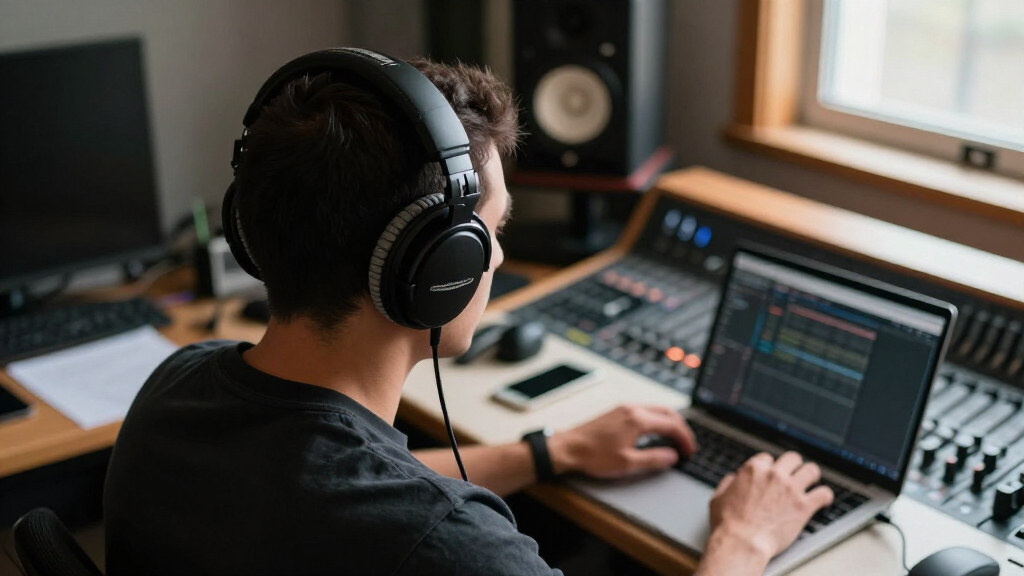
Finding the right audio editing headphones for creators means balancing accuracy, comfort, and budget — and no single pair wins all three. The Beyerdynamic DT 990 Pro (250 Ohm) takes my best overall spot for its famously wide, detailed soundstage that makes spotting edits, clicks, and reverb tails far easier than on closed-back rivals. If you edit in a noisy room or record while monitoring, the beyerdynamic DT 770 Pro (80 Ohm) offers better isolation, while the Sony MDR7506 remains the best value under $150 and the standard in edit bays everywhere. The main tradeoff throughout this category is open-back clarity versus closed-back isolation, plus whether your interface can drive higher-impedance models. Read on for the full breakdown of all 12 picks.
Complete the kit


Key Takeaways
- The Beyerdynamic DT 990 Pro’s open-back design gives the clearest editing perspective in this lineup, but its sound leakage makes it a poor choice for creators who record voiceover in the same room.
- The 80 Ohm DT 770 Pro proved the sweet spot for home creators: it isolates well, runs comfortably off most audio interfaces, and avoids the 250 Ohm model’s demand for stronger amplification.
- Three sub-$150 options — the Sony MDR7506, ATH-M40x, and SRH440A — cover most editing work well enough that paying more is about comfort and detail, not baseline accuracy.
- The ATH-M50xSTS-USB StreamSet is the only pick with a built-in mic and USB connectivity, making it the practical choice for streamers, but its boosted tuning is less neutral than dedicated monitors.
- The DT 700 PRO X and HD 480 PRO represent the premium closed-back tier, where the gains come from smoother treble and long-session comfort rather than dramatically better accuracy.
| Beyerdynamic DT 990 Pro (250 Ohm) Open-Back Studio Headphones |  | Best for Critical Mixing | Impedance: 250 Ohm | Design: Open-back | Color: Black | VIEW LATEST PRICE | See Our Full Breakdown |
| Sennheiser HD 480 PRO Professional Closed-Back Studio Headphones | 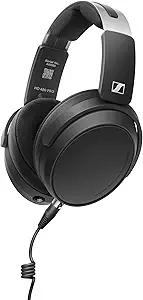 | Best Premium All-Rounder | Brand: Sennheiser | Model: HD 480 PRO | Design: Closed-back | VIEW LATEST PRICE | See Our Full Breakdown |
| beyerdynamic DT 770 Pro Studio Headphones (80 Ohm, Grey) |  | Best Overall | Impedance: 80 Ohm | Design: Closed-back | Color: Grey | VIEW LATEST PRICE | See Our Full Breakdown |
| Beyerdynamic DT 270 Pro Closed-Back Wired Studio Headphones |  | Best for Tracking and Podcasting | Type: Closed-back studio headphones | Connection: Wired | Intended Use: Studio recording, podcasting | VIEW LATEST PRICE | See Our Full Breakdown |
| Shure SRH840A Over-Ear Wired Studio Monitoring Headphones |  | Best Value for Serious Editing | Type: Over-ear wired studio monitoring headphones | Design: Closed-back, noise-isolating | Cable: Detachable locking | VIEW LATEST PRICE | See Our Full Breakdown |
| Audio-Technica ATH-M50xSTS-USB StreamSet Streaming Headset |  | Best for Streamers and Podcasters | Driver Size: 45 mm | Microphone: Cardioid condenser, flexible boom arm | Muting: Flip boom arm to mute | VIEW LATEST PRICE | See Our Full Breakdown |
| Sony MDR7506 Professional Large Diaphragm Headphones |  | The Industry-Standard Budget Pick | Driver Size: 40 mm | Frequency Response: 10 Hz – 20 kHz | Design: Closed-back, foldable over-ear | VIEW LATEST PRICE | See Our Full Breakdown |
| Audio-Technica ATH-M50X Professional Studio Monitor Headphones, Black |  | Best Overall | Driver Size: 45 mm | Type: Professional closed-back monitor headphones | Design: Circumaural, swiveling earcups | VIEW LATEST PRICE | See Our Full Breakdown |
| Shure SRH440A Over-Ear Wired Studio Headphones for Recording |  | Best for Accurate Mixing on a Budget | Design: Over-ear, closed-back, noise-isolating | Connectivity: Wired, detachable locking cable | Frequency Response: Extended | VIEW LATEST PRICE | See Our Full Breakdown |
| Audio-Technica ATH-M20x Professional Studio Monitor Headphones, White |  | Best for Beginners | Driver Size: 40 mm | Design: Over-ear, circumaural, closed-back | Cable Exit: Single-side | VIEW LATEST PRICE | See Our Full Breakdown |
| Audio-Technica ATH-M40x Professional Studio Monitor Headphones, Black |  | Best Value for Editors Who Mix Flat | Driver Size: 40 mm | Design: Closed-back, circumaural | Sound Signature: Flat studio tuning | VIEW LATEST PRICE | See Our Full Breakdown |
| beyerdynamic DT 700 PRO X Closed-Back Studio Headphones with Stellar.45 Driver |  | Best Premium Closed-Back for Vocal Recording and Editing | Driver: Stellar.45 dynamic driver | Impedance: 48 ohms | Design: Closed-back studio headphones | VIEW LATEST PRICE | See Our Full Breakdown |
| audio editing headphones for creator | Design | Color |
|---|---|---|
| Beyerdynamic DT 990 Pro | Open-back | Black |
| Sennheiser HD 480 PRO Professi | Closed-back | Black |
| beyerdynamic DT 770 Pro Studio | Closed-back | Grey |
| Beyerdynamic DT 270 Pro Closed | — | Black |
| Shure SRH840A Over-Ear Wired S | Closed-back, noise-isolating | — |
| Audio-Technica ATH-M50xSTS-USB | — | — |
| Sony MDR7506 Professional Larg | Closed-back, foldable over-ear | — |
| Audio-Technica ATH-M50X Profes | Circumaural, swiveling earcups | Black |
| Shure SRH440A Over-Ear Wired S | Over-ear, closed-back, noise-isolating | — |
| Audio-Technica ATH-M20x Profes | Over-ear, circumaural, closed-back | White |
| Audio-Technica ATH-M40x Profes | Closed-back, circumaural | Black |
| beyerdynamic DT 700 PRO X Clos | Closed-back studio headphones | Black with grey accents |
More Details on Our Top Picks
Beyerdynamic DT 990 Pro (250 Ohm) Open-Back Studio Headphones
This option stands out for open-back clarity, and that design choice is the whole story for audio editors. The open earcups create a wider, more natural stereo image than any closed-back model here, including the DT 770 Pro from the same family — which matters enormously when you’re panning dialogue, placing sound effects, or judging reverb tails. The velour pads stay comfortable through long podcast cleanup sessions. The tradeoff is real, though: 250 ohms of impedance means a phone or laptop headphone jack will barely drive them. Anyone editing without an audio interface or headphone amp should look at the Shure SRH840A instead. There’s also near-zero isolation, so a noisy room bleeds into your perception of the mix.
Pros:- Open-back design delivers a wide, natural stereo image for mixing decisions
- Velour ear pads remain comfortable through marathon editing sessions
- Accurate, revealing tuning suited to professional mixing and mastering
- German build quality with a durable coiled cable
Cons:- Requires a headphone amp or audio interface to reach usable volume
- Almost no noise isolation, making untreated rooms and shared spaces problematic
Best for: Editors and mixers working at a desk with an audio interface who need the most accurate stereo image possible
Not ideal for: Creators editing on the go or from a phone — the 250-ohm impedance demands amplification, and open backs leak sound both ways
- Impedance:250 Ohm
- Design:Open-back
- Color:Black
- Cable:3m coiled
- Adapter:1/4-inch
- Made in:Germany
Our verdict“Buy this if you mix at a desk with proper amplification and want the most honest stereo picture in the lineup; skip it if you edit from portable devices.”
Sennheiser HD 480 PRO Professional Closed-Back Studio Headphones
The HD 480 PRO earns its spot by solving the problem the DT 990 Pro creates: it offers accurate, full-spectrum sound in a closed-back design that works anywhere. The ultralight voice coil delivers fast transient response — useful for catching clicks, plosives, and edit points in spoken word content — while the angled earcups and ergonomic build keep long mastering days comfortable. Compared with the DT 270 Pro, it’s more versatile thanks to its detachable cable and bundled accessories, including a protective case and recording ear pads. The tradeoff is weight: it’s heavier than stripped-down monitors like the Sony MDR7506, and the closed design still traps some heat over very long sessions.
Pros:- Accurate, full-spectrum tuning suitable for mixing and monitoring
- Effective closed-back noise isolation for untreated spaces
- Detachable cable and included case add studio-grade practicality
- Ergonomic angled earcups designed for all-day wear
Cons:- Heavier than lightweight alternatives like the MDR7506
- Proper seal is needed for the isolation and low end to perform as intended
Best for: Working creators who split time between studio mixing and mobile editing and want one premium pair for everything
Not ideal for: Buyers on a tight budget or those who prioritize featherweight comfort for very long sessions
- Brand:Sennheiser
- Model:HD 480 PRO
- Design:Closed-back
- Cable Length:3 meters, coiled, detachable
- Connectivity:Dual L/R jacks
- Color:Black
- Included:Protective case, recording ear pads
- Warranty:24 months
Our verdict“This is the one-pair answer for creators who refuse to choose between studio accuracy and everyday versatility — as long as the price fits the budget.”
beyerdynamic DT 770 Pro Studio Headphones (80 Ohm, Grey)
My top pick balances everything a creator needs in one package. The 80-ohm impedance is the sweet spot: unlike the 250-ohm DT 990 Pro, it runs at reasonable volume from most interfaces and even laptops, while still rewarding better amplification. Its balanced, closed-back tuning makes it equally credible for tracking vocals, editing dialogue, and rough mixing — a flexibility the more recording-focused DT 270 Pro can’t match. Comfort is a genuine strength, with velour pads and strong German build quality that survives daily studio abuse. The honest drawback: velour over closed earcups means heat buildup in long sessions, and the fixed coiled cable can’t be replaced if it fails, unlike the detachable designs from Shure.
Pros:- 80-ohm impedance works well with interfaces without requiring a dedicated amp
- Balanced sound profile credible for tracking, editing, and mixing
- Velour ear pads and robust handcrafted construction built for daily use
- Long 3m cable with both 3.5mm and 1/4-inch connectivity
Cons:- Closed-back design traps heat during extended sessions
- Non-detachable cable means a cable failure ends the headphones
Best for: Creators who record, edit, and mix on one pair of headphones and want proven durability without amp complications
Not ideal for: Anyone needing a replaceable cable or open-back spatial accuracy for final mastering decisions
- Impedance:80 Ohm
- Design:Closed-back
- Color:Grey
- Cable Length:3m (9.8 ft)
- Connector:3.5mm with gold-plated 1/4-inch adapter
- Construction:Handcrafted in Germany
Our verdict“The safest single purchase in this roundup — accurate, comfortable, and compatible enough to serve nearly every editing workflow.”
Beyerdynamic DT 270 Pro Closed-Back Wired Studio Headphones
This model is better suited to the recording side of a creator’s workflow than to final mixing. Its strongest attribute is isolation: when you’re tracking vocals or hosting a podcast, the closed-back seal keeps the backing track from bleeding into your mic — something the open DT 990 Pro simply cannot do. The wired connection guarantees zero latency, which matters when you’re monitoring your own voice in real time and Bluetooth delay would be disorienting. Soft ear pads hold up through long monitoring stretches. Compared with the DT 770 Pro, though, it’s more of a specialist: the tuning and feature set are plainer, with no adapters, detachable cables, or accessories, so editors who mostly sit at a DAW should step up to the 770 instead.
Pros:- Strong noise isolation prevents headphone bleed into microphones
- Zero-latency wired monitoring for real-time vocal tracking
- Comfortable soft ear pads for long recording sessions
- Simple, reliable operation with no setup friction
Cons:- Basic design with no detachable cable or included accessories
- Wired-only, limiting flexibility compared with more feature-rich models
Best for: Podcasters and home recorders who primarily need isolation and zero-latency monitoring while capturing audio
Not ideal for: Editors focused on mixing and detailed audio judgment — its plain tuning and bare feature set serve tracking better
- Type:Closed-back studio headphones
- Connection:Wired
- Intended Use:Studio recording, podcasting
- Cable:3m included
- Color:Black
Our verdict“A purpose-built tracking tool for creators who record more than they mix; anyone doing detailed edit work should pick the DT 770 Pro.”
Shure SRH840A Over-Ear Wired Studio Monitoring Headphones
This pick makes the most sense for editors who want detailed, tailored frequency response without stepping into premium pricing territory. The SRH840A is tuned specifically for monitoring, which translates into hearing edit points, mouth clicks, and background hum clearly enough to fix them — a level of detail that cheaper options like the ATH-M20x smooth over. Two practical touches stand out against the DT 770 Pro: a detachable locking cable that survives studio wear and can be replaced, and a collapsible design that travels better between desk and location work. The wide padded headband and plush cushions hold up through long sessions. The compromises are the fixed wired connection and the fact that it doesn’t fold flat or include a case, so it’s less pocketable than truly portable models.
Pros:- Detailed, balanced tuning tuned for catching flaws in recordings
- Detachable locking cable is replaceable and secure
- Collapsible lightweight build easier to transport than fixed-frame rivals
- Wide padded headband comfortable through long editing sessions
Cons:- Wired-only connection limits mobility around the studio
- No included case and awkward folded profile reduce travel convenience
Best for: Budget-conscious editors and producers who want monitoring-grade detail and replaceable-cable durability
Not ideal for: Creators who need portability — no case and a non-collapsing-friendly shape make it a desk-first tool
- Type:Over-ear wired studio monitoring headphones
- Design:Closed-back, noise-isolating
- Cable:Detachable locking
- Portability:Lightweight collapsible design
- Comfort:Wide padded headband, plush ear cushions
- Intended Use:Recording, editing, monitoring
Our verdict“The smart mid-budget choice for detail-focused editors who value a replaceable cable over the DT 770 Pro’s fixed one.”
Audio-Technica ATH-M50xSTS-USB StreamSet Streaming Headset
What sets this option apart is that it isn’t just headphones — it’s a complete recording rig in one unit, pairing the acclaimed M50x sound signature with a built-in cardioid condenser boom microphone. For creators who both edit audio and record voiceover, that eliminates a separate mic purchase and desk clutter. Compared to the standard ATH-M50X, you get similar sonic character but with streaming-focused extras: a flip-to-mute boom arm and three earpad options to tune comfort and isolation.
The tradeoff is complexity and cost. You’re paying a premium over the M50X itself, and the bulkier design with a fixed mic makes it less appealing if your work is purely mixing. Wired-only, it also demands a specific setup to get the most from the XLR and USB options.
Pros:- Studio-grade M50x sound with a high-quality cardioid condenser mic built in
- Flip-up boom arm makes muting instant and foolproof during live sessions
- Interchangeable earpads let you tune comfort and isolation
- USB, 3.5 mm, and XLR connections cover every streaming and studio setup
Cons:- Premium price that’s wasted if you already own a microphone
- Bulkier and less portable than standard studio headphones
- Requires deliberate setup to take full advantage of its connection options
Best for: Streamers and voiceover creators who want studio-quality monitoring and a broadcast microphone without buying two separate devices
Not ideal for: Pure mixing engineers — the integrated mic adds cost and bulk they don’t need, and the standard M50X or SRH440A does the same job for less
- Driver Size:45 mm
- Microphone:Cardioid condenser, flexible boom arm
- Muting:Flip boom arm to mute
- Earpad Options:M50x, mesh, leatherette
- Connections:USB-A, 3.5 mm, XLR, 6.3 mm adapter
- Cable Length:2 meters
Our verdict“Buy this only if recording your voice is as central to your work as editing audio; everyone else should stick with dedicated monitor headphones.”
Sony MDR7506 Professional Large Diaphragm Headphones
Few headphones have edited more audio than the MDR7506 — it’s the pair you’ll see dangling around necks in edit bays everywhere, and that decades-long track record is its own argument. The closed-back design and 40 mm drivers deliver the bright, detailed midrange that makes clicks, plosives, and background hiss easy to catch while editing dialogue.
Its age shows, though. Unlike the ATH-M50X or Shure SRH440A, the cord is permanently attached, so a cable failure means surgery or replacement. The 9.8-foot coiled cord is generous at a desk but awkward anywhere else, and the vinyl earpads tend to flake after a couple of years. This pick makes the most sense for creators who want proven sound at a modest price, not modern conveniences.
Pros:- Legendary revealing sound signature that exposes editing flaws clearly
- Foldable design and included 1/4-inch adapter make it travel-ready
- Comfortable closed-ear design blocks moderate room noise
- Lower price than most competing studio monitors
Cons:- Non-detachable cord — damage means replacing or repairing the whole unit
- Build materials show wear sooner than modern rivals
- No wireless or detachable-cable option at all
Best for: Budget-conscious editors and podcast producers who want trusted, revealing sound for catching audio flaws without spending studio-monitor money
Not ideal for: Anyone who values replaceable cables and long-term durability — the SRH440A’s locking detachable cable solves what this model can’t
- Driver Size:40 mm
- Frequency Response:10 Hz – 20 kHz
- Design:Closed-back, foldable over-ear
- Cord Length:9.8 feet, coiled
- Connectivity:Wired
- Included:1/4-inch adapter
Our verdict“The cheapest credible ticket into professional-level editing sound, if you can live with a fixed cord.”
Audio-Technica ATH-M50X Professional Studio Monitor Headphones, Black
This is the pick I’d point most creators toward first, because it nails the balance nothing else in this lineup quite matches. The 45 mm drivers produce punchy lows without smothering the midrange — a common failure point when editing voice-heavy content — and the sound isolation is strong enough to work in untreated rooms. Compared to the Sony MDR7506, it fixes the biggest complaint: the detachable cable means a broken cord costs $15, not a new headphone.
The swiveling earcups and robust headband hold up through marathon edit sessions where the ATH-M20x starts feeling flimsy. The honest downside is a slightly elevated bass response — flattering for casual listening but something to account for when balancing low end. And at this size, these stay at the desk rather than in a bag.
Pros:- Excellent clarity with deep, controlled bass across the frequency range
- Detachable cable dramatically extends usable lifespan
- Swiveling earcups and durable build handle long daily sessions
- Strong passive isolation for noisy home studios
Cons:- Slightly bass-emphasized tuning that colors critical mixing decisions
- Bulky footprint makes it a desk-bound rather than travel option
- Priced above entry-level monitors like the ATH-M20x
Best for: Working creators who edit audio daily and want a durable, replaceable-cable workhorse with energetic, detailed sound
Not ideal for: Analytical mix engineers wanting strict neutrality — the DT 770 Pro’s flatter tuning suits precision mixing better than the M50X’s bass-forward character
- Driver Size:45 mm
- Type:Professional closed-back monitor headphones
- Design:Circumaural, swiveling earcups
- Connectivity:Wired, detachable cable
- Color:Black
- Warranty:2 years
Our verdict“If you’re buying one pair for editing, streaming prep, and general creation, this is the safest all-around spend.”
Shure SRH440A Over-Ear Wired Studio Headphones for Recording
Where the ATH-M50X flatters, the SRH440A tells the truth. Its neutral, transparent tuning makes it the better tool when your job is judging balance — level matching dialogue, taming harsh sibilance, deciding whether a music bed fights narration. Shure’s updated design also adds a detachable locking cable, which the Sony MDR7506 still lacks, and it stays put rather than working loose mid-session.
Comfort over long sessions is a genuine strength, with a well-padded headband that suits day-long edit benders. The compromises are predictable for the price: bass extension and detail retrieval don’t match pricier rivals like the Shure SRH840A, and there’s nothing here for casual listening — tracks sound flat and workmanlike rather than fun. It’s a tool, and a good one.
Pros:- Accurate, transparent response suited to mixing and EQ decisions
- Detachable locking cable stays secure and is cheap to replace
- Comfortable cushioned fit for extended editing sessions
- Durable build with effective passive noise isolation
Cons:- Bass detail and extension fall short of step-up models like the SRH840A
- Strictly wired, so no mobility for mobile creators
- Utility-focused sound won’t double as entertainment headphones
Best for: Creators who mix podcasts or video audio and need honest, uncolored sound for level and EQ decisions under $150
Not ideal for: Anyone wanting one pair for both editing and enjoyable music listening — the flat tuning makes casual playback feel lifeless
- Design:Over-ear, closed-back, noise-isolating
- Connectivity:Wired, detachable locking cable
- Frequency Response:Extended
- Compatibility:Audio interfaces, mixers, laptops, portable devices
- Included:Threaded 1/4-inch (6.3 mm) adapter
Our verdict“The most honest sound per dollar in this batch — buy it to make decisions, not to enjoy music.”
Audio-Technica ATH-M20x Professional Studio Monitor Headphones, White
This is the entry point I’d hand a first-time podcaster or YouTube editor, because it teaches you what closed-back monitoring actually sounds like without a steep investment. The 40 mm drivers lean warm, with boosted low end that helps newcomers hear music beds and room rumble, and the circumaural fit blocks enough noise to edit in a shared apartment.
Set against its sibling ATH-M50X, the gaps are clear: no detachable cable, less refined treble detail, and a headband that feels less substantial after hours of wear. Compared to the Sony MDR7506 at a similar price, you trade a bit of that classic midrange honesty for stronger bass and a fresher look. For learning the craft, that’s a fair trade — just plan to upgrade once your ears outgrow it.
Pros:- Very affordable entry into genuine studio monitoring sound
- Comfortable circumaural fit with solid passive isolation
- Enhanced low-end response helps beginners hear bass problems
- Sturdier build than typical consumer headphones at this price
Cons:- Non-detachable cable — the most likely failure point can’t be replaced
- Less treble detail than step-up monitors for critical work
- Bulky design with no folding hinge for portability
Best for: New podcasters and video editors building a first setup on a tight budget
Not ideal for: Experienced editors — the fixed cable, limited detail retrieval, and bass-forward tuning will feel like a downgrade from the M50X or SRH440A
- Driver Size:40 mm
- Design:Over-ear, circumaural, closed-back
- Cable Exit:Single-side
- Connectivity:Wired, fixed cable
- Color:White
- Model:ATH-M20XWH
- Warranty:2 years
Our verdict“A sensible first pair that covers the editing basics, as long as you accept you’ll eventually outgrow it.”
Audio-Technica ATH-M40x Professional Studio Monitor Headphones, Black
Most headphones in this price bracket flatter your audio — the ATH-M40x does the opposite, and that’s exactly the point. Its flat tuning means edits that sound clean here will translate honestly to car speakers, earbuds, and phone speakers, which matters more for a creator fixing dialogue or balancing music beds than any bass boost ever could. Compared to its sibling, the ATH-M50x, the M40x trades a bit of low-end presence and collapsible hinges for a more neutral signature at a noticeably lower price — a trade most audio editors should happily make. The swiveling 90-degree earcups are genuinely useful when cueing one section against another, and both coiled and straight detachable cables survive the desk-chair-rollover problem that kills cheaper pairs. The tradeoff: these are bulky, they don’t fold down, and Audio-Technica is vague about impedance specs.
Pros:- Flat, accurate tuning that translates well to playback on consumer devices
- Durable pro-grade build that survives daily studio abuse
- Two detachable cables (coiled and straight) included, replacing the most failure-prone part cheaply
- 90-degree swiveling earcups make one-ear A/B checks fast
Cons:- No folding hinge and a generally bulky frame hurt portability
- Impedance and frequency response are unspecified, making matching with audio interfaces a guessing game
Best for: Podcast and video editors on a budget who need trustworthy, neutral monitoring for mixing decisions
Not ideal for: Mobile creators who work from cafes or travel kits — the fixed, bulky frame doesn’t fold or pack down
- Driver Size:40 mm
- Design:Closed-back, circumaural
- Sound Signature:Flat studio tuning
- Earcup Rotation:90 degrees
- Cable:Detachable; coiled and straight cables included
- Materials:Pro-grade ear pads and headband
- Color:Black
Our verdict“The M40x is the smartest spend in this roundup for creators who want honest, mix-ready sound under the price of the M50x.”
beyerdynamic DT 700 PRO X Closed-Back Studio Headphones with Stellar.45 Driver
The DT 700 PRO X sits near the top of this lineup for creators who record and edit in the same room. Its closed-back isolation keeps click tracks and reference mixes from bleeding into vocal takes — the same strength that makes the DT 770 Pro (80 Ohm) a studio staple — but the newer Stellar.45 driver at 48 ohms removes the 770’s biggest headache: it runs properly from laptops and interfaces without an amp, while the older 250-ohm DT 990 Pro effectively demands one. Detail retrieval is a clear step up from the Sony MDR7506; sibilance in raw vocals and low-end rumble in field recordings are simply easier to hear. The catch is cost — roughly double the M40x — plus a size that monopolizes desk space. Two detachable cables and a German build with a 2-year warranty soften the sting.
Pros:- 48-ohm Stellar.45 driver delivers full performance straight from laptops, phones, and interfaces without an amp
- Strong closed-back isolation prevents bleed into mic recordings
- Two detachable cable lengths (1.8m and 3m) suit both desk editing and booth tracking
- German-made build quality backed by a 2-year warranty
Cons:- Premium price roughly double entry-level options like the ATH-M40x
- Large footprint makes it clumsy for commuting or mobile setups
Best for: Serious podcasters and musician-producers who track vocals and do detailed editing on the same headphones
Not ideal for: Casual or first-time editors — the price buys detail a beginner’s ears and workflow won’t yet exploit
- Driver:Stellar.45 dynamic driver
- Impedance:48 ohms
- Design:Closed-back studio headphones
- Cable Lengths:1.8 m and 3 m detachable cables
- Connectors:3.5 mm jack with 1/4-inch adapter
- Color:Black with grey accents
- Origin:Made in Germany
- Warranty:2 years
Our verdict“If you record and edit in one place and want one premium pair that does both jobs amp-free, the DT 700 PRO X justifies its price.”
How We Picked
I judged every pair here through one specific lens: editing audio for video, podcast, and music content, not casual listening. That meant prioritizing neutral frequency response (so a mix that sounds balanced on headphones translates to speakers), isolation or clarity depending on use case, comfort across multi-hour sessions, and realistic amplification requirements — a technically excellent 250 Ohm headphone is useless if a creator’s interface can’t drive it. I also weighed build durability and replaceable parts, since working headphones take daily abuse that consumer models can’t survive.
The ranking logic follows a simple hierarchy: models that reveal edit-level detail while staying practical for typical creator setups rank highest, then value picks that deliver 90% of the performance for half the price, and finally niche options that serve specific workflows like streaming or live monitoring. This is why the open-back DT 990 Pro leads despite its leakage problem, and why the budget ATH-M20x sits last — not because it sounds bad, but because every other model here does its job noticeably better for a modest price increase.
| audio editing headphones for creator | Color |
|---|---|
| Beyerdynamic DT 990 Pro | Black |
| Sennheiser HD 480 PRO Professi | Black |
| beyerdynamic DT 770 Pro Studio | Grey |
| Beyerdynamic DT 270 Pro Closed | Black |
| Shure SRH840A Over-Ear Wired S | — |
| Audio-Technica ATH-M50xSTS-USB | — |
| Sony MDR7506 Professional Larg | — |
| Audio-Technica ATH-M50X Profes | Black |
| Shure SRH440A Over-Ear Wired S | — |
| Audio-Technica ATH-M20x Profes | White |
| Audio-Technica ATH-M40x Profes | Black |
| beyerdynamic DT 700 PRO X Clos | Black with grey accents |
Factors to Consider When Choosing Audio Editing Headphones For Creators
Beyond the specific models above, a few category-wide decisions will shape whether any pair of editing headphones actually works for your setup. These are the factors I’d settle before clicking buy.Open-Back vs. Closed-Back: The Decision That Shapes Everything
This is the single biggest fork in the road, and many creators get it wrong by buying for sound quality alone. Open-back headphones like the DT 990 Pro let air pass through the ear cups, creating a wider, more natural soundstage that makes it easier to judge reverb, panning, and spacing between edits — but they leak sound badly and let room noise in, so they’re unusable for recording vocals in the same room. Closed-back models isolate you from your environment and keep click tracks and reference audio out of your microphone, at the cost of a slightly more compressed, in-your-head sound. A common mistake is treating this as a quality question when it’s really a workflow question: if you record and edit in the same space, closed-back is the correct answer no matter how good the open-back alternative sounds. Many working creators eventually own one of each for exactly this reason.
Impedance and What Your Interface Can Actually Drive
Impedance ratings confuse buyers more than any other spec, and mismatched pairings are the most common reason people think a good headphone sounds thin and quiet. Higher-impedance models like the 250 Ohm DT 990 Pro need more voltage to reach listening volume, which means a laptop headphone jack or phone will leave them sounding weak and bass-light. Lower-impedance versions like the 80 Ohm DT 770 Pro or the 32-ohm-friendly DT 700 PRO X Stellar.45 driver are designed to run properly off interfaces, computers, and even mobile devices without a dedicated amp. If you already own an audio interface with a strong headphone output, high impedance becomes an advantage — better control and cleaner sound. If you don’t, buy accordingly rather than planning to ‘add an amp later,’ because most people never do.
Neutral Tuning Versus Flattering Sound
Consumer headphones boost bass and treble to make music exciting, and that tuning will sabotage your edits without you realizing it. If your headphones exaggerate low frequencies, you’ll under-mix bass and ship content that sounds thin on car speakers and earbuds; if treble is scooped, you’ll miss harsh sibilance that listeners will hear immediately. Studio models are tuned flat precisely so these problems surface before publication. That said, some working models here — the ATH-M50x being the classic example — have a slightly boosted, more enjoyable signature, which is why they’re beloved by creators who also consume media on the same pair. The honest tradeoff: perfectly neutral headphones make editing decisions easier but listening less fun. Decide whether your headphones are a tool, an entertainment device, or both.
Comfort and Replacement Parts for Daily Use
Editing sessions run long, and a headphone that clamps too tightly or has shallow ear pads becomes unbearable by hour three — at which point sound quality is irrelevant. Look for replaceable ear pads and cables, because these are the two components that always fail first; the Sony MDR7506 and the entire beyerdynamic Pro line are known for parts availability, which extends a headphone’s life from three years to a decade. Weight matters too: models above 300 grams with dense clamping force suit shorter tracking sessions, while softer, larger-cup designs handle marathon editing. Velour pads (common on beyerdynamic open-backs) breathe better but wear faster and isolate less; pleather pads seal better but get sweaty and flake after a couple of years. Budgeting $20–30 every few years for fresh pads is part of owning studio headphones, not a defect.
Wired Connectivity and Why It Still Wins for Editing
Every serious pick in this roundup is wired, and that’s deliberate rather than old-fashioned. Bluetooth introduces compression, latency, and inconsistent sound profiles that make precise edit-point judgments unreliable — a delay of even 100ms will wreck your ability to sync cuts to music. USB models like the ATH-M50xSTS StreamSet sidestep this by carrying a digital signal, and they bundle a microphone, which explains their appeal for streamers. But for pure editing, a standard 3.5mm or quarter-inch cable into an interface remains the most reliable, lowest-latency path. One practical note: check cable length and detachability. A coiled or three-meter cable gives you freedom at a desk, while a detachable cable means a snag won’t kill the headphone — a lesson usually learned after one broken pair.
When Paying More Actually Matters
The sub-$150 tier in this comparison is genuinely competent — the MDR7506, ATH-M40x, and SRH440A will expose almost every editing problem a creator faces. So what does doubling or tripling the budget buy? Mostly refinement rather than revelation: smoother, less fatiguing treble (the biggest weakness of budget models after long sessions), better bass control, more durable construction, and comfort that holds up over six-hour days. If you edit occasionally, the budget tier is the rational buy and premium spending is vanity. If audio is your job or you’re spending full workdays in headphones, the extra $150–200 pays for itself in reduced fatigue alone. The mistake to avoid is assuming price correlates with raw accuracy — a $99 MDR7506 is more neutral than several headphones costing twice as much.
Frequently Asked Questions
Can I use the same headphones for recording voiceover and editing?
Only if they’re closed-back — and this constraint rules out my top overall pick, the DT 990 Pro, for that workflow. Open-back headphones leak audio out of the ear cups, so your reference track or edit playback will bleed into your microphone and contaminate the recording. Closed-back models like the DT 770 Pro, SRH840A, or ATH-M50x contain that sound well enough to monitor safely while speaking. If you record and edit in one room with one pair of headphones, choose closed-back and accept the slightly narrower soundstage. If you record in a treated space or a separate room, you can edit on open-backs and get the better perspective they offer.
Do I need a headphone amp for 250 Ohm headphones like the DT 990 Pro?
Strictly speaking, you need adequate voltage, and most laptop and phone outputs don’t provide it — plugged into those, the DT 990 Pro 250 Ohm sounds quiet, thin, and bass-shy. A dedicated audio interface with a decent headphone output (most interfaces over $150) will usually drive it properly, and a dedicated amp removes all doubt. The practical alternative is skipping the problem entirely: the 80 Ohm DT 770 Pro or the DT 700 PRO X with its Stellar.45 driver are voiced to run well on modest equipment. My honest advice for creators building a first setup is to match impedance to the gear you already own rather than buying high-impedance headphones and hoping an amp follows later. The performance gap at proper volume is real but modest.
Are the Sony MDR7506 still worth buying in 2026, or are they outdated?
They’re absolutely still worth buying, and their continued dominance in professional edit bays after three decades is itself the evidence. The MDR7506 does the two things editing demands — accurate mids where voice lives, and revealing treble for catching clicks and mouth noise — at a price that leaves budget for a mic or interface. The drawbacks are real but known: pleather pads that flake after a couple of years, a coiled cable some find annoying, and comfort that lags behind the beyerdynamic options. Newer competitors like the SRH440A and ATH-M40x compete closely on sound while offering better ergonomics in some respects. If your budget is under $150, any of these three is defensible — pick on comfort and parts availability rather than chasing tiny sound differences.
Is the ATH-M50xSTS StreamSet good for editing, or just for streaming?
It’s genuinely good for editing, but it’s tuned and built for the streaming workflow first, and that shapes its character. The built-in boom mic, USB connectivity, and broadcast-style controls make it a one-cable solution for creators who go live — a real convenience the other eleven picks here can’t match. For editing, its slightly boosted low end and energetic tuning make long sessions more fun but slightly less trustworthy than the flatter SRH840A or M40x when you’re balancing dialogue against music. Think of it as the right choice if streaming, calls, and voice work dominate your week, and a compromise if precise mix translation is your main concern. A creator who edits occasionally but streams constantly gets more value from it than a dedicated podcast editor would.
What’s the actual difference between the DT 770 Pro and the DT 700 PRO X?
The DT 700 PRO X is beyerdynamic’s modern replacement for the DT 770 Pro, and the differences are evolutionary rather than night-and-day. The new Stellar.45 driver runs efficiently at lower impedance, so it works well across interfaces, laptops, and mobile devices without the amp question the 250 Ohm DT 770 variant raises. It also softens the aggressive treble spike the DT 770 Pro is known for, which many listeners find fatiguing over long editing sessions. In return, the DT 770 Pro undercuts it on price and has a massive track record, with replacement parts and mods documented everywhere. If budget is tight, the DT 770 Pro remains a fully professional tool; if you’re buying fresh and edit daily, the PRO X’s smoother treble and universal drivability justify the premium.
Conclusion
After comparing all twelve, the right choice comes down to your workflow more than any spec sheet. For best overall, the Beyerdynamic DT 990 Pro (250 Ohm) wins on editing clarity alone — provided you don’t record in the same room and your gear can drive it. The beyerdynamic DT 770 Pro (80 Ohm) is my best value for working creators, pairing strong isolation with universal compatibility, while the Sony MDR7506 takes pure budget honors for first-time buyers who’d rather spend the savings on a microphone. At the premium end, the DT 700 PRO X is the pick for daily, multi-hour editors who want closed-back isolation without treble fatigue, and the HD 480 PRO suits similar buyers who want a more modern design language. Beginners can start confidently with the ATH-M20x or SRH440A and upgrade later with nothing lost. For specific needs: the ATH-M50xSTS StreamSet for streamers, the DT 270 Pro for loud-environment monitoring, the ATH-M50x for creators who also want an enjoyable listening headphone, and the ATH-M40x or SRH840A for flat-tuning traditionalists. Whatever you choose, match the headphone to your room, your interface, and your session length — those three factors predict satisfaction better than price ever will.