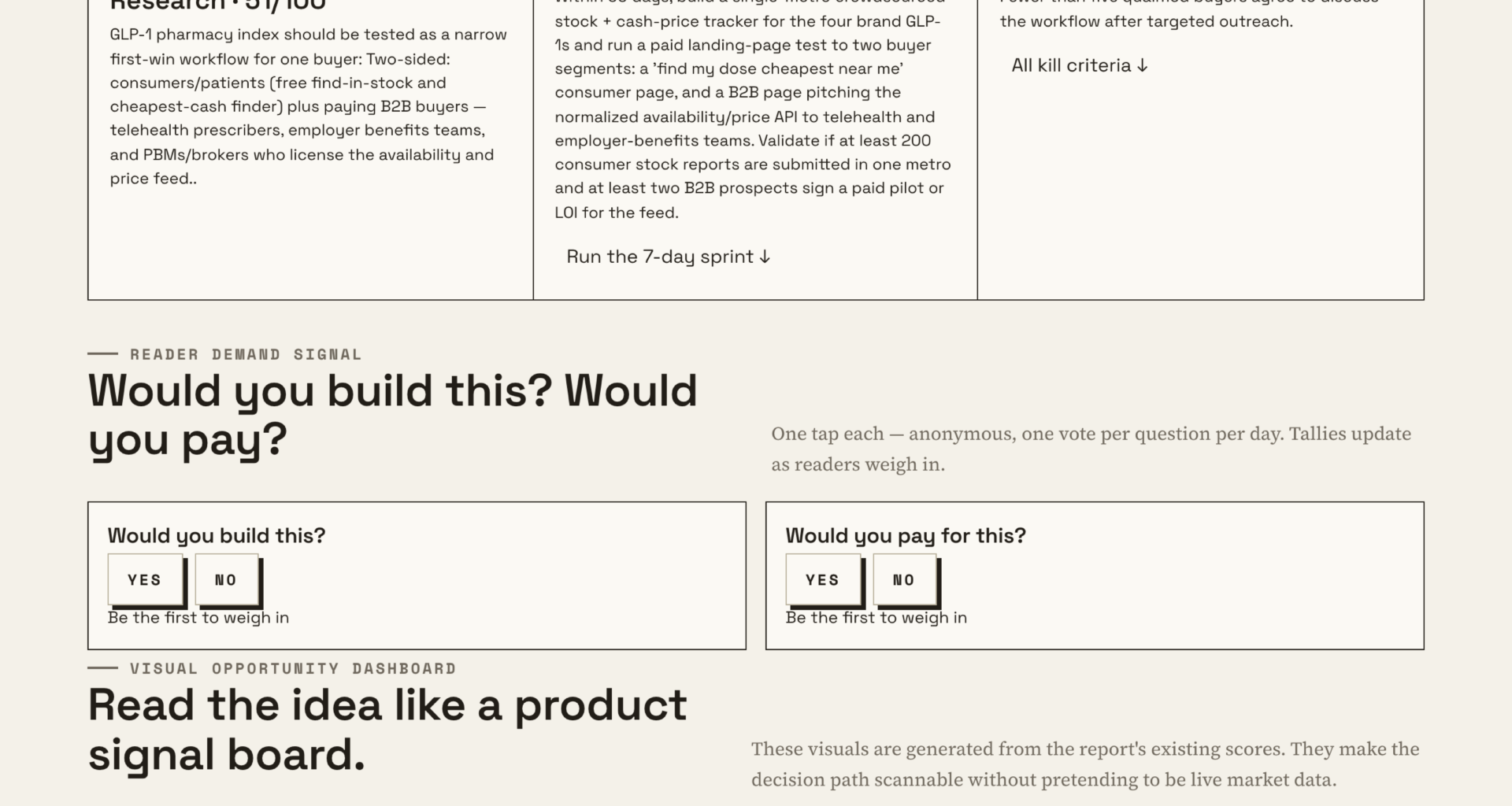
📊 Full opportunity report: GLP-1 Cash Prices: Compare Pharmacy And Manufacturer Options on IdeaNavigator AI — validation score, market gap, and execution plan.

Get audio and creator gear delivered free — and shop member deals
- Fast, free delivery on millions of items
- Access to Prime Big Deal Days deals on October 6–7
- Prime Video, Amazon Music and more included
TL;DR
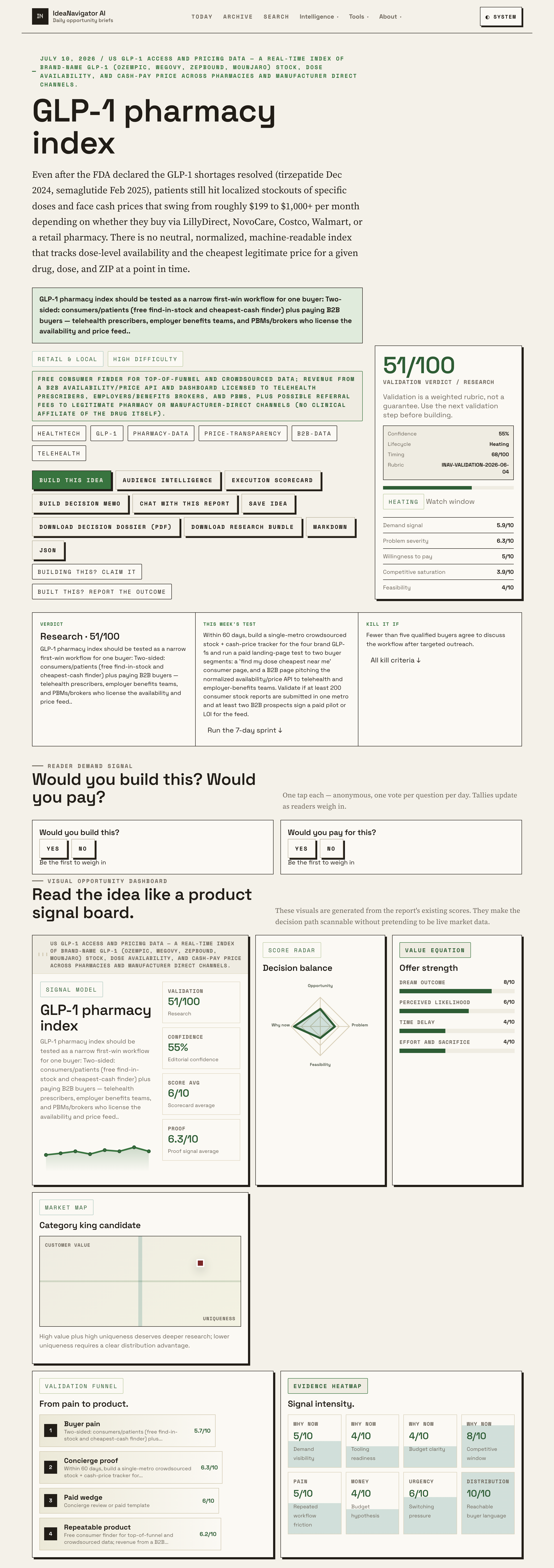
Cash prices for brand GLP-1 drugs like Ozempic, Wegovy, Zepbound and Mounjaro now range from roughly $199 to more than $1,000 per month depending on the purchase channel, according to an IdeaNavigator AI analysis. With the FDA shortage declarations lifted and compounders exiting, patients face a fragmented pricing landscape with no neutral dose-level price and availability index.
Patients paying cash for brand GLP-1 weight-loss and diabetes drugs face monthly prices that range from roughly $199 to more than $1,000 depending on whether they buy through LillyDirect, NovoCare, Costco, Walmart or a traditional retail pharmacy, according to a market analysis by IdeaNavigator AI. The analysis finds that even after the FDA declared GLP-1 shortages resolved, patients continue to encounter localized stockouts of specific doses — and no neutral, machine-readable index currently tracks dose-level availability and the cheapest legitimate cash price by drug, dose and ZIP code.
The analysis focuses on the four dominant brand GLP-1s in the US market: Ozempic and Wegovy (semaglutide, Novo Nordisk) and Zepbound and Mounjaro (tirzepatide, Eli Lilly). According to the analysis, the FDA removed tirzepatide from its shortage list in December 2024 and semaglutide in February 2025, ending the formal shortage period. However, patients still report gaps in availability of specific dose strengths at particular locations, even as list prices remain broadly similar across the market.
The price spread the analysis documents comes from the parallel growth of competing cash-pay channels. Manufacturer-direct platforms — LillyDirect and NovoCare — now sell directly to patients, while Costco and Walmart run their own cash pharmacy programs. The analysis also notes the launch of the TrumpRx portal in February 2026 as an additional channel. Because each channel prices independently and availability shifts by dose and location, the analysis argues the market has moved from a shortage problem to a fragmentation problem.
On the demand side, the analysis cites employer reports that GLP-1s now account for roughly 20% of pharmacy spend, creating what it describes as a need for cost-steering data among employer benefits teams, telehealth prescribers, and pharmacy benefit managers. IdeaNavigator AI proposes that a normalized, real-time index of brand GLP-1 stock, dose availability and cash-pay price — free to consumers, licensed as a data feed to business buyers — could address this gap.
Why the Price Spread Hits Patients Now
For patients without insurance coverage — or whose plans exclude weight-loss drugs — the difference between channels can amount to several hundred dollars per month, or thousands of dollars per year. A patient who buys Zepbound through a manufacturer cash program rather than a retail pharmacy counter may pay dramatically less for the identical drug, but there is currently no single neutral source that compares those options at the dose-and-ZIP-code level, according to the analysis.
The fragmentation also matters to employers and insurers. With GLP-1s at roughly 20% of pharmacy spend for some employers, according to the reports cited in the analysis, benefits teams and PBMs lack normalized data to steer members toward the cheapest legitimate channel. The analysis positions this as the commercial opening for a two-sided product: a free consumer price-and-stock finder generating crowdsourced data, with revenue from a B2B API licensed to telehealth prescribers, employer benefits teams and brokers.
From Shortage Lists to Direct-to-Patient Sales
The current pricing landscape took shape over roughly two years. The FDA’s shortage declarations had temporarily allowed compounding pharmacies to produce cheaper copies of semaglutide and tirzepatide. Once the agency declared the shortages resolved — December 2024 for tirzepatide, February 2025 for semaglutide — enforcement deadlines effectively forced compounders out of the market, removing a lower-cost gray channel.
At the same time, Novo Nordisk and Eli Lilly expanded their own direct-to-patient cash platforms, NovoCare and LillyDirect, while mass retailers Costco and Walmart built competing cash pharmacy offerings. The February 2026 launch of the TrumpRx portal added a further government-linked channel. The result, per the analysis, is a sprawl of independently priced channels and dose-level supply gaps that no single data source normalizes.
What the Price Data Does Not Show
The $199-to-$1,000-plus range is described as approximate, and the analysis does not publish a dose-by-dose, channel-by-channel price table. Which specific drug and dose sits at each end of the range, and how prices vary by ZIP code, is not specified. It is not clear from the analysis how frequently these prices change or how stable each channel’s cash pricing is over time.
The claimed validation plan — a single-metro crowdsourced stock and price tracker with a target of 200 consumer stock reports and two signed B2B pilots within 60 days — is a proposal, not a completed test. Whether crowdsourced stock reports would be accurate or comprehensive enough to serve paying B2B customers remains unproven. The employer-spend figure of roughly 20% is attributed to employer reports without a named survey or dataset.
Testing the Index Idea This Year
The analysis outlines a 60-day validation plan: build a single-metro crowdsourced tracker covering all four brand GLP-1s by drug, dose and ZIP, paired with paid landing-page tests aimed at two audiences — consumers searching for the cheapest dose nearby, and B2B buyers such as telehealth firms and employer benefits teams evaluating a normalized price and availability API. Success thresholds are at least 200 consumer stock reports in one metro and at least two B2B paid pilots or letters of intent.
If validated, the proposed roadmap calls for layering dose-level availability alerts on top of the consumer finder, then licensing the availability-and-price dataset to design partners. Readers comparing prices today should check each channel directly — LillyDirect, NovoCare, Costco, Walmart and local retail pharmacies — since no neutral real-time index yet exists.
Source: IdeaNavigator AI
Key Questions
How much do brand GLP-1 drugs cost without insurance?
Cash prices range from roughly $199 to more than $1,000 per month depending on the drug, dose and purchase channel, according to the IdeaNavigator AI analysis. Manufacturer-direct platforms and retail cash programs often price differently for the same medication.
Why can GLP-1 prices differ so much between pharmacies?
Each channel — LillyDirect, NovoCare, Costco, Walmart, TrumpRx and traditional retail pharmacies — sets its own cash pricing independently. The FDA’s resolution of the GLP-1 shortages also ended compounded lower-cost versions, pushing buyers into these fragmented channels.
Are GLP-1 shortages over?
The FDA removed tirzepatide from its shortage list in December 2024 and semaglutide in February 2025. However, the analysis reports that patients still encounter localized stockouts of specific doses at particular pharmacies.
Is there a tool that compares GLP-1 prices and availability by dose?
According to the analysis, no neutral, machine-readable index currently tracks dose-level availability and cheapest legitimate cash price by drug, dose and ZIP code. IdeaNavigator AI proposes building one, but it remains a proposal pending validation.
Can I still get compounded semaglutide or tirzepatide?
Compounding of copycat versions was tied to the FDA shortage declarations. Once those ended in 2024 and 2025, enforcement deadlines forced most compounders out of the market, according to the analysis.
Source: IdeaNavigator AI
Fall Picks
fall essentials
As an affiliate, we earn on qualifying purchases.