📊 Full opportunity report: A Closer Look At Measurement Apps For Men's Skincare on IdeaNavigator AI — validation score, market gap, and execution plan.

Get audio and creator gear delivered free with Prime
- Fast, free delivery on millions of items
- Prime Video, Amazon Music and more included
- Member-only deals all year
TL;DR
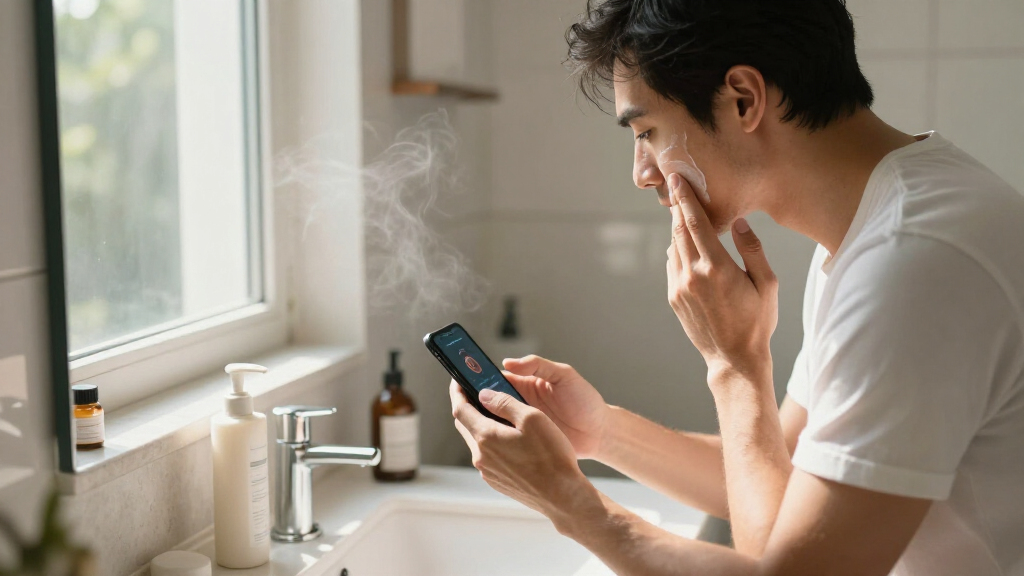
A product proposal outlines a skincare measurement app for men, using weekly guided selfies, routine logs and progress cards to show changes in skin clarity, texture and dark circles. The concept is not a launched or validated product: its proposed branding, retention and subscription model still need testing.
IdeaNavigator AI has outlined a product concept for a men’s skincare measurement app, proposing weekly guided selfies and routine tracking to help users gauge whether a regimen is making a difference. The proposal frames the app as an early-stage idea to test, not a launched service, and provides no user research or performance results showing that customers will adopt it.
The proposed first audience is a man who has recently started a skincare routine and wants a visible way to track progress. The concept argues that this user may want a simple “scoreboard” to answer whether a routine is working, and that existing beauty apps may feel unwelcoming because of their design, tone or marketing. Those are the proposal’s assumptions; it does not provide survey findings or other evidence measuring how common the problem is.
The suggested minimum viable product would prompt users to take weekly guided selfies and assess skin clarity, texture and dark circles. It would also include routine logging, streaks to encourage repeated use, and progress cards presented with training-oriented language rather than beauty-focused branding. The outline does not specify how any scores would be generated, how accurate they would be, or whether they would rely on automated image analysis or user input.
For revenue, the proposal suggests a subscription combined with affiliate recommendations for products tied to measured gaps. It also recommends testing the same selfie-capture technology with men’s-training branding against neutral branding, then comparing conversion and retention across user segments. No pricing, test design, results or partner products are provided.
Testing the Skin-Tracking Proposition
The idea addresses a practical hurdle for people starting a skincare routine: visible changes can be gradual, and day-to-day impressions may not make it easy to tell whether a product or habit is helping. A consistent record could give users a clearer reference point than memory alone, particularly if photos are captured under comparable conditions. That possible benefit depends on reliable measurement, a question the proposal leaves open.
The proposed framing also makes customer fit central to the product test. If some men avoid current beauty apps because of their presentation, a training-oriented interface could affect whether they try a tool and continue using it. But the outline does not establish that men as a group prefer that language, or that branding would outweigh factors such as privacy, convenience, cost and confidence in the results. Conversion and retention tests would be needed before treating the positioning as a market advantage.
The commercial model creates another point for scrutiny. Recommendations linked to apparent skin concerns might connect tracking with product discovery, while affiliate commissions could give the app a financial interest in purchases. Users would need clear information about how scores are produced and how recommendations are selected. The concept does not describe safeguards against products being promoted because of commercial arrangements rather than a user’s needs.
men's skincare progress tracking app
As an affiliate, we earn on qualifying purchases.
As an affiliate, we earn on qualifying purchases.
From Grooming Trend to App Test
IdeaNavigator AI describes the opportunity within men’s grooming technology and says men’s skincare is a fast-growing segment, attributing interest partly to looksmaxxing culture and its focus on measurable self-improvement. The proposal provides no market-size figures, growth rate, time period or independent evidence for that characterization, so it should be read as the rationale behind the idea rather than a verified market finding.
Rather than proposing a broad skincare platform, the outline focuses on one initial user and one repeatable task: document skin over time while recording a routine. That narrower scope makes the branding comparison and repeat-use measures testable. However, no product name, developer, release schedule, clinical partner or completed experiment is identified. The status described is a concept awaiting validation.
Evidence Still Needed on Scores
The proposal does not report whether prospective users want this product, whether men’s-training branding improves sign-ups, or whether users would keep taking weekly photos. No conversion or retention results are included, and there is no evidence that the suggested subscription and affiliate model would generate sustainable revenue.
It is also unclear what “scoring” would mean in practice. The outline does not explain how lighting, camera differences, facial expression, skin tone or temporary changes would be handled, nor whether scores would be checked against expert assessments. Without those details, a progress card could imply greater precision than the measurement supports. The proposal also gives no information about image storage, deletion, consent or privacy protections for facial photographs.
The claim that existing beauty apps discourage men is not accompanied by examples or user research. The market-growth rationale likewise lacks supporting figures and a defined measurement period. These gaps do not rule out demand, but they mean the concept’s central assumptions remain untested rather than established.
Branding and Retention Tests
The next step set out in the proposal is to test identical capture technology under two presentations: men’s-training branding and neutral branding. The outline recommends comparing conversion and retention by segment, but does not specify sample size, test duration, success thresholds or how those segments would be defined. No test date or results have been announced.
A fuller evaluation would also need to define how photos are captured and assessed, explain the limits of any scores, and set out privacy practices before asking users to upload facial images. Further testing could examine whether routine logging and streaks support repeat use, and whether product recommendations are useful and transparently separated from affiliate incentives. Until those steps produce evidence, the app remains a product hypothesis, not a confirmed business or a proven way to measure skincare progress.
Source: IdeaNavigator AI
Key Questions
Has a men’s skincare measurement app been launched?
The material describes a proposed app concept. It does not identify a launched product, developer or release date.
What would the proposed app track?
It would use weekly guided selfies, routine logs and progress cards focused on skin clarity, texture and dark circles. The scoring method has not been specified.
Would its skin scores be medically reliable?
That is unknown. The proposal provides no validation study, clinical assessment or technical details about how scores would be produced.
How would the product make money?
The suggested model combines a subscription with affiliate product recommendations. No prices, commercial partners or revenue results are given.
What is the next proposed test?
The concept recommends comparing conversion and retention for the same capture technology presented with men’s-training branding versus neutral branding. No test results or schedule are reported.
Source: IdeaNavigator AI
Fall Picks
fall essentials
As an affiliate, we earn on qualifying purchases.