
Portable audio recorders range from simple voice note devices to multitrack tools for music and video work, so the right choice depends on what you need to capture. I’d put the Zoom H4 Essential first for its broader recording flexibility, while the Zoom H1essential bundle stands out for a ready-to-use compact setup and the EVISTR 128GB AI recorder for people who want transcription features. The main tradeoffs are microphone and input capability versus simple operation, plus storage capacity versus how easily files can be transferred and managed. A large memory number alone does not tell you how well a recorder suits interviews, lectures, or music. Continue reading for the full comparison and help matching a recorder to your recording habits.

Get audio and creator gear delivered free with Prime
- Fast, free delivery on millions of items
- Prime Video, Amazon Music and more included
- Member-only deals all year
Complete the kit


Key Takeaways
The Zoom H4 Essential sits at the top because it is aimed at varied creative recording, while basic voice recorders prioritize quick notes and simpler operation.
The Zoom H1essential bundle adds a lavalier microphone, windscreen, memory card, and batteries, making it a more complete portable kit than the recorder-only H1 Essential listing.
Several voice recorder listings advertise large built-in storage, but capacity is only useful if the device’s file handling, playback, and connection options suit your routine.
Voice activation and noise reduction recur across the budget-style options; buyers should check how those functions affect quiet speech, room sound, and recording continuity.
The Zoom H1 XLR and H4 Essential target more demanding audio setups, while compact lecture-focused models make more sense when portability and straightforward voice capture matter most.


| portable audio recorder | Storage | Weight | Microphone |
|---|---|---|---|
| Digital Voice Recorder with 32 | 32GB built-in | 1.6 ounces | Built-in |
| Tonfarb 136GB Digital Voice Re | 136GB | 100 g | Built-in with noise cancellation |
| 136GB Voice Activated Recorder | 136GB | — | — |
| Zoom H1essential Handy Recorde | — | — | — |
| Zoom H1 XLR 2-Channel Recorder | — | 6.4 ounces | — |
| 64GB Digital Voice Recorder wi | 64 GB | 2.24 ounces | Stereo |
| Elasound 132GB Voice Activated | — | 0.17 kg | Built-in; clip-on microphone included |
| Zoom H4 Essential Handheld Rec | SD card; listed capacity up to 1 TB | 243 g | — |
| Voice Recorder 16GB | 16 GB | 1.6 ounces | Built-in stereo |
| Digital Voice Recorder 8GB | 8 GB | — | Stereo high-sensitivity with noise reduction |
| Zoom H1 Essential Recorder for | SD card, up to 1 TB | 92 g | — |
| EVISTR Digital Voice Recorder | 128 GB | 65 g | — |
| Tonfarb 64GB Digital Voice Rec | 64 GB | — | — |
| Digital Voice Recorder 16GB wi | 16 GB | 35 g | Mono with noise cancellation |
| 128GB Digital Voice Recorder f | 128 GB | 3.35 ounces | Built-in noise-canceling microphone |
More Details on Our Top Picks
Digital Voice Recorder with 32GB Built-in Memory, Voice Activation, and High-Quality Recording
I’d pick this compact recorder for straightforward lectures, interviews, and memos where easy operation matters more than pro-level connections. Its 32GB built-in storage and stated 20-hour recording battery life cover routine sessions without a memory card, while voice activation can reduce empty stretches in recordings. At 1.6 ounces, it’s easier to carry discreetly than the Tonfarb 136GB recorder, which offers much more storage and longer stated battery life but weighs 100 g. The tradeoff is a basic feature set: there’s no external memory option, and the supplied details don’t identify advanced editing or recording controls. I’d choose the Zoom H1 XLR instead for external microphones and flexible inputs, but that model requires a separate mic. This one suits buyers who want a small, uncomplicated recorder and can live within its fixed capacity.
Pros:- Lightweight 1.6-ounce design is easy to carry
- 32GB of built-in storage requires no separate memory card
- Voice activation can limit recording of long pauses
- USB-C connection and 3.5mm microphone jack offer basic transfer and mic options
Cons:- No external memory option, unlike the card-based Zoom H1 XLR
- Basic interface may not suit users who want advanced recording controls
- Stated battery life is shorter than the Tonfarb 136GB recorder’s 68 hours
Best for: Students, interviewers, and professionals who want a lightweight recorder for everyday sessions without managing removable cards
Not ideal for: Users recording long events or many sessions without regular file transfers, since storage is fixed at 32GB
- Storage:32GB built-in
- Recording quality:1536Kbps
- Battery life:Up to 20 hours
- Dimensions:4.16 x 1.46 x 0.47 inches
- Weight:1.6 ounces
- Microphone:Built-in
- Connectivity:USB Type-C
- Microphone jack:3.5mm
- Voice activation:Yes
Our verdict“Choose this for portable, uncomplicated daily recording; pick a higher-capacity model for extended sessions or more control.”
Tonfarb 136GB Digital Voice Recorder with Playback and Noise Reduction
The Tonfarb’s clearest advantage over the 32GB built-in-memory recorder is room for a much larger archive: 136GB storage and a stated 68-hour battery life make it a better fit for frequent lecture, interview, or meeting capture between transfers. It records in MP3 and WAV, and its noise-reduction feature and voice activation are aimed at intelligible speech rather than hands-on production work. A 1.44-inch screen and playback controls also make it more practical for checking files on the device than the simpler 32GB model. The cost of that capacity is a 100 g body, heavier than the 1.6-ounce recorder, and the listed formats are limited to MP3 and WAV. I’d favor the Zoom H1 XLR for external-mic workflows, but the Tonfarb is the more convenient self-contained choice for voice recording.
Pros:- 136GB storage supports a large archive before file transfers
- Stated battery life reaches up to 68 hours
- Noise reduction and voice activation target speech-focused recording
- 1.44-inch screen and 3.5mm headphone jack support on-device playback
Cons:- At 100 g, it is heavier than the compact 32GB voice recorder
- Listed recording formats are limited to MP3 and WAV
- USB-C is required for file transfer, and no rugged or waterproof build is specified
Best for: Students, journalists, and office professionals who record often and want substantial onboard storage with playback
Not ideal for: Filmmakers and musicians who need XLR inputs, detailed audio production controls, or a rugged recorder
- Storage:136GB
- Battery life:Up to 68 hours
- Recording formats:MP3, WAV
- Microphone:Built-in with noise cancellation
- Screen:1.44 inches
- Dimensions:0.47 x 1.45 x 4 inches
- Weight:100 g
- Connectivity:USB-C
- Headphone jack:3.5mm
Our verdict“Pick the Tonfarb if you prioritize long battery life and ample storage for speech over the lighter carry of the 32GB recorder.”
136GB Voice Activated Recorder with Noise Reduction DSP 6.0 and 21880H Recording Capacity
This recorder is aimed at buyers who want a large voice-note archive in a narrow, handheld form. Its listed 136GB storage matches the Tonfarb, while the claimed 21,880-hour recording capacity is a separate capacity figure, not a battery-life claim. DSP 6.0 noise reduction and voice activation target busy lectures and meetings, but the mono microphone and WAV-only format make this a speech-focused pick rather than a flexible production recorder. Compared with the Tonfarb, it lacks a listed screen size and detailed battery-life figure, so its on-device workflow is harder to evaluate from the supplied specifications. The USB-C and OTG transfer support can help move files to compatible devices, though OTG compatibility may limit convenience. I’d choose the Zoom H1 XLR for external-mic work; this is better for compact, mono voice capture.
Pros:- 136GB storage holds an extensive collection of recordings
- DSP 6.0 noise reduction is designed for busy recording environments
- Voice activation can reduce silent passages in speech recordings
- USB-C and OTG support provide file-transfer options
Cons:- Mono microphone operation is less suitable for stereo ambience or music
- WAV is the only listed recording format
- Battery life and screen details are not provided, unlike the Tonfarb 136GB model
Best for: Lecture and meeting recorders who value large storage, voice activation, and noise reduction for speech
Not ideal for: Stereo music recordists or buyers who need clearly specified battery runtime, broad format support, or a detailed playback interface
- Storage:136GB
- Digital recording time:Up to 21,880 hours (listed capacity)
- Microphone mode:Mono
- Format:WAV
- Noise reduction:DSP 6.0
- Hardware interface:USB Type-C
- Headphone jack:Mini-USB
- Dimensions:0.58 x 0.58 x 6 inches
- Transfer support:OTG
Our verdict“Choose this for high-capacity mono voice capture, but favor the Tonfarb if you want clearer playback and battery specifications.”
Zoom H1essential Handy Recorder Bundle with Lavalier Microphone, 32GB microSDHC, Windscreen, Batteries
The Zoom H1essential suits creators who need a real handheld recorder with onboard microphones, rather than a voice-note device built mainly for speech. Its 32-bit float recording is designed to preserve usable audio across changing levels, reducing the need to set gain precisely before a take. The built-in X/Y microphones handle sound directly, and the bundle adds a lavalier mic, windscreen, batteries, and 32GB microSDHC card. That makes it more ready for field clips and creator work than the Zoom H1 XLR, which has two XLR/TRS inputs but no built-in microphone. The H1essential’s listed microphone mode is mono, and the supplied details don’t include battery runtime or dimensions. Its feature set may also be excessive for simple memos, where the 32GB digital voice recorder is simpler to carry and operate.
Pros:- 32-bit float recording helps manage unpredictable changes in sound level
- Onboard X/Y microphones allow recording without attaching an external mic
- Captures loud sources up to 120 dB SPL
- Bundle includes a lavalier microphone, windscreen, batteries, and 32GB microSDHC card
Cons:- Listed microphone operation mode is mono
- More recording functions may be unnecessary for basic memos
- Supplied specifications do not state battery runtime or dimensions
Best for: Video creators, podcasters, and musicians who want onboard microphones, 32-bit float capture, and useful starter accessories
Not ideal for: Casual note-takers who want the simplest interface, or audio professionals who need XLR inputs and a clearly specified external-mic workflow
- Recording:32-bit float
- Onboard microphones:X/Y microphones
- Maximum sound pressure level:120 dB SPL
- Memory card:32GB microSDHC included
- Microphone mode:Mono (listed)
- Headphone jack:3.5mm
- Microphone connection:1/4-inch audio microphone interface
- Bundle accessories:Lavalier microphone, windscreens, batteries
Our verdict“Choose the H1essential for creator-friendly recording with onboard mics; choose the H1 XLR when connecting XLR microphones is the priority.”
Zoom H1 XLR 2-Channel Recorder for Filmmakers, Musicians & Podcasters
I’d choose the H1 XLR when the recording setup already depends on external microphones. Its two XLR/TRS combo inputs accept common professional mic or line connections, and 32-bit / 96kHz recording gives creators room to capture changing levels. The OLED waveform display and support for SDXC cards up to 1TB make it better suited to planned field, music, or podcast sessions than the voice-focused Tonfarb 136GB recorder. The central compromise is that it has no built-in microphone, so it cannot record immediately without an external mic; the H1essential is more convenient for grab-and-go capture because its X/Y microphones are onboard. Battery life is listed at about 10 hours on two AA batteries, shorter than the Tonfarb’s stated 68 hours. This is a capable portable hub for a mic-based setup, not a pocket memo recorder.
Pros:- Two XLR/TRS combo inputs support external microphone and line connections
- 32-bit / 96kHz recording suits detailed production workflows
- OLED waveform display provides a visual view of recorded audio
- SDXC support up to 1TB accommodates extended sessions
Cons:- No built-in microphone, unlike the Zoom H1essential
- About 10 hours of battery life on two AA batteries is shorter than the Tonfarb’s stated runtime
- Requires external microphones and removable storage for a ready-to-record setup
Best for: Filmmakers, musicians, and podcasters who already own XLR or TRS microphones and need a portable two-input recorder
Not ideal for: Students and casual recorders who want immediate capture from built-in microphones or longer battery life without carrying spare AAs
- Recording quality:32-bit / 96kHz
- Inputs:2 XLR/TRS combo inputs
- Display:OLED waveform display
- Input/output:3.5mm stereo input and headphone output
- Storage support:SDXC up to 1TB
- Battery:2 AA batteries; approximately 10 hours
- Dimensions:4.21 x 2.44 x 1.55 inches
- Weight:6.4 ounces
- Connectivity:USB Type-C
Our verdict“Pick the H1 XLR for portable recording with external mics and two inputs; skip it if you need a self-contained voice recorder.”
64GB Digital Voice Recorder with Playback, Voice Activation, USB, MP3
This recorder’s appeal is roomy 64GB storage paired with a stated 100-hour battery life, so it suits people who want to collect long sessions without routinely moving files or recharging. Stereo recording, noise reduction, and voice activation cover everyday lectures and meetings; activation can also reduce long stretches of silence in saved files. Compared with the 16GB Voice Recorder B09JNV7RF9, this model offers more storage headroom, while that smaller recorder is lighter and has a more clearly specified rechargeable battery. The tradeoff here is a very basic two-button design and no display, which makes checking recording status or finding files less convenient. I’d choose it for capacity and straightforward capture, not for hands-on control or detailed monitoring.
Pros:- 64GB capacity provides more room for recordings than the 16GB B09JNV7RF9.
- Voice activation can limit silent sections in recordings.
- Stereo microphone and noise reduction suit general lectures and meetings.
- USB Type-C supports file transfer.
Cons:- No display makes recording status and file navigation less clear.
- Two-button operation limits direct control.
- The stated battery life may vary with use.
Best for: Students and meeting attendees who record long sessions and want 64GB of built-in storage with voice activation.
Not ideal for: Buyers who need a screen to verify recording status, browse files on the device, or adjust settings with more than basic controls.
- Storage:64 GB
- Recording time:107 hours
- Battery life:100 hours
- Microphone:Stereo
- Formats:MP3, WAV
- Interface:USB Type-C
- Headphone jack:3.5 mm
- Weight:2.24 ounces
Our verdict“Choose this model if storage and long recording stretches matter more to you than a display or flexible controls.”
Elasound 132GB Voice Activated Recorder with AI Triple Noise Reduction – Portable Audio Recorder, 100h Continuous Recording
The Elasound is aimed at buyers who want to leave a recorder running across many sessions: its listing claims up to 100 hours of continuous recording and an unusually large memory capacity. Voice activation can help avoid filling that space with silence, while the included clip-on microphone offers another way to capture a speaker than relying only on the built-in mic. Compared with the 64GB recorder B07CPNR79C, this one claims substantially more storage and includes that clip-on mic, but its memory figures are inconsistent: the title says 132GB while the description and specs cite 136GB, and another listed figure mentions 128GB. It also has no display, so checking files or settings requires another device. I’d favor it for high-volume capture, not for buyers who need clear on-device feedback or dependable capacity documentation.
Pros:- Claims up to 100 hours of continuous recording.
- Voice activation can reduce recording of silence.
- Includes a clip-on microphone in addition to the built-in microphone.
- USB Type-C and a 3.5 mm headphone jack support transfer and listening.
Cons:- Memory capacity is inconsistent across the product information.
- No built-in display for checking files or recording status.
- The listed dimensions are relatively broad for a pocket recorder.
Best for: Researchers, interviewers, and meeting-heavy professionals who want extensive onboard storage and long unattended recording sessions.
Not ideal for: Buyers who need a screen for checking recordings on the go or require a consistently stated storage specification before choosing.
- Memory capacity:136 GB listed; title states 132 GB
- Maximum recording time:9800 hours
- Battery life:100 hours
- Audio format:MP3
- Microphone:Built-in; clip-on microphone included
- Interface:USB Type-C
- Headphone jack:3.5 mm
- Weight:0.17 kg
Our verdict“Pick the Elasound for long recording runs and large claimed capacity, provided its conflicting memory figures and lack of a display are acceptable.”
Zoom H4 Essential Handheld Recorder for Musicians, Podcasters & Filmmakers
Unlike the small dictation-focused recorders in this group, the Zoom H4 Essential is built for multitrack production: it records four tracks, has built-in stereo microphones, and accepts external XLR/TRS sources for instruments or dedicated microphones. Its 32-bit float recording and support for audio up to 96 kHz give creators more room to handle changing input levels and produce higher-resolution files than the MP3-oriented Elasound B0DBVNMV6M. A color LCD and spoken menu guidance also make operation more informative than on the display-free consumer models. That flexibility comes with a larger, more involved setup, AA battery dependence, and reliance on SD card storage for practical expansion. The listed dimensions appear unusually large for a handheld recorder, so I’d check the physical measurements before buying. This is a creator’s field tool, not the simplest lecture recorder.
Pros:- Four-track recording supports more involved creative sessions than the voice-only models.
- Built-in stereo microphones and external XLR/TRS inputs offer multiple capture options.
- 32-bit float recording and support up to 96 kHz suit production workflows.
- Color LCD and spoken menu guidance provide more feedback than screen-free alternatives.
Cons:- Requires two AA batteries, which may need replacing during frequent use.
- More involved controls and inputs are unnecessary for basic lecture recording.
- The listed dimensions are unusually large for a handheld recorder and should be checked.
Best for: Musicians, podcasters, and filmmakers who need built-in stereo capture plus external mic or instrument inputs for multitrack work.
Not ideal for: Students seeking a small, simple voice recorder for lectures, or buyers who want long battery life without carrying spare AA batteries.
- Track count:4 tracks
- Recording format:WAV
- Maximum sample rate:96 kHz
- Microphones:Built-in stereo
- External inputs:XLR/TRS
- Storage:SD card; listed capacity up to 1 TB
- Power:2 AA batteries
- Display:2-inch color LCD
- Weight:243 g
Our verdict“Choose the H4 Essential when you need multitrack creative inputs and recording flexibility, rather than a compact recorder for simple notes.”
Voice Recorder 16GB, Voice Activated Digital Recorder for Lectures, Meetings, Interviews, WAV/MP3 Playback
At 1.6 ounces and just over three inches long, this is the easiest option here to carry for routine lectures or interviews. It combines a built-in stereo microphone, noise reduction, voice activation, and MP3/WAV playback in a compact format; the rechargeable battery is listed for up to 20 hours of playback. Compared with the 64GB B07CPNR79C, this recorder is smaller and lighter but gives up substantial storage, making it a better fit for regular file transfers than for keeping a large archive on the device. Its 16GB memory is not expandable, and file transfer uses Micro USB rather than the USB Type-C connection on the 64GB model. I’d choose it for pocketability and basic recording, while frequent all-day recorders should look at a higher-capacity option.
Pros:- Lightweight 1.6-ounce body is easier to carry than the 64GB B07CPNR79C.
- Built-in stereo microphone and noise reduction suit everyday speech recording.
- Voice activation can reduce silent sections.
- Supports MP3 and WAV playback as well as recording.
Cons:- 16GB storage is not expandable.
- Micro USB file transfer is less convenient for buyers standardizing on USB Type-C.
- Playback is listed at up to 20 hours, which may not suit extended use without recharging.
Best for: Students and interviewers who carry a recorder daily, make shorter recordings, and value low weight over large onboard storage.
Not ideal for: People archiving long sessions without transferring files, or buyers who want expandable memory or USB Type-C.
- Storage:16 GB
- Microphone:Built-in stereo
- Formats:MP3, WAV
- Recording time:Up to 1120 hours at 32 kbps
- Playback time:Up to 20 hours
- Battery:Rechargeable 3.6V, 300mAh lithium
- Headphone jack:3.5 mm
- Weight:1.6 ounces
Our verdict“Pick this compact model for everyday carry and shorter sessions, but choose the 64GB B07CPNR79C if you need more room between file transfers.”
Digital Voice Recorder 8GB – Voice Activated for Lectures, Meetings & Interviews with Microphone, USB Cable and MP3 Player
The HoTiyan H-10001 focuses on accessible basics: three-button controls, a small screen, voice activation, and MP3/WAV playback. That makes it more straightforward to check and operate than the screen-free Elasound B0DBVNMV6M, although the H-10001’s 1.1-inch display still leaves little room for browsing. Its high-sensitivity stereo microphone and noise reduction are suited to speech, and voice activation can help stretch its 8GB of fixed storage by reducing quiet sections. The tradeoff is limited capacity with no card slot, so frequent users will need to transfer files often. Its listed recording life is up to 20 hours, and the Micro USB connection is less current than the USB Type-C port on the 64GB B07CPNR79C. I’d choose it for simple, occasional recording—not for a growing archive or long field sessions.
Pros:- Three-button controls offer a simple alternative to more complex recording gear.
- Small display provides some on-device information, unlike the screen-free Elasound B0DBVNMV6M.
- Voice activation can help conserve limited storage.
- MP3/WAV playback and variable playback speed add listening flexibility.
Cons:- 8GB storage is limited and cannot be expanded with a memory card.
- The 1.1-inch screen may be cramped for file navigation.
- Micro USB 2.0 is less convenient than the USB Type-C interface on the 64GB B07CPNR79C.
Best for: First-time recorder buyers who want basic on-device controls, a screen, and voice activation for occasional lectures or meetings.
Not ideal for: Frequent recorders who need extensive storage, longer unattended capture, or USB Type-C file transfer.
- Storage:8 GB
- Recording time:Up to 20 hours
- Battery:3.6V, 300mAh lithium-ion
- Recording formats:MP3, WAV
- Microphone:Stereo high-sensitivity with noise reduction
- Display:1.1 inches
- USB interface:Micro USB 2.0 Type B
- Playback features:Variable speed and A-B repeat
Our verdict“Choose the H-10001 for simple, occasional recordings with basic on-device feedback, but skip it if your sessions fill storage quickly.”
Zoom H1 Essential Recorder for Musicians, Podcasters & Content Creators
I’d choose the Zoom H1 Essential when the recording itself matters more than built-in transcription or huge storage. Its X/Y stereo microphones capture a more spacious sound than the mono speech-focused EVISTR L359, which is better suited to searchable lecture notes. The H1 Essential also records in 32-bit float, giving creators more leeway when a speaker or performance suddenly gets louder. It can double as a USB-C microphone for calls and streams, so it covers more than field recording alone. The tradeoffs are practical: it needs two AAA batteries, and recordings go to an SD card rather than built-in storage. I’d pick it for musicians and mobile creators, but not for buyers who want automatic transcripts or an all-in-one note-taking workflow.
Pros:- Built-in X/Y microphones capture stereo with a natural sense of space
- 32-bit float recording accommodates sudden changes in sound level
- USB-C connection lets it serve as a microphone for calls and streams
- Compact 92 g body and up to 10 hours of operation suit mobile recording
Cons:- Requires two AAA batteries rather than charging an internal battery
- Needs an SD card for recording because internal storage is limited
- Its feature set is less focused on speech transcription than the EVISTR L359
Best for: Musicians, interviewers, and video creators who want portable stereo capture with USB-C microphone use
Not ideal for: Students who mainly want automatic transcripts, or buyers who prefer built-in storage and a rechargeable battery
- Microphone configuration:Built-in X/Y stereo
- Recording format:WAV
- Recording mode:32-bit float
- Interface:USB Type-C
- Storage:SD card, up to 1 TB
- Battery:2 AAA batteries
- Operating time:Up to 10 hours
- Weight:92 g
Our verdict“Choose the H1 Essential for flexible stereo recording and USB-C use, but skip it if built-in transcription or rechargeable power matters more.”
EVISTR Digital Voice Recorder 128GB AI Transcribe & Summarize Note Taker
The EVISTR L359 is the speech-first pick here: its standout feature is not stereo ambience, but transcription across 113 languages, with summaries, mind maps, and speaker identification. That makes it a different kind of portable recorder from the Zoom H1 Essential, which is better suited to music and fuller stereo capture. The EVISTR pairs those AI tools with 128 GB of storage and up to 33 hours of recording, so it can hold long stretches of lectures or meetings without frequent file transfers. Its mono microphone and noise reduction suit spoken material, while one-touch operation keeps capture simple. The compromises are that wireless transfer is absent, the AI features may be unnecessary for straightforward recording, and the supplied information does not establish how its transcription features work offline.
Pros:- AI transcription supports 113 languages and includes summaries, mind maps, and speaker identification
- 128 GB storage accommodates extensive lecture and meeting archives
- Up to 33 hours of continuous recording supports long sessions
- Light 65 g design, one-touch operation, and password protection suit everyday carry
Cons:- Mono speech-focused recording is less suited to music and spacious stereo capture than the Zoom H1 Essential
- USB-C OTG is the listed connection; there is no Bluetooth transfer
- Advanced AI tools add little value for buyers who only need audio files
Best for: Students, journalists, and meeting-heavy professionals who want recordings paired with searchable transcripts and summaries
Not ideal for: Musicians or field recordists who need stereo sound, or users seeking wireless transfer and a simple recorder without AI tools
- Storage:128 GB
- Microphone mode:Mono, speech recognition
- Recording quality:3072 Kbps HD with noise reduction
- Audio formats:MP3, WAV
- AI language support:113 languages
- Interface:USB Type-C OTG
- Battery life:Up to 33 hours
- Weight:65 g
Our verdict“Pick the EVISTR L359 if turning spoken recordings into organized notes is the priority, not capturing stereo sound.”
Tonfarb 64GB Digital Voice Recorder with Playback
The Tonfarb stands out for buyers who want a dedicated recorder with up to 48 hours of use and substantial built-in capacity. Its 64 GB storage is less than the 128 GB offered by the EVISTR L359 and EVIDA V618, but the Tonfarb emphasizes straightforward capture and playback rather than AI transcription or a broader USB-drive feature set. It supports PCM recording up to 1536 kbps, voice activation, and password protection, making it a practical fit for extended lectures, interviews, or work sessions. The listed stereo microphone mode is a step beyond the mono EVIDA, though it does not give buyers the dedicated X/Y setup of the Zoom H1 Essential. Expect a smaller screen and AAA battery replacement rather than a rechargeable design.
Pros:- Up to 48 hours of use reduces interruptions during extended recording schedules
- 64 GB storage offers room for a large collection of recordings
- Stereo microphone mode and PCM recording support detailed speech capture
- Voice activation, password protection, and playback functions suit lecture and interview use
Cons:- Uses an included AAA battery rather than a rechargeable internal battery
- The 1.44-inch screen can make navigation less convenient
- Offers less storage than the 128 GB EVISTR L359 and EVIDA V618
Best for: Students and interviewers who record long sessions and want stereo-mode capture, voice activation, and onboard playback
Not ideal for: Creators who need 32-bit float recording, a rechargeable battery, or built-in transcription and summaries
- Storage:64 GB
- Recording formats:WAV, MP3
- Maximum audio quality:Up to 1536 kbps PCM
- Microphone mode:Stereo
- Battery:600 mAh; one included AAA battery listed
- Operating time:Up to 48 hours
- Screen:1.44 inches
- Interface:USB 2.0
Our verdict“Choose the Tonfarb for long recording sessions and useful onboard controls, but look elsewhere for rechargeable power or higher-end stereo capture.”
Digital Voice Recorder 16GB with Playback for Lectures, USB Rechargeable, Compact Dictaphone
This 16 GB recorder is the uncomplicated, pocketable option in a group that includes larger-capacity models such as the EVIDA V618 and feature-heavy devices such as the EVISTR L359. At 35 g, it is easy to carry for lectures or meetings, and its one-button recording and voice activation keep operation simple. The USB-rechargeable battery also avoids the AAA replacements required by the Tonfarb and Zoom H1 Essential. Its limits are just as clear: the built-in microphone records in mono, storage is modest beside the 128 GB alternatives, and the lack of a display makes file navigation less direct. I’d choose it when small size and basic voice capture matter more than stereo, detailed controls, or a large archive.
Pros:- Lightweight 35 g design is easy to carry daily
- USB-rechargeable power avoids disposable battery changes
- One-button recording and voice activation simplify basic capture
- Noise-reduced mono recording and playback cover common lecture and meeting needs
Cons:- 16 GB storage is far below the 64 GB Tonfarb and 128 GB EVIDA V618
- Mono microphone is not suited to wide stereo recording
- No display limits at-device file navigation
Best for: Students and occasional meeting attendees who want a lightweight, rechargeable recorder for basic voice notes
Not ideal for: Musicians, frequent interviewers, or users building a large recording archive who need stereo capture or more storage
- Storage:16 GB
- Microphone:Mono with noise cancellation
- Recording format:WAV
- Battery life:Up to 30 hours
- Charging interface:USB
- Weight:35 g
- Headphone jack:3.5 mm
- Dimensions:0.5 x 1.4 x 3.3 inches
Our verdict“Pick this recorder for lightweight, uncomplicated voice capture, but choose a higher-capacity stereo model for demanding or frequent recording.”
128GB Digital Voice Recorder for Lectures and Meetings – EVIDA V618
The EVIDA V618 makes the most sense for people who want to keep a large library of lectures or meetings on the recorder itself. Its 128 GB storage matches the EVISTR L359, while the EVIDA leans on practical playback and file-management tools—voice activation, bookmarks, A-B repeat, and four folders—instead of AI transcription and summaries. It also lists up to 54 hours of battery life, longer than the Tonfarb’s stated 48 hours. This is a mono, noise-canceling speech recorder, not a substitute for the Zoom H1 Essential’s stereo X/Y capture. The small screen may make organizing files less comfortable, and the supplied battery details list C batteries, so buyers should check power compatibility before choosing it.
Pros:- 128 GB storage supports a large collection of recordings
- Up to 54 hours of battery life suits long sessions and infrequent charging
- Voice activation, bookmarks, A-B repeat, and four folders aid recording review
- Noise-canceling built-in microphone is aimed at spoken content
Cons:- Mono microphone is less suitable for stereo sources than the Zoom H1 Essential
- Small screen can make file management less comfortable
- The listed C-battery requirement may be inconvenient for buyers expecting USB recharging
Best for: Lecture and meeting recorders who want extensive onboard storage, long operating time, and playback tools for reviewing specific passages
Not ideal for: Musicians seeking stereo recording, or buyers who want AI transcription, USB-C transfer, or a compact modern charging setup
- Storage:128 GB
- Microphone:Built-in noise-canceling microphone
- Recording formats:WAV, MP3 at 128 or 192 kbps
- Battery life:Up to 54 hours
- Battery type:C batteries, as listed
- Interface:USB 2.0
- Features:Voice activation, password protection, A-B repeat, bookmarks, four folders
- Weight:3.35 ounces
Our verdict“Choose the EVIDA V618 for a large, review-friendly archive of spoken recordings, not for stereo production or AI note generation.”
How We Picked
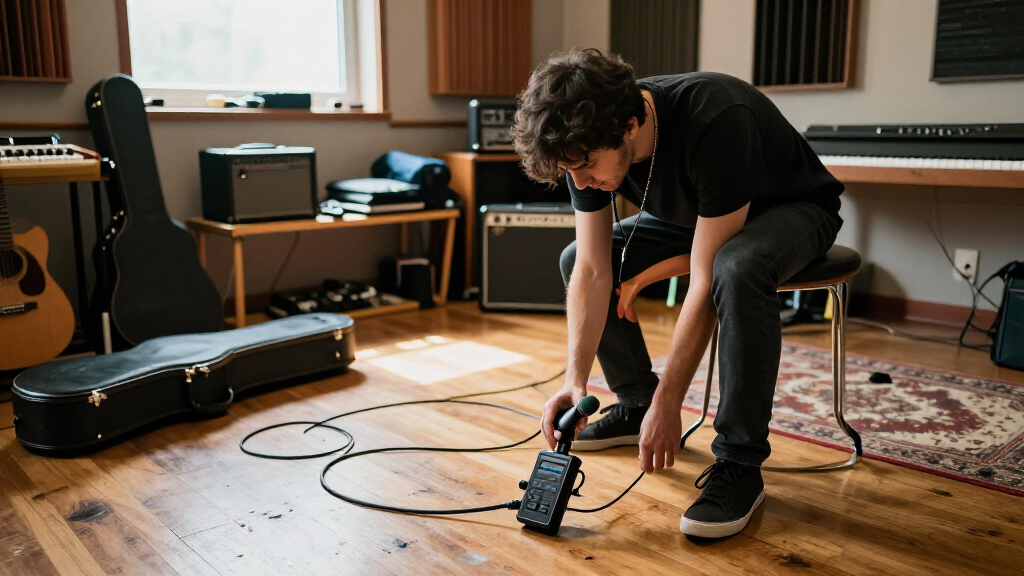
I ranked these portable audio recorders by how well their stated features match real recording jobs: lectures, meetings, interviews, music, video production, and quick voice notes. I gave weight to recording flexibility, included or supported microphones and accessories, storage and file access, controls, portability, and the usefulness of features such as voice activation or noise reduction. A high storage figure did not automatically earn a higher place; a recorder also needs to fit the way a buyer captures, reviews, and moves audio.
The ranking favors models with clearer use cases and broader practical flexibility, while keeping simpler voice recorders in contention for buyers who do not need production features. The Zoom H4 Essential leads for its wider creative scope, with the H1 options offering more compact routes into recording. Voice-focused models are better matches for notes and meetings, but their feature claims and storage capacities do not by themselves establish microphone performance or recording quality. I treat the AI transcription and noise-reduction labels as features to weigh against a buyer’s needs, not as substitutes for dependable capture and convenient file handling.
Factors to Consider When Choosing Portable Audio Recorders
Before choosing, start with the recording situation rather than the largest feature list. A recorder for lectures has different demands from one used for music, video, or interviews, and the right tradeoffs often involve microphones, workflow, and how much control you want.
Match the Recorder to the Sound Source
For a speaker across a room, a recorder’s built-in microphones need to be positioned close enough to capture clear speech; no storage feature can compensate for poor placement. Interviews may call for a lavalier or a way to connect an external microphone, while music recording can benefit from greater input flexibility. Buyers often focus on the recorder itself and forget that mic placement and room acoustics strongly shape the result. If the speaker cannot sit near the device, check whether your intended mic setup is supported before buying. A compact voice recorder is convenient for notes, but it may not offer the connections or control needed for a planned production.
Treat Storage as a Workflow Choice
More memory means fewer interruptions to offload files, but it can also leave you with a larger pile of recordings to organize. Think about whether you record short reminders, full days of meetings, or long sessions, then compare capacity with your file-transfer habits. Confirm how recordings can be moved to a computer or other device and whether the recorder uses built-in memory, a removable card, or both. A common mistake is choosing by the biggest capacity claim without checking how easy files are to find and copy. If you routinely archive audio, a reliable transfer routine may matter more than extra storage.
Decide How Much Control You Need
Voice activation can save space and reduce long stretches of silence, which suits some lectures and meetings. It may also miss quiet beginnings or pauses if the activation threshold does not match the room and speaker. Noise reduction can help in some settings, but buyers should not assume it will remove every distraction or improve every voice. For controlled interviews or music, manual start and stop controls may be preferable to relying on automatic behavior. Choose automation when it supports your workflow, and check whether you can turn it off or adjust it when recording conditions change.
Check Connections and Accessories Before the Session
A recorder may be portable but still require a separate microphone, wind protection, memory card, or power source for the job you have in mind. Bundles can reduce setup gaps, as the H1essential bundle’s listed accessories suggest, while a recorder-only package may leave you sourcing compatible parts. For video work, musicians, or podcasts, check the exact input and channel needs rather than assuming every handheld model supports the same setup. Also consider whether cables and accessories add bulk that you will actually carry. A slightly less compact kit can be the better choice when the needed components are ready together.
Balance Portability With Usability
Small recorders are easy to keep in a bag or pocket, but compact controls and displays can be less comfortable during a fast-moving session. Consider whether you need to start recording by touch, check levels at a glance, or review clips without connecting another device. A basic model may be easier for occasional notes, whereas a recorder with more options can take longer to learn. If you will use it infrequently, a simple control layout may be more valuable than advanced features you rarely touch. For regular production work, prioritize clear controls and dependable setup over the smallest possible body.
Pay More for Capabilities You Will Use
Higher-end recording tools make sense when their added inputs, channels, or workflow options solve a recurring problem. They are less compelling when your only task is saving short reminders or recording a nearby speaker. AI transcription can shorten note-taking, but check whether its software workflow, language support, and access requirements fit how you work. Likewise, a listed long recording capacity matters only if the recorder can run through the sessions you plan and handle the resulting files conveniently. Choose a more capable model for specific, repeatable needs, not simply because its feature list is longer.
Frequently Asked Questions
Should I choose a dedicated voice recorder or a Zoom handheld recorder?
I’d choose a dedicated voice recorder for straightforward notes, lectures, or meetings when simple controls and basic playback are the priority. The Zoom handheld options are aimed more at users who need creative recording flexibility, such as capturing music, interviews, or content for video. Check the inputs and microphone setup against your actual session rather than judging by product category alone. If you only need speech, extra production controls may add complexity without helping your routine. If you expect to expand into external microphones or more involved recording, a handheld recorder may leave more room to grow.
Is 128GB or more of storage necessary for a portable recorder?
Not for everyone: the right amount depends on recording length, file settings, and how often you transfer recordings. Short voice notes and occasional meetings usually place less pressure on storage than long sessions or frequent field work. Check whether the device’s capacity is built in or removable, and learn how files are copied and organized. A large number on the product listing does not tell you how convenient that process will be. I’d prioritize enough space for your routine plus a simple backup habit over maximum capacity by itself.
Can voice activation be trusted for lectures and meetings?
It can reduce stretches of silence, but it should not be treated as a guarantee that every quiet word will be captured. A soft-spoken speaker, distant microphone placement, or pauses between phrases can make automatic recording less predictable. For an important meeting, try the feature in a similar room and check the recording before relying on it. If missing a word would be a problem, continuous recording is often the safer approach when battery and storage allow. Voice activation is most useful when you can accept some setup and verification.
What should I look for if I need to record interviews outdoors?
Start with microphone placement and wind protection, since outdoor noise can overwhelm speech even when the recorder has noise-reduction features. A lavalier can keep a speaker’s voice close to the microphone, while a windscreen may help reduce wind hitting the mic. Check that the recorder supports the microphone you plan to use and that the needed accessories are included or compatible. If there are multiple speakers, think through where each person will sit and how you will capture both voices. A test recording in the actual environment can reveal problems that a feature label cannot.
Does an AI transcription recorder replace a regular audio recorder?
No: transcription is a separate convenience from capturing a clear, complete recording. An AI note-taker can help turn audio into searchable text, but you should check its transfer process, supported languages, and whether its software fits your privacy and work requirements. Keep the original audio when accuracy matters, since names, technical terms, and overlapping speech can be transcribed incorrectly. A conventional recorder may be a better fit if you mainly want dependable audio files without an added software workflow. Choose AI features when the text output saves time in a task you perform often.
Conclusion
For the broadest creative use, I recommend the Zoom H4 Essential as best overall; it is the strongest fit here for buyers who need more than basic voice capture. The Zoom H1 Essential is my best value direction for a compact creative recorder, while the H1essential bundle makes more sense for buyers who want listed accessories in the package. For beginners recording lectures or reminders, choose among the simpler 8GB, 16GB, or 64GB voice recorder options based on storage and playback needs rather than feature-count claims. The Zoom H1 XLR is the premium pick for buyers whose filming, music, or podcast setup calls for its specialized format; the EVISTR AI model suits people who value transcription and summaries. For long sessions and frequent file retention, compare the high-capacity voice recorders, but confirm file transfer and recording controls before deciding.
Halloween Picks
halloween
As an affiliate, we earn on qualifying purchases.