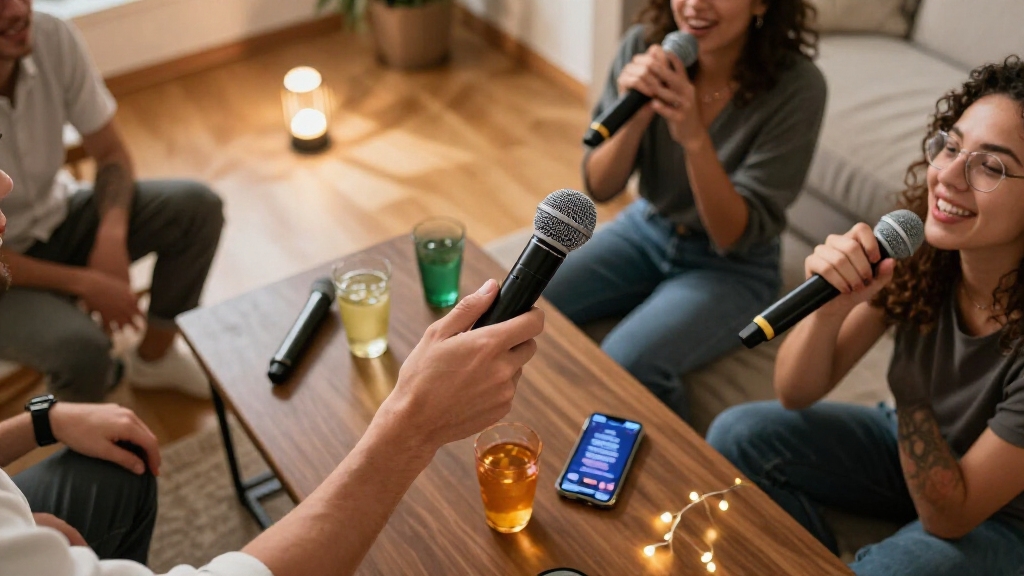

For most home karaoke setups, I’d start with the Pyle four-microphone UHF system: its four handheld mics suit group singing, while Bluetooth adds a convenient way to play backing tracks. The JBL PartyBox Wireless Microphones are a simpler match for compatible PartyBox owners, and the Shure BLX288/PG58 is the more performance-focused choice for buyers who want a dedicated vocal system. The main tradeoff is between portable, all-in-one convenience and receiver-based systems that support more singers or a more formal setup. Compatibility, how many people sing at once, and the need for batteries or charging can matter more than extra features. Read on for the full breakdown of all 15 wireless microphones for karaoke and how I’d match them to different rooms and singers.

Get audio and creator gear delivered free with Prime
- Fast, free delivery on millions of items
- Prime Video, Amazon Music and more included
- Member-only deals all year
Complete the kit


Key Takeaways
- Group size separates many of the strongest picks: Pyle and Phenyx Pro offer four handheld microphones, while most of the lineup is built around one or two singers.
- Bluetooth does not mean every setup is self-contained: a microphone may pair with a speaker or play music from a device, but buyers still need to check how vocals and backing tracks reach the same sound system.
- Speaker compatibility can outweigh microphone features: JBL’s PartyBox microphones make the most sense for PartyBox owners, while receiver-based models suit buyers connecting to a broader karaoke or PA setup.
- Rechargeable convenience comes with a charging routine: ALPOWL and GOLDEN MARS appeal to buyers avoiding disposable batteries, while battery-powered systems may be easier to keep ready with spares.
- The Shure BLX288/PG58 occupies a different lane: it is a dedicated dual-channel vocal system, not the simplest casual karaoke choice, so its appeal is strongest for buyers who value a more performance-oriented setup.
| Pyle UHF Wireless Microphone System with Four Handheld Microphones and Bluetooth |  | Best for Group Karaoke | Microphones included: 4 handheld dynamic microphones | Wireless band: UHF | Selectable channels: 50 | VIEW LATEST PRICE | See Our Full Breakdown |
| JBL PartyBox Wireless Microphones, 2-Pack |  | Best for JBL PartyBox Owners | Microphones: 2 handheld microphones | Compatibility: JBL PartyBox speakers | Wireless connection: 2.4 GHz via digital wireless dongle | VIEW LATEST PRICE | See Our Full Breakdown |
| Wireless Dual Handheld Microphone System |  | Best for Long-Room Range | Microphone type: 2 handheld dynamic microphones | Operating range: Up to 200 feet, line of sight | Polar pattern: Unidirectional | VIEW LATEST PRICE | See Our Full Breakdown |
| BONAOK Q37 Wireless Bluetooth Karaoke Microphone, Rose Gold |  | Best All-in-One for Beginners | Model: Q37 | Connectivity: Bluetooth and cable | Bluetooth range: 10 m | VIEW LATEST PRICE | See Our Full Breakdown |
| Talomen K60-2 Dual Handheld Wireless Microphone System |  | Best Rechargeable Receiver Set | Wireless connection: 2.4 GHz | Wireless range: Up to 160 ft (50 m) | Microphones: 2 dynamic, unidirectional handheld microphones | VIEW LATEST PRICE | See Our Full Breakdown |
| ALPOWL Rechargeable Wireless Microphone Set |  | Best for Rechargeable Duets | Microphones: 2 handheld | Connectivity: Infrared and UHF | Receiver connector: 6.35 mm jack | VIEW LATEST PRICE | See Our Full Breakdown |
| TONOR TW360 UHF Wireless Microphone System | 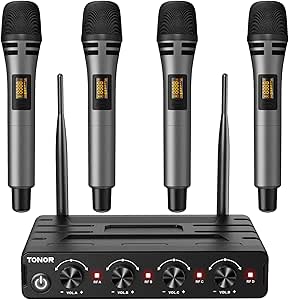 | Best for Background-Noise Control | Model: TW360 | Connectivity: UHF wireless | Receiver connection: 6.35 mm cable | VIEW LATEST PRICE | See Our Full Breakdown |
| HUACAM Wireless Karaoke Microphone Set with Receiver, Gray |  | Best for Simple 3.5 mm or 6.35 mm Setups | Model: CC-W68 | Microphones: 2 handheld | Wireless frequency: 2.4 GHz | VIEW LATEST PRICE | See Our Full Breakdown |
| JBL Wireless Two-Microphone System with Dual-Channel Receiver |  | Best for JBL PartyBox Owners | Microphones: 2 wireless microphones | Receiver: Rechargeable dual-channel receiver | Playback time: Up to 6 hours | VIEW LATEST PRICE | See Our Full Breakdown |
| WONATU G26-S Dual Wireless Karaoke Microphones |  | Best for Long Sessions and Flexible Connections | Model: G26-S | Microphones: 2 handheld | Connectivity: 2.4 GHz wireless | VIEW LATEST PRICE | See Our Full Breakdown |
| FIFINE K036 UHF Dual-Channel Wireless Handheld Microphone System |  | Best for Flexible Home Karaoke | Wireless technology: UHF | Channels: 2 | Frequency range: 520–578 MHz | VIEW LATEST PRICE | See Our Full Breakdown |
| Phenyx Pro PTU-5000-4H 4-Channel UHF Wireless Microphone System |  | Best for Large Karaoke Groups | Channels: 4 | Wireless technology: UHF | Fixed frequencies: 541.9, 546.3, 561.6, and 568.65 MHz | VIEW LATEST PRICE | See Our Full Breakdown |
| GOLDEN MARS Rechargeable Wireless Microphone Set, 2 Microphones |  | Best Rechargeable Two-Mic Set | Wireless technology: 2.4 GHz | Channels: 2 | Microphones included: 2 | VIEW LATEST PRICE | See Our Full Breakdown |
| Aveek 4-Pack Wireless Microphone System |  | Best for Long Group Sessions | Channels: 4 | Microphones: 4 handheld dynamic | Wireless range: Up to 262 feet | VIEW LATEST PRICE | See Our Full Breakdown |
| Shure BLX288/PG58 Dual-Channel Wireless Vocal System, J11 Band |  | Best Premium Two-Singer System | Frequency band: J11, 596–620 MHz | Channels: 2 | Transmission range: Up to 300 feet line-of-sight | VIEW LATEST PRICE | See Our Full Breakdown |
| wireless microphones for karaoke | Channels | Microphones | Wireless range |
|---|---|---|---|
| Pyle UHF Wireless Microphone S | — | — | — |
| JBL PartyBox Wireless Micropho | — | 2 handheld microphones | Up to 30 meters |
| Wireless Dual Handheld Microph | — | — | — |
| BONAOK Q37 Wireless Bluetooth | — | — | — |
| Talomen K60-2 Dual Handheld Wi | — | 2 dynamic, unidirectional handheld microphones | Up to 160 ft (50 m) |
| ALPOWL Rechargeable Wireless M | 2 | 2 handheld | Up to 200 ft (60 m) |
| TONOR TW360 UHF Wireless Micro | 40 selectable (4 × 10) | — | Up to 200 ft (60 m) |
| HUACAM Wireless Karaoke Microp | 1 | 2 handheld | — |
| JBL Wireless Two-Microphone Sy | — | 2 wireless microphones | — |
| WONATU G26-S Dual Wireless Kar | 99 selectable | 2 handheld | Up to 260 ft |
| FIFINE K036 UHF Dual-Channel W | 2 | — | — |
| Phenyx Pro PTU-5000-4H 4-Chann | 4 | 4 handheld dynamic cardioid | Up to 260 feet |
| GOLDEN MARS Rechargeable Wirel | 2 | — | Up to 300 feet claimed |
| Aveek 4-Pack Wireless Micropho | 4 | 4 handheld dynamic | Up to 262 feet |
| Shure BLX288/PG58 Dual-Channel | 2 | — | — |
More Details on Our Top Picks
Pyle UHF Wireless Microphone System with Four Handheld Microphones and Bluetooth
For karaoke nights where four people want to take turns or sing together, the Pyle UHF system is the most group-ready pick here: it includes four handheld microphones, while the JBL PartyBox Wireless Microphones set is limited to two and is designed for compatible JBL speakers. Pyle’s independent channel volume controls let a host balance singers separately, and Bluetooth 4.2 can bring music from a nearby device into the setup. The receiver also offers AUX and microphone connections, giving it more ways to fit into existing home audio gear than a standalone Bluetooth karaoke mic. The tradeoffs are practical: each microphone needs two AA batteries that are not included, and Bluetooth audio is specified for a shorter range than the microphones. Choose it for a receiver-based group setup, not a minimal, all-in-one karaoke rig.
Pros:- Four handheld microphones support larger groups than the two-mic JBL set.
- Independent microphone volume controls help balance singers.
- Bluetooth streaming plus AUX and microphone connections suit varied home audio setups.
- Fifty selectable UHF channels offer channel choices for the wireless microphones.
Cons:- Four microphones require eight AA batteries, which are not included.
- Bluetooth audio range is specified at up to 32 feet, shorter than the microphone range.
- The system depends on a separate receiver and compatible audio equipment.
Best for: Families or party hosts who want four singers on a receiver-based setup and have a compatible speaker or audio system.
Not ideal for: Buyers who want a single portable karaoke microphone or need Bluetooth music to travel as far as the wireless microphones.
- Microphones included:4 handheld dynamic microphones
- Wireless band:UHF
- Selectable channels:50
- Wireless operating range:Up to 165 ft
- Bluetooth:Version 4.2; range up to 32 ft
- Connections:3.5 mm AUX input/output; 6.3 mm microphone input and mixed output
- Microphone power:2 AA batteries per microphone; not included
- Receiver power:12V power adapter
Our verdict“Choose Pyle if four-mic group coverage and flexible receiver connections matter more than a compact all-in-one setup.”
JBL PartyBox Wireless Microphones, 2-Pack
If a JBL PartyBox is already the center of your karaoke setup, these two JBL wireless microphones offer a more tailored pairing than the receiver-based Pyle system. The cardioid pickup, shock mount and built-in pop filter are aimed at keeping handling noise and breath pops from distracting from vocals, while the dongle-based 2.4 GHz connection has a stated range of up to 30 meters. Battery life is listed at up to 20 hours, though it drops to 12 hours when using the wireless dongle. That’s still a useful buffer for extended parties, and the microphones can be used while charging through a PartyBox. The main limitation is compatibility: this set is built around JBL PartyBox speakers, not a general-purpose receiver for any home karaoke system. Unlike the BONAOK Q37, it also has no built-in speaker for standalone singing.
Pros:- Designed to work with JBL PartyBox speakers.
- Two microphones make duet performances possible.
- Cardioid pickup, shock mount and pop filter help manage handling noise and vocal pops.
- Rechargeable microphones can be used while charging through a PartyBox.
Cons:- The 2.4 GHz wireless connection requires the included dongle.
- Listed battery life falls to up to 12 hours when using the dongle.
- PartyBox-focused compatibility makes it less flexible than the Pyle receiver system.
Best for: JBL PartyBox owners who want a matched two-microphone setup for duets and party karaoke.
Not ideal for: Buyers using non-JBL speakers, karaoke machines or amplifiers that need a general-purpose microphone receiver.
- Microphones:2 handheld microphones
- Compatibility:JBL PartyBox speakers
- Wireless connection:2.4 GHz via digital wireless dongle
- Wireless range:Up to 30 meters
- Battery life:Up to 20 hours; up to 12 hours with dongle
- Pickup pattern:Cardioid (unidirectional)
- Noise reduction:Shock mount and built-in pop filter
- Frequency range:50–15,000 Hz
Our verdict“Pick this set for a JBL PartyBox karaoke rig, but look elsewhere if you need compatibility with a broader range of audio equipment.”
Wireless Dual Handheld Microphone System
The standout reason to choose this dual handheld system is its stated line-of-sight range of up to 200 feet, the longest specified microphone range among these five picks. That can suit karaoke in a larger room or across an open area, provided the receiver has a compatible microphone input. It includes two dynamic microphones and a receiver with a 6.35 mm plug, plus a 3.5 mm adapter, so it’s a more conventional speaker-or-amplifier setup than the BONAOK Q37, which connects directly to phones and other devices. The cost of that simpler receiver approach is limited device support: this system does not work with phones, computers or tablets, and AUX or line inputs are not supported. Its range is also stated for line of sight, so walls and obstacles may affect placement. This is a fit-first choice for compatible audio gear, not device flexibility.
Pros:- Stated line-of-sight range reaches up to 200 feet.
- Two handheld dynamic microphones support duet singing.
- Receiver includes a 6.35 mm plug and 3.5 mm adapter for compatible microphone inputs.
- Metal enclosures and included anti-slip rings add practical grip and protection.
Cons:- Not compatible with phones, computers or tablets.
- Does not support AUX or line inputs; compatible microphone jacks are required.
- The stated range is line of sight, and the receiver version is shipped at random.
Best for: Karaoke hosts with a compatible speaker, amplifier or karaoke machine who need two microphones across a spacious line-of-sight area.
Not ideal for: Singers who want to connect directly to a phone, computer or tablet, or whose equipment has only AUX or line inputs.
- Microphone type:2 handheld dynamic microphones
- Operating range:Up to 200 feet, line of sight
- Polar pattern:Unidirectional
- Compatible inputs:6.35 mm or 3.5 mm microphone jack
- Impedance:600 ohm
- Signal-to-noise ratio:70 dB
- Distortion:Less than 0.2%
- Included items:2 microphones, receiver with 6.35 mm plug, 3.5 mm adapter, 2 anti-slip rings, 2 microphone covers
Our verdict“Choose this system for long-range duets with compatible microphone-input equipment, not for phone-led karaoke.”
BONAOK Q37 Wireless Bluetooth Karaoke Microphone, Rose Gold
The BONAOK Q37 is the simplest route into casual karaoke: the handheld unit combines a microphone, speaker, MP3 player and recorder, so a beginner can sing without assembling a separate receiver-and-speaker system. Bluetooth and cable connections let it work with smartphones, PCs and tablets, while the separate microphone, echo and music controls make quick vocal adjustments easier than on a basic two-mic receiver set such as the Talomen K60-2. It can also play tracks from a microSD card, though the card is not included. This convenience comes with a different performance ceiling: it is a single handheld karaoke device, not a two-singer wireless system with a separate receiver. Battery life details are not provided, which makes it harder to plan for longer sessions. Pick it for personal or casual singing, not full-room group karaoke.
Pros:- Combines a microphone, speaker, MP3 player and recorder in one handheld unit.
- Bluetooth and cable connections support smartphones, PCs and tablets.
- Separate microphone, echo and music controls make basic vocal balancing straightforward.
- Supports music playback from a microSD card up to 32 GB.
Cons:- Only one handheld microphone is included, unlike the Talomen dual-mic set.
- The microSD card is not included.
- Battery life details are not provided.
Best for: Beginners, teens or casual singers who want a self-contained karaoke microphone that connects to a phone, PC or tablet.
Not ideal for: Duets, larger parties or buyers who need a separate receiver and multiple microphones for a home sound system.
- Model:Q37
- Connectivity:Bluetooth and cable
- Bluetooth range:10 m
- MicroSD support:Up to 32 GB; card not included
- Microphone type:Handheld, unidirectional
- Audio sensitivity:80 dB
- Dimensions:4.25 × 3.86 × 11.02 in
- Included accessories:Audio cable, charging cable, user manual
Our verdict“Choose the Q37 for easy solo karaoke with a phone or built-in playback, but not for duets or a larger receiver-based setup.”
Talomen K60-2 Dual Handheld Wireless Microphone System
The Talomen K60-2 suits karaoke hosts who want two handheld microphones without keeping a supply of disposable batteries on hand. Its rechargeable batteries are listed for more than 10 hours per full charge, and the receiver connects automatically, making setup less involved than choosing channels and balancing a larger system such as the Pyle four-microphone set. A 3.5 mm adapter is included alongside the receiver’s 6.35 mm plug, and the stated wireless range reaches up to 160 feet. The main catch is the input requirement: Talomen works with microphone inputs, not AUX or line inputs, and it is not compatible with phones, computers or tablets. That makes it a better match for a speaker or karaoke machine with the correct jack than a phone-centered setup. It offers practical duet coverage, but not the Pyle’s four-singer capacity.
Pros:- Two handheld microphones support duets.
- Rechargeable batteries provide more than 10 hours per full charge.
- Automatic connection and plug-and-play setup simplify use.
- Includes a 3.5 mm adapter for compatible microphone inputs.
Cons:- Does not support AUX or line inputs.
- Not compatible with mobile phones, computers or tablets.
- Has two microphones, while the Pyle system can accommodate four singers.
Best for: Duet-focused karaoke hosts with a speaker or karaoke machine that has a 3.5 mm or 6.35 mm microphone input.
Not ideal for: Phone, computer or tablet users, and anyone whose speaker offers only AUX or line inputs.
- Wireless connection:2.4 GHz
- Wireless range:Up to 160 ft (50 m)
- Microphones:2 dynamic, unidirectional handheld microphones
- Battery life:More than 10 hours per full charge
- Charging time:2–3 hours
- Included batteries:3 rechargeable 1200 mAh lithium batteries
- Receiver connection:6.35 mm plug; 3.5 mm adapter included
- Compatibility:Devices with 3.5 mm or 6.35 mm microphone inputs
Our verdict“Pick Talomen for rechargeable duet karaoke with compatible microphone inputs; skip it if your setup depends on AUX or a mobile device.”
ALPOWL Rechargeable Wireless Microphone Set
The ALPOWL suits karaoke pairs who want two mics without keeping spare AA batteries on hand. Its rechargeable receiver and microphones use USB-C, and the stated battery life of up to 10 hours should cover a typical home session. Setup is described as plug-and-play, though initial pairing may take one to three minutes, so it is not quite as immediate as the TONOR TW360’s automatic pairing. The ALPOWL’s up-to-200-foot range also gives singers room to move, while DSP noise reduction may help tame unwanted sound. Its receiver connects through a 6.35 mm microphone jack, which is less flexible than the WONATU G26-S receiver’s 3.5 mm and 6.35 mm options. Skip it if your setup relies on a TV audio jack or you want especially clear battery instructions.
Pros:- Two microphones and a rechargeable receiver support singing together without separate disposable batteries.
- USB-C charging and stated battery life of up to 10 hours suit longer home karaoke sessions.
- Stated wireless range of up to 200 ft allows singers to move around a room or nearby performance space.
- Plug-and-play setup and DSP noise reduction are useful for casual karaoke without extra software.
Cons:- The receiver needs a compatible 6.35 mm microphone input and does not work with TV audio jacks.
- Initial pairing may take one to three minutes rather than connecting immediately.
- Product instructions reportedly refer to both rechargeable and replaceable batteries, which may confuse setup.
Best for: Duets at home who want rechargeable microphones and a receiver for a compatible mixer, karaoke machine, speaker, or amplifier.
Not ideal for: Singers whose equipment only offers a TV audio jack, or buyers who prefer replaceable batteries and straightforward battery documentation.
- Microphones:2 handheld
- Connectivity:Infrared and UHF
- Receiver connector:6.35 mm jack
- Wireless range:Up to 200 ft (60 m)
- Battery life:Up to 10 hours
- Charging:USB-C; 3–4 hours stated charging time
- Channels:2
- Pickup pattern:Omnidirectional
Our verdict“Choose the ALPOWL for rechargeable duet singing with compatible 6.35 mm equipment, but pick the WONATU G26-S if you need a 3.5 mm receiver connection.”
TONOR TW360 UHF Wireless Microphone System
The TONOR TW360 earns its place for karaoke rooms where nearby conversation or music can compete with the singer. Its cardioid pickup pattern focuses on sound from the front, unlike the ALPOWL’s omnidirectional pattern, which is less selective about surrounding sound. Automatic receiver pairing also makes setup simpler, and 40 selectable channels offer room to adjust if a frequency is crowded. The tradeoff is that each microphone needs two AA batteries, which are not included; ALPOWL is the better match if recharging matters more than pickup direction. This system reaches a stated 200 ft and connects through a 6.35 mm cable, so it fits compatible karaoke machines, mixers, amplifiers, and powered speakers—but not gear without a microphone input. It is a focused, practical choice rather than a rechargeable one.
Pros:- Cardioid, unidirectional pickup helps limit sound arriving from behind or beside the singer.
- Forty selectable channels provide frequency options for adjusting the system.
- Automatic receiver pairing reduces setup steps.
- Stated 200 ft range supports movement around a home or performance space.
Cons:- Each microphone requires two AA batteries, and the batteries are not included.
- The receiver connects by 6.35 mm cable, limiting use with devices that lack a compatible microphone input.
Best for: Karaoke hosts using compatible 6.35 mm equipment in rooms where singers need more rejection of surrounding noise.
Not ideal for: Buyers who want rechargeable microphones, need a 3.5 mm connection, or do not want to source AA batteries separately.
- Model:TW360
- Connectivity:UHF wireless
- Receiver connection:6.35 mm cable
- Wireless range:Up to 200 ft (60 m)
- Channels:40 selectable (4 × 10)
- Pickup pattern:Cardioid, unidirectional
- Microphone power:2 AA batteries per microphone; not included
- Warranty:2 years
Our verdict“Pick the TONOR TW360 when directional pickup and selectable channels matter more than rechargeable power or flexible receiver connections.”
HUACAM Wireless Karaoke Microphone Set with Receiver, Gray
HUACAM’s clearest advantage is its choice of 3.5 mm and 6.35 mm connections, giving it a broader fit with compatible speakers and mixers than the 6.35 mm-only ALPOWL and TONOR systems. The kit includes two handheld microphones and a receiver, with LED indicators that make connection status easier to check during setup. Its metal casing and grille offer a more substantial build than the JBL system’s listed plastic material, though the JBL has a rechargeable dual-channel receiver and a defined list of compatible PartyBox speakers. HUACAM’s main limitation is its single-channel system, a point to clarify before relying on both microphones for separate or simultaneous vocal channels. It also requires three AA batteries. This is a straightforward option for compatible equipment, but its supplied information gives fewer performance details than the other picks.
Pros:- Receiver offers both 3.5 mm and 6.35 mm connections for compatible speakers, amplifiers, and mixers.
- Includes two handheld microphones and a receiver for duet-style karaoke.
- LED status indicators help users check the connection.
- Metal casing and grille provide a sturdier stated construction than a plastic-bodied alternative.
Cons:- The product data lists a single channel, which may not suit buyers seeking clearly specified dual-channel operation.
- Requires three AA batteries.
- No wireless range or battery-life figure is provided in the supplied product details.
Best for: Home karaoke users who need a two-microphone kit with either a 3.5 mm or 6.35 mm connection to compatible audio equipment.
Not ideal for: Buyers who need independently specified dual-channel operation, rechargeable power, or detailed range and battery-life figures.
- Model:CC-W68
- Microphones:2 handheld
- Wireless frequency:2.4 GHz
- Receiver connections:3.5 mm and 6.35 mm jacks
- Channels:1
- Batteries:3 AA batteries, included
- Features:Noise reduction and LED status indicators
- Construction:Metal casing and grille
Our verdict“Choose HUACAM for its dual-size receiver connections and metal construction, but choose the JBL system if you own a listed PartyBox and want a rechargeable receiver.”
JBL Wireless Two-Microphone System with Dual-Channel Receiver
For a buyer who already owns a compatible JBL PartyBox, this system has a specific advantage: its dual-channel receiver mixes two voices through the speaker, and setup is described as plug-and-play. That makes it a more tailored pairing than the broader equipment compatibility claimed for the ALPOWL or WONATU sets. The tradeoff is firm: JBL lists compatibility with particular PartyBox models, so I would not choose it for an unspecified speaker or mixer. Playback lasts up to six hours, and the receiver is rechargeable, but the microphones themselves use replaceable AA batteries. Compared with the rechargeable microphones in the ALPOWL set, this means keeping spare cells available. Its unidirectional pickup is suited to vocal use, while the short stated playback time makes it less appealing for extended events.
Pros:- Dual-channel receiver mixes two microphone signals through a compatible JBL PartyBox.
- Plug-and-play setup avoids a more involved pairing process.
- Rechargeable receiver provides up to 6 hours of playback.
- Unidirectional pickup is specified for vocal use.
Cons:- Compatibility is limited to the listed JBL PartyBox models.
- Microphones use replaceable AA batteries rather than rechargeable batteries.
- Up to 6 hours of playback may be restrictive for longer karaoke events.
Best for: Owners of one of the listed JBL PartyBox models who want two microphones and a receiver designed to work with that speaker.
Not ideal for: Karaoke buyers using non-listed speakers, mixers, or karaoke machines, and anyone who wants rechargeable microphone batteries or longer stated playback.
- Microphones:2 wireless microphones
- Receiver:Rechargeable dual-channel receiver
- Playback time:Up to 6 hours
- Microphone batteries:Replaceable AA batteries
- Pickup pattern:Unidirectional
- Frequency range:65–15,000 Hz
- Compatible speakers:Listed JBL PartyBox models, including Encore, 100/110, 200, 300, 310/310 MC, 710, Ultimate, 1000, and On-The-Go models
- Weight:1.2 lb
Our verdict“Buy this system for a listed JBL PartyBox; for a broader mix of compatible audio gear, the ALPOWL or WONATU sets are better fits.”
WONATU G26-S Dual Wireless Karaoke Microphones
The WONATU G26-S is the most feature-forward option here for karaoke sessions that run long or move between different audio setups. Its stated over-40-hour battery life is far beyond the ALPOWL’s up-to-10-hour figure, while the receiver’s 3.5 mm and 6.35 mm connections offer more hookup flexibility than the ALPOWL or TONOR. It also claims up to 260 ft of range and 99 selectable channels, paired with DSP noise and feedback reduction. Those headline specs make it appealing for parties, but they come with a documentation caveat: the stated warranty is inconsistent, listed as both 12 months and one month. The metal body is another practical distinction from the JBL system’s plastic material. Choose it for connection options and long runtime, not if you need unambiguous warranty terms.
Pros:- Stated battery life of over 40 hours per charge suits extended karaoke use.
- Receiver supports both 3.5 mm and 6.35 mm connections.
- Up to 260 ft stated range and 99 selectable channels offer flexibility for larger spaces and frequency selection.
- DSP noise and feedback reduction, unidirectional pickup, and a metal body are specified.
Cons:- Compatibility still depends on having a suitable 3.5 mm or 6.35 mm input.
- Warranty information conflicts: the description states 12 months while item details list one month.
- The long battery-life and range figures are stated specifications, with no further qualification in the supplied details.
Best for: Karaoke hosts planning long sessions who need two microphones, extended stated battery life, and both 3.5 mm and 6.35 mm receiver connections.
Not ideal for: Buyers who need confirmed warranty coverage or whose audio equipment lacks a compatible 3.5 mm or 6.35 mm input.
- Model:G26-S
- Microphones:2 handheld
- Connectivity:2.4 GHz wireless
- Receiver connections:6.35 mm and 3.5 mm
- Wireless range:Up to 260 ft
- Channels:99 selectable
- Battery life:Over 40 hours per charge
- Charging port:USB Type-C
- Pickup pattern and body:Unidirectional; metal body
Our verdict“Choose the WONATU for long stated runtime and flexible receiver connections, but favor a system with clearer warranty terms if support coverage is a priority.”
FIFINE K036 UHF Dual-Channel Wireless Handheld Microphone System
The FIFINE K036 suits home karaoke setups that need two singers now and a path to add another compatible microphone later. Separate mic volume controls make it easier to balance voices, while adjustable echo adds a familiar karaoke effect without requiring a separate processor. Its receiver offers 6.35 mm, 3.5 mm, and RCA connections, giving it broader connection options than the GOLDEN MARS Rechargeable Wireless Microphone Set, which is limited to microphone jacks. The tradeoff is that the K036 uses AA batteries and has no Bluetooth, so it needs a compatible speaker or amplifier and a wired connection. Its stated 80-foot range is also more modest than the much longer claims for several other systems here. I’d choose it for a straightforward, adjustable home setup, not a cable-free connection to a phone or TV.
Pros:- Includes two handheld microphones and supports one additional compatible 1/4-inch wireless microphone.
- Separate microphone volume controls help balance two singers.
- Adjustable echo adds karaoke-style vocal effect.
- Includes audio cables for 6.35 mm, 3.5 mm, and RCA connections.
Cons:- Does not support Bluetooth and requires a compatible wired audio connection.
- Microphones require four AA batteries, which are not included.
- The stated 80-foot operating range is shorter than the range claims for several alternatives.
Best for: Households with a compatible speaker or amplifier that want two microphones, separate level controls, and a possible third mic.
Not ideal for: Buyers who want Bluetooth pairing, rechargeable microphones, or a system that connects directly to a phone without compatible audio inputs.
- Wireless technology:UHF
- Channels:2
- Frequency range:520–578 MHz
- Operating range:Up to 80 feet
- Microphones included:2 handheld
- Connections:6.35 mm, 3.5 mm, and RCA
- Microphone controls:Separate volume controls; adjustable echo
- Power:4 AA batteries required
Our verdict“Choose the K036 for a two-singer home setup with flexible wired connections and adjustable echo, but skip it if Bluetooth or rechargeable mics are priorities.”
Phenyx Pro PTU-5000-4H 4-Channel UHF Wireless Microphone System
For a karaoke night where four people need their own microphones, the Phenyx Pro PTU-5000-4H is the clearest fit in this group. Its four handhelds and individual receiver volume controls give a host more control over a crowded mix than the two-mic FIFINE K036 or Shure BLX288/PG58. The metal receiver has four XLR outputs, a useful arrangement when connecting channels separately to a mixer; the system also offers a 6.35 mm connection. Its stated range of up to 260 feet suits larger rooms or event spaces, though that reach does not remove the need for a compatible speaker or amplifier. Unlike the rechargeable Aveek 4-Pack, this model relies on AA batteries, but it includes eight. Fixed UHF frequencies also mean less flexibility if the selected setup conflicts with local conditions.
Pros:- Four handheld microphones support group singing without sharing a mic.
- Individual receiver volume controls help manage different vocal levels.
- Four XLR outputs allow separate channel connections to a mixer.
- Includes eight AA batteries and has a stated range of up to 260 feet.
Cons:- Requires an amplifier or speaker for sound output.
- Fixed frequencies limit flexibility when changing frequency setups.
- AA-powered microphones require battery replacement or spare batteries.
Best for: Hosts running group karaoke, school events, or parties who need four simultaneous handheld microphones and a mixer-friendly receiver.
Not ideal for: Small home setups that only need one or two mics, or buyers seeking rechargeable microphones and adjustable frequency selection.
- Channels:4
- Wireless technology:UHF
- Fixed frequencies:541.9, 546.3, 561.6, and 568.65 MHz
- Wireless range:Up to 260 feet
- Microphones:4 handheld dynamic cardioid
- Receiver outputs:4 XLR outputs; 6.35 mm jack
- Signal-to-noise ratio:105 dB
- Power:8 AA batteries included; up to 8 hours
Our verdict“Pick the Phenyx Pro for four-person karaoke and separate mixer outputs, but choose a rechargeable system if avoiding disposable batteries matters more.”
GOLDEN MARS Rechargeable Wireless Microphone Set, 2 Microphones
The GOLDEN MARS set is a practical choice for singers who want to avoid keeping AA batteries on hand. Both microphones and the receiver recharge by USB-C, with over 10 hours of stated use per charge, so it can cover a long karaoke session between charges. Its claimed range of up to 300 feet is far beyond the FIFINE K036’s 80-foot specification, although buyers should match expectations to their room and setup. Noise reduction and anti-feedback processing target common problems in lively rooms, while the hyper-cardioid pattern focuses pickup more tightly than a broad, all-around capture. The main limitation is connection fit: it uses 3.5 mm or 6.35 mm microphone jacks, not AUX interfaces, and it does not offer the receiver’s multiple connection types found on the FIFINE. I’d favor it for rechargeable simplicity, not universal compatibility.
Pros:- Microphones and receiver recharge through USB-C.
- Rated for over 10 hours of use per charge.
- Noise reduction and anti-feedback features address common karaoke-room audio issues.
- Supports 3.5 mm and 6.35 mm microphone-jack connections.
Cons:- Does not support AUX interfaces, limiting compatibility with some audio equipment.
- Requires an audio device with a supported microphone input.
- Its claimed range does not compensate for an unsuitable connection or room setup.
Best for: Karaoke hosts with a speaker or amplifier that has a 3.5 mm or 6.35 mm microphone input and who want rechargeable two-mic convenience.
Not ideal for: Buyers who need AUX connectivity, RCA connections, Bluetooth, or direct compatibility with laptops, tablets, and phones.
- Wireless technology:2.4 GHz
- Channels:2
- Microphones included:2
- Wireless range:Up to 300 feet claimed
- Battery life:Over 10 hours
- Charging:USB-C; 2–3 hours
- Connections:3.5 mm and 6.35 mm microphone jacks
- Polar pattern:Hyper cardioid
- Material:Anodized aluminum
Our verdict“Choose GOLDEN MARS for rechargeable two-mic karaoke with compatible microphone inputs, but look elsewhere if your equipment relies on AUX or RCA.”
Aveek 4-Pack Wireless Microphone System
The Aveek 4-Pack combines four handheld microphones with a stated battery life of up to 40 hours per mic, making it a strong option for recurring group karaoke sessions where charging between every event is inconvenient. Compared with the Phenyx Pro PTU-5000-4H, it also offers four microphones but swaps that system’s four XLR outputs for a receiver with a 1/4-inch output and USB-C charging. Its claimed range of up to 262 feet is suitable for larger spaces, though compatibility is a bigger buying filter: the supplied information rules out laptops, tablets, and cellphones. The receiver also randomly assigns a channel when paired, which can frustrate users who want predictable channel setup. I’d put it ahead of the Phenyx for battery convenience, but behind it for flexible separate outputs and frequency control.
Pros:- Four handheld microphones support group performances.
- Advertises up to 40 hours of battery life per microphone.
- USB-C charging reduces reliance on disposable batteries.
- Includes a receiver, power adapter, 1/4-inch audio cable, and USB-C charging cables.
Cons:- Not compatible with laptops, tablets, or cellphones.
- Receiver randomly assigns a channel when paired.
- The receiver’s 1/4-inch output may be less useful than separate XLR outputs for some mixer setups.
Best for: Karaoke hosts with a compatible PA system, mixer, speaker, or karaoke machine who need four mics for long events.
Not ideal for: Buyers planning to connect directly to a laptop, tablet, or cellphone, or those who need manual control over channel assignment.
- Channels:4
- Microphones:4 handheld dynamic
- Wireless range:Up to 262 feet
- Battery life:Up to 40 hours per microphone
- Charging:USB-C
- Receiver output:1/4-inch
- Wireless technology:UHF
- Polar pattern:Unidirectional
- Signal-to-noise ratio:85 dB
Our verdict“Choose Aveek for long group sessions on compatible PA or karaoke equipment, but skip it if you need phone or computer compatibility or fixed channel assignments.”
Shure BLX288/PG58 Dual-Channel Wireless Vocal System, J11 Band
The Shure BLX288/PG58 is the premium two-singer choice for buyers who value quick frequency setup and a more expandable wireless system over rechargeable convenience. Its QuickScan frequency selection is designed to find an available frequency, and the system can support up to 12 compatible systems per band—a more event-ready approach than the fixed-frequency Phenyx Pro PTU-5000-4H. Two PG58 cardioid dynamic microphones keep the setup focused on vocals, while XLR and 1/4-inch outputs give the receiver useful options for karaoke speakers or mixers. The stated line-of-sight range reaches 300 feet, but walls and other obstacles can reduce practical reach. Each transmitter runs on two AA batteries for up to 14 hours. Compared with rechargeable GOLDEN MARS, Shure trades USB-C charging for battery swaps, and its J11 band may not be permitted in every region.
Pros:- QuickScan frequency selection supports faster setup than fixed-frequency systems.
- Two PG58 cardioid dynamic microphones are included.
- XLR and 1/4-inch receiver outputs suit a range of compatible audio setups.
- Supports up to 12 compatible systems per frequency band.
Cons:- The J11 band may not be authorized in every region.
- The 300-foot range is specified for line-of-sight conditions.
- Transmitters use two AA batteries each rather than rechargeable USB-C batteries.
Best for: Karaoke hosts, performers, and event operators who want two handheld vocal mics, frequency scanning, and a system that can scale to compatible units.
Not ideal for: Buyers who need rechargeable transmitters, a compact setup, or a frequency band confirmed for use in every region.
- Frequency band:J11, 596–620 MHz
- Channels:2
- Transmission range:Up to 300 feet line-of-sight
- Microphone capsule:PG58 dynamic, cardioid pickup pattern
- Transmitter battery life:Up to 14 hours
- Batteries:Two AA per transmitter; four included
- Receiver outputs:XLR and 1/4-inch
- System expansion:Up to 12 compatible systems per frequency band
- Weight:5.1 pounds
Our verdict“Choose the Shure for a two-mic karaoke rig with frequency scanning and expansion potential, but confirm J11 legality and accept AA-powered transmitters.”
How We Picked
I compared these 15 options around the decisions karaoke buyers actually face: how many singers can perform at once, how the microphones connect to music and speakers, and whether setup is approachable for a home user. I also weighed portability, power source, system type, and the likely demands of repeated parties. A built-in Bluetooth feature can simplify some setups, but it does not automatically replace a receiver or guarantee compatibility with every speaker.
The ranking favors useful karaoke fit over feature count. Flexible systems that suit common group sizes and home setups rank ahead of more specialized choices; simple, compatible options earn a place for buyers whose equipment already matches them. Four-mic kits suit larger groups but may be more than a casual singer needs, while dedicated vocal systems can be a better fit for frequent use than a compact all-in-one mic. I treat unknown or model-dependent details cautiously, so buyers should check the included receiver, connection type, and speaker compatibility before choosing.
Factors to Consider When Choosing Wireless Microphones For Karaoke
Before picking a model, I’d map the microphone to the room and the rest of the karaoke setup. Compatibility and singer count shape the decision more than a long feature list, and power and placement affect whether the system stays convenient after the first song.
Match the Microphone System to Your Speaker
Start by checking how the microphone’s audio reaches your speaker: through a receiver, a compatible PartyBox connection, or another specified input. Bluetooth on a product may refer to music playback rather than sending microphone audio to any Bluetooth speaker, so don’t assume the mic and backing track will work together wirelessly. Look up the speaker’s available inputs and the microphone system’s receiver outputs before buying. A receiver-based kit may suit a home karaoke mixer or PA, but can add cables and setup steps. A speaker-specific kit can be more convenient if you already own the matching equipment. If you are buying the whole setup, choose the speaker and microphones as a pair rather than treating compatibility as an afterthought.
Choose for the Number of Active Singers
Count the people likely to sing at the same time, not everyone who might take a turn during the evening. A dual-mic system covers duets and most family gatherings without adding extra handhelds to store, while a four-mic package is better suited to group numbers or hosted events. More microphones can also mean more coordination: each one needs power, a clear place to rest, and a compatible channel in the system. Don’t assume a pack of four automatically means four independent channels; check the system description and receiver configuration. For occasional solo singing, extra mics may add clutter rather than value. For a recurring group, having enough microphones ready can keep the song queue moving.
Decide Between a Receiver Kit and a Portable Mic
A receiver-based system is usually the more natural fit when karaoke audio runs through a mixer, PA, or speaker with microphone inputs. A portable Bluetooth karaoke mic can reduce the amount of gear for casual use, but may offer less flexibility when connecting to a larger sound system. Consider where the receiver will sit and whether you have a suitable input and cable; a wireless microphone still needs a route for its audio to reach the speaker. Check the product’s instructions for its intended connection, rather than inferring it from the word “wireless.” Buyers who move between rooms may value a compact setup, while a fixed party space can accommodate a receiver and extra connections. The right format is the one that fits your existing audio path.
Treat Power as Part of the Setup
Rechargeable microphones reduce the need to keep disposable batteries on hand, but they need to be charged before a gathering and stored with a reliable charging routine. Battery-powered models can be easier to revive quickly if you keep fresh spares nearby, though you will need to track battery condition and replacements. Check whether the receiver has its own power requirements as well; a rechargeable handheld does not make the full system cable-free. For long events, consider how you will handle a low battery without interrupting a song. For occasional use, simple battery storage may be easier than maintaining several charged devices. Choose the power plan that matches how often you host and how much preparation you want to do.
Plan for Room Size and Microphone Placement
Wireless performance depends on more than a range claim: walls, other electronics, receiver placement, and the distance between singer and receiver can all affect reliability. Keep the receiver in a clear, elevated spot where practical, and avoid hiding it behind equipment or inside a closed cabinet. In a busy room, microphone handling and speaker placement also matter; pointing a mic toward a speaker can encourage feedback, even with a capable system. If singers will move around, test the setup across the room before guests arrive. A large advertised range is less useful if the receiver sits behind obstructions. For a compact living room, easy placement and stable use may matter more than maximum reach.
Pay for the Features Your Karaoke Actually Uses
Extra channels and more microphones earn their keep when a group uses them regularly, not simply because a larger kit appears more capable. A dedicated vocal system can make sense for frequent hosting or for buyers who already have suitable audio gear, while a simpler compatible pair may be better for occasional family karaoke. Before paying for a feature, ask whether it solves a specific problem: avoiding battery changes, adding singers, or connecting to your current speaker. Also check what is included, since a receiver, cables, and charging accessories affect how much additional setup you need. Avoid choosing by microphone count alone if your sound system cannot accept the kit. Spend toward the bottleneck in your setup, not toward unused extras.
Frequently Asked Questions
Can I connect any wireless karaoke microphone to a Bluetooth speaker?
No. Some microphone products use Bluetooth for music playback or work with a specific speaker family, while receiver-based systems usually send vocal audio through a receiver output that must connect to a compatible speaker input. A speaker that accepts Bluetooth music does not necessarily accept microphone audio over Bluetooth. Check the microphone’s connection instructions and the speaker’s inputs before purchasing. If you want vocals and backing tracks through one speaker, confirm the full signal path for both.
Should I choose two microphones or a four-microphone system?
Choose two if most songs are solos or duets and you want a smaller, simpler kit. Four microphones make more sense when several people sing together or when the system will host group games and parties. Check that the receiver supports the number of microphones you intend to use at once; a package count alone may not tell you how its channels work. Also account for storage, power, and setup for every extra handheld. If only one or two mics are usually active, a four-pack may not improve the experience.
Is a rechargeable microphone set better than one that uses replaceable batteries?
Neither power style is automatically better; it depends on how you prepare for karaoke. Rechargeable models avoid regular disposable-battery changes, but you need to charge them ahead of time and remember to do so after use. Replaceable batteries can be convenient when you keep spares available, especially if a long session outlasts the current set. Check the power needs of the receiver too, since the handheld microphone is only part of the system. For frequent hosting, choose the routine you can reliably maintain.
Will a UHF wireless microphone system work with my home karaoke machine?
It can work if the receiver’s audio output matches an input on your karaoke machine or connected speaker, but UHF alone does not guarantee compatibility. Check the receiver’s output connections and the machine’s available microphone or audio inputs. Some systems may require a cable or mixer between the receiver and speaker. Confirm whether the karaoke machine can combine microphone audio with backing tracks from your chosen source. If the connection details are unclear, select a system whose documented outputs match your equipment.
Is a performance-oriented system worth it for casual home karaoke?
It may be, but casual use does not always benefit from a more involved vocal setup. A dedicated system such as the Shure BLX288/PG58 can appeal to buyers who already have compatible audio equipment and expect frequent use, while a simpler speaker-matched pair may be easier for occasional singing. Compare the connection requirements and setup effort, not just the microphone name or format. If you mainly want quick songs at home, convenience and compatibility may matter more than a performance-oriented system. Pay for the more involved option when its capabilities fit how you plan to use it.
Conclusion
For a flexible home gathering, I’d make the Pyle four-microphone UHF system my best overall pick because its four handhelds suit group karaoke and Bluetooth adds a useful music option. My best value choice is the WONATU G26-S dual system for buyers who want a two-microphone format without stepping up to a dedicated performance rig; check its connection requirements against your speaker. Beginners who already own a compatible PartyBox can start with the JBL PartyBox Wireless Microphones, whose appeal is the straightforward match to that speaker family. For a best premium, performance-oriented choice, I’d look at the Shure BLX288/PG58 if you have compatible audio equipment and expect regular use. For larger groups that need four microphones, compare Pyle with the Phenyx Pro PTU-5000-4H; for a compact, portable karaoke setup, consider the BONAOK Q37. Before ordering, verify the system’s inputs, included receiver, and power plan against your actual setup.