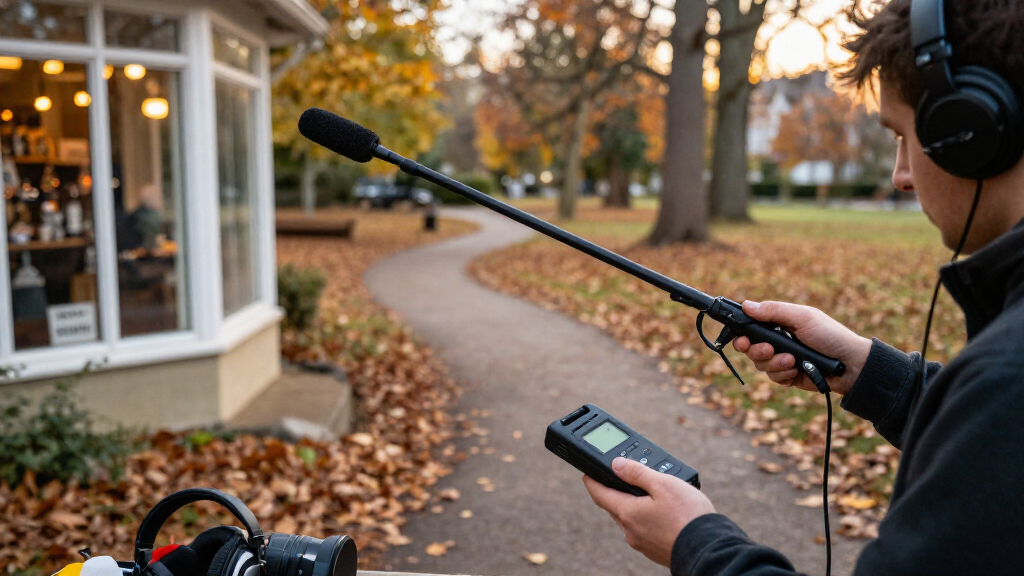
For Black Friday field recording microphones, my best overall pick is the Zoom M3 MicTrak, since its built-in recording makes it less dependent on a camera setup. The TASCAM DR-10L Pro stands out for discreet lavalier recording, while the Shure MV88 USB-C is a compact choice for phone-first capture. The main tradeoff is between microphones that plug into a camera or phone, systems that record independently, and wireless kits that prioritize movement. The right choice depends on where you record, how much setup you want, and whether you need stereo, dialogue, or a separate backup recording. Read on for the full breakdown of all nine options and how I rank them.

Get audio and creator gear delivered free with Prime
- Fast, free delivery on millions of items
- Prime Video, Amazon Music and more included
- Member-only deals all year
Complete the kit


Key Takeaways
- Independent recording changes the ranking: The Zoom M3 MicTrak and TASCAM DR-10L Pro can record without relying on a camera or phone’s audio input, which is useful when connections or camera settings could become a weak link.
- Shotgun microphones serve different camera workflows: The RØDE VideoMic Pro+ offers a familiar on-camera approach, while Sony’s ECM-B1M and ECM-M1 are digital camera-oriented options that make the most sense within compatible Sony setups.
- Mobile convenience comes in two forms: The Shure MV88 USB-C connects directly to a phone, while the MV88+ Video Kit is a broader mobile video setup; buyers should choose based on whether they need a compact mic or a kit.
- Wireless freedom is not the same as directional pickup: The DJI Mic Mini suits moving speakers and interviews, but a wireless lavalier kit is a different tool from a shotgun microphone aimed at sound in front of a camera.
- There is no single best microphone for every field recording: Stereo ambience, focused dialogue, hidden lavalier capture, and camera-mounted convenience call for different designs, so matching the mic to the sound source matters more than choosing the most feature-rich model.
| RØDE VideoMic Pro+ On-Camera Shotgun Microphone |  | Best Overall On-Camera Shotgun | Microphone type: Shotgun condenser | Polar pattern: Unidirectional | Connectivity: 3.5 mm jack; Micro USB power | VIEW LATEST PRICE | See Our Full Breakdown |
| Audio-Technica AT8035 Line + Gradient Condenser Microphone |  | Best for Boom and Outdoor Recording | Microphone type: Line-gradient condenser | Polar pattern: Line-gradient | Connectivity: Wired | VIEW LATEST PRICE | See Our Full Breakdown |
| TASCAM DR-10L Pro 32-Bit Float Field Recorder with Lavalier Microphone |  | Best for Dialogue and Unpredictable Levels | Recording format: WAV | Recording bit depth: 32-bit float | Included microphone: TM-10L lavalier | VIEW LATEST PRICE | See Our Full Breakdown |
| Shure MV88 USB-C Microphone for Mobile Recording, Black |  | Best Compact USB-C Microphone | Connectivity: USB-C | Polar patterns: Stereo, mono cardioid, mono bidirectional, raw mid-side | Features: Auto level mode; real-time noise reduction | VIEW LATEST PRICE | See Our Full Breakdown |
| DJI Mic Mini Wireless Microphone Kit with 2 Transmitters, Receiver, and Charging Case | 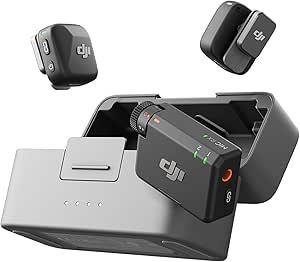 | Best Wireless Kit for Two-Person Recording | Included: 2 transmitters, 1 receiver, charging case, and accessories | Transmitter weight: 10 g | Maximum transmission range: 400 m | VIEW LATEST PRICE | See Our Full Breakdown |
| Zoom M3 MicTrak On-Camera Shotgun Recorder |  | Best Overall for Self-Contained Field Recording | Microphone type: Condenser shotgun microphone | Recording format: 32-bit float | Pickup modes: Mono, 90° stereo, 120° stereo | VIEW LATEST PRICE | See Our Full Breakdown |
| Sony ECM-B1M Digital Shotgun Microphone |  | Best for Sony MI Shoe Camera Rigs | Microphone type: Shotgun | Microphone capsules: 8 | Directivity patterns: 3 | VIEW LATEST PRICE | See Our Full Breakdown |
| Shure MV88+ Video Kit Stereo Condenser Microphone |  | Best for Phone-Based Field Kits | Microphone type: Stereo condenser | Connectivity: USB | Polar pattern: Multipattern | VIEW LATEST PRICE | See Our Full Breakdown |
| Sony ECM-M1 Digital Shotgun Microphone, Black |  | Best Compact Sony Camera Mic | Microphone type: Shotgun | Connectivity: Multi Interface Shoe | Recording modes: 8 | VIEW LATEST PRICE | See Our Full Breakdown |
| Black Friday field recording microphone | Connectivity | Weight | Microphone type | Signal-to-noise ratio |
|---|---|---|---|---|
| RØDE VideoMic Pro+ On-Camera S | 3.5 mm jack; Micro USB power | 4.32 oz | Shotgun condenser | 74 dB |
| Audio-Technica AT8035 Line + G | Wired | 5.92 ounces | Line-gradient condenser | 77 dB |
| TASCAM DR-10L Pro 32-Bit Float | — | 65 g | — | — |
| Shure MV88 USB-C Microphone fo | USB-C | 43.54 g | — | — |
| DJI Mic Mini Wireless Micropho | Bluetooth, DJI OsmoAudio, USB Type-C | — | — | — |
| Zoom M3 MicTrak On-Camera Shot | USB-C, 3.5 mm output | 318 g | Condenser shotgun microphone | — |
| Sony ECM-B1M Digital Shotgun M | — | 2.88 ounces | Shotgun | 70 |
| Shure MV88+ Video Kit Stereo C | USB | — | Stereo condenser | 76 dB |
| Sony ECM-M1 Digital Shotgun Mi | Multi Interface Shoe | 2.3 oz | Shotgun | 78 dB |
More Details on Our Top Picks
RØDE VideoMic Pro+ On-Camera Shotgun Microphone
For location work where a camera-mounted mic needs to stay ready between takes, I’d put the VideoMic Pro+ ahead of the Audio-Technica AT8035. Its automatic power control can switch it off when it is unplugged from the camera, while its rechargeable battery, AA backup, and Micro USB power give me more options when a shoot runs long. The Rycote Lyre suspension helps limit handling noise, and onboard digital switches let me shape the signal before it reaches the camera. That convenience comes with a connection tradeoff: the mic uses an unbalanced 3.5 mm output, not a more robust balanced connection, and it needs a camera or compatible recorder. I’d choose the longer AT8035 for boom-focused work, but this RØDE is the more adaptable camera-top pick.
Pros:- Rycote Lyre suspension helps reduce handling noise.
- Automatic power control can turn the mic off when it is unplugged from the camera.
- Runs on the included rechargeable LB-1 battery, two AA batteries, or Micro USB power.
- Digital switches provide source-side audio shaping.
Cons:- Unbalanced 3.5 mm output is less suited to longer cable runs than a balanced connection.
- Cannot record independently and requires a camera or compatible recording device.
Best for: Video shooters who want a camera-mounted directional mic with flexible power options and onboard audio controls.
Not ideal for: Recordists who need balanced outputs, a standalone field recorder, or a long boom mic; this requires a compatible device and uses unbalanced 3.5 mm output.
- Microphone type:Shotgun condenser
- Polar pattern:Unidirectional
- Connectivity:3.5 mm jack; Micro USB power
- Frequency range:40 Hz–20 kHz
- Signal-to-noise ratio:74 dB
- Power options:Rechargeable LB-1 battery, 2 AA batteries, or Micro USB
- Weight:4.32 oz
- Enclosure material:Metal
Our verdict“Choose the VideoMic Pro+ for a versatile camera-mounted setup; pick the AT8035 instead if boom reach matters more than compact handling.”
Audio-Technica AT8035 Line + Gradient Condenser Microphone
The AT8035 is the lineup’s most boom-oriented choice: its 14.53-inch line-gradient body suits video and broadcast work where the mic can sit above or beside the frame. Compared with the camera-mounted RØDE VideoMic Pro+, it gives up compactness and easy camera-top handling in favor of a longer form built for specialized acquisition. The included windscreen, stand clamp, battery, and carrying case make it a more complete starting kit for field setups, though its wired design and two-AA power requirement call for more preparation than the TASCAM DR-10L Pro’s self-contained lavalier approach. This is not the pick for discreet, close-miked interviews or a small travel rig. I’d favor it when directional boom placement is the priority and the extra length is manageable.
Pros:- Long line-gradient design suits boom placement for video and broadcast work.
- Includes a windscreen, stand clamp, battery, and carrying case.
- Metal enclosure.
- 20 Hz–20 kHz frequency response covers a broad stated range.
Cons:- The 14.53-inch body is awkward for compact camera rigs and packing.
- Requires two AA batteries and a wired connection, adding setup steps.
Best for: Boom operators and outdoor video crews who need a long wired line-gradient microphone with basic field accessories included.
Not ideal for: Travel shooters and people recording discreet interviews who need a compact mic or a self-contained lavalier recorder.
- Microphone type:Line-gradient condenser
- Polar pattern:Line-gradient
- Connectivity:Wired
- Frequency response:20 Hz–20 kHz
- Impedance:200 ohms
- Signal-to-noise ratio:77 dB
- Power source:2 AA batteries
- Length:14.53 inches
- Weight:5.92 ounces
Our verdict“Pick the AT8035 for boom-based outdoor and broadcast recording, but choose the RØDE VideoMic Pro+ for a more compact camera-mounted setup.”
TASCAM DR-10L Pro 32-Bit Float Field Recorder with Lavalier Microphone
When the recording needs to stay with a person rather than point toward a distant sound, I’d choose the DR-10L Pro over the RØDE VideoMic Pro+. Its included TM-10L lavalier and 32-bit float mono WAV recording make it a practical option for dialogue where levels may rise or fall unexpectedly. That approach is different from the directional camera-top and boom mics in this roundup: the recorder captures a close-worn voice, not a wide field of ambient sound. It also supports LTC jam sync and app control of up to five recorders, which can help crews manage multiple performers. The tradeoff is extra post-production and coordination compared with a direct camera mic, while Atomos wireless timecode requires the separately sold AK-BT1 adapter. I’d skip it for stereo ambience capture.
Pros:- 32-bit float recording accommodates a wide range of input levels.
- Includes a TM-10L lavalier microphone for close-miked dialogue.
- Supports LTC jam sync for production workflows.
- App can control up to five recorders.
Cons:- Atomos wireless timecode requires the separately sold AK-BT1 adapter.
- Mono lavalier recording is less suitable than the Shure MV88 for stereo environmental sound.
- Managing a separate recorder adds a device and workflow step compared with a camera-connected microphone.
Best for: Documentary crews, event videographers, and interview recordists who need a discreet lavalier and protection against changing speech levels.
Not ideal for: Field recordists focused on stereo ambience or distant directional sounds, since this is a mono lavalier recorder rather than a shotgun mic.
- Recording format:WAV
- Recording bit depth:32-bit float
- Included microphone:TM-10L lavalier
- Microphone mode:Mono
- Maximum storage capacity:512 GB
- Hardware interface:Bluetooth
- Headphone jack:3.5 mm
- Weight:65 g
Our verdict“Choose the DR-10L Pro for close-miked speech and variable levels, not for capturing a broad stereo soundscape.”
Shure MV88 USB-C Microphone for Mobile Recording, Black
The Shure MV88 USB-C is the easiest fit here for phone- and tablet-based field notes, quick interviews, and mobile sound capture: it plugs directly into a USB-C device instead of adding the receiver-and-transmitter setup of the DJI Mic Mini. Its four selectable polar patterns cover more than a simple phone mic, including stereo and raw mid-side options for shaping environmental recordings. Auto level and real-time noise reduction can help when recording conditions change, while Shure MOTIV apps provide further control. This compact route is less suited to a subject speaking from across a scene than the RØDE VideoMic Pro+ or AT8035, which use directional shotgun designs. I’d also check device compatibility before a shoot: some iPhones may need a firmware update, and some sound settings depend on the apps.
Pros:- Direct USB-C connection works with compatible phones, tablets, and computers.
- Four polar-pattern options include stereo and raw mid-side.
- Auto level mode adjusts gain in real time.
- Real-time noise reduction is available for mobile recording.
Cons:- Some iPhone use may require a firmware update for uninterrupted operation.
- Sound customization and some features rely on Shure MOTIV apps.
- Direct attachment is less flexible than the DJI Mic Mini for recording a moving subject at a distance.
Best for: Mobile journalists, travelers, and field recordists who want a directly connected USB-C mic with stereo and mono recording choices.
Not ideal for: Shooters who need wireless subject microphones, long-range pickup, or a setup that avoids app-dependent controls and device compatibility checks.
- Connectivity:USB-C
- Polar patterns:Stereo, mono cardioid, mono bidirectional, raw mid-side
- Features:Auto level mode; real-time noise reduction
- Compatible devices:Laptop, personal computer, smartphone, tablet
- Channels:1
- Audible noise:30 dB
- Enclosure material:Stainless steel
- Weight:43.54 g
Our verdict“Choose the MV88 for a compact, app-configurable USB-C field mic; choose the DJI Mic Mini when a wireless mic worn by the subject is more useful.”
DJI Mic Mini Wireless Microphone Kit with 2 Transmitters, Receiver, and Charging Case
For interviews where two people move through a scene, the DJI Mic Mini offers a different advantage from every shotgun in this group: its kit includes two lightweight transmitters, a receiver, and a charging case. That makes it more flexible for separate speakers than the RØDE VideoMic Pro+, which captures toward the camera rather than placing a mic on each person. The system adds two noise-cancellation levels and automatic limiting to help manage noisy surroundings and sudden peaks; the case provides up to 48 hours of battery life. Its stated 400 m maximum range is useful for mobile production, but it is not permission to ignore obstacles or local conditions. This kit is not waterproof, and direct connection works only with compatible DJI OsmoAudio devices. It suits dialogue better than natural stereo ambience.
Pros:- Two transmitters support recording two speakers separately within the system.
- Each transmitter weighs 10 g for discreet placement.
- Charging case provides up to 48 hours of battery life.
- Two noise-cancellation levels and automatic limiting help manage changing conditions.
Cons:- The system is not waterproof.
- Direct connection is limited to compatible DJI OsmoAudio devices.
- Using with Osmo Mobile series products requires the first-generation DJI OM Multifunctional Module.
Best for: Mobile video creators and interview teams who need separate wireless microphones for two speakers, with a receiver and charging case in one kit.
Not ideal for: Field recordists seeking a waterproof setup, unprocessed stereo ambience, or direct OsmoAudio connection without compatible DJI equipment.
- Included:2 transmitters, 1 receiver, charging case, and accessories
- Transmitter weight:10 g
- Maximum transmission range:400 m
- Sampling rate:48 kHz
- Maximum sound pressure level:120 dB SPL
- Battery life with charging case:Up to 48 hours
- Connectivity:Bluetooth, DJI OsmoAudio, USB Type-C
- Noise cancellation:2 levels: Basic and Strong
- Audio protection:Automatic limiting to reduce clipping
Our verdict“Choose the DJI Mic Mini for lightweight two-person wireless dialogue, but pick a shotgun or stereo mic for ambient field recordings.”
Zoom M3 MicTrak On-Camera Shotgun Recorder
I’d put the Zoom M3 MicTrak first for field shooters who want an on-camera mic that also records independently. Its 32-bit float recording reduces the need to set gain precisely, while mono and two stereo-width modes let you choose focused dialogue or broader ambience. Unlike the Sony ECM-M1, which depends on a compatible Sony Multi Interface Shoe, the M3 offers a 3.5 mm camera output and USB-C computer connection. It also saves a Mid-Side RAW backup for later stereo-width adjustments, though that flexibility comes from the recorded backup rather than the camera output itself. The built-in shock mount helps limit handling noise, but two AA batteries and a separate SDXC card add kit management. I’d choose it over a simple camera-fed shotgun when recording insurance matters more than the smallest setup.
Pros:- 32-bit float recording reduces the risk of unusable clipped takes when sound levels change unexpectedly.
- Mono, 90° stereo, and 120° stereo modes cover focused dialogue and wider environmental sound.
- Mid-Side RAW backup allows stereo width to be adjusted later.
- USB-C and 3.5 mm output support computer use and camera connection.
Cons:- Battery-powered use requires two AA batteries, and recording also requires an SDXC card.
- Stereo-width adjustments rely on the saved Mid-Side RAW file rather than the 3.5 mm camera output.
Best for: Camera operators recording unpredictable outdoor dialogue or ambience who want a local 32-bit float backup and multiple pickup widths.
Not ideal for: Sony camera owners seeking a tiny, cable-free MI Shoe mic, or anyone who wants stereo-width control directly from the camera output.
- Microphone type:Condenser shotgun microphone
- Recording format:32-bit float
- Pickup modes:Mono, 90° stereo, 120° stereo
- Backup recording:Mid-Side RAW
- Connectivity:USB-C, 3.5 mm output
- Power:Two AA batteries or corded electric
- Battery life:Up to 12 hours
- Storage:SDXC cards up to 1 TB
- Weight:318 g
Our verdict“Choose the M3 if you want an on-camera field mic with its own 32-bit float recording; skip it if a cable-free camera connection matters more.”
Sony ECM-B1M Digital Shotgun Microphone
The Sony ECM-B1M is the most camera-system-specific pick here: its appeal is the compact shotgun form and three selectable directivity patterns, not independent field recording. Sony’s eight capsules and digital signal processing support pattern changes for different shooting situations, while the MI Shoe digital interface is intended to keep a compatible Sony camera rig streamlined. That makes it a different proposition from the Zoom M3 MicTrak, which records to an SDXC card and offers a 32-bit float backup when the camera track is not enough. The tradeoff is compatibility: this model makes the most sense when the camera supports its shoe connection, and the supplied product data is inconsistent, listing both XLR connectivity and an MI Shoe digital interface. I’d verify the connection and power requirements for the exact camera setup before choosing it for a field kit.
Pros:- Three directivity patterns provide options for different camera-based recording situations.
- Eight capsules and digital signal processing support selectable pickup behavior.
- Lightweight 2.88-ounce design suits compact camera rigs.
- Designed for camera use in videography, interviews, and field recording.
Cons:- The product data conflicts on connectivity, listing XLR while also describing a digital MI Shoe interface.
- The supplied information lists a nonstandard battery requirement without clarifying the practical power setup.
- Unlike the Zoom M3 MicTrak, it is not described as recording independent backup files.
Best for: Sony camera operators who want a compact on-camera shotgun with selectable pickup directivity and a compatible MI Shoe workflow.
Not ideal for: Recordists using non-Sony cameras or those who need a clearly specified, standalone recorder with local backup files.
- Microphone type:Shotgun
- Microphone capsules:8
- Directivity patterns:3
- Connectivity listed:XLR; description also refers to a digital interface through Sony’s MI Shoe
- Signal-to-noise ratio:70
- Audible noise:20 dB
- Channels:1
- Weight:2.88 ounces
Our verdict“Pick the ECM-B1M for a compatible Sony MI Shoe camera rig, but confirm the connector and power details before building it into a field kit.”
Shure MV88+ Video Kit Stereo Condenser Microphone
For mobile-first recording, I’d favor the Shure MV88+ Video Kit over the camera-mounted shotgun options here. Included Lightning and USB-C cables connect it to supported phones, tablets, and computers, while the kit’s tripod and phone clamp make a small interview or location-video setup quick to assemble. Its companion apps also offer controls for gain, EQ, compression, stereo width, DSP, and polar patterns—more direct shaping than the Zoom M3 MicTrak offers from its physical pickup modes alone. The distinction is that the MV88+ is a USB stereo condenser kit, not a self-contained SD recorder like the M3. It also requires phantom power, and Android support is limited to select devices. I’d choose it for phone-led production and monitoring, but not for a camera crew needing a standalone recorder or broad device certainty.
Pros:- Included Lightning and USB-C cables connect with a range of compatible mobile and desktop devices.
- 3.5 mm headphone output supports real-time monitoring.
- App controls cover gain, EQ, compression, stereo width, DSP modes, and polar patterns.
- Tripod, phone clamp, and shoe-mount mic clip provide several portable mounting options.
Cons:- Requires phantom power to operate.
- Android compatibility is limited to select devices.
- Unlike the Zoom M3 MicTrak, it is not described as a standalone SD-card recorder.
Best for: Mobile journalists, video creators, and interviewers who record on supported phones or computers and want a bundled tripod, clamp, and headphone monitoring.
Not ideal for: Field crews needing a standalone recorder, users with unsupported Android devices, or anyone unable to provide phantom power.
- Microphone type:Stereo condenser
- Connectivity:USB
- Polar pattern:Multipattern
- Headphone output:3.5 mm
- Compatible devices:iPhone, iPad, select Android devices, Mac, and PC
- Included cables:Lightning and USB-C
- Power source:Phantom power required
- Signal-to-noise ratio:76 dB
- Included accessories:Manfrotto PIXI tripod, phone clamp, shoe-mount mic clip
Our verdict“Choose the MV88+ for a flexible phone-based stereo kit with monitoring; choose a recorder-based option if you need independent local recording.”
Sony ECM-M1 Digital Shotgun Microphone, Black
The Sony ECM-M1 stands out when a field kit needs a small camera-mounted mic with more than one pickup approach. Its eight dial-selectable recording modes, digital noise reduction, low-cut filtering, and backup safety recording give it more on-mic flexibility than the simpler directivity selection described for the Sony ECM-B1M. At just 2.3 ounces, it is also the lightest-feeling choice in this group by listed weight, keeping a compact compatible camera setup from growing around a larger recorder. The limit is the Multi Interface Shoe: this is a Sony-camera-oriented tool, not a broadly connected field microphone. It also has no listed independent storage, so its backup feature should not be mistaken for the Zoom M3 MicTrak’s separate SD-card recording. I’d choose it for run-and-gun Sony video, not as a universal mic for mixed camera systems.
Pros:- Eight selectable recording modes adapt the mic to varied video situations.
- Digital noise reduction and low-cut filtering provide on-mic sound-shaping tools.
- Multi Interface Shoe connection supports cable-free operation on compatible cameras.
- At 2.3 ounces, it is a compact choice for mobile camera work.
Cons:- Designed for cameras with a compatible Multi Interface Shoe.
- Plastic enclosure may be less reassuring for rough handling than a more robust-feeling build.
- Unlike the Zoom M3 MicTrak, it has no listed SD-card recording for an independent backup.
Best for: Sony camera videographers who prioritize a lightweight MI Shoe mic with multiple recording modes, filtering, and backup safety recording.
Not ideal for: Recordists using non-compatible cameras or anyone who needs an independent recorder with local storage and flexible connections.
- Microphone type:Shotgun
- Connectivity:Multi Interface Shoe
- Recording modes:8
- Microphone capsules:4
- Frequency response:40 Hz–20,000 Hz
- Signal-to-noise ratio:78 dB
- Power source:Corded electric
- Weight:2.3 oz
- Included items:Windscreen, MI Shoe cap, bag
Our verdict“Choose the ECM-M1 for compact, mode-rich recording on a compatible Sony camera, but not for a cross-platform or standalone field-recording setup.”
How We Picked
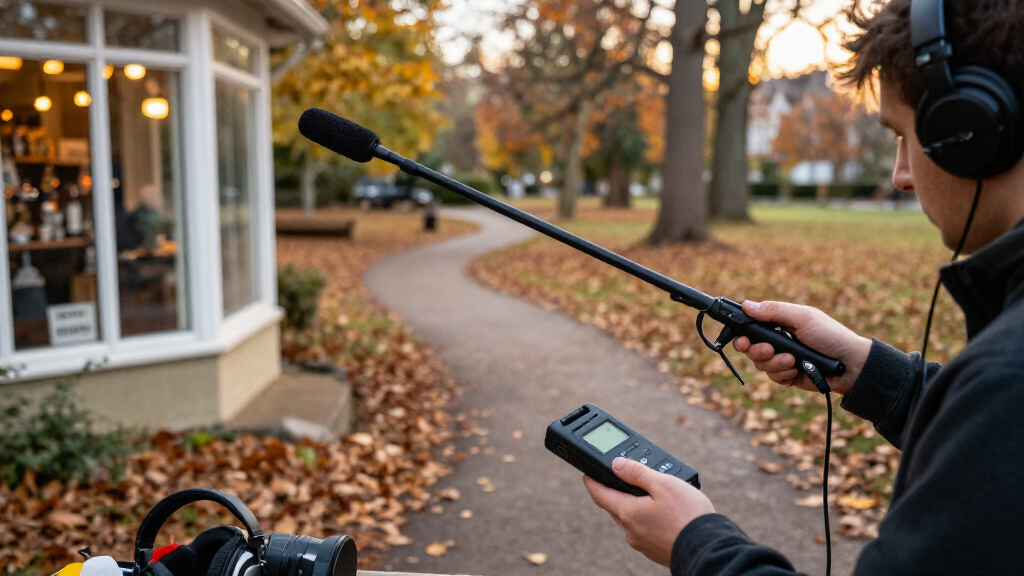
I ranked these microphones by how well they serve distinct field-recording workflows: on-camera directional capture, independent recording, mobile use, stereo video, and wireless dialogue. I weighed setup demands, connection compatibility, recording independence, portability, and how clearly each model’s design solves a buyer problem. I also considered build and day-to-day handling, since a microphone that is awkward to mount or depends on a specific device can be a poor field choice even when its feature set looks strong.
The order reflects versatility for the intended use, not a claim that one microphone sounds best in every situation. The Zoom M3 ranks first for combining camera mounting with onboard recording; the TASCAM is a stronger fit for discreet individual dialogue, and phone-oriented Shure options serve a different audience. Sony’s digital shotguns can make sense for compatible camera owners, but their narrower system fit affects their place in a broad roundup. The DJI kit earns a distinct role for wireless movement, while the RØDE and Audio-Technica options suit buyers who specifically want conventional shotgun designs.
| Black Friday field recording microphone | Microphone type |
|---|---|
| RØDE VideoMic Pro+ On-Camera S | Shotgun condenser |
| Audio-Technica AT8035 Line + G | Line-gradient condenser |
| TASCAM DR-10L Pro 32-Bit Float | — |
| Shure MV88 USB-C Microphone fo | — |
| DJI Mic Mini Wireless Micropho | — |
| Zoom M3 MicTrak On-Camera Shot | Condenser shotgun microphone |
| Sony ECM-B1M Digital Shotgun M | Shotgun |
| Shure MV88+ Video Kit Stereo C | Stereo condenser |
| Sony ECM-M1 Digital Shotgun Mi | Shotgun |
Factors to Consider When Choosing Black Friday Field Recording Microphones
Before choosing a microphone for field work, I would start with the recording chain rather than the feature list. The right mic has to match the sound you want, the device you record to, and the amount of backup you need if something goes wrong. These factors can prevent a purchase that looks capable on paper but adds friction at the location.
Choose the sound source before the microphone shape
A mic aimed at a person speaking to camera has a different job from one capturing a street soundscape or a group around a table. Shotgun designs are generally intended to emphasize sound from the direction they face, while stereo microphones are suited to recording a broader sense of space. A lavalier placed on a speaker can keep dialogue consistent as that person turns or moves, but it will not give the same spatial impression as a stereo field recording. A common mistake is to buy a directional mic for ambience and expect it to reproduce the location’s full character. Decide whether the priority is intelligible speech, environmental detail, or a mix before comparing accessories or recording formats.
Check the entire connection chain
Compatibility means more than finding a plug that fits. Confirm that your camera, phone, or recorder accepts the microphone’s output and supports any digital connection or mounting method it requires. Some camera-focused microphones are most convenient within a matching camera system, while a USB-C mic is aimed at compatible mobile devices. Plan for adapters, mounting space, cable routing, and any power needs before relying on a setup outdoors. Buyers often focus on the microphone itself and discover later that their phone case blocks a connector or their camera lacks the expected input. A simple connection diagram can reveal these problems before purchase.
Decide how much recording independence you need
A microphone that sends audio straight to a camera keeps the workflow simple, but it leaves the camera as the main recording point. A microphone or recorder with onboard capture can provide a separate file, which may help when a cable disconnects or camera audio settings are wrong. Independent recording also adds steps: you need to start the recorder, check its status, manage files, and sync audio later. For a short interview, that extra process may be worthwhile; for a quick, casual clip, it may be unnecessary overhead. Think about the cost of losing a take, not only how convenient the setup feels when everything works.
Match mobility to the way your subject moves
A camera-mounted shotgun is most useful when the subject stays near the camera’s direction, while a wireless lavalier setup can follow a person who walks, turns, or works with their hands. Wireless systems introduce their own planning needs, including transmitter placement, battery readiness, and checking the radio link at the recording location. A wired body recorder avoids a wireless link but requires the speaker to carry and manage a separate device. Small phone microphones reduce bulk, though they still depend on the phone being positioned well relative to the sound. Choose based on how the subject moves during a real take, rather than assuming one compact form will suit every scene.
Plan for handling noise, wind, and mounting
Field recording puts microphones close to clothing, camera controls, moving air, and surfaces that can transmit vibration. A suitable mount and wind protection can matter as much as the microphone’s pickup pattern, especially outside or while walking. Check what is included and what you may need to add; a kit that requires extra support gear can be less portable than its dimensions suggest. Avoid placing a sensitive microphone where a hand, strap, or cable will rub against it during movement. If you record outdoors often, budget space and setup time for protection rather than treating it as an optional afterthought.
Pay for the workflow you will use
More controls and recording modes are useful only when they fit your habits and recording needs. A creator who records dialogue every week may value a separate backup file, while a phone user making occasional clips may favor a direct connection and minimal setup. Consider whether you will use stereo capture, onboard recording, camera integration, or multiple transmitters often enough to justify the added complexity. For seasonal sales, compare the complete kit contents and compatibility rather than judging a deal by the microphone name alone. The best purchase is the one that removes a recurring problem without adding features you will leave unused.
Frequently Asked Questions
Should I choose the Zoom M3 MicTrak or the RØDE VideoMic Pro+ for camera recording?
I would favor the Zoom M3 MicTrak if having a recording on the microphone itself is part of your backup plan or you want more independence from the camera’s audio chain. The RØDE VideoMic Pro+ is a more straightforward fit for buyers who want a conventional on-camera shotgun workflow. Your camera inputs and preferred file-handling process matter here: independent files can add security, but they also require you to manage and sync another recording. If you mainly want audio sent directly into a camera, the simpler route may be preferable. Check the connection and mounting needs of your specific camera before deciding.
Is a wireless kit or a lavalier recorder better for interviews away from a camera?
Choose a wireless kit such as the DJI Mic Mini when the subject needs to move while audio travels to a receiver near the camera or recording device. A recorder-and-lavalier setup such as the TASCAM DR-10L Pro places capture on the speaker, which can reduce reliance on a wireless link but means handling separate recorded files. Wireless is often easier for a camera operator who needs a live feed; an independent recorder can suit a fixed interview where post-session syncing is acceptable. Think about who will monitor the audio and manage equipment during the take. Either route benefits from a short test recording before the interview begins.
Can I use the Shure MV88 USB-C or MV88+ Video Kit for recording outdoor ambience?
Both Shure options are mobile-oriented, but the right choice depends on how you want to capture and frame a scene. The MV88 USB-C is the more direct choice when you want a compact microphone connected to a compatible phone. The MV88+ Video Kit makes more sense if a broader mobile video setup suits your recording routine. For outdoor ambience, also plan for wind protection and a stable phone position; a small microphone does not remove handling or wind problems. If you need a setup independent of a phone, look instead at a recorder-based option in this roundup.
Are Sony’s ECM-B1M and ECM-M1 good choices if I do not own a compatible Sony camera?
These Sony digital shotgun models are most compelling when your camera supports their intended connection and workflow. Without a compatible Sony body, their main system advantage may not apply, and you should confirm how they connect to any alternative device before buying. A conventional camera microphone or a phone-oriented Shure model may fit a mixed-device setup more easily. Compare not only connector type but also whether the camera can provide the required power and handle the signal as expected. If you are buying a camera and microphone together, check the full pairing rather than assuming compatibility from the brand name.
What should I prioritize if this will be my first field recording microphone?
Start with the device you already record on and the sound you capture most often. For simple phone video, a compatible direct-connect microphone can keep the process manageable; for a camera-mounted dialogue setup, a shotgun may make more sense. If you record interviews, decide whether you want the speaker mic’d with a lavalier or prefer a microphone mounted near the camera. A recorder with independent files can protect a session, but it also asks you to manage more steps. I would favor a setup that you can mount, connect, and monitor confidently over one with extra functions you are unlikely to use.
Conclusion
For the broadest combination of camera use and recording independence, I recommend the Zoom M3 MicTrak as best overall. My best value pick for discreet dialogue is the TASCAM DR-10L Pro, while buyers who want a more polished Sony camera pairing should look at the ECM-M1 as the premium choice—provided their camera is compatible. For beginners recording on a phone, the Shure MV88 USB-C is the simplest starting point in this lineup. Choose the DJI Mic Mini for mobile interviews, the MV88+ Video Kit for a more built-out phone video rig, or the RØDE VideoMic Pro+ and Audio-Technica AT8035 if you specifically want a conventional shotgun approach. Sony camera owners can compare the ECM-B1M and ECM-M1 against their body’s supported workflow; whichever you choose, prioritize the sound source and connection fit over a feature list.