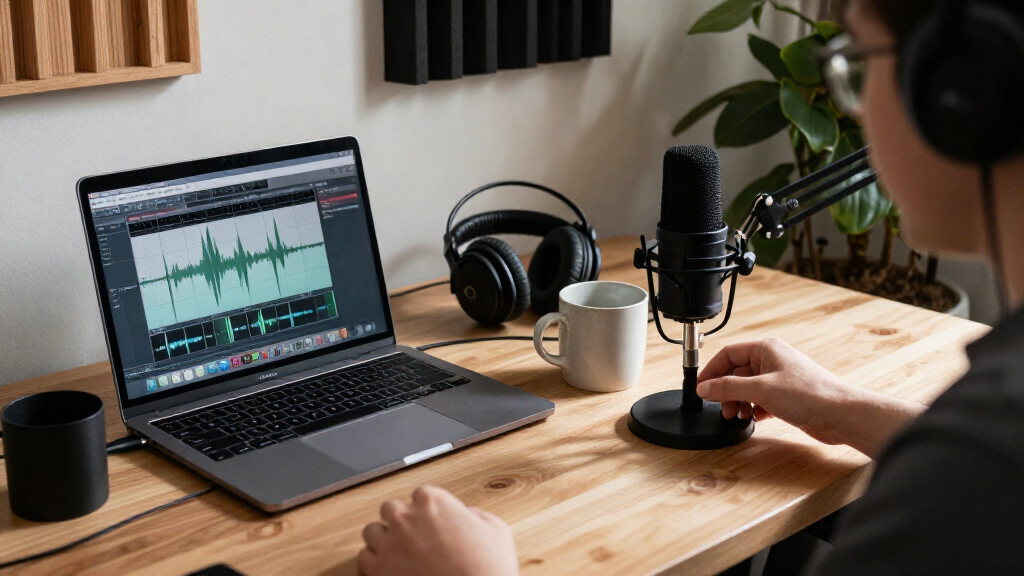
For most podcasters, I’d start with the RØDE PodMic USB: its dynamic design, USB-C connection, and XLR option suit spoken-word recording and leave room to expand later. The Samson Q2U is a practical value pick with both USB and XLR, while the Logitech Blue Yeti stands out for creators who want multiple pickup patterns for interviews or group recordings. The main tradeoff is between dynamic microphones, which can be a better fit for noisy rooms, and condenser models, which can capture a more open sound but may pick up more room noise. I also weighed connection options, included accessories, and how much setup each mic asks of a new podcaster. Read on for the full breakdown of all 15 picks and how to match one to your recording space.

Get audio and creator gear delivered free with Prime
- Fast, free delivery on millions of items
- Prime Video, Amazon Music and more included
- Member-only deals all year
Complete the kit


Key Takeaways
- The RØDE PodMic USB leads for upgrade flexibility: USB-C gets a solo show recording quickly, while XLR supports a later move to an audio interface.
- The Samson Q2U offers a strong entry point: its USB/XLR design makes it easier to try direct recording now without giving up a path to interface-based recording.
- Dynamic models are the more room-conscious group: the PodMic USB, Q2U, and FIFINE K688 are better fits for many untreated spaces than sensitive condenser options.
- The Blue Yeti is the standout for pickup-pattern choice: its multiple patterns support more recording setups, but that flexibility is less useful for a solo host who only needs one mic position.
- Included kits change the setup equation: options such as the FIFINE AM8T and A6T bundle a boom arm, while simpler desktop models may call for separate accessories.
| FIFINE AmpliTank K688 Dynamic Microphone with XLR and USB Outputs |  | Best Overall for a USB-to-XLR Upgrade Path | Microphone type: Dynamic | Connectivity: USB-C, XLR | Polar pattern: Cardioid (unidirectional) | VIEW LATEST PRICE | See Our Full Breakdown |
| FIFINE AmpliGame AM8T USB/XLR Dynamic Gaming Microphone Kit with Boom Arm |  | Best Complete Desk Kit | Microphone type: Dynamic | Connectivity: USB, XLR | Polar pattern: Cardioid (unidirectional) | VIEW LATEST PRICE | See Our Full Breakdown |
| FIFINE AmpliGame AM8 USB/XLR Dynamic Microphone |  | Best Budget-Friendly Desktop Dynamic | Microphone type: Dynamic | Connectivity: USB, XLR | Polar pattern: Cardioid (unidirectional) | VIEW LATEST PRICE | See Our Full Breakdown |
| Logitech Blue Yeti USB Microphone, Midnight Blue |  | Best for Multi-Person and Multi-Pattern Recording | Microphone type: Tri-capsule condenser | Connectivity: USB Type-A | Pickup patterns: Cardioid, omnidirectional, bidirectional, stereo | VIEW LATEST PRICE | See Our Full Breakdown |
| RØDE NT-USB Mini Studio-Quality USB Condenser Microphone |  | Best Compact USB Pick | Model: NT-USB Mini | Connectivity: USB-C | Polar pattern: Unidirectional | VIEW LATEST PRICE | See Our Full Breakdown |
| Samson Q2U USB/XLR Dynamic Microphone Recording and Podcasting Pack | 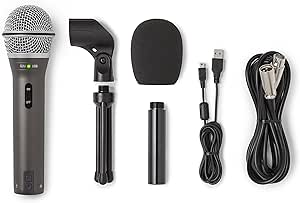 | Best Starter Mic for an Upgrade Path | Connectivity: USB-C and XLR | Microphone type: Dynamic | Polar pattern: Unidirectional | VIEW LATEST PRICE | See Our Full Breakdown |
| Logitech Blue Yeti USB Condenser Microphone with Blue VO!CE, Four Pickup Patterns, and Desktop Stand – Blackout |  | Best for Flexible Recording Setups | Connectivity: USB | Microphone design: Three-capsule array | Pickup patterns: Cardioid, omnidirectional, bidirectional, stereo | VIEW LATEST PRICE | See Our Full Breakdown |
| RØDE NT-USB+ Professional USB Condenser Microphone |  | Best Premium USB Condenser | Connectivity: USB-C | Microphone form factor: Large diaphragm | Polar pattern: Unidirectional | VIEW LATEST PRICE | See Our Full Breakdown |
| RØDE PodMic USB Dynamic Broadcast Microphone with XLR and USB-C |  | Best Broadcast-Style Hybrid | Connectivity: USB-C and XLR | Microphone type: Dynamic | Polar pattern: Unidirectional | VIEW LATEST PRICE | See Our Full Breakdown |
| MAONO A04 USB Condenser Microphone Kit |  | Best Complete Boom-Arm Kit | Connectivity: USB, USB Type-C | Microphone type: Large-diaphragm condenser | Capsule: 16 mm electret condenser | VIEW LATEST PRICE | See Our Full Breakdown |
| Rode Podcaster Dynamic USB Microphone (White) |  | Best for Noisy Rooms | Microphone type: Dynamic USB | Polar pattern: Unidirectional (cardioid) | Frequency response: 40 Hz–14 kHz | VIEW LATEST PRICE | See Our Full Breakdown |
| FIFINE AmpliGame A6T USB Gaming Microphone Kit with Boom Arm |  | Best Complete Boom-Arm Kit | Microphone type: Condenser | Connectivity: USB-C to USB-A/C | Polar pattern: Cardioid | VIEW LATEST PRICE | See Our Full Breakdown |
| FIFINE K669B USB Condenser Microphone |  | Best Simple Desktop Starter | Microphone type: Desktop condenser | Connectivity: USB; USB-B to USB-A/C cable | Polar pattern: Unidirectional (cardioid) | VIEW LATEST PRICE | See Our Full Breakdown |
| Sennheiser Profile USB Cardioid Condenser Microphone with Table Stand |  | Best for Hands-On Podcast Controls | Microphone type: Cardioid condenser | Connectivity: USB-C | Polar pattern: Unidirectional | VIEW LATEST PRICE | See Our Full Breakdown |
| ZealSound K66 USB Condenser Podcast Microphone with Noise Reduction, Gain and Echo Controls |  | Best for Phone-Friendly Recording | Microphone type: USB condenser | Pickup pattern: Cardioid | Frequency response: 40 Hz–18 kHz | VIEW LATEST PRICE | See Our Full Breakdown |
| USB microphones for podcaster | Connectivity | Microphone type | Polar pattern | Frequency response |
|---|---|---|---|---|
| FIFINE AmpliTank K688 Dynamic | USB-C, XLR | Dynamic | Cardioid (unidirectional) | 50 Hz–16 kHz |
| FIFINE AmpliGame AM8T USB/XLR | USB, XLR | Dynamic | Cardioid (unidirectional) | 50 Hz–16 kHz |
| FIFINE AmpliGame AM8 USB/XLR D | USB, XLR | Dynamic | Cardioid (unidirectional) | 50 Hz–16 kHz |
| Logitech Blue Yeti USB Microph | USB Type-A | Tri-capsule condenser | — | 20 Hz–20 kHz |
| RØDE NT-USB Mini Studio-Qualit | USB-C | — | Unidirectional | 20 Hz–20 kHz |
| Samson Q2U USB/XLR Dynamic Mic | USB-C and XLR | Dynamic | Unidirectional | — |
| Logitech Blue Yeti USB Condens | USB | — | — | 20 Hz–20 kHz |
| RØDE NT-USB+ Professional USB | USB-C | — | Unidirectional | 20 Hz–20 kHz |
| RØDE PodMic USB Dynamic Broadc | USB-C and XLR | Dynamic | Unidirectional | — |
| MAONO A04 USB Condenser Microp | USB, USB Type-C | Large-diaphragm condenser | Cardioid | 30 Hz–16 kHz |
| Rode Podcaster Dynamic USB Mic | — | Dynamic USB | Unidirectional (cardioid) | 40 Hz–14 kHz |
| FIFINE AmpliGame A6T USB Gamin | USB-C to USB-A/C | Condenser | Cardioid | — |
| FIFINE K669B USB Condenser Mic | USB; USB-B to USB-A/C cable | Desktop condenser | Unidirectional (cardioid) | 20 Hz–20 kHz |
| Sennheiser Profile USB Cardioi | USB-C | Cardioid condenser | Unidirectional | — |
| ZealSound K66 USB Condenser Po | — | USB condenser | — | 40 Hz–18 kHz |
More Details on Our Top Picks
FIFINE AmpliTank K688 Dynamic Microphone with XLR and USB Outputs
The K688 is my strongest fit for podcasters who want USB convenience now and the option to move to an XLR interface later. Its dynamic cardioid design favors a close, focused voice and can help keep room noise out of a solo recording, though it works best when you speak close to the mic. Unlike the FIFINE AmpliGame AM8, it does not include a boom arm, so you will need to supply your own positioning setup. In USB mode, onboard mute, gain, and headphone monitoring make recording adjustments straightforward; those controls are not available over XLR. The metal body, shock mount, and windscreen give it a more complete microphone package than a bare unit, but the missing stand and XLR cable add setup requirements.
Pros:- USB-C and XLR connections support both direct computer recording and later interface use
- Cardioid dynamic pickup suits close-mic podcast speech and helps limit off-axis room sound
- USB mute, gain, and headphone monitoring controls are accessible on the microphone
- Includes a shock mount and windscreen to help manage vibration and plosives
Cons:- Mic stand or boom arm and XLR cable are not included
- Onboard controls work only over USB
- Requires close speaking distance for best results
Best for: Solo podcasters who want a dynamic USB mic today and may add an XLR interface to their setup later
Not ideal for: Podcasters who need a complete desk-mounted kit or who prefer to record from farther away in a noisy room
- Microphone type:Dynamic
- Connectivity:USB-C, XLR
- Polar pattern:Cardioid (unidirectional)
- Frequency response:50 Hz–16 kHz
- Signal-to-noise ratio:>80 dB
- Material:Metal
- Included accessories:Shock mount, windscreen, 8.2 ft USB-C to USB-A cable, 5/8 in to 3/8 in adapter
Our verdict“Choose the K688 if you want a sturdy dynamic mic with USB simplicity and an XLR upgrade path, and already have or plan to buy a stand.”
FIFINE AmpliGame AM8T USB/XLR Dynamic Gaming Microphone Kit with Boom Arm
For a podcaster building a desk setup from scratch, the AM8T has a practical advantage over the FIFINE AmpliGame AM8: this kit includes a boom arm and clamp, so you can position the mic near your mouth without buying a separate support. Its dynamic cardioid capsule is a sensible match for spoken-word recording, while USB controls provide mute, gain, and headphone-volume adjustments without reaching for recording software. It also connects by XLR, giving the kit room to grow into an interface-based setup, although you must supply the XLR cable and its onboard controls are described for USB use. RGB lighting is a gaming-oriented extra rather than a podcasting benefit, and the clamp fits desks only up to two inches thick. That fit limit matters more than the lighting if your desk is unusually thick.
Pros:- Includes an adjustable boom arm, desk clamp, and windscreen
- USB and XLR connections accommodate computer recording and interface-based setups
- On-mic mute, gain, and headphone-volume controls simplify recording adjustments
- Cardioid dynamic design is suited to close-up spoken-word recording
Cons:- XLR cable is not included
- Desk clamp supports desktops only up to two inches thick
- RGB lighting adds little for audio-focused podcasting
Best for: First-time podcasters who want a dynamic USB mic, included boom arm, and simple on-mic controls in one setup
Not ideal for: Podcasters with desks thicker than two inches, or those seeking a compact, lighting-free recording setup
- Microphone type:Dynamic
- Connectivity:USB, XLR
- Polar pattern:Cardioid (unidirectional)
- Frequency response:50 Hz–16 kHz
- Signal-to-noise ratio:80 dB
- Included accessories:Boom arm stand, C-clamp, 8.2 ft USB-to-USB-C cable, windscreen
- Desk clamp capacity:Desktop thickness up to 2 in
- Weight:2.6 lb
Our verdict“Pick the AM8T if you want a ready-to-position dynamic mic kit for a compatible desk and value an included boom arm over a more understated design.”
FIFINE AmpliGame AM8 USB/XLR Dynamic Microphone
The AM8 suits podcasters who want USB and XLR flexibility without needing an included boom arm. Compared with the AM8T, it is the more stripped-back choice: the core microphone features remain, but you will need to provide your own stand and XLR cable. Over USB, tap-to-mute, headphone monitoring, and separate gain and monitoring controls keep common recording adjustments close at hand. Its cardioid dynamic pattern is aimed at a close speaker, with a suggested distance of two to six inches; that can help focus a solo voice, but it is less forgiving if you move around while talking. RGB lighting and onboard controls stop working over XLR, so the upgrade path is primarily about using the capsule with external gear, not carrying the USB conveniences into that mode.
Pros:- USB and XLR connections provide two recording paths
- Tap-to-mute, gain adjustment, and headphone monitoring are available over USB
- Cardioid dynamic pickup is suited to close spoken-word recording
- Built-in 3/8 in and 5/8 in threads fit many microphone stands
Cons:- Stand and XLR cable are not included
- RGB lighting and onboard controls are inactive over XLR
- Best suited to a close recording distance of two to six inches
Best for: Desk-based solo podcasters who already own a stand and want USB controls with the option to record through an XLR interface
Not ideal for: People assembling a complete microphone setup from scratch or speakers who need to sit farther from the mic
- Microphone type:Dynamic
- Connectivity:USB, XLR
- Polar pattern:Cardioid (unidirectional)
- Frequency response:50 Hz–16 kHz
- Signal-to-noise ratio:80 dB
- Channels:1
- Stand threads:3/8 in and 5/8 in
- RGB lighting:3 modes and more than 10 colors; USB connection only
Our verdict“Choose the AM8 if you already have a stand and want an adaptable close-talk mic, rather than the AM8T’s included boom-arm kit.”
Logitech Blue Yeti USB Microphone, Midnight Blue
The Blue Yeti stands apart from the FIFINE dynamic models because its four pickup patterns let one USB microphone handle more than a solo host: cardioid suits a single speaker, while bidirectional and omnidirectional modes can suit interviews or group discussions. Stereo adds another option for recording beyond standard spoken-word use. That flexibility makes it a useful choice for podcasters who change formats, though it does not offer the K688’s XLR connection or dynamic capsule. Its condenser design and multiple patterns make placement and room conditions more important than with a close-talk dynamic mic. Onboard pattern, gain, mute, and headphone controls are convenient, and zero-latency monitoring helps with live recording. The desktop stand is ready for table use, but a boom arm requires a separate mount; Blue VO!CE features also need Logitech G HUB.
Pros:- Four pickup patterns cover solo speech, interviews, group recording, and stereo capture
- Onboard gain, pattern, mute, and headphone-volume controls
- Zero-latency headphone monitoring supports live listening while recording
- Adjustable desktop stand and metal enclosure
Cons:- USB-only connectivity does not offer an XLR upgrade path
- Condenser pickup and multiple patterns call for thoughtful placement in noisy rooms
- Blue VO!CE features require Logitech G HUB, and a boom arm needs a separate mount
Best for: Podcasters who record solo episodes as well as face-to-face interviews or group conversations and want one USB mic for different layouts
Not ideal for: Podcasters who need XLR expansion or record close to noisy computers and untreated rooms
- Microphone type:Tri-capsule condenser
- Connectivity:USB Type-A
- Pickup patterns:Cardioid, omnidirectional, bidirectional, stereo
- Frequency response:20 Hz–20 kHz
- Signal-to-noise ratio:70 dB
- Channels:2
- Enclosure material:Metal
- Color:Midnight Blue
Our verdict“Choose the Blue Yeti if recording different conversation formats matters more than XLR expansion or the noise-rejecting close-talk approach of a dynamic mic.”
RØDE NT-USB Mini Studio-Quality USB Condenser Microphone
The NT-USB Mini is the compact, uncomplicated option in this group: it connects by USB-C and records directly to a computer or compatible tablet, while the K688 and AM8 models add XLR for future interface use. Its built-in pop filter helps manage plosive sounds, and zero-latency headphone monitoring lets a podcaster hear the recording without relying on delayed computer playback. The magnetic desk stand detaches for use with a standard mic arm, making it easier to switch between a tidy desktop and a more flexible recording position. Unlike the Blue Yeti, it does not provide several pickup patterns for different group layouts; it is a single-direction USB mic best suited to one speaker. USB-C may also call for an adapter on older devices, and it cannot support simultaneous multi-microphone recording on its own.
Pros:- Compact USB-C setup connects directly to compatible computers and tablets
- Built-in pop filter helps reduce plosive sounds in spoken-word recordings
- Zero-latency headphone monitoring with hardware volume control
- Magnetic desk stand detaches for mounting on a standard mic arm
Cons:- USB-C port or adapter is needed for older devices
- Single-direction design is less flexible for group recording than the Blue Yeti
- Single-channel operation limits simultaneous multi-microphone recording
Best for: Solo podcasters with a USB-C computer or tablet who want a compact mic that can move between a desk stand and a mic arm
Not ideal for: Interview hosts who need multiple pickup patterns, XLR expansion, or simultaneous multi-microphone recording
- Model:NT-USB Mini
- Connectivity:USB-C
- Polar pattern:Unidirectional
- Frequency response:20 Hz–20 kHz
- Signal-to-noise ratio:82 dB
- Weight:585 g
- Dimensions:7.28 × 2.36 × 1.97 in
- Compatible devices:Mac, PC, iPad, tablet
Our verdict“Pick the NT-USB Mini for a compact solo-podcast setup with simple monitoring, but choose the Blue Yeti for multiple recording patterns or a FIFINE model for XLR.”
Samson Q2U USB/XLR Dynamic Microphone Recording and Podcasting Pack
The Q2U makes sense for a new podcaster who wants a straightforward USB setup now but may move to an audio interface or mixer later. Its USB-C and XLR connections let the same dynamic mic serve both stages, while the included tripod, windscreen, clip, and cables make it a more ready-to-record bundle than the RØDE PodMic USB, which is built around broadcast-style mounting. The unidirectional dynamic design focuses on one speaker, a practical fit for solo recordings in an untreated room, though it is less suited to capturing several people around a table. Its metal body adds sturdiness, but the small desktop tripod offers less positioning freedom than the MAONO A04 kit’s boom arm. I’d choose the Q2U for flexibility and a complete basic setup, not for advanced onboard processing or multi-pattern recording.
Pros:- USB-C and XLR support a simple start and a later move to audio-interface recording
- Included tripod, extension, clip, windscreen, and cables cover core setup needs
- Dynamic, unidirectional pickup is suited to focused single-speaker speech
- Metal enclosure offers a sturdy handheld-style build
Cons:- Single pickup pattern limits flexibility for interviews around one mic
- Desktop tripod provides less reach and placement flexibility than a boom arm
- Requires a wired connection and has no listed onboard DSP or monitoring controls
Best for: First-time podcasters who want a bundled desktop setup and the option to move from USB recording to XLR equipment later
Not ideal for: Roundtable hosts who need to capture multiple speakers with one microphone, or buyers who want onboard sound processing and a boom arm
- Connectivity:USB-C and XLR
- Microphone type:Dynamic
- Polar pattern:Unidirectional
- Frequency range:50 Hz–15 kHz
- Signal-to-noise ratio:70 dB
- Enclosure material:Metal
- Weight:11.2 ounces
- Included accessories:Desktop tripod stand and extension, mic clip, windscreen, USB-C cable, XLR cable
Our verdict“Choose the Q2U if you want an affordable-to-set-up dynamic mic that can follow you from USB recording to an XLR workflow.”
Logitech Blue Yeti USB Condenser Microphone with Blue VO!CE, Four Pickup Patterns, and Desktop Stand – Blackout
The Blue Yeti earns its place through versatility rather than a single-purpose podcast design. Its four pickup patterns let one mic handle solo narration, face-to-face interviews, or stereo-style recordings; the Samson Q2U is more focused on one speaker, while the Yeti can adapt when the format changes. Onboard gain, mute, pattern, and headphone controls also make quick adjustments easier without reaching for recording software, and zero-latency monitoring helps catch problems as they happen. The tradeoff is its condenser design and broad pattern options: recording a voice in a noisy or echo-prone room calls for more care than with a focused dynamic mic such as the RØDE PodMic USB. Blue VO!CE effects add another layer, but require Logitech G HUB. I’d pick the Yeti for changing setups, not for the simplest untreated-room speech rig.
Pros:- Four pickup patterns accommodate several recording arrangements
- Onboard controls provide direct access to gain, mute, pattern, and headphone volume
- Zero-latency headphone monitoring supports real-time listening
- Can sit on its desktop stand or attach to a mic stand or boom arm
Cons:- Condenser design and broader pickup choices can make room noise more apparent
- Blue VO!CE effects require Logitech G HUB
- USB-only connection does not offer an XLR upgrade path
Best for: Podcasters who alternate between solo episodes, two-person interviews, and other recording formats at a fixed desk
Not ideal for: Speakers recording in noisy or reverberant rooms who want a focused dynamic microphone and minimal software setup
- Connectivity:USB
- Microphone design:Three-capsule array
- Pickup patterns:Cardioid, omnidirectional, bidirectional, stereo
- Frequency response:20 Hz–20 kHz
- Signal-to-noise ratio:100 dB
- Channels:2
- Controls:Headphone volume, pickup pattern, mute, microphone gain
- Monitoring:Zero-latency headphone monitoring
Our verdict“Choose the Blue Yeti if you need one desk microphone to switch between solo podcasting and varied interview or recording formats.”
RØDE NT-USB+ Professional USB Condenser Microphone
The NT-USB+ is the premium pick here for podcasters who want a polished, computer-based condenser setup without adding an XLR interface. Its 24-bit/48 kHz recording, high-gain Revolution Preamp, and built-in APHEX processing are aimed at clean speech capture and shaping over USB; unlike the Blue Yeti, it keeps to a single unidirectional pattern instead of offering several room configurations. That focus suits a host recording alone, but it rules out using one mic to cover a group around a table. The included pop filter and desktop stand also give it a tidier starting setup than the Samson Q2U’s basic tripod bundle, while the Q2U offers XLR flexibility the NT-USB+ lacks. I’d choose this RØDE for a fixed, solo USB studio, not a setup that needs multiple pickup patterns or an XLR expansion path.
Pros:- 24-bit/48 kHz recording and Revolution Preamp support a detailed USB recording chain
- Built-in APHEX processing adds audio-shaping options over USB
- Zero-latency headphone monitoring supports live listening
- Included pop filter, stand, ring mount, and USB-C cable help complete a desktop setup
Cons:- Unidirectional pattern limits group and multi-directional recording
- USB-only connectivity offers no direct XLR path
- Requires a connected computer or mobile device for power and processing
Best for: Solo podcasters building a computer- or mobile-based recording desk who want USB-C capture, monitoring, and included speech accessories
Not ideal for: Hosts who need XLR connectivity, multiple pickup patterns, or one microphone to capture several people around a table
- Connectivity:USB-C
- Microphone form factor:Large diaphragm
- Polar pattern:Unidirectional
- Frequency response:20 Hz–20 kHz
- Sample rate and bit depth:48 kHz / 24-bit
- Signal-to-noise ratio:59 dB
- Weight:540 g
- Included accessories:Desk stand, detachable pop filter, ring mount, 3 m USB-C to USB-C cable
Our verdict“Pick the NT-USB+ for a focused solo podcast desk where USB-C recording and onboard processing matter more than XLR or pattern flexibility.”
RØDE PodMic USB Dynamic Broadcast Microphone with XLR and USB-C
The PodMic USB is the strongest fit here for a podcaster who wants a broadcast-style dynamic mic with a clear path between computer recording and traditional audio gear. USB-C and XLR outputs give it more long-term flexibility than the USB-only NT-USB+, while USB mode adds APHEX DSP and zero-latency headphone monitoring for a more self-contained recording chain. Its built-in pop filter and internal shock mount help manage plosives and handling vibration, and the included swing mount makes positioning easier than the Samson Q2U’s desktop tripod. The tradeoff is that APHEX processing is available over USB, not XLR, and the unidirectional pattern is intended for one focused voice rather than a group. I’d choose it over the Q2U for integrated broadcast-style mounting and processing, but not if a desktop stand or multiple pickup patterns are the priority.
Pros:- USB-C and XLR connections support both computer recording and audio-interface setups
- USB mode includes APHEX DSP and zero-latency headphone monitoring
- Built-in pop filter and internal shock mount support cleaner speech capture
- Included swing mount allows flexible positioning
Cons:- APHEX digital processing is available in USB mode, not through XLR
- Unidirectional pickup is designed for focused speech rather than group recording
- Swing mount is included, but a boom arm is not listed
Best for: Solo podcasters who want a broadcast-style dynamic mic with USB processing now and XLR connectivity for a later studio setup
Not ideal for: Roundtable hosts needing one mic to capture several people, or buyers who want a desktop tripod and multiple pickup patterns
- Connectivity:USB-C and XLR
- Microphone type:Dynamic
- Polar pattern:Unidirectional
- Frequency range:20 Hz–20 kHz
- Built-in processing:APHEX DSP
- Monitoring:Zero-latency headphone output with level control
- Enclosure material:Metal
- Included accessories:Swing mount, USB-C cable, pouch
Our verdict“Choose the PodMic USB if you want a broadcast-style dynamic mic that combines USB processing with an XLR upgrade path.”
MAONO A04 USB Condenser Microphone Kit
The MAONO A04 stands out for buyers who want a boom arm and speech accessories in the box, rather than assembling a desk rig piece by piece. Its kit includes a scissor arm, shock mount, pop filter, and foam windscreen, giving it more positioning reach than the Samson Q2U’s desktop tripod and a more complete mounting setup than the RØDE NT-USB+’s included stand. The cardioid condenser capsule is designed for a close, front-facing voice, with a recommended distance of 2–6 inches; that placement can suit a controlled home-podcast setup, but it asks the host to stay near the mic. Its USB connection and broad listed device compatibility are convenient, though it is not compatible with Xbox, and the desk clamp only fits surfaces under 2.1 inches thick. I’d favor it for an accessory-rich desk setup, not for quiet-room flexibility or a future XLR workflow.
Pros:- Kit includes a scissor arm, shock mount, pop filter, and foam windscreen
- Boom arm provides more positioning reach than a basic desktop tripod
- USB-A and USB-C cable options support a range of listed computers and mobile devices
- Cardioid pattern focuses on a close, front-facing speaker
Cons:- Not compatible with Xbox
- Desk clamp only fits desktops less than 2.1 inches thick
- USB-only connection has no XLR upgrade path
Best for: New podcasters who want a boom-arm desk setup with a pop filter and shock mount included, and whose desk fits the clamp limit
Not ideal for: Xbox users, owners of desks 2.1 inches thick or more, or podcasters seeking XLR connectivity and a dynamic mic for a noisy room
- Connectivity:USB, USB Type-C
- Microphone type:Large-diaphragm condenser
- Capsule:16 mm electret condenser
- Polar pattern:Cardioid
- Sampling rate and bit depth:192 kHz / 24-bit
- Frequency response:30 Hz–16 kHz
- Signal-to-noise ratio:70 dB
- Recommended microphone distance:2–6 inches
- Included accessories:Adjustable scissor arm, metal shock mount, pop filter, foam windscreen, USB-A/USB-C to USB-B cable
Our verdict“Choose the MAONO A04 if an included boom arm and accessories matter more than XLR flexibility or compatibility with Xbox.”
Rode Podcaster Dynamic USB Microphone (White)
For podcasters recording in an ordinary room rather than a treated studio, the Rode Podcaster’s dynamic capsule and tight cardioid pickup are its main advantage: they favor a close voice and help keep surrounding sound out of the recording. The built-in headphone output and volume control also make direct monitoring straightforward, while its internal shockmount helps limit handling and desk-bump noise. Compared with the condenser Sennheiser Profile, this is the more room-noise-conscious choice, though the Profile offers more hands-on gain and mix controls. The Podcaster’s 40 Hz–14 kHz response suits spoken-word work but gives it less high-frequency reach for music. It also arrives without a stand, so factor in a separate mount, and mobile setups may be less reliable when relying on USB bus power.
Pros:- Dynamic cardioid pickup is suited to close-miked speech and helps reduce room sound.
- Built-in headphone output with volume control supports direct monitoring.
- Internal shockmount helps limit noise from bumps and vibrations.
- USB connectivity works with Windows and Mac without an external interface.
Cons:- Requires a separate stand or mount.
- The 14 kHz upper frequency limit is less suited to capturing extended high-frequency detail.
- USB bus power may cause compatibility problems with some mobile devices or hubs.
Best for: Solo podcasters recording close to the mic in a room with computer fans, household noise, or limited acoustic treatment.
Not ideal for: Creators who need a complete desk setup in the box, frequent mobile recording, or one microphone for both podcasts and bright-sounding music vocals.
- Microphone type:Dynamic USB
- Polar pattern:Unidirectional (cardioid)
- Frequency response:40 Hz–14 kHz
- Sample rate:8–48 kHz
- Bit depth:18-bit
- Headphone output:Built-in 3.5 mm output with volume control
- Weight:0.65 kg
- Included accessories:10 ft USB cable and RM2 ring-mount
Our verdict“Choose the Rode Podcaster if room-noise rejection matters more than an included stand or broader recording versatility.”
FIFINE AmpliGame A6T USB Gaming Microphone Kit with Boom Arm
The FIFINE AmpliGame A6T is a practical pick for a podcaster building a desk setup from scratch: its kit includes a boom arm, shock mount, pop filter, clamp, and cable, so there is less need to source basic mounting pieces separately. Its cardioid condenser design is aimed at clear, close voice pickup, while the mute indicator and RGB lighting make its gaming-streaming origins visible on camera. Compared with the desktop-stand Sennheiser Profile, the A6T gives you an arm-based position that can free up desk space, but the Profile offers onboard gain, mix, and headphone-volume controls. The A6T’s 192 kHz/24-bit specification is generous, though for spoken-word podcasting, room acoustics and mic placement still matter more than an especially high sample-rate ceiling. Its clamp also needs a compatible desk edge, and the lighting may not suit every studio.
Pros:- Includes a boom arm, shock mount, pop filter, C-clamp, and USB cable.
- Plug-and-play USB setup does not require a separate audio interface.
- Cardioid pickup is suited to focused voice recording.
- Mute indicator makes the mic’s mute status visible.
Cons:- The clamp fits desk thicknesses only up to 2 inches, limiting placement options.
- RGB lighting may be distracting in a restrained recording setup.
- Its condenser design can pick up more room sound than a close-miked dynamic option such as the Rode Podcaster.
Best for: New podcasters and streamers who want a boom arm, shock mount, and pop filter included for a fixed desk setup.
Not ideal for: Minimalist or mobile podcasters who need a compact stand-alone mic, or anyone whose desk cannot accommodate the boom-arm clamp.
- Microphone type:Condenser
- Connectivity:USB-C to USB-A/C
- Polar pattern:Cardioid
- Sample rate and bit depth:192 kHz / 24-bit
- Frequency range:60 Hz–18 kHz
- Signal-to-noise ratio:>70 dB
- Compatible devices:PC, Mac, PS4, PS5
- Included accessories:Boom arm, shock mount, pop filter, C-clamp, USB cable
Our verdict“Pick the A6T if you want an arm-mounted podcast and streaming setup supplied in one kit and have a compatible desk.”
FIFINE K669B USB Condenser Microphone
The FIFINE K669B keeps a first podcast setup simple: connect it to a supported computer or PlayStation, place it on its included tripod, and adjust the physical volume control. Its metal construction and cardioid desktop condenser make it a more substantial starting point than a bare-bones clip-on mic, without requiring phantom power or an audio interface. Compared with the boom-arm-equipped FIFINE AmpliGame A6T, the K669B takes up less setup effort but gives you less flexible mic positioning and no included shock mount or pop filter. It can work well for a solo host at a quiet desk, though condenser pickup makes room sound and keyboard noise worth managing. Compatibility is a firm limitation: it does not support Xbox or phones, and some recording applications may alter input levels automatically.
Pros:- Includes a tripod stand for a simple desktop setup.
- Metal construction gives the mic a sturdy feel.
- Physical volume control makes level adjustment convenient.
- USB-powered operation does not require 48 V phantom power.
Cons:- Not compatible with Xbox or phones.
- Some applications may change recording levels automatically, requiring settings adjustments.
- The included tripod offers less flexible positioning than the A6T’s boom arm.
Best for: First-time solo podcasters recording at a computer or PS4/PS5 who want a basic desktop mic with a physical level control.
Not ideal for: Phone-based podcasters, Xbox users, and creators who need an adjustable boom arm or a setup designed to reduce desk and keyboard noise.
- Microphone type:Desktop condenser
- Connectivity:USB; USB-B to USB-A/C cable
- Polar pattern:Unidirectional (cardioid)
- Frequency response:20 Hz–20 kHz
- Signal-to-noise ratio:78 dB
- Channels:1
- Included cable length:6.5 ft
- Compatible devices:Desktop computers, laptops, PC, PS4, PS5
Our verdict“Choose the K669B for straightforward computer-based solo recording if its device limits and desktop placement suit your setup.”
Sennheiser Profile USB Cardioid Condenser Microphone with Table Stand
The Sennheiser Profile suits podcasters who want to adjust their recording directly at the mic instead of digging through software menus. Onboard gain, mix, and headphone-volume controls, along with a mute button and headphone jack, support a tidy USB-C workflow for recording and monitoring. Its metal body and included table stand make it ready for a compact desk setup. Compared with the FIFINE K669B, the Profile offers more control over the listening mix and mute status; unlike the Rode Podcaster, however, it uses a condenser capsule, so it is better matched to a reasonably quiet recording space than a noisy room. The included stand is designed for tabletop use, and an optional boom arm is needed for more flexible placement. Its unidirectional pickup is also aimed at one speaker, not group conversations around a table.
Pros:- Onboard gain, mix, volume, and mute controls support hands-on operation.
- Built-in headphone jack allows direct monitoring.
- USB-C plug-and-play connection needs no external power source or software.
- Metal construction and adjustable tilt support flexible tabletop positioning.
Cons:- The included table stand is intended for compact desk use; a boom arm is optional.
- Unidirectional pickup is designed for one speaker rather than a group.
- As a condenser mic, it is less suited than the Rode Podcaster to rooms where rejecting surrounding noise is the priority.
Best for: Solo podcasters who record at a desk and want convenient physical control of mic gain, headphone mix, and monitoring volume.
Not ideal for: Hosts recording in noisy rooms, multi-person roundtable podcasters, or anyone who needs a boom arm included.
- Microphone type:Cardioid condenser
- Connectivity:USB-C
- Polar pattern:Unidirectional
- Controls:Gain, mix, volume, mute
- Headphone jack:Built-in
- Included accessories:Table stand and 1.2 m USB-C cable
- Construction:Metal
- Weight:717 g
Our verdict“Choose the Profile if you value onboard recording and monitoring controls and can record in a relatively quiet room.”
ZealSound K66 USB Condenser Podcast Microphone with Noise Reduction, Gain and Echo Controls
The ZealSound K66 stands out for podcasters who move between a computer and a compatible phone or tablet: its USB connection comes with USB-C and Lightning adapters, while the cardioid pickup and headphone jack support a simple voice-recording workflow. Physical controls for mic volume, monitoring volume, echo, and mute give you more direct access than the basic FIFINE K669B. The K66 also lists a noise-reduction mode, but the supplied description does not explain how it affects the sound, and activation through a long press of the mute button may take some getting used to. Zero-latency monitoring is useful for hearing your voice while recording, but the product data does not specify dimensions, weight, or mounting options. Compared with the Sennheiser Profile, its adapters favor device flexibility, while the Profile spells out a more complete set of onboard mix controls.
Pros:- USB-C and Lightning adapters support a range of compatible devices.
- Zero-latency headphone monitoring helps the host hear their voice while recording.
- Physical controls cover microphone volume, monitoring volume, echo, and mute.
- Cardioid pickup focuses on the main voice source.
Cons:- Noise reduction is activated by holding the mute button, which may be unintuitive.
- Product data does not specify dimensions, weight, or included mounting options.
- The listed 46 kHz sampling rate is less clearly documented than the Sennheiser Profile’s control and connection details.
Best for: Podcasters who record voice notes or episodes across compatible Windows or Mac computers, iPhones, iPads, and USB-C devices.
Not ideal for: Creators who need clearly documented mounting hardware, detailed physical specifications, or predictable control of noise reduction without a button shortcut.
- Microphone type:USB condenser
- Pickup pattern:Cardioid
- Frequency response:40 Hz–18 kHz
- Sampling rate:46 kHz
- Sensitivity:−45 dB ±3 dB
- Monitoring:3.5 mm headphone jack, zero-latency
- Controls:Microphone volume, monitoring volume, echo, mute
- Compatibility:Windows PC, Mac, PS4, PS5, iPhone, iPad, and compatible USB-C devices
Our verdict“Pick the K66 if you need a mic that can connect to compatible phones and computers and want direct headphone monitoring.”
How We Picked
I ranked these microphones around podcast use rather than gaming features or general-purpose recording alone. The main criteria were spoken-word suitability, USB setup and controls, connection flexibility, pickup pattern, and how well each design fits a typical home recording space. I also weighed included stands or boom arms, since extra mounting gear can affect how soon a new host can record comfortably.
The order favors microphones that balance clear podcast use, manageable setup, and room to grow. Dynamic USB/XLR models rank well for hosts recording near a computer or in an untreated room; versatile condensers earn their place when pattern choice or a desktop workflow matters more. Lower-ranked options can still be the right buy for a particular budget, kit requirement, or recording style, but they involve more compromises in flexibility, accessories, or fit for spoken-word work.
| USB microphones for podcaster | Polar pattern |
|---|---|
| FIFINE AmpliTank K688 Dynamic | Cardioid (unidirectional) |
| FIFINE AmpliGame AM8T USB/XLR | Cardioid (unidirectional) |
| FIFINE AmpliGame AM8 USB/XLR D | Cardioid (unidirectional) |
| Logitech Blue Yeti USB Microph | — |
| RØDE NT-USB Mini Studio-Qualit | Unidirectional |
| Samson Q2U USB/XLR Dynamic Mic | Unidirectional |
| Logitech Blue Yeti USB Condens | — |
| RØDE NT-USB+ Professional USB | Unidirectional |
| RØDE PodMic USB Dynamic Broadc | Unidirectional |
| MAONO A04 USB Condenser Microp | Cardioid |
| Rode Podcaster Dynamic USB Mic | Unidirectional (cardioid) |
| FIFINE AmpliGame A6T USB Gamin | Cardioid |
| FIFINE K669B USB Condenser Mic | Unidirectional (cardioid) |
| Sennheiser Profile USB Cardioi | Unidirectional |
| ZealSound K66 USB Condenser Po | — |
Factors to Consider When Choosing USB Microphones For Podcasters
Before choosing a model, I’d match the microphone to the room and the way you plan to record, rather than treating a long feature list as a proxy for better podcast audio. These broader tradeoffs can help narrow the field before you compare individual picks.
Match the mic type to your room
A quiet room with soft furnishings gives you more freedom to choose a condenser microphone, while a reflective room or nearby computer fan makes mic placement and background pickup more pressing. Dynamic microphones are often a sensible starting point for untreated home spaces, but they still pick up noise if you sit far away or point them toward a sound source. Plan to speak close to the mic and keep its rear rejection aimed toward the loudest distraction. A condenser is not automatically the wrong choice in a home studio; it simply rewards a quieter environment and careful placement. Avoid buying based on the assumption that any microphone will remove room echo after recording.
Decide whether USB alone is enough
A USB-only microphone can simplify a one-person podcast: connect it to a compatible computer, select it as the input, and record. USB/XLR models add a different kind of value: they can connect directly now and leave open the option of an interface or mixer later. That flexibility matters most if you expect to add microphones, use more advanced routing, or change your recording setup. It does not mean you need to buy an interface immediately, and XLR itself does not improve a USB recording. Check which cable and ports your computer supports before ordering, especially if you rely on USB-C.
Choose pickup patterns for the show you actually make
For a solo host, a cardioid pattern is usually the simplest choice because it focuses on sound from the front of the microphone. Multiple patterns can help when one mic needs to serve interviews, two-person conversations, or room recording, but each setup requires attention to seating and mic distance. A multi-pattern mic is not a substitute for giving each guest a suitable microphone in a remote or noisy setting. Consider how often you will change the recording format; if the answer is rarely, extra patterns may add controls without adding much value. Prioritize consistent close-mic placement over pattern variety for a regular solo show.
Budget for the mounting and monitoring pieces
The microphone is only part of a comfortable recording setup. A desk stand can be enough for occasional sessions, while a boom arm can free desk space and make it easier to keep the mic at a consistent distance. Headphone monitoring helps you catch clipping, cable problems, and distracting room sounds before they become a full episode issue. Bundled accessories save setup effort, but check that the mount fits your desk and that its reach suits your seating position. A kit is not automatically the better choice if its included arm or stand will need replacing for your workspace.
Look for controls that fit your recording routine
Physical gain, mute, and headphone controls can make short recording tasks easier, especially when you do not want to reach for software mid-session. These controls do not replace setting a sensible input level before recording, and a convenient mute button can create an unwanted silence if you forget to switch it back on. Software effects and noise-reduction features may help a particular workflow, but they can also add setup steps or alter the voice in ways you do not want. Decide which adjustments you expect to make while speaking and which can wait until editing. A straightforward mic can be the better choice if reliability and repeatable setup matter more than extra processing options.
Buy for the next recording step, not every possible upgrade
USB/XLR connectivity can protect a purchase when a show grows, but planned upgrades are more useful than hypothetical ones. If you expect to host guests in the same room, a single USB microphone may not be the right long-term recording arrangement; separate microphones and an interface can provide more control. If you are recording solo for the foreseeable future, a direct USB connection may be all you need. Also check operating-system compatibility and whether your recording software can select the microphone cleanly. Pay more for capabilities you will use, such as XLR expansion or pattern switching, rather than features that only sound useful on paper.
Frequently Asked Questions
Should I choose a dynamic or condenser USB microphone for a home podcast?
I’d start with the room: a dynamic mic is often the easier fit when your space has computer noise, hard surfaces, or limited sound treatment. A condenser can suit a quieter room and may be appealing when you want a more open recording, but it can also capture more of the space around you. Neither type removes background noise by itself, so speaking close to the mic and managing the room still matter. For a shared or untreated space, compare dynamic options such as the PodMic USB and Q2U before defaulting to a condenser. If your room is quiet and your setup is controlled, a condenser remains a reasonable choice.
Is a USB/XLR microphone worth choosing if I only record over USB today?
It can be worthwhile if you have a realistic plan to move to an interface, add more recording control, or change your setup later. For a solo podcast with no planned changes, USB-only may be simpler and leaves fewer unused features. XLR does not improve sound merely by being present; the benefit is connection flexibility. Before paying for that option, decide what would prompt you to buy an interface and when you might do it. The Q2U, K688, and PodMic USB show why this choice can be useful, but it is not a requirement for a first podcast.
Can one USB microphone record two people in the same room?
It can, depending on the microphone’s pickup patterns and how the hosts sit, but one mic often makes placement and consistent volume harder. A multi-pattern model such as the Blue Yeti gives you more ways to capture a shared conversation, yet both voices still need to stay at a suitable distance. For a regular two-host show, separate microphones usually make level control and editing easier, though they add gear and may require an interface or a suitable multi-input setup. If you record guests only occasionally, test seating and mic orientation before committing to a single-mic format. Remote guests are usually better recorded on their own microphones at their own locations.
Do I need a boom arm, or is a desktop stand enough?
A desktop stand is fine if it puts the mic close to your mouth without blocking your workspace or transmitting distracting desk bumps. A boom arm can make positioning easier and free space, particularly if you share the desk with a keyboard or monitor. It also adds another point to check for stability and noise, so a bundled arm is not automatically an upgrade. Think about where you sit, how much the mic needs to move, and whether the arm can attach securely to your desk. If the included stand already supports a comfortable, repeatable position, you can put off buying an arm.
What should I check before buying a USB microphone for my computer?
Check that the mic’s connection works with your computer’s available ports and that its stated compatibility covers your operating system. Confirm whether it needs a particular cable, adapter, or software utility, and whether your recording program lets you select it as the audio input. Headphone monitoring and mute or gain controls can improve day-to-day use, but they are not substitutes for checking levels before recording. If you plan to record multiple people, check how your software handles separate inputs rather than assuming one USB mic will scale easily. These checks can prevent a technically compatible mic from becoming inconvenient in your actual workflow.
Conclusion
For the best overall balance of spoken-word suitability and future flexibility, I’d choose the RØDE PodMic USB. The best value fit is the Samson Q2U, especially for a first-time host who wants USB now and XLR as an option later; the best for beginners is also the Q2U when a practical, uncomplicated start matters more than extra patterns or software features. For a premium pick, the RØDE NT-USB+ suits buyers who want a more feature-rich USB condenser workflow and have a suitably quiet room. Choose the Blue Yeti for pickup-pattern versatility, or the FIFINE AM8T when an included boom arm is a key part of the setup you need. Match the mic to your space and recording routine, and the right choice becomes clearer than choosing by feature count alone.