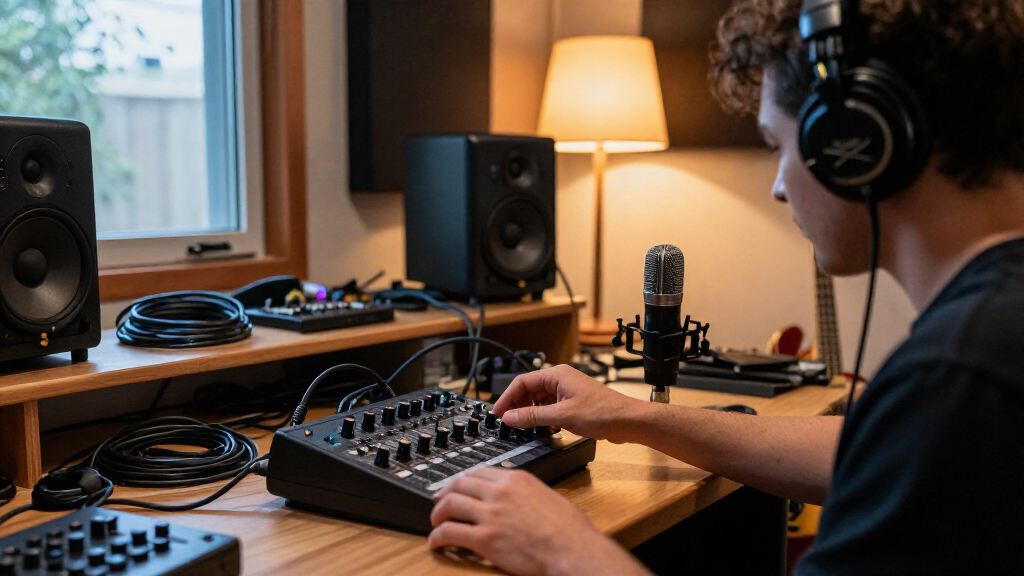
For home recording, I’d make the beyerdynamic DT 770 Pro X (48 Ω) my best overall pick for its closed-back design and easier pairing with everyday audio gear. The Shure SRH440A is a strong alternative for focused wired monitoring, while the Sony MDR-7506 suits creators who want a familiar recording-studio style. The main tradeoffs are isolation versus comfort, a straightforward wired connection versus wireless convenience, and paying for a more versatile design versus keeping to the basics. This roundup compares all 12 options by their fit for recording at home, not by feature count alone. Read on for the full breakdown and help matching a pair to your setup.

Get audio and creator gear delivered free with Prime
- Fast, free delivery on millions of items
- Prime Video, Amazon Music and more included
- Member-only deals all year
Complete the kit


Key Takeaways
The DT 770 Pro X (48 Ω) leads the roundup because its closed-back design and comparatively accessible impedance make it a practical fit for varied home recording setups.
The two DT 770 models serve different setups: the Pro X is the more flexible all-rounder here, while the 32-ohm DT 770 Pro is aimed at buyers who want a lower-impedance version of the established design.
The Shure SRH440A and Sony MDR-7506 stand out as wired monitoring choices, while the Audio-Technica ATH-M20x keeps the proposition simpler for basic studio work.
Several OneOdio and entry-level models overlap in purpose, so detachable cables, wireless operation, or a particular fit may be more useful deciding points than the word “studio” in a product name.
Wireless convenience is not the same as recording suitability: the OneOdio A70 can fit casual listening and flexible setups, but wired monitoring is the safer choice when recording timing and consistency matter.


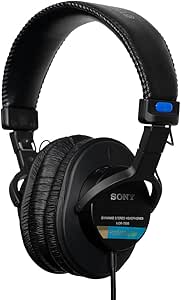


More Details on Our Top Picks
JOYO JMH-02 Wired Over-Ear Studio Monitor Headphones
The JOYO JMH-02 is a straightforward choice for home recordists who want closed-back monitoring without a complicated setup. Its 50 mm neodymium drivers and stated 15 Hz–25 kHz response provide a broad range for checking performances, while the enclosed earcups help limit sound leaking into a microphone. Compared with the Shure SRH440A, the JOYO offers a long 3 m cable and both 3.5 mm and 6.35 mm connections, but the Shure has a detachable locking cable and a collapsible design that are more convenient for storage and transport. The self-adjusting headband and soft cushions suit regular recording sessions, though the straight cable can be awkward around a crowded desk. Passive isolation reduces ambient sound, but it does not cancel noise electronically.
Pros:- Closed-back circumaural design helps reduce sound bleed into recording microphones
- 50 mm neodymium drivers with a stated 15 Hz–25 kHz frequency response
- Long 3 m cable includes 3.5 mm and 6.35 mm connections
- Self-adjusting headband and soft over-ear cushions
Cons:- Passive isolation does not electronically cancel room noise
- Straight cable can be less convenient than a coiled cable at a recording desk
- Lacks the detachable locking cable and collapsible build of the Shure SRH440A
Best for: Home vocalists and instrument players who want an affordable-feeling, wired monitoring setup with a long cable and standard studio connections.
Not ideal for: Recordists who need a detachable or coiled cable, active noise cancellation, or a more portable folding design.
- Driver size:50 mm
- Driver type:Neodymium
- Frequency response:15 Hz–25 kHz
- Design:Closed-back, circumaural
- Noise isolation:Passive
- Cable length:3 m (9.8 ft)
- Connectors:3.5 mm jack; 6.35 mm gold-plated adapter
- Warranty:1 year
Our verdict“Choose the JOYO JMH-02 for basic home recording if you want closed-back monitoring, a long cable, and flexible plug options in one wired set.”
Shure SRH440A Over-Ear Wired Studio Headphones
For a home studio that needs one pair for tracking and critical listening, the Shure SRH440A earns its place through balanced sound and practical studio-focused details. Its closed-back earcups help control bleed while recording vocals, and the cushioned adjustable headband supports longer editing or mixing sessions. Compared with the JOYO JMH-02, the SRH440A trades a longer listed cable for a detachable locking cable, which is easier to replace and secure during regular studio use. It also folds down for storage, an advantage over the less portable JOYO. The tradeoff is that it remains wired, and its closed-back fit may feel warm over extended sessions. This is a more considered monitoring pick than the DJ-oriented OneOdio Pro-10, whose swiveling cups favor single-ear monitoring.
Pros:- Balanced sound suited to monitoring, recording, and critical listening
- Closed-back design helps reduce ambient noise and sound bleed
- Detachable locking cable and collapsible construction aid storage and upkeep
- Adjustable headband and cushioned earcups support long sessions
Cons:- Wired connection limits movement around the room
- Closed-back earcups may feel warm during extended wear
- Lacks the 90° swiveling ear cups offered by the OneOdio Pro-10
Best for: Home recordists who want a balanced wired headphone for vocal tracking, editing, and critical listening, with a cable that can be detached for storage or replacement.
Not ideal for: Listeners who need wireless mobility, dislike the warmer feel of closed-back earcups, or want swiveling cups for DJ-style single-ear monitoring.
- Type:Wired over-ear studio headphones
- Design:Closed-back, collapsible
- Connector:6.35 mm jack
- Cable:Detachable locking cable
- Included adapter:Threaded 6.3 mm (¼-inch) adapter
- Headband:Adjustable and cushioned
- Warranty:2-year limited warranty
Our verdict“Pick the Shure SRH440A if balanced monitoring and a replaceable locking cable matter more than wireless freedom or DJ-style cup movement.”
OneOdio Pro-10 Wired Over-Ear DJ Headphones, Black
The OneOdio Pro-10 is the most DJ-oriented pick here, and its 90° swiveling ear cups make it useful for home recordists who also cue tracks or monitor one side at a time. The 50 mm dynamic drivers are described as emphasizing powerful bass, clear vocals, and crisp highs, so the presentation may suit performance checks better than work that calls for an especially neutral reference. Compared with the Shure SRH440A, the Pro-10 adds swiveling cups and a shared audio port for connecting another pair, while the Shure is the more directly studio-focused option for balanced monitoring. Its 3.5 mm and 6.35 mm connections cover common recording gear, but you still need a compatible jack, and the 415 g listed weight is substantial for long sessions.
Pros:- 90° swiveling ear cups support single-ear monitoring
- 50 mm dynamic drivers with neodymium magnets
- 3.5 mm and 6.35 mm audio connections suit a range of equipment
- Shared audio port can connect another pair of headphones
Cons:- Bass-forward described sound may be less suitable for neutral mix decisions
- Listed weight of 415 g may feel heavy during long recording sessions
- Wired use requires a compatible 3.5 mm or 6.35 mm audio jack
Best for: Home producers and DJs who cue tracks, monitor with one ear, or want a headphone with dual-size audio connections and a shared listening port.
Not ideal for: Mixers seeking a clearly neutral reference sound, users who prioritize a lighter headset, or anyone needing wireless operation.
- Driver size:50 mm
- Driver type:Dynamic
- Impedance:32 ohms
- Sensitivity:110 dB
- Frequency response:40 kHz (as listed)
- Audio connectors:3.5 mm and 6.35 mm
- Ear cup rotation:90°
- Weight:415 g
Our verdict“Choose the OneOdio Pro-10 for home recording when single-ear cueing matters more than the Shure SRH440A’s more balanced monitoring focus.”
beyerdynamic DT 770 Pro X (48 Ω) Closed-Back Studio Headphones – Black
The DT 770 Pro X is the premium-leaning choice for home studios that want a wide stated frequency range, closed-back isolation, and parts that can be maintained over time. Its 45 mm dynamic driver and 5 Hz–35,000 Hz response give recordists a broad range to monitor, while the 48 Ω impedance is specified to work without a separate amp. Compared with the beyerdynamic DT 770 Pro 32 Ohm, this version has a detachable mini-XLR cable rather than a fixed, shorter cable, making replacement easier if the lead is damaged. Velour ear pads are replaceable too. The tradeoff is that it is still wired and the source must drive it appropriately; buyers wanting a shorter cable for a close laptop setup may prefer the 32-ohm model’s 1.6 m lead.
Pros:- 45 mm dynamic driver and stated 5 Hz–35,000 Hz frequency response
- Closed-back design provides passive isolation for recording
- Detachable mini-XLR cable can be replaced or upgraded
- Replaceable velour ear pads support long-term maintenance
Cons:- Wired-only design does not suit wireless listening
- The 3 m cable may be cumbersome at a close laptop or mobile setup
- The 32-ohm DT 770 Pro has a shorter 1.6 m cable for nearby sources
Best for: Home recordists ready to invest in closed-back monitoring with replaceable ear pads and a detachable cable for long-term studio upkeep.
Not ideal for: Buyers who want wireless headphones, a short cable for close-to-device use, or a model selected specifically for water resistance.
- Impedance:48 Ω
- Frequency response:5 Hz–35,000 Hz
- Driver size:45 mm
- Sensitivity:97 dB
- Weight:10.8 oz
- Cable:3 m, detachable
- Connector:Mini-XLR / 3.5 mm jack
- Ear pad material:Velour
- Noise isolation:Passive, closed-back
Our verdict“Choose the DT 770 Pro X if replaceable parts and a detachable cable matter more to your studio setup than a short lead or wireless listening.”
beyerdynamic DT 770 Pro 32 Ohm Closed-Back Studio Headphones, Black
The 32-ohm DT 770 Pro suits home recordists who plug headphones directly into a laptop, phone, tablet, or console and do not want to add a separate amplifier. Its closed-back construction provides passive isolation, while the padded spring-steel headband and over-ear leatherette pads are built for extended listening. Compared with the DT 770 Pro X, this version has a shorter 1.6 m cable that is easier to manage near a device, but the cable is fixed rather than detachable. That makes the Pro X the better choice if easy cable replacement is a priority. With a stated 5–35,000 Hz response, this model offers broad-range monitoring; still, its single-sided lead may not reach comfortably across a larger recording space.
Pros:- 32-ohm design is specified for use with phones, laptops, tablets, and consoles without a separate amplifier
- Closed-back construction provides passive sound isolation
- Padded spring-steel headband and leatherette over-ear pads support extended wear
- Shorter 1.6 m straight cable suits recording near a device
Cons:- Fixed cable cannot be detached or replaced independently
- The 1.6 m cable may not reach across a larger recording space
- Leatherette earpads differ from the replaceable velour pads on the DT 770 Pro X
Best for: Bedroom producers and mobile recordists who connect directly to everyday devices and need closed-back monitoring without a separate amplifier.
Not ideal for: Studio users who need a long cable across a room or want to replace the cable easily; the DT 770 Pro X has a detachable lead.
- Impedance:32 ohms
- Design:Closed-back, dynamic
- Frequency response:5–35,000 Hz
- Ear placement:Over-ear
- Cable:Fixed, straight, 1.6 m
- Earpad material:Leatherette
- Headband:Padded spring steel
- Made in:Germany
- Warranty:2 years
Our verdict“Pick the 32-ohm DT 770 Pro for direct-to-device home recording in a compact setup, but choose the Pro X if you need a longer, detachable cable.”
FIFINE HD8 Wired Studio Monitor Headphone, Detachable 3.5mm/6.35mm Cables
The FIFINE HD8 makes sense for a home setup where headphones move between a computer, interface, and mixer. Its two detachable coiled cables include 3.5 mm and 6.35 mm connections, so it is easier to adapt than the Sony MDR-7506, whose long cable is fixed. The 50 mm drivers cover a stated 20 Hz–20 kHz range, while the closed-back design helps keep playback from spilling into a microphone during tracking. At 265 g, it is also lighter than the TASCAM TH-02 listed here. The tradeoff is that its supplied cable choices add flexibility but do not make it wireless, and the product information gives less detail about its response characteristics than a more explicitly specified monitoring model. Choose it for adaptable connections and session comfort, not for cable-free movement.
Pros:- Includes detachable 3.5 mm and 6.35 mm coiled cables for connecting to varied recording gear.
- Closed-back construction helps limit headphone spill while recording vocals or instruments.
- At 265 g, it is lighter than the TASCAM TH-02 in this roundup.
- Soft padded cushions and an adjustable headband support longer sessions.
Cons:- Wired-only connectivity restricts movement around a recording space.
- The coiled cable can feel less convenient when working away from the desk.
- The stated frequency range does not describe how evenly the headphones reproduce each frequency.
Best for: Home recordists who regularly switch between a computer or interface with a 3.5 mm output and studio gear with a 6.35 mm jack.
Not ideal for: Anyone who needs wireless listening or a fixed, detailed frequency-response specification for critical mix decisions.
Our verdict“I would choose the HD8 for home recording setups that need comfortable closed-back headphones and flexible detachable connections.”
TASCAM TH-02 Wired Over-Ear Studio Monitor Headphones
The TASCAM TH-02 suits a home recordist who needs headphones that can be put away or carried between workspaces without taking up much room. Its foldable design gives it a practical storage advantage over the Audio-Technica ATH-M20x, which is specified with a long fixed cable but no folding feature in the supplied data. The 50 mm dynamic drivers, closed-back construction, and included 3.5 mm-to-6.3 mm adapter cover common recording connections, while the 32-ohm impedance is compatible with many everyday audio sources. Its 18 Hz–22 kHz stated response is broader on paper than the Sony MDR-7506’s 10 Hz–20 kHz range, but that alone does not establish more accurate monitoring. The plastic enclosure and wired connection are tradeoffs; this is a portable, straightforward option rather than a premium build pick.
Pros:- Folding construction makes storage and transport easier.
- Closed-back design helps reduce sound leakage during recording.
- Includes a 3.5 mm-to-6.3 mm adapter for common audio connections.
- 32-ohm impedance suits many consumer and recording devices.
Cons:- The cable is wired, limiting movement while recording.
- Plastic enclosure may not suit buyers who prioritize a more substantial build.
- Not water resistant.
Best for: Bedroom producers and mobile home recordists who want foldable closed-back headphones with an adapter for interface or mixer use.
Not ideal for: Buyers seeking a detachable cable, water resistance, or a more robustly specified build for frequent rough handling.
Our verdict“I would pick the TH-02 for a compact, foldable recording setup, but not for buyers who need a detachable lead or rugged construction.”
OneOdio A71D Wired Over-Ear DJ Headphones
The OneOdio A71D is the most performance-oriented fit here for someone who alternates between listening on headphones and monitoring a live source with one ear. Its 90-degree swiveling ear cups support that DJ-style working position, a feature the FIFINE HD8 and Audio-Technica ATH-M20x do not list. It also folds for storage and includes 3.5 mm and 6.35 mm connection compatibility, making it usable with a range of home recording gear. The 40 mm dynamic drivers and 32-ohm impedance are practical for general monitoring, though the supplied frequency-response entry is only “40 kHz,” which is incomplete and does not let me compare its full response range with the Sony MDR-7506. The fixed 2.2 m cable is another compromise: convenient enough near a desk, but not replaceable if it is damaged.
Pros:- 90-degree rotating ear cups support single-ear monitoring.
- Folding design makes it easier to store between sessions.
- Includes 3.5 mm connection and a 6.35 mm adapter for recording equipment.
- Padded ear cups and an adjustable headband support extended wear.
Cons:- The 2.2 m cable is non-detachable.
- The listed frequency-response specification is incomplete for judging monitoring range.
- At 0.34 kg, it is heavier than the FIFINE HD8.
Best for: Home DJs, instrumentalists, and recordists who need to monitor with one ear while keeping the other available for a room or live source.
Not ideal for: Mixers who require a clearly documented full frequency-response range or buyers who want to replace a damaged headphone cable.
Our verdict“I would choose the A71D when one-ear monitoring matters more than a replaceable cable or fully documented frequency response.”
Sony MDR-7506 Professional Over-Ear Headphones
The Sony MDR-7506 is a strong match for home recordists who want a familiar, closed-ear wired format that can move between a desk, interface, and storage case. Its foldable construction, soft case, and included 1/4-inch and 1/8-inch adapter make it more travel-ready than the Audio-Technica ATH-M20x, whose supplied details do not include a case. The stated 10 Hz–20 kHz response reaches lower on paper than the ATH-M20x’s 15 Hz–20 kHz range, but a specification range alone cannot tell you how neutral either model sounds. The main practical drawback is the 9.8 ft non-detachable cord: it offers reach around a studio desk but can snag, and it cannot be replaced separately. Compared with the FIFINE HD8, the Sony gives up detachable cables in favor of a case and compact folding.
Pros:- Foldable design and included soft case simplify storage and transport.
- Closed-ear construction helps reduce outside noise and headphone spill.
- Includes adapters for 1/4-inch and 1/8-inch connections.
- Long 9.8 ft cord gives reach across a typical recording desk.
Cons:- Non-detachable cord cannot be replaced independently if damaged.
- Long cable can snag or feel cumbersome away from a studio desk.
- Wired design limits freedom to move around while monitoring.
Best for: Home recordists who want foldable closed-ear headphones, a storage case, and adapters for both small and quarter-inch audio jacks.
Not ideal for: People who need a detachable cable, wireless freedom, or a shorter lead for portable listening.
Our verdict“I would choose the MDR-7506 for a portable, adapter-ready home studio setup if a long fixed cable is acceptable.”
Audio-Technica ATH-M20x Professional Studio Monitor Headphones
The Audio-Technica ATH-M20x is the clearest fit in this group for home recordists prioritizing tracking and sound isolation over portability. Its circumaural earcups are designed to sit around the ears and help limit outside noise, while the 40 mm drivers are tuned for enhanced low-frequency performance. That makes it a practical contrast to the TASCAM TH-02, which emphasizes a foldable form, and the OneOdio A71D, which adds swiveling cups for single-ear monitoring. The ATH-M20x also uses a single-sided 2.99 m cable, keeping the lead out of the way on a desk, though its length can be awkward for portable listening and it is not listed as detachable. A 6.3 mm adapter supports connection to common studio equipment. Its 47-ohm impedance is higher than the TASCAM’s 32 ohms, so source compatibility is worth checking.
Pros:- Circumaural earcups provide isolation suited to recording sessions.
- 40 mm drivers are tuned for enhanced low-frequency performance.
- Single-sided cable exit keeps the lead organized on a desk.
- Includes a 6.3 mm adapter for studio connections.
Cons:- The 2.99 m cable can be cumbersome for portable use.
- Wired construction restricts movement away from the recording setup.
- The 47-ohm impedance may be a less straightforward match for some low-output devices than the TASCAM TH-02.
Best for: Home vocalists and instrumentalists who need closed-back headphones for tracking near a microphone and primarily work at a fixed desk.
Not ideal for: Mobile listeners who want a short or detachable cable, or users whose source struggles with 47-ohm headphones.
Our verdict“I would choose the ATH-M20x for fixed-position home tracking where isolation and a long single-sided cable matter more than portability.”
OneOdio A70 Wireless Over-Ear Headphones, Black
The A70 suits home recordists who want wireless listening between sessions without giving up a wired connection for recording. Its included 3.5 mm-to-6.35 mm cable can connect to common studio equipment, while the second cable offers a standard 3.5 mm hookup. That makes it more adaptable than the strictly wired OneOdio A71, though the A71 is the clearer fit for someone who wants a dedicated wired monitoring setup with a stated frequency range and swiveling cups.
Up to 72 hours of wireless playback, foldable earcups, and a jack-lock connection add convenience for moving between a desk and everyday use. The tradeoff is that wireless versatility does not make it the most focused choice for mixing, and sharing audio through the jack-lock system requires compatible additional headphones. Its over-ear form also takes more storage space than compact options.
Pros:- Wireless and wired modes offer flexibility between recording and casual listening.
- Included 6.35 mm connection works with studio equipment that uses a larger headphone jack.
- Up to 72 hours of wireless playback reduces charging interruptions.
- Foldable earcups and a jack-lock connection support storage and a more secure wired hookup.
Cons:- Wireless features are less relevant to buyers who want a dedicated wired mixing setup like the OneOdio A71.
- Audio sharing requires compatible additional headphones.
- The over-ear design is bulkier to store than compact headphones.
Best for: Home recordists who want one pair for wired sessions and extended wireless listening away from the recording setup.
Not ideal for: Mixers seeking a strictly wired monitoring pair or buyers who need compact headphones for a small workspace or bag.
- Fit:Over-ear
- Drivers:40 mm neodymium
- Wireless playback:Up to 72 hours
- Included cables:3.5 mm to 6.35 mm; 3.5 mm to 3.5 mm
- Microphone:Built-in HD microphone with noise reduction
- Weight:8.96 ounces
- Color:Black
- Warranty:24 months
Our verdict“Choose the A70 if you want a recording-capable wired connection alongside long-lasting wireless listening, but pick the A71 for a simpler wired studio setup.”
OneOdio A71 Wired Over-Ear Studio Headphones, Black
The A71 is the more direct pick for a home recording desk where headphones stay connected to an interface, mixer, or other audio source. Its coiled cable with both 3.5 mm and 6.35 mm plugs covers common connection types without requiring a separate adapter, and the 90° swiveling earcups make single-ear monitoring easier during recording or DJ work. Compared with the wireless OneOdio A70, it gives up untethered listening and long wireless playback in favor of a simpler wired setup.
A stated 20 Hz–40,000 Hz frequency range, padded cushions, and adjustable headband suit general monitoring tasks, while the audio-sharing port lets another pair connect. The specifications do not establish how neutral its sound is, so buyers focused on critical mix decisions may prefer comparing it with the Shure SRH440A. Its plastic enclosure and cable dependence are practical compromises, not features for someone seeking a wireless all-purpose pair.
Pros:- 3.5 mm and 6.35 mm plugs support a range of home recording equipment.
- 90° swiveling earcups make single-ear monitoring practical.
- Coiled cable extends from 6.6 to 9.8 feet, helping manage slack around a desk.
- Padded cushions and an adjustable headband allow fit adjustment.
Cons:- Wired-only operation keeps the listener tethered to the audio source.
- Plastic enclosure may feel less substantial than headphones with a more robust construction.
- The provided specifications do not establish sound neutrality for critical mixing.
Best for: Home recordists and DJs who monitor from wired gear, need both common plug sizes, and value single-ear listening.
Not ideal for: People who want wireless freedom, or mixers who prioritize a model with more explicitly documented monitoring characteristics.
- Connectivity:Wired
- Driver type and size:Dynamic, 40 mm
- Frequency response:20 Hz–40,000 Hz
- Impedance:32 ohm
- Sensitivity:110 dB
- Connectors:3.5 mm and 6.35 mm
- Cable:6.6–9.8 ft coiled
- Ear cup rotation:90° swiveling
- Enclosure material:Plastic
Our verdict“Pick the A71 for a flexible, wired monitoring setup with single-ear listening; choose the A70 if wireless playback matters more.”
How We Picked
I ranked these headphones around the needs of home recording: closed-back isolation for tracking, a wired option for dependable monitoring, and an impedance or connection setup that fits common interfaces, mixers, and computers. I also weighed comfort for longer sessions, cable practicality, build and replaceability, and how clearly each model’s design serves a different buyer. Features only mattered when they solved a real studio problem; a wireless connection, for example, is useful for general listening but does not automatically make a headphone a better recording monitor.
The DT 770 Pro X (48 Ω) takes the top spot as the most broadly useful combination in this group. The Shure and Sony follow as focused wired alternatives, while the 32-ohm DT 770, ATH-M20x, and more basic models make sense for narrower budgets or simpler setups. DJ-oriented OneOdio options and the A70 remain on the list for buyers who value their particular cable or wireless features, but rank below the strongest recording-first picks because those conveniences do not replace a clear monitoring fit. No one model is right for every head, interface, or recording room, so comfort and connection compatibility remain personal checks.
Factors to Consider When Choosing Studio Headphones For Home Recording
Choosing headphones for a home studio involves more than finding a model labeled “monitor.” I’d start with the recording environment and the gear already on your desk, then weigh comfort and everyday handling against monitoring needs. These broader checks can prevent a common mismatch: buying a feature-rich pair that does not suit your interface, session length, or recording workflow.
1. Decide Whether Closed-Back Isolation Matters
If you record vocals, acoustic instruments, or quiet sources near a microphone, closed-back headphones help limit headphone sound bleeding into the recording. Isolation also makes click tracks easier to hear at a restrained listening level. Open-back designs can feel more spacious for some editing tasks, but none of the 12 picks here is positioned as an open-back specialist. Do not assume a tighter seal is always better: heat, glasses, and head shape can make extended sessions uncomfortable. If you mostly mix after tracking, you may want a separate listening reference rather than using isolation as your only criterion. Choose based on the job you do most often, not an imagined all-purpose studio setup.
2. Match Impedance and Connection to Your Gear
A headphone needs to work well with the source feeding it, so check your interface or recorder’s headphone output before choosing. Lower-impedance models are often easier to drive from everyday devices, while higher-impedance versions may call for a stronger headphone amplifier to reach comfortable levels. Impedance alone does not tell the whole story; output power and headphone sensitivity also affect loudness. Check whether the supplied cable ends in the plug your gear accepts, and whether an adapter is included or needed. A mismatch can lead to low volume or an awkward cable setup, not better sound. Avoid choosing from impedance numbers in isolation—use your device’s specifications and expected listening level together.
3. Prioritize Comfort for the Length of Your Sessions
Clamping force, pad material, headband pressure, and weight can matter more over a three-hour recording session than a small feature difference on a spec sheet. Comfort is personal: a close seal may improve isolation but feel warm, and glasses can change how pads sit. If possible, check the return policy and try headphones with the glasses or hairstyle you usually wear. Replacement pads can extend a headphone’s useful life, but availability and fit differ by model. For sessions that involve both tracking and breaks, a lighter feel may be more valuable than a foldable design you rarely use. Do not mistake “over-ear” for a guarantee that the cups will fit every listener comfortably.
4. Treat Monitoring and Mixing as Different Jobs
Headphones can help you hear recording noise, edits, and performance details, but they do not reproduce the same room cues as speakers. Tracking headphones should provide enough isolation and a stable connection; headphones used to make mix decisions also need a sound presentation you can learn and cross-check. A familiar, revealing sound is not automatically neutral, and no single pair removes the need to check mixes on other systems. New producers often buy a premium model expecting it to fix room acoustics or teach them how a mix translates. Put some of that effort into reference tracks and repeatable listening habits. If your main job is recording takes, comfort and spill control can matter more than pursuing a supposed perfect mix headphone.
5. Choose Cable Features Around Your Workflow
A detachable cable can be convenient if you move around, store your headphones often, or want to replace a damaged lead without replacing the whole set. A long cable gives reach to a rack or interface, but can snag at a small desk; a coiled cable stretches when needed and can also add weight. Check cable length and connector type before purchase rather than relying on a product’s DJ or studio label. Wireless listening can be handy away from the recording position, yet Bluetooth latency may make it a poor choice for timing-sensitive monitoring. A model with wireless and wired modes is most useful when you will actually use both. For recording takes, plan on a wired connection unless the manufacturer and your setup support a suitably low-latency workflow.
6. Pay More for a Specific Improvement, Not a Label
Higher-priced headphones are easiest to justify when they solve a clear need, such as a fit you can wear all session, a build suited to frequent handling, or compatibility with more than one source. Premium does not automatically mean more accurate, and an entry-level pair can be enough for learning to record at home. Compare the practical details that affect ownership: cable replacement, pad availability, folding or storage needs, and how the headphones connect to your interface. Avoid paying extra for wireless features if you will monitor only through a wired output. Conversely, a minimal model may be a false economy if a fixed cable or uncomfortable fit makes it frustrating to use. Pick the least expensive option that genuinely covers your recording workflow, then spend elsewhere in the studio where it will improve the result.
Frequently Asked Questions
Can I record vocals with Bluetooth headphones?
I would not use Bluetooth as the primary monitoring connection while recording vocals. Wireless audio can add latency, making your voice or the backing track feel out of time, and that delay can make a performance harder to judge. A headphone that also works in wired mode may still be useful for casual listening between takes. Before relying on a wireless mode, check whether it remains active over the cable and whether the wired connection bypasses Bluetooth processing. For recording, use a direct wired connection from your interface or recorder whenever possible.
Do I need a headphone amplifier for these models?
Not necessarily: the answer depends on the headphone’s impedance and sensitivity, plus the output strength of your interface, computer, or recorder. The DT 770 Pro X (48 Ω) and DT 770 Pro 32 Ohm are the easier starting points in this lineup for buyers concerned about everyday source compatibility, but numbers alone cannot promise a particular volume. If your current headphones already play loudly and cleanly from the same output, a separate amp may not solve a problem you have. If a chosen pair sounds too quiet, check your interface specifications and gain settings before buying another device. Avoid turning the output up so far that it becomes uncomfortable or distorts.
Are DJ headphones suitable for home recording?
They can work for tracking if they provide enough isolation, feel comfortable, and connect cleanly to your recording gear. The OneOdio Pro-10, A71D, and A71 may appeal to buyers who value a particular cable arrangement or a DJ-style design, but those traits do not automatically make them better for recording than the Shure SRH440A or Sony MDR-7506. Think about whether their handling and fit suit a stationary recording desk, rather than assuming a DJ label signals better monitoring. For vocal takes, keep headphone volume controlled to reduce spill into the microphone. If your priority is a recording-first wired pair, compare these options against the dedicated monitoring models in the roundup.
Should I buy one pair for both tracking and mixing?
One pair can cover both jobs when you are starting out, but tracking and mixing place different demands on headphones. Closed-back isolation helps keep click tracks and backing audio out of microphones, while mix decisions depend on learning how the headphones translate and checking your work elsewhere. A headphone that feels comfortable and connects reliably may be a better first purchase than chasing a model advertised as suitable for every task. The DT 770 Pro X, Shure SRH440A, and Sony MDR-7506 are the stronger wired starting points in this selection, but none replaces speakers or reference checks. If your work grows, add a second listening option based on the weak point you notice in your workflow.
What should I check before choosing between the two DT 770 models?
Start with the exact model and impedance printed in the listing: the DT 770 Pro X in this roundup is 48 Ω, while the DT 770 Pro is 32 Ohm. Then compare compatibility with your interface or other source, rather than assuming the model names mean they are interchangeable. Consider whether you want the broader all-rounder role assigned here to the Pro X or specifically prefer the lower-impedance Pro version. Check the included cable and plug details as well, since small connection differences can affect desk setup. If both suit your gear, comfort, fit, and the way each model handles your regular recording tasks should guide the choice.
Conclusion
For most home recording setups, I’d choose the beyerdynamic DT 770 Pro X (48 Ω) as best overall because it balances isolation and broad source compatibility. The OneOdio Pro-10 is my best value-leaning pick for buyers who want a straightforward wired, over-ear option without chasing extras, while the beyerdynamic DT 770 Pro 32 Ohm is the best premium alternative for someone set on that established model and a lower-impedance version. Beginners who want a simple monitoring pair can start with the Audio-Technica ATH-M20x; those who prefer another focused wired choice should compare the Shure SRH440A and Sony MDR-7506. For specific needs, consider the OneOdio A70 for wireless flexibility away from latency-sensitive recording, or the JOYO, FIFINE, TASCAM, OneOdio A71D, and A71 when their cable, fit, or basic wired approach suits your setup. My final check would be comfort and direct compatibility with your recording output—those details matter more than a studio label alone.