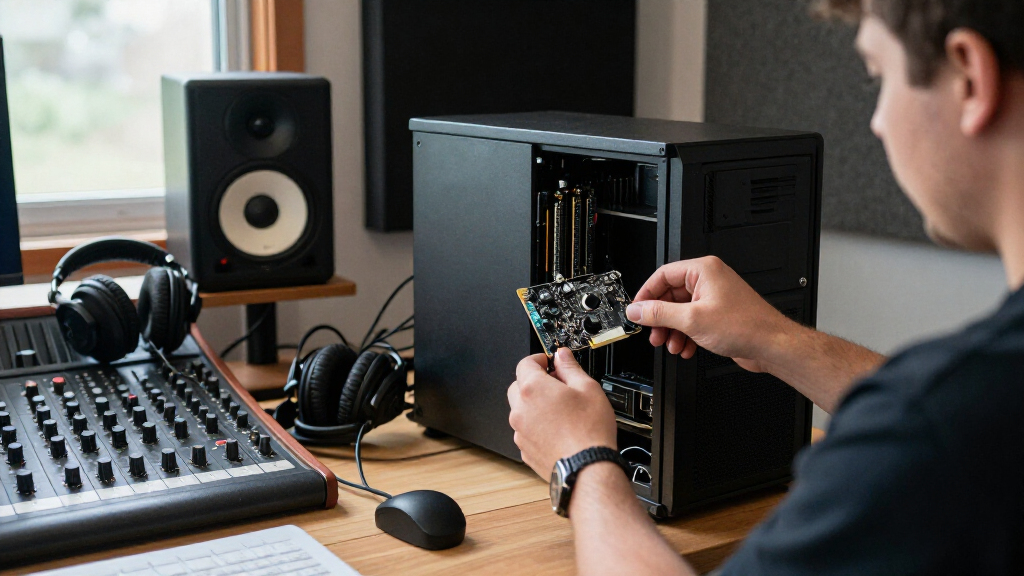

When selecting the best PCIe Gen devices, the Samsung 9100 PRO stands out as the premier choice for enthusiasts seeking maximum throughput, while the WD_BLACK SN7100 offers the most balanced performance-to-power ratio for high-end gaming rigs. This category presents a significant tradeoff between raw bandwidth and thermal management, as Gen5 components often demand aggressive cooling solutions that Gen4 alternatives do not. I have evaluated these fourteen options to clarify which cards and drives deliver tangible speed gains versus those that simply offer higher theoretical specs. Continue reading to understand which specific PCIe generation matches your workload and how to avoid bottlenecking your new hardware.

Get audio and creator gear delivered free with Prime
- Fast, free delivery on millions of items
- Prime Video, Amazon Music and more included
- Member-only deals all year
Complete the kit


Key Takeaways
- PCIe 5.0 SSDs like the Samsung 9100 PRO require robust active cooling, making them overkill for standard laptops or small form-factor builds without airflow.
- Expansion cards that combine multiple functions, such as the QNAP QM2-2P10G1TB, save valuable M.2 slots but introduce complex driver dependencies compared to standalone drives.
- USB4 add-in cards like the ASUS USB4 PCIe Gen4 Card bridge the gap between legacy peripherals and modern Thunderbolt standards, but compatibility with older motherboards can be inconsistent.
- For most users, a high-capacity PCIe 4.0 drive like the Crucial P310 4TB offers better value per terabyte than entry-level PCIe 5.0 options.
- Physical lane configuration matters more than generation alone; a PCIe 4.0 x4 drive often outperforms a misconfigured PCIe 5.0 x2 connection in real-world file transfers.
| StarTech.com 4-Port USB PCIe Card, 10Gbps, Full Profile |  | Best for a Balanced Mix of USB-C and USB-A | Model: PEXUSB312A2C2V | Ports: 2 x USB-C, 2 x USB-A | Maximum port speed: 10Gbps | VIEW LATEST PRICE | See Our Full Breakdown |
| JMT ADT-R37P PCIe 5.0 x16 to OCP NIC 3.0 Side-Mount Adapter Card |  | Best for Side-Mount OCP NIC Expansion | Model: R37P | Interface: PCIe 5.0 x16 to OCP NIC 3.0 | PCIe compatibility: Gen 3, Gen 4, and Gen 5 | VIEW LATEST PRICE | See Our Full Breakdown |
| StarTech.com 5-Port USB 3.2 Gen 2 PCIe Card with USB-C, USB-A, and Internal Header |  | Best for Adding an Internal USB Header | Model: PEXUSB312A1C1H | External ports: 1 x USB-C and 2 x USB-A, up to 10Gbps | Internal connection: 20-pin IDC header for 2 x USB-A, up to 5Gbps | VIEW LATEST PRICE | See Our Full Breakdown |
| QNAP QM2-2P10G1TB 2 x PCIe Gen3 NVMe SSD & 1 x 10GbE Port Expansion Card |  | Best for Combining NAS Storage and 10GbE | Model: QM2-2P10G1TB | SSD slots: 2 x M.2 2280 PCIe Gen3 x4 NVMe | Ethernet: 10GbE, 10G/5G/2.5G/1G/100M | VIEW LATEST PRICE | See Our Full Breakdown |
| ASUS Hyper M.2 x16 Gen5 Card for Four NVMe SSDs |  | Best for Four-Drive NVMe Expansion | Interface: PCI Express x16 | M.2 drive support: Up to 4 NVMe SSDs | Supported M.2 sizes: 2242, 2260, 2280, 22110 | VIEW LATEST PRICE | See Our Full Breakdown |
| Samsung 9100 PRO 2TB PCIe 5.0 M.2 2280 NVMe SSD |  | Best for Maximum Single-Drive Speed | Capacity: 2TB | Interface: PCIe 5.0 x4 | Form factor: M.2 2280 | VIEW LATEST PRICE | See Our Full Breakdown |
| Patriot P320 512GB PCIe Gen 3 x4 M.2 2280 SSD |  | Best for Basic PCIe Gen 3 Upgrades | Capacity: 512GB | Interface: PCIe Gen 3 x4 | Form factor: M.2 2280 | VIEW LATEST PRICE | See Our Full Breakdown |
| HighPoint Rocket 1604L PCIe Gen5 x16 4-Port M.2 NVMe Add-In Card |  | Best for Multi-Drive Expansion | Model: Rocket 1604L | Bus interface: PCIe 5.0 x16 | M.2 ports: 4 | VIEW LATEST PRICE | See Our Full Breakdown |
| Samsung 990 PRO 2TB PCIe 4.0 M.2 2280 SSD |  | Best Balanced PCIe 4.0 SSD | Capacity: 2TB | Interface: PCIe 4.0 x4 | Form factor: M.2 2280 | VIEW LATEST PRICE | See Our Full Breakdown |
| WD_BLACK SN7100 1TB NVMe SSD, PCIe Gen4, M.2 2280 |  | Best for Laptops and Handheld Gaming | Capacity: 1TB | Interface: NVMe, PCIe Gen 4 | Form factor: M.2 2280 | VIEW LATEST PRICE | See Our Full Breakdown |
| Crucial P310 4TB PCIe Gen4 NVMe M.2 2280 SSD |  | Best High-Capacity Value | Capacity: 4 TB | Interface: PCIe Gen4 NVMe | Form Factor: M.2 2280 | VIEW LATEST PRICE | See Our Full Breakdown |
| Samsung 990 1TB NVMe PCIe 4.0 Internal SSD |  | Best for Security and Reliability | Capacity: 1 TB | Interface: PCIe x4 | Connectivity: NVMe, PCI Express 4.0 | VIEW LATEST PRICE | See Our Full Breakdown |
| ASUS USB4 PCIe Gen4 Card with Dual USB-C Ports and DisplayPort 1.4 |  | Best Expansion for Connectivity | Brand: ASUS | Controller: ASMedia USB4 ASM4242 | USB Ports: 2 x USB Type-C | VIEW LATEST PRICE | See Our Full Breakdown |
| Lexar NM790 1TB NVMe SSD with Heatsink, PCIe Gen 4×4, M.2 2280 |  | Best Performance with Thermal Management | Capacity: 1 TB | Interface: NVMe, PCIe Gen 4×4 | Form Factor: M.2 2280 | VIEW LATEST PRICE | See Our Full Breakdown |
| PCIe Gen device | Interface | Capacity |
|---|---|---|
| StarTech.com 4-Port USB PCIe C | PCIe 3.0 x4 | — |
| JMT ADT-R37P PCIe 5.0 x16 to O | PCIe 5.0 x16 to OCP NIC 3.0 | — |
| StarTech.com 5-Port USB 3.2 Ge | PCIe 3.0 x4 | — |
| QNAP QM2-2P10G1TB 2 x PCIe Gen | — | — |
| ASUS Hyper M.2 x16 Gen5 Card f | PCI Express x16 | — |
| Samsung 9100 PRO 2TB PCIe 5.0 | PCIe 5.0 x4 | 2TB |
| Patriot P320 512GB PCIe Gen 3 | PCIe Gen 3 x4 | 512GB |
| HighPoint Rocket 1604L PCIe Ge | — | — |
| Samsung 990 PRO 2TB PCIe 4.0 M | PCIe 4.0 x4 | 2TB |
| WD_BLACK SN7100 1TB NVMe SSD | NVMe, PCIe Gen 4 | 1TB |
| Crucial P310 4TB PCIe Gen4 NVM | PCIe Gen4 NVMe | 4 TB |
| Samsung 990 1TB NVMe PCIe 4.0 | PCIe x4 | 1 TB |
| ASUS USB4 PCIe Gen4 Card with | PCIe 4.0 x4 | — |
| Lexar NM790 1TB NVMe SSD with | NVMe, PCIe Gen 4×4 | 1 TB |
More Details on Our Top Picks
StarTech.com 4-Port USB PCIe Card, 10Gbps, Full Profile
For a desktop or server that needs several fast external USB connections, this card offers a more balanced port mix than the StarTech.com 5-Port USB 3.2 Gen 2 card: it has two USB-C and two USB-A ports, with up to 10Gbps per port. Its dual controllers provide up to 20Gbps of total bandwidth, giving multiple connected devices more room to operate than a single-controller design. SATA power can supply up to 15W to each USB-C port, useful for bus-powered accessories, though that is not USB Power Delivery. The tradeoff is its full-profile bracket and PCIe 3.0 x4 requirement for best performance. Compared with the 5-Port card, it gives up an internal header in exchange for another external USB-C port. It also lacks DisplayPort Alt Mode, so USB-C monitors are out.
Pros:- Provides two USB-C and two USB-A ports on one card.
- Dual controllers support up to 20Gbps total bandwidth.
- SATA power supplies up to 15W per USB-C port.
- Supports older USB 3.1, 3.0, 2.0, and 1.1 devices.
Cons:- Needs a PCIe 3.0 x4 slot for best performance; PCIe 2.0 can reduce throughput.
- Full-profile card may not fit compact cases.
- USB-C ports do not support DisplayPort Alt Mode or USB Power Delivery.
Best for: Desktop and server owners who need two high-speed USB-C ports alongside two USB-A ports for storage and peripherals.
Not ideal for: Small-form-factor builds without room for a full-profile card, or users seeking USB-C display output or USB Power Delivery.
- Model:PEXUSB312A2C2V
- Ports:2 x USB-C, 2 x USB-A
- Maximum port speed:10Gbps
- Total bandwidth:Up to 20Gbps
- Controller:Dual ASMedia ASM3142
- Interface:PCIe 3.0 x4
- Power connector:SATA
- USB-C power:Up to 5V 3A / 15W per port
Our verdict“Choose this card if you want two fast USB-C ports and two USB-A ports, and have a full-profile PCIe x4 slot available.”
JMT ADT-R37P PCIe 5.0 x16 to OCP NIC 3.0 Side-Mount Adapter Card
The JMT ADT-R37P serves a specialized purpose: it carries an OCP NIC 3.0 interface outside the chassis using a PCIe 5.0 x16 connection. Its side-mounted design suits systems where an OCP network card needs a different physical placement, while support for PCIe Gen 3, 4, and 5 broadens host compatibility. Optional external power can separate the motherboard and external circuit power, and the listed LCP connector material is designed for high-temperature use. This is not a general-purpose network upgrade, though. The product data reports network access up to 450 Mbps, a modest figure beside the QNAP QM2-2P10G1TB’s clearly specified 10GbE port. I would choose the QNAP for a NAS needing defined Ethernet speeds; the JMT makes sense only when its OCP NIC routing and mounting format are the point.
Pros:- Provides a PCIe 5.0 x16 connection to an OCP NIC 3.0 interface.
- Compatible with PCIe Gen 3, Gen 4, and Gen 5.
- Side-mount design places the OCP NIC interface outside the chassis.
- Optional external power separates motherboard and external circuit power.
Cons:- Reported network speed of up to 450 Mbps is limited compared with the QNAP card’s 10GbE connection.
- Specialized OCP NIC format requires careful host and card compatibility checks.
- Product data provides limited detail on supported network configurations.
Best for: System builders who need to extend an OCP NIC 3.0 connection outside a chassis and can verify compatibility with their specific hardware.
Not ideal for: Buyers seeking a straightforward high-speed Ethernet adapter, since the reported network speed is up to 450 Mbps and OCP NIC compatibility is specialized.
- Model:R37P
- Interface:PCIe 5.0 x16 to OCP NIC 3.0
- PCIe compatibility:Gen 3, Gen 4, and Gen 5
- Dimensions:163.65 × 121 × 21.6 mm
- Weight:73.6 g
- Reported network speed:Up to 450 Mbps
- Connector material:LCP flame-retardant, high-temperature-resistant plastic
- Operating temperature:-40°C to 80°C
Our verdict“Buy this adapter for a specific OCP NIC 3.0 side-mount setup, not as a general-purpose Ethernet upgrade.”
StarTech.com 5-Port USB 3.2 Gen 2 PCIe Card with USB-C, USB-A, and Internal Header
This StarTech card is the better fit when a build needs both external high-speed ports and an internal USB connection. It combines one USB-C and two USB-A ports at up to 10Gbps with a 20-pin header for two additional USB-A ports running at up to 5Gbps. That header makes it more useful than the 4-Port StarTech card for a case with front-panel USB-A connections, although the 4-Port model offers a second external USB-C port and dual controllers for up to 20Gbps total bandwidth. The PEXUSB312A1C1H instead uses one ASMedia 3142 controller, so its appeal is connection flexibility rather than maximum total throughput. SATA supplemental power helps serve connected devices, and both full- and low-profile brackets are included. As with the other StarTech card, USB-C does not carry video or USB Power Delivery.
Pros:- Combines one external USB-C port, two external USB-A ports, and an internal 20-pin header.
- External USB-C and USB-A ports support speeds up to 10Gbps.
- Includes SATA supplemental power and a low-profile bracket.
- Works with older USB 3.2, 3.1, 3.0, 2.0, and 1.1 devices.
Cons:- Requires a PCIe 3.0 x4 slot for full performance; PCIe 2.0 can reduce performance.
- Only one external USB-C port, compared with two on the StarTech 4-Port card.
- USB-C does not support DisplayPort Alt Mode or USB Power Delivery.
Best for: Desktop builders who need a PCIe card for fast external USB devices plus an internal header for case USB-A ports.
Not ideal for: Users whose priority is multiple external USB-C ports or the higher combined bandwidth of a dual-controller card.
- Model:PEXUSB312A1C1H
- External ports:1 x USB-C and 2 x USB-A, up to 10Gbps
- Internal connection:20-pin IDC header for 2 x USB-A, up to 5Gbps
- Controller:ASMedia 3142
- Interface:PCIe 3.0 x4
- Supplemental power:SATA
- Operating systems:Windows 8 and later, Linux, macOS
- Brackets:Full-profile installed; low-profile included
Our verdict“Pick this card when an internal USB header matters as much as adding fast external ports.”
QNAP QM2-2P10G1TB 2 x PCIe Gen3 NVMe SSD & 1 x 10GbE Port Expansion Card
The QNAP QM2-2P10G1TB bundles two storage upgrades that would otherwise need separate expansion cards: two M.2 2280 PCIe Gen3 x4 NVMe slots and a multi-speed 10GbE port. For a compatible NAS, that can add SSD caching or storage without using 3.5-inch drive bays, while faster networking helps move data between the NAS and supported clients. This combination sets it apart from the ASUS Hyper M.2 x16 Gen5 card, which supports four NVMe drives but has no Ethernet port. The QNAP card is less suited to a storage-only build seeking the newest PCIe generation, since its NVMe interface is Gen3 and it needs a free PCIe Gen3 x8 slot. Its specialized bracket also fits only selected QNAP NAS models, so chassis and system compatibility deserve a check before buying.
Pros:- Combines two M.2 NVMe slots with a 10GbE network port.
- Adds SSD capacity without occupying 3.5-inch drive bays.
- Ethernet supports 10G, 5G, 2.5G, 1G, and 100M speeds.
- Supports QNAP QTS, QuTS hero, Windows, and Linux.
Cons:- Requires a free PCIe Gen3 x8 slot.
- NVMe slots use PCIe Gen3 rather than the Gen5 interface offered by the ASUS Hyper M.2 card.
- Specialized bracket supports only selected QNAP NAS models.
Best for: QNAP NAS owners who want to add two NVMe drives for caching or storage and upgrade the same system to 10GbE.
Not ideal for: Builders focused on four-drive NVMe expansion or PCIe Gen5 storage, and owners of NAS models that do not support the required bracket.
- Model:QM2-2P10G1TB
- SSD slots:2 x M.2 2280 PCIe Gen3 x4 NVMe
- Ethernet:10GbE, 10G/5G/2.5G/1G/100M
- PCIe interface:PCIe Gen3 x8
- Operating system support:QNAP QTS, QuTS hero, Windows, Linux
- Weight:0.31 kg
- Warranty:2 years
Our verdict“Choose this card for a compatible QNAP NAS when adding NVMe storage and 10GbE together matters more than Gen5 drive support.”
ASUS Hyper M.2 x16 Gen5 Card for Four NVMe SSDs
When the goal is to mount several NVMe drives on one expansion card, the ASUS Hyper M.2 x16 is the lineup’s most direct choice: it supports up to four SSDs in lengths from 2242 to 22110 and works with PCIe 5.0 and 4.0 platforms. RAID support for AMD and Intel systems gives storage builders room to configure an array, while the heatsink, thermal pads, and active fan help manage heat during sustained workloads. That cooling hardware makes it a more storage-focused option than the QNAP QM2-2P10G1TB, which trades a four-drive layout for two Gen3 NVMe slots plus 10GbE. The ASUS card has its own fit requirements, though: it needs a PCIe x16 slot and a 6-pin power connection, and its active fan adds another moving part. Check platform lane and RAID support before planning an array.
Pros:- Supports up to four M.2 NVMe SSDs on one card.
- Works with PCIe 5.0 and PCIe 4.0 platforms.
- Supports RAID on AMD and Intel platforms.
- Heatsink, thermal pads, and active fan help cool drives under sustained workloads.
Cons:- Requires a PCIe x16 slot and a 6-pin PCIe power connection.
- Does not provide the integrated 10GbE port found on the QNAP QM2-2P10G1TB.
- Active cooling adds a fan that storage-only passive cards do not require.
Best for: Workstation and storage builders who need up to four NVMe drives on one card and have a suitable x16 slot and 6-pin power lead.
Not ideal for: NAS owners who need integrated Ethernet, or compact-system builders without a full x16 slot, auxiliary power, or room for the card’s cooling hardware.
- Interface:PCI Express x16
- M.2 drive support:Up to 4 NVMe SSDs
- Supported M.2 sizes:2242, 2260, 2280, 22110
- PCIe compatibility:PCIe 5.0 and 4.0
- RAID support:AMD and Intel platforms
- Power connector:1 x 6-pin PCIe
- Cooling:Heatsink, top and bottom thermal pads, active fan
- Warranty:3 years
Our verdict“Choose the ASUS card when four-drive NVMe capacity and active cooling matter more than integrated networking or simpler power requirements.”
Samsung 9100 PRO 2TB PCIe 5.0 M.2 2280 NVMe SSD
The Samsung 9100 PRO is the fastest single-drive choice here on paper, with PCIe 5.0 x4 and sequential speeds up to 14,700 MB/s read and 13,400 MB/s write. That bandwidth suits large video projects and other storage-heavy work better than the PCIe 4.0 Samsung 990 PRO, while its 2TB capacity leaves room for games and active files. A 5nm controller and thermal controls are intended to manage power and heat, and Samsung Magician adds drive monitoring and firmware tools. The tradeoff is platform dependence: the host must support PCIe 5.0 to make use of its higher ceiling, and performance can vary with system setup and firmware. PS5 buyers may also need a separate heatsink.
Pros:- PCIe 5.0 x4 interface with sequential read speeds up to 14,700 MB/s
- Up to 13,400 MB/s sequential write speed for large transfers
- 2TB capacity for games, project files, and applications
- Samsung Magician supports firmware updates and drive-health monitoring
Cons:- Requires a PCIe 5.0-capable host to reach its stated interface performance
- A separate heatsink may be needed for PS5 use
- Actual performance varies with hardware, configuration, and firmware
Best for: Desktop builders with a PCIe 5.0 M.2 slot who move large files, edit high-resolution video, or run demanding storage workloads.
Not ideal for: PCIe 4.0-only system owners or PS5 buyers seeking a ready-to-install drive with a heatsink included.
- Capacity:2TB
- Interface:PCIe 5.0 x4
- Form factor:M.2 2280
- Sequential read speed:Up to 14,700 MB/s
- Sequential write speed:Up to 13,400 MB/s
- Random read speed:Up to 1,850K IOPS
- Random write speed:Up to 2,600K IOPS
- Controller:5nm
- Software:Samsung Magician
Our verdict“Choose the 9100 PRO if your PCIe 5.0 system can use its bandwidth and your workload benefits from very high single-drive throughput.”
Patriot P320 512GB PCIe Gen 3 x4 M.2 2280 SSD
The Patriot P320 is the straightforward entry in this group: a 512GB M.2 drive using PCIe Gen 3 x4 and NVMe 1.3. Its stated read speed of up to 3,000 MB/s is a clear step above a mechanical boot drive, but it sits well below the PCIe 4.0 WD_BLACK SN7100 and PCIe 5.0 Samsung 9100 PRO in sequential throughput. That makes the P320 a sensible fit for a basic Windows system, everyday applications, or an older PC with a Gen 3 slot—not a choice for maximizing transfer speed or keeping a large game library on one drive. The supplied data gives no random-performance figures or bundled management software, so buyers focused on those details should compare alternatives before choosing.
Pros:- PCIe Gen 3 x4 and NVMe 1.3 support for compatible systems
- Sequential read speeds up to 3,000 MB/s
- Sequential write speeds up to 2,200 MB/s
- M.2 2280 form factor fits systems designed for that drive size
Cons:- 512GB capacity can limit large game libraries and media projects
- Gen 3 interface has a lower speed ceiling than the WD_BLACK SN7100 and Samsung 9100 PRO
- Provided specifications do not list random speeds or drive-management software
Best for: Windows PC owners upgrading an older system with a PCIe Gen 3 M.2 slot who need a modest boot and application drive.
Not ideal for: Creators moving large media files, users needing more than 512GB, or buyers building around PCIe Gen 4 or Gen 5 speeds.
- Capacity:512GB
- Interface:PCIe Gen 3 x4
- Form factor:M.2 2280
- Protocol:NVMe 1.3
- Sequential read speed:Up to 3,000 MB/s (CDM)
- Sequential write speed:Up to 2,200 MB/s (CDM)
- Operating system support:Windows
Our verdict“Pick the P320 for a basic Windows upgrade where Gen 3 compatibility and everyday responsiveness matter more than capacity or peak throughput.”
HighPoint Rocket 1604L PCIe Gen5 x16 4-Port M.2 NVMe Add-In Card
Unlike the other picks, the HighPoint Rocket 1604L is an add-in card, not an SSD: it provides four M.2 ports so a workstation can host up to four NVMe drives. Its PCIe 5.0 x16 connection and dedicated x4 lanes per port make it a different kind of upgrade from the single-drive Samsung 9100 PRO; the value here is accommodating multiple drives, not supplying storage by itself. Support for 2242, 2260, and 2280 devices and for x86 Intel/AMD and ARM platforms adds flexibility, with Windows, Linux, and macOS listed. The main constraint is physical and platform fit: it needs a PCIe x16 slot, and its M.2 size support stops at the listed lengths. Buyers should also check that their system can accommodate the card and its intended drive setup.
Pros:- Four M.2 ports support up to four NVMe devices
- Dedicated x4 lane allocation for each port
- PCIe 5.0 x16 bus interface
- Supports 2242, 2260, and 2280 drives across listed Windows, Linux, and macOS platforms
Cons:- Requires an available PCIe x16 slot
- Does not include the NVMe storage devices
- Supports only the listed 2242, 2260, and 2280 M.2 sizes
Best for: Workstation builders who need to add several M.2 NVMe drives and have an available PCIe x16 slot.
Not ideal for: Laptop owners, compact-system builders without an open x16 slot, or shoppers who need a storage drive rather than an expansion card.
- Model:Rocket 1604L
- Bus interface:PCIe 5.0 x16
- M.2 ports:4
- Devices supported:Up to 4 PCIe M.2 NVMe devices
- M.2 sizes:2242, 2260, 2280
- Lane allocation:Dedicated x4 lanes per port
- Compatible platforms:x86 Intel/AMD and ARM
- Supported operating systems:Windows, Linux, macOS
- Warranty:2 years
Our verdict“Choose the Rocket 1604L when your desktop needs several NVMe drives and has the slot and platform support to host this expansion card.”
Samsung 990 PRO 2TB PCIe 4.0 M.2 2280 SSD
The Samsung 990 PRO offers a capable PCIe 4.0 option for buyers who want 2TB without moving to a Gen 5 platform. Its sequential read and write figures—up to 7,450 MB/s and 6,900 MB/s—are lower than the Samsung 9100 PRO, but that comparison favors the 9100’s newer interface; the 990 PRO remains a better match for systems built around PCIe 4.0. Its controller manages heat, and the listed compatibility includes desktops, laptops, and PlayStation 5. The 2TB capacity suits game libraries and editing files, though PS5 buyers may need a separate heatsink. Compared with the 1TB WD_BLACK SN7100, this model doubles the stated capacity, while its performance still depends on the host supporting PCIe 4.0.
Pros:- 2TB capacity for games and working files
- Sequential read speeds up to 7,450 MB/s
- Sequential write speeds up to 6,900 MB/s
- Listed compatibility includes desktop, laptop, and PlayStation 5
Cons:- Slower stated sequential speeds than the PCIe 5.0 Samsung 9100 PRO
- A separate heatsink may be needed for PS5 use
- Performance depends on system support, configuration, and firmware
Best for: Desktop, laptop, and PS5 owners with PCIe 4.0 support who want 2TB for games, editing projects, or general high-speed storage.
Not ideal for: Users seeking the higher sequential speed ceiling of a PCIe 5.0 drive or PS5 buyers who require an included heatsink.
- Capacity:2TB
- Interface:PCIe 4.0 x4
- Form factor:M.2 2280
- Sequential read speed:Up to 7,450 MB/s
- Sequential write speed:Up to 6,900 MB/s
- Weight:9.07 g
- Dimensions:3.16 x 0.87 x 0.09 in
- Compatible devices:Desktop, laptop
- Compatible console:Sony PlayStation 5
Our verdict“Choose the 990 PRO for a 2TB PCIe 4.0 upgrade when you want broad listed device compatibility without moving to Gen 5.”
WD_BLACK SN7100 1TB NVMe SSD, PCIe Gen4, M.2 2280
The WD_BLACK SN7100 targets compact gaming systems and laptops rather than maximum capacity: this 1TB PCIe Gen 4 M.2 drive is listed for desktops, laptops, and handheld gaming devices. Its read speed reaches up to 7,250 MB/s and write speed up to 6,900 MB/s, close to the 2TB Samsung 990 PRO on the listed sequential figures but with half the capacity. TLC 3D NAND and stated power-efficiency improvements over the previous generation suit battery-powered devices, where storage use can share a limited power budget. Windows users can access WD_BLACK Dashboard tools; that software limitation matters if you use another operating system. The 1TB capacity may also fill quickly for large libraries, and the listed maximum speeds apply to 1–2TB models.
Pros:- Listed for desktop, laptop, and handheld gaming devices
- Sequential read speed up to 7,250 MB/s and write speed up to 6,900 MB/s
- TLC 3D NAND memory
- WD_BLACK Dashboard offers drive tools on Windows
Cons:- 1TB capacity is below the 2TB Samsung 990 PRO
- WD_BLACK Dashboard software is available for Windows only
- Maximum stated speeds apply to 1–2TB models
Best for: Laptop and handheld gaming owners who want a fast PCIe Gen 4 drive in an M.2 2280 system and can work within 1TB.
Not ideal for: Buyers needing 2TB or more, or users who want WD_BLACK Dashboard features on an operating system other than Windows.
- Capacity:1TB
- Interface:NVMe, PCIe Gen 4
- Form factor:M.2 2280
- Maximum read speed:7,250 MB/s
- Maximum write speed:6,900 MB/s
- Memory type:TLC 3D NAND
- Compatible devices:Desktop, handheld gaming console, laptop
- Weight:4.54 g
- Model:WDS100T4X0E
Our verdict“Choose the SN7100 for a compatible laptop or handheld that benefits from PCIe Gen 4 speed and power-efficiency improvements, provided 1TB is enough.”
Crucial P310 4TB PCIe Gen4 NVMe M.2 2280 SSD
This drive stands out for offering 4 TB of storage at a competitive price point, making it ideal for users who need massive space without breaking the bank. Compared to the Samsung 990, which caps out at 1 TB in this lineup, the P310 provides four times the capacity, perfect for game libraries or media archives. While its 7,100 MB/s read speeds are respectable, they trail slightly behind the raw power of the Lexar NM790. The inclusion of Acronis software is a nice touch for those migrating data, though it is a limited offer. The main tradeoff is the lack of onboard DRAM, which can impact sustained write performance compared to premium drives. It is a pragmatic choice for bulk storage rather than high-intensity professional workflows.
Pros:- Massive 4 TB capacity for extensive game and media libraries
- Competitive sequential speeds for a high-capacity Gen4 drive
- Includes a useful software license for data migration
Cons:- Lacks onboard DRAM cache, which can slow down sustained writes
- Sequential speeds are lower than top-tier competitors like the Lexar NM790
Best for: Gamers and media collectors who need 4 TB of fast, affordable storage for large libraries.
Not ideal for: Professional video editors or data scientists who require sustained write speeds and heavy random I/O performance.
- Capacity:4 TB
- Interface:PCIe Gen4 NVMe
- Form Factor:M.2 2280
- Read Speed:Up to 7,100 MB/s
- Write Speed:Up to 6,000 MB/s
- NAND Type:G8 NAND
- Software:Acronis True Image offer
Our verdict“The Crucial P310 is the smart choice for anyone prioritizing sheer capacity over peak performance.”
Samsung 990 1TB NVMe PCIe 4.0 Internal SSD
The Samsung 990 distinguishes itself with robust hardware encryption and enterprise-grade features like TRIM support, making it a superior choice for privacy-conscious users. While the Crucial P310 offers more space, the 990 focuses on data integrity and security, which is vital for business laptops or personal machines holding sensitive information. Its 7,150 MB/s read speed is nearly identical to the P310, but the real differentiator is the software ecosystem, which provides detailed drive health monitoring. The tradeoff here is capacity; at 1 TB, you are buying peace of mind and security features rather than bulk storage. It is a refined, secure option that prioritizes data protection over raw gigabytes.
Pros:- Built-in hardware encryption for enhanced data security
- Comprehensive software suite for firmware and health tracking
- High random read/write IOPS for snappy system responsiveness
Cons:- Limited 1 TB capacity compared to high-density alternatives
- Performance can fluctuate based on firmware versions and system configuration
Best for: Business users and privacy-focused individuals who need encrypted storage and reliable health monitoring.
Not ideal for: Users with massive game libraries or media archives who need more than 1 TB of space.
- Capacity:1 TB
- Interface:PCIe x4
- Connectivity:NVMe, PCI Express 4.0
- Sequential Read Speed:Up to 7,150 MB/s
- Sequential Write Speed:Up to 6,450 MB/s
- Random Read Speed:Up to 700K IOPS
- Random Write Speed:Up to 1,100K IOPS
- Features:Hardware encryption, TRIM support
Our verdict“Choose the Samsung 990 if you value data security and drive health tools over maximum storage capacity.”
ASUS USB4 PCIe Gen4 Card with Dual USB-C Ports and DisplayPort 1.4
Unlike the storage-focused drives in this roundup, this ASUS card is a connectivity upgrade designed to bring modern USB4 standards to older desktops. It adds two 40 Gbps USB-C ports and 8K video output, features that internal SSDs like the Lexar NM790 simply do not provide. This is the right pick if your motherboard lacks native USB4 or Thunderbolt 4. The requirement for a PCIe 4.0 x4 slot and a 6-pin power connector means it is not for compact builds or users with limited internal space. It transforms a PC into a hub for high-speed peripherals and modern displays, filling a niche that pure storage devices cannot address.
Pros:- Adds two full-speed USB4 ports with 40 Gbps bandwidth
- Supports 8K video output via DisplayPort 1.4
- Provides up to 60 W charging per port for laptops and devices
Cons:- Requires significant internal space and specific PCIe power connections
- Windows-only compatibility limits use in Linux or macOS environments
Best for: Desktop users needing to add USB4, 8K video output, or high-power charging to a PC without native support.
Not ideal for: Small form factor builds or systems without an available PCIe 4.0 x4 slot and 6-pin power connector.
- Brand:ASUS
- Controller:ASMedia USB4 ASM4242
- USB Ports:2 x USB Type-C
- USB Bandwidth:Up to 40 Gbps
- Charging:Up to 20V/3A (60W) per port
- Video Support:DisplayPort 1.4, up to 8K at 60 Hz
- Interface:PCIe 4.0 x4
- Operating Systems:Windows 10 64-bit, Windows 11
Our verdict“This card is essential for desktop owners seeking to future-proof their I/O with USB4 and 8K video capabilities.”
Lexar NM790 1TB NVMe SSD with Heatsink, PCIe Gen 4×4, M.2 2280
The Lexar NM790 leads this group in raw speed, hitting 7,400 MB/s read speeds, which edges out the Samsung 990 and Crucial P310. Its standout feature is the included heatsink, which actively manages thermal throttling during heavy workloads—a critical advantage for consoles like the PlayStation 5 or tight desktop cases. While it uses HMB 3.0 instead of DRAM, the dynamic cache implementation mitigates the typical performance dips seen in DRAM-less drives. This makes it a high-performance option for gamers and creators who need sustained speeds without worrying about overheating. It is the best all-rounder for performance, provided you have the physical clearance for the heatsink.
Pros:- Highest sequential read speeds in this lineup at 7,400 MB/s
- Includes a high-quality heatsink for thermal stability
- High endurance rating of 1000 TBW for long-term durability
Cons:- Heatsink adds height, limiting compatibility with slim devices
- Relies on HMB 3.0 rather than dedicated DRAM cache
Best for: PlayStation 5 owners and desktop users who need maximum speed and active cooling without buying a separate heatsink.
Not ideal for: Slim laptops or ultra-thin desktops where the added height of the heatsink prevents installation.
- Capacity:1 TB
- Interface:NVMe, PCIe Gen 4×4
- Form Factor:M.2 2280
- Read Speed:Up to 7400 MB/s
- Write Speed:Up to 6500 MB/s
- Endurance:1000 TBW
- Cache:HMB 3.0, Dynamic SLC Cache
- Compatibility:Desktop, laptop, PlayStation 5
- Warranty:Five-year limited warranty
Our verdict“The Lexar NM790 is the top pick for users who demand peak performance and built-in thermal protection.”
How We Picked
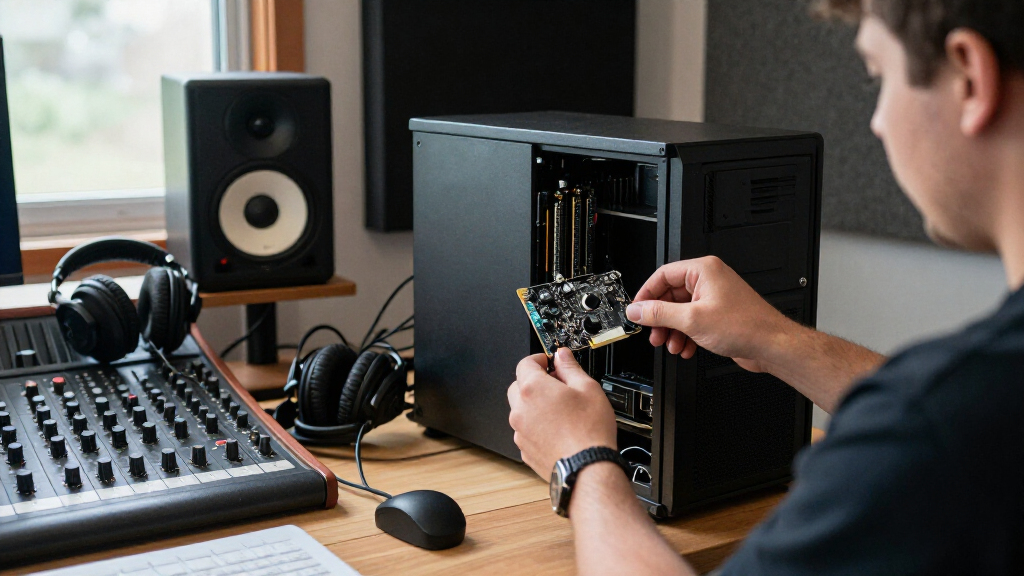
I evaluated these fourteen devices by analyzing their theoretical bandwidth against real-world thermal throttling data and compatibility constraints. The primary criterion was performance stability; I prioritized devices that maintain sustained speeds under load rather than those that spike briefly before throttling. For expansion cards, I focused on lane efficiency and power delivery, ensuring that cards like the StarTech USB models do not starve connected devices of necessary amperage.
Secondary considerations included form factor versatility and future-proofing. I excluded devices that lacked clear support documentation or required proprietary software for basic functionality. The ranking reflects a balance between immediate usability for current-generation systems and long-term viability for platforms adopting PCIe 5.0 and 6.0 standards.
Factors to Consider When Choosing Best PCIe Gen Devices
Selecting the right PCIe device requires understanding the relationship between generation, lane width, and physical space. These factors determine whether your hardware will run at full speed or become a thermal bottleneck.Understanding Lane Widths vs. Generation
Many buyers focus exclusively on the generation number, assuming PCIe 5.0 is always faster than PCIe 4.0. However, a PCIe 4.0 x4 drive typically outperforms a PCIe 5.0 x2 drive in sequential read/write tasks due to doubled bandwidth. You must check your motherboard’s M.2 slot keying and lane allocation before purchasing. Some consumer chipsets share lanes between the primary GPU slot and secondary M.2 slots, which can halve the speed of a high-end Gen5 drive if not configured correctly.
Thermal Management Requirements
Higher generations generate more heat per watt. The Samsung 9100 PRO and similar Gen5 drives often ship with bulky heatsinks or require active fan cooling. If you are building a compact system, a PCIe 4.0 drive like the WD_BLACK SN7100 may sustain higher speeds because it runs cooler. Always verify that your motherboard includes an M.2 armor or heatsink; without one, a Gen5 drive may throttle significantly during large file transfers.
Expansion Card Utility vs. Standalone Drives
Devices like the ASUS Hyper M.2 x16 allow you to add multiple NVMe drives to a single x16 slot. This is ideal for workstations with spare PCIe lanes but offers little benefit for gaming PCs where the GPU occupies the primary slot. Standalone M.2 drives are generally more power-efficient and easier to cool. Only choose expansion cards if you have exhausted your motherboard’s native M.2 slots or need to partition storage for different workloads like video editing versus OS booting.
USB and Network Integration Tradeoffs
Combination cards like the QNAP QM2-2P10G1TB offer storage and networking in one unit. While this saves space, it creates a single point of failure for two critical subsystems. If the card fails, you lose both network access and data storage. For critical data, I recommend separating these functions. However, for small business servers where physical space is at a premium, these integrated units provide a streamlined cable management solution that outweighs the risk.
Driver Support and OS Compatibility
Newer PCIe standards often require updated BIOS versions and chipset drivers to function correctly. The ASUS USB4 PCIe Card, for example, may require specific Windows updates to recognize Thunderbolt devices properly. Always check the manufacturer’s support page for your specific motherboard model before buying. Incompatibilities can lead to devices appearing as ‘unknown’ in Device Manager, requiring tedious troubleshooting that negates the ease of installation.
Frequently Asked Questions
Do I need a PCIe 5.0 drive if I have a PCIe 4.0 motherboard?
No, you will not gain any speed benefits from installing a PCIe 5.0 drive in a PCIe 4.0 slot. The drive will operate at the maximum speed of the slot, which is capped at Gen4 levels. Since Gen5 drives are more expensive and run hotter, you are paying a premium for unused potential. It is better to buy a high-end Gen4 drive like the WD_BLACK SN7100 and save the budget for other components.Can I use a USB4 expansion card on any desktop motherboard?
Not necessarily. While the card fits physically into a PCIe slot, it requires BIOS support for USB4 or Thunderbolt protocols to function correctly. Many older motherboards lack the necessary firmware updates or hardware routing for USB4. Check your motherboard manufacturer’s documentation for ‘USB4 support’ or ‘Thunderbolt headers.’ Without proper support, the card may only provide basic USB-C connectivity without the high-speed data or display capabilities.Is a heatsink mandatory for NVMe SSDs?
It depends on the generation and your case airflow. For PCIe 3.0 and 4.0 drives, a heatsink is recommended but not always mandatory if your case has good airflow. For PCIe 5.0 drives like the Samsung 9100 PRO, a heatsink is effectively mandatory to prevent thermal throttling during sustained workloads. Many motherboards include built-in M.2 heatsinks; verify if yours does before buying an aftermarket solution to avoid clearance issues.Why would I choose an add-in card over an M.2 drive for storage?
You should choose an add-in card only if you have run out of M.2 slots on your motherboard or need to add storage to a server chassis with limited internal mounting options. Add-in cards also allow for easier replacement of individual drives without removing the entire card in some designs. For most consumer builds, M.2 drives are superior due to lower power consumption, simpler installation, and better integration with motherboard cooling solutions.Does a PCIe expansion card slow down my graphics card?
It can, depending on your motherboard’s lane distribution. If you install a card in a secondary slot that shares bandwidth with the primary x16 GPU slot, your GPU may drop from x16 to x8 mode. This typically results in a small performance loss in gaming, often less than 5%. However, for professional workloads using high-bandwidth GPUs, this bottleneck can be more noticeable. Check your motherboard manual to see which slots share resources.Conclusion
Choosing the best PCIe Gen devices depends heavily on your specific system configuration and workload. For pure speed and future-proofing, the Samsung 9100 PRO is the definitive choice, provided you have adequate cooling. If you seek a balance of capacity and value, the Crucial P310 4TB offers the most storage for the price without generating excessive heat. For users needing connectivity upgrades, the ASUS USB4 Card is the best premium option for modern peripheral integration, while the StarTech USB 3.2 Card remains the reliable workhorse for legacy device support. Evaluate your motherboard’s thermal and lane constraints before purchasing to ensure you get the full performance advertised.
Evergreen bestsellers Picks

Ninja Foodi 6-in-1 DualZone FlexBasket Air Fryer, 7-Qt MegaZone, Black, DZ071

TCL F8D Series 75-Inch 4K QLED Smart Fire TV, 144Hz, HDR (75F8D, 2026)

Dyson Cyclone V10 Origin Cordless Vacuum
As an affiliate, we earn on qualifying purchases.