Portable digital audio recorders range from simple voice memos to stereo field recorders and AI transcription tools, so the right choice depends on what you need to capture and how you plan to use the recording. I would start with the Zoom H1essential Stereo Recorder as the best overall pick for straightforward, dedicated audio capture, while the Zoom H4essential suits buyers who need more recording flexibility and the Plaud Note Pro models stand out for recording paired with AI-powered transcription workflows. The main tradeoff is between focused audio controls and extra convenience features such as wearable designs, large stated storage capacities, and transcription services. Those extras can change how you record and manage audio, but they may also add setup, software, or subscription considerations. Read on for the full comparison and guidance on which type best fits your routine.

Get audio and creator gear delivered free with Prime
- Fast, free delivery on millions of items
- Prime Video, Amazon Music and more included
- Member-only deals all year
Complete the kit


Key Takeaways
- The Zoom H1essential is the clearest all-around choice for buyers who want a dedicated stereo recorder rather than a recording device built around transcription or wearable convenience.
- The Zoom H4essential is the more flexible Zoom option, but its additional recording capability makes most sense for users with needs beyond basic voice notes.
- AI recorders serve a different job from conventional recorders: the Plaud, SOULOG, Pocket AI, and Gem options emphasize transcription, summaries, or hands-free capture rather than audio controls alone.
- Large advertised storage is not the same as better recording value. Models listing 64GB, 128GB, or 136GB may suit long-running voice-note habits, but buyers should still check file handling, transfer methods, and recording settings.
- Simple recorders remain relevant for budget-minded or beginner users. EVIDA, EVISTR, HoTiyan, and the 16GB option focus on direct recording and playback, with fewer AI-oriented steps than the smart-recorder choices.
| Gem Wearable AI Voice Recorder Wristband with Transcription and Summaries |  | Best Wearable AI Recorder | Weight: 0.4 oz (11 g) | Battery life: Up to 20 hours | Audio storage: Up to 300 hours | VIEW LATEST PRICE | See Our Full Breakdown |
| Zoom H1essential Voice Recorder Bundle with Lavalier Microphone and 32GB microSD Card |  | Best for Flexible Interview Recording | Recording format: 32-bit float | Maximum sound pressure level: 120 dB SPL | Microphones: Built-in X/Y microphones | VIEW LATEST PRICE | See Our Full Breakdown |
| EVIDA 128GB Digital Voice Recorder with Voice Activation and Playback |  | Best for Long-Running Voice Archives | Storage: 128 GB | Recording formats: WAV, MP3 | Recording quality: Up to 1536 kbps | VIEW LATEST PRICE | See Our Full Breakdown |
| 64GB Digital Voice Recorder with Playback, Audio Recording Device |  | Best for One-Switch Recording | Memory storage: 64 GB | Recording formats: MP3, WAV | Recording quality: Up to 1536 kbps PCM | VIEW LATEST PRICE | See Our Full Breakdown |
| HoTiyan 8GB Digital Voice Recorder with Voice Activation and MP3 Playback |  | Best Compact Everyday Dictation Pick | Storage capacity: 8 GB | Audio formats: MP3, WAV | Microphone: Built-in stereo | VIEW LATEST PRICE | See Our Full Breakdown |
| SOULOG Sense AI Voice Recorder with Unlimited Transcription |  | Best for Long-Form AI Notes | Storage: 8 GB | Microphone: Built-in stereo | Battery life: 50+ hours | VIEW LATEST PRICE | See Our Full Breakdown |
| Pocket AI Voice Recorder, Auto Transcription, AI Note Taker, Space Grey |  | Best for AI Search Across Meetings | Storage: 64 GB | Hardware interface: Bluetooth | Microphone: Built-in | VIEW LATEST PRICE | See Our Full Breakdown |
| EVISTR L357 64GB Digital Voice Recorder with Playback |  | Best Value for Standalone Recording | Storage: 64 GB | Recording formats: WAV and MP3 | Microphone: Built-in stereo | VIEW LATEST PRICE | See Our Full Breakdown |
| Zoom H4essential Handheld Recorder |  | Best for Multitrack Field Recording | Recording tracks: 4 | Recording technology: 32-bit float | Maximum sample rate: 96 kHz | VIEW LATEST PRICE | See Our Full Breakdown |
| Zoom H1essential Stereo Recorder |  | Best Compact Recorder for Changing Sound Levels | Microphone: Built-in X/Y stereo microphones | Recording format: WAV | Recording technology: 32-bit float | VIEW LATEST PRICE | See Our Full Breakdown |
| 136GB Digital Voice Recorder with Playback, 9775 Hours Audio Record |  | Best for Long Sessions and High Capacity | Storage: 136GB total: 8GB built-in plus included 128GB TF card | Recording formats: MP3 and WAV | Maximum recording bitrate: 1536 kbps PCM | VIEW LATEST PRICE | See Our Full Breakdown |
| Plaud Note Pro AI Voice Recorder, Capture, Understood, Done, Silver |  | Best for AI-Assisted Meeting Notes | Microphones: Four built-in microphones | Microphone range: Up to 5m (16.4ft) | Storage: 64GB | VIEW LATEST PRICE | See Our Full Breakdown |
| Plaud Note Pro AI Voice Recorder, Black |  | Best for a Low-Profile Pocket Recorder | Microphones: Four built-in microphones | Microphone range: Up to 5m (16.4ft) | Storage: 64GB | VIEW LATEST PRICE | See Our Full Breakdown |
| Plaud NotePin S Wearable AI Voice Recorder |  | Best Wearable Recorder | Weight: 17.28g | Dimensions: 0.83 x 2.01 x 0.43 inches | Storage: 64GB | VIEW LATEST PRICE | See Our Full Breakdown |
| Digital Voice Recorder 16GB Voice Recorder with Playback for Lectures – USB Rechargeable Dictaphone Upgraded Small Tape Recorder Device |  | Best for Straightforward, Button-Operated Recording | Storage: 16GB | Recording format: WAV | Recording time: Up to 30 hours | VIEW LATEST PRICE | See Our Full Breakdown |
| portable digital audio recorder | Storage | Connectivity |
|---|---|---|
| Gem Wearable AI Voice Recorder | — | Bluetooth 5 |
| Zoom H1essential Voice Recorde | — | — |
| EVIDA 128GB Digital Voice Reco | 128 GB | USB 2.0 |
| 64GB Digital Voice Recorder wi | — | — |
| HoTiyan 8GB Digital Voice Reco | — | — |
| SOULOG Sense AI Voice Recorder | 8 GB | — |
| Pocket AI Voice Recorder | 64 GB | — |
| EVISTR L357 64GB Digital Voice | 64 GB | USB-C |
| Zoom H4essential Handheld Reco | SD card, up to 1 TB | — |
| Zoom H1essential Stereo Record | SD card, up to 1 TB | USB-C |
| 136GB Digital Voice Recorder w | 136GB total: 8GB built-in plus included 128GB TF card | USB-C |
| Plaud Note Pro AI Voice Record | 64GB | Bluetooth 5 |
| Plaud Note Pro AI Voice Record | 64GB | Bluetooth 5 |
| Plaud NotePin S Wearable AI Vo | 64GB | Bluetooth 5 |
| Digital Voice Recorder 16GB Vo | 16GB | USB |
More Details on Our Top Picks
Gem Wearable AI Voice Recorder Wristband with Transcription and Summaries
For hands-free capture that can turn conversations into usable notes, I’d put the Gem wristband ahead of conventional pocket recorders like the Zoom H1essential. It records without needing a phone nearby, then its companion app can transcribe in 153 languages and produce summaries, decisions, and action items. That makes it a stronger fit for meetings or personal notes than a recorder focused mainly on audio files. At 0.4 ounces, it is designed to stay out of the way, and its 20-hour battery and 300-hour storage reduce the need for frequent transfers. The tradeoff is less control over recording hardware and workflow than a dedicated handheld recorder. Its IPX5 rating handles sweat and rain, not showers or swimming, and alternate pendant or clip wear requires separate accessories.
Pros:- Records from the wrist without requiring a phone to remain nearby.
- App offers transcription in 153 languages and AI summaries, decisions, and action items.
- Lightweight design, 20-hour battery life, and up to 300 hours of audio storage.
- Recording starts by button press, with a red LED and tactile feedback.
Cons:- Less suited to hands-on audio workflows than the Zoom H1essential and other handheld recorders.
- IPX5 resistance does not cover swimming or showers.
- Pendant and clip accessories are sold separately, and this edition does not attach to Apple Watch.
Best for: People who want discreet, hands-free meeting or personal-note capture with app-based transcription and summaries.
Not ideal for: Audio creators who need physical recording controls, detailed mic connections, or a recorder designed for music and field sound.
- Weight:0.4 oz (11 g)
- Battery life:Up to 20 hours
- Audio storage:Up to 300 hours
- Memory capacity:4 GB
- Microphone range:Up to 16.4 ft (5 m)
- Transcription:153 languages and regional variants
- Water resistance:IPX5; suitable for sweat and rain, not swimming or showers
- Wrist fit:5.9–8.7 in (150–220 mm)
- Connectivity:Bluetooth 5
Our verdict“Choose the Gem if you value wearable, phone-independent capture and AI-generated notes more than hands-on audio controls.”
Zoom H1essential Voice Recorder Bundle with Lavalier Microphone and 32GB microSD Card
The Zoom H1essential bundle is the most production-minded option in this group: its 32-bit float recording is useful when voices may swing from quiet to loud, since you can avoid setting recording levels before each take. Built-in X/Y microphones handle sound up to 120 dB SPL, while the included lavalier gives interviewers another way to capture a speaker close to the source. That makes it more adaptable for interviews than the simpler HoTiyan H-10001, though the HoTiyan offers a more traditional voice-recorder feature set with playback and file-management details. The Zoom’s 32GB card, windscreen, and batteries make the bundle ready for field use, but its listed digital recording time is 10 hours. The listed microphone operation mode is mono, so buyers seeking a clearly specified stereo capture workflow should check that limitation before choosing it.
Pros:- 32-bit float recording reduces the need to set input levels in advance.
- Built-in X/Y microphones are rated to capture sound up to 120 dB SPL.
- Bundle includes a lavalier microphone, windscreen, 32GB card, and batteries.
- Pre-record, auto-record, overdubbing, and playback-speed adjustment add useful recording options.
Cons:- Listed digital recording time is 10 hours, shorter than the extended runtimes claimed for the EVIDA and 64GB recorder.
- Microphone operation mode is listed as mono, which may not suit buyers seeking specified stereo capture.
- More recording-focused controls may be unnecessary for simple voice memos.
Best for: Interviewers and solo creators who want level-forgiving recording, built-in mics, and an included lavalier for close voice capture.
Not ideal for: Buyers who need long uninterrupted recording sessions, extensive onboard storage, or a clearly specified stereo microphone mode.
- Recording format:32-bit float
- Maximum sound pressure level:120 dB SPL
- Microphones:Built-in X/Y microphones
- Digital recording time:10 hours
- Storage capacity:32 GB
- Headphone jack:3.5 mm
- Included accessories:Lavalier condenser microphone, furry windscreen, 4 AAA batteries, cloth
- Recording features:Overdubbing, pre-record, auto-record, and playback-speed adjustment
Our verdict“Pick the Zoom bundle for interviews and variable-volume recording where 32-bit float and the included lavalier matter more than maximum runtime.”
EVIDA 128GB Digital Voice Recorder with Voice Activation and Playback
If storage and long capture sessions matter more than pocket-friendly weight, the EVIDA VR01 stands out with 128GB onboard and up to 54 hours of continuous recording. Its six voice-activation sensitivity levels give buyers more control over when recording starts, while WAV and MP3 support cover higher-quality files and space-saving recordings. Compared with the HoTiyan H-10001, the EVIDA offers far more stated storage and longer continuous runtime, making it better suited to accumulating lectures or interviews. It also adds bookmarks, four folders, password protection, and A-B repeat for managing and reviewing files. The compromises are practical: it weighs 3.35 ounces, requires a C battery, and has no headphone jack. Its broad storage advantage is less useful for anyone who wants easy, direct listening from the recorder itself.
Pros:- 128GB storage provides room for a large local archive.
- Up to 54 hours of continuous recording is suited to extended sessions.
- Six voice-activation sensitivity levels help tailor recording to the environment.
- WAV and MP3 recording plus bookmarks, folders, and A-B repeat support file use and review.
Cons:- Requires a C battery rather than using a rechargeable battery.
- No headphone jack for direct monitoring or listening.
- At 3.35 ounces, it is heavier than the Gem wearable recorder.
Best for: Students, researchers, or interviewers who record lengthy sessions and want substantial local storage with voice activation.
Not ideal for: People who want a lightweight rechargeable recorder or need to monitor and review audio through a headphone jack.
- Storage:128 GB
- Recording formats:WAV, MP3
- Recording quality:Up to 1536 kbps
- Continuous recording time:Up to 54 hours
- Microphone:Built-in mono with noise cancellation
- Voice activation:6 sensitivity levels
- Weight:3.35 ounces
- Battery:1 C battery required
- Connectivity:USB 2.0
Our verdict“Choose the EVIDA when high storage capacity and long recording sessions outweigh rechargeable power and headphone listening.”
64GB Digital Voice Recorder with Playback, Audio Recording Device
This 64GB recorder earns its place through fast, simple start-and-save operation: a side switch can begin recording even when the unit is powered off, then stop and save with another movement. That is a more immediate workflow than the menu-led features of the EVIDA VR01, which instead offers greater stated storage and six voice-activation sensitivity levels. This model balances capacity with a listed 48-hour recording time, and supports WAV and MP3, voice activation, scheduled recording, file segmentation, and password protection. A 1.44-inch screen and 3.5 mm headphone jack also make navigation and playback more direct than on the EVIDA. The listing describes noise reduction but gives limited detail about how it works, so I would treat it as a general-purpose voice recorder rather than a tool for critical sound capture. Its listed battery-life figures also differ, with 32 hours average and 48 hours digital recording time.
Pros:- Side switch starts recording from powered-off state and saves with a simple control movement.
- 64GB storage with support for WAV and MP3 recording.
- Includes a 3.5 mm headphone jack and a 1.44-inch screen for playback and navigation.
- Offers voice activation, scheduled recording, file segmentation, and password protection.
Cons:- Battery figures are inconsistent: the listing gives 32 hours average life and 48 hours digital recording time.
- Noise reduction is advertised without detailed performance information.
- The EVIDA VR01 offers twice the stated storage and more voice-activation sensitivity levels.
Best for: Students and interviewers who want a quick physical record switch, onboard playback, and substantial storage for everyday voice recordings.
Not ideal for: Audio professionals who need detailed microphone specifications or a clearly stated, consistent battery-runtime figure.
- Memory storage:64 GB
- Recording formats:MP3, WAV
- Recording quality:Up to 1536 kbps PCM
- Digital recording time:48 hours
- Battery average life:32 hours
- Microphone operation mode:Stereo
- Screen size:1.44 inches
- Headphone jack:3.5 mm
- Dimensions:0.47 × 1.45 × 4 inches
Our verdict“Pick this recorder if a fast physical record switch and direct playback matter more than thoroughly specified audio performance.”
HoTiyan 8GB Digital Voice Recorder with Voice Activation and MP3 Playback
The HoTiyan H-10001 is a straightforward fit for short notes, lectures, and interview practice: it has a built-in stereo microphone, voice activation, USB file transfer, and playback controls without the AI app workflow of the Gem or the level-management strengths of the Zoom H1essential. Its 8GB storage can hold up to 560 hours at the lowest listed 32 kbps rate, but that figure depends on using a compressed setting; buyers recording at higher bit rates should expect less capacity. A-B repeat and variable-speed playback make reviewing language practice or selected passages easier. It is also rechargeable and has a 3.5 mm headphone jack, unlike the battery-powered EVIDA. The main limits are a maximum of 199 recording files, 20 hours of recording battery life, and just 8 hours of playback with earphones, so it suits routine use better than long archival sessions.
Pros:- Built-in stereo microphone with MP3 and WAV support.
- Voice activation can reduce recording of quiet gaps.
- A-B repeat and variable playback speed help with review and practice.
- Rechargeable battery, USB 2.0 file transfer, and 3.5 mm headphone jack.
Cons:- 8GB storage and a 199-file limit are restrictive compared with the EVIDA and 64GB recorder.
- Recording battery life is listed at 20 hours, with 8 hours of playback using earphones.
- The 560-hour maximum recording claim applies at the low 32 kbps setting.
Best for: Students and language learners who want an affordable-feature, rechargeable recorder for routine notes and replaying selected passages.
Not ideal for: People archiving many long sessions or needing extended playback, high-capacity storage, or AI transcription.
- Storage capacity:8 GB
- Audio formats:MP3, WAV
- Microphone:Built-in stereo
- Recording bit rates:192, 128, 64, and 32 kbps
- Maximum recording time:Up to 560 hours at 32 kbps
- Recording battery life:20 hours
- Playback battery life:8 hours with earphones
- Headphone jack:3.5 mm
- Maximum recording files:199
Our verdict“Choose the HoTiyan for everyday dictation and playback practice, but skip it if your recordings need extensive storage or long runtimes.”
SOULOG Sense AI Voice Recorder with Unlimited Transcription
The SOULOG Sense is the strongest fit here for people who want searchable meeting notes more than hands-on audio controls. Its unlimited transcription, structured summaries, and action items can turn recorded conversations into material that is easier to revisit than a long audio file. Compared with the Pocket AI Voice Recorder, it specifies a longer 50-plus-hour recording run and a rewind feature that can save up to 30 minutes of audio. That rewind has a catch: it must be enabled beforehand, and the recorder must stay powered on. The magnetic design is handy for compatible phones, but it makes the recorder less self-contained than the EVISTR L357, which works as a conventional recorder with playback controls. I’d choose SOULOG for meetings and follow-up tasks, not for users who need a headphone jack or standalone playback.
Pros:- Unlimited transcription supports more than 120 languages
- AI notes organize summaries and action items
- More than 50 hours of recording time and a quick-charge claim of up to eight hours from 10 minutes
- Magnetic attachment can pair with a compatible phone and hold a card holder
Cons:- Rewind only works when enabled in advance and while the recorder remains powered on
- No headphone jack is listed
- Phone attachment depends on smartphone compatibility
Best for: People who record frequent meetings and want transcripts, summaries, and action items available across devices
Not ideal for: Buyers who want a standalone recorder with a headphone jack, or whose smartphone is not compatible with its magnetic attachment
- Storage:8 GB
- Microphone:Built-in stereo
- Battery life:50+ hours
- USB-C quick charge:10 minutes provides up to 8 hours of use
- Transcription:Unlimited; supports 120+ languages
- Rewind:Can save up to 30 minutes; requires Rewind enabled and device powered on
- Weight:1.6 ounces
- Dimensions:0.12 × 2.5 × 4 inches
Our verdict“Choose the SOULOG Sense if AI-generated meeting notes and long recording sessions matter more than standalone playback controls.”
Pocket AI Voice Recorder, Auto Transcription, AI Note Taker, Space Grey
Pocket’s differentiator is not simply transcription: it adds Ask Pocket, which lets users query information across their recordings and request next steps. That makes it a more active meeting companion than the SOULOG Sense, whose listed strengths center on unlimited transcription, summaries, and structured notes. Pocket also offers one-tap recording and a claimed four-day battery, a convenient combination for frequent meetings and travel. Its 64 GB storage is generous on paper, though the product information describes a Bluetooth hardware interface and smartphone compatibility rather than a detailed standalone workflow. Advanced features are optional subscription tools, so buyers should check which capabilities are included before relying on them. Compared with the EVISTR L357, Pocket prioritizes AI organization over conventional playback features such as a headphone jack and A-B repeat.
Pros:- Ask Pocket can search and answer questions based on recorded conversations
- Creates summaries, action items, and structured conversation maps
- 64 GB listed storage capacity
- Advertised battery life of up to four days
Cons:- Some advanced features require an optional subscription
- The listed Bluetooth interface and smartphone focus may not suit buyers seeking a simple standalone recorder
- The provided specifications do not list a headphone jack or recording formats
Best for: Meeting-heavy professionals who want to ask questions across recordings and turn conversations into organized follow-up
Not ideal for: Buyers who want clearly specified wired playback, traditional recorder controls, or every advanced AI feature without a subscription
- Storage:64 GB
- Hardware interface:Bluetooth
- Microphone:Built-in
- Battery life:Up to 4 days
- Compatibility:Smartphones; MagSafe-compatible devices
- Dimensions:1.77 × 3.2 × 7.4 inches
- Battery:One included nonstandard battery
Our verdict“Pick Pocket if searchable AI insights and meeting follow-up are more useful to you than conventional recorder playback.”
EVISTR L357 64GB Digital Voice Recorder with Playback
The EVISTR L357 is the straightforward pick for buyers who want to record, listen back, and manage files without making an AI note service the center of the workflow. Its 64 GB storage, built-in stereo microphone, WAV and MP3 support, and 3.5 mm headphone jack give it a more traditional recorder setup than the phone-oriented SOULOG Sense or Pocket. Voice activation and scheduled recording can reduce idle capture, while A-B repeat and variable-speed playback help with review or transcription. The tradeoff is that no wireless connection is specified, so moving files means using its USB-C port rather than a wireless app workflow. Battery details also vary across the product information; the listed continuous figures are 32 hours recording and 35 hours playback. Compared with the Zoom H1essential, it offers more storage in its listed specs but lacks 32-bit float recording.
Pros:- 64 GB storage supports long recordings without frequent file transfers
- WAV and MP3 recording with adjustable gain and noise reduction
- Voice activation and scheduled recording add flexible capture options
- Headphone playback includes A-B repeat, rewind, and variable speed
Cons:- No wireless connectivity is specified
- Battery-life details vary across the product information
- Does not list 32-bit float recording like the Zoom H1essential
Best for: Students, interviewers, and note-takers who want ample local storage, headphone playback, and simple file transfer
Not ideal for: Field recordists who need 32-bit float capture, wireless file sharing, or dependable battery claims across use cases
- Storage:64 GB
- Recording formats:WAV and MP3
- Microphone:Built-in stereo
- Maximum audio quality:1536 kbps
- Continuous recording time:32 hours
- Continuous playback time:35 hours
- Connectivity:USB-C
- Weight:2.24 ounces
Our verdict“Choose the EVISTR L357 for a compact, conventional recorder with substantial storage and useful playback controls.”
Zoom H4essential Handheld Recorder
The H4essential is the most capable choice here when a portable recorder needs to handle more than a single stereo source. Its four tracks, built-in stereo microphones, and two XLR/TRS inputs let users combine ambient capture with external microphones or other audio sources. 32-bit float recording at up to 96 kHz can give sound recordists more room to handle sudden level changes than the simpler EVISTR L357, though it does not replace careful microphone placement. USB-C adds recording and streaming connections to a phone, tablet, or computer, while SD-card backup keeps sessions local. Those capabilities come with more setup and a shorter listed runtime: up to 10 hours on two AA batteries. Compared with the smaller, simpler Zoom H1essential, the H4essential is better suited to multi-mic work, but it is more recorder than a casual lecture note-taker needs.
Pros:- Four-track recording supports more involved sessions
- Two XLR/TRS inputs allow connection of external microphones and audio sources
- 32-bit float recording up to 96 kHz offers flexibility for changing sound levels
- USB-C supports recording or streaming to devices, with SD-card backup
Cons:- Up to 10 hours of recording time may require spare batteries for longer outings
- Runs on two AA batteries rather than a built-in rechargeable battery
- More inputs and track controls add complexity compared with the Zoom H1essential
Best for: Independent musicians, interview crews, and field recordists who need external mic inputs and multitrack capture
Not ideal for: Casual lecture recorders or travelers who prioritize minimal setup and long operation on a single charge
- Recording tracks:4
- Recording technology:32-bit float
- Maximum sample rate:96 kHz
- Microphones:Built-in stereo
- Inputs:2 XLR/TRS
- Storage:SD card, up to 1 TB
- Power:2 AA batteries
- Recording time:Up to 10 hours
- Weight:243 g
Our verdict“Choose the H4essential if you need multiple tracks and XLR/TRS inputs in a portable recorder, rather than a simple one-mic capture device.”
Zoom H1essential Stereo Recorder
The H1essential keeps the Zoom approach simpler than the H4essential: it records stereo through built-in X/Y microphones rather than adding multitrack inputs for external mics. Its 32-bit float recording helps accommodate sudden changes in volume, making it a sensible handheld option for interviews, ambient sound, and unpredictable events. USB-C also lets it work as a microphone with computers or mobile devices, so it can serve both field capture and desk-based calls. Compared with the EVISTR L357, the H1essential offers 32-bit float recording and USB microphone mode, while EVISTR lists more onboard storage and longer continuous recording time. The Zoom records to an SD card of up to 1 TB, but its listed runtime is up to 10 hours on two AAA batteries. I’d pick it for flexible stereo capture, not for long unattended sessions.
Pros:- 32-bit float recording helps accommodate unpredictable changes in volume
- Built-in X/Y microphones capture stereo sound
- USB-C microphone mode supports computer and mobile-device use
- SD-card support up to 1 TB offers room for extended file storage
Cons:- Runs on two AAA batteries and lists up to 10 hours of recording
- No XLR/TRS inputs or multitrack capability are specified
- The 2.8 cm screen is small for reviewing settings and recordings
Best for: Mobile interviewers, video creators, and ambient-sound recordists who want compact stereo capture with headroom for changing levels
Not ideal for: People who need XLR inputs, multitrack recording, or longer recording sessions without changing batteries
- Microphone:Built-in X/Y stereo microphones
- Recording format:WAV
- Recording technology:32-bit float
- Connectivity:USB-C
- Storage:SD card, up to 1 TB
- Power:2 AAA batteries
- Recording time:Up to 10 hours
- Dimensions:5.38 × 2.12 × 1.14 inches
- Weight:92 g
Our verdict“Choose the H1essential for compact, flexible stereo recording; step up to the H4essential if you need external inputs or multiple tracks.”
136GB Digital Voice Recorder with Playback, 9775 Hours Audio Record
I’d choose this recorder when recording time and storage matter more than a slim profile. Its included 128GB TF card brings total capacity to 136GB, while the advertised battery life reaches 68 hours; that makes it a more practical fit for extended classes or repeated meetings than the 16GB Digital Voice Recorder. A one-click physical record switch can start capture even when the unit is powered off, helping reduce the chance of missing an opening comment. USB-C file transfer, voice activation, and A-B repeat add useful everyday controls.
The tradeoff is its bulk: at about 100g, it weighs substantially more than the 30g Plaud Note Pro. Its built-in microphones and noise-reduction claims also do not make it a dedicated stereo field recorder, and the large stated recording-hour figure depends on recording format and settings. I’d skip it if pocket weight or app-based transcription is the priority.
Pros:- 136GB total storage with the included TF card for keeping many recordings on the device.
- Advertised battery life of up to 68 hours supports extended use between charges.
- Physical one-click recording can start capture from powered-off state.
- USB-C transfer, voice activation, and A-B repeat support straightforward recording and review.
Cons:- At about 100g, it is heavier than compact options such as the Plaud Note Pro.
- No stated app transcription or summary workflow; recordings need to be managed as audio files.
- The 9775-hour capacity claim is tied to MP3 recording and should not be read as the runtime for higher-quality WAV files.
Best for: Students, interviewers, and meeting-heavy users who want long standalone recording sessions and substantial local storage.
Not ideal for: Travelers prioritizing an ultralight recorder, or professionals who want built-in AI transcription and summaries rather than manual file handling.
- Storage:136GB total: 8GB built-in plus included 128GB TF card
- Recording formats:MP3 and WAV
- Maximum recording bitrate:1536 kbps PCM
- Advertised battery life:Up to 68 hours
- Microphones:Built-in dual microphones
- Display:1.44 inches
- Connectivity:USB-C
- Dimensions and weight:0.47 x 1.45 x 4 inches; approximately 100g
Our verdict“Choose it for long sessions and large local archives, but pick the Plaud Note Pro if low weight and AI-assisted notes matter more.”
Plaud Note Pro AI Voice Recorder, Capture, Understood, Done, Silver
The Plaud Note Pro is for buyers who want a portable recorder to produce useful follow-up materials, not just audio files. Its four microphones and stated 5-meter pickup range target in-person conversations, while the companion app can turn recordings into transcripts, summaries, and structured outputs. Compared with the Tonfarb 136GB recorder, this trades local capacity and long standalone runtime for a more guided workflow after the meeting. At 30g and 2.99mm thin, it is also much easier to carry discreetly between appointments.
That workflow has limits: the Starter Plan includes 300 transcription minutes per month, and online meetings require Plaud Desktop rather than the device alone. Battery life is listed as up to 30 hours in Enhance mode or 50 in Endurance mode, so settings affect the recording window. I’d choose it over the wearable NotePin S when phone-call capture and a flat, pocketable form are more useful than hands-free placement.
Pros:- Four built-in microphones with a stated pickup range up to 5 meters.
- AI tools can turn recordings into transcripts, summaries, and structured work documents.
- Very thin, 30g design with a small display for recording status.
- 64GB storage and up to 50 hours of recording in Endurance mode.
Cons:- Starter Plan transcription is limited to 300 minutes per month.
- Online meeting recording requires Plaud Desktop.
- No headphone jack for direct wired monitoring or playback.
Best for: Consultants, managers, and interviewers who want portable conversation capture paired with transcripts, summaries, and work-ready outputs.
Not ideal for: People who need a conventional recorder with a headphone jack, unlimited included transcription, or standalone online-meeting capture.
- Microphones:Four built-in microphones
- Microphone range:Up to 5m (16.4ft)
- Storage:64GB
- Recording time:Up to 30 hours in Enhance mode; up to 50 hours in Endurance mode
- Audio format:WAV
- Display:0.95 inches
- Connectivity:Bluetooth 5
- Dimensions and weight:2.13 x 3.37 x 0.12 inches; 30g
- Included transcription:Starter Plan with 300 minutes per month
Our verdict“Pick the Note Pro if AI-generated meeting follow-up is worth the app and transcription-plan dependence.”
Plaud Note Pro AI Voice Recorder, Black
This black Note Pro has the same core appeal as the silver version: a recorder thin enough to carry like a card, with four microphones and an app-based route from conversation to notes. Its 30g weight and 0.12-inch thickness make it less conspicuous in a pocket than the 100g Tonfarb 136GB recorder, while the small display gives a quick check on recording status. The 64GB storage and Endurance mode, rated for up to 50 hours, suit regular meetings without needing a larger handheld unit.
I’d treat this as a distinct pick for buyers prioritizing the black finish and minimal carry, not as a different recording platform from the silver Plaud Note Pro. Both rely on the Plaud workflow: the Starter Plan offers 300 transcription minutes monthly, and online meeting capture calls for Plaud Desktop. Unlike the wearable Plaud NotePin S, this is not designed to attach to clothing, and it has no headphone jack. Choose it for pocket carry; skip it if a physical wearable or simpler file-only recorder fits better.
Pros:- Slim 30g body is easy to carry alongside a phone or notebook.
- Four microphones are specified for conversations up to 5 meters away.
- 64GB storage and up to 50 hours of recording in Endurance mode.
- Plaud app supports transcription, summaries, and structured work outputs.
Cons:- Starter Plan transcription is limited to 300 minutes per month.
- Online meetings require Plaud Desktop.
- No headphone jack, and it lacks the NotePin S’s wearable attachment options.
Best for: Professionals who carry a recorder in a pocket and want conversation capture with AI transcription and summaries.
Not ideal for: Buyers who want a clip-on wearable, a headphone jack, or an AI workflow without monthly transcription limits.
- Microphones:Four built-in microphones
- Microphone range:Up to 5m (16.4ft)
- Storage:64GB
- Display:0.95 inches
- Recording time:Up to 30 hours in Enhance mode; up to 50 hours in Endurance mode
- Audio format:WAV
- Connectivity:Bluetooth 5
- Dimensions and weight:2.13 x 3.37 x 0.12 inches; 30g
- Included accessories:Magnetic case, magnetic ring, and charging cable
Our verdict“Choose this version if you want the Note Pro’s pocketable AI workflow in black, rather than a wearable or traditional standalone recorder.”
Plaud NotePin S Wearable AI Voice Recorder
The NotePin S makes the most sense when the recorder needs to stay on your clothing or wrist, rather than in your hand or pocket. Its 17.28g weight and included pin, clip, lanyard, and wristband give it more ways to stay accessible than the flat Plaud Note Pro. A stated 3-meter pickup range is suited to nearby conversations, and the app adds transcription, summaries, and tools for turning discussions into work documents. Apple Find My support also gives this wearable a practical tracking feature the Note Pro does not list.
The wearable design comes with compromises. Its recording range is shorter than the Note Pro’s stated 5 meters, and battery life tops out at 20 hours, below either Note Pro mode. The Starter Plan includes 300 transcription minutes monthly, and there is no headphone jack. I’d pick this for hands-free capture during appointments or movement; for a stationary meeting table or longer recording sessions, the Note Pro is the stronger fit.
Pros:- 17.28g wearable design can be worn as a pin, clip, lanyard, or wristband.
- Included charging dock and multiple attachment accessories support different carry styles.
- Apple Find My support helps locate the recorder.
- Transcription and summary tools can turn captured conversations into work materials.
Cons:- Up to 20 hours of battery life is shorter than the Note Pro’s listed recording modes.
- Stated microphone range is up to 3 meters, compared with 5 meters for the Note Pro.
- Starter Plan transcription is limited to 300 minutes per month, and there is no headphone jack.
Best for: Mobile professionals, field interviewers, and people who need a recorder attached to clothing while they move.
Not ideal for: Users recording long sessions, conversations across larger rooms, or buyers who prefer a conventional pocket recorder with longer battery life.
- Weight:17.28g
- Dimensions:0.83 x 2.01 x 0.43 inches
- Storage:64GB
- Battery life:Up to 20 hours
- Recording format:MP3
- Microphone range:Up to 3m (9.8ft)
- Microphone modes:Mono and stereo
- Connectivity:Bluetooth 5
- Included accessories:Magnetic pin, clip, lanyard, wristband, charging dock, and USB-C cable
Our verdict“Choose the NotePin S for hands-free wearable capture, but choose the Note Pro for longer sessions and greater stated pickup range.”
Digital Voice Recorder 16GB Voice Recorder with Playback for Lectures – USB Rechargeable Dictaphone Upgraded Small Tape Recorder Device
This recorder suits buyers who want a familiar record, stop, and playback routine without tying their workflow to a companion app. Dedicated controls handle recording and playback, while A-B repeat makes it easier to revisit a passage from a lecture or interview. At 35g, it is lighter than the 136GB Tonfarb model, but its 16GB storage is far more modest; that tradeoff favors someone who regularly transfers or deletes files over anyone building a large on-device archive. Voice activation and a built-in speaker add convenience for casual classroom or meeting use.
The listed recording time is up to 30 hours, but playback is listed at seven hours, so it is better thought of as a capture device than an all-day media player. The product data also does not specify USB-C or AI transcription, unlike the Plaud Note Pro. I’d choose it for uncomplicated local recordings, and skip it if high storage, longer playback, or automated meeting notes are priorities.
Pros:- Simple physical record, stop, and play controls reduce setup for everyday voice capture.
- At 35g, it is light enough for regular pocket or bag carry.
- A-B repeat helps replay selected portions of lectures or interviews.
- Voice activation and a built-in speaker support basic capture and review.
Cons:- 16GB storage is substantially less than the 64GB Plaud Note Pro or 136GB Tonfarb recorder.
- Playback is listed at up to seven hours, well below the up-to-30-hour recording figure.
- No AI transcription workflow is specified, so users must handle transcription separately.
Best for: Students and occasional interviewers who want a light, simple recorder with physical controls and direct playback.
Not ideal for: Frequent recorders who need high storage, AI transcription, or a longer playback battery for reviewing files away from a computer.
- Storage:16GB
- Recording format:WAV
- Recording time:Up to 30 hours
- Playback time:Up to 7 hours
- Microphone:Built-in mono microphone with noise cancellation
- Display:1 inch
- Connectivity:USB
- Headphone jack:3.5mm
- Dimensions and weight:0.5 x 1.4 x 3.3 inches; 35g
Our verdict“Pick it for lightweight, button-operated recordings and simple playback, but choose a higher-capacity model for frequent or long-term archiving.”
How We Picked
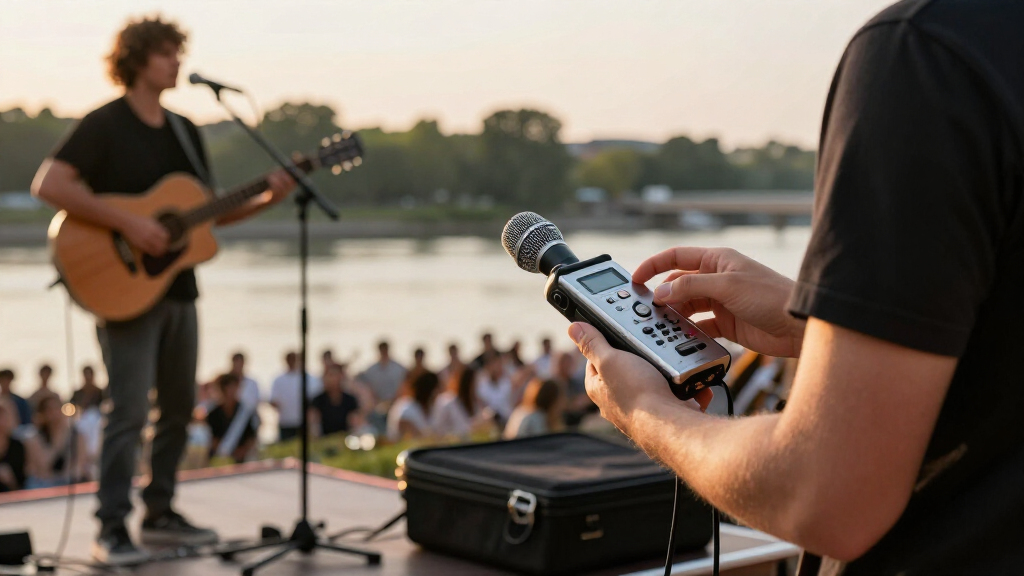
I ranked these portable digital audio recorders by how well each product’s stated design and features match a practical recording job: capturing clear audio, operating easily away from a desk, and getting recordings into a usable form afterward. I separated dedicated handheld recorders from basic voice recorders and AI-focused devices, since a field recording, a lecture note, and a searchable meeting transcript are different needs. The product names and listed features also shaped how much confidence I could place in a particular use case; I avoided treating advertised storage or AI claims as proof of recording quality.
The order gives priority to versatility and a clear recording purpose, then weighs ease of use, portability, and likely workflow tradeoffs. The Zoom H1essential leads as a focused stereo recorder, while the H4essential ranks for buyers who need more capability. AI devices rank well for transcription-oriented workflows but do not replace a dedicated recorder for every use; basic voice recorders are sensible when a simple record-and-playback routine matters more than advanced controls. Where product listings provide limited detail, I treat their exact performance and service terms as points for buyers to verify.
| portable digital audio recorder | Connectivity |
|---|---|
| Gem Wearable AI Voice Recorder | Bluetooth 5 |
| Zoom H1essential Voice Recorde | — |
| EVIDA 128GB Digital Voice Reco | USB 2.0 |
| 64GB Digital Voice Recorder wi | — |
| HoTiyan 8GB Digital Voice Reco | — |
| SOULOG Sense AI Voice Recorder | — |
| Pocket AI Voice Recorder | — |
| EVISTR L357 64GB Digital Voice | USB-C |
| Zoom H4essential Handheld Reco | — |
| Zoom H1essential Stereo Record | USB-C |
| 136GB Digital Voice Recorder w | USB-C |
| Plaud Note Pro AI Voice Record | Bluetooth 5 |
| Plaud Note Pro AI Voice Record | Bluetooth 5 |
| Plaud NotePin S Wearable AI Vo | Bluetooth 5 |
| Digital Voice Recorder 16GB Vo | USB |
Factors to Consider When Choosing Portable Digital Audio Recorders
Before choosing a recorder, decide what you need after the recording ends. A device that captures stereo audio, one that records spoken notes, and one that generates transcripts can all be portable while serving very different workflows. These factors help narrow the field without assuming that more features or more listed storage automatically make a better fit.
Match the recorder to the sound source
Start with what you plan to record most often: a single speaker, a lecture, an interview, music, or ambient sound. A straightforward voice recorder can be adequate for spoken reminders, while dedicated stereo models make more sense when the sound’s space and detail matter. Buyers often overbuy recording complexity for voice memos or underbuy it for music and multi-source sessions. Think about microphone placement and whether you need to connect an external microphone, not just the device’s headline feature list. If the source changes from day to day, favor adaptable inputs and controls over the smallest body. The right match can matter more than a large storage figure.
Choose between recording and transcription
AI-oriented recorders are designed to make spoken content easier to search, summarize, or share, while traditional recorders focus on creating audio files. Those are complementary jobs, not interchangeable measures of quality. Before choosing an AI model, check how transcription is accessed, whether an account or app is required, what languages and export options are supported, and whether any ongoing service terms apply. A transcript can save time for meetings, but it may still need correction, especially with multiple speakers or noisy rooms. If you mainly need an original audio file for editing, a dedicated recorder may be the simpler path. Choose AI when the text workflow is a real part of your routine, not just an appealing extra.
Treat storage claims as a workflow question
Stated capacity can help estimate how much audio a device may hold, but recording format and quality settings affect actual recording time. Large numbers alone do not tell you how easily files can be transferred, organized, or backed up. Ask how the recorder connects to a computer or phone and whether its files use formats your usual software can open. A removable memory card can offer a different path from built-in storage, while either approach still benefits from regular backups. Buyers who record short classes or meetings may value simple file access more than maximum capacity. For long sessions, confirm the expected recording settings and file-management steps before relying on the device.
Balance portability with controls and connections
A pocket-sized or wearable recorder is easier to carry and can be less conspicuous, but small controls may be harder to operate quickly. Handheld models generally give more room for direct controls and microphone connections, which can help when recording conditions change. Consider whether you will start recordings one-handed, clip the device to clothing, or place it on a table. Also check charging arrangements and how the recorder behaves when you need to monitor or connect an external microphone. A compact shape is useful only if it fits the way you actually capture audio. For planned sessions, an extra few seconds of setup may be a fair trade for more control.
Prioritize the features you will use repeatedly
Voice activation, playback, transcription, summaries, and external microphone support can all be useful, but each adds a different kind of value. Voice activation may reduce empty recording time, yet it is not a substitute for checking how a device handles quiet speech or pauses. Playback on the recorder can help with quick checks, while an app-based workflow may be better for reviewing longer files. Avoid paying attention to feature count without asking whether a feature removes a recurring task for you. A simpler device is often easier to learn and operate reliably. The best upgrade is the one that improves a regular recording habit rather than an occasional one.
Check privacy, file access, and service terms
Recordings can contain sensitive conversations, class material, or work discussions, so device and service choices have privacy implications. AI transcription may involve sending audio to a connected app or service; review the provider’s current data handling and account terms before recording private material. Also confirm whether you can export original audio and transcripts in practical formats, and whether recordings remain accessible if you stop using a service. A device with local recording may still rely on an app for convenient organization. Keep consent rules in mind when recording other people, since requirements vary by location and setting. These checks can prevent a portable recorder from becoming a hard-to-manage archive.
Frequently Asked Questions
Should I choose the Zoom H1essential or the Zoom H4essential?
I would choose the H1essential if your priority is a dedicated stereo recorder for direct, portable capture. The H4essential is the better fit when you need more recording flexibility than a basic handheld setup offers. The added capability is less useful if you only record short voice notes or occasional lectures. Decide based on the sources and connections you expect to use, rather than choosing the larger model simply because it offers more. Check the current product details for the inputs and recording features your setup requires.
Are AI voice recorders a good replacement for a conventional audio recorder?
They can replace one for some spoken-word workflows, but not for every recording need. AI-focused models in this lineup emphasize transcription, summaries, or convenient capture, while the Zoom handhelds are more directly centered on audio recording. If you need an original file for editing or want dedicated recording controls, a conventional recorder may be a better match. If searchable notes save you substantial time, AI features can justify a different workflow. Check service access, export options, and privacy terms before making an AI recorder your only device.
Is a recorder with 128GB or 136GB automatically better for long recordings?
No. Capacity is only one part of recording time; file format, quality settings, and whether the device uses internal or removable storage also affect how much audio fits. A high-capacity listing does not tell you how easy it is to retrieve or back up recordings. For long sessions, look for clear information about recording formats, file transfer, and power behavior as well as capacity. If you record short clips, easier controls and file access may matter more than the largest stated number. Confirm the maker’s specifications for your intended recording settings.
What should I check before buying a recorder for lectures or meetings?
Consider where the recorder will sit, how far it will be from the speaker, and whether you need a transcript or just an audio archive. A recorder close to the speaker may capture more usable speech than one placed at the back of a large room, regardless of its feature list. For transcription, review supported languages, speaker handling, export options, and any service requirements. For audio-only use, prioritize straightforward controls, reliable file transfer, and enough capacity for your typical session length. Also check recording permissions and consent rules for the place where you plan to use it.
Is a wearable recorder better than a handheld recorder for everyday notes?
A wearable model may suit frequent, hands-free capture, while a handheld recorder is easier to place deliberately and operate with dedicated controls. The best choice depends on whether you value quick access or direct control more. Wearable devices can raise privacy and consent questions because they are less visible than a recorder held in hand. Check how recording starts and stops, how audio is retrieved, and whether transcription depends on an app or service. For occasional notes, a simple pocket recorder may be easier to manage than a device designed to stay on your person.
Conclusion
For most buyers seeking a dedicated portable recorder, I recommend the Zoom H1essential as the best overall because its role is clear: straightforward stereo recording without making transcription the main event. The best premium-style choice for added recording flexibility is the Zoom H4essential, especially for buyers whose sources and setup demand more than basic capture. For a best value direction, compare the simple EVIDA, EVISTR, HoTiyan, and 16GB recorders by the controls, storage workflow, and playback features you actually need rather than by capacity claims alone. Beginners who want a direct record-and-playback routine should start with one of those straightforward voice recorders; buyers who want searchable notes should consider Plaud, SOULOG, Pocket AI, or Gem instead. For wearable, hands-free capture, look at the Gem wristband or Plaud NotePin S, and check privacy and app requirements before deciding. Pick the device that fits your recording routine and the work you want to do with the file afterward.