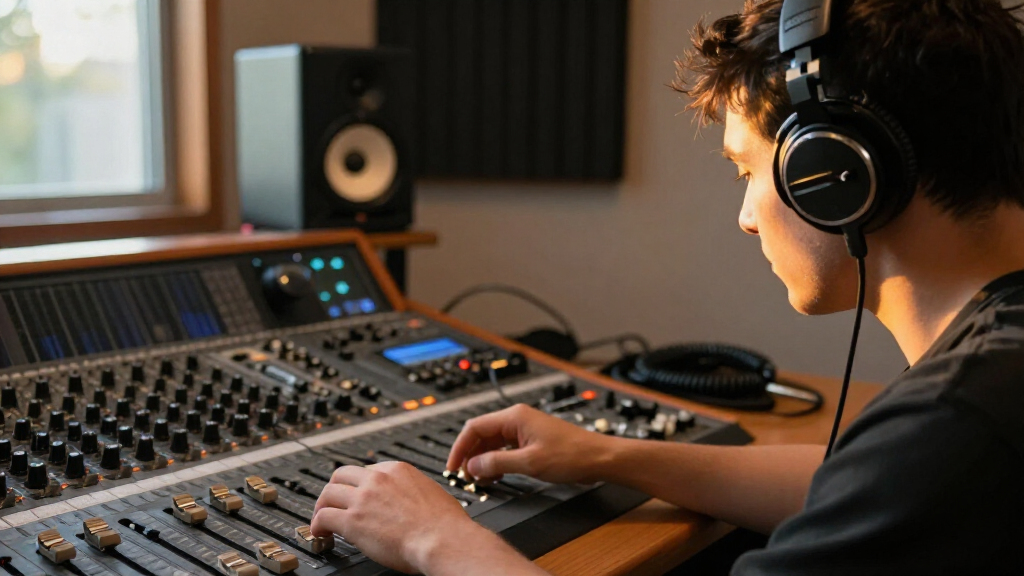

Wireless studio monitor headphones can make recording and everyday listening more flexible, but Bluetooth latency and sound processing can limit their usefulness for precise monitoring. My best overall pick is the Audio-Technica ATH-M50xBT2, which pairs a wireless option with a wired connection for work that needs lower latency. The OneOdio Studio Max 2 stands out for DJ-oriented versatility, while the wired Sony MDR-7506 is a familiar studio-style alternative when wireless is not a requirement. The main tradeoff is convenience versus a dependable, low-latency signal, with fit, isolation, and open- or closed-back design also shaping the choice. Read on for the full breakdown and a guide to matching these options to your setup.

Get audio and creator gear delivered free with Prime
- Fast, free delivery on millions of items
- Prime Video, Amazon Music and more included
- Member-only deals all year
Complete the kit


Key Takeaways
- The ATH-M50xBT2 is the most balanced wireless pick in this lineup because it offers Bluetooth convenience alongside wired listening; use the wired connection when timing and monitoring reliability matter.
- Wireless does not automatically mean studio-ready. Bluetooth latency can interfere with recording or live monitoring, so the wired models remain relevant even though the search is for wireless headphones.
- The OneOdio Studio Max 2 and Studio Max 1 serve DJ-style needs better than a simple Bluetooth-versus-wired comparison suggests, but buyers should check their preferred connection and work routine before choosing.
- Open-back models such as the beyerdynamic DT 990 PRO and Audio-Technica ATH-R50X suit spacious listening, not noisy rooms or microphone recording, where sound leakage and limited isolation can be a problem.
- Several entries are wired siblings or duplicate ATH-M20x listings. Compare the M20x, M20xBT, M30x, and M50xBT2 by connectivity and intended use rather than assuming each listing represents a distinct wireless option.
| Audio-Technica ATH-M50xBT2 Wireless Over-Ear Headphones, Black |  | Best Wireless All-Rounder | Driver size: 45 mm | Battery life: Up to 50 hours | Quick charge: Up to 3 hours of use from a 10-minute charge | VIEW LATEST PRICE | See Our Full Breakdown |
| OneOdio Studio Max 2 Wireless DJ Headphones |  | Best for Wireless Studio Flexibility | Driver size: 45 mm | Latency: 9 ms | Audio codec: LDAC | VIEW LATEST PRICE | See Our Full Breakdown |
| Audio-Technica ATH-M20x Professional Studio Monitor Headphones, White |  | Best Wired Studio Alternative | Driver size: 40 mm | Sensitivity: 96 dB | Frequency response: 15–20 kHz | VIEW LATEST PRICE | See Our Full Breakdown |
| Sony MDR-7506 Professional Over-Ear Headphones | 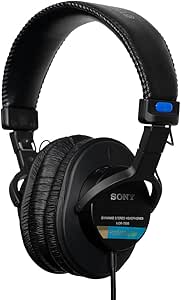 | Best for Closed-Back Wired Monitoring | Driver size: 40 mm | Frequency response: 10 Hz–20 kHz | Cord length: 9.8 ft | VIEW LATEST PRICE | See Our Full Breakdown |
| beyerdynamic DT 990 PRO 250 Ohm Open-Back Studio Headphones |  | Best for Open-Back Mixing | Impedance: 250 ohm | Design: Open-back, over-ear | Driver type: Dynamic | VIEW LATEST PRICE | See Our Full Breakdown |
| OneOdio A70 Bluetooth Over-Ear Headphones |  | Best Value for Wired-and-Wireless Flexibility | Connectivity: Bluetooth and wired | Wireless playtime: Up to 72 hours | Drivers: 40 mm neodymium | VIEW LATEST PRICE | See Our Full Breakdown |
| Audio-Technica ATH-M20x Professional Studio Monitor Headphones |  | Best for Budget-Conscious Wired Tracking | Driver size and type: 40 mm dynamic | Frequency response: 15–20,000 Hz | Sensitivity: 96 dB | VIEW LATEST PRICE | See Our Full Breakdown |
| Audio-Technica ATH-R50X Open-Back Headphones |  | Best for Open-Back Mixing | Design: Fully open-back | Weight: 7.36 ounces (207 g) | Cable lengths: 9.8 ft (3.0 m) and 3.9 ft (1.2 m), detachable | VIEW LATEST PRICE | See Our Full Breakdown |
| OneOdio Studio Max 1 Wireless DJ and Wired Studio Headphones |  | Best for Wireless DJ Monitoring | Connectivity: Bluetooth and wired | Bluetooth version: 5.2 listed in specifications; description states 5.3 | Driver size: 50 mm | VIEW LATEST PRICE | See Our Full Breakdown |
| Audio-Technica ATH-M20xBT Wireless Over-Ear Headphones, Black |  | Best for Everyday Wireless Studio Use | Driver size: 40 mm | Impedance: 36 ohms | Connectivity: Bluetooth and wired 3.5 mm | VIEW LATEST PRICE | See Our Full Breakdown |
| Audio-Technica ATH-M30x Professional Studio Monitor Headphones |  | Best for Portable Wired Monitoring | Brand: Audio-Technica | Model: ATH-M30x | Driver size: 40 mm | VIEW LATEST PRICE | See Our Full Breakdown |
| Audio-Technica ATH-M50x Professional Studio Monitor Headphones, Black | 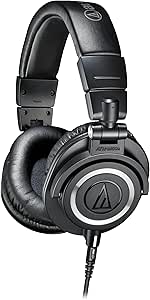 | Best for One-Ear Monitoring | Brand: Audio-Technica | Model: ATH-M50x | Driver size: 45 mm | VIEW LATEST PRICE | See Our Full Breakdown |
| Sony MDR-M1 Professional Closed-Back Monitor Headphones | 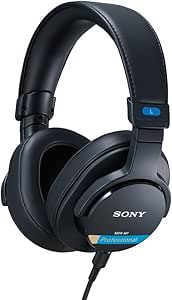 | Best Lightweight Wired Monitor | Brand: Sony | Model: MDR-M1 | Type: Closed-back over-ear monitor headphones | VIEW LATEST PRICE | See Our Full Breakdown |
| wireless studio monitor headphone | Warranty | Driver size | Frequency response | Impedance |
|---|---|---|---|---|
| Audio-Technica ATH-M50xBT2 Wir | One-year limited end-user warranty | 45 mm | — | — |
| OneOdio Studio Max 2 Wireless | 2 years | 45 mm | 20 Hz–40 kHz | — |
| Audio-Technica ATH-M20x Profes | 2 years | 40 mm | 15–20 kHz | 47 Ω |
| Sony MDR-7506 Professional Ove | — | 40 mm | 10 Hz–20 kHz | — |
| beyerdynamic DT 990 PRO 250 Oh | — | — | 5 Hz–35,000 Hz | 250 ohm |
| OneOdio A70 Bluetooth Over-Ear | 24 months | — | — | — |
| Audio-Technica ATH-M20x Profes | 2 years on parts and labor | — | 15–20,000 Hz | 47 ohms |
| Audio-Technica ATH-R50X Open-B | 2 years | — | — | — |
| OneOdio Studio Max 1 Wireless | 2 years | 50 mm | — | — |
| Audio-Technica ATH-M20xBT Wire | — | 40 mm | — | 36 ohms |
| Audio-Technica ATH-M30x Profes | 2 years on parts and labor | 40 mm | — | 38 ohms |
| Audio-Technica ATH-M50x Profes | — | 45 mm | Up to 28,000 Hz | 38 ohms |
| Sony MDR-M1 Professional Close | 1 year | — | 5 Hz–80 kHz | 50 ohms |
More Details on Our Top Picks
Audio-Technica ATH-M50xBT2 Wireless Over-Ear Headphones, Black
Among the wireless options here, the ATH-M50xBT2 is the most balanced fit for listeners who want familiar closed-back monitoring-style headphones without staying tethered to a desk. Its 45 mm drivers, app-based EQ, and low-latency mode offer more sound adjustment than a basic Bluetooth pair, while multipoint pairing makes switching between a computer and phone easier. Compared with the OneOdio Studio Max 2, it gives up 2.4 GHz connectivity and the much longer stated battery life, but brings a clearly specified companion app and dual beamforming microphones for calls. The up-to-50-hour battery suits long stretches away from a charger, though a full charge takes 3.5 hours. I would treat it as a wireless listening and reference companion, not a replacement for a wired monitor when dependable studio signal and mixing accuracy matter most.
Pros:- Up to 50 hours of battery life, with a 10-minute charge providing up to three hours of use
- Multipoint Bluetooth connects to two devices at once
- App-based EQ customization and low-latency mode add flexibility
- Dual beamforming microphones support clearer calls
Cons:- Bluetooth operation is not a substitute for a wired, dependable studio monitoring path
- A full battery charge takes 3.5 hours
- The included charging cable is only 30 cm long
Best for: Home producers and audio editors who want closed-back wireless headphones for casual checks, computer listening, and calls, with the option to adjust EQ.
Not ideal for: Mix engineers who need a wired-first monitoring setup or DJ users who want 2.4 GHz wireless and the Studio Max 2’s longer stated battery life.
- Driver size:45 mm
- Battery life:Up to 50 hours
- Quick charge:Up to 3 hours of use from a 10-minute charge
- Bluetooth pairing:Multipoint; connects to two devices at once
- Microphones:Dual microphones with beamforming
- Charging connection:USB-C
- Included audio cable:1.2 m
- Warranty:One-year limited end-user warranty
Our verdict“Choose the ATH-M50xBT2 if you want an adaptable wireless companion for everyday listening and light monitoring rather than a dedicated wired mixing headphone.”
OneOdio Studio Max 2 Wireless DJ Headphones
The Studio Max 2 offers the broadest connection toolkit in this group: 2.4 GHz wireless, Bluetooth 6.0, and wired listening, with 3.5 mm and 6.35 mm connections and several cables included. That makes it a stronger fit for moving between a DJ setup, computer, and mobile device than the Audio-Technica ATH-M50xBT2, which is centered on Bluetooth and wired use. Its stated 9 ms latency and LDAC support suit responsive monitoring and compatible high-quality wireless playback, while up to 120 hours of playback reduces charging interruptions. Memory foam cushions and swivel cups add practical comfort and monitoring flexibility. The tradeoff is that wireless convenience and a broad feature set do not make it equivalent to a dedicated wired reference headphone; buyers focused on critical mix decisions may prefer a purpose-built wired model such as the Sony MDR-7506.
Pros:- Supports 2.4 GHz wireless, Bluetooth 6.0, and wired listening
- Up to 120 hours of wireless playback, with a five-minute charge providing up to nine hours
- Includes 3.5 mm and 6.35 mm connections and multiple cables
- Memory foam earcups and 180-degree swivel cups suit extended sessions and monitoring
Cons:- Wireless feature versatility does not replace a dedicated wired reference setup for critical mixing
- The supplied specs do not state a weight, making fit comparisons harder
- Its multiple connection modes may be unnecessary complexity for buyers who only monitor from one source
Best for: DJs and home-studio users who need one headphone for low-latency wireless monitoring, Bluetooth listening, and wired connections across multiple setups.
Not ideal for: Mixers seeking a strictly wired reference pair, or buyers who do not need multiple connection modes and prefer a simpler headphone.
- Driver size:45 mm
- Latency:9 ms
- Audio codec:LDAC
- Frequency response:20 Hz–40 kHz
- Wireless connectivity:2.4 GHz and Bluetooth 6.0
- Wired connections:3.5 mm and 6.35 mm
- Battery life:Up to 120 hours
- Warranty:2 years
Our verdict“Pick the Studio Max 2 if you need a flexible DJ and studio headphone that can move between wireless and wired sources without frequent charging.”
Audio-Technica ATH-M20x Professional Studio Monitor Headphones, White
The ATH-M20x is the straightforward wired monitor choice for buyers who value isolation and a direct connection over wireless convenience. Its circumaural design helps reduce surrounding sound during recording or focused editing, and the 40 mm drivers are described as tuned for stronger low-frequency performance. Compared with the wireless ATH-M50xBT2, this model gives up Bluetooth, app EQ, and mobility; in return, it keeps the setup simple and avoids relying on a battery for playback. The single-side cable and 3.5 mm connection suit a basic interface or computer setup, while its 261 g weight is a useful fit reference. Its plastic build and 15 Hz–20 kHz stated response place it below more feature-rich monitoring options, and it cannot meet the wireless promise of this roundup. I include it as a practical wired counterpoint, not as a wireless pick.
Pros:- Circumaural design helps isolate the listener from surrounding noise
- 40 mm drivers are tuned for enhanced low-frequency performance
- Single-side wired connection keeps cable routing simple
- 261 g weight and durable plastic construction suit basic studio use
Cons:- No Bluetooth or wireless capability
- Plastic construction may feel less premium than alternatives
- Stated frequency response ends at 20 kHz
Best for: New home-studio users recording vocals or editing near a computer who want closed-back isolation and do not need wireless playback.
Not ideal for: Buyers specifically seeking wireless studio monitor headphones, or producers who need Bluetooth, a detachable cable, or a more premium build.
- Driver size:40 mm
- Sensitivity:96 dB
- Frequency response:15–20 kHz
- Impedance:47 Ω
- Weight:261 g
- Connectivity:Wired, 3.5 mm jack
- Cable exit:Single-side
- Warranty:2 years
Our verdict“Choose the ATH-M20x only if wired isolation matters more than wireless freedom and you want a simple entry-level studio monitor.”
Sony MDR-7506 Professional Over-Ear Headphones
The Sony MDR-7506 prioritizes a familiar wired studio setup over the wireless convenience promised by this roundup. Its closed-ear design helps limit outside noise, while the 9.8-foot cord gives room to move around a workstation without relying on Bluetooth or charging. Compared with the Audio-Technica ATH-M50xBT2, the MDR-7506 is less flexible for calls and mobile listening, but its included 1/4-inch adapter and foldable construction make it more directly suited to traditional studio connections and storage. The 40 mm drivers and 10 Hz–20 kHz response provide useful reference specifications, though they do not establish wireless performance. Its fixed, non-detachable cord is the main practical compromise: damage or cable snags are harder to address than with a replaceable lead. I rank it as a wired monitoring alternative, not a wireless recommendation.
Pros:- Closed-ear design helps reduce external noise
- Long 9.8-foot cord supports movement around a studio desk
- Folding construction and included soft case ease storage
- Includes a 1/4-inch adapter for studio connections
Cons:- Wired only, so it does not meet a need for wireless monitoring
- The 9.8-foot cord is non-detachable
- The long cable can be cumbersome outside a fixed studio setup
Best for: Recording and editing users who need closed-back wired headphones with a long cord and a 1/4-inch adapter for studio equipment.
Not ideal for: Anyone who requires Bluetooth, freedom from a cable, or a detachable lead for easier replacement.
- Driver size:40 mm
- Frequency response:10 Hz–20 kHz
- Cord length:9.8 ft
- Cord type:Non-detachable OFC cord
- Connectivity:Wired
- Design:Closed-ear, foldable
- Weight:8 oz
- Included:Soft case and 1/4-inch adapter
Our verdict“Choose the MDR-7506 for closed-back, wired studio monitoring with a long lead, and skip it if wireless use is a requirement.”
beyerdynamic DT 990 PRO 250 Ohm Open-Back Studio Headphones
The DT 990 PRO is the open-back specialist in this lineup, aimed at mixing and monitoring where a spacious stereo image matters more than isolation or wireless movement. Its open construction lets sound escape, so it is better suited to a quiet room than recording beside a microphone or listening around others. Compared with the closed-back Sony MDR-7506, it offers a wider, more natural presentation by design, but provides less isolation and privacy. The 250-ohm impedance also makes an interface or headphone amplifier a sensible pairing for adequate drive; it is less convenient than the wireless ATH-M50xBT2 for casual listening. Replaceable velour pads and a spring-steel headband are practical advantages for long sessions, yet its fixed 3 m coiled cable keeps it firmly tethered. This is a wired mixing option, not a wireless monitor headphone.
Pros:- Open-back construction provides a wide stereo image for mixing and monitoring
- Replaceable velour ear pads support long sessions
- Spring-steel headband offers a sturdy adjustable design
- Includes a 3 m coiled cable and 1/4-inch adapter
Cons:- Wired design limits movement compared with the ATH-M50xBT2
- 250-ohm impedance is best paired with a headphone amplifier or audio interface
- Open-back design leaks sound and offers little isolation
Best for: Mixers working in a quiet room with an audio interface or headphone amplifier who prefer an open-back stereo presentation.
Not ideal for: Wireless buyers, vocalists recording near an open microphone, or anyone monitoring in shared spaces where sound leakage is a problem.
- Impedance:250 ohm
- Design:Open-back, over-ear
- Driver type:Dynamic
- Frequency response:5 Hz–35,000 Hz
- Sensitivity:96 dB
- Cable:Fixed 3 m coiled cable
- Ear pad material:Replaceable velour
- Weight:0.4 kg
Our verdict“Choose the DT 990 PRO for open-back mixing in a quiet, properly equipped studio, not for wireless listening or recording isolation.”
OneOdio A70 Bluetooth Over-Ear Headphones
The OneOdio A70 earns its place for buyers who want one pair for casual wireless listening and wired sessions at studio equipment. Its 3.5 mm and 6.35 mm cables make connecting to different devices straightforward, while the jack-lock design helps keep a wired connection secure. Compared with the OneOdio Studio Max 1, it offers simpler connectivity and a shorter feature list, but still delivers the essential Bluetooth-and-cable flexibility without a transmitter. Up to 72 hours of wireless playback reduces charging interruptions; wired use remains available when the battery runs out. The tradeoff is that this is a convenient hybrid, not a dedicated wireless reference monitor: the supplied details do not establish a neutral tuning profile, and its foldable over-ear build may feel bulky for daily carry.
Pros:- Bluetooth and wired listening provide flexibility across casual and studio setups.
- Includes 3.5 mm and 6.35 mm cables for connecting to common audio gear.
- Up to 72 hours of wireless playback between charges.
- Foldable, rotating earcups make storage and fit adjustment easier.
Cons:- The listed details do not establish a neutral reference sound, limiting confidence for critical mix decisions.
- Wireless listening depends on battery charge, even though wired listening remains an option.
- Over-ear construction can be bulky to carry compared with more compact headphones.
Best for: Home producers and hobbyists who want Bluetooth for everyday listening plus included connections for studio interfaces or mixers.
Not ideal for: Mix engineers who need a clearly specified reference tuning or travelers prioritizing a compact, lightweight pair.
- Connectivity:Bluetooth and wired
- Wireless playtime:Up to 72 hours
- Drivers:40 mm neodymium
- Included cables:3.5 mm to 6.35 mm and 3.5 mm to 3.5 mm
- Microphone:Built-in HD microphone with noise reduction
- Design:Foldable, rotating over-ear cups
- Weight:8.96 ounces
- Warranty:24 months
Our verdict“Choose the A70 if you want an affordable-feeling wired-and-wireless workflow with studio connections included, not a proven neutral reference monitor.”
Audio-Technica ATH-M20x Professional Studio Monitor Headphones
The Audio-Technica ATH-M20x is the most straightforward studio-focused choice here: it is built for wired tracking and mixing rather than wireless convenience. Its circumaural earcups help limit outside sound reaching the listener, a practical advantage when recording near speakers or other activity. The 9.8-foot single-sided cable gives room to move around a workstation, though that same length is awkward for portable listening. Compared with the wireless ATH-M20xBT, this version avoids dependence on charging and keeps the setup simple, but gives up Bluetooth and multipoint pairing. Its 40 mm drivers are tuned for enhanced low-frequency performance, which can help make bass easier to hear but is not, by itself, proof of a neutral reference response. I would pick it for wired studio tasks, not for a wireless-first headphone setup.
Pros:- Designed specifically for studio tracking and mixing.
- Circumaural earcups provide sound isolation for recording environments.
- Single-sided 9.8-foot cable offers useful reach around a workstation.
- Includes a 6.3 mm adapter for connecting to studio equipment.
Cons:- Wired-only design restricts movement and does not suit wireless listening.
- The 9.8-foot cable can be cumbersome outside a fixed studio setup.
- Enhanced low-frequency tuning may not suit buyers seeking a documented neutral response.
Best for: New home-studio owners who need a wired pair for tracking and basic mixing, especially in a space where isolation helps.
Not ideal for: Buyers who require Bluetooth, freedom from a long cable, or headphones for commuting and mobile use.
- Driver size and type:40 mm dynamic
- Frequency response:15–20,000 Hz
- Sensitivity:96 dB
- Impedance:47 ohms
- Design:Over-ear, circumaural
- Cable:9.8 ft (2.99 m), single-sided
- Included adapter:6.3 mm
- Warranty:2 years on parts and labor
Our verdict“Pick the ATH-M20x for simple, isolated wired tracking; choose the ATH-M20xBT instead if wireless listening matters more than a dedicated studio cable setup.”
Audio-Technica ATH-R50X Open-Back Headphones
The Audio-Technica ATH-R50X serves a different studio job from the closed-back options: its fully open earcups support a spacious presentation suited to critical listening, mixing, and mastering in a quiet room. The lightweight 7.36-ounce build and two detachable cable lengths also make it better suited to long sessions than a fixed-cable design such as the ATH-M20x. Its reported strengths in bass and midrange accuracy give mix decisions a useful focus, while the expansive soundstage can help with judging placement. This is not a wireless headphone, however, so it does not meet the wireless part of this roundup’s brief on its own. Open construction also leaks sound in both directions and offers little isolation. I would choose it for stationary reference work, not tracking near a microphone or listening in shared, noisy spaces.
Pros:- Open-back design creates an expansive presentation for critical listening.
- Reported accurate bass and mids suit mixing and mastering work.
- Lightweight 7.36-ounce construction supports long sessions.
- Two detachable cable lengths and a 6.3 mm adapter add connection flexibility.
Cons:- No wireless connectivity is specified, so it cannot serve as a Bluetooth studio monitor.
- Open earcups provide little isolation and leak audio to nearby microphones or people.
- Not suited to noisy environments or recording situations that require sound containment.
Best for: Mixers and mastering-focused listeners working in quiet rooms who value an open presentation and lightweight comfort over wireless operation.
Not ideal for: Wireless-first buyers, recording musicians who need isolation, or anyone monitoring in a noisy or shared space.
- Design:Fully open-back
- Weight:7.36 ounces (207 g)
- Cable lengths:9.8 ft (3.0 m) and 3.9 ft (1.2 m), detachable
- Connector:2.5 mm twist-lock
- Plug:3.5 mm gold-plated stereo mini-plug
- Adapter:6.3 mm
- Headband:Lightweight construction
- Warranty:2 years
Our verdict“Choose the ATH-R50X for quiet-room open-back reference work, but skip it if wireless playback or isolation is part of your studio setup.”
OneOdio Studio Max 1 Wireless DJ and Wired Studio Headphones
The OneOdio Studio Max 1 is the most feature-packed wireless option in this batch for DJs who also need wired studio connections. Its 180-degree rotating earcups support single-ear monitoring, and the included 3.5 mm and 6.35 mm cables make it easier to move between consumer gear and mixer or interface outputs. Compared with the OneOdio A70, it adds a transmitter, low-latency support, LDAC, and a longer stated wireless runtime; those extras make it more capable for DJ and multi-device use, but also add complexity. The listed latency is 20 ms, and playback reaches up to 120 hours over Bluetooth, or 50 hours with the transmitter. One specification mismatch remains: Bluetooth is listed as version 5.2 in the specs while the description says 5.3. It is a flexible tool, not a substitute for a clearly characterized neutral reference pair.
Pros:- Bluetooth and wired connections support both mobile listening and studio or DJ gear.
- 180-degree rotating earcups enable single-ear monitoring.
- Long stated battery life, with up to 120 hours over Bluetooth and 50 hours with the transmitter.
- Includes 3.5 mm and 6.35 mm cables and a travel case.
Cons:- Bluetooth version information conflicts: the specs list 5.2 while the description says 5.3.
- The feature set is more complex than the simpler OneOdio A70.
- The supplied details do not establish a neutral tuning profile for critical reference work.
Best for: DJs and hybrid creators who need single-ear monitoring, wireless playback, and wired connections to studio or DJ equipment.
Not ideal for: Mixers seeking a documented neutral reference profile, or buyers who want unambiguous Bluetooth specifications and a simpler setup.
- Connectivity:Bluetooth and wired
- Bluetooth version:5.2 listed in specifications; description states 5.3
- Driver size:50 mm
- Latency:20 ms
- Battery life:Up to 120 hours in Bluetooth mode; up to 50 hours with transmitter
- Audio features:Hi-Res Audio, LDAC, and LC3 decoding
- Included connections:3.5 mm and 6.35 mm cables; 1/4-inch to 1/8-inch adapter
- Design:Foldable with 180-degree rotating earcups
- Warranty:2 years
Our verdict“Choose the Studio Max 1 for feature-rich wireless DJ monitoring and broad wired compatibility, not for a no-frills neutral mixing reference.”
Audio-Technica ATH-M20xBT Wireless Over-Ear Headphones, Black
The Audio-Technica ATH-M20xBT is the clearest fit for buyers who want a wireless everyday headphone that can also connect by cable when a studio session calls for it. Its Bluetooth multipoint pairing lets two devices stay connected, which is handy for switching between a computer and phone without repeatedly pairing. Up to 60 hours of battery life and USB-C rapid charging make it more convenient away from the desk than the wired ATH-M20x, while the included 1.2 m cable preserves a direct listening option. That convenience comes with a limitation: the product data describes detailed sound, clear mids, and enhanced bass, but does not establish a neutral reference response. There is also no noise control, and wireless use requires a charged battery. I’d choose it for flexible daily listening and light studio work, not as my sole critical mixing monitor.
Pros:- Bluetooth multipoint pairing connects two devices for easier switching.
- Up to 60 hours of battery life supports extended wireless use.
- USB-C rapid charging provides up to three hours of use from a 10-minute charge.
- Included 3.5 mm cable allows wired listening when preferred.
Cons:- No noise control is provided.
- Wireless listening requires a charged battery.
- Enhanced bass tuning is not the same as a documented neutral reference response.
Best for: Home-studio users who also listen on a phone or laptop and want multipoint Bluetooth, long battery life, and a wired fallback.
Not ideal for: Critical mix engineers needing a documented neutral response, or listeners who require noise control or cable-free use without charging.
- Driver size:40 mm
- Impedance:36 ohms
- Connectivity:Bluetooth and wired 3.5 mm
- Multipoint pairing:Connects to two devices
- Battery life:Up to 60 hours
- Rapid charging:Up to 3 hours of use from a 10-minute charge
- Included cable:1.2 m (3.9 ft), 3.5 mm stereo mini-plug
- Weight:7.6 ounces
- Noise control:None
Our verdict“Pick the ATH-M20xBT for everyday wireless convenience with a wired fallback, but use a more clearly reference-oriented headphone for critical mix decisions.”
Audio-Technica ATH-M30x Professional Studio Monitor Headphones
The ATH-M30x is the practical pick for wired monitoring on the move, with a collapsible closed-back design that packs more easily than the bulkier ATH-M50x. Its 40 mm drivers are tuned for detailed sound and clear midrange, making it useful for checking vocals and other mid-focused material. Contoured earcups provide passive isolation, which can help keep outside noise from distracting during tracking, though they do not cancel noise electronically.
Compared with the ATH-M50x, this model has smaller drivers and fewer supplied workflow details, so it is the more straightforward option rather than the stronger choice for one-ear monitoring. The included protective case and screw-on adapter add practical value for field kits. It is still wired, and its closed-back presentation will not suit buyers who want the more open sound of a headphone such as the DT 990 PRO.
Pros:- 40 mm drivers are tuned for detail and midrange definition.
- Contoured closed-back earcups provide passive sound isolation.
- Collapsible construction is convenient for storage and field use.
- Includes a protective case and screw-on adapter.
Cons:- Wired-only connectivity limits movement around a studio.
- Passive isolation does not provide active noise cancellation.
- Closed-back sound will not suit buyers who prefer an open-back listening presentation.
Best for: Mobile recording hobbyists and students who need compact, wired closed-back headphones for vocal checks and tracking.
Not ideal for: Listeners seeking wireless freedom, active noise cancellation, or an open-back presentation for spacious mixing.
- Brand:Audio-Technica
- Model:ATH-M30x
- Driver size:40 mm
- Impedance:38 ohms
- Design:Closed-back, over-ear
- Noise control:Passive noise isolation
- Cable:Single-sided
- Warranty:2 years on parts and labor
Our verdict“Choose the ATH-M30x for compact, wired tracking and midrange checks, but pick the ATH-M50x if one-ear monitoring is a priority.”
Audio-Technica ATH-M50x Professional Studio Monitor Headphones, Black
The ATH-M50x earns its place for studio workflows that call for detailed closed-back monitoring and quick one-ear checks. Its 45 mm drivers and stated response up to 28,000 Hz distinguish it from the smaller-driver ATH-M30x, while the 90-degree swiveling earcups make it easier to monitor a source without fully covering both ears. Sound-isolating earcups also help limit distractions during recording.
The detachable cable is a useful advantage over the ATH-M30x’s single-sided cable arrangement: it can be removed for storage or replacement. That versatility comes with a wired-only setup, so it does not meet the wireless brief as well as the ATH-M50xBT2. Nor is it water resistant, making it a studio tool rather than a choice for wet or rugged settings. Buyers who want a lighter, very broad-range closed-back option may prefer Sony’s MDR-M1, though it lacks the M50x’s specified swivel feature.
Pros:- 45 mm dynamic drivers and a stated frequency response up to 28,000 Hz.
- 90-degree swiveling earcups support one-ear monitoring.
- Sound-isolating over-ear design helps reduce studio distractions.
- Detachable cable and durable earpad and headband materials suit regular use.
Cons:- Wired connectivity restricts movement compared with wireless roundup options.
- Not water resistant.
- Closed-back listening may feel less open than the DT 990 PRO.
Best for: Recording engineers, DJs, and home-studio users who need closed-back isolation and frequent one-ear monitoring.
Not ideal for: Buyers who need wireless listening, water resistance, or a headphone designed for outdoor and wet use.
- Brand:Audio-Technica
- Model:ATH-M50x
- Driver size:45 mm
- Driver type:Dynamic
- Frequency response:Up to 28,000 Hz
- Impedance:38 ohms
- Sensitivity:99 dB
- Earcup swivel:90 degrees
- Cable:Detachable
Our verdict“Pick the ATH-M50x for wired studio work where one-ear monitoring matters more than wireless convenience.”
Sony MDR-M1 Professional Closed-Back Monitor Headphones
The Sony MDR-M1 is the comfort-focused pick among these wired studio monitors: at approximately 216 g, it is lighter than the ATH-M50x by design positioning, and its soft, thick earpads are aimed at extended sessions. The closed-back construction supplies isolation for monitoring, while the listed 5 Hz–80 kHz response gives it a broader stated range than the ATH-M50x’s published upper limit. That specification describes range, not a guarantee of more accurate results, so buyers should weigh fit and workflow too.
Two detachable cables and replaceable earpads make the MDR-M1 easier to maintain than a fixed-cable setup, and it includes both 3.5 mm and 6.3 mm stereo jacks. Unlike the ATH-M50x, however, the supplied details do not list swiveling earcups for one-ear monitoring. It is also wired only, so it is a poor match for anyone specifically seeking wireless studio monitoring; the ATH-M50xBT2 better fits that use.
Pros:- Approximately 216 g lightweight construction.
- Soft, thick earpads are suited to extended studio sessions.
- Closed-back design provides sound isolation for monitoring.
- Two detachable cables and replaceable earpads support maintenance.
Cons:- Wired connection limits movement during recording or production.
- Over-ear fit may not suit buyers who prefer smaller headphones.
- No one-ear swivel feature is listed, unlike the ATH-M50x.
Best for: Producers and editors who wear headphones for long sessions and want a lightweight, serviceable closed-back wired monitor.
Not ideal for: Buyers who need wireless connectivity, compact on-ear headphones, or 90-degree swivel cups for one-ear monitoring.
- Brand:Sony
- Model:MDR-M1
- Type:Closed-back over-ear monitor headphones
- Frequency response:5 Hz–80 kHz
- Weight:Approximately 216 g
- Impedance:50 ohms
- Connectivity:3.5 mm and 6.3 mm stereo jacks
- Cables:Two detachable cables
- Warranty:1 year
Our verdict“Choose the MDR-M1 for lightweight, long-session wired monitoring, but select the ATH-M50x if swiveling cups are part of your workflow.”
How We Picked
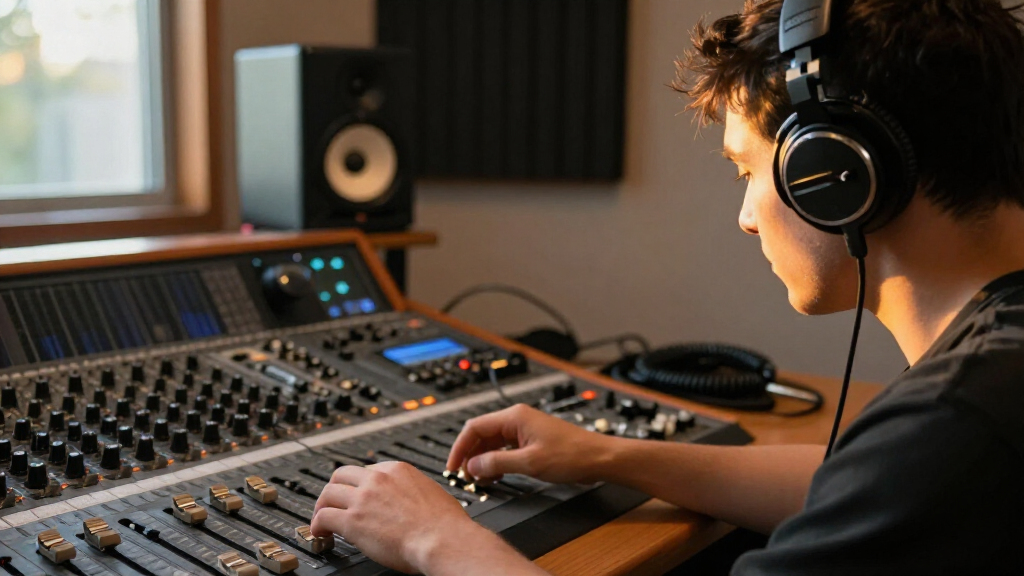
I ranked the 13 listed products by how well they serve someone seeking wireless studio-style listening, while distinguishing that use from low-latency production monitoring. I weighed connection flexibility, the practical role of Bluetooth, studio-oriented design, comfort for longer sessions, isolation or sound leakage, and how clearly each model fits a particular buyer. A wireless feature is useful for playback and casual work, but it does not by itself make a headphone suitable for recording decisions.
The ATH-M50xBT2 leads because it best bridges wireless convenience and wired studio use among the products listed. The OneOdio wireless models follow for buyers whose priorities lean toward DJ use and flexible listening, while wired options are included as useful comparisons—not presented as wireless substitutes. Open-back and closed-back designs are ranked by the situations they suit, and near-duplicate M20x listings are treated as separate listed products without implying that the wired versions have Bluetooth.
Factors to Consider When Choosing Wireless Studio Monitor Headphones
Before choosing, decide what “studio monitor” means in your setup: accurate-enough playback, recording with a microphone, editing, or simply a studio-inspired sound at home. The right choice depends less on a wireless label than on how you connect, where you listen, and whether sound can leak.
Decide When You Actually Need Bluetooth
Bluetooth is convenient for reference listening, moving around a room, or switching between a computer and a phone, but wireless audio can add delay. That delay may make a performer hear their voice or instrument late while recording. A common mistake is to assume that a Bluetooth model will behave like a wired monitor whenever it is connected wirelessly. If you record or edit to a live signal, check whether the headphones can also work by cable and plan to use that mode for timing-sensitive tasks. If your work is mostly playback, arranging, or casual listening, wireless flexibility may matter more than latency. Choose based on the connection you will use for the task, not just the feature list.
Match Open- or Closed-Back Design to Your Room
Closed-back headphones help contain sound and reduce outside noise, which makes them a safer choice near microphones or in shared spaces. Open-back models often feel less sealed and can suit focused listening in a quiet room, but their sound leaks outward and outside noise reaches you more readily. A frequent buying mistake is choosing an open-back design for vocal tracking because it seems more spacious. The leakage can enter a nearby microphone, while a closed-back fit may be more practical even if it feels less airy. Think about who else is in the room and whether a microphone is live before prioritizing openness. The room and recording method can matter more than a small difference in headphone specifications.
Treat “Monitor” as a Use Case, Not a Guarantee
The label “studio monitor” does not guarantee that every headphone presents sound identically or suits every production task. A headphone can be useful for checking edits or tracking without being the sole reference for mix decisions. Compare important mixes on other headphones, speakers, or playback devices rather than trying to correct every balance by memory. If you mainly need to hear performance details while recording, comfort and isolation may outweigh a spacious presentation. If you are making tonal decisions, consistency across listening sessions and familiarity with the headphone matter more than wireless convenience. Avoid buying based on the word “studio” alone; identify the actual decisions you expect to make.
Prioritize Fit for Long Sessions
Clamp pressure, ear-pad space, weight, and heat buildup can decide whether a headphone works for a long editing session. A model that sounds appealing in a short audition may become distracting after an hour if its pads press on the ears or the headband concentrates pressure. Check return terms and fit details before committing when possible, especially if you wear glasses. Over-ear designs can improve comfort for some people, but the category label alone does not guarantee a good fit. Replaceable pads can also affect long-term upkeep, though replacement options vary by model. Give comfort equal weight to sound if your sessions regularly run long.
Compare the Whole Connection Chain
Wireless performance depends on the source device, Bluetooth support, codec compatibility, and whether the headphones can connect to more than one source in your preferred way. Do not assume a particular codec or feature works simply because both devices advertise Bluetooth; check compatibility on both ends. For wired work, confirm the connector, cable length, and whether your interface or computer can drive the headphone comfortably. High-impedance wired models may call for a suitable headphone output, while a wireless model can avoid that particular dependency during casual listening. Think through the actual route from source to ears before choosing. A convenient headphone can still be a poor match if it does not connect cleanly to your gear.
Pay More for a Need, Not a Spec Sheet
A higher-tier model makes sense when it solves a recurring problem, such as needing both wired and wireless use, a particular open-back presentation, or a build suited to frequent handling. Extra features are less valuable if you will listen from one device in one room and rarely move the headphones. At the other end, the lowest-cost wired option may be poor value for a buyer whose main requirement is Bluetooth. Compare the cost of ownership too: cable replacement, pad wear, and the availability of parts can affect how long a pair stays practical. Avoid paying for DJ-focused controls if you do not mix, or for wireless capability if you will always work by cable. Let your routine set the budget ceiling.
Frequently Asked Questions
Can I use Bluetooth headphones for recording vocals?
You can use Bluetooth headphones to listen to playback, but latency may make live vocals feel out of sync with the performance. That delay can lead a singer to adjust timing unnecessarily. For tracking, use a wired connection when the model supports it, or choose a wired headphone such as the Sony MDR-7506 or a wired ATH-M20x. Also check that the closed-back design limits sound leaking into the microphone. Keep Bluetooth for playback between takes rather than assuming it is suitable for monitoring a live input.
Are the wired ATH-M20x models wireless?
No: the listed ATH-M20x Professional Studio Monitor Headphones are wired, while the ATH-M20xBT is the Bluetooth version. The roundup contains two listings for the wired ATH-M20x, so those entries should not be read as separate wireless choices. If wireless connectivity is a firm requirement, compare the M20xBT with the ATH-M50xBT2 and the OneOdio wireless models. If you want a straightforward wired option for studio use, the wired M20x remains a different kind of choice. Check the exact model name before ordering.
Should I choose open-back headphones for mixing?
Open-back headphones can suit quiet-room listening, but they are not automatically the right choice for every mix or room. They leak sound, offer little isolation, and can be distracting around other people or microphones. The DT 990 PRO and ATH-R50X are the open-back options in this roundup, while closed-back models are more practical for tracking and shared spaces. If you mix on open-backs, cross-check decisions on other playback systems and account for your room noise. Choose them for the listening environment and workflow, not for a general promise of better sound.
Is a wireless model a good replacement for a wired studio pair?
It can be a useful all-purpose replacement if you need wireless playback and the model also offers a wired mode for work where delay matters. It is less suitable if your studio routine depends on a consistent, direct connection or if the wireless feature adds cost without serving your day-to-day use. The ATH-M50xBT2 is the clearest hybrid choice in this list, while the wired Sony and Audio-Technica models are direct alternatives for cable-first setups. Check which connection is available during charging and whether it suits your source equipment. Treat wireless as added convenience, not a guarantee of studio performance.
Which type should I choose if I share a room or record near a microphone?
A closed-back model is usually the more practical starting point because it helps limit headphone sound reaching a microphone and reduces some outside noise. Open-back headphones can leak enough sound to become part of a vocal or instrument recording, especially at higher listening levels. Fit also matters: a comfortable seal can make it easier to monitor at a sensible volume. If the room is shared, consider whether other people will hear your playback as well. For a quiet room with no live microphone, an open-back model may still suit focused listening.
Conclusion
For the best overall wireless choice, I would start with the Audio-Technica ATH-M50xBT2 for its blend of Bluetooth convenience and wired use. The best value direction depends on your priority: choose the OneOdio A70 for wireless listening on a simpler feature set, or a wired ATH-M20x if Bluetooth is not needed. For a premium or specialized listening setup, compare the open-back ATH-R50X and DT 990 PRO, while recognizing that neither is a wireless solution. The best beginner choice is the ATH-M20xBT if you want an accessible wireless-and-wired starting point; choose the wired M20x instead if recording latency matters more. For DJ-oriented flexibility, look at the OneOdio Studio Max 2 or Studio Max 1, and for a dependable wired studio-style option, consider the Sony MDR-7506 or Sony MDR-M1. My final advice: pick the connection and enclosure that fit your actual room and workflow, rather than choosing by the word “wireless” alone.
Black Friday Picks

Kindle Paperwhite Signature Edition (2024), 32 GB, Metallic Black
As an affiliate, we earn on qualifying purchases.