
TL;DR

Get audio and creator gear delivered free with Prime
- Fast, free delivery on millions of items
- Prime Video, Amazon Music and more included
- Member-only deals all year
Energy capacity, rather than chip supply or funding, is emerging as the key bottleneck for AI development. The US and China face different infrastructure challenges that could influence global AI leadership.
Energy capacity constraints are now the main obstacle to scaling artificial intelligence infrastructure, overshadowing chip shortages and funding. While the US leads in chip innovation and investment, its grid cannot deliver enough power to meet AI demands. Conversely, China has vastly expanded its power capacity, but faces limitations in chip manufacturing. This divergence is shaping the global AI race, with infrastructure bottlenecks influencing future leadership.
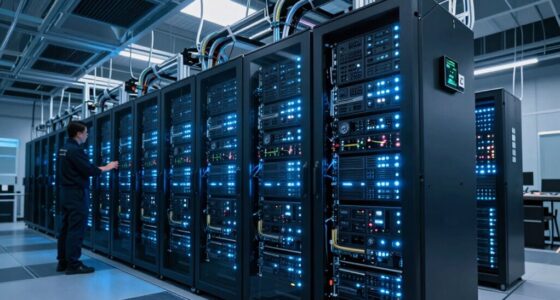
Over the past three years, the focus of the AI hardware debate shifted from chip supply—particularly NVIDIA GPUs—to the availability of electrical power. The key metric is gigawatts of capacity, not total energy consumption, as the ability to supply peak power determines whether new data centers can be built and operated. Global data-center capacity is projected to grow from approximately 132 GW in 2026 to around 290 GW by 2030, but current infrastructure is struggling to keep pace.
In the US, despite over $650 billion committed to AI infrastructure by major tech companies, grid capacity constraints pose significant challenges. The US interconnection queue includes projects totaling about 2,300 GW, with wait times extending to five years. Experts like Goldman Sachs and Morgan Stanley warn of a potential power shortfall of up to 45 GW by 2028, risking bottlenecks that could slow AI deployment. Many existing transmission lines and power plants are aging, further complicating expansion efforts.
Meanwhile, China has rapidly expanded its power generation capacity, adding more than 543 GW in 2025 alone—almost ten times the US’s new capacity in the same period—and is expected to continue outpacing the US. Chinese data centers benefit from cheaper power and faster deployment timelines, giving China a significant edge in scaling AI infrastructure. However, export controls on advanced chips, such as those affecting Huawei, limit China’s AI compute capabilities despite its power advantage.
Implications of Infrastructure Bottlenecks for Global AI Leadership
The current infrastructure bottleneck means that the race for AI dominance is increasingly dependent on physical power capacity, not just financial investment or chip innovation. The US’s inability to scale its grid could slow down its AI progress, while China’s rapid power expansion provides a strategic advantage. These constraints could influence geopolitical power balances, with infrastructure becoming a critical factor in technological leadership.
As an affiliate, we earn on qualifying purchases.
Energy Growth and Geopolitical Competition in AI Infrastructure
The shift from chip-centric constraints to energy capacity reflects broader geopolitical trends. The US has prioritized chip innovation but faces a lag in grid modernization, with many power plants and transmission lines nearing end-of-life. China, on the other hand, has invested heavily in expanding its power generation, becoming the world’s largest producer of electricity, which supports its ambitions in AI. The global infrastructure challenge is compounded by long permitting timelines and supply chain issues for transformers and transmission equipment.
This divergence underscores a structural asymmetry: the US leads in chip design but is constrained by energy infrastructure, while China’s expansive power capacity is limited by chip manufacturing capabilities. The ongoing competition involves not just AI models but the physical and geopolitical infrastructure that underpins them.
“Electrons are the new oil. The US needs to build 100 GW of new capacity annually to keep pace with China’s rapid expansion, but grid constraints remain a significant barrier.”
— Thorsten Meyer
Unresolved Aspects of Infrastructure and Geopolitical Impact
It remains unclear how quickly the US can modernize its grid and whether policy changes or technological breakthroughs will accelerate capacity expansion. The precise impact of these infrastructure constraints on AI innovation timelines is still being evaluated, and future developments in chip manufacturing or renewable energy could alter the current landscape.
Next Steps in Infrastructure Development and Policy Responses
Expect increased focus on grid modernization efforts in the US, with potential policy initiatives aimed at streamlining permitting and boosting transmission capacity. Simultaneously, China’s continued expansion will be monitored for its influence on global AI competitiveness. Industry and government stakeholders will likely prioritize investments in energy infrastructure to mitigate bottlenecks and sustain AI growth trajectories.
Key Questions
Why is energy capacity now considered more critical than chip supply for AI?
Because the ability to supply peak power at specific locations determines whether new data centers can be built and operated, making energy infrastructure a fundamental bottleneck in scaling AI infrastructure.
How does China’s energy capacity compare to the US?
China has added nearly ten times the new power capacity of the US in 2025 and already generates more than twice the electricity, giving it a significant advantage in supporting AI infrastructure expansion.
What are the main challenges in expanding the US power grid?
Long permitting timelines, aging infrastructure, limited manufacturing capacity for transformers and transmission lines, and a backlog of projects waiting to connect to the grid are key obstacles.
Could technological advances or policy changes resolve these infrastructure constraints?
Potentially, yes. Faster permitting, investment in grid modernization, and innovations in energy storage could help close the capacity gap, but these solutions are still in development or planning stages.
Will energy constraints slow down AI progress globally?
It depends on regional infrastructure development. While some areas may face delays, others with more advanced or expanding grids could continue rapid AI deployment, influencing global leadership dynamics.
Source: ThorstenMeyerAI.com
Halloween Picks
halloween
As an affiliate, we earn on qualifying purchases.