
TL;DR

Get audio and creator gear delivered free with Prime
- Fast, free delivery on millions of items
- Prime Video, Amazon Music and more included
- Member-only deals all year
Mixture-of-Experts (MoE) models allow AI systems to expand capacity without proportional increases in per-token costs. This breakthrough enables trillion-parameter models to operate efficiently at frontier scales, transforming AI development and deployment.
Mixture-of-Experts (MoE) models are now at the forefront of frontier AI systems, enabling models with trillions of parameters to operate efficiently by activating only a subset of their capacity per token. This approach addresses the longstanding challenge of balancing model size and operational costs, making large-scale AI more practical and scalable.
Recent models like Kimi K3 with 2.8 trillion total parameters demonstrate the effectiveness of MoE architectures. Although all parameters are stored in memory, only about 104 billion are active during inference on each token, significantly reducing per-token compute costs. This split allows models to contain enormous knowledge bases without incurring prohibitive operational expenses.
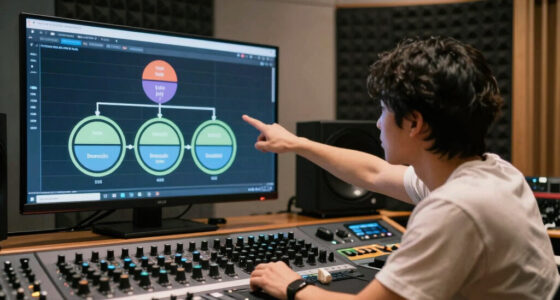
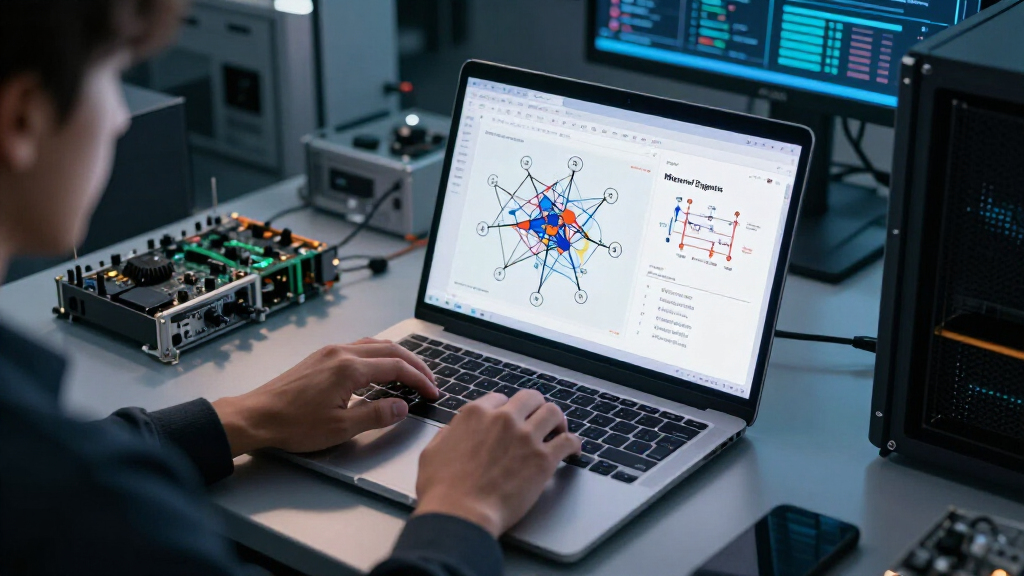
MoE models work by dividing their capacity into many parallel sub-networks called experts. During processing, a router selects only a few experts for each token, leaving the rest dormant. This statistical specialization enables models to scale capacity without proportionally increasing compute or memory bandwidth, breaking the traditional ‘cost lockstep’ of dense models.
Industry adoption is driven by the need to build larger models economically. For example, a dense 2.8-trillion-parameter model would be impractical to serve in real-time due to memory and compute costs, but an MoE version can deliver similar knowledge breadth at manageable speeds and costs. Recent deployments confirm these models can operate at speeds comparable to much smaller dense models, despite their vast total parameters.
Implications of MoE for Large-Scale AI Deployment
The adoption of MoE architectures signifies a major shift in AI development, enabling the construction of trillion-parameter models that are both feasible and cost-effective. This approach allows researchers and companies to expand their AI capabilities, pushing the boundaries of what is possible in natural language processing, reasoning, and knowledge integration, while controlling operational costs.
By separating total parameters from active computation, MoE models reduce hardware requirements during inference, making large models accessible for real-time applications and large-scale deployment. This development is expected to accelerate AI innovation, democratize access to powerful models, and influence hardware design to optimize for these architectures.
As an affiliate, we earn on qualifying purchases.
Evolution of Model Scaling and the Rise of MoE
Traditional dense transformer models faced a fundamental scalability challenge: increasing size meant proportionally higher costs in compute and memory, creating a practical limit around a few hundred billion parameters. To overcome this, researchers introduced Mixture-of-Experts architectures, which divide the model into many sub-networks, or experts, that are selectively activated.
Early experiments with MoE models showed promising results, but it was only with recent large-scale deployments, such as Kimi K3 and Qwen3, that the technique proved essential for enabling trillion-parameter models. These models demonstrate that it is possible to have vast knowledge bases accessible at a manageable operational cost, fundamentally changing the landscape of open AI development.
The shift to MoE is also reflected in hardware considerations, as the split between total parameters and active parameters influences how models are stored, loaded, and executed, making the architecture a key factor in future AI hardware design.
“MoE models break the traditional cost lockstep, allowing models with trillions of parameters to operate efficiently by activating only a subset of experts per token.”
— Thorsten Meyer
Remaining Questions on MoE Model Optimization and Use
While the benefits of MoE are clear, questions remain about the best methods for expert routing, training stability, and interpretability of the emergent specialization. Additionally, the impact on model robustness and bias mitigation requires further study. The long-term effects on hardware efficiency and scalability are also still being evaluated.
Future Developments in MoE Model Research and Deployment
Research will focus on improving routing algorithms for better efficiency and stability, as well as exploring hybrid architectures combining MoE with other scaling techniques. Industry deployments are expected to expand, with more models adopting MoE for various tasks, and hardware manufacturers optimizing systems specifically for these architectures. Monitoring these developments will be crucial to understanding the full potential and limitations of MoE at frontier scales.
Key Questions
How does Mixture-of-Experts differ from traditional dense models?
MoE models split their capacity into many sub-networks called experts, activating only a few per token, which reduces per-token compute costs despite having a larger total number of parameters.
Why are MoE models important for scaling AI systems?
They enable the construction of very large models with billions or trillions of parameters that are still computationally feasible, making advanced AI capabilities more accessible and cost-effective.
What are the main challenges still facing MoE models?
Challenges include improving routing algorithms, ensuring training stability, interpretability of emergent specialization, and understanding the impact on robustness and bias.
Will MoE models replace dense models entirely?
Not necessarily; MoE models complement dense models by offering a scalable alternative for large-scale applications, especially where cost and speed are critical.
How does hardware design adapt to MoE architectures?
Hardware must accommodate large memory requirements for storing all experts and optimize for fast switching and selective activation during inference.
Source: ThorstenMeyerAI.com
Fall Picks
fall essentials
As an affiliate, we earn on qualifying purchases.