
TL;DR

Get audio and creator gear delivered free with Prime
- Fast, free delivery on millions of items
- Prime Video, Amazon Music and more included
- Member-only deals all year
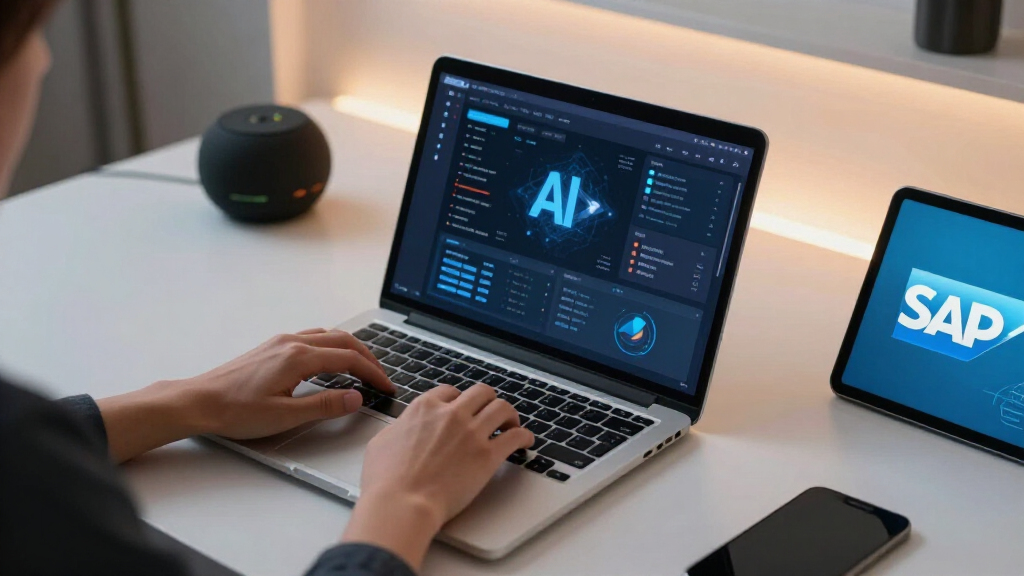
SAP has introduced Joule, an AI layer embedded in its enterprise systems, focusing on owning and leveraging structured business data rather than competing solely on model intelligence. This approach aims to create a secure, scalable foundation for AI in large organizations.
SAP has launched Joule, a comprehensive AI layer embedded in its core enterprise solutions, marking a strategic shift from building the smartest models to owning and controlling the data those models need. This development, announced in mid-2026, positions SAP as a key player in enterprise AI by leveraging its vast data footprint in global business transactions, impacting how large organizations deploy AI for operational efficiency and decision-making.
SAP’s Joule is integrated across over 35 solutions, including S/4HANA Cloud, SuccessFactors, and Ariba, with more than 30 specialized AI agents and 2,500+ ‘Joule Skills’ as of the first quarter of 2026. The company has committed €100 million to a partner fund aimed at enabling system integrators to develop custom AI agents using Joule Studio, a low-code platform that now supports DevOps workflows through a VS Code extension and CLI.
According to SAP, early customer outcomes include a global retailer reducing HR process cycle times by 40–60%, an Argentine airport operator cutting direct costs by 16% and administrative effort by 90%, and developers reporting approximately 20% productivity gains on routine coding tasks. These figures are vendor-published and focus on operational improvements, not speculative benefits.
SAP’s strategic approach is centered on the concept of ‘the Autonomous Enterprise,’ where AI agents are considered as first-class operators alongside humans, emphasizing automation and data governance. The architecture relies heavily on a Knowledge Graph that ensures Joule reads structured, permissioned business metadata directly from SAP’s Business Technology Platform, enabling context-aware responses tailored to specific workflows and legal requirements.
Why SAP’s Data-Centric AI Approach Matters for Business
SAP’s emphasis on owning and orchestrating enterprise data through Joule positions it uniquely in the AI landscape. Unlike frontier labs that focus on model development, SAP’s strategy aims to embed AI deeply into business operations, leveraging its existing data moat. This approach could redefine how large organizations adopt AI, emphasizing trust, compliance, and operational consistency over raw model performance. If successful, SAP’s model could influence the broader enterprise AI market by shifting focus from model innovation to data control and system orchestration, giving SAP a durable competitive advantage.
enterprise AI data management software
As an affiliate, we earn on qualifying purchases.
As an affiliate, we earn on qualifying purchases.
SAP’s Enterprise Data Dominance and AI Evolution
Most of the world’s large-scale business transactions, including purchase orders, invoices, payroll, and supply chain movements, pass through SAP systems. This extensive data footprint gives SAP a strategic advantage, as it can leverage its existing infrastructure to embed AI capabilities that are deeply integrated and permissioned. Prior to Joule, SAP’s AI efforts were more fragmented, but the new platform consolidates its position, emphasizing data ownership over model building. The company’s recent acquisitions, like Prior Labs, and investments in Knowledge Graph technology, reinforce this focus.
This shift reflects a broader industry trend where incumbent software providers aim to embed AI into core systems, rather than compete solely on developing new models. SAP’s ‘own the data’ approach contrasts with frontier labs’ ‘build the smartest model’ philosophy, aiming for a more controlled, scalable, and compliant AI deployment at enterprise scale.
“SAP’s strategy is to own the data that models need, not just to build the smartest models. This gives us a sustainable advantage in enterprise AI.”
— Thorsten Meyer, AI strategist at SAP
Unanswered Questions About SAP’s AI Strategy
It remains unclear how quickly and broadly organizations will adopt Joule at scale, given the complexity of reducing custom code and integrating with existing systems. The effectiveness of the €100 million partner fund in driving demand and the long-term reliability of third-party models integrated into Joule are still to be seen. Additionally, the impact of potential shifts in third-party model capabilities or pricing on SAP’s model-agnostic approach is uncertain.
Next Steps for SAP’s Enterprise AI Ecosystem
SAP will likely focus on expanding Joule’s deployment, increasing the number of AI agents, and demonstrating measurable ROI to drive adoption. The company may also refine its model orchestration capabilities and deepen integrations within its ecosystem. Monitoring customer case studies and feedback will be critical to assess whether SAP’s data-centric approach can sustain its competitive edge and become a standard in enterprise AI deployment.
Key Questions
How does SAP’s Joule differ from other AI solutions?
Joule emphasizes owning and leveraging enterprise-specific, permissioned data through a structured Knowledge Graph, rather than relying on open internet models. It integrates deeply into SAP’s solutions, serving as a contextual, trustworthy interface for business operations.
What are the main risks associated with SAP’s AI approach?
Key risks include variable AI usage costs that may hinder predictable budgeting, dependence on third-party models that could change in capability or pricing, and slow adoption due to the complexity of reducing custom code and integrating Joule into existing systems.
Will SAP’s AI strategy reduce the need for custom development?
Yes, adopting Joule encourages standardization and reduces custom code, which aligns with SAP’s broader cloud migration goals. This can accelerate system upgrades and improve AI consistency across organizations.
What is the long-term goal of SAP’s AI platform?
To establish a secure, scalable, and governance-compliant AI infrastructure that positions SAP as the foundational layer for enterprise AI, shifting value from model innovation to data control and orchestration.
Source: ThorstenMeyerAI.com
Fall Picks
fall essentials
As an affiliate, we earn on qualifying purchases.