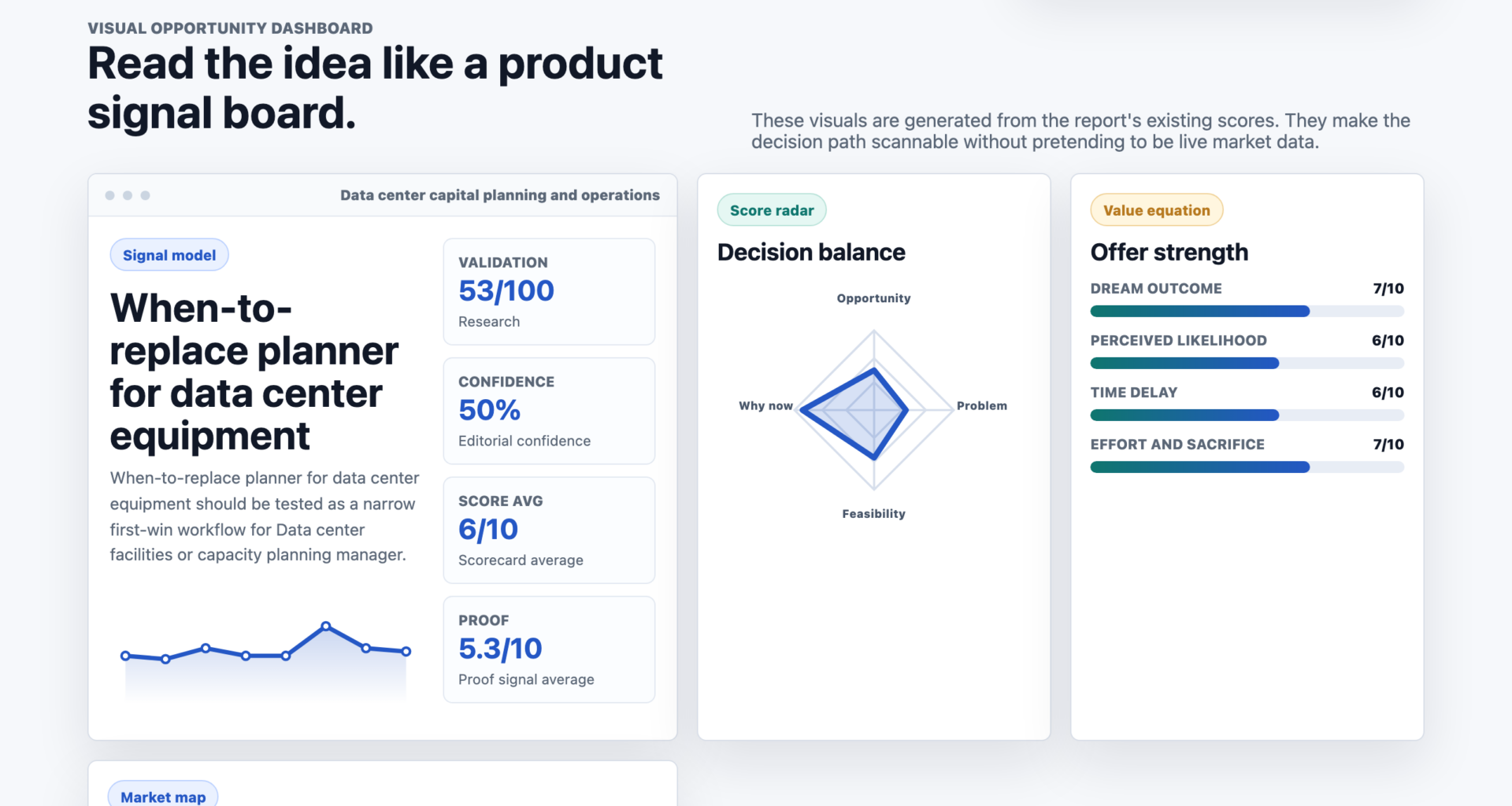

📊 Full opportunity report: When-to-replace planner for data center equipment on IdeaNavigator AI — validation score, market gap, and execution plan.

Get audio and creator gear delivered free with Prime
- Fast, free delivery on millions of items
- Prime Video, Amazon Music and more included
- Member-only deals all year
TL;DR
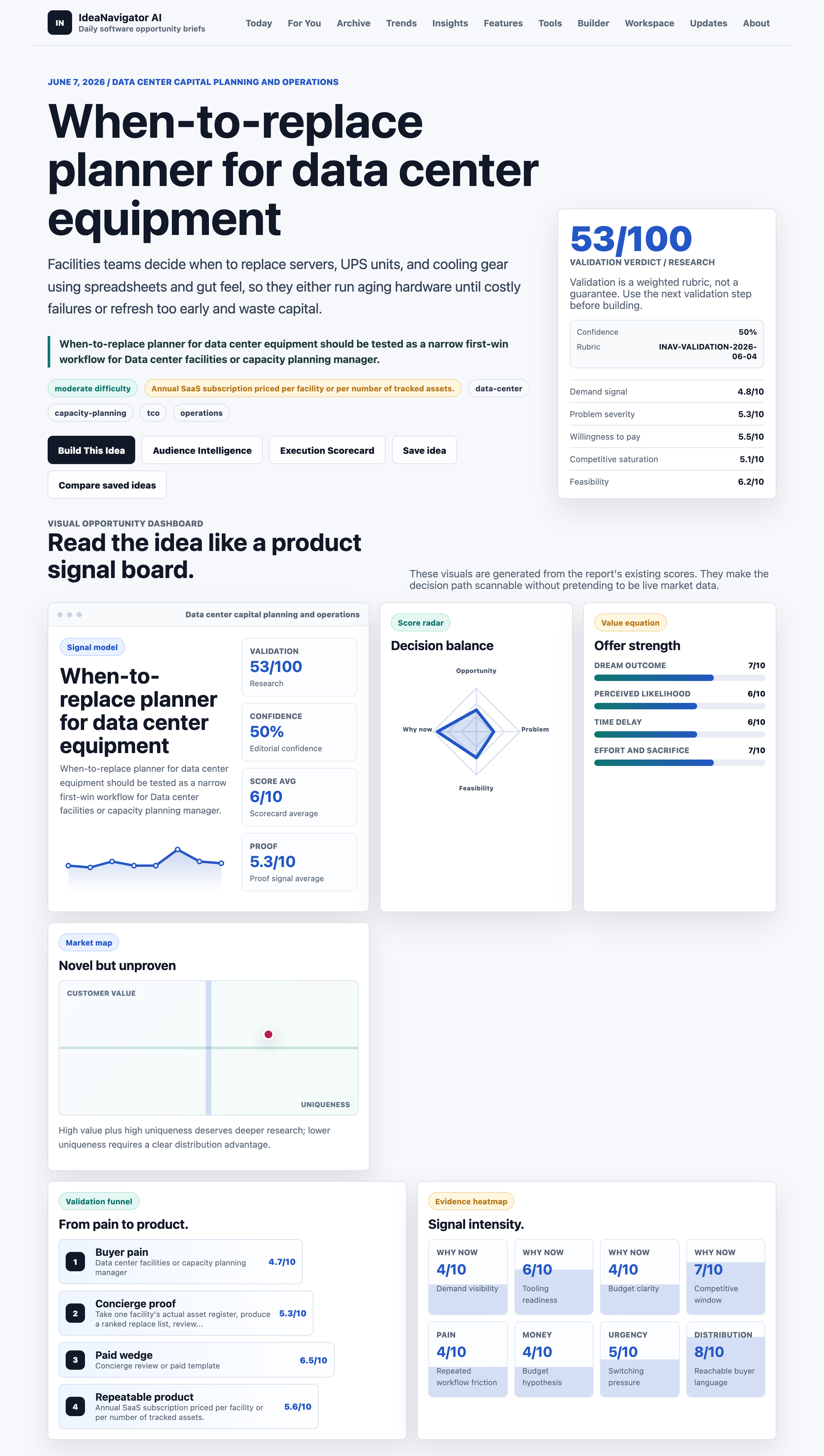
A new software prototype designed to help data center managers determine optimal replacement timing for servers, UPS, and cooling units is undergoing initial testing. The tool aims to replace manual, intuition-based decisions with data-driven recommendations, potentially saving costs and improving reliability.
A prototype software tool designed to assist data center facilities and capacity managers in determining the optimal timing for replacing equipment is currently being tested on a real facility, marking a step toward more data-driven capital planning.
The proposed ‘when-to-replace’ planner ingests data about existing assets, including age, power consumption, and maintenance costs, then ranks equipment based on a calculated score that considers rising energy costs and failure risks. This approach aims to replace heuristic or spreadsheet-based decision-making with a systematic, data-driven process.
Initial validation involves applying the tool to a single facility’s asset register, generating a ranked list of equipment for replacement, and reviewing these suggestions with the facility’s capacity manager. The goal is to measure how many recommendations align with the manager’s current plans, providing a basis for further refinement.
The software is envisioned as a SaaS subscription service, priced per facility or per number of assets tracked, targeting data center operations and capital planning teams seeking to optimize hardware refresh cycles amid rising energy costs and increasing hardware density.
Why It Matters
This development matters because it addresses a longstanding challenge in data center management: deciding when to replace aging equipment. Current practices often rely on spreadsheets and intuition, risking costly failures or premature refreshes that waste capital. An effective, automated tool could improve reliability, reduce operational costs, and support more sustainable infrastructure management.
As energy costs and hardware density increase, the economic tradeoffs become sharper, making data-driven recommendations more valuable. This tool could set a new standard for equipment lifecycle management in data centers, influencing how facilities plan upgrades and replacements in the future.
data center server replacement software
As an affiliate, we earn on qualifying purchases.
As an affiliate, we earn on qualifying purchases.
Background
Data center facilities typically decide on equipment replacement based on manual assessments, often using spreadsheets and gut feeling. This approach can lead to suboptimal decisions, either delaying replacements and risking failures or replacing hardware too early and incurring unnecessary costs.
The rise in energy costs and hardware density over recent years has made replacement timing more complex, as newer equipment offers significant efficiency gains that can justify earlier upgrades. However, quantifying these benefits against failure risks remains challenging without systematic analysis.
Similar tools are emerging in other infrastructure sectors, but a dedicated, asset-specific replacement planner for data centers is still in development. Initial testing aims to validate whether such a tool can reliably support decision-making in real-world settings.
“The goal is to replace intuition with data-driven recommendations, reducing costly failures and capital waste.”
— an anonymous researcher
What Remains Unclear
It is not yet clear how accurately the prototype’s recommendations will align with actual operational needs or whether facility managers will adopt the tool for routine use. Further testing across diverse facilities is needed to validate its effectiveness and scalability.What’s Next
The next steps include expanding testing to multiple facilities, refining the algorithm based on user feedback, and developing a commercial SaaS version. Additional validation will focus on measuring the impact on replacement accuracy and operational costs.
Key Questions
How does the ‘when-to-replace’ planner work?
The tool analyzes asset data such as age, power consumption, and maintenance costs, then ranks equipment based on a score that considers rising energy costs and failure risks to suggest optimal replacement timing.
Is this tool ready for widespread use?
Not yet. It is currently in a testing phase with a single facility. Broader deployment will depend on further validation and user feedback.
What are the main benefits of using this planner?
It aims to reduce costly failures, optimize capital expenditure, and improve energy efficiency by providing data-driven replacement recommendations.
How will the tool be priced?
It is expected to be offered as a SaaS subscription, priced per facility or per number of assets tracked.
Source: IdeaNavigator AI
Halloween Picks
halloween
As an affiliate, we earn on qualifying purchases.