
📊 Full opportunity report: The Evolution Of Military Visuals Through Artificial Intelligence on ThorstenMeyerAI.com — validation score, market gap, and execution plan.

Get audio and creator gear delivered free with Prime
- Fast, free delivery on millions of items
- Prime Video, Amazon Music and more included
- Member-only deals all year
TL;DR
AI-driven technologies are now producing highly realistic, real-time military visuals for simulations and strategic analysis. This development enhances training, planning, and operational awareness, marking a significant shift in military visualization capabilities.
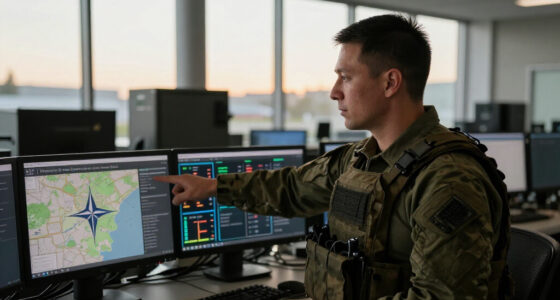
Recent developments show that artificial intelligence is now capable of generating highly realistic, real-time visualizations of military battle scenarios, transforming how armed forces train, plan, and analyze operations. These AI-powered visuals are being integrated into simulation platforms and strategic tools, marking a significant shift in military visualization technology.
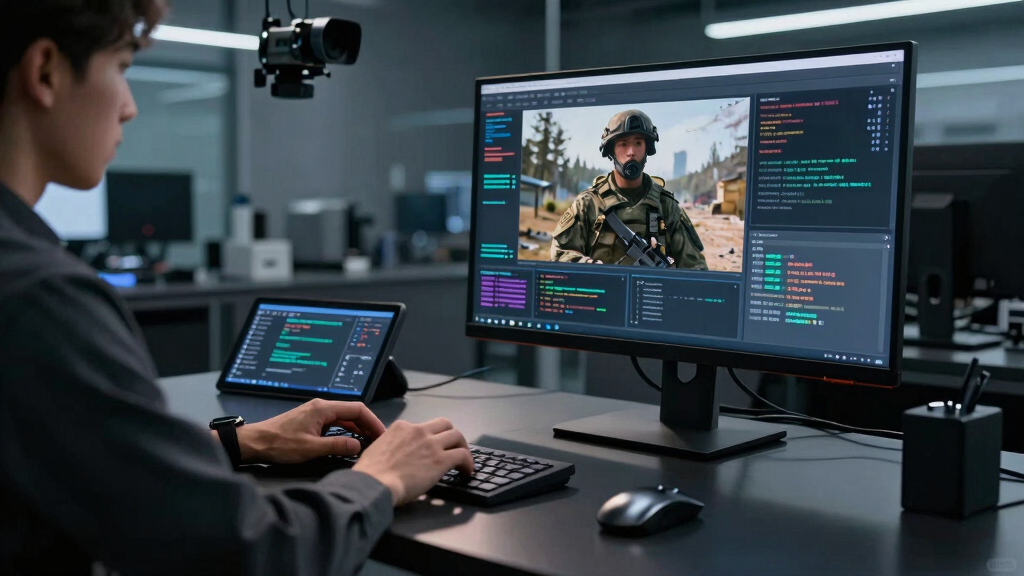
Multiple sources confirm that advanced AI systems can now produce detailed, real-time battlefield imagery without relying solely on traditional graphics or pre-rendered models. These systems utilize real-time data streams, including live market-like activity or sensor inputs, to generate dynamic visual representations of combat zones. For example, a recent project demonstrated an AI-driven visualization platform that renders ongoing simulated battles with high fidelity, integrating live data feeds to depict troop movements, weapon strikes, and environmental effects.
Experts say these technologies leverage deep learning algorithms and neural networks trained on vast datasets, enabling the AI to generate realistic visuals that adapt instantly to changing scenarios. The visualizations are often accompanied by auditory cues and interactive elements, providing a multi-sensory experience. Importantly, these tools are not designed for operational command but serve as artistic, training, or analytical aids, emphasizing the raw chaos and complexity of modern warfare.
Implications for Military Training and Strategy
The ability to generate realistic, real-time battlefield visuals using AI has significant implications for military training, strategic planning, and operational awareness. These visualizations can offer immersive training environments without the need for expensive physical simulations, allowing personnel to experience complex combat scenarios virtually. Additionally, commanders can analyze dynamic battlefield data more intuitively, improving decision-making and response times in actual conflicts.
Furthermore, this technology enhances strategic planning by visualizing potential outcomes and testing different tactics in a simulated environment. While these tools are not yet deployed operationally in combat zones, their development signals a shift toward more data-driven, visually immersive military analysis, potentially reducing risks and increasing preparedness.
Products Worth Considering

Jackery Explorer 2000 v2 Portable Power Station with Two 200W Solar Panels

LG 34GX90SA-W 34-inch Ultragear WQHD OLED Curved Gaming Monitor

Apple iPad Air 11-inch (M2), 512GB, Wi-Fi, Space Gray
As an affiliate, we earn on qualifying purchases.
Evolution of Military Visualization Technologies
Traditional military visualization relied heavily on computer-generated graphics, physical models, and simulated environments, often limited by hardware constraints and pre-designed scenarios. Over the past decade, advancements in digital graphics and sensor technology improved realism but remained static and costly. Recent years have seen a surge in AI research focused on real-time data processing and generative modeling, enabling the creation of dynamic, adaptable visuals.
Projects like the Bitcoin War visualization demonstrate how browser-based, AI-powered systems can produce visceral, cinematic battle scenes driven by real-time data streams. These innovations build on prior efforts but leverage AI’s ability to synthesize complex scenes instantly, opening new avenues for military visualization that are more flexible, scalable, and accessible.
“AI systems now can generate highly detailed battlefield visuals in real-time, offering new perspectives for training and analysis.”
— an anonymous researcher
Unresolved Challenges and Deployment Questions
While the technology shows promise, it remains unclear how widely these AI visualization tools will be adopted operationally within military forces. Questions persist about the accuracy, reliability, and security of AI-generated visuals in high-stakes environments. Additionally, there is limited information on how these tools integrate with existing command systems or how they will be regulated for use in actual combat scenarios.
Experts caution that further validation and testing are needed before these systems can be relied upon for critical decision-making or deployed in active conflict zones.
Future Developments and Potential Military Applications
Next steps include expanding the capabilities of AI visualization platforms to incorporate more sensor data, improve realism, and enhance interactivity. Military organizations are expected to conduct field tests and simulations to evaluate operational effectiveness. Researchers also anticipate integrating these visuals with augmented reality (AR) and virtual reality (VR) tools for immersive training environments.
As the technology matures, broader adoption in strategic planning, mission rehearsal, and possibly real-time battlefield monitoring could follow, transforming military visualization from static models to dynamic, AI-driven battle maps.
Key Questions
How accurate are AI-generated military visuals?
While highly detailed, current AI visuals are primarily used for training and analysis. Their accuracy in operational settings is still under evaluation, and they are not yet relied upon for real-time command decisions.
Can AI visuals replace traditional military simulations?
AI visuals complement existing simulations by providing more dynamic and realistic scenarios. However, they are not expected to fully replace physical or pre-rendered models in the near term.
Are these AI tools secure for military use?
Security concerns remain, as AI systems could be vulnerable to hacking or manipulation. Ensuring robustness and security is a priority for future development.
Will AI-generated visuals be used in actual combat zones?
Currently, these tools are mainly for training and planning. Deployment in active combat scenarios would require extensive validation and security measures.
Source: ThorstenMeyerAI.com