
TL;DR

Get audio and creator gear delivered free with Prime
- Fast, free delivery on millions of items
- Prime Video, Amazon Music and more included
- Member-only deals all year
Writer Shahid Hussain says a renewed, AI-assisted investigation into Salvage identified a 2006 Official Charts entry and linked the band’s two known tracks to producer Greg Haver. The trail has not yet established who the band members were or what happened to them after the release.
After 15 years of searching, writer Shahid Hussain has traced two songs by the elusive band Salvage to a chart listing from 2006 and a production credit for Greg Haver, a producer whose credits include work with Manic Street Preachers. The investigation adds verifiable details to the story of a band that left little searchable record, but it has not yet identified the musicians or established what happened to them.
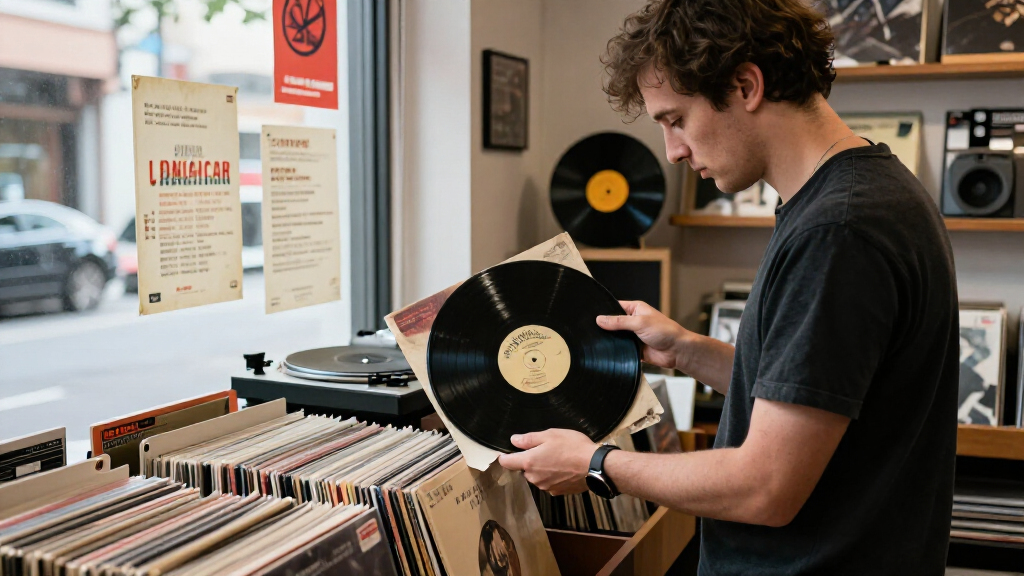
Hussain’s account centers on a CD containing two Salvage tracks, “Electric” and “Searchlights.” He says he first encountered the music in 2011 and was struck by its polished, expansive indie-rock sound. The disc’s generic band and song names, low-resolution cover image and lack of credits made it difficult to distinguish from unrelated results and other groups named Salvage.
The clearest documentary finding was an entry in the Official Charts archive: Salvage appeared at No. 47 on the Independent Singles Chart for the week of June 4–10, 2006. Hussain says the listing also supplied an Official Charts artist ID. The chart record confirms the release had a chart listing; it does not, by itself, identify the people behind the band.
A separate search found a production credit for Greg Haver. Hussain says the match was missed at first because the relevant page misspelled the song title as “Searchlight,” omitting the final “s.” He reports emailing Haver, but his account does not include a reply or confirmation from the producer. Hussain also used the CD barcode to trace the disc’s production to Key Production in London, though an inquiry to the company did not yield information.
What the Trail Establishes
The findings move the story from a remembered disc and a hard-to-search band name toward specific, checkable records: a dated chart position, an artist ID and a production credit. That matters to music listeners and researchers because obscure releases can become difficult to document when labels are small, metadata is sparse and physical copies are scarce.
At the same time, the discoveries do not resolve the central mystery. A chart entry establishes that the release was listed, while a production credit points to a professional involved in making the tracks. Neither identifies the performers or explains whether Salvage was a conventional band, a short-lived project or something else. The report’s value is in narrowing the search, not in claiming it is solved.
Hussain’s process also shows how AI tools can contribute to archival research by organizing evidence and suggesting search paths, while leaving access and judgment to the researcher. In this case, he says he supplied the models with the known artwork, audio, metadata and URLs, checked suggested leads, and personally handled material that the tools could not access. The breakthrough followed searches across multiple databases, not an AI result alone.
As an affiliate, we earn on qualifying purchases.
How Salvage Went Missing
Hussain says he bought the CD after first hearing the tracks on Pandora, then later lost the physical disc. The cover art survived only in low resolution, and he could not initially recall exactly when or where he had encountered it. Searches were complicated by the ordinary word “salvage,” the repeated word in the cover artwork—which led some listings to call the release “Salvage Salvage”—and the existence of unrelated bands with the same name.
The disc’s record label, Despatches, offered few clues. According to Hussain, his searches found no company registration and no other releases that established a clear catalog. A Discogs listing had no credits or matrix or SID codes, and attempts to locate the tracks through services and databases including Spotify, Bandcamp, Last.fm, AllMusic and MusicBrainz produced no match. Some older identification systems and royalty databases also failed to provide a lead.
In the renewed search, Hussain assembled the materials he had into a shared research dataset and had one AI model keep a running log of attempted searches and open theories. He then gave that record and the background material to a second model for fresh ideas and challenges. The investigation eventually returned to a producer search; a title typo on the page carrying the credit had concealed the relevant result.
““The music was a perfect piece of stadium indie rock – thoughtful but expansive, layered yet elegantly simple.””
— Shahid Hussain, describing the two tracks
The Band Members Remain Unknown
Hussain’s account does not name any Salvage members, establish how the group formed, or explain whether it released music beyond “Electric” and “Searchlights.” The available chart and label records described in the report do not supply those details. It is also unclear whether the band continued after its chart appearance or whether the release was a brief project.
The report says Hussain contacted Haver, but gives no response from him. It also does not report a response from Key Production or from the person who sold Hussain the CD. The producer credit is a reported database finding, not confirmation from Haver in the material provided. The exact circumstances behind the Despatches label and the release’s distribution remain unresolved.
Hussain describes encountering other people searching for Salvage, but the account does not identify them or present independent evidence from their searches. Pandora’s listing helped him remember where he first heard the music and locate his purchase invoice; it did not reveal the band’s identity. The search therefore has yielded new leads without establishing a complete history.
Awaiting a Response From Haver
The clearest next step is a response from Greg Haver, whom Hussain says he contacted after finding the production credit. Haver may be able to confirm the credit or point to people involved, but the report does not say whether he has replied or whether further contact is planned. No date for a resolution is given.
Other possible leads include the Official Charts artist ID, the Pandora listing, the barcode and the remaining label records. These may help connect the release to a distributor, performers or additional documentation, though Hussain’s account does not establish that any of those sources contain undiscovered credits. Until a participant or stronger documentation emerges, the band’s lineup and later history remain open questions.
For now, the confirmed progress is narrower: Salvage had a release listed at No. 47 on the Independent Singles Chart in the week of June 4–10, 2006, and Hussain found a page crediting Haver as producer. Whether the search will identify the musicians—or explain why the trail went cold—remains unknown.
Key Questions
What did the search uncover about Salvage?
Hussain found a 2006 Official Charts listing and a production credit naming Greg Haver. The band’s members and later history remain unidentified in his account.
When did Salvage appear on the chart?
The band was listed at No. 47 on the Independent Singles Chart for the week of June 4–10, 2006.
Which songs are associated with the band?
The CD Hussain describes contains “Electric” and “Searchlights.” A page carrying the producer credit reportedly misspelled the second title as “Searchlight.”
Has the band been identified?
No. The report identifies a producer credit but does not establish who performed on the tracks, whether Salvage was a full band or project, or what happened after the chart listing.
Did AI solve the mystery?
AI tools helped organize the available material and suggest search approaches, according to Hussain. The key findings came through checking records and following leads, and the investigation has not yet identified the musicians.
Source: hn
Halloween Picks
halloween
As an affiliate, we earn on qualifying purchases.