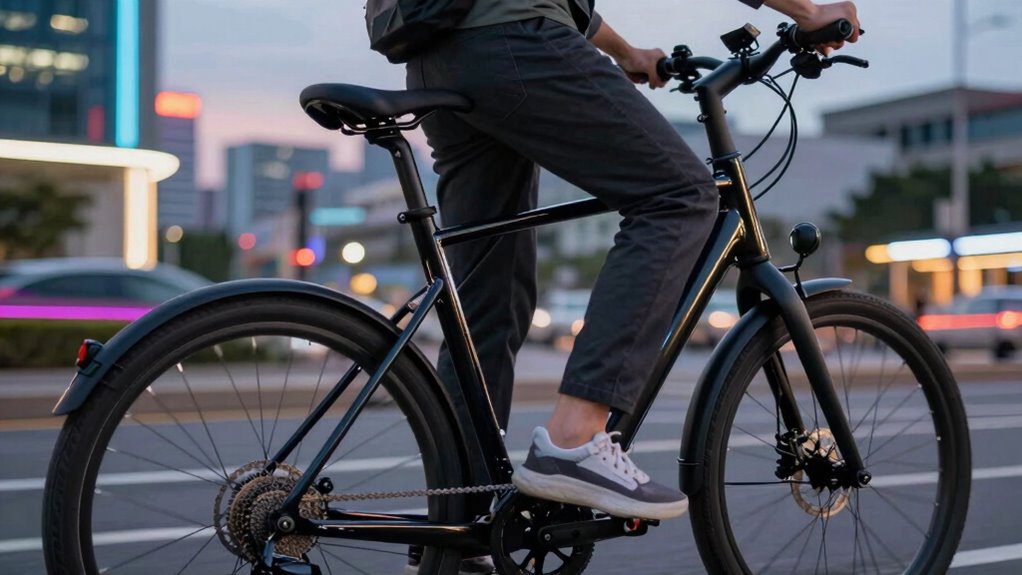

Your e-bike feels different from its specs because design, handling, rider input, and real-world conditions all influence ride experience. Factors like frame geometry, battery placement, tire choice, and terrain change how it responds, often more than numbers suggest. Your expectations and riding style also shape how the bike feels in practice. If you want to understand why your e-bike behaves this way and how to find one that suits you, keep exploring these factors.

Get audio and creator gear delivered free with Prime
- Fast, free delivery on millions of items
- Prime Video, Amazon Music and more included
- Member-only deals all year
Key Takeaways
- Bike geometry and design significantly influence ride feel beyond technical specifications.
- Real-world conditions like terrain, temperature, and weather impact perceived performance.
- Rider input, posture, and pedal technique alter how the bike responds, affecting perception.
- Component quality and calibration affect smoothness, responsiveness, and overall riding experience.
- Battery performance and placement influence power delivery and handling, shaping rider sensation.
As an affiliate, we earn on qualifying purchases.
Why Does My E-Bike Feel Different From Its Specs?
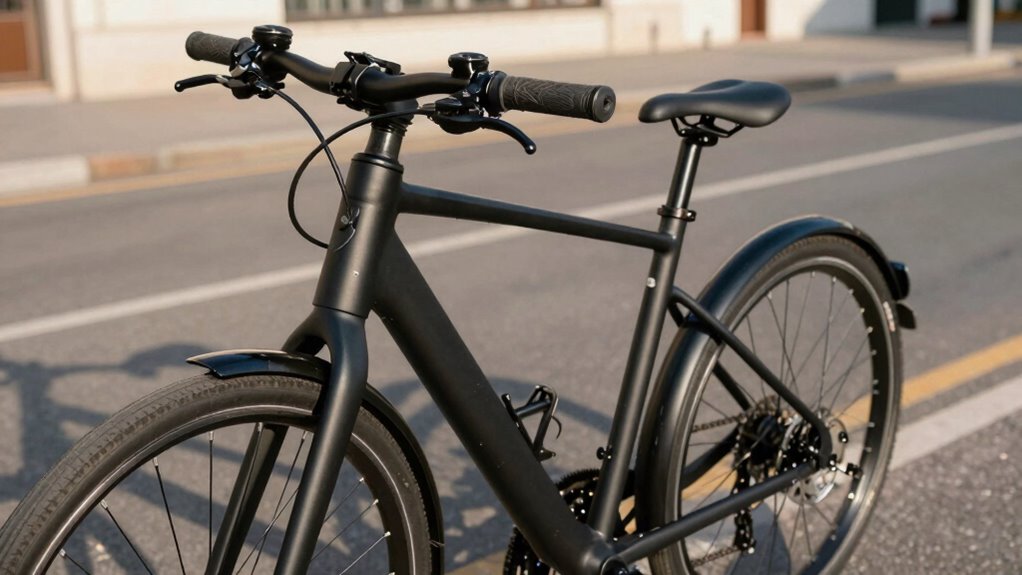
Even though your e-bike’s specs might promise a certain level of power and speed, how it actually feels can be quite different. One key factor is battery life, which affects how long you experience peak performance before power drops. If the battery drains faster than expected, you might notice a decrease in speed or power, making the ride feel less impressive. Additionally, motor efficiency plays a significant role. A highly efficient motor converts power more effectively, providing consistent acceleration and smooth riding. Conversely, lower efficiency can cause the bike to feel sluggish or inconsistent, especially as the battery depletes. Understanding these elements helps explain why your e-bike’s real-world performance may not match its advertised specs, emphasizing how essential good battery management and motor design are for a satisfying ride. motor efficiency directly influences how well your e-bike performs under different conditions. Moreover, environmental factors like temperature and terrain can further impact performance, making it important to consider real-world conditions when evaluating your e-bike’s capabilities. Factors such as battery management and rider habits can also significantly influence overall performance and ride quality. Additionally, component quality can impact the durability and consistency of your e-bike’s performance over time.
How Does Bike Design and Geometry Affect Ride Feel?
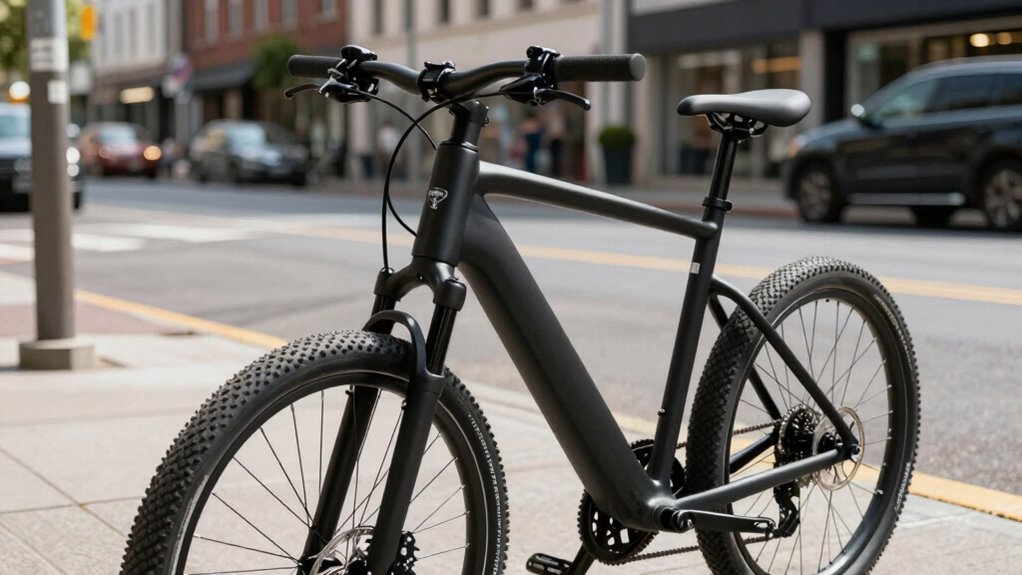
The way your bike is designed impacts how stable you feel on it and how comfortable your ride is. The frame geometry determines how it handles and balances, influencing your confidence and control. Plus, your riding position can make a big difference in comfort, especially on longer trips. Natural ingredients in your bike’s design, such as lightweight materials, can also enhance ride quality and reduce fatigue. Considering luxury bike features can also enhance your overall riding experience. Additionally, understanding device and network security helps ensure your bike’s electronic systems remain protected from hacking attempts, maintaining safety during your rides. Being aware of electric bike cybersecurity is increasingly important as more electronic components are integrated into modern bikes. Moreover, the power output of electric dirt bikes, which can range from 10 to 20 horsepower, directly influences their ride feel and responsiveness.
Frame Geometry Influences Stability
Frame geometry plays a crucial role in how stable and confident you feel while riding an electric bike. A well-designed frame, with proper angles and proportions, enhances stability, especially at higher speeds or on tricky terrain. The bike’s frame stiffness contributes greatly to ride feel—more rigid frames offer sharper handling and reduce flex, giving you precise control. Advanced suspension systems work together with geometry to absorb shocks and maintain balance, further boosting confidence. If the frame is too slack or too aggressive, it can make the bike feel twitchy or unsteady. Additionally, a well-balanced frame geometry can improve overall riding comfort and control, making your experience more enjoyable. Overall, the combination of frame geometry, stiffness, and suspension design shapes how secure you feel, influencing your riding experience far beyond what specs alone can tell you. Additionally, understanding how frame geometry influences ride feel can help riders select bikes better suited to their specific needs and riding styles.
Riding Position Affects Comfort
How you position yourself on an electric bike greatly influences your comfort and overall ride feel. Your riding posture impacts how easily you can handle the bike and how comfortable you stay over time. Adjusting the seat height ensures your legs have a slight bend at the bottom of each pedal stroke, reducing fatigue. A more upright riding posture can alleviate back and neck strain, especially on longer rides. Conversely, a forward-leaning position might increase speed but can cause discomfort if not properly set up. Considering workspace fundamentals like proper positioning and ergonomics can also enhance your overall riding experience.
How Do Rider Input and Pedal Assist Make Your E-Bike More Responsive?
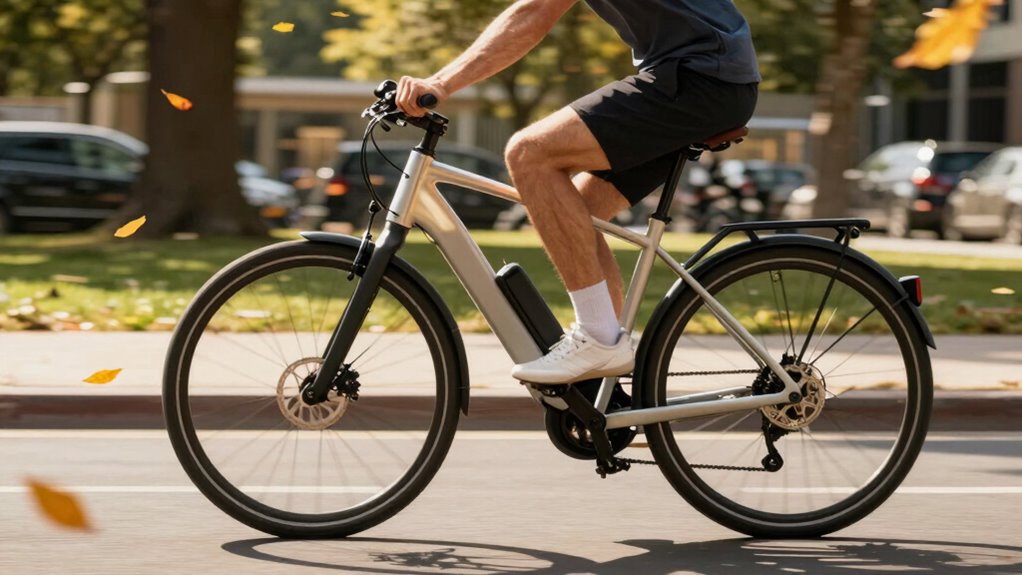
Your maneuvers directly influence how power is applied, making your ride feel more natural and responsive. Pedal assist systems adjust sensitivity based on your input, ensuring smooth acceleration and control. Response time settings can be fine-tuned, giving you an even more intuitive riding experience.
Rider Maneuvers Influence Power
Rider maneuvers play a crucial role in how responsive your e-bike feels, especially when combined with pedal assist. Your confidence and pedal technique directly influence how power is delivered and controlled. Smooth, deliberate movements can make the bike feel more responsive and efficient, while abrupt actions may reduce control. When you adjust your riding style, you help the system interpret your intentions better, resulting in a more natural ride. Incorporating landscaping elements can also create a more comfortable and inspiring environment that encourages confident riding. Paying attention to your riding posture can further enhance your control and comfort, making the experience even more intuitive.
Pedal Assist Sensitivity Levels
Adjusting the pedal assist sensitivity levels tunes how your e-bike responds to your pedaling effort, making the ride feel more natural and intuitive. Higher pedal sensitivity means the motor reacts quickly to your input, providing more immediate support, while lower sensitivity requires stronger pedaling to activate assistance. This adjustment directly influences motor responsiveness, shaping how seamlessly the bike adapts to your cadence. Use the table below to understand different levels:
| Level | Pedal Sensitivity | Motor Responsiveness |
|---|---|---|
| Low | Less responsive | Requires more effort |
| Medium | Balanced | Moderate reaction |
| High | Very responsive | Quick motor activation |
| Max | Max sensitivity | Almost instant response |
Tweaking these settings helps you customize your ride for comfort and efficiency.
Response Time Adjustments
Response times on an e-bike are directly influenced by how rider input interacts with the pedal assist system, making the bike feel more or less responsive depending on settings. When you adjust response time, you’re effectively controlling how quickly the motor reacts to your pedaling or throttle input. Faster response times make acceleration feel instant, enhancing motor efficiency and creating a more natural riding experience. Conversely, slower response times can conserve battery lifespan by reducing unnecessary motor activation. Your input, combined with pedal assist adjustments, fine-tunes the responsiveness for different terrains or riding styles. Additionally, understanding battery capacity helps you choose the right settings to optimize both responsiveness and energy usage. Properly configuring response settings ensures you get the most seamless and efficient ride possible, especially when considering how motor performance responds to various input levels. Recognizing how riding conditions influence responsiveness can further help you tailor your ride for comfort and efficiency, and adapting these settings can also extend your overall battery life.
How Does Battery Placement Influence Handling?
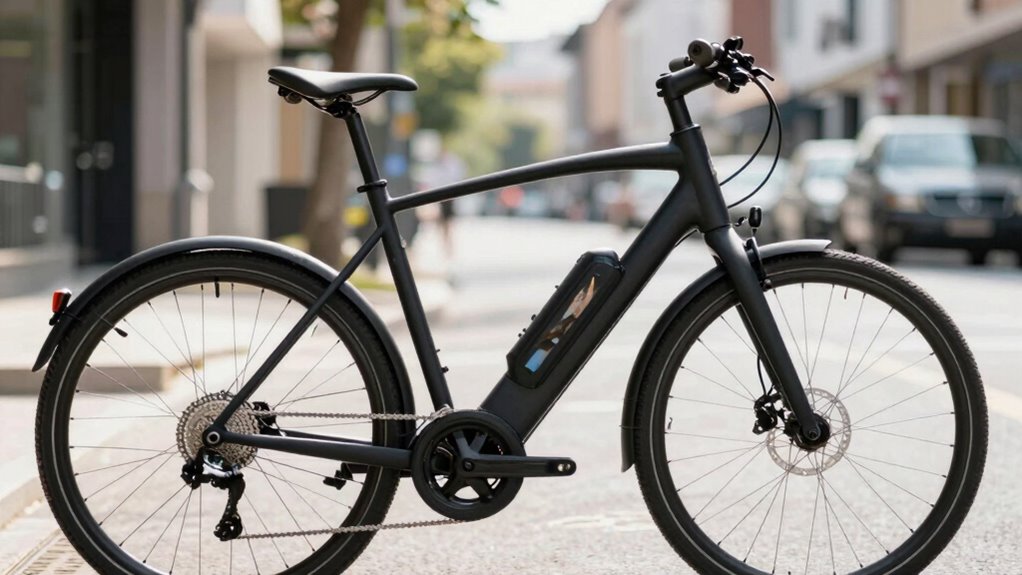
The placement of the battery considerably impacts how an electric bike handles on the road. A lower, central battery placement shifts the bike’s handling dynamics, offering better stability and control during turns. Conversely, a higher or rear-mounted battery can make the bike feel less balanced, especially at higher speeds. This affects your ability to maneuver smoothly and confidently. Understanding bike handling principles can further help you select a design that enhances your riding experience. Additionally, being aware of measurement accuracy in components, such as battery voltage and motor performance, ensures you choose a reliable and well-balanced e-bike. Recognizing the importance of informal language and colloquialisms in rider communication can also improve your understanding of rider feedback and riding styles.
How Do Tire Choice and Pressure Affect Your E-Bike Ride?

Tire choice and pressure directly influence how your e-bike handles on different terrains and riding conditions. Proper tire grip guarantees safety and control, especially on wet or uneven surfaces. Pressure tuning allows you to optimize comfort, traction, and efficiency. Lower pressures increase grip and cushion shocks but can cause pinch flats, while higher pressures reduce rolling resistance but may decrease traction. Selecting the right tire type—slick, knobby, or semi-slick—also impacts ride feel and performance. Keep in mind that adjusting tire pressure frequently can improve your ride, especially when switching between road and off-road terrains. Regular pressure tuning helps you find the perfect balance between speed, comfort, and grip, making your riding experience more predictable and enjoyable. Tire maintenance is essential for maintaining optimal performance and safety over time. Additionally, understanding how tire pressure affects your ride can help you make more informed adjustments for different conditions, emphasizing the importance of exponential thinking in optimizing your riding setup.
How Do Firmware Updates and Motor Calibration Change Ride Feel?
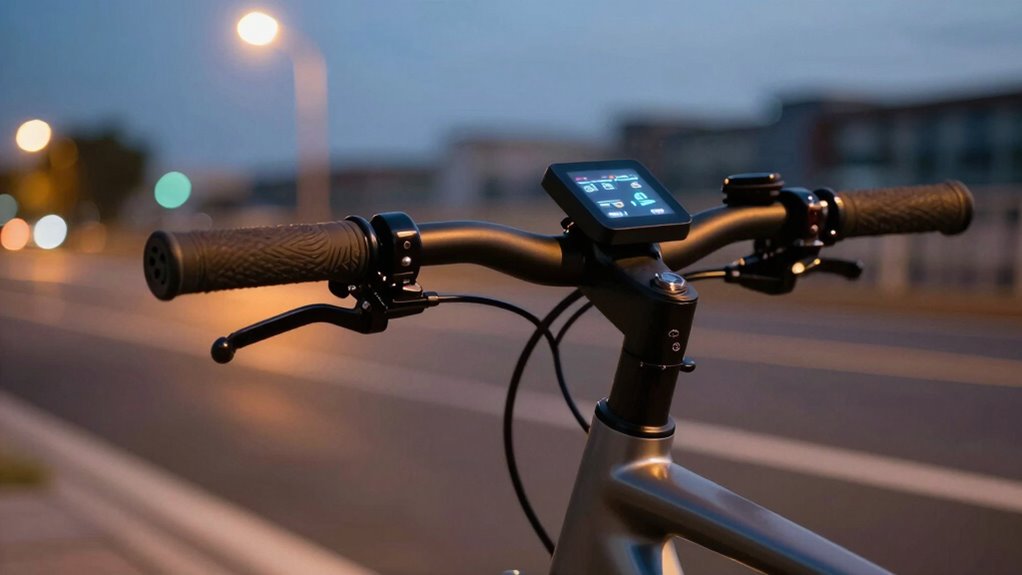
Firmware updates and motor calibration can considerably alter how your e-bike feels while riding, often in ways that aren’t immediately obvious. Firmware calibration adjusts the motor’s software to improve responsiveness, smoothness, or power delivery. These updates can refine sensor accuracy, guaranteeing that the system properly interprets input from speed, torque, and position sensors. Improved sensor accuracy results in more natural assistance, making your ride feel more intuitive and consistent. When your e-bike receives a firmware update, it may feel noticeably different, with smoother acceleration or more seamless power transitions. Calibration ensures that the motor responds precisely to your input, avoiding jerky or uneven assistance. Overall, these adjustments can make your ride feel more refined, even if the bike’s specs haven’t changed.
How Do Real-World Conditions Impact Your E-Bike’s Power?

Your riding experience can change substantially depending on terrain and elevation, which can make your e-bike feel less powerful or more effortful. Weather and temperature also play a role, as cold or wet conditions can reduce battery efficiency and motor performance. Understanding these factors helps you anticipate how your bike will perform in different real-world situations.
Terrain and Elevation Effects
When riding over varied terrain and changing elevations, the power of your e-bike can feel noticeably different from what specs suggest. Uphill climbs demand more from your motor, which can drain the battery faster, reducing overall battery capacity and limiting range. Flat terrain allows smoother, more efficient riding, conserving energy. As you switch between descents and climbs, the charging speed becomes essential—faster charging helps you recover quickly after tough sections. Keep in mind:
- Steeper inclines increase power demands, reducing effective range
- Battery capacity impacts how well your bike handles elevation changes
- Challenging terrain can make you feel the difference in motor assistance more acutely
Understanding these factors helps you better manage your ride, especially on unpredictable terrains.
Weather and Temperature Factors
Weather and temperature conditions can substantially influence how your e-bike performs in real-world riding. Weather impact, like rain or humidity, can reduce grip and affect battery efficiency, making your ride feel different than expected. Temperature effects are also significant; cold weather can diminish battery capacity, resulting in less power and shorter range. Conversely, high temperatures can cause overheating, which may trigger safety features or reduce motor performance. Wind resistance adds another layer, requiring more effort to maintain speed. Overall, these factors can make your e-bike feel less powerful or less responsive, even if the specs stay the same. Understanding how weather impact and temperature effects influence your ride helps you better prepare and adjust for a smoother, more reliable experience.
What’s the Psychology Behind Your Expectations and Actual Ride Feel?
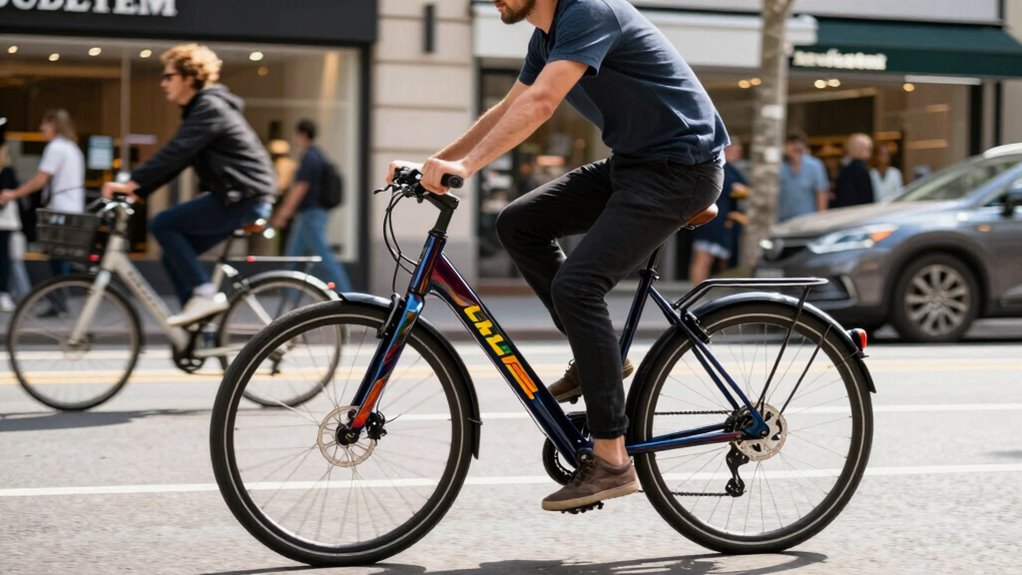
Expectations often shape how you perceive the ride, even before you hop on the bike. Your psychological perception influences whether you feel the bike is smooth, powerful, or sluggish. Expectation bias can lead you to interpret sensations differently based on past experiences or assumptions. If you expect an e-bike to be ultra-responsive, you might notice subtle accelerations more sharply. Conversely, if you believe it’s heavy or underwhelming, those feelings may seem magnified. Your mind filters sensations according to what you anticipate, affecting your overall experience. Recognizing this can help you approach each ride objectively.
- Your mind interprets physical sensations through the lens of prior beliefs
- Expectations can amplify or diminish your perceived ride quality
- Being aware of expectation bias helps you enjoy the true feel of your bike
How Do Different E-Bike Styles Offer Unique Rides Despite Similar Specs?
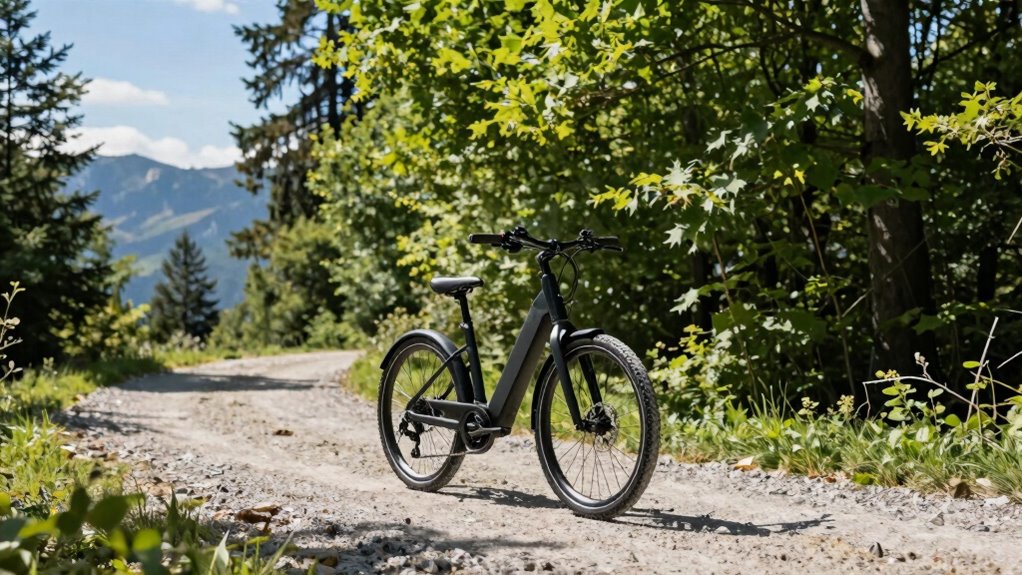
Despite sharing similar specifications like motor power and battery capacity, different e-bike styles deliver distinctly unique riding experiences. A cruiser offers a relaxed, stable ride with a comfortable seat and wider tires, perfect for leisurely outings. A mountain e-bike emphasizes ruggedness and agility, with sturdy frames and enhanced suspension, providing a more active feel. City e-bikes often feature sleek designs with custom paint options, allowing you to personalize your ride’s look. They also excel in accessory compatibility, supporting racks, fenders, and lights for versatile urban use. Each style’s frame geometry, tire size, and design focus influence how you feel during the ride, making the experience more about the ride’s purpose than just the specs. That’s how different e-bike styles shape your ride uniquely.
Tips to Find an E-Bike That Feels Right for You
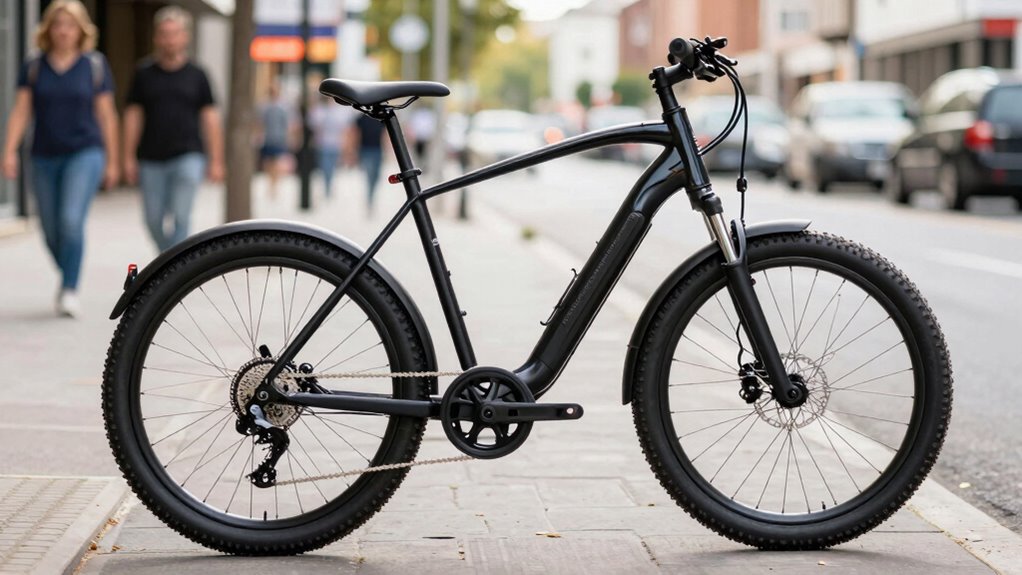
Finding an e-bike that feels right for you starts with understanding what kind of riding experience you want. Consider how important battery durability is for your rides—longer-lasting batteries mean fewer charges and more adventures. Pay attention to motor noise; a quieter motor can make your ride more enjoyable and less disruptive. Test ride different models to assess how they handle and feel, focusing on aspects like responsiveness and comfort.
- Choose a bike with a motor that matches your noise preferences
- Prioritize battery durability based on your typical ride length
- Feel how different frame styles influence your overall comfort and control
Frequently Asked Questions
Can Rider Weight Influence How an E-Bike Feels During Riding?
Yes, rider weight can influence how an e-bike feels during riding. Heavier riders may notice more strain on the bike’s motor and handling, especially on hills or rough terrain. Conversely, lighter riders might experience a more nimble feel. Your weight affects bike handling, including acceleration and balance, making the riding experience feel different even if the specs stay the same. Adjusting your riding style can help optimize comfort and control.
How Does Weather Impact the Ride Experience of an E-Bike?
Weather can dramatically change your e-bike ride, and you might not see it coming. Climate variations and temperature effects influence how your bike responds—cold weather stiffens components, reducing efficiency, while rain slicks surfaces, risking slips. Wind resistance can sap your power unexpectedly. Stay alert, because these weather shifts can turn a smooth ride into a challenging adventure, making you realize just how much weather impacts your riding experience.
Do Different Terrains Change the Perceived Performance of My E-Bike?
Yes, different terrains change how your e-bike feels. Terrain variations, like uphill or rough surfaces, increase pedal resistance, making the ride feel more challenging and different from flat, smooth paths. You might notice the motor works harder on steep inclines, affecting speed and effort. Conversely, on flat terrain, pedaling feels easier and more relaxed. So, your e-bike’s performance perception varies markedly depending on the terrain, even if the specs stay the same.
How Does Riding Style Affect the Feel of an E-Bike?
Riding style is like steering a ship through varying waters—you control how the e-bike feels. Your riding ergonomics and personal habits shape your experience, making it feel more or less responsive. If you prefer aggressive riding, you’ll notice quicker acceleration and sharper turns. Conversely, relaxed riding offers smoother, more comfortable sensations. Your habits influence how the bike responds, making it feel different despite the specs suggesting otherwise.
Is There a Way to Customize My E-Bike’s Responsiveness?
Yes, you can customize your e-bike’s responsiveness by adjusting settings related to battery optimization and motor responsiveness. Many e-bikes have a control panel or app that lets you tweak assist levels, sensitivity, and power delivery. By fine-tuning these features, you’ll experience a more personalized ride that matches your riding style. Just check your bike’s manual or app options to optimize performance and make your e-bike feel just right for you.
Conclusion
Think of your e-bike like a dance partner—its specs are the music, but how you move together makes all the difference. When I first got mine, I expected a certain feel, but it was the tweaks—tire pressure, riding style—that truly made it mine. Just like tuning an instrument, adjusting these details helps you enjoy a ride that’s uniquely yours, turning raw specs into a smooth, harmonious experience on every journey.
Fall Picks
fall essentials
As an affiliate, we earn on qualifying purchases.