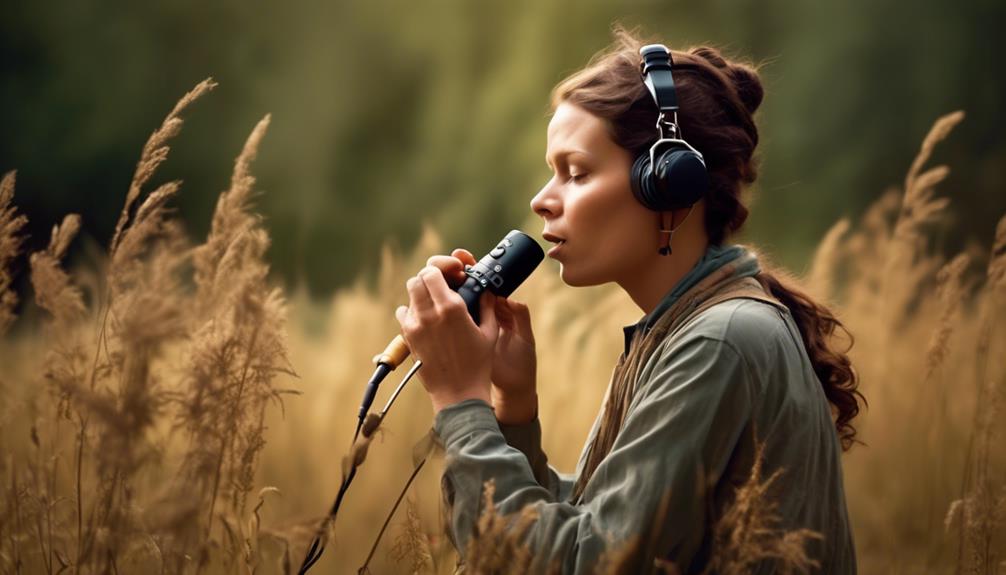
When choosing a microphone for recording nature sounds, the key considerations are capturing clear audio over distances and dealing with unpredictable outdoor environments. The Zoom H1 stands out as the best overall for its portability and excellent stereo quality. For those seeking long-range capabilities, the 8X Long Range Listening Device offers impressive distance recording, though it sacrifices some portability. Meanwhile, the Audio-Technica ATV-SG1LE is ideal for on-camera use with high directional focus. The main tradeoffs include balancing sound quality, range, durability, and ease of use. Continue reading for a detailed comparison to help you find the right match for your nature recording needs.

Get audio and creator gear delivered free with Prime
- Fast, free delivery on millions of items
- Prime Video, Amazon Music and more included
- Member-only deals all year
Key Takeaways
- Range is a critical factor: longer-range devices excel in capturing distant sounds but may be bulkier and more complex to handle.
- Stereo quality varies: dedicated microphones like the Nikon ME-1 provide crisp, natural sound, while parabolic devices amplify distant audio effectively.
- Portability influences usability: compact recorders like the Zoom H1 are easier to carry but may have limited range compared to larger parabolic mics.
- Durability matters: outdoor-focused microphones need weather resistance or protective accessories to perform reliably in variable conditions.
- Price ranges significantly: premium options offer better sound fidelity and features, but budget models can still deliver good results for casual recording.
| 8X Long Range Listening Device, Bird Monocular Parabolic Microphone with Digital Recording |  | Best for Extended Outdoor Listening and Recording | Range: 300 ft | Zoom: 8x | Recording Time: 12 seconds | VIEW ON AMAZON | See Our Full Breakdown |
| Parabolic Microphone Monoculars 8X Portable Bird Listening Device with Sound Amplifier for Wildlife Observation |  | Best for Versatile Outdoor Listening and Observation | Type: Bird Watching Instrument | Magnification: 8x | Objective Lens: 21mm | VIEW ON AMAZON | See Our Full Breakdown |
| Nikon ME-1 Stereo Microphone |  | Best for DSLR Audio Quality and Noise Reduction | Compatibility: DSLR cameras with 3.5mm mic jack | Features: Noise reduction, cable stop | Included: Wind screen, soft case | VIEW ON AMAZON | See Our Full Breakdown |
| Bird Observing Listening Recording Device with Headphones and Dish Directional Microphone |  | Best for Beginner Outdoor Bird Observers | Material: ABS engineering plastic | Sound Quality: Less than 0.6% waveform distortion | Power Consumption: Energy-efficient switch circuit | VIEW ON AMAZON | See Our Full Breakdown |
| Zoom H1 Essential Handy Recorder Bundle with Microphone and Accessories |  | Best for Portable High-Quality Audio on the Go | Compatible Devices: Smartphone | Hardware Interface: 1/4-inch audio microphone | Form Factor: Built-in headphones jack 3.5mm | VIEW ON AMAZON | See Our Full Breakdown |
| HUSBELL Outdoor Adventure Kit – Parabolic Listening Device with 8X Monocular & Headphones for Nature Exploration |  | Best for Kid-Friendly Outdoor Exploration | Material: Impact-resistant ABS plastic | Magnification: 8X monocular | Sound Amplification Range: 160 ft | VIEW ON AMAZON | See Our Full Breakdown |
| Audio-Technica ATV-SG1LE On-Camera Shotgun Microphone |  | Best for Focused Outdoor Audio Capture | Item Weight: 11 ounces | Product Dimensions: 5.04 x 1.26 x 2.32 inches | Model Number: ATV-SG1LE | VIEW ON AMAZON | See Our Full Breakdown |
| Zoom H1 Essential Handheld Recorder for Musicians, Podcasters & Filmmakers with Stereo Microphones, 32-Bit Float, USB Microphone Mode |  | Best for Versatile, High-Quality Field Recording | Microphone Type: X/Y stereo microphones | Recording Format: 32-bit float | Connectivity: USB-C | VIEW ON AMAZON | See Our Full Breakdown |
| Giant Squid Omnidirectional Mono Microphone |  | Best for Wide-Range, Simple Mono Recording | Frequency Response: 20-20,000 Hz | Sensitivity: -35 dB ±4 dB | Sound to Noise Ratio: > 62dB | VIEW ON AMAZON | See Our Full Breakdown |
| Zoom H1 Essential Handy Recorder Bundle with Accessories |  | Best for Professional-Grade Portable Field Recording | Recording Format: 96kHz sample rate | Microphone Type: X/Y microphones | Maximum SPL: 120 dB | VIEW ON AMAZON | See Our Full Breakdown |
More Details on Our Top Picks
8X Long Range Listening Device, Bird Monocular Parabolic Microphone with Digital Recording
This long-range device excels at capturing sounds from as far as 100 meters, making it a standout for birdwatchers and wildlife enthusiasts who need to record distant calls. Compared to the Parabolic Microphone Monoculars 8X, it offers more precise sound control and a durable build tailored for rugged outdoor use. However, its short 12-second recording limit and manual operation mean it’s less suited for extended sessions or hands-free recording. Its adjustable sound controls help fine-tune the capture, but users should be aware of the limited recording duration, which could require multiple takes. Overall, this model prioritizes distance and durability over long recording times or ease of use for casual observers.
Pros:- Captures sounds from up to 100 meters away with clarity
- Includes digital recording and replay capabilities
- Rugged, non-slip design suitable for outdoor environments
Cons:- Limited to 12 seconds of recording time, restricting long-term capture
- Requires manual adjustment for optimal sound quality
Best for: Serious birdwatchers and wildlife researchers needing to record distant sounds in rugged outdoor settings
Not ideal for: Casual nature listeners or hikers wanting longer, hands-free recording sessions
- Range:300 ft
- Zoom:8x
- Recording Time:12 seconds
- Includes:Headphone
Our verdict“This device is ideal for outdoor professionals who need to record distant wildlife sounds with durability, but it’s less suitable for casual or extended recordings.”
Parabolic Microphone Monoculars 8X Portable Bird Listening Device with Sound Amplifier for Wildlife Observation
This compact device offers a strong balance of amplification and portability, making it well-suited for users wanting to listen to wildlife from up to 200 meters away. Unlike the Bird Observing Listening Recording Device, which is tailored more for casual use, this model provides a focusing telescope and a high effective observation distance, ideal for more detailed wildlife viewing. Its 9V battery dependency and relatively bulky size may deter those seeking lightweight, long-duration use. The sound recording feature is limited to 12 seconds, similar to the 8X Long Range Listening Device, but the added optical zoom makes it more versatile for observation. This pick makes the most sense for outdoor enthusiasts who want a combination of listening and viewing capabilities.
Pros:- Allows listening from up to 200 meters in quiet environments
- Includes a focusing telescope and sound recording capabilities
- Portable and suitable for outdoor use
Cons:- Requires a 9V battery not included, adding to setup complexity
- Bulky for extended handheld use
Best for: Bird watchers and nature observers who want both visual and auditory wildlife insights from a distance
Not ideal for: Hikers or campers seeking lightweight, long-duration recording tools without optical zoom
- Type:Bird Watching Instrument
- Magnification:8x
- Objective Lens:21mm
- Effective Observation Distance:5 meters to unlimited
- Directional Listening Distance:200 meters
- Power Supply:9V battery (not included)
Our verdict“This device is a versatile choice for outdoor observers seeking combined viewing and listening, but it’s less ideal for those prioritizing lightweight convenience or long recordings.”
Nikon ME-1 Stereo Microphone
The Nikon ME-1 is designed specifically for connecting to compatible DSLR cameras, making it ideal for nature videographers who want to record ambient sounds without camera autofocus noise intruding. Its noise reduction feature is a notable advantage over basic microphones, especially when recording in dynamic outdoor environments. Compared with the dedicated parabolic devices, the ME-1 offers less distance range but excels in clarity and ease of use with standard camera gear. Its limitations are clear: it requires a compatible DSLR with a 3.5mm mic jack, making it less suitable for standalone field recording. This microphone is best for those combining nature sound recording with video production on a DSLR platform.
Pros:- Reduces autofocus noise for cleaner recordings
- Includes wind screen and protective case
- Easy to connect to compatible DSLR cameras
Cons:- Limited to cameras with 3.5mm microphone jacks
- Less effective for standalone field recording
Best for: Nature videographers using DSLR cameras who prioritize audio clarity and noise suppression
Not ideal for: Audio-only recorders or users without compatible DSLR cameras
- Compatibility:DSLR cameras with 3.5mm mic jack
- Features:Noise reduction, cable stop
- Included:Wind screen, soft case
Our verdict“This microphone is perfect for DSLR users seeking improved audio quality, but it won’t serve as a standalone recorder for field work.”
Bird Observing Listening Recording Device with Headphones and Dish Directional Microphone
This lightweight, durable device offers clear sound with minimal distortion, making it suitable for children and adults new to outdoor listening. Compared to more advanced parabolic mics like the 8X Long Range Listening Device, it emphasizes ease of use and portability, sacrificing some range and precision. While its sound fidelity is decent, its below-average customer rating suggests it may not perform well in very noisy environments or for long-term recording. Its included headphones enhance listening, but limited details on battery life and range mean it’s better suited for casual, short-term use rather than professional wildlife recording. It’s a good entry-level choice for families and newcomers to nature observation.
Pros:- High sound fidelity with low waveform distortion
- Lightweight and portable for outdoor use
- Durable ABS construction with nonslip coating
Cons:- Limited information on battery life and range
Best for: Beginner bird watchers and outdoor enthusiasts seeking a simple, portable listening device
Not ideal for: Experienced wildlife recorders or users needing long-range, high-fidelity sound capture
- Material:ABS engineering plastic
- Sound Quality:Less than 0.6% waveform distortion
- Power Consumption:Energy-efficient switch circuit
- Included:Headphones
Our verdict“This device offers easy, portable listening for beginners but may fall short in noisy environments or for serious wildlife recording.”
Zoom H1 Essential Handy Recorder Bundle with Microphone and Accessories
The Zoom H1 offers a versatile solution for capturing high-quality natural sounds, with 32-bit float recording that prevents clipping and a built-in X/Y microphone array capturing stereo sound up to 120 dB SPL. This makes it ideal for content creators who want reliable, clear recordings without bulky equipment. Compared to the mono-focused Zoom H1 Essential Handheld Recorder, this bundle adds accessories that streamline field recording, but it still limits users to mono operation for some scenarios. Its small size and ease of use make it perfect for quick outdoor recordings, though it’s less suited for long-term, continuous sessions without external power sources. Overall, it’s a flexible choice for mobile nature sound recording with a focus on audio quality.
Pros:- 32-bit float recording prevents clipping and ensures consistency
- Built-in X/Y microphones capture detailed stereo sound
- Compact, easy to operate with advanced features like overdubbing
Cons:- Limited to mono operation mode in some cases, reducing stereo flexibility
- No large internal storage—relies on 32GB microSDHC card included
Best for: Content creators, podcasters, and filmmakers needing portable, high-fidelity audio capture in outdoor settings
Not ideal for: Long-duration recordings requiring extended power or stereo operation beyond simple handheld use
- Compatible Devices:Smartphone
- Hardware Interface:1/4-inch audio microphone
- Form Factor:Built-in headphones jack 3.5mm
- Memory Storage Capacity:32GB microSDHC card included
- Microphone Operation Mode:Mono
Our verdict“This recorder is ideal for mobile, high-quality outdoor recordings, especially for content creators, but less suited for extended or stereo-only field sessions.”
HUSBELL Outdoor Adventure Kit – Parabolic Listening Device with 8X Monocular & Headphones for Nature Exploration
This kit stands out for its engaging combination of visual and audio tools, making it ideal for introducing children and casual outdoor enthusiasts to nature sound recording. Its impact-resistant design and included monocular allow users to see and hear wildlife from up to 160 feet, fostering curiosity. Unlike the more professional-focused options, this product emphasizes ease of use and educational fun, but it trades off some sound fidelity and durability for the target age range. The built-in recording feature is limited to 12 seconds, which restricts longer captures, and the need for a 9V battery (not included) adds a minor inconvenience. Compared to specialized microphones, it doesn’t offer the same sound quality or versatility but excels in accessibility for beginners and young explorers.
Pros:- Durable, impact-resistant plastic suitable for outdoor use
- Combines visual and audio exploration for immersive learning
- One-hand operation with a built-in recording feature
Cons:- Requires a 9V battery not included, adding extra cost
- Limited recording length of only 12 seconds
Best for: Parents, teachers, or casual outdoor enthusiasts seeking an educational, easy-to-use wildlife exploration device for children or beginners.
Not ideal for: Professional nature sound recordists or serious hobbyists who require higher sound fidelity and longer recording capabilities.
- Material:Impact-resistant ABS plastic
- Magnification:8X monocular
- Sound Amplification Range:160 ft
- Power Source:9V battery (included)
- Recording Length:12 seconds
- Weight:Under 1 lb
Our verdict“This kit is perfect for young explorers or casual users wanting an engaging, simple way to experience wildlife sounds and sights.”
Audio-Technica ATV-SG1LE On-Camera Shotgun Microphone
Compared with the Zoom H1, the ATV-SG1LE excels in delivering highly directional, professional-quality sound, making it ideal for recording specific wildlife sounds or ambient environments with clarity. Its compact size and inclusion of a wind muff make it suitable for outdoor filming, but it’s limited strictly to on-camera use, which can be restrictive for field recording. Unlike the Zoom H1, it doesn’t function as a standalone recorder or USB microphone, so it requires a camera or external recording device. This makes it better suited for videographers needing precise audio capture, but less ideal for those seeking portable, versatile recording options. Its focused pickup reduces background noise effectively, yet its dependency on camera compatibility might limit flexibility.
Pros:- Highly directional acoustic tube reduces background noise
- Includes wind muff for outdoor conditions
- Compact and lightweight for easy mounting
Cons:- Requires connection to a camera with TRS cable, needing additional gear
- Limited to on-camera use, not suitable for handheld or standalone recording
Best for: Videographers or content creators needing focused, high-quality outdoor audio for on-camera use in wildlife filming or outdoor shoots.
Not ideal for: Field recordists or hobbyists who want a portable, standalone microphone for spontaneous nature sound recording.
- Item Weight:11 ounces
- Product Dimensions:5.04 x 1.26 x 2.32 inches
- Model Number:ATV-SG1LE
Our verdict“This microphone makes the most sense for videographers needing precise, professional sound for outdoor filming, but less so for standalone field recording.”
Zoom H1 Essential Handheld Recorder for Musicians, Podcasters & Filmmakers with Stereo Microphones, 32-Bit Float, USB Microphone Mode
Compared to the Giant Squid, the Zoom H1 excels in its versatility and portability, offering high-quality stereo recording with built-in X/Y microphones and 32-bit float capability, which handles dynamic outdoor sounds well. Its user-friendly interface makes it accessible for beginners, but it lacks advanced editing tools found on more professional devices. The H1’s ability to double as a USB microphone expands its use for streaming or remote interviews, unlike the Giant Squid, which is more a dedicated microphone. While it doesn’t match the ultra-low noise ratios of studio-grade gear, its compact size and multiple uses make it an excellent choice for outdoor nature recordings, especially for those who need flexibility and quick setup.
Pros:- High-quality stereo X/Y microphones for natural sound capture
- 32-bit float recording handles loud environments well
- Can be used as a USB microphone for streaming or calls
Cons:- Limited advanced editing features
- Battery life may not support lengthy sessions
Best for: Amateur naturalists, podcasters, or filmmakers who want a portable device capable of capturing high-quality outdoor sound on the go.
Not ideal for: Professional sound engineers or those requiring extremely low noise floors for critical recordings, as it’s more suited to casual use.
- Microphone Type:X/Y stereo microphones
- Recording Format:32-bit float
- Connectivity:USB-C
- Storage:SD card
- Use Cases:Music, podcasts, videos, interviews
Our verdict“This recorder offers a compelling blend of ease-of-use and quality, making it ideal for outdoor recording beginners and content creators needing portability.”
Giant Squid Omnidirectional Mono Microphone
Compared with the Zoom H1, the Giant Squid provides a different approach, with its omnidirectional pickup capturing a broad sound field, which can be advantageous for certain nature recordings. Its wide frequency response and low noise ratio make it capable of capturing detailed ambient sounds, but as a mono mic, it limits stereo imaging, which might be a drawback for those wanting a more immersive sound experience. Its simple design and lack of additional features mean it’s straightforward but less flexible for diverse outdoor environments. This mic suits those who need a reliable, wide-range mono capture rather than detailed stereo imaging, especially when portability and straightforward operation are priorities.
Pros:- Wide frequency response for detailed audio
- Low noise ratio improves overall sound clarity
- Long 6-foot cable offers flexible positioning
Cons:- Mono pickup limits stereo sound capture
- No additional features or controls for processing
Best for: Field recordists who need a reliable, wide-frequency, mono microphone for capturing ambient outdoor sounds without concern for stereo imaging.
Not ideal for: Users seeking stereo recordings or detailed spatial sound for immersive nature soundscapes.
- Frequency Response:20-20,000 Hz
- Sensitivity:-35 dB ±4 dB
- Sound to Noise Ratio:> 62dB
- Cable Length:6 feet
- Connector:3.5 mm stereo mini plug
Our verdict“This microphone is well-suited for straightforward, wide-range mono recordings in outdoor environments, but it doesn’t provide stereo imaging for immersive soundscapes.”
Zoom H1 Essential Handy Recorder Bundle with Accessories
In comparison to the Giant Squid, the Zoom H1 bundle provides a more complete recording solution with high-quality 32-bit float recording, versatile accessories, and a portable design suitable for serious outdoor recording. Its built-in X/Y microphones capture detailed stereo sound, and the included accessories like windscreens and a tripod enhance outdoor usability. While it requires SD card storage and external power for extended sessions, it offers more flexibility for dynamic field environments, making it a clear choice for those who want a professional-grade device in a compact package. The interface may be complex for absolute beginners, but experienced users will appreciate the range of features and durable build for outdoor use.
Pros:- High-quality 32-bit float recording for dynamic range
- Includes essential accessories like windscreens and a tripod
- Compact, portable design suitable for outdoor use
Cons:- Requires SD cards (not included), adding to cost and setup
- External power needed for longer sessions
Best for: Professional or semi-professional outdoor sound recordists who need a portable, all-in-one recording kit for nature environments.
Not ideal for: Casual hobbyists or travelers looking for a simple, minimal kit, since it involves managing accessories and external storage.
- Recording Format:96kHz sample rate
- Microphone Type:X/Y microphones
- Maximum SPL:120 dB
- Connectivity:USB-C
- Included Accessories:EVA case, furry windscreen, foam windscreen, octopus tripod
Our verdict“This bundle is ideal for serious outdoor sound recorders seeking professional quality and versatility in a portable package.”

How We Picked
To evaluate these microphones, I focused on performance in outdoor environments, sound clarity, range, build quality, and ease of use. Devices were selected for their ability to reliably capture distant or subtle sounds without excessive background noise. The ranking reflects a balance between professional-grade features and practical usability for hobbyists and outdoor enthusiasts alike. Additional factors like durability, portability, and value for money also shaped the lineup, ensuring each option serves a distinct user need.Factors to Consider When Choosing Microphone For Recording Nature Sounds
Choosing the right microphone for recording nature sounds involves understanding several key factors. Not all microphones are built for outdoor use, and different recording scenarios demand specific features. By considering these factors, you can avoid common pitfalls like inadequate range or poor sound quality, ensuring your recordings are clear and immersive.Range and Sensitivity
Range determines how far a microphone can pick up sounds clearly. Parabolic microphones excel at capturing distant noises like bird calls or wildlife movement, but they tend to be larger and less portable. Conversely, handheld recorders are more portable but have limited range. Consider your typical recording environment—long-range options are ideal for wide outdoor spaces, while shorter-range mics suit forest or close-up recordings.
Sound Quality and Stereo Imaging
High-quality stereo microphones reproduce natural soundscapes with depth and clarity, which is crucial for immersive recordings. Omnidirectional mics pick up sounds from all directions, capturing a realistic environment, whereas directional mics focus on specific sources, reducing background noise. Match the microphone’s stereo capabilities with your recording goals—whether capturing a broad soundscape or isolating specific sounds.
Durability and Weather Resistance
Outdoor recordings expose equipment to moisture, dust, and temperature changes. Look for microphones with weather-resistant features or the ability to add protective covers. Investing in durable gear minimizes the risk of damage and reduces the need for repairs, especially if you plan to record in challenging conditions frequently.
Ease of Use and Portability
Some microphones require complex setups or external batteries, which can be a hindrance in field recording. Compact, all-in-one recorders like the Zoom H1 simplify operation and are easier to carry for extended outings. Consider your experience level and mobility needs—more sophisticated devices may offer better sound but come with a steeper learning curve and bulkier design.
Budget and Value
Prices vary widely, and higher-cost microphones often provide superior fidelity and features. However, budget-friendly options can still produce excellent results for casual or beginner use. Weigh the cost against your intended use—if professional-quality recordings are your goal, investing in a higher-end model makes sense; for hobbyist recordings, mid-range devices might suffice.
Frequently Asked Questions
Can I use a regular microphone for recording nature sounds outdoors?
While a standard microphone can capture outdoor sounds, it often lacks the necessary features for high-quality nature recordings, such as directional sensitivity or weather resistance. Regular mics may pick up too much background noise or be damaged by moisture and dust. Investing in a specialized outdoor microphone ensures clearer recordings and durability in unpredictable environments.
What is the advantage of using a parabolic microphone for nature recording?
Parabolic microphones are designed to focus sound waves from distant sources, greatly increasing their range. This makes them ideal for capturing sounds like bird calls or animal movements from afar. However, they tend to be larger, more fragile, and require careful handling. They are best suited for serious wildlife observation rather than casual or portable recording sessions.
Do I need a stereo microphone or a mono one for nature recordings?
For capturing the full ambiance of a natural environment, stereo microphones are generally preferred as they deliver a richer, more immersive soundscape. Mono microphones can still be useful, especially if you want to focus on specific sounds or if size and weight are critical factors. The choice depends on whether you value spatial accuracy or simplicity.
How important is weather resistance for outdoor microphones?
Weather resistance can significantly extend the lifespan of your recording gear and improve reliability. If you plan to record in rain, high humidity, or dusty conditions, look for microphones with weatherproofing or protective accessories. Skipping this feature might lead to equipment failure or compromised audio quality during critical recording moments.
Is it worth investing in a dedicated nature recorder over a standard microphone?
Dedicated nature recorders often combine high-quality microphones with features tailored to outdoor use, such as windshields, high sensitivity, and durable construction. They offer more convenience and better audio fidelity for field recording. While they tend to be more expensive, this investment pays off if you prioritize high-quality, hassle-free recordings in challenging environments.
Conclusion
Choosing the right microphone depends on your specific needs. For serious wildlife enthusiasts or professionals, the 8X Long Range Listening Device provides unmatched distance capture, though at the expense of portability. Casual or beginner recorders will find the Zoom H1 offers excellent value and ease of use. If you need a compact on-camera microphone for multimedia projects, the Audio-Technica ATV-SG1LE stands out. For those prioritizing durability and weather resistance, investing in models with protective features is advisable. Ultimately, the best choice hinges on your recording environment, budget, and experience level.
Halloween Picks
halloween
As an affiliate, we earn on qualifying purchases.