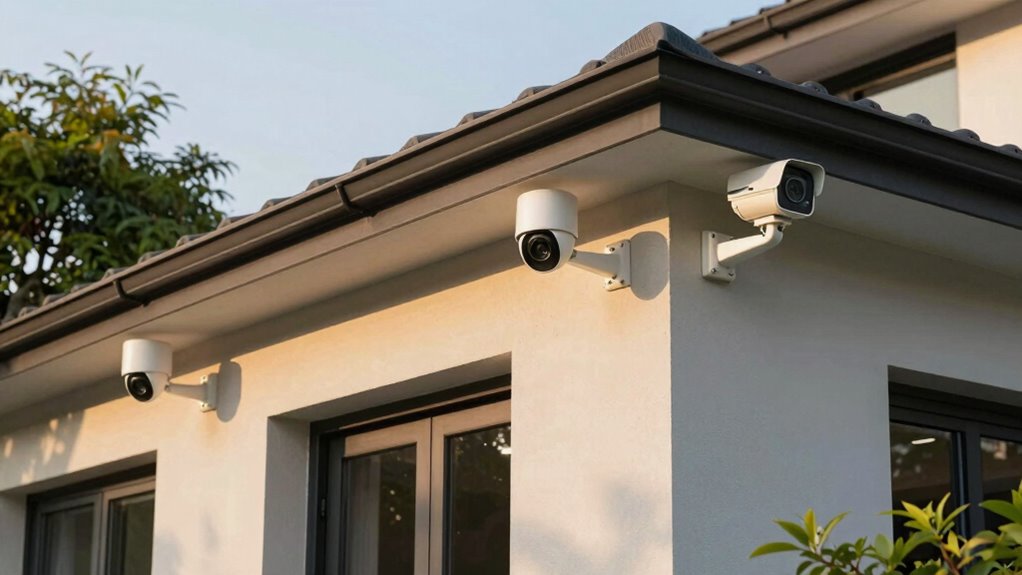
To build a more reliable camera layout around your home, start by evaluating your security needs and identifying key zones like entry points and high-value areas. Choose cameras with good resolution, night vision, and weather resistance, and carefully plan their placement to cover blind spots and prevent tampering. Regularly test, fine-tune, and maintain your system to guarantee clear footage and coverage. Keep these tips in mind, and you’ll improve your home’s security markedly—more useful insights await if you continue exploring.

Get audio and creator gear delivered free with Prime
- Fast, free delivery on millions of items
- Prime Video, Amazon Music and more included
- Member-only deals all year
Key Takeaways
- Assess and prioritize vulnerable entry points, ensuring comprehensive coverage of all access routes and blind spots.
- Choose high-resolution, weather-resistant cameras with features like night vision and motion detection for reliability.
- Position cameras strategically high and angled to prevent tampering and optimize sightlines, avoiding obstructions.
- Regularly test, calibrate, and maintain cameras to ensure consistent functionality and clear footage.
- Update firmware and adjust camera angles periodically to adapt to environmental changes and evolving security needs.
As an affiliate, we earn on qualifying purchases.
Assess Your Home’s Security Needs and Key Zones
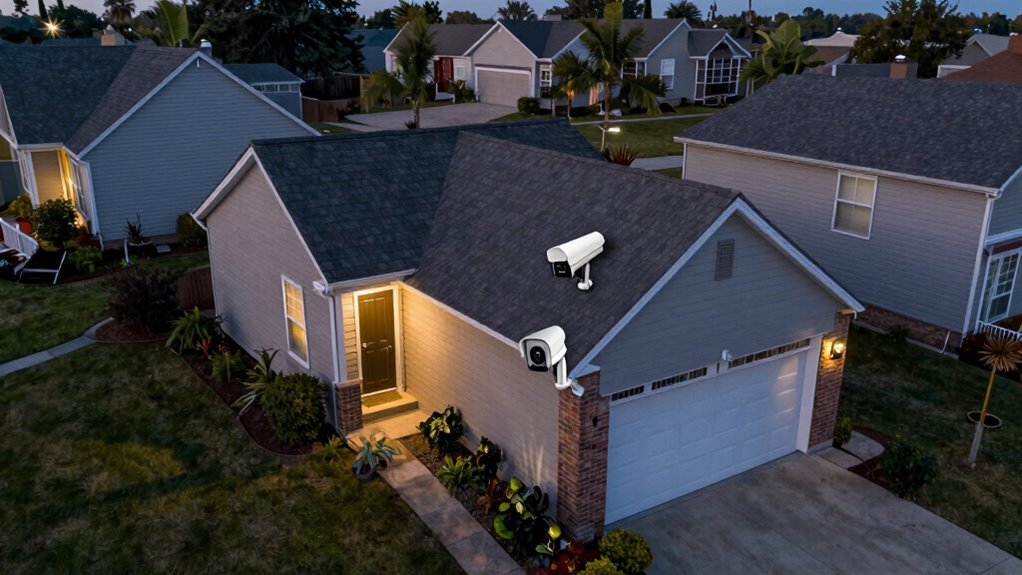
Before installing cameras, you need to identify which areas of your home require the most security. Think about your main entry points, such as doors and windows, and any high-value areas like safes or home offices. Consider how home automation might enhance your security system, making monitoring more seamless. Be mindful of privacy concerns—placing cameras where they won’t intrude on personal spaces like bedrooms or bathrooms helps maintain trust and legal compliance. Map out key zones that need coverage and evaluate potential blind spots. This initial assessment guarantees you’re targeting the right areas, balancing security with privacy. Additionally, incorporating security zone info such as lighting and landscaping can improve camera visibility and deterrence. For example, choosing the right camera placement can significantly reduce blind spots and improve overall coverage. Understanding the importance of security system effectiveness can guide your planning process, ensuring your setup deters intruders and provides reliable monitoring. Clear priorities will guide your camera placement, making your security system more effective and respectful of everyone’s privacy. Proper planning also involves understanding how smart security devices can work together to create a cohesive and reliable system.
Choose the Right Cameras and Features for Your Home
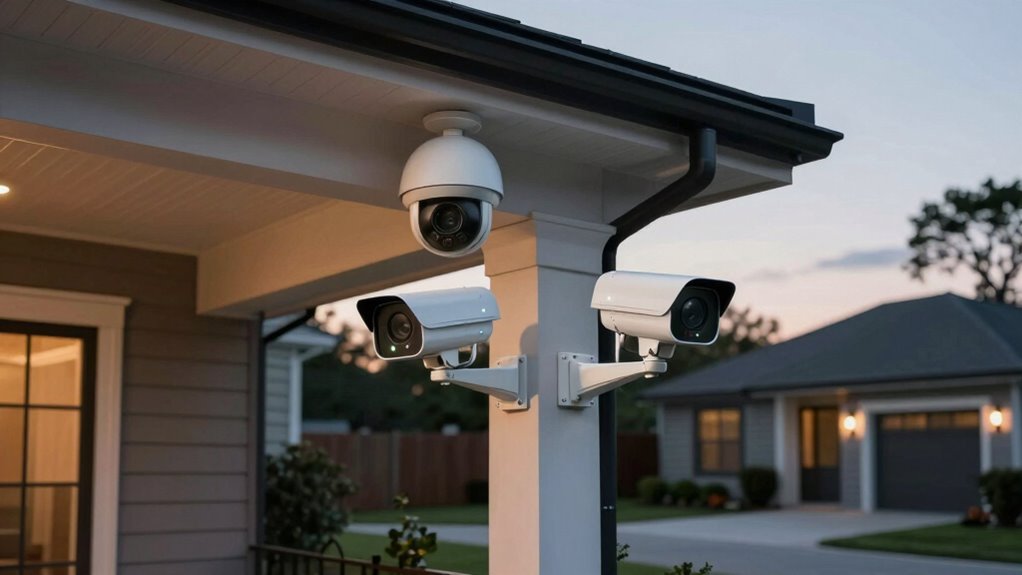
Selecting the right cameras and features is essential to building an effective security system that meets your home’s specific needs. Start by considering camera resolution; higher resolution provides clearer images, making it easier to identify faces or details. Look for cameras with at least 1080p for sharp images. Night vision is equally important, especially for outdoor areas or low-light conditions, ensuring your cameras capture details after sunset. Decide if you need wired or wireless models based on your home’s layout and installation preferences. Features like motion detection, two-way audio, and weather resistance can enhance security and convenience. Choose cameras that align with your monitored zones, providing complete coverage without gaps. The right combination of resolution and night vision will give you reliable, clear footage around the clock. Additionally, understanding the importance of battery capacity can significantly improve your camera’s operational reliability during power outages or remote locations. Ensuring your cameras have sufficient power options can further enhance their dependability in various scenarios. Moreover, understanding nail biology and hygiene can serve as a metaphor for the importance of regular maintenance and proper care to keep your security system functioning optimally. Regularly inspecting and maintaining your cameras, similar to proper hygiene, helps prevent malfunctions and ensures consistent security coverage.
Design a Camera Coverage Map to Minimize Blind Spots

Start by identifying your home’s most vulnerable entry points to guarantee they’re covered. Then, strategically map camera placements to eliminate blind spots and maximize visibility. Regularly review and update your coverage plan to adapt to any changes or new risks. Incorporating proper safety tips when installing your cameras can help prevent accidents and ensure a secure setup. Additionally, understanding home security systems and their features can enhance your overall protection strategy. Knowing how to optimize camera placement can further improve your coverage effectiveness. Considering camera coverage as part of your security planning can ensure comprehensive protection against potential threats. Implementing recovery routines like foam rolling can also support physical well-being, which indirectly contributes to maintaining alertness and responsiveness in your security setup.
Identify Vulnerable Entry Points
To effectively identify vulnerable entry points, you need to analyze all possible access points around your property and understand how they can be exploited. Focus on vulnerable entry points like doors, windows, garages, and side alleys, as these are common targets for intruders. Look for areas that lack adequate lighting or are obscured by foliage, which can serve as hidden camera zones. Consider how someone might bypass your security or hide while attempting to gain entry. By pinpointing these weak spots, you can prioritize camera placement and ensure you cover all angles. Recognizing vulnerable entry points helps you develop an all-encompassing security plan that minimizes blind spots and deters intruders effectively. Incorporating digital concepts like remote monitoring can further enhance your security strategy. Additionally, understanding security vulnerabilities allows you to stay ahead of potential threats and adapt your camera layout accordingly. Performing regular security assessments can also reveal new vulnerable areas as your property or environment changes over time. Incorporating knowledge about electric power sources can also be beneficial when considering how to power your security devices effectively.
Map Camera Placement Strategically
Once you’ve identified your property’s vulnerable entry points, the next step is to strategically map out camera placement to guarantee thorough coverage. Focus on strategic positioning to eliminate blind spots and maximize security. Place cameras at key angles that cover entrances, driveways, and dark corners, ensuring these areas are visible from multiple perspectives. Use a coverage map to visualize camera placement and identify gaps. Consider mounting cameras high enough to prevent tampering while maintaining a clear view of critical zones. Adjust angles to overlap fields of view, reducing blind spots. Keep in mind that the right camera placement not only captures activity but also provides clear footage. A well-planned camera coverage map helps you create an effective security system with minimal gaps. Additionally, understanding contrast ratio can help in selecting cameras with optimal image clarity in various lighting conditions. Recognizing coverage optimization techniques can further enhance your system’s reliability and reduce potential vulnerabilities. Employing personality assessments or understanding behavioral cues can also assist in evaluating activity captured by your cameras, especially in identifying suspicious behavior.
Regularly Update Coverage Plan
How often do you revisit and update your camera coverage plan? Regular updates are vital to keep blind spots minimized. Over time, sensor calibration can drift, causing cameras to misalign or miss critical areas. Staying on top of firmware updates ensures your cameras operate with the latest features and security patches, improving reliability. Reassess your coverage map after any hardware changes or seasonal shifts that might affect visibility. Adjust camera angles and positions as needed, and verify their functionality frequently. A well-maintained coverage plan adapts to evolving conditions, ensuring your cameras provide thorough security. Regularly inspecting and maintaining your equipment, including airless paint sprayers, can help prevent unexpected failures and ensure consistent performance. Consistent reviews and updates help you identify potential blind spots early, maintaining ideal surveillance and peace of mind around your home.
Position Cameras for Clear and Effective Footage
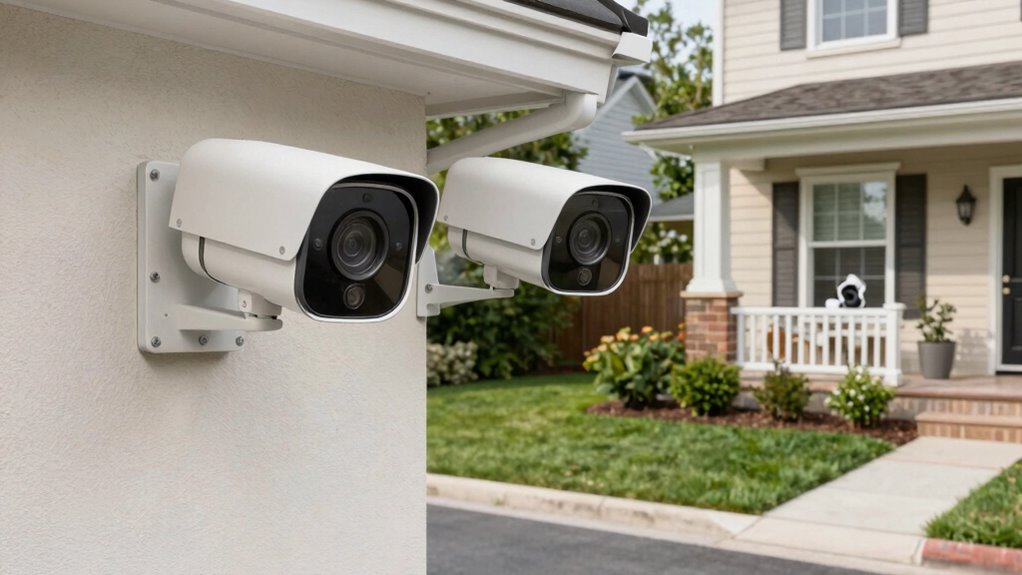
To get clear and effective footage, you need to focus on ideal camera placement strategies that cover all critical areas. Make certain your cameras are positioned to avoid obstructed views and blind spots, and check that lighting conditions won’t cause glare or shadows. Proper positioning ensures your footage is sharp, reliable, and useful. Additionally, considering work-life harmony can help you set up your surveillance system efficiently without feeling overwhelmed.
Optimal Camera Placement Strategies
Positioning your cameras thoughtfully is essential to capturing clear and effective footage. Proper placement guarantees you cover key areas and maximize your camera lens selection for clarity. First, mount cameras high enough to prevent tampering but low enough for a clear view. Second, aim lenses toward entrances, driveways, and blind spots. Third, ensure wireless connectivity is strong; avoid areas with thick walls or interference. Fourth, choose adjustable mounts for flexible angles, enabling you to fine-tune coverage. Keep in mind that ideal placement reduces blind spots and improves footage quality, especially when using cameras with different lens types. Investing in cameras with reliable wireless connectivity guarantees continuous monitoring without interruptions. Proper placement, combined with the right lens selection, guarantees thorough and clear security footage around your home. Additionally, proper placement strategies help prevent common issues like blind spots and connectivity problems, ensuring your security system functions effectively.
Avoiding Obstructed Views
Have you considered how obstructions can compromise your camera’s effectiveness? Obstructed views make it harder to capture clear footage, allowing intruders or issues to go unnoticed. To prevent this, position your cameras where they won’t be blocked by trees, fences, or other objects. Be mindful of camera shadows, which can create blind spots or false alarms during certain times of the day. Adjust angles so that sunlight, shadows, or moving branches don’t interfere with the view. Regularly check camera placement and clear any potential obstructions to maintain a clear line of sight. By proactively avoiding obstructions, you guarantee your footage remains reliable and your home stays protected. Clear views are essential for accurate monitoring and quick response.
Ensuring Proper Lighting
Proper lighting plays an essential role in capturing clear footage, especially during low-light conditions or at night. To optimize your camera setup, consider how indoor ambiance and natural illumination affect visibility. Correct positioning ensures your cameras get the best light and avoid shadows or glare.
Here are four tips:
- Place cameras where natural light, like windows, illuminates the area during the day.
- Use supplemental lighting to enhance indoor ambiance without creating glare.
- Avoid pointing cameras directly at bright light sources to prevent overexposure.
- Adjust camera angles for even lighting coverage, reducing shadows and dark spots.
Consider Lighting and Environment When Placing Cameras
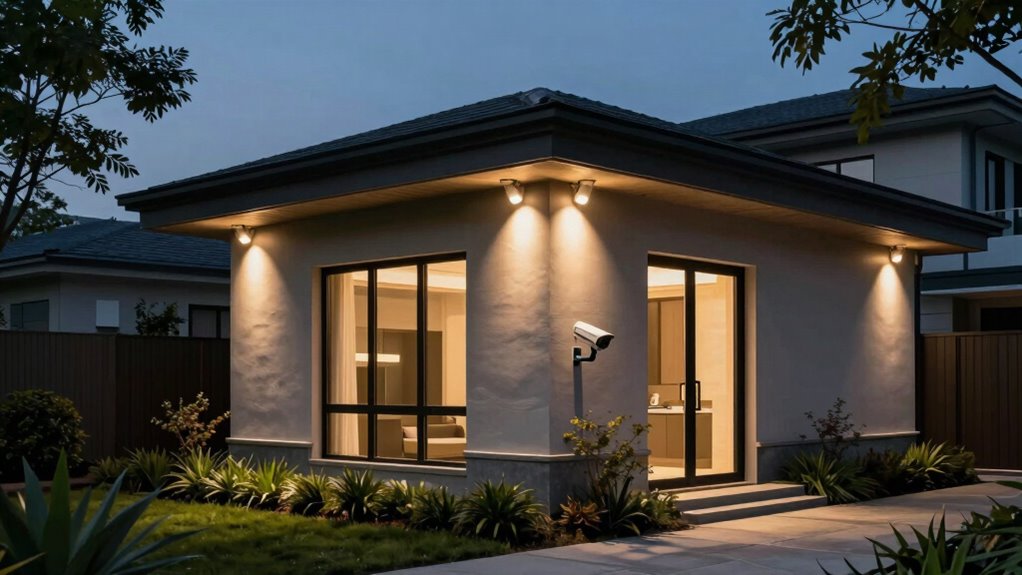
Lighting and environmental conditions can dramatically affect your camera’s effectiveness, so it’s vital to take them into account carefully during placement. Proper lighting considerations help ensure clear footage both day and night, so avoid placing cameras where direct sunlight or glare could obscure the view. Shadows, reflections, and low-light areas pose environmental challenges that can reduce visibility. Position cameras where they won’t be affected by harsh lighting or weather conditions, like rain or snow, which can compromise their operation. Use shaded areas or install protective housings if needed. Consider how natural light shifts throughout the day and season, adjusting placements accordingly. Addressing lighting considerations and environmental challenges upfront ensures your cameras deliver reliable, high-quality footage around your home.
Test and Fine-Tune Your Camera Setup for Reliability
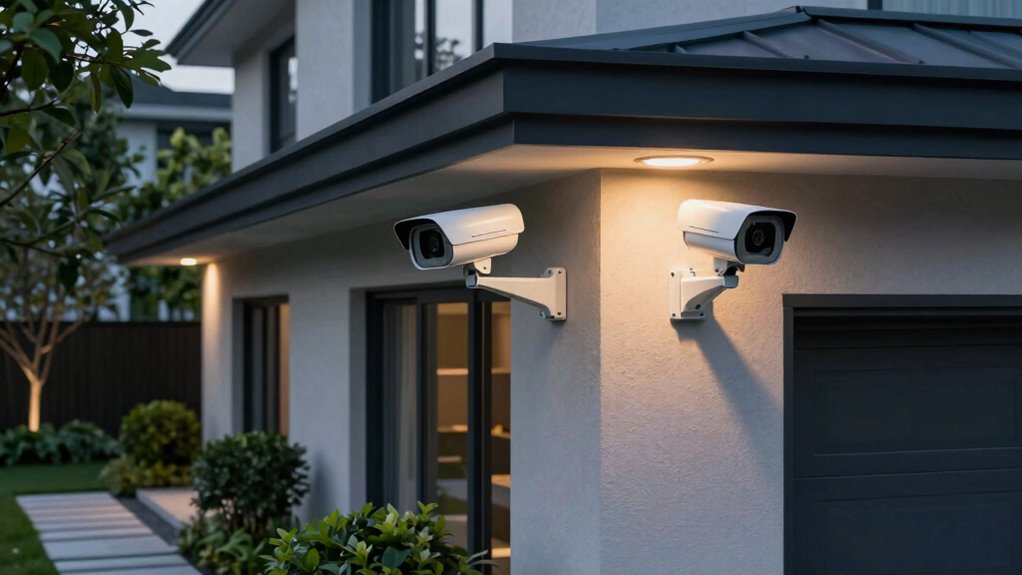
Once you’ve installed your cameras, it’s important to test their placement to guarantee they cover the desired areas effectively. Start with camera calibration to ensure each lens is properly aligned and focused. Next, review footage analysis from different times of day to identify blind spots or poorly lit areas. Adjust camera angles as needed. Then, perform a live test by walking through your property, checking if the cameras capture your movements clearly. Finally, verify that the footage quality remains consistent and reliable. Consider the following steps:
- Calibrate each camera for sharp, clear images
- Analyze footage for gaps or issues
- Fine-tune angles based on test results
- Confirm consistent footage quality over time
This process helps maximize reliability and security.
Maintain and Update Your Security Camera System Over Time
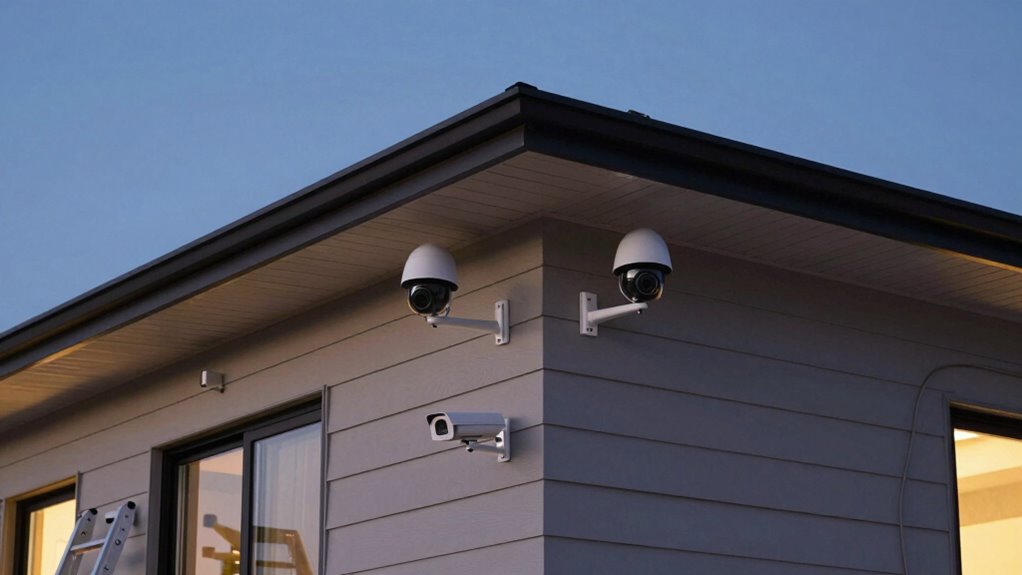
Regularly maintaining and updating your security camera system is essential to guarantee it continues to function effectively and provide reliable protection. Consistently perform camera maintenance by cleaning lenses and checking for obstructions. Keep firmware updates current to enhance security features and fix vulnerabilities. Regular updates ensure your system runs smoothly and stays compatible with new technology. Schedule routine inspections to identify issues early, and document maintenance activities for future reference.
| Maintenance Task | Recommended Frequency |
|---|---|
| Camera cleaning | Monthly |
| Firmware updates | As released by manufacturer |
| System testing | Quarterly |
| Obstruction check | Biannual |
Staying proactive helps maintain peak performance and prevents security gaps.
Frequently Asked Questions
How Often Should I Upgrade or Replace My Security Cameras?
You should upgrade or replace your security cameras every 3 to 5 years, depending on their performance and technology. Regularly check your camera placement to guarantee ideal coverage, and monitor the power sources for reliability. If you notice blurry footage, connectivity issues, or outdated features, it’s time for an upgrade. Staying current with advancements guarantees your security system remains effective and that your camera placement and power sources stay dependable.
What Are the Best Practices for Securing Camera Footage From Hacking?
Did you know 80% of hacking attempts target unsecured video feeds? To secure your camera footage, use strong encryption protocols like WPA3 and HTTPS to protect data during transmission. Implement strict access controls by creating unique, complex passwords and enabling two-factor authentication. Regularly update your firmware and monitor access logs. These practices make hacking considerably harder, ensuring your footage stays private and safe from intruders.
Can I Integrate My Home Security Cameras With Smart Home Devices?
Yes, you can integrate your home security cameras with smart home devices. To guarantee seamless operation, focus on strategic camera placement and lighting optimization. Position cameras where they cover key entry points and high-traffic areas, and ensure proper lighting for clear footage. Use compatible smart hubs or apps to connect cameras with other devices, enabling automation and remote monitoring for an all-encompassing, smart security system.
How Do Weather Conditions Impact Camera Performance and Longevity?
Weather conditions profoundly impact your camera’s performance and longevity. Harsh weather, like rain, snow, or extreme heat, can reduce weather resilience, causing damage or malfunctions. To keep your cameras reliable, perform regular camera maintenance, such as cleaning lenses and checking seals. Use weatherproof cameras designed for outdoor use, and consider protective enclosures to shield against the elements, ensuring your security system remains effective regardless of weather challenges.
What Legal Considerations Should I Be Aware of When Installing Cameras?
When installing cameras, you need to prioritize legal compliance and address privacy concerns. Make sure your cameras only capture your property and avoid intruding on neighbors’ private spaces. Check local laws about surveillance, recording, and data storage, as rules vary. Inform visitors if they’re being recorded, and avoid cameras focused on areas like neighbors’ yards or public spaces. Respect privacy rights to prevent legal issues down the line.
Conclusion
Now that you’ve set up your camera layout, remember—your home’s security isn’t just about placement but ongoing vigilance. Regularly test and update your system to catch any blind spots or technical issues. With each adjustment, you get closer to a foolproof security setup. But beware—threats evolve, and so should your defenses. Are you ready to stay one step ahead and guarantee your home remains truly protected? The next move is yours.
Evergreen bestsellers Picks
bestsellers
As an affiliate, we earn on qualifying purchases.