This checklist is for music makers setting up a room for recording, monitoring, or practice. It covers treatment across walls, corners, ceilings, equipment, doors, and floors, with a product pick where one was provided.

Get audio and creator gear delivered free with Prime
- Fast, free delivery on millions of items
- Prime Video, Amazon Music and more included
- Member-only deals all year
The sections follow the surfaces and problem areas you can review around the room: walls and corners first, then the ceiling and equipment, followed by doors and floors. Bass traps and rugs are advice-only sections, so use them to guide your shopping without treating them as specific product recommendations.
Use the look-for lists to compare candidate products against your room dimensions, installation method, and setup. Before buying, confirm the product’s exact dimensions and intended use from its listing; names alone do not establish compatibility or acoustic performance.
Acoustic wall panels
Wall panels are a visible part of a room treatment plan, so check how a panel’s shape and finish work with the available wall area and your room layout. The listed pick is a four-piece set of teak wood slat wall panels. The name identifies the finish and set size, but does not establish panel dimensions, mounting method, or acoustic performance; verify those details before planning coverage.
A common buying mistake is choosing panels by appearance alone or assuming a small set will cover the intended listening or recording area. Measure the wall, mark obstacles such as doors and outlets, and compare the listing’s per-panel dimensions with the space you can actually use. Check whether the product is designed for your intended treatment role and whether its installation requirements suit the wall surface. Keep enough clearance around fixtures and decide how the panels will fit alongside other treatment.
What to look for:
- Per-panel and total set dimensions
- Mounting method and compatible wall surfaces
- Product description of intended acoustic use
- Clearance for outlets, doors, and fixtures
- Finish and slat orientation for the room
NeatiEase Teak Wood Slat Wall Panels, 4-Piece Set

These MDF and high-density polyester fiber panels add a contemporary wood-slat look while helping absorb sound and reduce echo. The four panels can be installed horizontally or vertically on walls or ceilings, and can be cut to shape.
Pros:
- Helps absorb sound and reduce echo
- Can be installed horizontally or vertically
- Can be cut to fit different shapes
- Suitable for walls and ceilings
Cons:
- Heavy package at 52.9 pounds
- Installation requires screws or superglue
Best for: Rooms where a teak slat finish suits the wall plan
Not ideal for: Buyers who need confirmed coverage or performance from the product name alone
Bottom line: Measure the usable wall and verify the listing’s dimensions, mounting details, and intended use before choosing this four-piece set.
Bass traps
Bass traps are a corner-treatment consideration for a music room, but no specific product was supplied for this checklist. Start by identifying the corners and other locations you can dedicate to treatment, then look for products explicitly described for bass-frequency absorption. Do not assume a panel or soft furnishing will serve the same role just because it fits the space.
One common mistake is buying before checking available depth and height. Measure the corner, note nearby doors or equipment, and confirm how the proposed trap is installed or supported. Compare product dimensions with the room rather than relying on generic room diagrams. If a listing does not state its intended use or installation needs clearly, gather those details before adding it to your plan. Keep the treatment layout compatible with access to the room and your recording or listening position.
What to look for:
- Product explicitly described for bass trapping
- Height, width, and depth for the intended corner
- Installation or support requirements
- Clearance from doors and equipment
- Details about intended use in the product listing
Acoustic ceiling clouds
A ceiling cloud is a ceiling-mounted treatment option to consider when planning the area above a listening or recording position. The listed pick is a Primacoustic Nimbus panel, 1.5 inches thick, in a two-pack; the supplied product name is truncated after “Bla,” so confirm the full model and details in the listing. The name alone does not specify dimensions, mounting hardware, or suitability for a particular ceiling.
Before buying, measure the intended ceiling area and check for lights, fans, beams, and other obstructions. A frequent mistake is treating the pack count or thickness as proof of coverage or compatibility. Verify each panel’s dimensions, how it attaches, and whether the mounting approach suits the ceiling structure. Confirm the full product name and included components, and plan placement so the panels do not interfere with room access or fixtures. Use the listing’s stated guidance to judge whether this product matches your intended application.
What to look for:
- Full product name and model details
- Dimensions of each panel and pack contents
- Mounting hardware and ceiling compatibility
- Clearance from lights, fans, and beams
- Stated intended use in the product listing
Primacoustic Nimbus 1.5 inch Acoustic Ceiling Cloud Panel 2-Pack – Black

The Primacoustic Nimbus Acoustic Ceiling Cloud Panel 2-pack consists of 1.5-inch-thick panels made from high-density glass wool, wrapped in black fabric. Designed to reduce room echo and reverb, these panels improve sound clarity in studios, conference rooms, and other spaces by suspending from the ceiling.
Pros:
- Effective at reducing reverb and improving sound clarity
- Easy to suspend with included hardware
- Professional and attractive appearance
- High-density glass wool construction for sound absorption
Cons:
- Requires ceiling suspension hardware and installation
- Bulkier size may not suit small spaces
- Limited color options
Best for: Setups considering a ceiling treatment in a two-pack
Not ideal for: Buyers who need confirmed dimensions or mounting details from the truncated name
Bottom line: Confirm the complete listing, panel dimensions, included mounting parts, and ceiling compatibility before planning placement.
Isolation pads
The supplied pick for this slot is the Studio Designs Zenith Drafting Light Table with integrated LED light, as named in the brief. Its name describes a drafting table, not an isolation pad, so the provided information does not establish that it is intended to isolate speakers or other studio equipment. Check the full listing carefully before treating it as a match for this checklist slot.
For equipment isolation, first identify the item you want to support and its footprint, weight, and contact points. Then compare those requirements with a product explicitly described for that role. A common buying mistake is relying on a category label or nearby recommendation without confirming the listed item’s purpose. Check dimensions and compatibility for your specific equipment, and confirm that the product supports the intended orientation and placement. If the drafting table is being considered for a separate workspace need, assess it on that basis rather than assuming it functions as an isolation pad.
What to look for:
- Product explicitly identified as an isolation pad
- Dimensions matching the equipment footprint
- Compatibility with the equipment being supported
- Intended use and placement guidance
- Clear distinction between studio isolation and desk use
Studio Designs Zenith Drafting Light Table with Integrated LED Light Pad

This adjustable drafting table has a built-in Artograph LED light pad with dimming from 0 to 3,500 lux and a 34 × 19.5-inch illuminated area. Its tempered glass work surface offers three height settings and five angle positions, with a pencil ledge and lower storage shelf for supplies.
Pros:
- Integrated dimmable LED light pad provides a large illuminated area.
- Adjustable height and tabletop angle accommodate different working positions.
- Tempered glass surface supports up to 25 lbs.
- Pencil ledge and lower shelf provide space for tools and supplies.
Cons:
- The illuminated area is smaller than the full glass work surface.
- The workstation weighs 57 lbs.
Best for: Readers checking whether the listed table meets a separate workspace need
Not ideal for: Shoppers seeking a confirmed equipment isolation pad
Bottom line: The supplied name identifies a drafting light table, so verify its purpose before using it for equipment isolation.
Door draft stoppers
Door sealing is a fit-sensitive detail in a music room checklist. The listed pick is an HD Door Seal Kit sized 36 by 84, but the name does not explain which door dimensions those figures describe or what components the kit includes. Confirm the listing’s specifications and intended installation before deciding whether it fits your opening.
Measure the door and frame where the seal will sit, and note the gap and any threshold or trim that could affect installation. A common mistake is matching only one stated dimension while overlooking the door’s thickness, frame profile, or the kit’s installation method. Check whether the listing describes a complete kit and whether it is intended for your door type. Also make sure the planned seal will not interfere with normal opening and closing. Use the product’s instructions and measurements to assess fit rather than assuming the name guarantees compatibility.
What to look for:
- What the 36 by 84 dimensions refer to
- Door and frame measurements required for fit
- Included kit components
- Installation method and door-type compatibility
- Clearance for normal opening and closing
HD Door Seal Kit 36×84
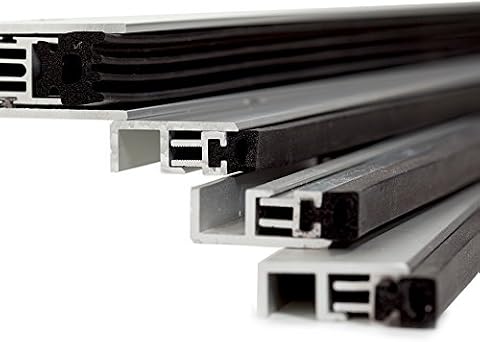
This door seal kit is designed for doors measuring 34" – 36" wide and up to 84" high. It offers simple installation, cost-effective sound isolation, and an industry-leading bottom-door seal to improve acoustics and energy efficiency.
Pros:
- Easy to install with simple instructions
- Cost-effective solution for sound isolation
- Industry-leading bottom-door seal improves acoustics
Cons:
- Limited to doors within specified size range
- Only includes one kit, may require additional for larger doors
Best for: Shoppers whose measured door matches the listing requirements
Not ideal for: Buyers who have not checked door, frame, and threshold dimensions
Bottom line: Compare your measured opening and door details with the kit’s full fit requirements before ordering.
Acoustic rugs
Rugs are an optional floor-planning choice in this advice-only slot; no specific product was provided. Decide first whether a rug fits the room’s layout and intended use, then compare its dimensions with the open floor area. A rug’s presence alone does not establish a particular acoustic benefit, so use product descriptions and your room’s needs to guide the choice.
Common mistakes include choosing a size that blocks a door, creates a trip edge, or conflicts with chairs and stands. Measure the available floor area, account for how equipment moves, and check the rug’s listed dimensions and construction. If you plan to place it under furniture or studio gear, confirm the surface and pile suit that arrangement. Keep door swings and walkways clear. Treat this as a practical room-layout decision, and seek product information that describes the rug’s materials and intended use rather than assuming its category guarantees a result.
What to look for:
- Dimensions that fit the usable floor area
- Clearance for doors and walkways
- Construction suitable for the planned placement
- Compatibility with chairs, stands, or furniture
- Product details about materials and intended use
For a budget-first buying order, start by measuring and prioritizing the room areas you want to address, then compare products against those dimensions and their stated uses. Review wall panels and the ceiling cloud details, check the door kit’s fit, and gather product-specific information for the advice-only bass-trap and rug slots before purchasing. The isolation-pad pick needs purpose verification against your equipment needs.
Work through the checklist one area at a time and keep your measurements handy while comparing listings. Careful fit checks and clear product descriptions make it easier to build a room plan that suits your setup. You can make progress with a few well-matched choices and refine the rest as you learn what the space needs.