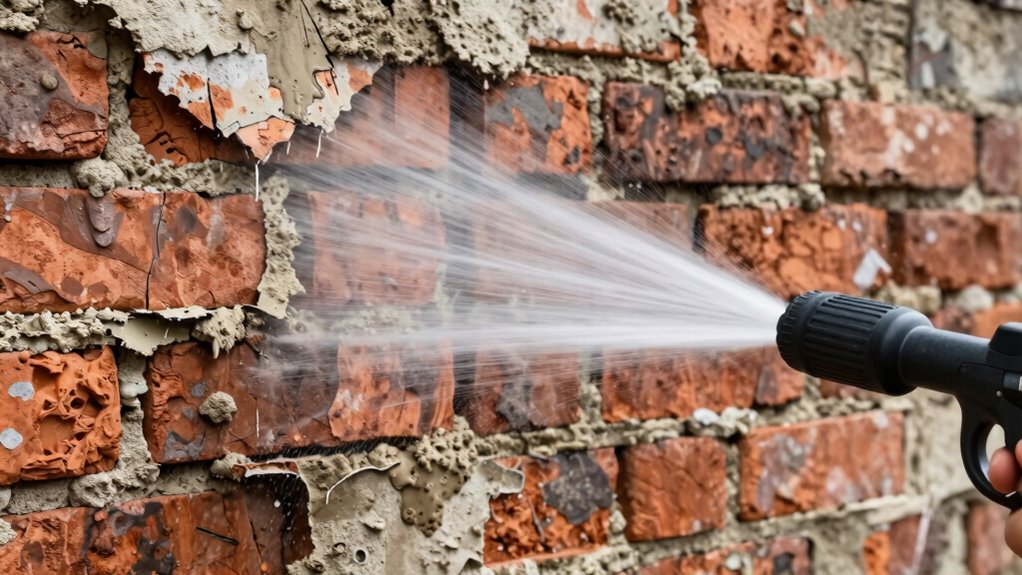
Using the wrong nozzle on your pressure washer can quickly damage surfaces by concentrating high-pressure jets where they shouldn’t be. Narrow spray angles or too much pressure can strip paint, gouge wood, etch concrete, or cause streaks. Smaller nozzles create stronger, focused streams that may be too aggressive on delicate materials. To avoid costly repairs, it’s essential to select the right nozzle and pressure. Keep going to discover how to do it safely and effectively.

Get audio and creator gear delivered free with Prime
- Fast, free delivery on millions of items
- Prime Video, Amazon Music and more included
- Member-only deals all year
Key Takeaways
- Using a narrow-angle or high-pressure nozzle concentrates force, increasing the risk of surface etching, gouging, or stripping materials.
- Incorrect nozzle selection can cause excessive stress on the equipment, leading to cracks, chips, or erosion of parts.
- Mismatched spray angles and pressure levels can damage delicate surfaces like wood, siding, or paint.
- High-pressure jets from unsuitable nozzles can create streaks, uneven cleaning, or surface damage.
- Inappropriate nozzle use may lead to insufficient cleaning and the need for rework, further risking surface harm.
As an affiliate, we earn on qualifying purchases.
Why Using the Wrong Nozzle Can Damage Surfaces
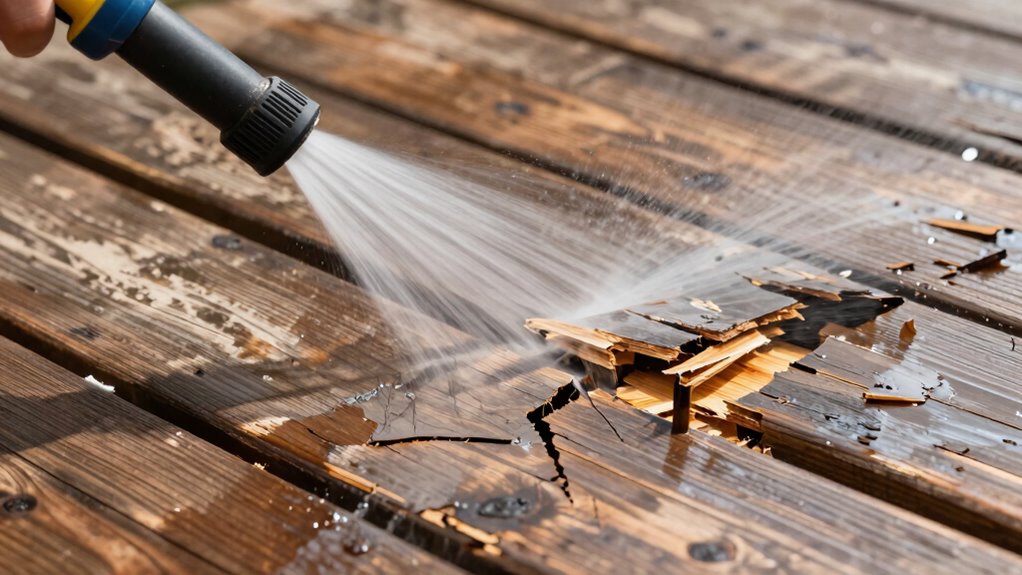
Using the wrong nozzle on your pressure washer can quickly lead to surface damage. The improper nozzle can strip away paint, etch concrete, or gouge wood, ruining your surface prep efforts. When you choose a nozzle with too high pressure or too narrow a spray angle, you risk harming delicate surfaces. This not only damages the material but also shortens your equipment durability, as excessive pressure puts unnecessary stress on the washer’s components. Selecting the correct nozzle guarantees you apply just enough pressure for effective cleaning without causing harm. Always match your nozzle to the surface type to protect your surfaces and maintain the longevity of your pressure washer. Proper nozzle choice is vital for safe, efficient cleaning and preserving your surfaces’ integrity. Understanding pressure settings and their impact can help prevent unnecessary damage and extend your equipment’s lifespan. Additionally, being aware of surface sensitivities ensures you avoid costly mistakes during cleaning.
Understanding Different Pressure Washer Nozzle Types
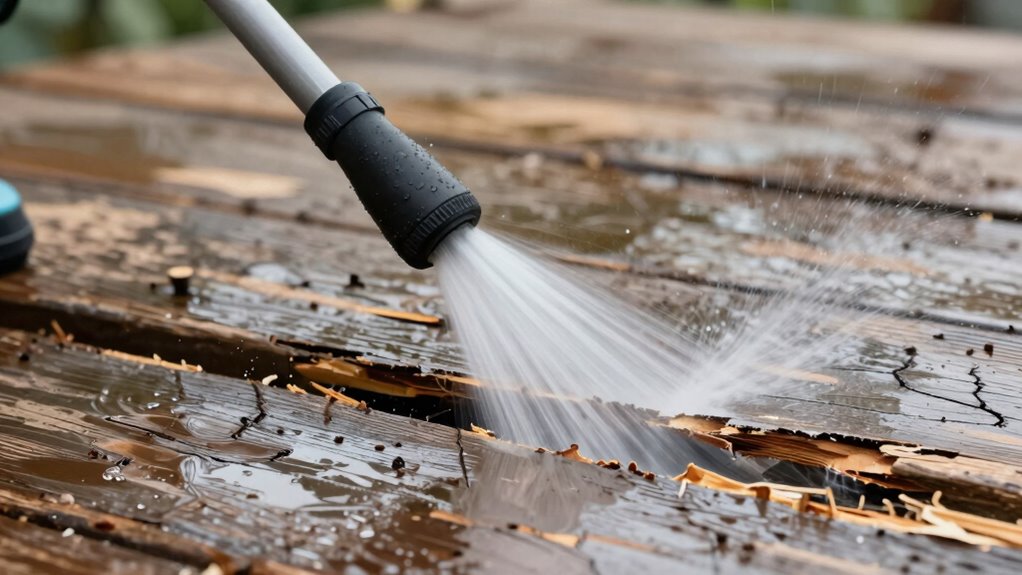
Knowing the different nozzle types and their uses helps you choose the right one for each job. Spray angles impact the pressure and coverage, so selecting the appropriate nozzle is essential to avoid damage. A fire pit, for example, requires a gentle spray to prevent heat damage to surrounding materials. Understanding these factors guarantees you get effective cleaning without harming surfaces. Additionally, selecting the correct nozzle can prevent common mistakes like using a high-pressure jet that causes pressure washer damage, emphasizing the importance of proper nozzle choice. Being aware of the pressure settings and how they interact with different surfaces can further help you avoid costly mistakes. Moreover, understanding the different nozzle types and their specific applications ensures you operate your pressure washer safely and effectively. Incorporating knowledge of AI in safety monitoring can also enhance user awareness and prevent accidents with high-pressure equipment.
Nozzle Types and Uses
Understanding the different pressure washer nozzle types is essential for getting the job done efficiently and safely. Each nozzle produces a different spray pattern, impacting cleaning power and potential damage. For delicate tasks like chemical cleaning or eco-friendly options, select nozzles with wider spray angles to prevent harm. Using the wrong nozzle can cause surface damage or ineffective cleaning. Additionally, considering the contrast ratio of your equipment can influence the visibility of cleaning results, especially in varying lighting conditions. Choosing the right nozzle guarantees effective cleaning without risking damage or overuse of chemicals.
Impact of Spray Angles
The spray angle of a pressure washer nozzle directly influences the cleaning power and safety of your task. A narrow spray angle, like 0 or 15 degrees, delivers concentrated pressure that quickly removes stubborn grime but can also damage delicate surfaces, reducing their surface durability. Conversely, wider angles, such as 25 or 40 degrees, distribute water more gently, minimizing surface damage and extending the lifespan of materials. Using the wrong spray angle can also increase environmental impact by causing unnecessary wear and tear, leading to more frequent replacements or repairs. Selecting the appropriate spray angle is vital for balancing effective cleaning with preserving surface integrity and reducing environmental harm. Always match your nozzle’s spray angle to the specific surface and cleaning needs. Understanding different pressure washer nozzles helps in choosing the right spray angle for each task.
Selecting Appropriate Nozzles
Have you ever wondered how selecting the right nozzle can make or break your pressure washing project? Nozzle compatibility is key to ensuring you use the correct spray pattern and pressure level for your surface. Different nozzles produce varying spray angles and flow rates, affecting cleaning efficiency. For delicate surfaces, choose a nozzle with a wider spray angle to avoid damage; for tough grime, a narrower, high-pressure nozzle works best. Always verify that your nozzle matches your pressure washer’s specifications to prevent damage or ineffective cleaning. Using the proper nozzle not only protects your surfaces but also maximizes cleaning efficiency, saving you time and effort. Making an informed choice helps you achieve professional results without risking costly mistakes. Proper nozzle selection is an essential aspect of pressure washer maintenance to ensure optimal performance and surface safety. Additionally, understanding different pressure washer nozzle types can help you select the most appropriate tool for each cleaning task, such as choosing nozzles with adjustable spray patterns for versatility. Recognizing the importance of Nozzle compatibility can further prevent potential damage to your equipment and surfaces.
How Nozzle Size and Pressure Impact Surface Safety

Using the right nozzle size is essential because it determines the force you’re applying; a smaller nozzle creates more concentrated pressure that can damage surfaces. If you crank up the pressure too high, you risk causing chips, cracks, or other damage. Always match your nozzle and pressure settings to protect your surfaces effectively. Understanding AI trends in surface safety can also help in choosing the correct equipment for specific materials. Additionally, being aware of surface safety standards ensures you’re following best practices to prevent unintended damage during cleaning. Proper nozzle selection and pressure control are crucial in avoiding damage, especially considering surface material considerations, which vary widely and require tailored cleaning approaches. Staying informed about surface safety innovations can further enhance your ability to select the safest and most effective cleaning methods. Regularly consulting surface safety guidelines can help you stay updated on the latest protective measures and best practices.
Nozzle Size Affects Force
Choosing the right nozzle size can considerably influence the force exerted during pressure washing, directly impacting surface safety. Smaller nozzles focus water into a narrow, powerful jet, increasing pressure and cleaning efficiency but also raising the risk of damage. Larger nozzles produce a broader spray with less force, making them safer for delicate surfaces. The nozzle size affects not only the cleaning outcome but also the longevity of your pressure washer accessories; using the wrong size can cause unnecessary wear and tear, reducing nozzle durability. Always match your nozzle size to the task at hand to avoid applying excessive force. Proper nozzle selection guarantees effective cleaning without compromising surface integrity or damaging your equipment. Remember, the right nozzle size balances force and safety.
Excess Pressure Causes Damage
Excess pressure from a pressure washer can quickly cause damage to delicate surfaces if not properly managed. When pressure is too high, it risks stripping paint, gouging wood, or eroding concrete. To prevent this, focus on:
- Adjusting the pressure settings to match surface sensitivity.
- Using the correct nozzle size for maximum control.
- Performing regular equipment maintenance to guarantee consistent pressure output.
- Properly preparing surfaces to avoid unnecessary force during cleaning.
- Understanding cycling gear care to ensure your equipment remains in optimal condition and reduces the risk of accidental damage during maintenance. Additionally, a holistic SEO approach emphasizes the importance of content relevance and authority, which can be enhanced by understanding and applying proper technical and on-page strategies to improve overall effectiveness. Being aware of the environmental impact of tissue paper can also inspire more eco-conscious choices in cleaning and maintenance routines, reducing unnecessary waste and damage. Proper pressure washer techniques are essential to prevent surface damage and ensure safe, effective cleaning.
Signs You’re Using the Wrong Nozzle During Cleaning
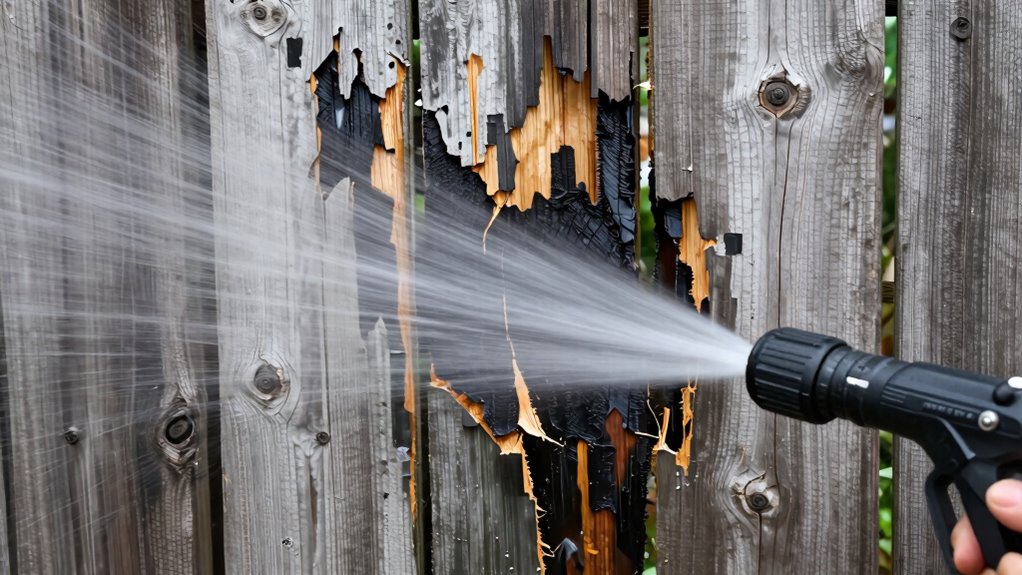
If your pressure washing results aren’t meeting expectations, it might be a sign you’re using the wrong nozzle. You may notice uneven cleaning, streaks, or surface damage. These issues often stem from improper surface preparation or incompatible equipment.
Here’s a quick look:
| Indicator | Cause |
|---|---|
| Surface damage or etching | Using a narrow, high-pressure nozzle |
| Inconsistent cleaning | Nozzle too wide or too low pressure |
| Excess spray spray or mist | Wrong nozzle angle or size |
| Surface not cleaned properly | Incompatible nozzle for the surface type |
Choose the right nozzle for your surface and equipment to prevent damage and guarantee effective cleaning. Proper nozzle selection is essential for understanding pressure washer safety and achieving optimal results. Additionally, understanding the different types of nozzles can help you select the most appropriate one for each cleaning task. Knowing how to adjust nozzle settings properly can also improve cleaning efficiency and reduce the risk of damage.
Common Mistakes When Selecting Nozzles for Your Home

Selecting the wrong nozzle for your home pressure washing project can lead to ineffective cleaning and potential damage. Common mistakes include choosing a nozzle without considering surface preparation, which might result in surface damage. You should also be mindful of nozzle material, as cheap or incompatible options can wear quickly or cause harm.
Here are common pitfalls:
- Using a narrow spray nozzle on delicate surfaces, risking etching or gouging.
- Overlooking surface preparation, leading to dirt or grime being pushed deeper.
- Ignoring nozzle material quality, which affects durability and safety.
- Not matching the nozzle type to the cleaning task, resulting in poor results or damage.
Making informed choices helps protect your surfaces and guarantees effective cleaning.
Tips for Matching Nozzle and Pressure Settings Safely

Choosing the right nozzle and pressure settings is key to cleaning effectively without causing damage. To guarantee safe, eco-friendly cleaning, start with the lowest pressure and a wide spray nozzle. Gradually adjust to higher pressures if needed. Always match the nozzle to the surface, avoiding high-pressure tips on delicate materials. Regular equipment maintenance, like cleaning nozzles, keeps pressure consistent and prevents damage. Use the table below to help select the correct settings:
| Surface Type | Recommended Nozzle & Pressure |
|---|---|
| Wooden decks | 25° nozzle, low pressure |
| Concrete | 15° nozzle, moderate to high pressure |
| Vinyl siding | 25° nozzle, low to moderate pressure |
| Car exteriors | 40° nozzle, low pressure |
| Windows | 40° nozzle, very low pressure |
Matching nozzle and pressure settings is essential for safe, eco-conscious cleaning.
How to Inspect and Maintain Your Nozzles to Prevent Damage
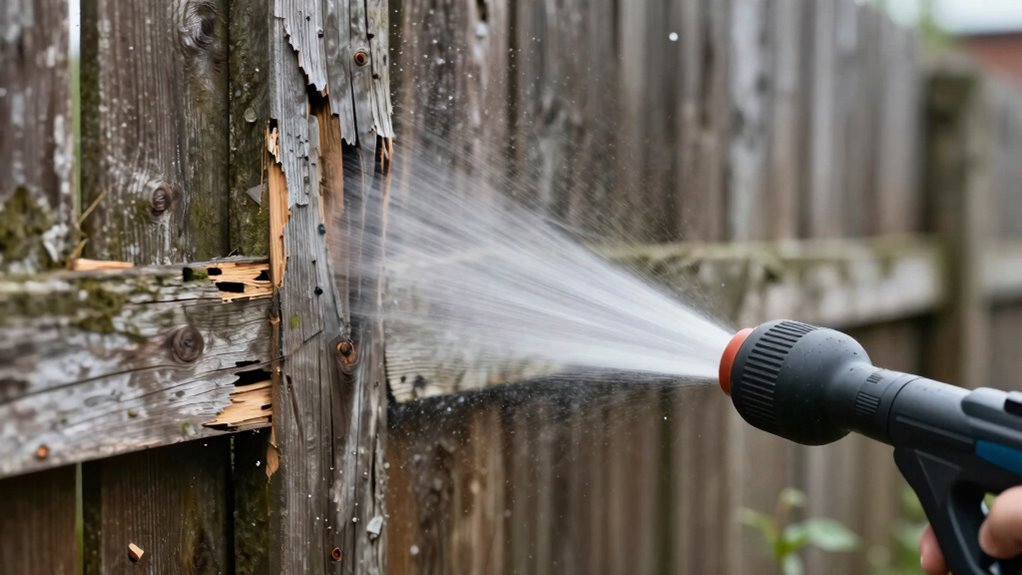
Regularly inspecting and maintaining your nozzles is essential to guarantee they perform effectively and prevent damage to your pressure washer or surfaces. Proper care helps affirm equipment durability and nozzle compatibility. To do this:
- Check for clogs, cracks, or wear and replace damaged nozzles immediately.
- Clean nozzles with a brush or pin to remove debris that can affect spray pattern.
- Store nozzles in a dry, safe place to prevent rust and corrosion.
- Confirm nozzle compatibility with your pressure washer’s specifications before use.
Expert Tips for Safe and Effective Pressure Washing
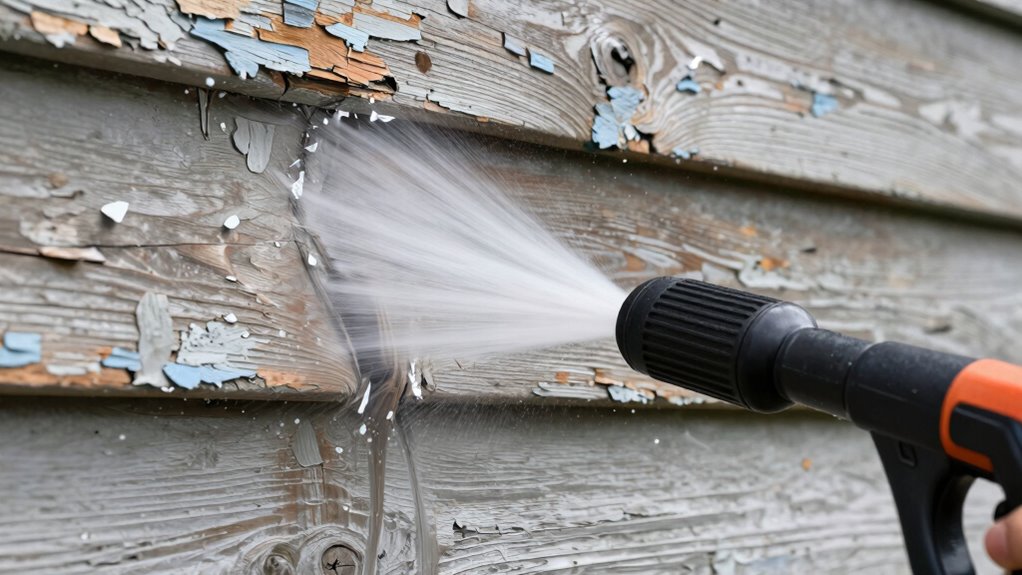
Proper nozzle maintenance not only guarantees your pressure washer performs efficiently but also plays a vital role in keeping the operation safe. To guarantee effective and safe pressure washing, always choose the right nozzle for your task, considering historical cleaning methods and environmental impact. Use lower pressure settings for delicate surfaces and avoid unnecessary water waste. Wear protective gear and test spray distances before starting. Here’s a quick reference:
| Nozzle Type | Use Case | Environmental Tip |
|---|---|---|
| 0° (Red) | Stubborn stains | Minimize water pressure |
| 25° (Green) | General cleaning | Use eco-friendly detergents |
| 40° (Yellow) | Soft surfaces | Avoid runoff into sensitive areas |
Following these tips helps prevent damage and supports sustainable cleaning practices.
Frequently Asked Questions
Can Using the Wrong Nozzle Cause Long-Term Surface Damage?
Yes, using the wrong nozzle can cause long-term surface damage. When your nozzle isn’t compatible with the surface you’re cleaning, it can lead to surface erosion, stripping away paint or delicate finishes. The high-pressure stream may be too intense, especially with a narrow or incompatible nozzle, damaging the material over time. Always guarantee nozzle compatibility to prevent long-term damage and maintain your surfaces’ integrity.
How Do Nozzle Materials Affect Cleaning Safety?
Have you ever wondered what keeps your pressure washer safe during use? The material of your nozzle plays a key role in cleaning safety. Using incompatible materials can lead to nozzle corrosion, weakening it over time. Make certain your nozzle’s material is compatible with your cleaning solution and surface; otherwise, corrosion can cause failure. Proper material choice ensures durability, safety, and effective cleaning without risking damage or injury.
Are There Specific Nozzles for Delicate Surfaces?
Yes, there are specific nozzles designed for delicate surfaces. You should use low-pressure Nozzle types, such as a 40 or 25-degree nozzle, to minimize the risk of damage. Surface sensitivity varies, so always opt for wider spray angles to reduce force. This careful choice helps protect gentle materials like paint, wood, or siding while still achieving effective cleaning. Always test a small area first for safety.
What Safety Precautions Should I Take With High-Pressure Nozzles?
When using high-pressure nozzles, you should always prioritize proper nozzle handling and wear protective gear. Keep a firm grip on the pressure washer, maintain a safe distance from surfaces, and avoid pointing the nozzle at yourself or others. Wearing safety goggles, gloves, and sturdy clothing protects you from debris and water spray. Never bypass safety features, and always read the manufacturer’s instructions to prevent accidents and damage.
How Often Should I Replace or Upgrade My Pressure Washer Nozzles?
Did you know that using worn-out nozzles can reduce pressure efficiency by up to 50%? You should replace or upgrade your pressure washer nozzles every 300 to 500 hours of use or when you notice signs of wear. Always check nozzle compatibility and pressure regulation features to prevent damage. Regular maintenance guarantees peak performance, extends your equipment’s lifespan, and keeps your cleaning projects safe and effective.
Conclusion
Choosing the right nozzle is essential to avoid damaging your surfaces. While it might seem tempting to use a powerful setting for quick results, doing so can cause costly harm. Remember, safety and effectiveness come from selecting the proper nozzle and pressure. Even if you’re in a hurry, taking a moment to choose wisely will save you time, money, and frustration in the long run. Trust the process, and your surfaces will thank you.
Halloween Picks
halloween
As an affiliate, we earn on qualifying purchases.