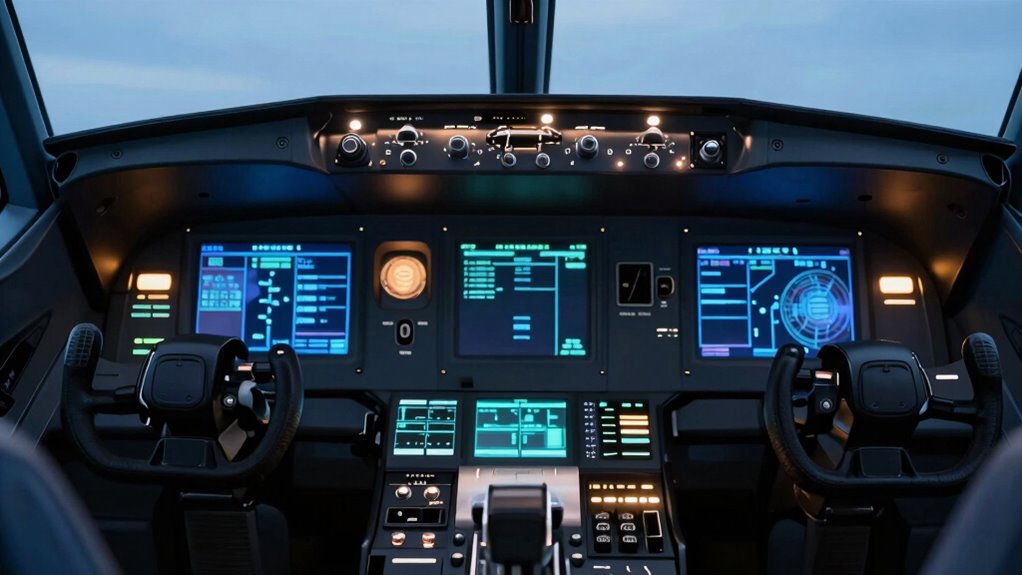
The main mistake that makes cockpits feel wrong on a triple-monitor setup is poor alignment and calibration. When screens aren’t perfectly matched in height, angle, or visual settings, it creates distortions or mismatched perspectives that break immersion. Bezels and inconsistent calibration can also distract your focus. Fixing these issues can make your setup feel more natural and seamless. Keep going to discover key tips to improve your cockpit experience even further.

Get audio and creator gear delivered free with Prime
- Fast, free delivery on millions of items
- Prime Video, Amazon Music and more included
- Member-only deals all year
Key Takeaways
- Improper monitor alignment causes inconsistent angles, disrupting the natural cockpit perspective.
- Failing to calibrate monitors results in mismatched visuals, breaking immersion.
- Incorrect monitor height or tilt can strain the neck and eyes, making cockpit views uncomfortable.
- Overly visible bezels and seams distract from the seamless cockpit experience.
- Poor strategic placement increases visual clutter, reducing situational awareness and realism.
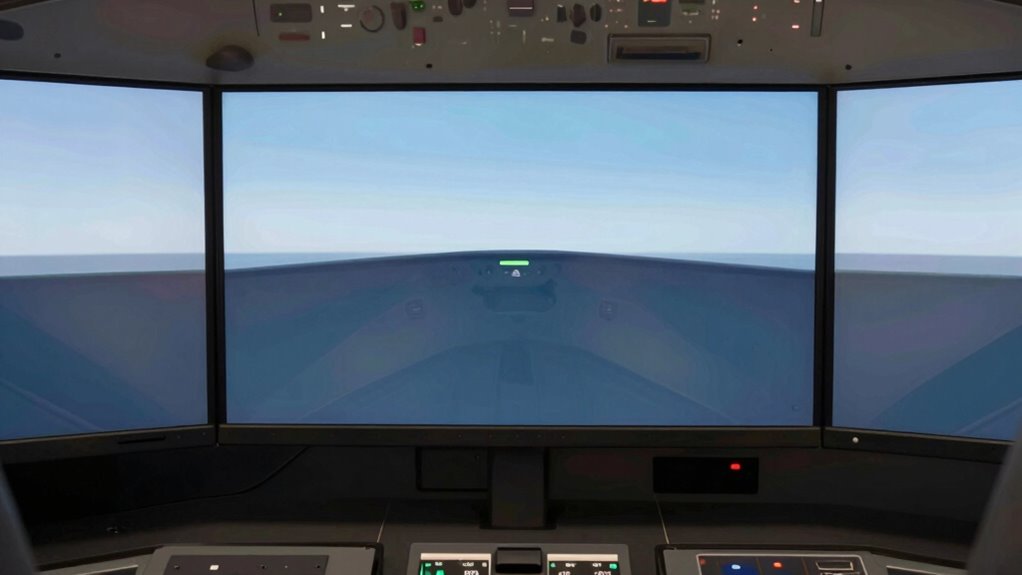
Have you ever considered that adding a third monitor to your cockpit setup might not improve your performance as much as you think? It’s a common assumption among enthusiasts that more screens mean better immersion and quicker reactions, but that’s not always the case. In fact, a poorly configured triple-monitor setup can do more harm than good, leading to discomfort and even impairing your ability to fly or drive effectively. The key lies in understanding how ergonomic adjustments and visual distortion come into play when expanding your display array.
When you add a third monitor, it’s tempting to just place it next to your existing screens and call it a day. But overlooking ergonomic adjustments can cause strain on your neck, shoulders, and eyes. If your monitors aren’t positioned at the correct height, angle, or distance, you’ll find yourself constantly repositioning your head or stretching awkwardly, which can quickly become fatiguing. Proper ergonomic adjustments ensure your monitors are aligned with your natural line of sight, reducing physical stress and helping you maintain focus longer. Without this, even the most immersive setup can become a source of discomfort, making your experience feel wrong and distracting you from your performance.
Proper ergonomic setup prevents fatigue and discomfort, ensuring your monitors support focus and performance.
Another significant issue with adding a third monitor is the potential for visual distortion. Many users underestimate how much the curvature, size, and resolution of multiple screens can affect your perception. When monitors aren’t calibrated correctly or if they have different specifications, you’ll notice a mismatch in image quality and perspective. This visual distortion can create an uncomfortable viewing experience, disorienting your spatial awareness and making it harder to judge distances or track objects accurately. A setup that isn’t carefully aligned can cause parallax errors, where objects appear distorted or misplaced, undermining the very immersion you sought to enhance.
Furthermore, the increased visual clutter from three screens can be overwhelming if not configured thoughtfully. Instead of improving your situational awareness, a cluttered setup can distract or confuse you, especially if the bezels break the visual flow or if the screens aren’t seamlessly integrated. This is why it’s vital to pay attention to how your monitors work together as a unified display. Proper calibration and strategic placement help mitigate visual distortion and create a cohesive, natural view that supports your performance rather than hampers it. Additionally, understanding the importance of monitor calibration can significantly improve your visual experience.
In the end, the mistake isn’t in having a third monitor but in neglecting the ergonomic adjustments and the impacts of visual distortion. A properly adjusted setup can transform your experience from distracting to immersive, ultimately enhancing your focus and accuracy. When you focus on these aspects, your setup becomes an asset rather than a hindrance, allowing you to enjoy the full benefits of an expanded cockpit without feeling like something’s just a little off.
As an affiliate, we earn on qualifying purchases.
Frequently Asked Questions
How Does Monitor Placement Affect Peripheral Vision Accuracy?
Your monitor placement directly impacts your peripheral vision accuracy by affecting visual alignment. When screens are misaligned or set too far apart, it causes peripheral distortion, making it harder to see the edges naturally. Proper placement keeps your monitors within your peripheral view, reducing distortion and providing a seamless field of vision. This setup helps you react faster and feels more immersive, especially during high-stakes gaming or simulation tasks.
What Are the Best Ergonomic Setups for Triple Monitors?
Think of your setup as a symphony, where each element plays a essential role. You should position your monitors at eye level using sturdy monitor stands, creating a seamless, panoramic view. Pair this with an ergonomic chair that supports good posture, preventing fatigue. Keep monitors aligned in a slight curve, reducing neck strain. This harmony ensures comfort and clarity, making your triple-monitor setup feel natural and efficient.
Can Calibration Improve Cockpit Realism With Multiple Screens?
Calibration can definitely improve cockpit realism with multiple screens. By adjusting color calibration, you guarantee consistent, true-to-life colors across all displays, enhancing immersion. Additionally, fine-tuning your field of view helps align the screens seamlessly, preventing distortions or gaps that break realism. When you calibrate both color and FOV properly, your cockpit setup feels more natural and convincing, immersing you deeper into the simulation.
How Do Lighting Conditions Influence Multi-Monitor Cockpit Experiences?
Lighting conditions markedly impact your multi-monitor cockpit experience. When ambient brightness is well-balanced, your screens’ images appear more natural, reducing eye strain and enhancing realism. Ensuring color consistency across all monitors also plays a key role, preventing mismatched hues that break immersion. Adjusting lighting to match real-world conditions and calibrating your displays for uniform brightness and color helps create a more convincing, comfortable cockpit environment.
Are There Specific Software Tools to Optimize Multi-Monitor Views?
Coincidentally, there are software tools designed to optimize your multi-monitor views by allowing software customization of viewing angles. These tools help you calibrate and align screens seamlessly, reducing distortion and enhancing immersion. Programs like NVIDIA Surround, AMD Eyefinity, or third-party options like SoftTH and WideView can fine-tune your display setup, making your cockpit feel more natural and accurate, ultimately improving your overall experience.
Conclusion
If you’re aiming for an authentic cockpit experience, avoid the common mistake of misaligned triple monitors. Proper positioning can drastically improve your immersion and reduce eye strain. Remarkably, studies show that a well-calibrated setup can boost your reaction time by up to 20%, making your gaming more precise and realistic. So, take the time to set up your monitors correctly—you’ll notice the difference in every flight or race. Don’t let a simple mistake keep you from reaching peak performance.
Halloween Picks
halloween
As an affiliate, we earn on qualifying purchases.