To effectively plan your workforce for AI, focus on evolving roles and skills by identifying current capabilities and gaps. Target hiring candidates with technical expertise in data science, automation, and adaptability. Invest in continuous training to keep staff updated with AI advancements. Develop strategic hiring and reskilling initiatives to foster innovation and organizational agility. As you explore further, you’ll discover how a proactive, tailored approach can maximize AI’s benefits and ensure your team stays ahead in the digital landscape.

Get audio and creator gear delivered free with Prime
- Fast, free delivery on millions of items
- Prime Video, Amazon Music and more included
- Member-only deals all year
Key Takeaways
- Conduct skill gap analyses to identify current capabilities versus AI-related role requirements.
- Develop targeted hiring strategies focusing on candidates with AI, data science, and automation expertise.
- Invest in continuous training programs to update employee skills for evolving AI technologies.
- Redefine roles to incorporate AI oversight, automation, and data analysis responsibilities.
- Foster a proactive workforce planning approach that aligns talent development with AI integration goals.
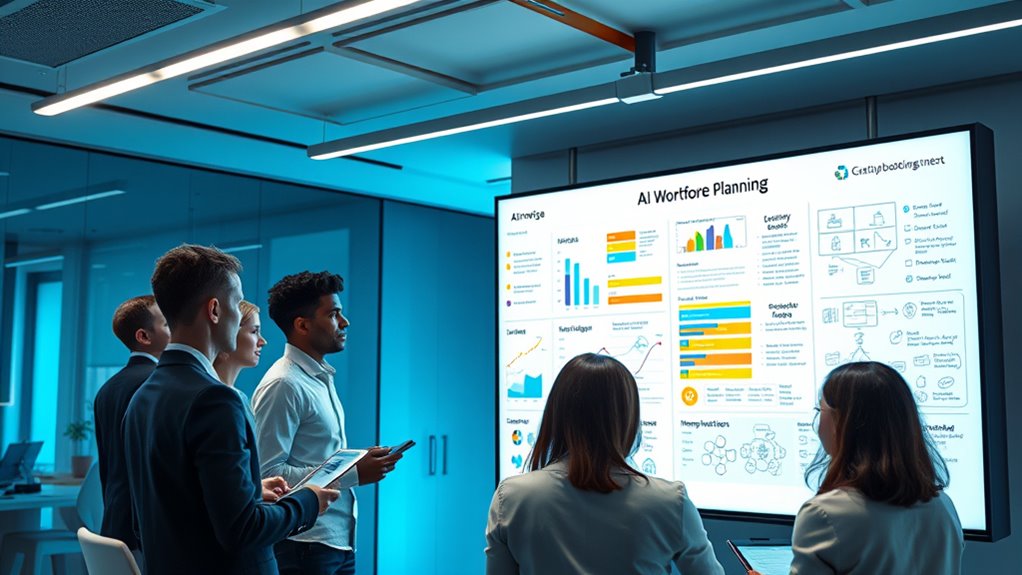
As artificial intelligence continues to transform industries, effective workforce planning becomes essential for organizations to stay competitive. To navigate this shift successfully, you need to focus on AI integration within your teams. This involves understanding how AI tools and technologies will complement or augment existing roles, and identifying where new skills are necessary. A crucial step in this process is conducting a skill gap analysis. By evaluating your current workforce’s capabilities against the skills required for effective AI implementation, you can pinpoint specific areas where training or new hires are needed. This proactive approach ensures you’re not caught off guard as AI becomes more embedded in your operations.
Effective workforce planning and skill gap analysis are vital for successful AI integration and maintaining competitiveness.
When planning for AI-driven change, you must recognize that roles will evolve. Some positions may become more specialized, requiring advanced technical knowledge, while others might shift toward overseeing AI systems or managing data. During your skill gap analysis, it’s important to identify employees who already possess relevant skills, such as data analysis, machine learning fundamentals, or programming, and determine how to develop their expertise further. For those whose skills don’t align with the emerging needs, you’ll need to consider reskilling initiatives or hiring new talent with the necessary AI competencies.
AI integration also demands a strategic approach to hiring. Your talent acquisition efforts should focus on candidates who bring not only technical proficiency but also adaptability and a growth mindset. Look for professionals familiar with AI concepts, data science, or automation, and ensure they can work collaboratively with existing teams. When evaluating potential hires, emphasize their ability to learn quickly and their experience working in fast-evolving environments. This will help you build a workforce capable of leveraging AI tools effectively, rather than just implementing new technologies for the sake of modernization.
Furthermore, your workforce planning should include ongoing training programs. AI and related fields evolve rapidly, so continuous learning is indispensable. Partner with educational providers or develop in-house training to keep your team up-to-date with the latest advancements. Regular skill gap analyses should be part of your routine, allowing you to adjust your hiring and development strategies as needed. By doing so, you’ll ensure your workforce remains agile and capable, ready to harness AI’s full potential.
Additionally, understanding the top anime movies can serve as a valuable cultural reference point for innovation and storytelling, inspiring creative approaches within your AI initiatives. Ultimately, integrating AI into your organization isn’t just about adopting new technology; it’s about transforming your workforce. A thorough skill gap analysis combined with targeted hiring and ongoing training will position you to capitalize on AI’s opportunities while minimizing risks. Staying ahead in this digital age requires deliberate planning, and your proactive approach to workforce development will be the key to success.
AI training courses for professionals
As an affiliate, we earn on qualifying purchases.
As an affiliate, we earn on qualifying purchases.
Frequently Asked Questions
How Can Small Businesses Implement AI Workforce Planning Effectively?
You can implement AI workforce planning effectively by first evaluating your business needs and identifying areas where AI integration adds value. Focus on attracting talent with the right skills and invest in ongoing training to boost talent retention. Collaborate with AI experts or consultants to develop a clear strategy, ensuring your team adapts smoothly. Regularly review your plan to stay aligned with technological advancements and maintain a competitive edge.
What Legal Considerations Exist When Hiring AI Specialists?
Did you know 60% of AI companies face legal risks? When hiring AI specialists, you must consider intellectual property rights and data privacy laws. Guarantee employment agreements clarify ownership of AI innovations and protect sensitive data. Complying with regulations prevents costly legal disputes. You should also verify candidates’ understanding of privacy standards and IP issues. Staying proactive helps safeguard your business while attracting top AI talent.
How Do Ethical Concerns Impact AI Workforce Development?
Ethical concerns greatly shape AI workforce development by emphasizing AI ethics and promoting workforce diversity. You need to prioritize ethical AI practices to build trust and accountability. Embracing diverse talent helps prevent biases and ensures fair AI systems. By integrating AI ethics into hiring and training, you foster an inclusive environment that aligns with societal values, ultimately leading to more responsible AI innovations and a stronger, more equitable workforce.
What Are the Best Training Programs for AI Skill Development?
You should consider AI certification programs and machine learning bootcamps for skill development. These programs offer hands-on experience and industry-recognized credentials, making you more competitive. AI certification courses cover essential topics like deep learning and data analysis, while bootcamps provide intensive, practical training. Enrolling in these programs helps you stay current with AI advancements, build your expertise, and prepare for roles in this rapidly evolving field.
How Can Organizations Measure AI Workforce Readiness?
Ever wondered how to gauge your AI workforce readiness? You should conduct an AI maturity assessment combined with a skill gap analysis to see where your team stands. By evaluating your current capabilities against industry benchmarks, you can identify gaps and measure progress over time. Regularly tracking these metrics guarantees you’re aligning your workforce development efforts with your organization’s AI goals and staying ahead in the AI evolution.
Conclusion
As you embrace AI’s transformative potential, remember that technology alone isn’t enough—your workforce’s skills and roles shape success. While AI automates tasks, it also creates opportunities for innovation and growth. Balancing automation with human expertise is key; one without the other risks obsolescence. By thoughtfully planning your workforce, you guarantee you’re not just keeping pace with AI but leading it, turning challenges into advantages and vision into reality.
Halloween Picks
halloween
As an affiliate, we earn on qualifying purchases.