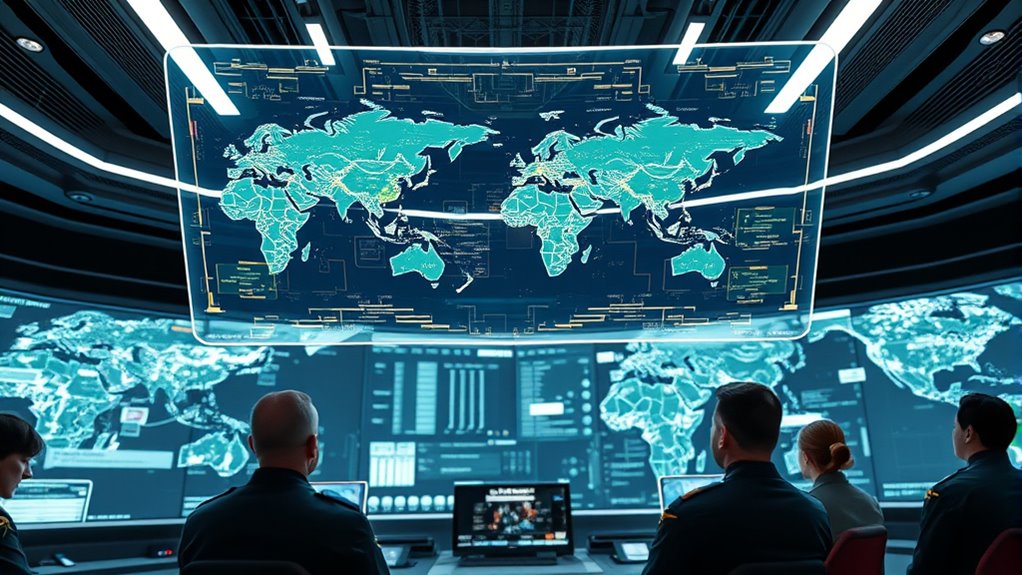

Algorithmic leadership in the modern military transforms decision-making by enabling faster, data-driven choices that improve operational efficiency and tactical advantage. AI processes vast information streams in real-time, helping you make informed decisions quickly and accurately. This shift enhances the OODA loop, giving you a strategic edge in contested environments. However, it also introduces challenges like algorithmic bias and ethical concerns. Stay with us to explore how these technological advances shape future defense strategies.

Get audio and creator gear delivered free with Prime
- Fast, free delivery on millions of items
- Prime Video, Amazon Music and more included
- Member-only deals all year
Key Takeaways
- AI-driven decision-making enhances operational speed and accuracy, transforming military leadership and strategic planning.
- Algorithmic systems support real-time data analysis, enabling faster responses and tactical advantages in combat scenarios.
- Autonomous systems reduce human oversight needs, raising ethical concerns and requiring strict oversight policies.
- AI’s integration into training improves readiness through personalized, realistic simulations, fostering adaptable decision-makers.
- Reliance on algorithms introduces risks like bias and vulnerabilities, emphasizing the need for careful monitoring and ethical safeguards.
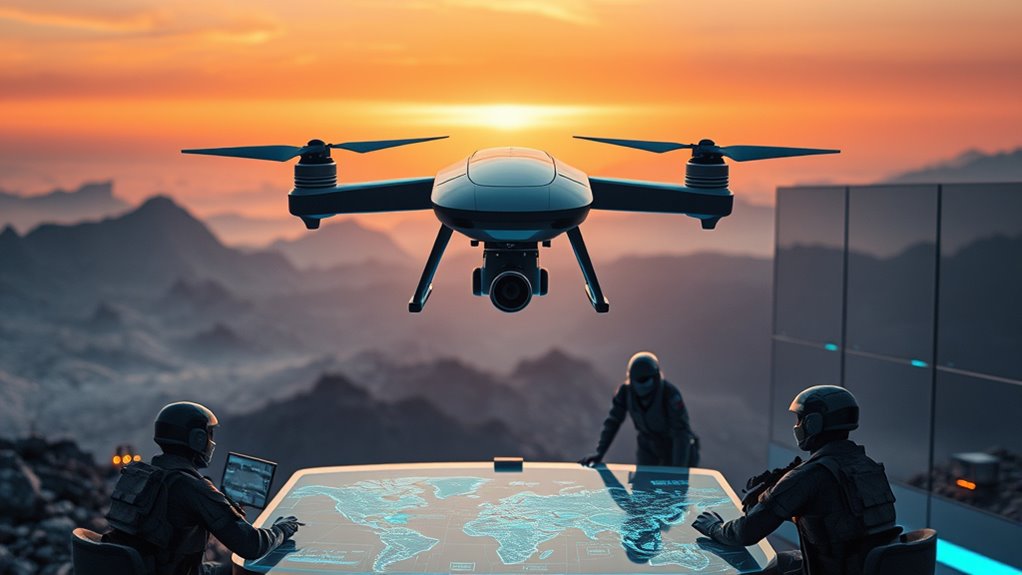
In today’s military landscape, algorithmic leadership is transforming how decisions are made, operations are carried out, and systems are managed. You’re at the forefront of a revolution where artificial intelligence (AI) processes vast data streams from multiple sources in real-time, markedly boosting situational awareness. This rapid data analysis enables you to make faster, more informed decisions, reducing delays that could impact mission success. Projects like Maven exemplify this shift, using AI to analyze drone footage and identify targets efficiently, saving valuable time and resources.
However, integrating AI isn’t without challenges. Algorithmic bias can creep into decision-making, potentially skewing results and raising fairness concerns. It’s essential for you to understand that while AI enhances operational efficiency and reduces human error, it must be carefully monitored to prevent unintended consequences. Technological advancements in AI continue to improve intelligence gathering, allowing you to adapt swiftly to dynamic environments and make smarter choices with less effort.
AI also accelerates the OODA loop—Observe, Orient, Decide, Act—by streamlining each phase with faster data collection and analysis. This speed gives you a tactical advantage, especially in contested environments where quick adaptation is indispensable. Decision support tools built on AI provide predictive insights and recommendations, helping you navigate complex situations with greater confidence. Still, balancing automation with your critical thinking remains essential to avoid over-reliance on technology, especially when facing unpredictable scenarios.
Autonomous systems powered by AI are increasingly capable of operating with minimal human input, offering greater flexibility and operational reach. These systems can perform tasks like surveillance, logistics, or even weapon deployment, all while reducing the maintenance burden on your teams. Yet, deploying autonomous weapons raises ethical questions that must be addressed through strict policies and oversight, ensuring responsible use of these powerful tools. Understanding AI vulnerabilities is crucial to prevent adversaries from exploiting system flaws and compromising mission integrity.
In military training, AI personalizes learning experiences and creates realistic simulations, enhancing your readiness for real-world challenges. Adaptive learning systems tailor scenarios to your individual needs, helping you develop essential skills faster. Meanwhile, AI’s role in training emphasizes realism and efficiency but should be balanced with cognitive development to foster adaptable, critical thinkers capable of handling complex situations.
AI-powered military decision support systems
As an affiliate, we earn on qualifying purchases.
As an affiliate, we earn on qualifying purchases.
Frequently Asked Questions
How Do Algorithms Influence Decision-Making Autonomy in Combat Scenarios?
Algorithms influence your decision-making in combat by quickly analyzing vast data, providing real-time insights, and generating courses of action. They help you anticipate threats, streamline planning, and reduce delays, increasing your operational autonomy. However, reliance on AI also raises ethical concerns and questions of accountability, especially with autonomous weapons. Balancing AI-driven suggestions with human judgment is vital to guarantee responsible and effective decision-making on the battlefield.
What Ethical Concerns Arise From Ai-Controlled Military Operations?
You might worry that AI-controlled military operations raise serious ethical questions. These include the risk of biased targeting, weakening human judgment, and diminishing moral responsibility. You could also be concerned about collateral damage, civilian safety, and the opacity of AI decisions, which hampers oversight. Additionally, vulnerabilities to cyber threats threaten operational integrity. Ensuring meaningful human control and transparency becomes essential to uphold ethical standards and protect human dignity in warfare.
How Is Transparency Maintained in Algorithmic Military Systems?
You maintain transparency in algorithmic military systems by ensuring they incorporate explainable AI, which clarifies how decisions are made. You support continuous oversight and rigorous testing to verify system reliability. Collaboration between government and industry helps develop ethical standards and regulatory frameworks. By integrating human oversight and focusing on responsible AI development, you can address technical limitations, data complexities, and adversarial risks, fostering trust and accountability in military operations.
What Are the Risks of Reliance on AI in Warfare?
Relying on AI in warfare risks vulnerabilities like data poisoning, which can cause faulty decisions, and adversarial attacks that evade detection, leading to misidentification or missed threats. You also face the danger of AI model theft, allowing enemies to replicate or counter your systems. Additionally, autonomous systems might escalate conflicts faster, blur battlefield lines, and increase the chance of unintended escalation, making operational control more complex and risky.
How Do Different Countries Regulate Military AI Technologies?
You see that countries regulate military AI differently. The U.S. emphasizes testing, responsible use, and international norms, but lacks exhaustive federal laws. The EU enforces strict regulations through the AI Act, banning high-risk systems, with heavy fines for violations. Canada proposes risk-based rules, focusing on transparency and oversight. Meanwhile, countries like Russia and China prioritize automation goals, with Russia aiming for 30% automation by 2025, and others developing guidelines or draft laws.
Conclusion
As you navigate this evolving landscape, remember that technology is a tool, not a replacement for human judgment. Embracing AI in military leadership offers great potential, but it’s crucial to stay grounded in ethics and wisdom. As the saying goes, “A wise man learns more from his enemies than a fool from his friends.” Stay vigilant, adapt wisely, and guarantee that technology enhances, rather than diminishes, your moral compass.
Halloween Picks
halloween
As an affiliate, we earn on qualifying purchases.