
🔍 Read the full analysis: A Fresh Approach To Halloween Decor: Put AI To Work on ThorstenMeyerAI.com

Get audio and creator gear delivered free with Prime
- Fast, free delivery on millions of items
- Prime Video, Amazon Music and more included
- Member-only deals all year
TL;DR
A ThorstenMeyerAI.com guide describes how AI can add generated visuals, voices or responsive dialogue to Halloween displays. It cautions that some products marketed as AI-powered may only play prerecorded sounds when a motion sensor is triggered, and advises checking privacy, connectivity and safety before setting up a display.
ThorstenMeyerAI.com’s Halloween decor guide explains how artificial intelligence can add generated visuals, voices or responsive dialogue to seasonal displays, while warning that some products described as AI-powered may simply play a fixed recording when a motion sensor detects someone. The distinction can affect what buyers get, how reliably an effect works and whether a device sends information online.
The ThorstenMeyerAI.com guide distinguishes artificial intelligence from ordinary automation. It says a prop that plays the same growl whenever someone approaches uses a sensor and prerecorded audio. By contrast, a character that interprets a visitor’s speech and varies its reply uses a speech system; a tool that creates a haunted portrait or drafts dialogue generates content for someone to review.
The guide says those capabilities have different tradeoffs: generated images and dialogue may need editing, speech recognition can struggle amid outdoor noise, and camera-based image analysis can raise privacy questions. It advises checking a product’s current feature list, price, availability and privacy settings rather than relying on broad marketing language. It also recommends finding out whether processing happens on the device or through an online service.
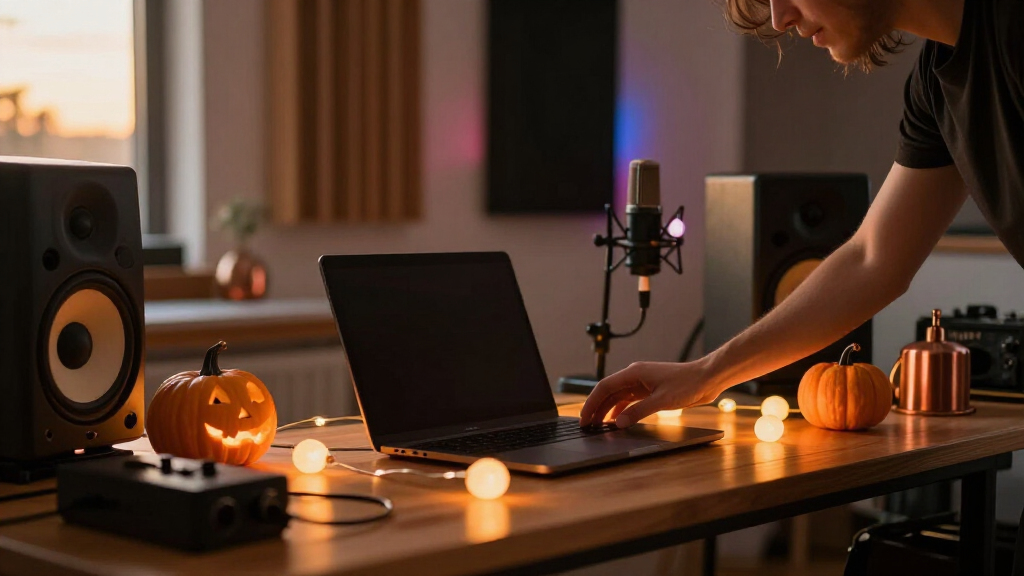
As a practical example, the guide suggests assigning each feature a clear purpose. A portrait might whisper a short welcome as guests approach, with a speaker providing the voice and a light changing color. It notes that more devices can create a coordinated scene but add setup and troubleshooting, while a simple recording or local light cue may be more dependable if an internet connection fails.
A motion-triggered recording is automation; AI usually means a system generates or interprets content.
Use generated art, voices, or dialogue to personalize a scene, then review the results and usage terms.
Plan one clear visitor moment before choosing sensors, lights, speakers, or controllers.
Test offline behavior, sensor timing, audio, cable placement, and outdoor protection before Halloween night.
Tell visitors when a display processes faces or voices, limit collection, and provide a way to pass without interacting.
What Buyers Should Check
The guide argues that the AI label alone does not explain a product’s behavior. It contrasts a motion-triggered recording, which can deliver a consistent scare, with a responsive character that can produce varied replies but may need a microphone, a speech service or a reliable network. Knowing which parts of a display are generated, interpreted or simply triggered can help buyers match the technology to the experience they want.
It also recommends including reliability and privacy in the planning. A connected effect could depend on Wi-Fi when visitors arrive, and a feature that analyzes speech or camera images may handle information about guests. The guide does not identify particular products or report measured performance; shoppers still need to check each device’s current documentation and settings.
From Sensors to Responsive Props
The ThorstenMeyerAI.com guide notes that Halloween displays have long used motion sensors to activate lights, sounds or moving props. It says adding a sensor does not, on its own, make a decoration AI-powered: the sensor starts a predetermined action. The AI features it describes include generating images or audio, recognizing speech and analyzing camera images.
The guide presents these as different options for a scene, rather than claiming that one approach is universally better. It gives examples: a fixed sound may suit a quick jump scare, generated artwork may help create a themed backdrop, and speech tools may let a character respond to a visitor. The source is advice, not a report of a newly announced device, launch or industry-wide change.
What the Guide Does Not Establish
The supplied ThorstenMeyerAI.com source material includes no publication date, named products or independent product tests. It does not establish how common AI features are in Halloween decorations, whether specific products are currently available, or how well any particular system performs. Product capabilities and prices may change, so the guide advises checking up-to-date listings and privacy information before purchase.
The source also does not quantify the reliability of local playback compared with online services or specify how any named device handles visitor data. Those details depend on the product. Buyers should consult its settings and documentation, especially if a display uses microphones, cameras or cloud-based processing.
Plan and Test the Scene
The guide recommends starting with one moment for visitors, such as a scarecrow turning its head and whispering as someone reaches a gate. The creator can then choose whether a recording, generated audio or a speech-responsive feature serves that moment. The guide says generated material should be reviewed and edited for tone; its license may also limit how it can be shared or used commercially.
Next, it advises testing the setup from the visitor’s perspective, including its trigger, sound and lighting. A connected effect should also be checked under likely network conditions, with a simple fallback ready if it stalls. For outdoor displays, the guide says safety and privacy belong in the plan. It does not provide a product-specific safety checklist, so users should follow the instructions for their equipment and account for the needs of their space and visitors.
Key Questions
Does a motion-triggered Halloween prop use AI?
Not necessarily. As the ThorstenMeyerAI.com guide explains, a sensor that starts the same prerecorded sound is ordinary automation. A prop that interprets speech or creates varied responses uses additional AI features.
What should I check before buying an AI Halloween decoration?
The guide recommends checking the product’s current capabilities, price, availability and privacy settings. Find out whether features run locally or depend on an online service, particularly if the device uses a microphone or camera.
Are connected effects more reliable than simple triggers?
The guide provides no comparative performance data. It says online features may offer more flexibility but depend on connectivity; local playback can be less varied and more dependable when a network is unavailable.
How can I make a display easier to manage?
The guide recommends starting with one clear visitor experience and adding only the devices that help deliver it. Test the scene from the visitor’s point of view, and prepare a simple fallback for effects that rely on an internet connection.
Source: ThorstenMeyerAI.com
Halloween Picks
halloween
As an affiliate, we earn on qualifying purchases.