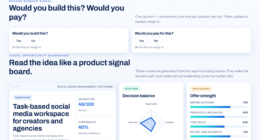
📊 Full opportunity report: A Marketplace That Connects Independent Retailers With Wholesale Products on IdeaNavigator AI — validation score, market gap, and execution plan.

Get audio and creator gear delivered free with Prime
- Fast, free delivery on millions of items
- Prime Video, Amazon Music and more included
- Member-only deals all year
TL;DR

IdeaNavigator AI describes a proposed wholesale marketplace for independent retailers that want to test products in quantities smaller than many distributors’ opening-order minimums. The proposal calls for manually brokering trials between 20 brands and 50 shops, then measuring how many trials lead to standard wholesale reorders within a quarter. No launch, completed trial, or performance results are reported.
IdeaNavigator AI’s proposal outlines a wholesale marketplace where independent retailers could test products in small quantities, including five-unit assortments, before committing to standard wholesale orders. The proposal recommends first brokering orders manually between 20 brands and 50 shops and measuring conversion to regular reorders within a quarter; it does not report that this test has taken place or that a platform has launched.
According to the IdeaNavigator AI proposal, the marketplace would target independent shop owners who may want to introduce unfamiliar products but cannot meet distributor case minimums or opening-order sizes designed for larger buyers. Under the proposed model, participating brands would set micro-minimums, while orders from multiple businesses would be consolidated to make fulfillment of smaller purchases more practical. The proposal does not specify shipping partners, fees, product categories, or how consolidation would work operationally.
The proposal says retailers would place trial orders, with five-unit assortments offered as an example, then track sell-through. If a test performs well, the retailer could move to a standard wholesale relationship with the brand. The suggested revenue streams are an order take rate and optional subscription analytics for brands to review trial performance. Pricing and the terms of those arrangements are not provided.
Rather than starting with a full technology platform, IdeaNavigator AI recommends a manual pilot involving 20 brands and 50 shops. The key measure would be the share of trial orders that become standard reorders during the following quarter. The proposal includes no pilot results, participating businesses, or target conversion rate.
Testing Demand Before Full Orders
The IdeaNavigator AI proposal frames the idea around a purchasing constraint that can affect what independent stores are able to try: a retailer may be interested in a product but unwilling or unable to take the quantity required for an opening order. Smaller trials could, if the logistics and economics work, let shops test demand with less inventory committed upfront. That could give emerging brands another route to reach stores and provide retailers with a lower-quantity way to evaluate new merchandise.
The commercial case is not established by the proposal alone. Consolidating small shipments could add handling complexity, and low-volume orders may not produce enough margin for brands, retailers, or the marketplace. The proposed pilot’s reorder measure is intended to test whether trial purchases lead to ongoing wholesale business, but results would need to be reported before the model’s effectiveness can be assessed.
Products Worth Considering

DJI Osmo Mobile 8 Phone Gimbal with Mic Mini Transmitter, Infinity Black

DJI Osmo Mobile 7P with Mic Mini TX (Infinity Black) Gimbal Stabilizer
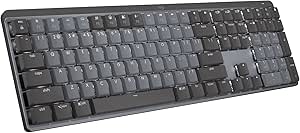
Logitech MX Mechanical Wireless Illuminated Keyboard, Tactile Quiet, Graphite
As an affiliate, we earn on qualifying purchases.
From Trade Shows to Trial Orders
In its proposal, IdeaNavigator AI describes independent retailers as relying on trade shows for periodic product discovery while facing distributor minimums that can make experimentation difficult. It also points to Faire as evidence that the broader wholesale marketplace model has gained traction, while arguing that very small trial orders remain an underserved use case. These are the proposal’s framing points; it provides no market-size figures or comparative data on current order minimums.
The proposal’s suggested sequence is deliberately narrow: test one buyer problem, broker orders manually, and check whether retailers reorder. That approach would generate evidence on buyer interest and repeat purchasing before investment in a larger platform. The plan does not set out a timeline beyond measuring conversion within a quarter, nor does it say when or whether that quarter would begin.
Pilot Status and Economics
IdeaNavigator AI’s proposal does not confirm a launch or completed pilot. It is not clear whether brands or shops have agreed to participate, what product categories would be included, or how shipping consolidation would be organized. The proposal also does not disclose platform pricing, the proposed take rate, subscription costs, or how returns, damaged goods, and unsold trial inventory would be handled.
The central unanswered question is whether small trial orders can be fulfilled at a cost that works for all sides and still lead to enough repeat business. The proposal says a quarterly reorder measure could provide an initial signal, but it does not define a successful conversion rate or describe how it would account for differences among products and stores.
A Manual Trial Before Building
The next step outlined in the IdeaNavigator AI proposal is to broker trial orders manually between 20 brands and 50 shops. During the test, organizers would need to record order fulfillment and retailer sell-through, then check whether participating shops place standard wholesale reorders within a quarter. The proposal does not give a start date or identify an operator responsible for the trial.
Any decision to build a marketplace would depend on evidence from that test, including repeat orders and whether consolidated fulfillment is workable. Until participants, operating terms, and results are made public, the marketplace remains a proposed business concept, not a confirmed service available to retailers.
Source: IdeaNavigator AI proposal
Key Questions
Has the wholesale marketplace launched?
No launch is reported. The IdeaNavigator AI proposal describes a possible marketplace and recommends testing the model manually before building a platform.
Who is the proposed service for?
According to the proposal, it is aimed at independent retailers who want to test products but may not be able to meet distributor minimums or larger opening-order requirements.
How would the trial orders work?
The proposal says brands would set smaller minimums and shipments would be consolidated. Retailers could test assortments, with five units given as an example, and track sell-through before considering a standard wholesale order.
How would the proposal be tested?
IdeaNavigator AI recommends manually brokering trial orders between 20 brands and 50 shops, then measuring conversion to standard reorders within a quarter. No results or start date are provided.
How would the marketplace make money?
The proposal suggests a commission on orders and subscription analytics for brands as revenue sources. Specific rates, subscription terms, and operating costs are not stated.
Source: IdeaNavigator AI