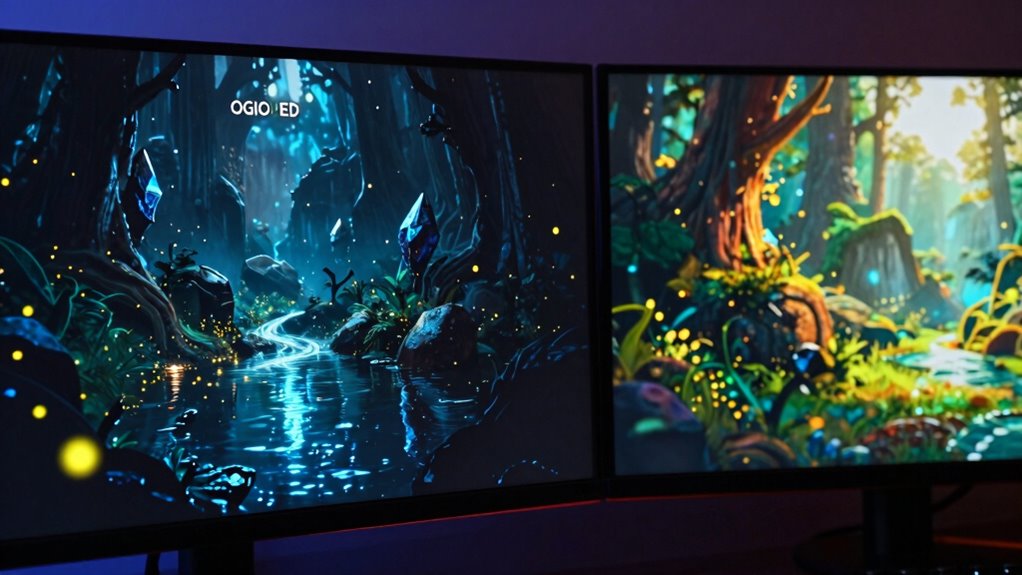

If you want a more immersive gaming feel, OLED screens are the better choice because they deliver deeper blacks, vibrant colors, and wider viewing angles, making scenes look more realistic. They also have faster response times, reducing ghosting and motion blur during fast gameplay. While OLEDs offer superior contrast and depth, they can be more prone to burn-in and cost more. To discover how each tech impacts your gaming experience, keep exploring the details.

Get audio and creator gear delivered free — and shop member deals
- Fast, free delivery on millions of items
- Access to Prime Big Deal Days deals on October 6–7
- Prime Video, Amazon Music and more included
Key Takeaways
- OLED offers faster response times and deeper blacks, creating a more immersive and smoother gaming experience.
- LCDs are generally brighter and more suitable for well-lit environments, impacting visibility during gameplay.
- OLED’s wider color gamut and better color accuracy enhance visual realism and scene depth in games.
- LCDs are more resistant to burn-in and typically have longer lifespans, making them more durable over time.
- Higher refresh rates in both OLED and LCD improve motion clarity, but OLED’s quick response reduces ghosting effects significantly.
As an affiliate, we earn on qualifying purchases.
OLED vs. LCD: Which Display Is Better for Gaming?
When it comes to gaming, choosing between OLED and LCD displays can profoundly impact your experience. Your decision depends on hardware compatibility and ergonomic design. OLED screens often have better response times and wider viewing angles, but they may demand specific hardware support for optimal performance. LCDs tend to be more compatible across various systems and are generally easier to integrate into ergonomic setups, thanks to their adjustable stands and mounts. If you prioritize responsiveness and vibrant visuals, OLED might be the better choice, yet ensure your hardware can handle it. Additionally, display technology plays a crucial role in overall image quality and longevity. The type of display can also influence image retention, which is an important consideration for gamers. Understanding display longevity can help you make a more informed decision based on how long you want your display to perform optimally. Moreover, considering manufacturing quality can significantly affect the durability and overall performance of your chosen display. Furthermore, production processes directly impact the consistency and reliability of the displays you select. Ultimately, your gaming comfort and hardware setup influence which display suits you best.
Visual Quality: How Contrast, Black Levels, and Color Accuracy Affect Gaming Immersion
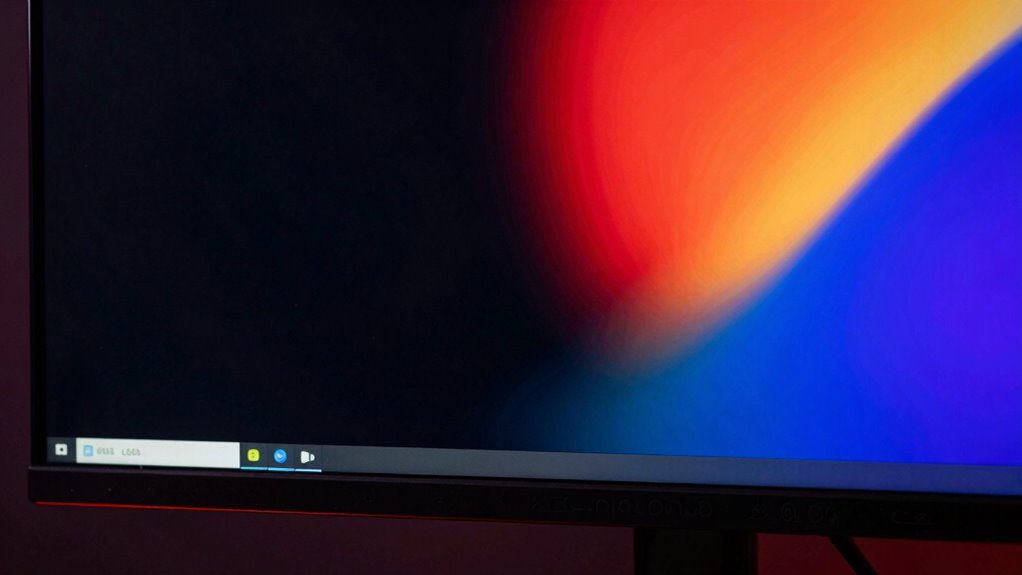
Your gaming experience is greatly influenced by contrast, black levels, and color accuracy. Deep blacks and vibrant colors make scenes feel more realistic and immersive. When these elements are sharp and precise, your gameplay looks richer and more engaging. Additionally, contrast ratio plays a vital role in defining the depth and clarity of images, especially in dark scenes. A higher contrast ratio can enhance the overall visual depth, making details stand out more vividly.
Deep Contrast and Blacks
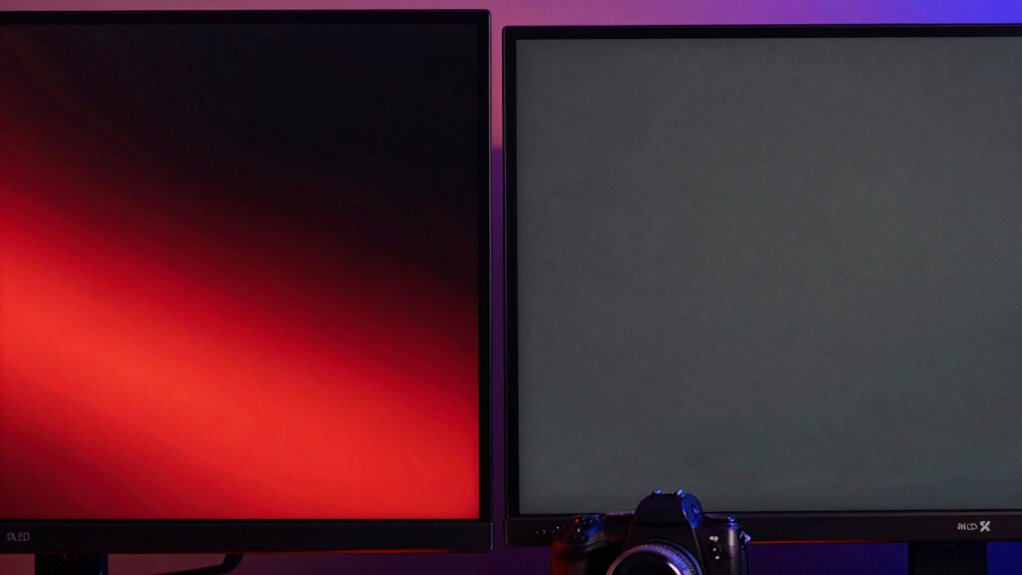
Deep contrast and true blacks are essential for immersing yourself in gaming worlds, as they bring out the depth and richness of the visuals. When your screen size and panel technology support deep blacks, scenes feel more realistic and engaging. With OLED panels, each pixel emits its own light, allowing for perfect black levels even in dark scenes. LCDs rely on backlighting, which can cause blacks to appear grayish, reducing immersion. Consider these aspects:
- OLED’s ability to turn off pixels completely for true blacks
- Panel technology influencing black uniformity
- Larger screen sizes enhancing visual impact in dark scenes
- Contrast ratios shaping the depth of shadows and highlights
- The type of display technology used directly impacts black levels and overall visual quality. Additionally, advancements in water-based cooling systems have contributed to more consistent panel performance and longevity in high-end gaming monitors. Ensuring security compliance in manufacturing processes helps maintain quality and user trust. Focusing on these details helps you choose a display that maximizes contrast and black levels for a more immersive gaming experience.
Vibrant and Accurate Colors
Vibrant and precise colors are essential for creating an immersive gaming experience, as they bring scenes to life and enhance visual realism. Proper color calibration guarantees that colors appear true to life, making gameplay more engaging. Panel technology plays a significant role here; OLED panels typically deliver richer, more vibrant colors with better accuracy than LCDs. This is because OLEDs can produce a wider color gamut and more exact color reproduction without relying on backlighting. As a result, your games look more vivid and lifelike, pulling you deeper into the action. Whether you’re exploring fantastical worlds or intense combat scenes, accurate color representation through advanced panel technology guarantees every detail is sharp and true to the developer’s vision.
Enhanced Visual Depth
Contrast and black levels are essential for creating a sense of depth in gaming visuals, making scenes feel more realistic and immersive. With better contrast, images pop, and dark areas gain detail that draws you into the game world. OLED displays excel here, offering perfect black levels and vibrant contrast ratios. To enhance this visual depth, consider:
- Fine-tuning display calibration for ideal contrast and color accuracy.
- Utilizing displays with high native contrast ratios.
- Choosing monitors with ergonomic design that minimizes glare and reflections.
- Ensuring your setup allows for proper viewing angles, preserving color and contrast consistency.
These factors work together to heighten visual immersion, making your gaming experience more engaging and lifelike. Enhanced contrast and black levels truly deepen your immersion, especially when combined with precise display calibration.
Response Time and Refresh Rate: Why They Matter for Fast and Competitive Gaming
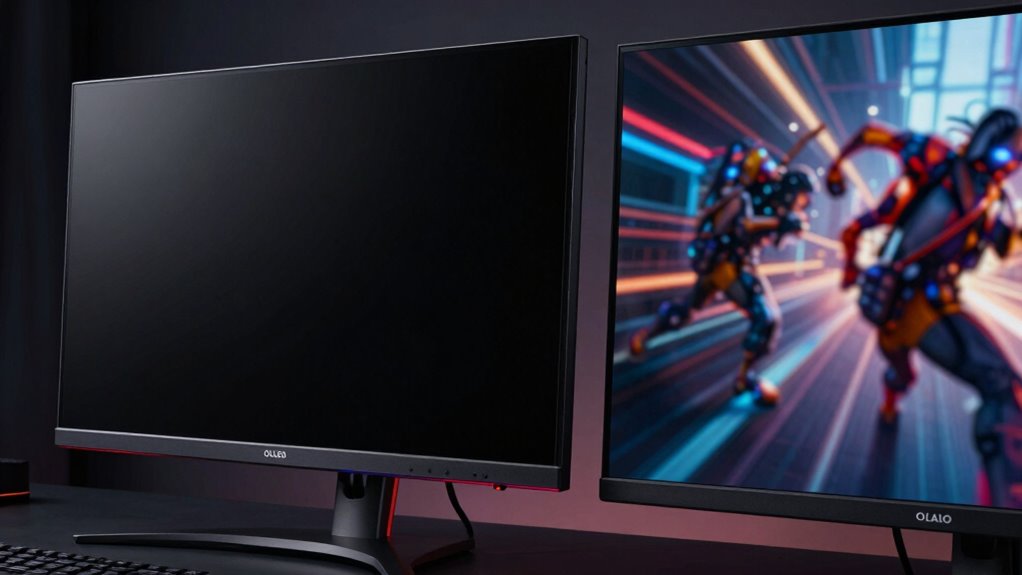
In fast-paced games, every millisecond counts, and your display’s response time can make or break your reaction. A lower response time means less ghosting and blurring, giving you a clearer view of quick movements. Additionally, a higher refresh rate guarantees smoother gameplay, which can give you an edge in competitive scenarios.
Response Time Impact
When it comes to fast-paced and competitive gaming, response time and refresh rate play vital roles in how smooth and responsive your experience feels. Faster response times reduce pixel response, minimizing ghosting and motion blur, which is critical in quick scenes. Lower input lag means commands register faster, giving you an edge in reaction time. Here’s what to consider:
- Pixel Response Time: Faster pixel response reduces motion artifacts.
- Input Lag: Less lag means quicker response to your inputs.
- Response Time Difference: OLEDs generally have quicker response times than LCDs.
- Visual Clarity: Fast response helps maintain clarity during rapid movements.
In essence, quicker response times enhance your gaming feel by making visuals sharper and inputs more immediate.
Refresh Rate Significance
A high refresh rate is essential for fast-paced gaming because it determines how many frames your monitor can display each second, directly impacting the smoothness of motion. A higher refresh rate, like 120Hz or 144Hz, enhances motion clarity, making fast movements look sharper and more fluid. This reduces motion blur and ghosting, giving you a competitive edge in quick reaction scenarios. When your monitor refreshes more often, your brain receives smoother visual updates, which helps you track fast-moving objects more accurately. Keep in mind, response time also plays a role, but without a high refresh rate, even quick response times can’t deliver ideal motion clarity. Overall, a higher refresh rate makes your gaming experience more seamless, precise, and immersive.
Brightness and Color Fidelity: Enhancing Realism and Visual Impact
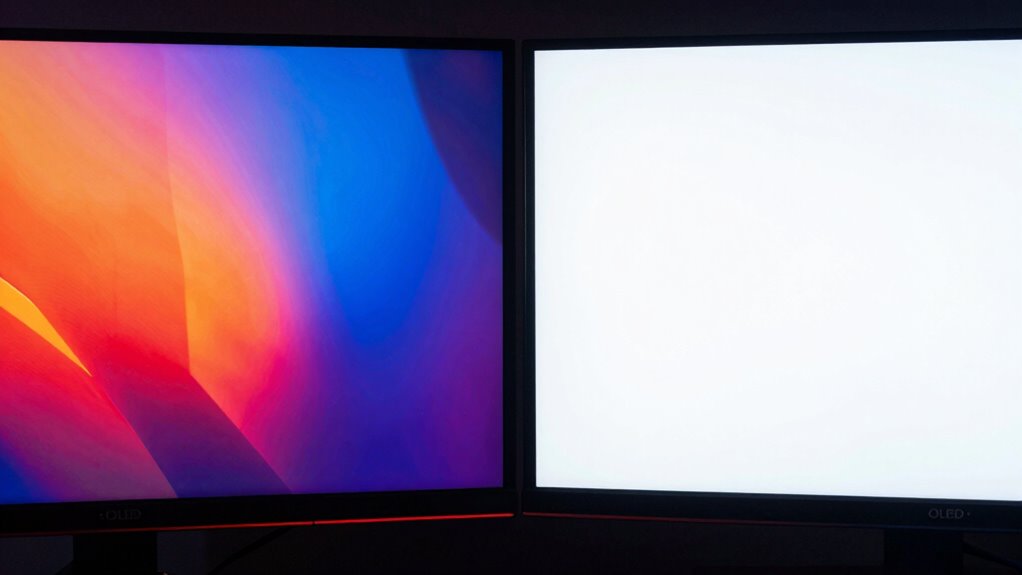
Brightness and color fidelity play essential roles in creating a more immersive gaming experience, with each technology offering distinct advantages. OLED screens excel in delivering deep blacks and vibrant colors, thanks to perfect contrast ratios. LCDs, on the other hand, often boast higher maximum brightness levels, enhancing HDR support for vivid highlights. When it comes to viewing angles, OLED maintains consistent color and brightness across a wide range, making multiplayer gaming more enjoyable. To visualize the difference:
- OLED offers richer, more lifelike colors.
- LCD provides brighter images suitable for well-lit rooms.
- HDR support enhances detail in highlights and shadows.
- OLED’s viewing angles stay consistent, reducing color shift.
- Display technology continues to evolve, offering even better options for immersive gaming experiences, including advancements in brightness capabilities. Additionally, ongoing innovations in screen durability ensure long-term performance for gamers. This continuous progress contributes to the development of improved visual quality, further enhancing the overall gaming experience.
These factors combine to make your gaming visuals more realistic and impactful.
Long-Term Considerations: Durability, Burn-In Risks, and Cost
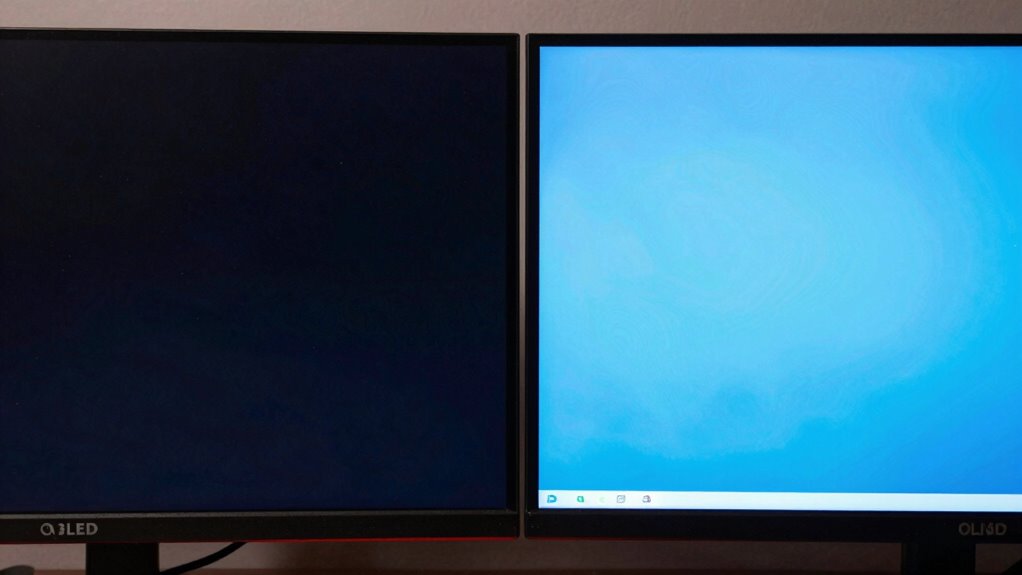
While OLED displays deliver stunning visuals, they tend to be more vulnerable to burn-in and generally have a shorter lifespan compared to LCDs. These durability concerns mean you need to be mindful of static images or prolonged gaming sessions that can cause burn-in. Burn-in prevention techniques, like screen savers or avoiding static HUD elements, are essential to prolong your display’s life. Cost is another factor; OLEDs typically come with a higher price tag, reflecting their advanced technology. Over time, repairs or replacements might be necessary if burn-in occurs or the panel degrades. In contrast, LCDs are usually more affordable and less prone to burn-in, making them a more cost-effective choice for long-term gaming without the worry of durability issues.
Choosing the Right Gaming Display: Tips Based on Your Play Style and Budget

Choosing the right gaming display depends heavily on your play style and budget, as different setups can enhance or hinder your experience. To optimize your gaming ergonomics and comfort, consider these tips:
- Decide between OLED’s vibrant visuals or LCD’s affordability and durability.
- Prioritize adjustable monitor mounting options for better ergonomics and reduced strain.
- Match your display’s refresh rate and response time to your game type, like fast-paced shooters or slower strategy games.
- Set a budget that balances features with long-term durability, especially if you’re concerned about burn-in risks or monitor lifespan.
Frequently Asked Questions
How Do OLED and LCD Screens Differ in Power Consumption During Gaming?
During gaming, OLED screens generally consume less power when displaying darker scenes because they turn off pixels to achieve true blacks, conserving energy. In contrast, LCD screens use a backlight that stays on regardless of image brightness, which can increase power consumption, especially at higher screen brightness levels. OLED offers better color accuracy and deeper blacks, but LCDs can be more power-efficient during brighter scenes.
Can OLED Screens Cause Burn-In With Prolonged Gaming Sessions?
Yes, OLED screens can cause burn-in with prolonged gaming sessions. You might notice image retention or ghosting if static images stay on-screen for too long. To protect screen longevity, avoid displaying the same static images repeatedly, and use screen savers or pixel-shifting features. While OLED offers stunning visuals, being mindful of these habits helps prevent permanent burn-in and maintains ideal image quality over time.
Which Display Type Offers Better Viewing Angles for Multiplayer Gaming?
You’ll find OLED screens offer better viewing angles for multiplayer gaming, like turning a kaleidoscope to see vibrant colors from different perspectives. Their superior color accuracy and fast response times guarantee everyone’s visuals stay sharp, no matter where you sit. Unlike LCDs, OLEDs maintain consistent brightness and color from various angles, making multiplayer sessions more immersive and enjoyable for all players, regardless of their position around the screen.
Are There Significant Latency Differences Between OLED and LCD Displays?
You’ll notice that OLED displays generally have lower latency than LCDs, thanks to faster response times. This means less motion blur and smoother gameplay, which is essential for competitive gaming. Additionally, OLEDs offer better color accuracy, making visuals more vibrant and immersive. The quicker response times reduce input lag, giving you a slight edge in fast-paced games. Overall, OLEDs provide a more responsive gaming experience with superior color fidelity.
How Do OLED and LCD Screens Perform in Different Lighting Environments?
Think of OLED screens as delicate fireflies, shining brightly in darkness but dimming in bright sunlight, while LCDs are like sturdy lanterns, bright and clear in any environment. OLEDs offer superior color accuracy in low light, but may struggle with glare in bright settings, affecting screen durability over time. LCDs perform consistently across lighting conditions, ensuring clear visuals whether you’re indoors or outdoors.
Conclusion
So, which display will elevate your gaming experience to new heights? Will it be the stunning contrast and deep blacks of OLED, or the affordability and quick response of LCD? Imagine immersing yourself in your favorite game, every detail sharp and vivid—yet, beneath that beauty, questions about long-term durability and cost linger. The choice is yours, but one thing’s for certain: your next gaming adventure depends on it. Are you ready to decide?
Halloween Picks
halloween
As an affiliate, we earn on qualifying purchases.