
To replace a light fixture safely, start by turning off the power at your circuit breaker and verify the circuit is dead using a non-contact voltage tester. Inspect the wiring for damage and take note of how wires are connected before disconnecting. Carefully connect the new fixture, ensuring all connections are tight and properly grounded. Double-check your work before restoring power, and test the fixture to confirm everything functions correctly. Keep going to learn more safety tips and detailed steps.

Get audio and creator gear delivered free with Prime
- Fast, free delivery on millions of items
- Prime Video, Amazon Music and more included
- Member-only deals all year
Key Takeaways
- Turn off power at the circuit breaker and verify with a non-contact voltage tester before starting.
- Inspect the existing wiring for damage; do not attempt repairs—hire a licensed electrician if needed.
- Disconnect the old fixture carefully, noting wire connections for proper reinstallation.
- Ensure all wire connections are secure, grounded properly, and mounted correctly as per manufacturer instructions.
- After installation, double-check all connections, restore power, and test the fixture to confirm safe operation.
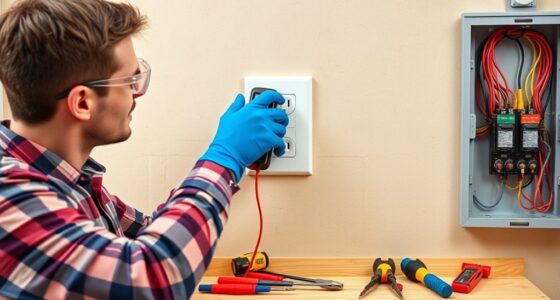
Are you familiar with the basic principles of electrical safety? If not, it’s vital to understand them before attempting any electrical work, like replacing a light fixture. Your safety depends on knowing how electrical systems in your home operate and recognizing potential hazards. Before starting, turn off the power at the circuit breaker that supplies the fixture. This step is essential to prevent electric shocks. Locating your circuit breaker and understanding how to shut off power quickly can save you from dangerous accidents. Always verify the power is off by using a non-contact voltage tester before touching any wires. These testers help you confirm that no current is flowing, reducing the risk of electrical shock.
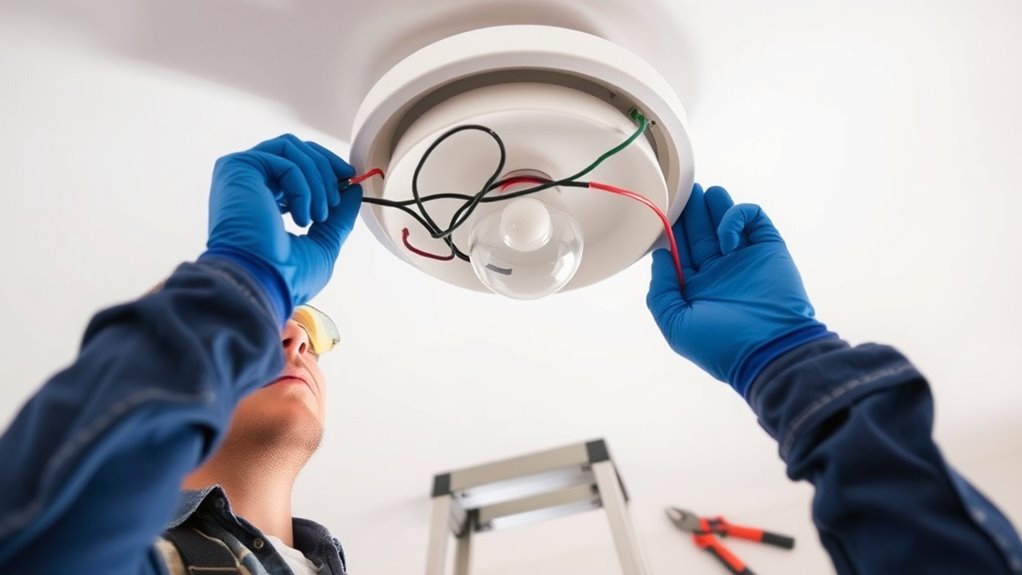
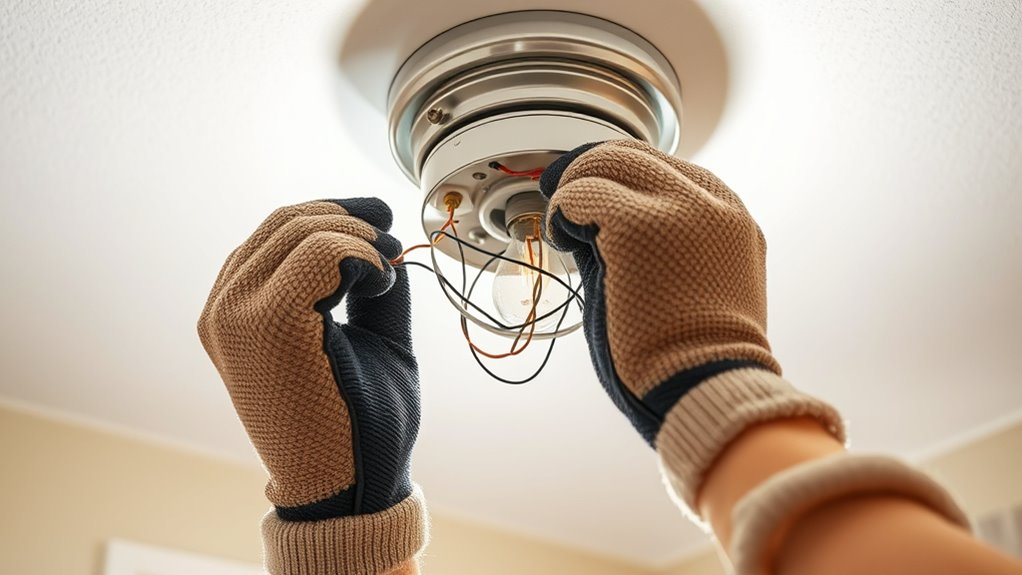
When working on a light fixture, inspect the fixture and the wiring for signs of damage or wear. Frayed wires, loose connections, or scorch marks indicate potential hazards. If you notice any damage, don’t attempt to repair it yourself—hire a licensed electrician to handle major repairs. For minor replacements, follow the manufacturer’s instructions carefully. Properly disconnect the old fixture, making note of how the wires are connected. Usually, the black or red wires are hot, the white wires are neutral, and the green or copper wires are grounding. Use insulated tools to handle these connections, and avoid forcing wires into place. When installing the new fixture, verify all connections are secure and tight to prevent arcing or loose contacts, which can cause fires.
Before restoring power, double-check all connections. Make sure the fixture is mounted correctly and that no wires are exposed. If your home has tamper-resistant outlets or GFCIs in the area, verify they’re functioning properly after completing the installation. This adds an extra layer of safety, especially in moist areas like kitchens and bathrooms. Once everything is in place, turn the circuit breaker back on and test your new fixture. If it doesn’t work, turn the power back off and recheck your connections. Never rush this process—being cautious helps prevent accidents.
non-contact voltage tester for electrical safety
As an affiliate, we earn on qualifying purchases.
As an affiliate, we earn on qualifying purchases.
Frequently Asked Questions
Can I Replace a Light Fixture Without Turning off the Circuit Breaker?
You shouldn’t replace a light fixture without turning off the circuit breaker. Live wires pose serious risks, including electrical shocks and fires. Always disconnect power first, using a circuit breaker and testing with a voltage tester to verify no current flows. Taking these safety steps protects you from harm and ensures the job’s done correctly. When in doubt, consult a professional to avoid dangerous mistakes.
What Tools Are Essential for Safely Replacing a Light Fixture?
Think of your toolbox as a shield, protecting you during a light fixture swap. You’ll need insulated screwdrivers to handle wires safely, a voltage tester to confirm power is off, and pliers for bending or cutting wires. Don’t forget gloves and safety glasses for extra protection. A drill, wire connectors, and a level help guarantee proper installation. These tools keep you safe and make the process smooth and secure.
How Do I Identify the Correct Wires to Connect?
To identify the correct wires, start by turning off the power at the breaker and using a voltage tester to verify there’s no current. Look for the black or brown wire as the hot connection, the white or blue wire as neutral, and the green or bare copper wire as ground. Match these to the corresponding wires on your fixture, making secure connections with wire nuts.
Is It Safe to Replace a Fixture in a Damp or Outdoor Location?
Think of replacing a fixture in damp or outdoor settings like tending a delicate garden—careful and intentional. You should always turn off the power at the breaker, check for live wires, and wear protective gear. Make certain the area is dry, use waterproof fixtures, and install GFCI outlets for extra safety. If you’re unsure, it’s best to consult a professional to keep your lighting shining safely and brightly.
What Should I Do if the Existing Wiring Is Damaged or Outdated?
If you find the existing wiring is damaged or outdated, you should first turn off the power at the main panel. Carefully remove the fixture and inspect the wiring for damage or deterioration. If needed, replace damaged sections with the correct gauge wire, secure all connections properly, and use approved connectors. Always guarantee your work complies with local codes, and consider consulting a licensed electrician for complex repairs or upgrades.
Conclusion
Think of replacing a light fixture as tending a delicate garden. With careful attention and respect for the wiring, you nurture safety and confidence, allowing your home to shine brightly without risk. Just as a gardener preserves beauty through gentle hands, your cautious approach guarantees a safe, lasting glow. When you follow these steps, you become the guardian of your space, turning a simple task into a bright symbol of care and mastery.
Halloween Picks
halloween
As an affiliate, we earn on qualifying purchases.