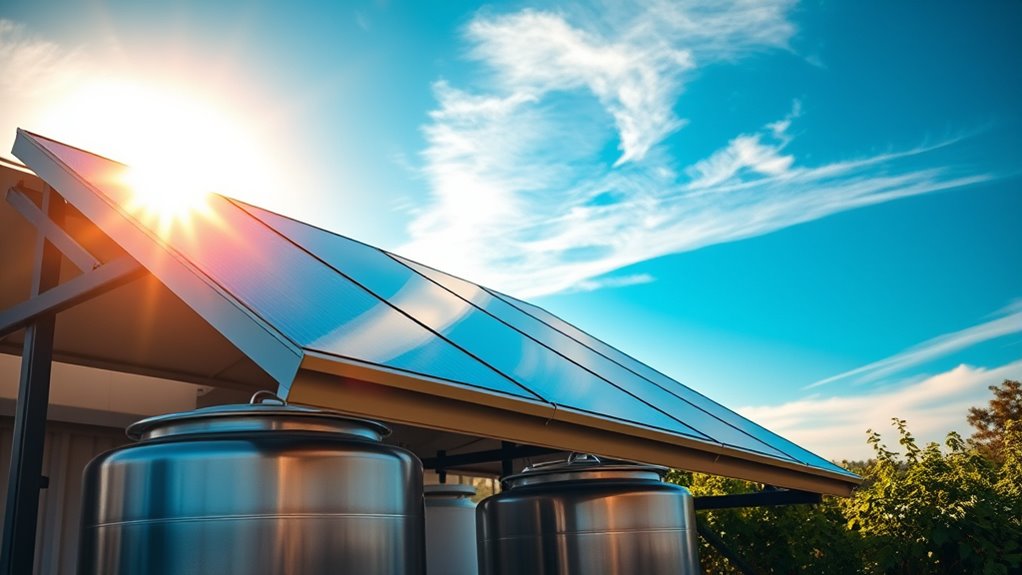

Solar water heaters use free sunlight to heat your water efficiently, which can cut energy bills and reduce your carbon footprint. They come in active or passive systems, with various collector types like flat plate or evacuated tubes. Proper installation, placement, and maintenance are key for ideal performance and durability. If you’re looking for a long-term, eco-friendly way to save money, considering a solar water heater could be a smart move—exploring more details will help you decide confidently.

Get audio and creator gear delivered free with Prime
- Fast, free delivery on millions of items
- Prime Video, Amazon Music and more included
- Member-only deals all year
Key Takeaways
- Solar water heaters reduce energy bills by harnessing free, renewable solar energy, offering long-term savings.
- They are durable systems designed to last decades with minimal maintenance needs.
- Proper installation—location, shading, and system type—is crucial for optimal performance and efficiency.
- They can significantly lower your carbon footprint, making them an eco-friendly choice.
- Initial costs may be high, but incentives like tax credits and rebates can offset expenses.
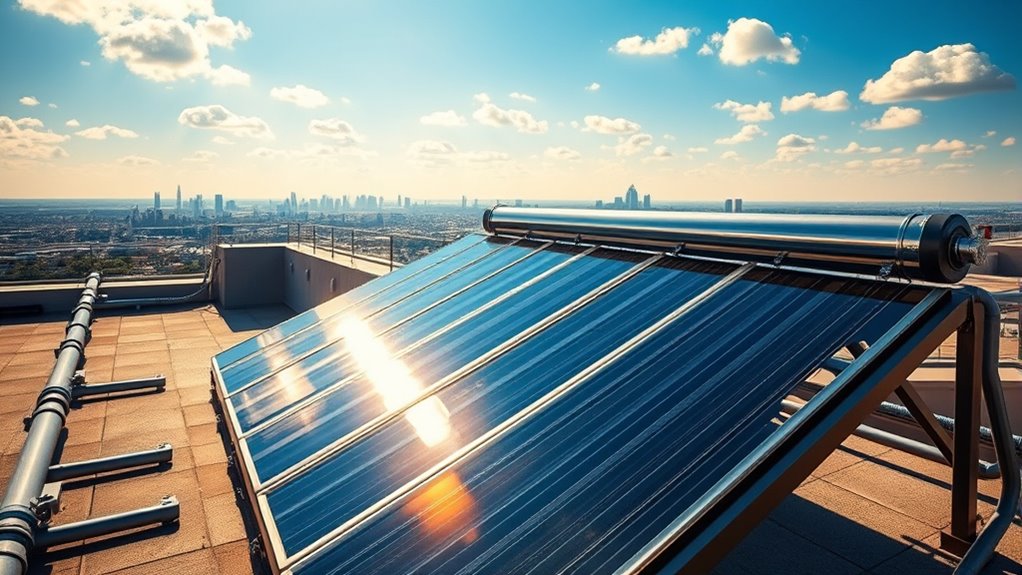
Are you looking for an eco-friendly way to cut your energy bills? Solar water heaters could be a smart choice. They harness free, renewable solar energy to heat your water, reducing your reliance on conventional energy sources. These systems come in two main types: active and passive. Active systems use circulating pumps and controls to manage water flow, making them efficient in various conditions. Passive systems, on the other hand, don’t rely on pumps; they use natural convection to circulate water, which can be simpler and more durable. You’ll also find different collector options. Flat plate collectors are flat panels that absorb solar energy, while evacuated tube collectors use vacuum-sealed tubes for higher efficiency, especially in colder climates. Thermosyphon systems typically position the storage tank near the roof collectors, using gravity to circulate water naturally.
Proper installation is vital to maximize efficiency. Collector placement should be as close to the storage tank as possible to minimize heat loss and ensure quick water heating. The collectors need full sun exposure during the day, which means they should be in an unobstructed solar window. An air gap of at least 1 ½ feet above your roof sheeting is necessary to prevent heat loss and allow proper airflow. When installing, slope your collectors and piping at least 4 inches in 10 feet to promote good drainage and prevent water pooling. All roof penetrations must be sealed tightly to prevent leaks and water damage. Additionally, understanding the contrast ratio of your system helps determine how well it will perform in different lighting conditions, especially in dark scenes or low-light environments.
Proper installation ensures maximum efficiency and durability for your solar water heater system.
The benefits of solar water heaters are compelling. They considerably cut energy bills by using free solar power, and they work effectively in any climate. Although the initial investment can be high, the long-term savings often outweigh the upfront costs. Plus, adopting solar reduces your carbon footprint by decreasing reliance on fossil fuels. Solar water heaters are designed to last decades, making them a durable and cost-effective solution over time.
Key components include solar collectors to absorb sunlight, storage tanks for heated water, and pumps with controls to circulate water efficiently. Temperature sensors help optimize system performance, while freeze protection valves guard against freezing in colder weather. Installing a solar water heater involves cutting roof holes for piping, securely mounting collectors on roof rafters, connecting high-pressure piping, and testing the system thoroughly to ensure there are no leaks. Setting up controls correctly and following manufacturer instructions ensures smooth operation.
Maintenance involves regular checks for leaks, system pressure, and proper operation of pumps and vents. In colder climates, freeze protection is essential to prevent damage. Though the initial cost may seem high, many regions offer incentives like tax credits and rebates, which can offset expenses. Over time, you’ll likely see substantial savings on your energy bills, and a solar water heater can even boost your property’s value, making it a wise, environmentally friendly investment.
Frequently Asked Questions
How Long Do Solar Water Heaters Typically Last?
You might wonder how long solar water heaters last. Typically, they last between 10 and 25 years, with high-quality systems exceeding 25 years if you maintain them well. Factors like installation, water quality, and climate influence their lifespan. Proper maintenance, such as cleaning panels and checking for leaks, can help maximize their longevity. Compared to other systems, solar water heaters usually last longer, offering a reliable, long-term solution.
Are Solar Water Heaters Effective in Cloudy Weather?
You might think solar water heaters are only good on sunny days, but surprisingly, they still work on cloudy days. UV rays and diffused sunlight provide enough energy for some heating, especially with evacuated tube collectors. While efficiency drops, backup systems like electric or gas heaters kick in to keep your water hot. So, even in gray weather, your solar heater continues to do its job, just at a slower pace.
What Maintenance Is Required for Solar Water Heaters?
You need to perform regular maintenance on your solar water heater to keep it running efficiently. This includes inspecting the collectors for damage, leaks, or debris, and cleaning them to guarantee maximum sunlight absorption. Check piping, connections, and insulation for wear or leaks, and ensure wiring is secure. Schedule annual professional inspections, and replace damaged parts promptly. Proper maintenance prolongs your system’s lifespan and maximizes energy savings.
Can Solar Water Heaters Supply Hot Water During Winter?
Ever wondered if solar water heaters can keep up in winter? They can, but their performance drops because of lower solar radiation. You’ll likely need a backup system, like electric or gas, to guarantee hot water availability during cold months. Proper insulation and system monitoring help, but don’t expect the same efficiency as in summer. With the right setup, you can still enjoy savings and eco benefits year-round.
What Is the Average Cost of Installing a Solar Water Heater?
The current question asks about the average cost to install a solar water heater. You can expect to pay between $3,000 and $9,000 for installation, with the national average around $9,000. Costs depend on system size, type, and complexity. Keep in mind, tax credits and rebates can reduce your upfront expense considerably, sometimes to as low as $1,500. Overall, investing in a solar water heater can save you money long-term.
Conclusion
Thinking about switching to a solar water heater? Imagine saving money on energy bills while helping the environment. For example, Sarah installed one last summer and now enjoys hot water even during cloudy days, all while cutting her electricity costs. If you’re ready for an eco-friendly, cost-effective solution, a solar water heater might be perfect for you. It’s a smart choice that benefits your wallet and the planet—why not give it a try?
Fall Picks
fall essentials
As an affiliate, we earn on qualifying purchases.