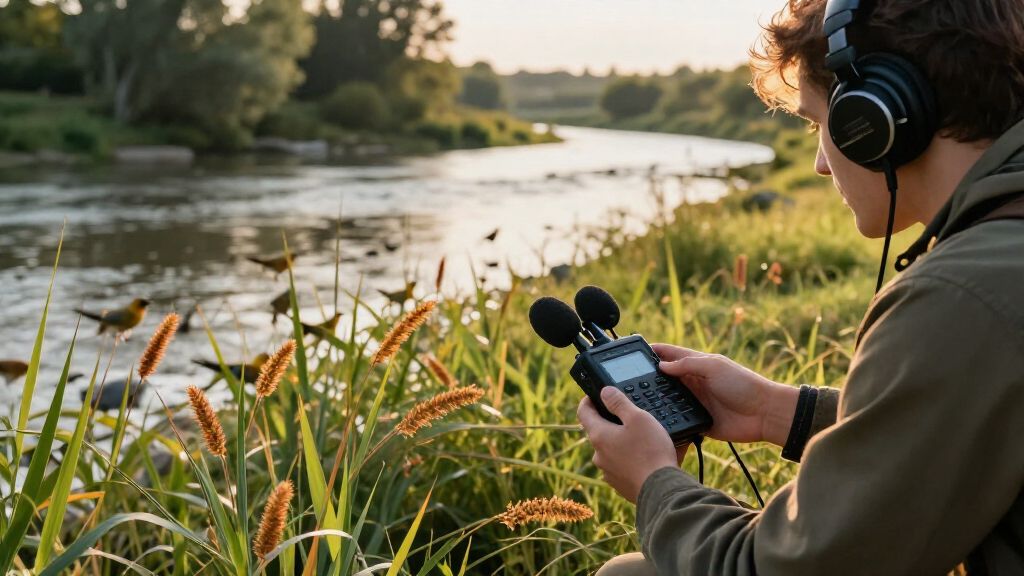
For most field recording work, I’d start with the Zoom F6: its six inputs and 32-bit float recording suit demanding shoots where sources and levels can change quickly. The Zoom F3 is a simpler two-input choice for clean, compact capture, while the TASCAM DR-40XP offers built-in microphones and added input flexibility in a handheld design. The main tradeoff is between a small, easy-to-carry recorder and a larger unit with more connections, controls, or recording channels. Features such as 32-bit float help with level management, but they do not replace good microphone placement or careful monitoring. Read on for the full comparison and guidance on choosing a recorder for your field workflow.

Get audio and creator gear delivered free with Prime
- Fast, free delivery on millions of items
- Prime Video, Amazon Music and more included
- Member-only deals all year
Complete the kit


Key Takeaways
- The Zoom F6 leads for multi-source work: its six inputs make it a stronger fit for film sets and complex location sessions than the two-input F3.
- 32-bit float appears across several formats: the F3 and F6 focus on external-mic workflows, while handheld models such as the H5studio and DR-40XP combine that recording approach with more direct access to built-in or add-on microphones.
- Recorder size reflects workflow, not just portability: the F2 is a small dedicated lavalier recorder, while the H6studio and F6 make more sense when multiple sources and hands-on control matter.
- Built-in stereo microphones can reduce setup time: the H2essential, H1essential, and TASCAM handheld models suit quick ambient capture, though they offer different levels of input expansion.
- The product lineup favors distinct use cases over one universal winner: the F3 is a focused external-mic option, the H1essential keeps the basics simple, and the TP-7 is a distinctive portable choice rather than a conventional multichannel field recorder.
| Zoom F6 Professional Field Recorder for Filmmakers & Musicians |  | Best for Multi-Mic Film Production | Inputs: 6 XLR | Maximum tracks: 14 | Recording format: 32-bit float WAV | VIEW LATEST PRICE | See Our Full Breakdown |
| Zoom H2essential Handheld Recorder |  | Best for Flexible Built-In Microphone Recording | Microphones: 3 built-in microphones | Recording patterns: 9 selectable mono, stereo, and surround patterns | Audio resolution: Up to 32-bit float / 96 kHz | VIEW LATEST PRICE | See Our Full Breakdown |
| Zoom F2 32-Bit Float Lavalier Recorder with Microphone |  | Best for Hands-Free Lavalier Capture | Recording format: WAV, 32-bit float | Sample rates: 44.1 kHz or 48 kHz | Included microphone: LMF-2 omnidirectional lavalier | VIEW LATEST PRICE | See Our Full Breakdown |
| Teenage Engineering TP-7 Portable Digital Audio Recorder |  | Best Compact Recorder for Notes and Interviews | Storage: 128 GB internal | Digital recording time: Up to 610 hours | Microphone: Built-in stereo | VIEW LATEST PRICE | See Our Full Breakdown |
| Zoom H5studio Handy Recorder with 32-Bit Float Recording |  | Best for Self-Contained Stereo Field Recording | Recording format: WAV, 32-bit float | Maximum sample rate: 192 kHz | Maximum simultaneous tracks: 6 | VIEW LATEST PRICE | See Our Full Breakdown |
| Zoom F3 Professional Field Recorder |  | Best for No-Fuss XLR Field Recording | Recording format: 32-bit float WAV | Channels: 2 | Inputs: 2 locking XLR/TRS | VIEW LATEST PRICE | See Our Full Breakdown |
| TASCAM DR-05XP 32-Bit Float Portable Handheld Field Recorder and USB-C Audio Interface | 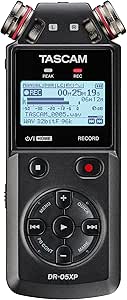 | Best for Simple Handheld Capture | Recording formats: 32-bit float, 24-bit, and 16-bit | Sample rates: 44.1, 48, and 96 kHz | Microphones: Omnidirectional condenser | VIEW LATEST PRICE | See Our Full Breakdown |
| Zoom H1 XLR 2-Channel Portable Recorder |  | Best Compact Recorder for External Mics | Recording format and resolution: WAV, 32-bit float up to 96 kHz | Inputs: Two locking XLR/TRS combo inputs; 3.5 mm stereo input | Headphone output: 3.5 mm | VIEW LATEST PRICE | See Our Full Breakdown |
| TASCAM DR-40XP 4-Channel 32-Bit Float Portable Handheld Field Recorder and USB-C Audio Interface |  | Best for Flexible Four-Source Capture | Channels: 4 | Recording formats: 32-bit float, 24-bit, and 16-bit | Sample rates: 44.1, 48, and 96 kHz | VIEW LATEST PRICE | See Our Full Breakdown |
| Zoom H6studio Handy Recorder |  | Best for Expanded Multitrack Field Sessions | Recording: 32-bit float | Track capacity: Up to 6 individual tracks plus stereo mix | Inputs: 4 XLR/TRS | VIEW LATEST PRICE | See Our Full Breakdown |
| Zoom H4essential 4-Track Handheld Recorder |  | Best for Flexible Field Setups | Recording tracks: 4 | Recording format: WAV | Bit depth: 32-bit float | VIEW LATEST PRICE | See Our Full Breakdown |
| Zoom H1essential Portable Stereo Recorder |  | Best Compact Recorder for Ambient Sound | Microphones: Built-in X/Y stereo | Recording format: WAV | Recording type: 32-bit float | VIEW LATEST PRICE | See Our Full Breakdown |
| digital audio recorders for field recording | Weight | Inputs | Recording format | Storage |
|---|---|---|---|---|
| Zoom F6 Professional Field Rec | 2.4 pounds | 6 XLR | 32-bit float WAV | — |
| Zoom H2essential Handheld Reco | 6.72 ounces | — | — | — |
| Zoom F2 32-Bit Float Lavalier | 181 g | — | WAV, 32-bit float | microSD, microSDHC, and microSDXC up to 512 GB |
| Teenage Engineering TP-7 Porta | 5.6 ounces | — | — | 128 GB internal |
| Zoom H5studio Handy Recorder w | 14.4 ounces | 2 XLR/TRS | WAV, 32-bit float | — |
| Zoom F3 Professional Field Rec | — | 2 locking XLR/TRS | 32-bit float WAV | microSD up to 512 GB |
| TASCAM DR-05XP 32-Bit Float Po | — | — | — | — |
| Zoom H1 XLR 2-Channel Portable | — | Two locking XLR/TRS combo inputs; 3.5 mm stereo input | — | SDXC cards up to 1 TB |
| TASCAM DR-40XP 4-Channel 32-Bi | — | 2 XLR/TRS combo inputs | — | — |
| Zoom H6studio Handy Recorder | — | 4 XLR/TRS | — | — |
| Zoom H4essential 4-Track Handh | 243 g | — | WAV | SD card, up to 1 TB |
| Zoom H1essential Portable Ster | 92 g | — | WAV | SD card, up to 1 TB |
More Details on Our Top Picks
Zoom F6 Professional Field Recorder for Filmmakers & Musicians
The Zoom F6 is the strongest fit here for field work that needs several isolated microphone feeds and dependable video sync. Its six XLR inputs, 14-track capacity, and timecode I/O suit production crews recording multiple talent or sources at once. 32-bit float with dual A/D converters gives more room to recover unexpected level changes than a conventional gain-dependent workflow. Compared with the handheld Zoom H5studio, the F6 offers more XLR inputs and timecode, while the H5studio is easier to use as a grab-and-go recorder with built-in stereo mics. The tradeoff is a more production-oriented setup: it weighs 2.4 pounds, runs on four AA batteries or USB power, and its 8 GB internal storage is modest for long sessions. I’d choose it for a crew with external media and a battery plan.
Pros:- Six XLR inputs and up to 14 tracks support complex multi-microphone sessions
- 32-bit float recording with dual A/D converters gives substantial latitude for changing sound levels
- Timecode I/O supports frame-accurate synchronization with video
- Can operate as a standalone recorder or USB audio interface
Cons:- Four AA batteries may need frequent replacement during extended field sessions
- The 8 GB internal storage may not cover long recordings without additional media
- At 2.4 pounds, it is less convenient to carry than compact handheld options
Best for: Film crews and location recordists who need multiple XLR microphones, isolated tracks, and timecode synchronization
Not ideal for: Solo recordists who mainly capture ambience with built-in microphones or want a lighter, simpler handheld recorder
- Inputs:6 XLR
- Maximum tracks:14
- Recording format:32-bit float WAV
- A/D converters:Dual
- Timecode I/O:Yes
- Power:4 AA batteries or USB power
- Internal storage:8 GB
- Dimensions:4 × 4.5 × 2.5 inches
- Weight:2.4 pounds
Our verdict“Choose the F6 when multi-mic inputs and timecode matter more than the simplicity and lighter carry of the H5studio.”
Zoom H2essential Handheld Recorder
The Zoom H2essential suits field recordists who want to change how a handheld recorder hears a scene without packing separate microphones. Its three built-in microphones and nine patterns cover mono, stereo, and surround recording, giving it more pickup choices than the F2’s single lavalier-oriented setup. Recording at 32-bit float up to 96 kHz reduces the need to adjust gain when sound levels shift, while SD-card storage supports up to 2 TB. It can also work as a USB microphone and supports Bluetooth synchronization with multiple units. Those options make it versatile for ambience, interviews, and location notes, but the 1.3-inch screen is small, and two AA batteries remain part of the field kit. I’d skip it if the job calls for XLR inputs like the F6.
Pros:- Three microphones and nine selectable patterns provide varied mono, stereo, and surround pickup options
- 32-bit float recording up to 96 kHz avoids routine gain adjustment
- Functions as both an SD-card recorder and USB microphone
- Audible menu navigation and Bluetooth multi-unit synchronization add useful accessibility and workflow options
Cons:- The 1.3-inch display may be hard to read in bright outdoor conditions
- Two AA batteries add ongoing power management to field sessions
- Built-in microphones do not replace the F6’s multiple XLR inputs for external-mic production
Best for: Solo field recordists, nature sound collectors, and interviewers who want several built-in pickup patterns in one handheld unit
Not ideal for: Production crews needing XLR microphone connections or users who need a large, easily viewed screen outdoors
- Microphones:3 built-in microphones
- Recording patterns:9 selectable mono, stereo, and surround patterns
- Audio resolution:Up to 32-bit float / 96 kHz
- Storage media:SD card, up to 2 TB
- Connectivity:USB 3.0 Type-C and Bluetooth
- Power:2 AA batteries
- Battery life:Up to 20 hours
- Display:1.3 inches
- Weight:6.72 ounces
Our verdict“Choose the H2essential for adaptable built-in recording patterns, but pick the F6 if your field setup depends on XLR microphones.”
Zoom F2 32-Bit Float Lavalier Recorder with Microphone
The Zoom F2 is purpose-built for placing a microphone on a person and keeping the recorder out of the way. Its compact body-pack format and included omnidirectional lavalier make it a more direct fit for dialogue than the H2essential, whose built-in microphones are designed for broader handheld pickup. 32-bit float WAV recording removes the need for manual gain adjustment, which can help when a speaker shifts volume during a take. It records to microSD cards up to 512 GB and can run for up to 15 hours on two AAA batteries. This is a focused tool, not a general-purpose ambience recorder: it offers only mono or stereo microphone operation and lacks the F6’s multiple XLR inputs and timecode features. I’d pick it for discreet, individual talent recording rather than a multi-source scene.
Pros:- Included omnidirectional lavalier, windscreen, and lapel clip provide a ready-to-wear setup
- 32-bit float recording avoids manual gain adjustments during changing dialogue levels
- microSD support up to 512 GB accommodates long recording workloads
- REC Hold switch helps prevent accidental recording stops
Cons:- Two AAA batteries are required, with up to 15 hours of recording time
- Mono or stereo microphone operation is less flexible than the H2essential’s nine pickup patterns
- A single lavalier-focused setup cannot replace the F6 for multi-mic field production
Best for: Documentary crews, interviewers, and solo creators who need a compact recorder worn by one speaker
Not ideal for: Recordists capturing wide environmental sound or multiple external microphones, since it is built around a single lavalier workflow
- Recording format:WAV, 32-bit float
- Sample rates:44.1 kHz or 48 kHz
- Included microphone:LMF-2 omnidirectional lavalier
- Storage:microSD, microSDHC, and microSDXC up to 512 GB
- Power:2 AAA batteries
- Recording time:Up to 15 hours
- Weight:181 g
- USB interface:USB 3.0 Type-C
Our verdict“Choose the F2 when a speaker needs a small, wearable recorder; choose the H2essential for handheld environmental recording.”
Teenage Engineering TP-7 Portable Digital Audio Recorder
The Teenage Engineering TP-7 is the most pocket-focused option in this group, aimed at quick recordings, spoken notes, and interview material rather than a conventional multitrack field rig. Its 128 GB internal storage holds up to 610 hours of digital recording, so there is no separate card to manage. USB-C, Bluetooth, and three two-way jacks give it useful connection choices, while the motorized reel and one-handed controls favor fast operation. Compared with the Zoom H2essential, the TP-7 emphasizes compact memo capture and internal storage rather than selectable microphone patterns and a stated 32-bit float/96 kHz recording mode. Its 7-hour battery life is also shorter than the H2essential’s stated 20 hours. The lack of a physical display and iOS-limited transcription features make it a specialized pick, not my choice for long, visually monitored outdoor sessions.
Pros:- 128 GB internal storage provides up to 610 hours of digital recording
- Compact 5.6-ounce design and one-handed controls suit quick location notes
- USB-C, Bluetooth, and three two-way jacks support a range of connections
- Companion app offers voice-to-text transcription on iOS
Cons:- Seven-hour battery life is shorter than the H2essential’s stated 20 hours
- No physical display for conventional visual monitoring
- Transcription features are limited to iOS devices
Best for: Journalists, researchers, and sound collectors who prioritize pocketable voice notes, quick playback, and substantial internal storage
Not ideal for: Field recordists needing long battery life, detailed visual monitoring, or the H2essential’s range of microphone pickup patterns
- Storage:128 GB internal
- Digital recording time:Up to 610 hours
- Microphone:Built-in stereo
- Connectivity:USB-C, Bluetooth, and 3.5 mm headphone jack
- Battery life:Up to 7 hours
- Weight:5.6 ounces
- Built-in speaker:Yes
- Warranty:1 year
Our verdict“Choose the TP-7 for a highly portable voice-note workflow, but opt for the H2essential for longer sessions and more defined field pickup patterns.”
Zoom H5studio Handy Recorder with 32-Bit Float Recording
The Zoom H5studio is the clearest choice here for a recordist who wants built-in stereo microphones plus the option to connect external sources. Its 19.4 mm X/Y microphones make it more immediately suited to capturing ambience than the F6, which is designed around external XLR microphones. Two XLR/TRS inputs and up to six tracks add room for a pair of external sources alongside the built-in stereo pickup, while 32-bit float WAV recording helps with unpredictable field levels. Dedicated gain knobs also give hands-on control when a session calls for it. The compromises are its two-input limit compared with the F6’s six XLR connections, four-AA power, and a 2-inch display that may feel constrained for monitoring. I’d choose this as a portable all-in-one recorder, not as a substitute for a larger production rig.
Pros:- Large 19.4 mm X/Y microphones provide built-in stereo recording for location sound
- Two XLR/TRS inputs and up to six tracks allow mixed built-in and external-mic setups
- 32-bit float recording supports unpredictable changes in field levels
- Dedicated gain knobs offer direct level control
Cons:- Two XLR/TRS inputs are fewer than the F6’s six XLR inputs
- Four AA batteries are required for portable operation
- The 2-inch display limits the viewing area for on-device monitoring
Best for: Ambience recordists, musicians, and small crews who want built-in stereo capture with two external input channels
Not ideal for: Film crews recording several XLR microphones at once or buyers who need the F6’s timecode I/O and larger input count
- Recording format:WAV, 32-bit float
- Maximum sample rate:192 kHz
- Maximum simultaneous tracks:6
- Built-in microphone:19.4 mm X/Y stereo capsule
- Inputs:2 XLR/TRS
- Storage capacity:Up to 2 TB
- Power:4 AA batteries
- Battery recording time:Up to 15 hours
- Weight:14.4 ounces
Our verdict“Choose the H5studio for portable stereo ambience and a couple of external sources; move up to the F6 when a production needs more XLR channels and timecode.”
Zoom F3 Professional Field Recorder
The Zoom F3 is the most focused choice here for recording two external sources reliably. Its 32-bit float capture and dual converters help preserve sudden peaks without requiring constant level adjustments, a useful safeguard when dialogue or location sound is unpredictable. Compared with the handheld TASCAM DR-40XP, the F3 gives up built-in microphones and extra channels in favor of locking XLR/TRS inputs and a compact format that suits a camera rig or a small bag-based setup. The tradeoff is its narrow two-channel limit: it is not the right tool for a multi-mic production. It also runs on AA batteries, so longer shoots call for spare cells or USB power. I’d choose it for dependable external-mic recording, not as an all-in-one ambient recorder.
Pros:- 32-bit float recording with dual A/D converters helps retain usable audio across changing levels.
- Two locking XLR/TRS inputs help keep cables secure on rigs and in active field setups.
- Ultra-low-noise preamps support clean recordings from external microphones.
- Can run on AA batteries or USB power and supports microSD cards up to 512 GB.
Cons:- Two input channels limit its usefulness for multi-microphone sessions.
- AA batteries may need replacement during long recording days.
- Built-in microphones are not listed, so ambient capture requires external gear.
Best for: Filmmakers and location-sound recordists who need two secure external mic connections and clip-resistant capture in a compact rig.
Not ideal for: Field recordists who want built-in microphones or need to record more than two sources at once.
- Recording format:32-bit float WAV
- Channels:2
- Inputs:2 locking XLR/TRS
- Converters and preamps:Dual A/D converters; ultra-low-noise preamps
- Storage:microSD up to 512 GB
- Power:2 AA batteries or USB
- Dimensions and weight:3.04 × 2.95 × 1.88 inches; 8.48 ounces
- Connectivity:Wireless control; 3.5 mm headphone jack
Our verdict“Choose the F3 when secure two-mic XLR recording and level flexibility matter more than extra channels or built-in microphones.”
TASCAM DR-05XP 32-Bit Float Portable Handheld Field Recorder and USB-C Audio Interface
The TASCAM DR-05XP is the straightforward pick for field recording when carrying external microphones and cables is not part of the plan. Its built-in omnidirectional condenser microphones handle sound levels up to 125 dB SPL, while 32-bit float recording offers more latitude when a source gets louder than expected. Unlike the Zoom F3, it does not provide XLR inputs; its advantage is a self-contained handheld form and the option to work as a USB-C audio interface when connected to a computer. That makes it a better fit for quick ambience, meetings, or reference audio than for a crewed production using professional XLR mics. Its AA power and the need to supply your own SD card and batteries add setup chores, and its built-in mic arrangement offers less control over stereo placement than the DR-40XP.
Pros:- Built-in omnidirectional microphones capture sound without requiring a separate mic.
- 32-bit float recording supports unpredictable changes in source level.
- Handles sound up to 125 dB SPL according to the supplied specifications.
- Can function as a 2-in/2-out USB-C audio interface.
Cons:- No XLR inputs are listed, limiting use with professional external microphones.
- SD card and AA batteries are not included.
- The fixed built-in microphone setup offers less placement flexibility than the DR-40XP.
Best for: Solo recordists, students, and interviewers who want a compact handheld recorder with built-in microphones and occasional USB-C interface use.
Not ideal for: Location-sound crews using XLR microphones or recordists who need adjustable stereo mic placement and multiple input sources.
- Recording formats:32-bit float, 24-bit, and 16-bit
- Sample rates:44.1, 48, and 96 kHz
- Microphones:Omnidirectional condenser
- Maximum SPL:125 dB
- USB interface:USB-C, 2-in/2-out
- Power and battery life:2 AA alkaline batteries; up to 17.5 hours
- Included items:Recorder only; SD card and batteries not included
Our verdict“Pick the DR-05XP for uncomplicated handheld recording with built-in mics, but choose an XLR-equipped model for external-mic field work.”
Zoom H1 XLR 2-Channel Portable Recorder
The Zoom H1 XLR keeps the core of an XLR field setup small: two locking combo inputs, 32-bit float recording, and a waveform display in a 6.4-ounce recorder. Compared with the Zoom F3, it adds a 0.96-inch OLED waveform screen for at-a-glance monitoring and a 3.5 mm stereo input, while remaining limited to two main XLR/TRS connections. That makes it a practical option for a compact camera bag or a two-mic interview kit, rather than a substitute for a larger multitrack unit such as the Zoom H6studio. The display helps show activity, but it does not expand the channel count or remove the need to manage storage and power. It takes two AA batteries and requires an SDXC card, so buyers need to bring both for a recording session.
Pros:- Two locking XLR/TRS combo inputs accept microphones, instruments, and other sources.
- 32-bit float recording supports capture when levels shift unexpectedly.
- OLED waveform display gives a visual check on recorded audio activity.
- SDXC support accommodates cards up to 1 TB.
Cons:- Only two XLR/TRS inputs are provided, well short of the H6studio’s four.
- Requires two AA batteries and an SDXC card; built-in storage is not listed.
- Battery life is specified at up to 10 hours, shorter than the DR-05XP’s stated maximum.
Best for: Mobile videographers and two-mic interview recordists who want locking external-mic inputs in a lightweight recorder.
Not ideal for: Recordists who need built-in microphones, more than two XLR/TRS sources, or an included storage medium.
- Recording format and resolution:WAV, 32-bit float up to 96 kHz
- Inputs:Two locking XLR/TRS combo inputs; 3.5 mm stereo input
- Headphone output:3.5 mm
- Display:0.96-inch OLED waveform display
- Storage:SDXC cards up to 1 TB
- Power and battery life:2 AA batteries; up to 10 hours
- Dimensions and weight:4.21 × 2.44 × 1.55 inches; 6.4 ounces
Our verdict“Choose the H1 XLR when a lightweight two-input recorder with a waveform display suits your field kit better than a larger multitrack model.”
TASCAM DR-40XP 4-Channel 32-Bit Float Portable Handheld Field Recorder and USB-C Audio Interface
The TASCAM DR-40XP bridges handheld ambience recording and external-mic work more effectively than the two-input Zoom F3. Its adjustable built-in stereo microphones can record alongside two XLR/TRS inputs, providing up to four channels for combining a location bed with close-miked sources. The A-B and X-Y mic configurations give the built-in pair more placement options than the fixed microphones in the DR-05XP, while 32-bit float recording and HDDA preamps support clean capture across changing levels. This flexibility suits small crews and musicians recording several sources without carrying a larger unit. The limit is four simultaneous channels, so it cannot match the Zoom H6studio’s broader track capacity. The package also omits batteries and a microSD card, which means the recorder needs a little preparation before heading out.
Pros:- Can combine adjustable built-in microphones with two XLR/TRS inputs for up to four channels.
- A-B and X-Y microphone positions offer different stereo recording approaches.
- 32-bit float recording and HDDA preamps are suited to variable field levels.
- USB-C 2-in/2-out interface mode supports direct computer recording.
Cons:- Four-channel capacity is less suited to larger multi-mic productions than the H6studio.
- microSD card and batteries are not included.
- Its handheld built-in-mic design is less focused on secure, rig-mounted XLR recording than the F3.
Best for: Small film crews, musicians, and interview recordists who want built-in stereo ambience plus two external XLR sources in one handheld unit.
Not ideal for: Productions requiring more than four simultaneous channels or buyers who expect batteries and a memory card in the package.
- Channels:4
- Recording formats:32-bit float, 24-bit, and 16-bit
- Sample rates:44.1, 48, and 96 kHz
- Inputs:2 XLR/TRS combo inputs
- Built-in microphones:Adjustable A-B or X-Y unidirectional condenser microphones
- Maximum SPL:125 dB
- USB interface:USB-C, 2-in/2-out
- Dimensions and weight:1.38 × 2.76 × 6.13 inches; 6.1 ounces
Our verdict“Choose the DR-40XP if you need a handheld recorder that can capture stereo ambience and two external sources at once.”
Zoom H6studio Handy Recorder
For field sessions that need several isolated sources, the Zoom H6studio offers the widest track capacity in this group: up to six individual tracks plus a stereo mix. Four XLR/TRS inputs and interchangeable capsules give it more room to adapt than the four-channel TASCAM DR-40XP, while large 19.4 mm microphones and support for sample rates up to 192 kHz suit detailed location and music recording. Its 32-bit float recording and look-ahead limiters are designed to help manage distortion when levels jump. That capability comes with a real portability cost: at 1.05 pounds, it is much heavier than the compact F3 or H1 XLR, and portable operation takes four AA batteries. I’d favor it for a field bag built around multiple sources, not for a minimalist walk-and-record kit.
Pros:- Records up to six individual tracks plus a stereo mix.
- Four XLR/TRS inputs support multiple external sources.
- Interchangeable capsules and large 19.4 mm microphones provide recording flexibility.
- 32-bit float recording, look-ahead limiters, and sample rates up to 192 kHz support demanding sessions.
Cons:- At 1.05 pounds, it is substantially heavier than the F3 and H1 XLR.
- Portable operation requires four AA batteries.
- Four XLR/TRS inputs may still be limiting for larger microphone arrays.
Best for: Field producers and musicians recording several microphones or instruments who need isolated tracks and adaptable built-in mic options.
Not ideal for: Solo recordists prioritizing a lightweight kit, or anyone who needs more than four XLR/TRS inputs.
- Recording:32-bit float
- Track capacity:Up to 6 individual tracks plus stereo mix
- Inputs:4 XLR/TRS
- Built-in microphones:19.4 mm; interchangeable capsules
- Maximum SPL:140 dB
- Sample rates:44.1–192 kHz
- Power and battery life:4 AA batteries; up to 15 hours
- Dimensions and weight:11 × 4.8 × 2.5 inches; 1.05 pounds
Our verdict“Pick the H6studio for multi-source field sessions and isolated tracks, but favor a smaller recorder when low carry weight matters more.”
Zoom H4essential 4-Track Handheld Recorder
The H4essential suits field recordists who want one handheld unit for ambient stereo capture and external microphones. Its built-in stereo mics handle quick location recordings, while two XLR/TRS inputs let you connect mics or other audio gear for interviews, performances, and more controlled setups. 32-bit float recording can accommodate sudden changes in level, reducing the need to predict every peak before you press record. Compared with the pocket-sized H1essential, the H4essential offers more input flexibility and four-track recording, but it is larger and weighs more. USB-C recording or streaming, with an SD-card backup option, is useful when connecting to a phone or computer. The tradeoffs are AA-battery power and a listed recording time of 10 hours, so long outings call for spare batteries.
Pros:- 32-bit float WAV recording at up to 96 kHz helps handle unpredictable changes in field sound levels.
- Built-in stereo microphones and two XLR/TRS inputs support both quick ambient capture and external audio gear.
- USB-C supports recording or streaming with a phone, tablet, or computer.
- Can record to a connected device while saving a backup to an SD card.
Cons:- Requires two AA batteries, so extended field sessions may require carrying spares.
- Listed digital recording time is 10 hours, which can be limiting on longer outings.
- At 243 g, it is less pocketable than the 92 g H1essential.
Best for: Field recordists who need built-in stereo capture plus two external mic or line inputs for interviews, small performances, or location work.
Not ideal for: Travelers prioritizing the smallest, lightest recorder, or crews needing more than two XLR/TRS inputs without adding another recorder.
- Recording tracks:4
- Recording format:WAV
- Bit depth:32-bit float
- Maximum sample rate:96 kHz
- Microphones and inputs:Built-in stereo microphones; 2 XLR/TRS inputs
- Connectivity:USB-C
- Storage:SD card, up to 1 TB
- Power and listed recording time:2 AA batteries; 10 hours
- Weight:243 g
Our verdict“Choose the H4essential if you want a handheld field recorder that pairs stereo ambience capture with two external inputs, and skip it if portability is your main priority.”
Zoom H1essential Portable Stereo Recorder
For a field kit that needs to stay light, the H1essential keeps the setup simple: its built-in X/Y stereo microphones capture ambience, speech, and music without requiring an external mic. Recording in 32-bit float WAV helps accommodate changing sound levels, which is handy when a quiet environment suddenly gets louder. At 92 g, it is far easier to carry than the H4essential, but that smaller footprint comes with a clear limit: there are no listed XLR/TRS inputs, so it is not the choice for connecting multiple professional microphones. USB-C microphone mode also lets it serve as an input for a computer or mobile device. Spoken menu guidance supports a straightforward workflow, while SD-card recording means buyers need to plan for storage. Its two AAA batteries are easy to pack, though the listed recording time is still up to 10 hours.
Pros:- Built-in X/Y microphones record stereo sound without a separate mic setup.
- 32-bit float WAV recording helps manage unexpected changes in sound level.
- USB-C microphone mode supports use with computers and mobile devices.
- At 92 g, it is substantially lighter than the H4essential.
Cons:- No XLR/TRS inputs are listed, limiting connections for external professional microphones.
- Requires two AAA batteries and is specified for up to 10 hours of recording.
- Recording uses an SD card, which is not specified as included.
Best for: Hikers, travelers, and solo recordists who want a light, self-contained recorder for stereo ambience, speech, or quick location notes.
Not ideal for: Interviewers or location crews who need XLR/TRS inputs for external microphones, or buyers who want a recorder with built-in storage.
- Microphones:Built-in X/Y stereo
- Recording format:WAV
- Recording type:32-bit float
- Connectivity:USB-C
- Storage:SD card, up to 1 TB
- Battery and recording time:2 AAA batteries; up to 10 hours
- Headphone jack:3.5 mm
- Dimensions:5.38 × 2.12 × 1.14 in
- Weight:92 g
Our verdict“Pick the H1essential for lightweight, self-contained stereo field recording; choose the H4essential instead when external inputs and four-track recording matter more.”
How We Picked
I ranked these recorders by how well their features serve actual field tasks: capturing environmental sound, recording dialogue on location, handling unpredictable loudness, and working with microphones beyond the recorder itself. I weighed input count and type, onboard microphones, recording formats, physical portability, monitoring and control, and the usefulness of USB connectivity. A feature mattered most when it removed a real limitation in the field—for example, extra inputs for separate sources or a compact body for a recorder worn with a lavalier.
The ranking reflects versatility for field recording first, then the value of each model’s distinct strengths against its compromises. That puts the F6 ahead for its combination of channel capacity and professional input options, while the F3 ranks strongly for a lean external-microphone setup. Handheld recorders rise when their onboard microphones, accessible controls, or input flexibility suit quick location work; more specialized or less conventional choices rank lower for buyers seeking one recorder for varied field tasks. No model earns a higher place from a headline format alone: the intended microphone setup and operating workflow matter just as much.
Factors to Consider When Choosing Digital Audio Recorders For Field Recording
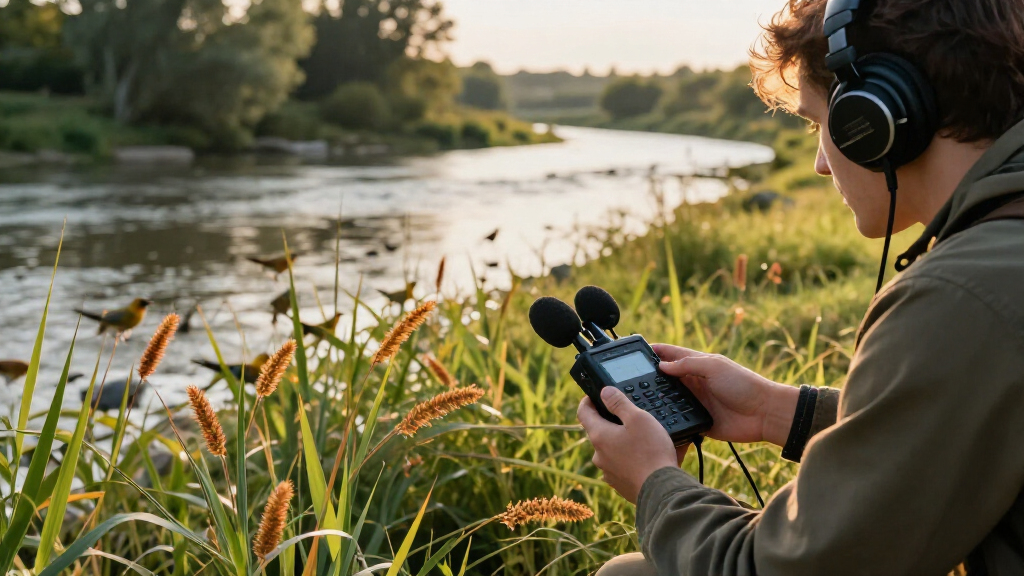
Before choosing a recorder, I’d map out how sound enters the device and how the files will be used afterward. A field setup can range from a recorder held toward birdsong to a multichannel unit feeding from several microphones. These broader tradeoffs can prevent buying more recorder than a project needs—or choosing a compact model that cannot handle the next assignment.
Match Inputs to the Sources You Record
Count the sources you need to capture at the same time, not just the microphones you own today. A recorder with two inputs can handle a stereo pair or a small dialogue setup, but separate microphones for several people or sound sources call for more channels. Also check the input types and power needs of your microphones; an input count by itself does not guarantee compatibility. A common mistake is buying for a one-person setup and later trying to record several isolated sources on a device that cannot do it. If extra channels are rare, a compact two-input recorder plus a separate workflow may be easier to carry than a larger unit on every trip.
Choose Onboard Mics or an External-Mic Workflow
Built-in stereo microphones make spontaneous recording fast: take the recorder out, point it toward the sound, and capture a scene without assembling a separate rig. External microphones offer more control over direction, placement, and distance, which can matter when the recorder must stay protected or away from the sound source. Buyers sometimes assume onboard microphones make external inputs unnecessary, but the two approaches solve different problems. For wildlife, weather, or distant ambience, microphone placement and wind protection can matter more than a recorder’s feature list. If your sessions regularly alternate between quick stereo ambience and separate mic channels, a hybrid handheld recorder can reduce the number of devices you carry.
Understand What 32-Bit Float Can and Cannot Do
32-bit float can give more flexibility when adjusting recorded levels later, which is useful when a quiet moment suddenly turns loud. It does not repair distorted microphone capsules, poor placement, wind rumble, handling noise, or a clipped signal earlier in the recording chain. Buyers who expect the format to eliminate monitoring can still miss a bad connection or unusable background noise. Think of it as extra headroom for level decisions, not a substitute for listening and setup. If your sound sources are predictable and you prefer simple workflows, channel layout and ease of operation may matter more than choosing a recorder based on bit depth alone.
Balance Portability Against Controls and Rigging
A smaller recorder is easier to carry, mount, or keep close during long sessions, but reduced size can mean fewer controls and less room for connections. Larger recorders can make channel adjustments and monitoring easier, especially when recording several sources, though they add bulk to a bag or camera rig. Decide whether the device will live in your hand, attach to a camera, sit in a bag, or be worn with a microphone. A frequent mismatch is choosing the smallest option for a job that requires frequent level and channel changes. If recording conditions are difficult, accessible controls and secure mounting can be more useful than shaving off a little weight.
Plan for Power, Storage, and Weather
Field sessions can last longer than expected, and access to a charger or replacement batteries may be limited. Check the recorder’s power options and estimate runtime with the microphones and accessories you plan to use. Memory capacity also depends on recording format, channel count, and session length, so test a realistic recording before an important outing. Wind, rain, dust, and cold place demands on the full setup, not only the recorder; a protective case or windscreen may be a better use of your kit budget than a feature you seldom use. For remote recording, a backup power plan and spare media help protect the session from practical failures that no recording format can fix.
Consider Monitoring and File Handoff
Headphone monitoring helps catch rubbing, wind, cable faults, and unwanted background sounds while there is still time to adjust. Check whether the recorder’s controls and display make it practical to monitor the channels you use, especially when it is mounted out of reach. USB audio-interface support can also make a recorder useful at a desk, but that feature should not outweigh the needs of the field session. Think through how files will move to a computer, how channels will be labeled, and whether the output fits your editing process. A recorder that captures technically sound audio but creates a slow or confusing handoff can cost time across every project.
Frequently Asked Questions
Is the Zoom F6 a better choice than the Zoom F3 for location recording?
I’d choose the F6 when a session needs several microphone inputs or the flexibility to record multiple sources separately. The F3 makes more sense when two inputs are enough and a smaller, simpler external-mic recorder is the priority. The extra capacity of the F6 adds value only if your work can use those channels; otherwise, it may add more setup and equipment than you need. Compare the number of simultaneous sources you actually record, not the number you might record someday. For a compact stereo or two-mic workflow, the F3 is a more focused fit.
Should I choose a handheld recorder with built-in microphones or a recorder for external microphones?
Choose built-in microphones when quick stereo capture and minimal setup are central to your work, such as gathering ambient sound or recording a location without a separate mic rig. An external-mic recorder is a better match when you need to place microphones away from the recorder, select a particular mic type, or capture separate sources. Some handheld models let you do both, but their input count and physical layout still shape what they can handle. Think about whether speed or microphone placement control is more important on most outings. If you often do both kinds of work, a hybrid model may reduce the need for a second recorder.
Does 32-bit float mean I can record without setting levels?
No. 32-bit float can offer more room to adjust recorded levels later, but it cannot restore detail lost to microphone distortion, bad placement, or noise already present in the recording. Monitoring is still useful for catching cable problems, wind, handling sounds, and unwanted sources. It also helps confirm that the recorder is receiving a signal at all. If a session is hard to repeat, treat the format as added flexibility rather than a reason to skip a sound check. Good placement and a reliable setup remain the basis of usable field audio.
Which recorder type makes the most sense for recording dialogue with a lavalier?
A small dedicated lavalier recorder such as the Zoom F2 is a natural fit when each speaker can wear a recorder and microphone, and a compact setup matters more than managing several inputs from one central device. For multiple speakers or a camera-based workflow, a recorder with more inputs can make monitoring and track management easier. Check whether your process requires isolated tracks, synchronized camera audio, or a separate backup recording. A wearable recorder can simplify cable runs but requires you to manage and match files from each person afterward. Choose based on the whole dialogue workflow, not only the size of the recorder.
When is it worth choosing a recorder with more channels?
More channels are useful when you regularly record several microphones at once and want separate tracks for editing. They can also support growth into more complex film, interview, or music sessions without replacing the recorder. Extra channels do not automatically improve a simple stereo recording, and they can bring more cables, setup steps, and demands on storage and power. If most outings involve one microphone or a stereo pair, a smaller model may be quicker and easier to pack. Pay for additional inputs when they solve a recurring recording need, not just to keep unused capacity available.
Conclusion
For a single recorder that can cover varied location jobs, I’d pick the Zoom F6 as best overall, especially when multiple sources need separate inputs. The Zoom F3 is my best value for a focused external-microphone setup, while the Zoom H6studio is the best premium-style handheld choice for buyers who want a more expansive, hands-on recorder. Beginners who want straightforward portable stereo capture should look at the Zoom H1essential; it keeps the task simple compared with larger multichannel units. For a dedicated wearable lavalier workflow, choose the Zoom F2, and for built-in microphones with added input flexibility, compare the TASCAM DR-40XP. The right pick depends on whether your field work needs more channels, faster spontaneous capture, or a smaller recording kit.