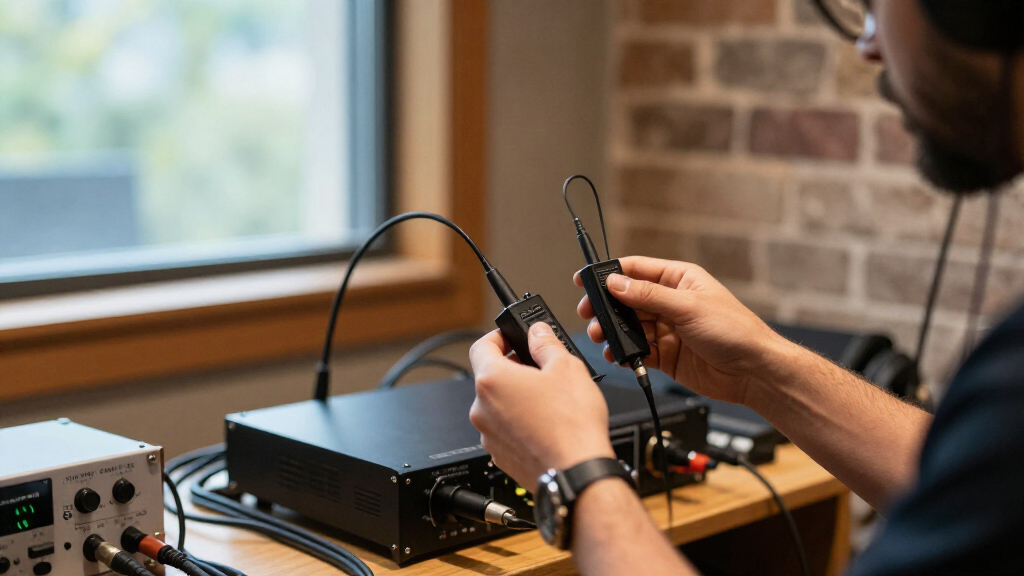

The best wireless microphone system for most buyers is the Shure BLX24/PG58, which pairs trusted brand reliability with simple setup and consistently clean vocal reproduction. If you need multiple mics for a venue, church, or school, the Phenyx Pro PTU-7000-4H offers four auto-scanning channels at a price that undercuts pro brands by hundreds. For beginners and casual home or party use, the TONOR all-in-one kit bundles handheld, headset, and lavalier mics for very little money. The main tradeoffs in this category come down to signal reliability versus price, UHF versus 2.4GHz, and whether you need one mic or four. Read on for the full breakdown of all 14 systems.

Get audio and creator gear delivered free with Prime
- Fast, free delivery on millions of items
- Prime Video, Amazon Music and more included
- Member-only deals all year
Complete the kit


Key Takeaways
- Shure‘s BLX24/PG58 earns the top spot on brand-backed reliability and sound consistency, even though it costs several times more than budget UHF kits that offer more hardware on paper.
- Phenyx Pro dominates the mid-range: three of its systems (PTU-7000-4H, PTU-5000-4H, PTU-71 series) made the list because auto-scan frequency selection solves the #1 wireless complaint — interference — at prices under $300.
- 2.4GHz systems like the JOYO XLR and the 500ft long-range set trade raw channel capacity for convenience and battery life, making them better for solo presenters than multi-mic productions.
- The biggest quality gap in this roundup isn’t audio fidelity — it’s dropout behavior: budget kits like the Melonare and Pyle work fine in open rooms but struggle through walls and crowded RF environments.
- Buying a case bundled with your system (the JBL Winguard package) often costs barely more than the standalone unit, making it one of the few genuinely worthwhile bundle upsells in this category.


| wireless microphone system | Channels | Range |
|---|---|---|
| TONOR Wireless Microphone Syst | — | 200 ft / 60 m |
| Phenyx Pro 4-Channel UHF Fixed | 4 | — |
| Shure BLX24/PG58 Wireless Voca | 1 | 300 ft (100 m) |
| Phenyx Pro Dual UHF Tunable Fr | 2 (expandable to 3 systems / 6 mics) | — |
| Phenyx Pro 4 Channel UHF Auto | 4 | Up to 328 ft (100 m) |
| Professional Wireless Micropho | — | 500 ft |
| TONOR Wireless Microphone Syst | — | 295 ft (90 m) |
| JOYO 2.4GHz Wireless XLR Micro | 4 | 100 ft |
| Phenyx Pro Dual UHF Auto Scan | — | — |
| Pyle 4 Channel UHF Wireless Mi | 4 | 300 ft |
| Melonare 4×10 UHF Wireless Mic | 4 | 200 ft |
| JBL Wireless Two Microphone Sy | 2 | — |
| JBL Wireless Two Microphone Sy | 2 | — |
More Details on Our Top Picks
TONOR Wireless Microphone System with Handheld, Headset, and Lavalier Mics
Most budget wireless systems lock you into a single microphone style, but this TONOR set hands you three mic formats for one price — a handheld for karaoke, a headset for fitness instructors, and a lavalier for presenters. That flexibility is rare at this tier, and the automatic pairing means you plug in the receiver and go, with no frequency scanning to learn. The 200ft range covers a school gym or backyard event comfortably, though it trails the 328ft reach of the Phenyx Pro PTU-7000-4H if you’re working larger venues. The tradeoff for the low price shows up in the details: a 60 dB signal-to-noise ratio is far noisier than the Phenyx Pro PTU-5000-4H’s 105 dB, and batteries aren’t in the box. For casual users, though, that’s a fair exchange.
Pros:- Three mic formats (handheld, headset, lavalier) in one affordable package
- Automatic pairing makes setup genuinely beginner-friendly
- 200ft range is generous for the price
- Support for many simultaneous channels suits group events
Cons:- 60 dB signal-to-noise ratio is noticeably noisier than pricier rivals
- Batteries not included, and instructions are sparse
Best for: Beginners, small venues, and multi-purpose households who want handheld, headset, and lavalier options without a learning curve
Not ideal for: Anyone recording or performing professionally — the noise floor and 60 dB SNR will be audible in quiet passages
- Range:200 ft / 60 m
- Number of Channels:20
- Polar Pattern:Unidirectional
- Form Factor:Handheld, Headset, Lavalier
- Power Source:Battery Powered
- Signal-to-Noise Ratio:60 dB
- Connector Type:Aux (3.5mm)
- Enclosure Material:Metal, Plastic
Our verdict“Buy this if you want maximum mic-format variety and zero-fuss setup for casual events; skip it if audio cleanliness matters.”
Phenyx Pro 4-Channel UHF Fixed Frequency Wireless Microphone System PTU-5000-4H
When four people need to be mic’d at once — a panel discussion, a church service, karaoke night — the price of name-brand gear climbs fast. The PTU-5000-4H solves that with four handhelds and a rackmountable receiver at a fraction of what four Shure BLX24/PG58 systems would cost. The 105 dB signal-to-noise ratio is the standout spec here, beating both the TONOR system and Phenyx’s own PTU-7000-4H, which translates to clean, quiet audio during soft speech or ballads. The compromise is that the frequencies are fixed: unlike the tunable PTU-52-2H with its 30 frequency groups, you can’t dodge interference in crowded RF environments. It also needs an external amp or mixer — there’s no aux output to a soundbar — and eight AA batteries is a real ongoing cost.
Pros:- Four channels at a price well below name-brand multi-mic setups
- 105 dB signal-to-noise ratio delivers noticeably cleaner audio than budget rivals
- All-metal rackmount build survives regular gig transport
- Up to 8 hours of battery life per charge of batteries
Cons:- Fixed frequencies limit flexibility in crowded spectrum environments
- Requires an external amplifier or powered speaker — no direct aux output
- Eight AA batteries needed for the handhelds
Best for: Budget-conscious churches, schools, and event hosts who need four reliable mics through a PA or mixer
Not ideal for: Mobile DJs or presenters in RF-dense urban venues — fixed frequencies can’t be retuned around interference
- Channels:4
- Frequency Range:541.9 – 568.65 MHz (UHF)
- Signal-to-Noise Ratio:105 dB
- Outputs:XLR and 6.35 mm
- Battery Life:Up to 8 hours (8 AA batteries)
- Polar Pattern:Unidirectional (cardioid)
- Enclosure Material:Metal
Our verdict“The smartest way to get four clean-sounding mics on a tight budget, provided you have a PA system and a predictable RF environment.”
Shure BLX24/PG58 Wireless Vocal Microphone System – H9 Band
This is the pick where brand pedigree earns its price. Shure’s QuickScan setup finds a clear frequency in seconds, and the 14-hour battery life on two AAs comfortably outlasts the Phenyx Pro PTU-52-2H’s shorter runtime, meaning a singer can get through a full weekend of gigs without swapping batteries. The PG58 capsule’s cardioid pattern is tuned specifically for vocals, so it rejects stage wash better than the general-purpose handhelds in the TONOR bundle. Compared with everything else here, the tradeoff is capacity and cost: you get one microphone, not four, for close to what a full Phenyx Pro PTU-5000-4H quad system costs. Buyers also need to verify that the H9 band (512–542 MHz) is legal for wireless mic use in their region — Shure publishes a compatibility chart by country for exactly this reason.
Pros:- 14-hour transmitter battery life leads this entire lineup
- QuickScan frequency setup takes seconds and avoids interference automatically
- PG58 cardioid capsule is purpose-built for vocal clarity and feedback rejection
- 300ft reliable range from a trusted pro-audio brand
Cons:- Single-channel package — one mic only for a multi-mic price
- H9 band requires regional spectrum compliance verification before purchase
Best for: Vocalists, gigging musicians, and speakers who want one dependable, great-sounding wireless channel they never have to think about
Not ideal for: Buyers needing multiple simultaneous mics or those in regions where the H9 band isn’t licensed for wireless mics
- Frequency Band:H9 (512–542 MHz)
- Range:300 ft (100 m)
- Transmitter Battery Life:14 hours (2 AA batteries, included)
- Polar Pattern:Cardioid dynamic
- Channels:1
- Includes:Receiver, handheld transmitter with PG58 mic, clip, power supply
Our verdict“If you need one wireless vocal mic that simply works night after night, this is the one to buy — just confirm the H9 band is legal where you perform.”
Phenyx Pro Dual UHF Tunable Frequency Wireless Microphone System PTU-52-2H
The PTU-52-2H fixes the single biggest weakness of its sibling, the fixed-frequency PTU-5000-4H: with 30 tunable frequency groups, you can shift channels when the RF spectrum gets crowded, and up to three units can run side by side without crosstalk. For two-mic setups — a duet, an interviewer and guest, a pastor and worship leader — this hits a sweet spot between the single-channel Shure BLX24/PG58 and the four-channel Phenyx systems. Sound quality sits in the middle of the pack with a 98 dB signal-to-noise ratio, clean enough for live use but a step below the PTU-5000-4H’s 105 dB figure. The 500–590 MHz band is a potential vulnerability in some regions as spectrum gets reallocated, and at 2.5 pounds with a half-rack chassis, this is gear that lives in a bag, not a pocket.
Pros:- 30 tunable frequency groups let you dodge interference mid-event
- Up to three systems can run simultaneously for six total mics
- Both XLR and 6.35 mm outputs integrate with mixers or powered speakers
- Metal construction holds up to regular transport
Cons:- Runs on 4 AA batteries that need regular replacement
- 500 MHz band faces growing spectrum crowding in some areas
- Bulky receiver reduces portability compared with compact options
Best for: Duos, small bands, and event hosts who need two mics and the ability to retune around interference
Not ideal for: Traveling presenters who want pocketable gear, or buyers needing more than two mics
- Channels:2 (expandable to 3 systems / 6 mics)
- Frequency Range:500 – 590 MHz UHF
- Tunable Frequencies:30 groups / 60 channels
- Signal-to-Noise Ratio:98 dB
- Outputs:XLR and 6.35 mm
- Power:4 AA batteries
- Weight:2.5 lbs
Our verdict“The best two-mic value when you need the freedom to retune — a practical middle ground between single-channel and quad systems.”
Phenyx Pro 4 Channel UHF Auto Scan Wireless Microphone System PTU-7000-4H
This is Phenyx Pro’s flagship quad system, and the difference from the PTU-5000-4H is automation: auto scan finds the cleanest available frequencies the way Shure’s QuickScan does, so you get the PTU-52-2H’s interference-fighting flexibility without manually stepping through 30 frequency groups. The 328ft range is the longest in this batch — a meaningful advantage over the TONOR’s 200ft for large halls and outdoor gigs — and handy features like battery indicator lights and a lock function prevent a mid-performance dead-mic surprise. The costs are weight and complexity: at 4.08 kg with a sizable rack chassis and a multi-step setup, this is overkill for a living-room karaoke night, where the TONOR bundle makes far more sense. Eight AA batteries are mercifully included, but plan on buying replacements.
Pros:- Auto scan finds clear frequencies automatically — no manual channel hunting
- 328ft range is the longest in this lineup
- Four handhelds plus battery indicators and lock function for pro reliability
- Batteries and full accessory set included in the box
Cons:- Setup complexity can frustrate beginners
- Heavy at 4.08 kg — built for racks, not backpacks
- Requires 8 AA batteries across the four transmitters
Best for: Working DJs, venues, and event production teams who need four mics, long range, and hands-off frequency management
Not ideal for: First-time users and casual home karaoke — the setup process and rack-sized receiver are more than beginners need
- Channels:4
- Frequency Range:530 – 580 MHz UHF
- Range:Up to 328 ft (100 m)
- Signal-to-Noise Ratio:98 dB
- Outputs:XLR and 6.35 mm
- Power:8 AA batteries (included)
- Weight:4.08 kg
- Dimensions:22.6 x 14.8 x 3 inches
Our verdict“The most complete four-mic system here for professionals who need range and self-managing frequencies — casual users should buy something simpler.”
Professional Wireless Microphone System, 500ft Long Range, 2.4G Cordless Microphone Set
Range is the headline here, and it’s earned: 500 feet of 2.4G transmission comfortably outpaces the TONOR UHF kit’s 295 feet and the Phenyx Pro PTU-71-1H1B’s 328 feet, which matters if your preacher roams the sanctuary or your emcee works a sprawling wedding hall. The 40-hour playtime is another standout — nearly double the PTU-71-2H’s 16 hours — so multi-day events don’t hinge on fresh batteries. Setup is genuinely plug-and-play, with automatic pairing that skips the frequency scanning the Phenyx systems demand. The tradeoff is inherent to 2.4G: it shares spectrum with Wi-Fi, so in a hotel ballroom saturated with networks, the UHF-based Phenyx models may hold a cleaner signal. It also needs compatible output connections, so check your mixer or amp inputs before committing.
Pros:- Longest range in the lineup at 500 feet
- 40-hour battery life outlasts multi-day events
- Automatic pairing with no frequency setup required
- Works with PA systems, amplifiers, mixers, and karaoke machines
Cons:- 2.4G band is prone to interference in crowded wireless environments
- Requires compatible output connections on your audio gear
Best for: Wedding DJs, church techs, and event hosts who need to cover big rooms without worrying about battery swaps
Not ideal for: Operators in Wi-Fi-dense venues like hotels and convention centers, where 2.4G interference is a real risk
- Range:500 ft
- Wireless Technology:2.4G
- Playtime:40 hours
- Microphone Type:Dynamic
- Compatibility:PA systems, amplifiers, mixers, karaoke machines
- Setup:Plug-and-play with automatic pairing
Our verdict“If you prioritize raw range and runtime over everything else, this is the system built for big, open venues.”
TONOR Wireless Microphone System with Headset and Lavalier Mics, 295 ft UHF Range
This TONOR kit wins on a simple proposition: you get a headset mic, lavalier, and bodypack transmitters — the full hands-free package — at a price where competitors often include just one handheld. The cardioid capsules deliver noticeably cleaner speech pickup than the generic 2.4G set above, and UHF transmission sidesteps the Wi-Fi congestion issues that plague 2.4G systems in busy venues. Compared with the Phenyx Pro PTU-71-1H1B, you give up auto scan and the handheld mic, and the 295-foot range trails Phenyx’s 328 feet, but for fitness instructors, presenters, and auctioneers that gap rarely matters. Budget for AA batteries, since none ship in the box, and expect occasional manual frequency tweaks if you run alongside other UHF gear.
Pros:- Includes both headset and lavalier mics plus bodypacks
- UHF band resists Wi-Fi interference better than 2.4G alternatives
- All-metal receiver built for long-term durability
- Auto-pairing with straightforward controls
Cons:- Batteries not included, adding to upfront cost
- Manual frequency setup needed when operating near other UHF systems
Best for: Fitness instructors, speakers, and performers who need headset and lavalier options without a premium price
Not ideal for: Buyers wanting a handheld vocal mic in the box or automated interference avoidance — look at the Phenyx PTU-71-1H1B instead
- Range:295 ft (90 m)
- Frequency:UHF
- Included Mics:Headset, lavalier with bodypacks
- Receiver:All-metal construction
- Power:2 AA batteries (not included)
- Capsule:Professional cardioid
Our verdict“The most affordable path to a complete hands-free UHF setup, provided you can live without a handheld mic and auto scan.”
JOYO 2.4GHz Wireless XLR Microphone System MW-2
The MW-2 takes a different approach from every dedicated system here: it’s a plug-on transmitter and receiver that wirelessly enables the dynamic mic you already own. If you like the feel and sound of your SM58-style handheld, this keeps it — something the TONOR or Phenyx kits, which lock you into their own capsules, can’t offer. Audio quality is the strongest in this batch at 24-bit/48kHz, and the rechargeable battery eliminates the AA treadmill the Phenyx models impose. But the range is the shortest at 100 feet, a fifth of what the 2.4G long-range system delivers, and it’s dynamic-mic only — condenser users report noise issues. Muting before power cycles is mandatory to avoid loud pops, and Wi-Fi-heavy rooms can still cause dropouts.
Pros:- Wireless-converts your existing dynamic mic instead of replacing it
- Highest audio resolution in the lineup at 24-bit/48kHz
- Rechargeable lithium-ion batteries with no ongoing AA costs
- Auto-pairing works with mixers, interfaces, and DSLR cameras
Cons:- 100-foot range is the shortest here by a wide margin
- Prone to pops on power cycles and interference from Wi-Fi or LED lighting
Best for: Performers and streamers who already own a favorite dynamic mic and want to cut the cable
Not ideal for: Large-venue operators needing 200+ feet of range, or anyone running condenser microphones
- Frequency:2.4GHz
- Channels:4
- Range:100 ft
- Audio Quality:24-bit/48kHz
- Battery Life:6–8 hours (rechargeable lithium-ion)
- Compatibility:Dynamic mics; PA systems, mixers, interfaces, DSLRs
Our verdict“A smart, great-sounding cable replacement for small stages and studios — not a whole-venue solution.”
Phenyx Pro Dual UHF Auto Scan Handheld Wireless Microphone System PTU-71-2H
Where the PTU-71-1H1B spreads itself across four mic formats, this sibling doubles down on one job: two handheld mics, done well. That focus buys you refined EQ tuning that flatters vocals, a sturdier metal build, and a 16-hour battery life that comfortably outlasts the JOYO MW-2’s 6–8 hours. Auto scan across 200 frequencies means two singers can perform simultaneously without stepping on each other or the house Wi-Fi — a real edge over 2.4G systems at karaoke nights where phones saturate the airwaves. Mute and lock functions prevent accidental mid-song fumbles, which karaoke hosts will appreciate. The honest drawbacks: four AA batteries per charge cycle add cost over time, and like its sibling, the menu-driven setup demands more patience than truly plug-and-play options.
Pros:- Two simultaneously usable handhelds with clean auto-scanned channels
- Vocal-tuned EQ and durable metal construction
- 16-hour battery life with included AAs and full accessory set
- Mute and lock functions prevent accidental on-stage changes
Cons:- Ongoing cost of 4 AA batteries per power cycle
- Menu-based setup and UHF tuning can frustrate beginners
Best for: Karaoke hosts, duos, and MCs who need two quality handheld mics running at once
Not ideal for: Solo presenters or hands-free users — the lavalier/headset crowd should pick the PTU-71-1H1B or TONOR kit
- Frequency Range Ch 1:536.57 – 561.32 MHz
- Frequency Range Ch 2:562.37 – 587.12 MHz
- Selectable Frequencies:200 (100 per channel)
- Maximum Range:328 ft
- Battery Life:16 hours (4 x AA included)
- Construction:Metal handhelds and receiver
Our verdict“The pick when two vocalists share one stage and you’d rather buy quality handhelds than mic formats you won’t use.”
Pyle 4 Channel UHF Wireless Microphone System with 2 Handheld Mics, 2 Lavalier & 2 Headsets, 300ft Range, Rack Mount Receiver
Most systems in this roundup force you to pick a microphone style and commit — the Pyle 4-Channel hands you six transmitters across three formats for less than many dual-mic competitors cost. Compared with the Phenyx Pro PTU-5000-4H, which serves four handhelds well, this kit covers mixed formats: a presenter can wear the lavalier or headset while two singers trade handhelds. The 300 ft range and 200 selectable frequencies put it ahead of the JBL options on paper, though the 519-568 MHz band gets crowded at large events, and battery life tops out around 4 hours — shorter than the Melonare’s runtime claims. If one system needs to serve karaoke night, a conference, and a church service, this is the most flexible package here.
Pros:- Six included microphones across three formats for true format flexibility
- 300 ft range with 200 selectable frequencies
- Rack-mount metal receiver with LCD display
- Universal XLR and 1/4-inch outputs fit most mixers and amps
Cons:- Around 4 hours of battery life is short for extended events
- 519-568 MHz UHF band can suffer interference in RF-crowded venues
- All microphones run on replaceable batteries
Best for: Schools, churches, and event venues that need handheld, lavalier, and headset mics from a single rack-mountable system
Not ideal for: Buyers who need all-day runtime — 4-hour battery life and disposable batteries make long conferences a hassle
- Channels:4
- Range:300 ft
- Frequency Range:519-568 MHz
- Selectable Frequencies:200
- Battery Life:Up to 4 hours
- Included Microphones:2 handheld, 2 lavalier, 2 headset
- Receiver Display:LCD
Our verdict“The most versatile package in this lineup for organizations that need every microphone format without buying multiple systems.”
Melonare 4×10 UHF Wireless Microphone System, 200FT Stable Signal
Where the Pyle 4-Channel spreads its budget across six microphones, the Melonare concentrates it on four handhelds with genuinely strong transmission: 24-bit/48kHz audio and frequency-hopping that keeps the 200 ft signal clean even when neighbors are running their own systems. Support for up to 8 simultaneous sets makes it scale beyond what the dual-channel JBL units can touch, which matters for large weddings or multi-host karaoke nights. The tradeoff is power: eight AA batteries that drain fast and no rechargeable option, so frequent hosts will spend real money on cells. Sound quality sits above typical budget karaoke gear, and the compact receiver travels easily — just don’t expect rack-mount build like the Phenyx Pro systems offer.
Pros:- 24-bit/48kHz audio quality above its price class
- Frequency hopping resists interference at 200 ft
- Supports up to 8 simultaneous systems for large events
- Compact, portable receiver that sets up in minutes
Cons:- Requires 8 AA batteries with frequent replacement costs
- Fixed 530-580 MHz range may need retuning in crowded RF environments
- No rechargeable battery option at all
Best for: Karaoke hosts and party DJs who want four solid handheld mics and clean sound on a tight budget
Not ideal for: Environmental-minded or frequent users — 8 AA batteries with no rechargeable option gets costly and wasteful
- Channels:4
- Range:200 ft
- Frequency Range:530-580 MHz
- Sampling Rate:24-bit/48kHz
- Simultaneous Sets Supported:Up to 8
- Power Source:8 AA batteries
- Outputs:6.35 mm jack, XLR
Our verdict“A smart budget pick for group karaoke and events where four handhelds and clean audio matter more than battery economy.”
JBL Wireless Two Microphone System with Dual-Channel Receiver, Black and Winguard Protective Travel Case
This bundle is essentially the JBL dual-channel system with one meaningful addition: a Winguard protective travel case that makes it the version to buy if your rig moves between houses, yards, and parties. Sound-wise it’s identical to the standalone JBL — JBL Original Pro Sound with clean vocal clarity and plug-and-play pairing to the PartyBox series. Compared with the Melonare, you give up two channels and half the range territory, but you gain simplicity: no frequency scanning, no mixer required. The catch is real, though — it’s built around JBL’s ecosystem, so owners of generic PA speakers should look at the Phenyx Pro PTU-52-2H instead, which offers standard XLR output and tunable frequencies for similar money.
Pros:- Includes a hard travel case that protects the full kit in transit
- Plug-and-play setup with no frequency configuration
- Two mics run simultaneously on the dual-channel receiver
- Clean JBL vocal tuning that flatters karaoke singing
Cons:- Only 6 hours of battery life per charge
- Microphones still need replaceable AA batteries
- Ecosystem-locked design limits use with non-JBL speakers
Best for: JBL PartyBox owners who take their speaker to parties and want two mics plus a case for transport
Not ideal for: Anyone with non-JBL PA gear — the receiver’s compatibility is centered on the PartyBox ecosystem
- Channels:2
- Battery Life:Up to 6 hours
- Battery Type:AA (replaceable)
- Connector:USB
- Compatibility:JBL PARTYBOX series and others
- Included Case:Winguard protective travel case
Our verdict“The right buy only if you already own a JBL PartyBox and want a protected, grab-and-go karaoke kit.”
JBL Wireless Two Microphone System with Dual-Channel Receiver, Black
The standalone JBL Wireless Two-Microphone System is the easiest product in this roundup to set up: pair it, and you’re singing. Its rechargeable dual-channel receiver is a genuine advantage over the battery-hungry Melonare, cutting one ongoing cost entirely. Compared with its case-bundled sibling, this version makes sense when the system lives at home rather than traveling. Against the Shure BLX24/PG58, the JBL can’t match broadcast-grade RF performance — the 60 dB signal-to-noise ratio and plastic build sit firmly in consumer territory — but it also costs far less and skips frequency setup altogether. That 65 Hz-15 kHz response is tailored for vocals, so spoken-word presenters may find the low end thin. For casual karaoke at home, the simplicity wins; for gigging musicians, it doesn’t.
Pros:- Rechargeable receiver eliminates one set of battery purchases
- True plug-and-play pairing with no frequency scanning
- JBL Original Pro Sound tuning delivers clear vocals
- Battery indicator lights take the guesswork out of runtime
Cons:- 6-hour maximum runtime limits long events
- 60 dB signal-to-noise ratio trails pro-level systems
- Primarily designed around JBL PartyBox speakers
Best for: Casual home karaoke singers with a JBL PartyBox who value zero-setup simplicity over pro features
Not ideal for: Working performers — the 60 dB SNR, 6-hour cap, and JBL-centric design fall short of the Shure BLX24 or Phenyx Pro options
- Channels:2
- Frequency Response:65 Hz – 15 kHz
- Signal-to-Noise Ratio:60 dB
- Battery Life:Up to 6 hours
- Polar Pattern:Unidirectional
- Connector:USB, wireless
- Receiver Battery:1 Li-Po rechargeable
Our verdict“A fuss-free, budget-friendly karaoke pair for JBL speaker owners — just don’t expect professional-grade RF headroom.”
How We Picked
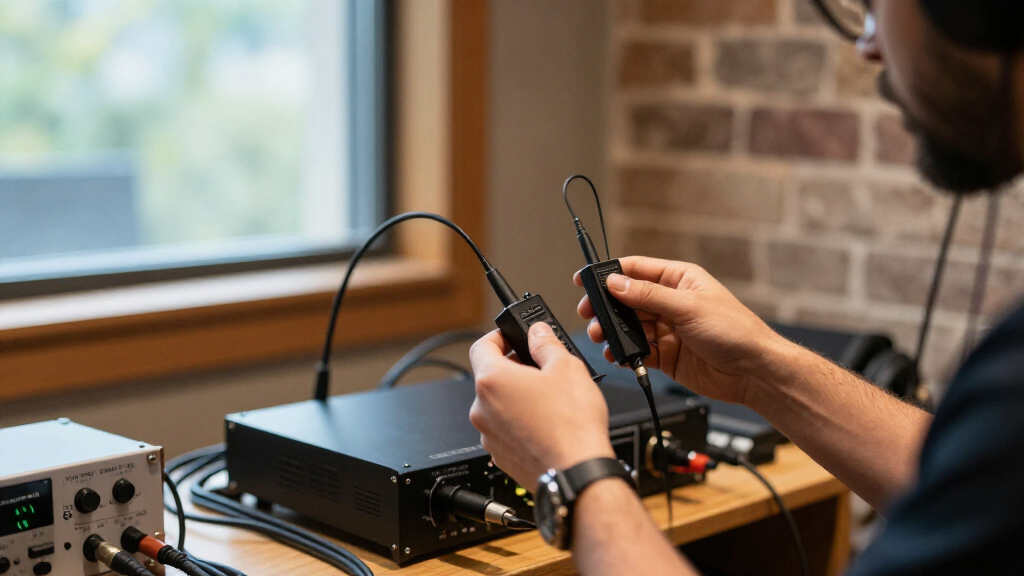
I ranked these systems on five buyer-relevant criteria: signal stability, setup ease, sound quality, expandability, and value per microphone. Signal stability carried the most weight because dropouts ruin a performance faster than mediocre tone does — auto-scanning receivers and name-brand RF engineering ranked above raw range claims. Range numbers on spec sheets are line-of-sight figures, so I treated 200ft and 500ft claims skeptically and prioritized user-reported consistency instead.
Setup ease separated the plug-and-play options (TONOR, JBL) from rack-mounted systems that reward buyers who understand gain staging and frequency coordination. Value was calculated per microphone and per feature: a $130 dual system with auto-scan can beat a $400 fixed-frequency system if you regularly perform in RF-crowded spaces. Finally, I weighted versatility — systems offering headset, lavalier, and handheld options scored higher for buyers hosting varied events, while single-purpose systems had to excel at their one job to rank at all.
Factors to Consider When Choosing Wireless Microphone Systems
Before picking a specific system, it helps to understand the bigger decisions that shape every wireless microphone purchase — getting these wrong costs more than choosing the wrong brand.UHF vs. 2.4GHz: The Frequency Decision Nobody Explains
UHF systems operate on dedicated broadcast bands and generally penetrate walls and travel farther, which is why most of my higher-ranked multi-mic picks use it. 2.4GHz shares spectrum with Wi-Fi, Bluetooth, and microwaves — convenient because it often works worldwide without licensing, but risky in hotels, conference centers, and homes packed with wireless devices. If you perform in the same venue repeatedly, scan the room first: a UHF system with auto-scan (like the Phenyx PTU-71 line) will find a clean channel; a fixed-frequency budget system won’t. Solo presenters and content creators usually do fine on 2.4GHz, while anyone coordinating two or more mics should stick with UHF. The common mistake is assuming a bigger range number means a better system — range tells you nothing about how the system behaves when interference appears.
How Many Channels You Actually Need
Channel count determines both price and complexity, and buyers routinely overbuy. A dual-channel system covers speeches, duets, karaoke, and interviews — the majority of real-world use. Four-channel rack systems make sense for venues, churches, and schools where multiple speakers or performers share a stage, but they demand more RF discipline: channels must be coordinated so they don’t intermodulate with each other. Also check whether additional transmitters can be added later; some budget four-channel systems max out permanently at the mics included in the box. If you think you might grow, a system with an expandable receiver costs more now and less later. Buying four channels for a two-person podcast is money spent on hardware that never leaves the rack.
Mic Type Matters More Than the Receiver
Handheld mics suit vocalists and Q&A sessions where the mic gets passed around; lavaliers disappear on camera and free a presenter’s hands; headsets win for fitness instructors and stage performers who move constantly. Many buyers fixate on the receiver’s specs while ignoring which mic formats are included, then discover their fitness-class system came with two handhelds. Bundled kits like the TONOR triple-mic package and the Pyle six-mic setup exist precisely because format flexibility matters. Consider also that condenser capsules in cheap handhelds pick up more room noise — good for studio nuance, bad for loud venues. Match the mic to the body and the room, not the spec sheet.
Battery Systems and Hidden Running Costs
Disposable AA batteries are the industry standard for a reason — you can swap them mid-event in seconds — but a weekly performer will burn through dozens per year. Rechargeable built-in batteries (common in 2.4GHz systems like the JOYO) cut running costs to zero but create a failure mode: a dead internal battery mid-show ends the night unless you carry a spare transmitter. Check charging time too, since some budget rechargeable systems need three hours to refill for six hours of use. Rack systems with battery meters on the receiver front panel let you monitor drain without touching the mics — a small feature that prevents big surprises. Budget for batteries as part of the purchase, not an afterthought.
Build Quality and the Dropout Tell
Plastic receivers and thin battery doors are where budget systems cut corners, and they fail in predictable ways: cracked clips, loose XLR jacks, antennas that snap off in a gig bag. Metal-body handhelds and rack-mountable steel receivers (Phenyx Pro, Shure) survive touring; lightweight plastic units suit stationary home and office use. The subtler quality signal is dropout behavior — cheap systems hiss and cut before they fail outright, so early audio artifacts are a warning, not a quirk. Warranty length is another honest signal: brands offering two-plus years (Shure, JBL) are betting their hardware survives; 90-day warranties suggest the manufacturer isn’t. Spend according to how often the system travels, not just how it sounds in the store.
When Paying More Actually Buys Something
Stepping up in this category buys three real things: RF engineering, capsule quality, and support. Name-brand systems resist interference because of decades of antenna and filtering design — you can’t see it, but you hear it as an absence of dropouts. Better capsules mean feedback rejection and consistent tone across loud stages, which matters far more for live vocals than for spoken presentations. Support means replacement parts, firmware fixes, and a human answering the phone. What paying more does NOT reliably buy is better specs on paper — budget systems often quote longer ranges and bigger battery numbers than premium ones. If your use case is a quiet room with one speaker, a $70 system genuinely does the job; if money rides on the performance, buy reliability instead.
Frequently Asked Questions
Do cheap wireless microphone systems actually work, or will I regret buying one?
For light, stationary use — home karaoke, small meetings, classroom presentations — budget systems like the TONOR and Melonare work acceptably and represent real value. The regret usually arrives when expectations change: dropouts through walls, plastic battery doors that crack, and no meaningful warranty support if a transmitter fails before an event. What cheap systems don’t handle well is RF-crowded environments (hotels, downtown venues, anywhere dense with Wi-Fi) or physical abuse from frequent transport. My honest rule: if a failed mic would merely annoy you, buy cheap; if a failed mic would embarrass you in front of an audience, spend for auto-scan and metal construction. The Phenyx Pro line sits in the sweet spot where the reliability jump is worth the price jump.
Is 2.4GHz or UHF better for my situation?
UHF is the safer default if you perform live, run multiple microphones, or work in buildings with thick walls, because its frequencies penetrate obstacles and dedicated bands face less competition. 2.4GHz shines for solo users, plug-on convenience, and worldwide travel since it needs no frequency licensing anywhere. Its weakness is congestion — in a conference hall with hundreds of phones and Wi-Fi hotspots, a 2.4GHz system may stutter even at close range. The JOYO plug-on transmitter shows 2.4GHz at its best: it turns your existing dynamic mic wireless with no venue coordination at all. If you’re coordinating two or more mics, or amplifying vocals on a loud stage, choose UHF without hesitation.
Can I add more microphones to a system later?
It depends entirely on the receiver, and this is where cheap systems trap buyers. Fixed-frequency receivers like the Phenyx PTU-5000-4H are locked to their bundled mic count — you cannot buy a fifth transmitter and expect it to work. Auto-scan systems with available bandwidth (the PTU-71 line and higher-end Phenyx models) sometimes accept additional matched transmitters, but you must confirm compatibility before purchasing, because frequencies must align exactly. Rack receivers with antenna distribution are designed for growth; plastic desktop receivers generally aren’t. My practical advice: buy the channel count you’ll realistically need within two years, not the maximum you can imagine. Underbuying forces an awkward second purchase; overbuying wastes money on channels that stay silent.
Why does my wireless mic cut out, and can I fix it?
Dropouts almost always trace to one of three causes: interference, weak batteries, or blocked line of sight. Interference is the most common — another device (Wi-Fi router, TV transmitter, even a colleague’s wireless system) is squatting on your frequency, and the fix is switching channels via auto-scan or manual frequency selection. Weak batteries cause transmitters to drift and drop well before they die completely, so replace them at the first sign of inconsistency rather than pushing them. Keep the receiver elevated and in sight of the mics; a receiver buried behind a rack or under a table loses half its effective range. If dropouts persist on fresh batteries and clean frequencies, the antenna placement or the venue itself is the problem — repositioning the receiver even a few feet often resolves it.
Do I need a rack-mounted receiver?
Rack mounting matters if the system lives permanently in a venue, travels in a flight rack, or shares space with other audio gear — it protects the receiver, centralizes cabling, and usually signals a more robust build overall. For mobile users who set up on a table, a compact desktop receiver is lighter, cheaper, and does the same electronic job. The Phenyx PTU-5000-4H and Pyle systems include rack hardware because they target installed use; the TONOR and JBL systems skip it because their buyers carry them in a bag. Don’t pay rack money for rack features you’ll never mount. One middle path worth knowing: rack ears and mounting kits can often be added to steel receivers later, but never to plastic ones.
Conclusion
For the best overall balance of sound, reliability, and support, the Shure BLX24/PG58 is the safest single-mic purchase in this lineup — you pay for engineering that just works. The best value picks split by use case: the TONOR triple-mic kit for beginners and casual hosts, and the Phenyx Pro PTU-7000-4H for anyone who needs four auto-scanning channels without pro-audio pricing. For best premium, the JBL dual system with the Winguard case delivers polished sound and genuine portability for working presenters and performers. Beginners should start with the TONOR or the Melonare — cheap enough to learn on, capable enough to keep. For specific needs: fitness instructors and talking-head presenters get the most from the TONOR headset/lavalier set, anyone wanting to make an existing dynamic mic wireless should grab the JOYO plug-on system, and venues needing fixed multi-mic installs are well served by the Phenyx PTU-5000-4H. Whatever you choose, buy the reliability your audience will notice — not the spec numbers they won’t.
Fall Picks
fall essentials
As an affiliate, we earn on qualifying purchases.