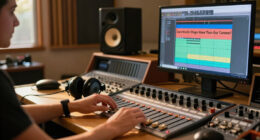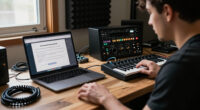
The best vocal effects processors for singers balance sound-shaping options with controls you can manage while performing. I’d put the BOSS VE-22 first for its broad performance-focused effects, while the BOSS VE-2 is a simpler harmony-centered choice and the HeadRush VX5 stands out for singers who want pitch correction. The main tradeoff is between straightforward, hands-on operation and deeper effects flexibility, along with the space and setup each unit requires. Your mic, instruments, monitoring, and performance style can matter as much as the effect list. Read on for all 14 picks and guidance on choosing the right processor for your setup.

Get audio and creator gear delivered free with Prime
- Fast, free delivery on millions of items
- Prime Video, Amazon Music and more included
- Member-only deals all year
Complete the kit


Key Takeaways
- The BOSS VE-22 is the most balanced performance pick: it offers a broader vocal-effects approach than the harmony-led VE-2 without requiring a rack-style setup.
- Harmony is not the same as pitch correction: the VE-2 and FLAMMA FV04 focus on harmony effects, while the HeadRush VX5 and FLAMMA FV01 are better matches for singers seeking pitch correction.
- Control style separates the shortlist: a mic-stand-mounted TC Helicon Perform-V keeps controls close, while floor pedals suit singers who prefer foot operation.
- More features can mean more setup: models such as the BOSS VE-500 and MOOER VE200 suit singers who want deeper processing, but simple needs may be better served by a smaller unit.
- Choose around your performance format: the BOSS VE-8 is tailored to acoustic singer-instrumentalists, while the Zoom V3 calls out streaming as well as live use.
| HeadRush VX5 Vocal Effects Pedal with AutoTune |  | Best for Adjustable Auto-Tune | Effects: Compression, reverb, delay, chorus, lo-fi | Pitch correction: Antares AutoTune with Retune Speed and Humanize controls | Presets: 99 factory presets; stores up to 250 | VIEW LATEST PRICE | See Our Full Breakdown |
| Audota AVE-100 Multi-Effect Vocal Processor |  | Best for All-in-One Streaming and Recording Features | Microphone input: 6.35 mm/XLR combo jack | Phantom power: 48 V | Effects: Echo, reverb, harmony, auto-tune, pitch correction | VIEW LATEST PRICE | See Our Full Breakdown |
| BOSS VE-2 Vocal Harmonist Effects Processor |  | Best for Portable, Simple Harmonies | Harmony options: 24 | Harmony control: Automatic harmonies based on connected guitar chords | Effects: Reverb and delay | VIEW LATEST PRICE | See Our Full Breakdown |
| FLAMMA FV04 Vocal Harmony Effects Pedal | 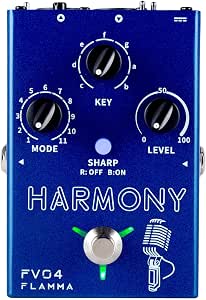 | Best Compact Harmony Pedal | Harmony modes: 11, with major and minor scale shifting | Inputs: Microphone and guitar | Outputs: Separate vocal and guitar channels or mixed signal | VIEW LATEST PRICE | See Our Full Breakdown |
| BOSS VE-8 Acoustic Singer Preamp and Effects Pedal |  | Best for Singing Guitarists and Looping | Processing: Vocal and guitar processing | Audio effects: Distortion, reverb, chorus, radio voice effect | Harmony: Real-time vocal harmonies | VIEW LATEST PRICE | See Our Full Breakdown |
| TC Helicon Perform-V Mic Stand-Mount Vocal Processor |  | Best for Fast, Hands-Free Stage Setup | Audio output dynamic range: >109 dB, 20 Hz to 20 kHz | Frequency response: +0.50/-0 dB, 20 Hz to 20 kHz | Signal format: Analog | VIEW LATEST PRICE | See Our Full Breakdown |
| BOSS VE-22 Vocal Performer Multi-Effects Processor |  | Best All-Rounder for Stage and Streaming | Type: Vocal effects processor | Power source: Four AA batteries | Voltage: 9 V | VIEW LATEST PRICE | See Our Full Breakdown |
| TC Helicon VoiceLive Play Vocal Effects Processor |  | Best for Preset Variety and Sing-Along Practice | Preset library: More than 200 song- and artist-inspired presets | Harmony feature: Automatic key detection | Backing-track connection: AUX input | VIEW LATEST PRICE | See Our Full Breakdown |
| Zoom V3 Vocal Processor for Streaming and Live Performance |  | Best for Direct Streaming Controls | Voice effects: 16 | Harmony: Up to three-part | Channels: 1 | VIEW LATEST PRICE | See Our Full Breakdown |
| Audota AVE-100 Vocal Effects Processor with Harmony, Pitch Correction, Reverb, and Delay |  | Best for Key-Aware Harmony and Looping | Harmony modes: Unison, +3rd, +6th | Inputs: XLR microphone; 6.35 mm instrument/line | Phantom power: 48V | VIEW LATEST PRICE | See Our Full Breakdown |
| MOOER VE200 Vocal Multi Effects Processor with AI StemLab and Touch Screen |  | Best for Mobile Streaming and Backing-Track Creation | Dimensions: 5.87 × 4.56 × 2.21 inches | Weight: 0.41 kg | Battery life: Approximately 5 hours | VIEW LATEST PRICE | See Our Full Breakdown |
| FLAMMA FV01 Vocal Effects Processor and Pitch Correction Pedal |  | Best for Straightforward Vocal-and-Guitar Routing | Model: FV01 | Dimensions: 4.9 × 3.4 × 2.4 inches | Weight: 0.37 kg | VIEW LATEST PRICE | See Our Full Breakdown |
| MOOER MVP1 Autuner Vocal Effects Processor |  | Best for Adjustable Pitch Correction and Classic Effects | Dimensions: 6.02 × 5 × 2.95 inches | Weight: 0.6 kg | Power: 9V DC, corded electric | VIEW LATEST PRICE | See Our Full Breakdown |
| BOSS VE-500 Vocal Performer Multi-Effects Unit |  | Best for Advanced Vocal-and-Guitar Performance | Dimensions: 7.65 × 4.7 × 11.4 inches | Weight: 1.5 pounds | Power: 9V, 100 mA, corded electric | VIEW LATEST PRICE | See Our Full Breakdown |
| vocal effects processors for singer | Weight | Dimensions | Power |
|---|---|---|---|
| HeadRush VX5 Vocal Effects Ped | 1.2 kg | 5.9 × 6.5 × 2.7 inches | Corded electric; 9 V, 1 A |
| Audota AVE-100 Multi-Effect Vo | 0.51 kg | 5.59 × 4.45 × 2.01 inches | 9 V; listed current is 500 A |
| BOSS VE-2 Vocal Harmonist Effe | 16 ounces | 8.9 × 6.6 × 4.55 inches | — |
| FLAMMA FV04 Vocal Harmony Effe | 12.8 ounces | 3.4 × 2.4 × 4.9 inches | 9 V, 500 mA; supply included |
| BOSS VE-8 Acoustic Singer Prea | 1.5 kg | 13.3 × 8.9 × 5.1 inches | Corded electric; 9 V |
| TC Helicon Perform-V Mic Stand | 0.2 kg | 6.69 × 3.62 × 6.57 in | — |
| BOSS VE-22 Vocal Performer Mul | 16 oz | 8.72 × 5.72 × 2.56 in | — |
| TC Helicon VoiceLive Play Voca | 2.09 lb | 11.02 × 3.35 × 6.5 in | — |
| Zoom V3 Vocal Processor for St | 590 g | 5.91 × 7.48 × 1.97 in | — |
| Audota AVE-100 Vocal Effects P | 320 g | — | — |
| MOOER VE200 Vocal Multi Effect | 0.41 kg | 5.87 × 4.56 × 2.21 inches | 9V, 1.5A |
| FLAMMA FV01 Vocal Effects Proc | 0.37 kg | 4.9 × 3.4 × 2.4 inches | 9V, 500 mA, corded electric |
| MOOER MVP1 Autuner Vocal Effec | 0.6 kg | 6.02 × 5 × 2.95 inches | 9V DC, corded electric |
| BOSS VE-500 Vocal Performer Mu | 1.5 pounds | 7.65 × 4.7 × 11.4 inches | 9V, 100 mA, corded electric |
More Details on Our Top Picks
HeadRush VX5 Vocal Effects Pedal with AutoTune
The VX5 is the strongest fit here for singers who want pitch correction as a hands-on part of their live setup. Its Antares AutoTune has dedicated Retune Speed and Humanize controls, so you can shape correction from pronounced to more natural rather than rely on a single preset. Compared with the harmony-focused BOSS VE-2, the VX5 offers a broader effects palette, preset storage, and USB audio and MIDI connectivity; the VE-2 is the more straightforward choice for portable harmony. The VX5 also adds footswitch control and up to 250 stored presets, useful when a set calls for different vocal sounds. Its tradeoff is reliance on corded power, and the listed details do not specify included microphone cables or other accessories. Choose it for flexible pitch shaping, not battery-powered simplicity.
Pros:- Antares AutoTune includes dedicated Retune Speed and Humanize controls.
- Combines compression, reverb, delay, chorus, lo-fi effects, and vocal harmonies.
- Stores up to 250 presets and supports hands-free footswitch control.
- USB audio and MIDI connectivity support recording and control setups.
Cons:- Requires corded electric power, limiting use away from an outlet.
- Included microphone cables and other accessories are not specified.
Best for: Performers who want adjustable AutoTune, multiple vocal effects, and footswitch access to saved sounds during a set.
Not ideal for: Singers who need a battery-powered rig or want a simple harmony pedal with minimal setup; the BOSS VE-2 is a more direct alternative.
- Effects:Compression, reverb, delay, chorus, lo-fi
- Pitch correction:Antares AutoTune with Retune Speed and Humanize controls
- Presets:99 factory presets; stores up to 250
- Connectivity:USB-B, MIDI, 1/4-inch audio, 3.5 mm audio
- Controls:Knobs and footswitches
- Power:Corded electric; 9 V, 1 A
- Dimensions:5.9 × 6.5 × 2.7 inches
- Weight:1.2 kg
Our verdict“Choose the VX5 if adjustable AutoTune and a wide, preset-driven effects setup matter more than battery portability.”
Audota AVE-100 Multi-Effect Vocal Processor
The AVE-100 packs a broad set of singer-focused tools into a compact unit: pitch correction, harmony, echo, reverb, feedback reduction, looping, and OTG recording. That mix makes it more suited to a singer who moves between performance and streaming than the more narrowly harmony-led FLAMMA FV04, which focuses on harmony modes and reverb. Its combo microphone input and 48 V phantom power also accommodate condenser microphones, while the FV04 lists mic and guitar inputs. The AVE-100’s listed controls are buttons, which may feel less immediate than a pedal with a dedicated footswitch when changing sounds mid-song. Its power-current specification is listed as 500 A, an unclear figure, so I would verify the required supply before buying. It is a feature-rich option, but the supplied data leaves that power detail uncertain.
Pros:- Combines pitch correction, harmony, echo, and reverb.
- Includes feedback reduction, looping, and OTG recording.
- Combo microphone input and 48 V phantom power support multiple microphone types.
- Compact body with button-based controls.
Cons:- The listed 500 A current specification is unclear and should be verified.
- Button controls may be less convenient for hands-free changes during a performance.
Best for: Singers who want one compact processor for live vocals, streaming, and OTG recording, including users with condenser microphones.
Not ideal for: Performers who need clearly documented power requirements or prefer dedicated footswitch control for changing effects while singing.
- Microphone input:6.35 mm/XLR combo jack
- Phantom power:48 V
- Effects:Echo, reverb, harmony, auto-tune, pitch correction
- Auto-Tune modes:2
- Harmony modes:3
- Additional features:Feedback reduction, vocal cancellation, looping, OTG recording
- Power:9 V; listed current is 500 A
- Dimensions:5.59 × 4.45 × 2.01 inches
- Weight:0.51 kg
Our verdict“Pick the AVE-100 if streaming and OTG recording are as important as vocal effects, but confirm its power requirements first.”
BOSS VE-2 Vocal Harmonist Effects Processor
The VE-2 makes vocal harmonies its main job, with 24 harmony options and automatic generation from guitar chords when connected. That guitar-aware approach can spare a singer-songwriter from programming harmony parts, while its reverb and delay add basic vocal ambience. Compared with the broader HeadRush VX5, the VE-2 offers fewer kinds of effects and no listed pitch-correction suite; in return, its operation is aimed at singers who want harmonies without music-theory knowledge. Four AA batteries and USB connectivity make it a flexible choice for travel or recording, though battery replacement adds upkeep and the listed dimensions are larger than the FLAMMA FV04’s compact footprint. This is a focused harmonizer, not a general-purpose vocal effects hub.
Pros:- Offers 24 harmony options without requiring music theory knowledge.
- Can generate harmonies automatically from connected guitar chords.
- Runs on four AA batteries for portable use.
- USB connectivity supports integration with recording setups.
Cons:- Four AA batteries may need replacement during regular use.
- Its effects selection is limited to reverb and delay in the supplied specifications.
- Does not provide the broad pitch-correction and effects range listed for the HeadRush VX5.
Best for: Solo singers and guitar-playing songwriters who want automatic harmonies and basic ambience without programming parts.
Not ideal for: Vocalists seeking adjustable AutoTune, a wide variety of effects, or a smaller pedalboard footprint; the HeadRush VX5 provides a broader processing set.
- Harmony options:24
- Harmony control:Automatic harmonies based on connected guitar chords
- Effects:Reverb and delay
- Power source:Four AA batteries
- Connectivity:USB
- Weight:16 ounces
- Dimensions:8.9 × 6.6 × 4.55 inches
- Warranty:2 years
Our verdict“Choose the VE-2 for easy, guitar-aware harmonies on the move rather than a broad collection of vocal effects.”
FLAMMA FV04 Vocal Harmony Effects Pedal
The FV04 is a compact choice for singers who want harmony and reverb without the deeper processing menus of the HeadRush VX5. Its 11 harmony modes include major and minor scale shifting, and it can take both microphone and guitar inputs—handy for a singer who accompanies themselves. Separate or mixed outputs give more routing flexibility than a simple vocal-only setup, while 48 V phantom power supports condenser microphones. Compared with the BOSS VE-2, the FV04 offers fewer listed harmony options but adds guitar input, dedicated reverb, and defined output routing. The tradeoff is a narrower effects palette: the provided description does not list AutoTune, looping, or USB connectivity. It also needs corded power, although a 9 V supply is included.
Pros:- Provides 11 harmony modes with major and minor scale shifting.
- Accepts both microphone and guitar inputs.
- Offers separate vocal and guitar outputs or a mixed signal.
- Includes dedicated reverb, 48 V phantom power, and a 9 V power supply.
Cons:- Requires corded power rather than battery operation.
- The listed effects are limited compared with the HeadRush VX5 and Audota AVE-100.
- The supplied product details do not list USB connectivity or looping.
Best for: Singing guitarists who want a small, straightforward harmony pedal with microphone support and separate or mixed outputs.
Not ideal for: Singers who need AutoTune, looping, USB recording, or a wide selection of vocal effects; the VX5 and AVE-100 list more processing features.
- Harmony modes:11, with major and minor scale shifting
- Inputs:Microphone and guitar
- Outputs:Separate vocal and guitar channels or mixed signal
- Phantom power:48 V
- Effects:Dedicated reverb
- Power:9 V, 500 mA; supply included
- Dimensions:3.4 × 2.4 × 4.9 inches
- Weight:12.8 ounces
- Warranty:2 years
Our verdict“Pick the FV04 if you want compact, guitar-compatible harmonies and flexible outputs without needing AutoTune or extensive effects.”
BOSS VE-8 Acoustic Singer Preamp and Effects Pedal
The VE-8 is the most complete pick here for a performer who sings and plays acoustic guitar through the same rig. It combines vocal and guitar processing, real-time harmonies, and independent looping, so you can build a layered arrangement without separate processors for each source. The listed 80-second looper gives room for short sections and repeated backing parts, though it limits longer builds. Compared with the vocal-focused BOSS VE-2, the VE-8 adds guitar processing and separate looping; compared with the HeadRush VX5, its strengths lean toward singer-songwriter performance rather than adjustable AutoTune and a large preset library. The tradeoffs are corded power and a larger, heavier body than the FV04. Choose it for an integrated acoustic setup, not a small vocal-only pedalboard.
Pros:- Processes both vocals and guitar in one unit.
- Creates real-time vocal harmonies.
- Provides independent looping for guitar and vocals.
- Includes XLR and 1/4-inch connections plus USB.
Cons:- Requires corded electric power rather than batteries.
- Looper recording time is limited to 80 seconds.
- Its listed size and 1.5 kg weight make it less compact than the FV04.
Best for: Acoustic singer-guitarists who want vocal effects, guitar processing, real-time harmonies, and looping in one performance unit.
Not ideal for: Vocalists who need battery operation, an especially compact pedal, or a long looper; the FV04 is smaller, and the supplied VE-8 data lists an 80-second loop limit.
- Processing:Vocal and guitar processing
- Audio effects:Distortion, reverb, chorus, radio voice effect
- Harmony:Real-time vocal harmonies
- Looper:Independent guitar and vocal looping; 80 seconds recording time
- Connectors:1/4-inch (6.35 mm) and XLR
- Connectivity:USB
- Power:Corded electric; 9 V
- Dimensions:13.3 × 8.9 × 5.1 inches
- Weight:1.5 kg
Our verdict“Choose the VE-8 if you sing and play acoustic guitar and want harmonies and looping integrated into one rig.”
TC Helicon Perform-V Mic Stand-Mount Vocal Processor
The Perform-V suits singers who want vocal polish close at hand without adding a floor pedal to the setup. Its mic-stand mount keeps core effects accessible, while adaptive EQ, compression, de-essing, gating, automatic gain control, and anti-feedback tools address common live-mic problems. Reverb, echo, and doubling are on board; the app adds harmonies, hard-tune, and megaphone presets. Compared with the BOSS VE-22, it prioritizes a compact, microphone-centered workflow over a broader standalone control surface. Wireless preset loading is handy, but microphone compatibility is a meaningful limitation: the description specifies TC Helicon MP-75/MP-76 support. Its small, light build helps quick setup, though singers who tour heavily may prefer a more substantial unit.
Pros:- Mic-stand mounting keeps the processor within easy reach without a floor pedal.
- Combines reverb, echo, doubling, and app-loaded harmony and character effects.
- Adaptive EQ, automatic gain control, and anti-feedback functions support steadier live vocals.
- Wireless preset loading from a smartphone can speed up sound changes.
Cons:- The described microphone compatibility is limited to TC Helicon MP-75/MP-76 models.
- Its compact, lightweight construction may be less reassuring for heavy touring.
- Additional harmony and character effects depend on the smartphone app.
Best for: Singers who want quick access to core vocal effects and feedback control from a mic-stand-mounted unit, especially users with a compatible TC Helicon microphone.
Not ideal for: Singers who need broad microphone compatibility, extensive foot-controlled editing, or a rugged processor for demanding touring use.
- Audio output dynamic range:>109 dB, 20 Hz to 20 kHz
- Frequency response:+0.50/-0 dB, 20 Hz to 20 kHz
- Signal format:Analog
- Interface:USB
- Connector types:1/4-inch and 1/8-inch
- Power source:Corded electric
- Voltage:12 V
- Dimensions:6.69 × 3.62 × 6.57 in
- Weight:0.2 kg
Our verdict“Choose the Perform-V for an uncluttered, mic-stand-based live setup if you use a compatible microphone and value quick access over extensive onboard control.”
BOSS VE-22 Vocal Performer Multi-Effects Processor
The VE-22 earns its place as a flexible choice for singers who move between live performance, practice, recording, and streaming. Its harmonies and doubling sit alongside compression, EQ, reverb, and automatic pitch correction, giving singers both corrective tools and ways to thicken a part. The portable body and USB-C connection make it easier to fit into a travel or computer-based setup than the larger TC Helicon VoiceLive Play. The tradeoff is that the supplied description does not give the VoiceLive Play’s large preset count or its sing-along features, so buyers seeking a library-led experience may prefer that model. The VE-22 runs on four AA batteries, a useful option away from an outlet, but long sessions can mean carrying spares. Its vocal-specific focus also makes it the wrong choice for processing instruments.
Pros:- Combines harmony and doubling with pitch correction and studio-style vocal processing.
- Compact design suits travel, practice, and stage use.
- USB-C connectivity supports computer-based recording and streaming setups.
- Knob, button, and footswitch controls provide multiple ways to operate the unit.
Cons:- Four-AA battery operation may call for spare batteries during extended sessions.
- Designed for vocal processing rather than instrument effects.
- The provided product details do not specify the available preset count or input options.
Best for: Singers who want one portable processor for rehearsals, stage use, and USB-connected recording or livestreaming, with harmony and doubling available.
Not ideal for: Musicians seeking a processor for instruments as well as vocals, or singers who need long battery sessions without carrying spare AA batteries.
- Type:Vocal effects processor
- Power source:Four AA batteries
- Voltage:9 V
- Current:260 mA
- Connectivity:USB-C
- Signal format:Analog
- Controls:Knob, button, and footswitch
- Dimensions:8.72 × 5.72 × 2.56 in
- Weight:16 oz
Our verdict“Pick the VE-22 if you want a portable, vocal-focused unit that can cover stage work and computer-based sessions without relying on a large preset library.”
TC Helicon VoiceLive Play Vocal Effects Processor
The VoiceLive Play is the pick for singers who want to explore a wide range of ready-made sounds rather than build every effect from scratch. Its more than 200 song- and artist-inspired presets give a performer many starting points, while automatic key detection can generate harmonies without manually working out the key. An AUX input and Vocal Cancel feature also make it useful for practicing or singing along with a track. Compared with the Zoom V3, whose appeal centers on direct effect controls and USB streaming, the VoiceLive Play leans harder into preset exploration and backing-track practice. The catch is that the AUX workflow requires a separate MP3 player, and its 2.09-pound weight is less convenient than a smaller portable option. Choose it for variety, not the lightest setup.
Pros:- More than 200 song- and artist-inspired presets offer many sound starting points.
- Automatic key detection supports harmony creation without manually setting a key.
- AUX input and Vocal Cancel support sing-along practice with external tracks.
- USB interface provides a connection option for computer-based setups.
Cons:- Sing-along use requires a separate MP3 player.
- At 2.09 pounds, it is heavier than compact options such as the BOSS VE-22.
- Its preset-focused strengths may be less useful to singers who prefer direct, minimal controls.
Best for: Singers who enjoy trying song-inspired vocal sounds and want automatic-key harmonies and backing-track practice in one processor.
Not ideal for: Performers who need a particularly lightweight rig, or buyers who want to play backing tracks without bringing a separate MP3 player.
- Preset library:More than 200 song- and artist-inspired presets
- Harmony feature:Automatic key detection
- Backing-track connection:AUX input
- Additional track feature:Vocal Cancel
- Hardware interface:USB
- Signal format:Analog
- Voltage:12 V
- Dimensions:11.02 × 3.35 × 6.5 in
- Weight:2.09 lb
Our verdict“Choose the VoiceLive Play if preset variety and track-based practice matter more to you than a lighter, more direct-control setup.”
Zoom V3 Vocal Processor for Streaming and Live Performance
The Zoom V3 is a practical match for singers who want effects under their hands and a direct route into a computer or mobile recording setup. It offers 16 vocal effects, pitch correction, and up to three-part harmony, with dedicated compression, reverb, and delay controls that make common adjustments more immediate than browsing the VoiceLive Play’s large preset collection. USB connectivity supports recording and streaming, while 48V phantom power allows use with condenser microphones. That flexibility comes with limits: the V3 has a single audio channel, and four AA batteries provide up to 3.5 hours of operation, so battery use may not suit a long show. Compared with the mic-stand-mounted Perform-V, it is a more self-contained desk or performance-unit option, but less focused on keeping processing controls at the microphone.
Pros:- Provides 16 vocal effects, pitch correction, and up to three-part harmony.
- Dedicated compression, reverb, and delay controls make key adjustments accessible.
- USB connectivity supports recording and streaming.
- 48V phantom power supports condenser microphones.
Cons:- Single-channel input limits its suitability for multi-microphone vocal setups.
- Battery operation lasts up to 3.5 hours, which may not cover a long session.
- The listed maximum sample rate is 44.1 kHz.
Best for: Solo singers and streamers who want hands-on effect controls, USB audio, and the option to use a phantom-powered condenser microphone.
Not ideal for: Singers who need multiple input channels or extended battery operation for long performances without access to power.
- Voice effects:16
- Harmony:Up to three-part
- Channels:1
- Connectivity:USB
- Maximum sample rate:44.1 kHz
- Microphone support:48V phantom power for condenser microphones
- Battery operation:Up to 3.5 hours on four AA batteries
- Dimensions:5.91 × 7.48 × 1.97 in
- Weight:590 g
Our verdict“Pick the V3 for hands-on vocal shaping and USB streaming in a solo setup, but look elsewhere if you need multiple channels or longer battery life.”
Audota AVE-100 Vocal Effects Processor with Harmony, Pitch Correction, Reverb, and Delay
The AVE-100 stands out for singers who want harmony and pitch tools alongside a broader input and connection mix. Its KeyLearn feature detects the backing track’s key, while the listed harmony modes—unison, +3rd, and +6th—make the available vocal intervals clear. A built-in loop recorder adds a performance and practice tool that the Zoom V3 description does not list, and 48V phantom power accommodates condenser microphones. The XLR mic input and separate 6.35 mm instrument/line input also suit setups that combine a voice with an external source. The tradeoffs are uncertainty: the description does not specify how many vocal layers the looper can capture or how long the battery lasts. Compared with the more fully detailed VE-22, buyers get useful stated features but less clarity on operating limits.
Pros:- KeyLearn detects the backing track’s key for harmony use.
- Lists unison, +3rd, and +6th harmony modes.
- Built-in loop recorder supports layered practice or performance workflows.
- XLR input with 48V phantom power supports condenser microphones.
Cons:- The number of vocal layers supported by the loop recorder is not specified.
- Battery type and battery life are not stated.
- The listed 9V, 500 mA power requirement may require checking power arrangements for the intended setup.
Best for: Singers who want key-aware harmony, looping, and the option to connect a condenser microphone or an instrument/line source.
Not ideal for: Buyers who need confirmed loop-layer limits, documented battery runtime, or clearly specified battery type before planning a live rig.
- Harmony modes:Unison, +3rd, +6th
- Inputs:XLR microphone; 6.35 mm instrument/line
- Phantom power:48V
- Power requirement:9V, 500 mA
- Audio connections:1/4-inch audio, 3.5 mm audio, USB Type-C
- Controls:Knob
- Weight:320 g
- Warranty:1 year
Our verdict“Choose the AVE-100 if key-aware harmony and looping are priorities and you can accept limited published details about battery life and loop capacity.”
MOOER VE200 Vocal Multi Effects Processor with AI StemLab and Touch Screen
The VE200 makes the most sense for singers who want more than live vocal effects: its AI StemLab integration can help create backing tracks by removing vocals, while Bluetooth and USB-C OTG support mobile performance and streaming setups. Smart key learning, pitch correction, harmony, vocoder, and looping give it a broader creative toolkit than the simpler FLAMMA FV01, which focuses on basic pitch correction and vocal EQ. Its five-hour battery life also makes it easier to take away from a fixed rig. The tradeoff is a small 1.28-inch touchscreen, which may make edits fiddly, and full StemLab use depends on the MOOER CLOUD app. I’d pick it for portable, track-based work rather than quick, hands-on adjustments on a dark stage.
Pros:- AI StemLab integration supports vocal removal and backing-track creation through the MOOER CLOUD app.
- Smart key learning helps generate harmonies that fit the detected song key.
- USB-C OTG, Bluetooth, and an approximately five-hour battery support mobile streaming and performance.
- Combines pitch correction, harmony, vocoder, looper, and feedback suppression.
Cons:- Full AI StemLab functionality depends on the MOOER CLOUD app.
- The 1.28-inch touchscreen may be cramped for navigating settings during live use.
- Its 9V, 1.5A power requirement may call for a dedicated supply when battery operation is not practical.
Best for: Singers who stream or perform away from a studio and want app-linked stem separation, backing-track tools, and a rechargeable portable setup.
Not ideal for: Performers who need large, easily read controls or want every feature to work without a companion app.
- Dimensions:5.87 × 4.56 × 2.21 inches
- Weight:0.41 kg
- Battery life:Approximately 5 hours
- Power:9V, 1.5A
- Connectivity:USB-C OTG, Bluetooth, XLR balanced outputs, 6.35 mm instrument input
- Controls:1.28-inch circular color touchscreen and footswitches
- Effects and features:AI StemLab, pitch correction, harmony, vocoder, looper, feedback suppression
- Presets:99
Our verdict“Choose the VE200 if mobile streaming and AI-assisted backing-track work matter more to you than large, stage-friendly controls.”
FLAMMA FV01 Vocal Effects Processor and Pitch Correction Pedal
The FV01 is a simpler choice for a singer who wants pitch correction, three vocal EQ modes, and guitar routing without stepping up to a larger multi-effects unit. Its WARM, BRIGHT, and NORMAL settings offer a quick way to shift vocal character, while mixed or separate guitar and microphone outputs suit performers who need control over how those signals reach the PA. Compared with the MOOER MVP1, the FV01 has fewer documented effects: the available description names delay but does not spell out a broader reverb or effect selection. That makes it easier to approach, but less appealing for singers building varied vocal sounds. Optional 48V phantom power is useful for compatible condenser microphones, though the description does not clarify whether it is included as standard. I’d choose it for basic vocal shaping, not a full effects arsenal.
Pros:- Pitch correction and WARM, BRIGHT, and NORMAL EQ modes give singers simple tone-shaping options.
- Can serve as a microphone amplifier or a stompbox in a vocal signal chain.
- Mixed or separate guitar and microphone outputs offer useful routing flexibility.
- Compact 0.37 kg body is easier to fit into a small pedal setup than the BOSS VE-500.
Cons:- The supplied product details identify delay but do not specify a wider effects selection.
- 48V phantom power is described as optional, so condenser-mic users should confirm availability.
- Corded 9V operation does not provide the VE200’s battery-powered mobility.
Best for: Solo singers who play guitar and want basic pitch correction, quick EQ choices, and flexible vocal-and-instrument outputs in a compact pedal.
Not ideal for: Singers seeking a clearly specified range of harmonies, reverbs, and advanced effects, or those who need guaranteed phantom power without checking the package details.
- Model:FV01
- Dimensions:4.9 × 3.4 × 2.4 inches
- Weight:0.37 kg
- Power:9V, 500 mA, corded electric
- Phantom power:Optional 48V
- Vocal controls:Pitch correction; WARM, BRIGHT, and NORMAL EQ modes
- Effects:Delay listed
- Routing:Mixed or separate guitar and microphone outputs
Our verdict“Pick the FV01 for uncomplicated vocal correction and guitar routing, but choose a more fully specified processor if varied effects are a priority.”
MOOER MVP1 Autuner Vocal Effects Processor
The MVP1 suits singers who want a more defined effects set than the FV01 documents, without the VE200’s app-linked tools and touchscreen workflow. Its 0–100 adjustable pitch correction gives control over correction strength, and the three vocal tone settings pair with selectable tape, digital, or slapback delay and room, hall, or plate reverb. For a singer who also plays guitar, mixed or individual outputs make it possible to route the two sources together or separately. Compared with the BOSS VE-500, the MVP1 is a more focused pedal rather than a unit built around extensive routing and up to nine simultaneous effects. That narrower scope is easier to understand, but it also limits how far a performer can build layered sounds. It requires a 9V DC supply, so it is not a battery-powered alternative to the VE200.
Pros:- Pitch correction is adjustable from 0 to 100, allowing control over correction intensity.
- Flat, warm, and bright vocal tone choices provide quick tonal alternatives.
- Tape, digital, and slapback delay pair with room, hall, and plate reverb options.
- XLR microphone and 1/4-inch instrument connections support mixed or separate outputs.
Cons:- Requires a 9V DC power supply and does not offer the VE200’s stated battery operation.
- Its listed effects are more focused than the BOSS VE-500’s broader multi-effect setup.
- At 0.6 kg and 6.02 × 5 × 2.95 inches, it is larger and heavier than the compact FV01.
Best for: Guitar-playing singers who want adjustable pitch correction, a choice of familiar delay and reverb styles, and separate vocal and instrument routing.
Not ideal for: Performers who need battery-powered operation, AI or streaming tools, or extensive multi-effect layering and routing.
- Dimensions:6.02 × 5 × 2.95 inches
- Weight:0.6 kg
- Power:9V DC, corded electric
- Pitch correction:Adjustable from 0–100
- Vocal tones:Flat, warm, bright
- Delay:Tape, digital, slapback, or off
- Reverb:Room, hall, plate, or off
- Inputs and outputs:XLR microphone with 48V phantom power support; 1/4-inch instrument; mixed or individual outputs
Our verdict“Choose the MVP1 if adjustable correction, traditional delay and reverb, and flexible guitar routing are your priorities.”
BOSS VE-500 Vocal Performer Multi-Effects Unit
The VE-500 is the most capable option here for a singer who wants to build a live vocal rig around a guitar input. It can run up to nine effects at once, combining tools such as harmony, pitch correction, reverb, delay, modulation, distortion, EQ, filtering, vocoder, and a looper. That breadth gives it more room for complex arrangements than the focused MOOER MVP1, whose documented effects center on pitch correction, delay, and reverb. The looper also supports songwriting and live parts between vocal phrases. This flexibility comes with a tradeoff: the listed information emphasizes the range of processing, but provides less detail about navigation and setup than the touchscreen-based MOOER VE200. The VE-500 is also corded only, so it is a better fit for a prepared pedalboard than mobile, battery-powered performance.
Pros:- Runs up to nine effects at once for layered vocal processing.
- Automatic harmonies and pitch correction support fuller live vocal parts.
- Guitar integration brings vocal and instrument processing into one performance setup.
- Built-in looper can support live arrangements and songwriting.
Cons:- Corded power limits use away from an outlet compared with the battery-powered VE200.
- Its broad effects and routing capabilities may be more than a singer needs for basic correction and reverb.
- The listed product details do not specify a battery option or touchscreen for editing.
Best for: Gigging singer-guitarists and songwriters who want layered vocal effects, automatic harmonies, and looping in one performance unit.
Not ideal for: Mobile performers who need battery operation, or singers who want a compact, simple pedal with only a few quick settings.
- Dimensions:7.65 × 4.7 × 11.4 inches
- Weight:1.5 pounds
- Power:9V, 100 mA, corded electric
- Audio output:XLR
- Hardware interface:USB
- Effects capacity:Up to nine effects at once
- Effects:Harmony, pitch correction, reverb, delay, modulation, distortion, EQ, filter, vocoder, looper
- Signal format:Analog
Our verdict“Choose the VE-500 if you play guitar and want extensive, layered vocal processing and looping in a corded live rig.”
How We Picked
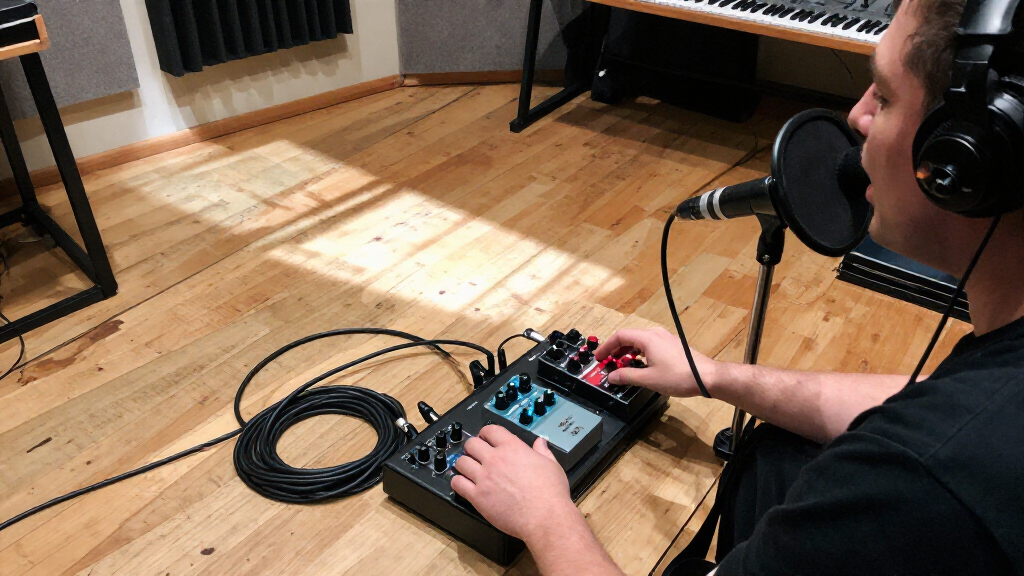
I compared these vocal effects processors by how well they serve a singer’s real setup: live performance, acoustic guitar-and-vocal sets, streaming, or a more involved effects rig. I considered the kinds of processing each product is identified with, including harmony, pitch correction, reverb, delay, and broader multi-effects, alongside practical differences in control format and intended use. A processor only earns a strong place when its feature set addresses a recognizable need rather than adding complexity for its own sake.
The ranking gives priority to versatile, singer-focused options that appear suited to a wide range of performance needs, then separates more specialized or streamlined picks by their best-fit buyer. A useful distinction is whether a product is centered on harmonies, pitch correction, instrument pairing, streaming, or deeper effects control. Similar or repeated product names do not prove that two listings are different models, so I avoid treating the two Audota AVE-100 entries as distinct feature sets based on their titles alone. Buyers should check the exact model and included functions before choosing.
Factors to Consider When Choosing Vocal Effects Processors For Singers
Before choosing a processor, start with the performance problem you want it to solve. A harmony pedal, a pitch-correction unit, and a multi-effects processor can all alter a vocal, but they do different jobs and ask different things of the singer. These broader checks can help prevent buying an impressive feature list that does not fit your mic, stage habits, or music.
Choose the Effect You Actually Need
Decide whether your main goal is harmony, pitch correction, space effects, or a mix of several tools. Harmony effects create additional vocal lines; they do not automatically correct the notes in your lead vocal. Pitch correction addresses pitch, while reverb and delay shape ambience and timing. A common mistake is to buy a processor based on a long effects list when only one function will be used regularly. If a single effect solves the problem, a simpler unit may be easier to operate and faster to set up. Choose a broader processor when you have a clear plan for using its extra effects or changing sounds between songs.
Match Controls to How You Perform
Think about whether you can spare a hand to adjust settings, or need to make changes with your feet while singing. Floor pedals can keep performance changes accessible, but their switches and controls may compete for limited stage space. A mic-stand-mounted processor puts controls closer to the singer, though its position and cable routing need to work with the stand and microphone. Menu-driven or screen-based units may offer more ways to shape sounds but can take longer to learn. Before buying, consider whether you need to make adjustments mid-song or can set your sounds in advance. The best control layout is the one you can use without losing focus on the performance.
Check the Whole Signal Chain
A vocal processor is one part of a setup, not a replacement for a suitable microphone, monitoring, or sound system. Check the connections and input needs against your existing gear, including whether you plan to connect an instrument or stream audio. Harmony features can depend on information from an instrument or other settings, so confirm how the chosen model determines harmony notes before relying on it live. Also think about where the processor sits in your signal path and who will control levels at the mixer. A mismatch in routing can create more setup work than the effects are worth. Write down your current connections before shopping, then compare them with the unit’s documented requirements.
Balance Flexibility Against Setup Time
More effects and editing options can help a singer build distinct sounds for different songs, but they also add choices to learn and maintain. If you perform a short set with one consistent vocal sound, extensive programming may not improve the result. Singers who change styles or need several vocal treatments may benefit from a more flexible processor, provided they have time to prepare settings. Avoid assuming that more presets automatically mean a better fit; the useful question is how quickly you can recall the sound you need. Plan for setup and soundcheck, especially when using a processor in a shared stage rig. Pick the level of complexity you will actually use, not the most complicated system you can operate once.
Account for Your Musical Role
A solo singer, acoustic guitarist, backing vocalist, and livestream performer may need very different features. If you sing while playing acoustic guitar, look for a workflow built around both vocal and instrument signals rather than treating the guitar as an afterthought. Streaming introduces routing and monitoring needs that may not matter for a singer using a conventional PA. A harmony effect can also sound more useful in a sparse solo arrangement than in a dense band mix. Consider the songs and venues where you will use the processor most often. Buying for your actual role can prevent paying in complexity for features that do not suit your set.
Plan for Learning and Reliability
Any processor adds another device, power requirement, cable connection, and possible point of failure to a performance setup. Before a show, learn how to bypass effects and return to a dry vocal if a setting behaves unexpectedly. Keep a simple starting preset or known-good configuration so you are not building your sound from scratch at soundcheck. Read the manufacturer’s guidance for power, connections, and compatible equipment rather than assuming every pedal works with every rig. If you are new to vocal processing, prioritize controls you can understand quickly over advanced editing options. A dependable, familiar setup is often more useful on stage than an elaborate sound you have not rehearsed.
Frequently Asked Questions
Do I need pitch correction if I only want vocal harmonies?
No. Harmony effects add one or more vocal parts, while pitch correction changes the tuning of the lead vocal; they solve different problems. If your goal is a fuller sound for solo performances, a harmony-focused unit may be enough. If you also want help managing pitch, look for a processor that specifically lists pitch correction. Some products may combine functions, but check the exact model’s capabilities rather than inferring them from a family name. Consider how much correction you want and whether you can control it easily during a song.
Will a vocal effects pedal work with my existing microphone and PA?
It may, but compatibility depends on the processor’s input and output connections, power needs, and the rest of your signal chain. Check the manufacturer’s specifications against your microphone and PA before buying, and confirm whether any adapters or additional cables are needed. If you also use an instrument, check how that signal connects and whether it affects harmony functions. A processor that fits your vocal needs but complicates routing can slow down setup. When in doubt, ask a retailer or sound technician to verify the complete connection path.
Is a more advanced multi-effects processor a poor choice for a beginner?
Not necessarily, but extra editing options can take time to learn and may distract from basic vocal technique and performance. Beginners who want one or two reliable effects may find a simpler interface easier to set up and use consistently. A more advanced unit can make sense if you are ready to program sounds and will use the added flexibility. Before choosing, check whether you can quickly access a basic vocal sound without navigating complicated settings. Learning one effect at a time is a practical way to avoid overprocessing your voice.
Should I choose a mic-stand-mounted processor or a floor pedal?
Choose based on how you need to operate the effects while performing. A stand-mounted unit keeps controls near the microphone and may suit singers who want direct access without bending down. A floor pedal can be more convenient for foot-controlled changes, especially when hands are occupied by an instrument. Each format has setup tradeoffs: stand placement and cable routing for one, stage space and foot access for the other. Consider your movement, instrument, and typical stage layout before deciding. If possible, check the control layout and size rather than relying on the product format alone.
Are the two Audota AVE-100 listings separate processors?
The roundup includes two listings with the Audota AVE-100 name, one of which also names harmony, pitch correction, reverb, and delay. The names alone do not establish whether they are separate versions, bundles, or duplicate listings. Check the exact model identifier, product documentation, included accessories, and available input and output details before comparing them. Do not assume the longer listing title guarantees extra functions on a particular unit. If the specifications match, treat them as the same processor rather than as two distinct choices.
Conclusion
For the broadest singer-focused starting point, I’d choose the BOSS VE-22 as best overall; for a simpler harmony-centered setup, the BOSS VE-2 is my best value-style pick, while the HeadRush VX5 is a stronger match when pitch correction is a priority. Beginners should favor a processor whose controls and core effects are easy to understand, rather than paying in setup time for features they will not use. For a premium, more involved rig, consider the BOSS VE-500 if you want a dedicated multi-effects unit and are prepared for a more involved workflow. Acoustic singer-instrumentalists should look at the BOSS VE-8, and streaming-focused performers can shortlist the Zoom V3. Match the processor to your sound goal, connections, and stage habits, then verify the exact model specifications before ordering.