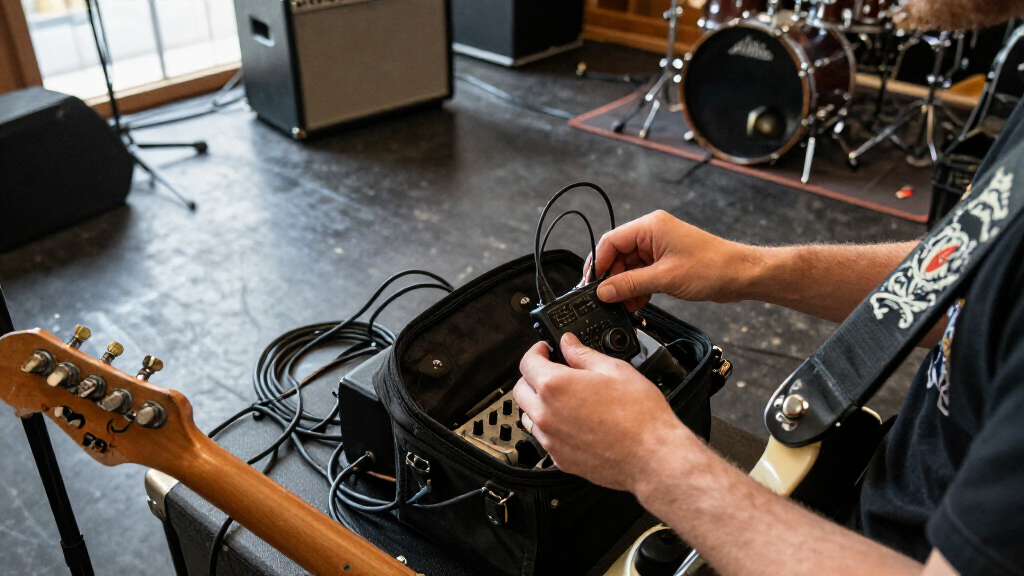

Wireless in-ear monitors for musicians range from simple, quick-pairing sets for rehearsals to more configurable UHF systems for demanding stages. My best overall pick is the Sennheiser XSW IEM, which offers a more gig-ready monitoring platform than the compact 2.4 GHz options. The Shure P3TRA215CL is a strong alternative for performers who want a familiar pro-audio system, while the LEKATO MS-20 stands out for its two-receiver setup and charging case. The main tradeoffs are frequency flexibility and stage reliability versus simpler setup, portability, and the ability to share a mix. Read on for the full breakdown and help matching a system to your band, venue, and monitoring needs.

Get audio and creator gear delivered free with Prime
- Fast, free delivery on millions of items
- Prime Video, Amazon Music and more included
- Member-only deals all year
Complete the kit


Key Takeaways
- The Sennheiser XSW IEM systems and Shure P3TRA215CL lead this group for musicians who need a more stage-oriented setup; check the exact band version against local spectrum availability before buying.
- 2.4 GHz models prioritize convenience: LEKATO MS-1, JOYO JW-07, and similar compact sets suit rehearsals and small performances, but share crowded unlicensed spectrum with other devices.
- The LEKATO MS-20 is distinct for its two-receiver package, making it a practical choice when two performers can use the same monitor mix.
- UHF systems vary in how much control they offer: models such as the Phenyx Pro PTM-11-2B and PTM-10 can suit more involved rigs, but require more attention to frequency coordination and setup.
- These systems do not all provide independent mixes. Multiple bodypacks may receive one transmitter’s feed, so bands needing separate mixes should confirm the number of transmitters and mixer outputs required.
| LEKATO MS-1 Wireless In Ear Monitor System |  | Best for Shared Band Monitoring | Wireless frequency: 2.4 GHz | Maximum receivers: Up to 6 per transmitter | Transmission modes: Stereo and mono | VIEW LATEST PRICE | See Our Full Breakdown |
| Sennheiser XSW IEM Wireless In-ear Monitoring System – B Band |  | Best Complete Kit for a First Stage Rig | System type: Wireless in-ear monitoring system | Frequency band: B band | Transmitter: XSW IEM transmitter | VIEW LATEST PRICE | See Our Full Breakdown |
| Sennheiser Pro Audio IE 100 Pro Wireless In-Ear Monitor, Red |  | Best for Musicians Who Also Want Everyday Wireless Earphones | Wireless connection: Bluetooth 5 | Bluetooth range: 10 meters | Wired connection: Detachable 3.5 mm cable | VIEW LATEST PRICE | See Our Full Breakdown |
| Shure P3TRA215CL Wireless In-Ear Monitor System – J13 Band |  | Best for Larger Stages and Personal Mix Control | System: Shure PSM 300 | Frequency band: J13 | Wireless range: Up to 300 feet (90 m) | VIEW LATEST PRICE | See Our Full Breakdown |
| Sennheiser XSW-IEM Wireless In-ear Monitor System A Band |  | Best for Beginners Who Want Adjustable Monitor Mixes | System type: Stereo wireless in-ear monitoring system | Frequency band: A band, 476–500 MHz | Transmitter: One XSW IEM SR transmitter | VIEW LATEST PRICE | See Our Full Breakdown |
| Coda AirSync IEM Wireless In-Ear Monitor System |  | Best for Multi-System UHF Setups | Wireless band: 657–663 MHz UHF | Selectable channels: 13 | Stated range: 150 ft | VIEW LATEST PRICE | See Our Full Breakdown |
| POGOLAB Wireless In-Ear Monitor System with 7-Channel UHF |  | Best for Low-Latency Monitoring | Wireless band: UHF | Selectable channels: 7 | Audio resolution: 48 kHz/24-bit | VIEW LATEST PRICE | See Our Full Breakdown |
| JOYO Wireless in Ear Monitor System (JW-07) |  | Best for Personal Practice | Wireless band: 2.4 GHz | Audio resolution: 48 kHz/16-bit | Latency: <5 ms | VIEW LATEST PRICE | See Our Full Breakdown |
| Xvive U45 Wireless in-Ear Monitor System, 5.8 GHz True Diversity IEM |  | Best for 5.8 GHz Channel Scanning | Wireless band: 5.8 GHz | Wireless design: True diversity | Channel feature: Channel scan | VIEW LATEST PRICE | See Our Full Breakdown |
| Phenyx Pro PTM-11-2B Wireless In-Ear Monitor System |  | Best for Two-Person Mono Monitoring | Wireless band: UHF, 900 MHz band | Selectable frequencies: 50 | Stated range: 164 ft | VIEW LATEST PRICE | See Our Full Breakdown |
| Xvive U4 Wireless in-Ear Monitor System Set |  | Best for Compact, Simple Setups | Wireless technology: 2.4 GHz | Stated range: 27 meters | Enclosure material: Metal | VIEW LATEST PRICE | See Our Full Breakdown |
| LEKATO Wireless in-Ear Monitor MS-20 |  | Best for Multi-Receiver Band Rehearsals | Wireless technology: 2.4 GHz | Receiver capacity: Up to 10 pairs per transmitter | Battery life: Up to 30 hours with charging case | VIEW LATEST PRICE | See Our Full Breakdown |
| Phenyx Pro PTM-10 UHF Stereo Wireless In-Ear Monitor System |  | Best for Stage Control and Frequency Flexibility | Frequency band: 900 MHz UHF | Tunable frequencies: 89 | Operating range: Up to 160 ft / 50 m | VIEW LATEST PRICE | See Our Full Breakdown |
| LEKATO MS-02 Wireless In-Ear Monitor System |  | Best for Small Groups Wanting Mono or Stereo | Wireless frequency: 2.4 GHz | Latency: Less than 4.5 ms in mono mode | Audio sampling rate: 24-bit/48 kHz | VIEW LATEST PRICE | See Our Full Breakdown |
| wireless in-ear monitors for musician | Battery life |
|---|---|
| LEKATO MS-1 Wireless In Ear Mo | More than 5 hours per charge |
| Sennheiser XSW IEM Wireless In | — |
| Sennheiser Pro Audio IE 100 Pr | Up to 10 hours |
| Shure P3TRA215CL Wireless In-E | — |
| Sennheiser XSW-IEM Wireless In | — |
| Coda AirSync IEM Wireless In-E | 5–6 hours |
| POGOLAB Wireless In-Ear Monito | Up to 5 hours |
| JOYO Wireless in Ear Monitor S | Over 8 hours |
| Xvive U45 Wireless in-Ear Moni | 5+ hours |
| Phenyx Pro PTM-11-2B Wireless | — |
| Xvive U4 Wireless in-Ear Monit | — |
| LEKATO Wireless in-Ear Monitor | Up to 30 hours with charging case |
| Phenyx Pro PTM-10 UHF Stereo W | — |
| LEKATO MS-02 Wireless In-Ear M | Up to 6–8 hours |
More Details on Our Top Picks
LEKATO MS-1 Wireless In Ear Monitor System
The MS-1’s clearest advantage for a band is its one-transmitter-to-multiple-receivers setup: up to six receivers can share a transmitter, which can simplify rehearsal or small-stage monitoring when musicians can use the same feed. Its 2.4 GHz link, automatic pairing, and switchable stereo or mono modes make setup less involved than the channel and frequency controls on the Sennheiser XSW IEM systems. The tradeoff is that a shared transmitter does not give each player an independent mix, and the listed five-hour battery life calls for charging between longer sessions. Its 100-foot open-area range and low stated latency suit modest setups, but this is a less convincing choice for larger stages than the Shure PSM 300, which specifies coverage beyond 300 feet. Check that the source and cable support stereo if you want stereo transmission.
Pros:- Supports up to six receivers from one transmitter, useful for a shared band mix.
- Automatic pairing reduces setup steps for rehearsal and small gigs.
- Switchable stereo and mono input modes support different source and monitoring setups.
- Stated latency is under 12 ms, with up to 100 feet of open-area range.
Cons:- A single transmitter feed does not provide separate personal mixes for each musician.
- Five-hour stated battery life may require recharging during extended event days.
- Stereo operation depends on a stereo source and suitable stereo cable.
Best for: Small bands and church groups that want several musicians to hear one shared monitor feed without adding separate transmitters.
Not ideal for: Performers who need individual mixes or play larger stages; the shared feed limits personalization, and the stated open-area range is shorter than Shure PSM 300 coverage.
- Wireless frequency:2.4 GHz
- Maximum receivers:Up to 6 per transmitter
- Transmission modes:Stereo and mono
- Latency:Under 12 ms
- Audio resolution:24-bit/48 kHz as stated
- Frequency response:20 Hz–20 kHz
- Dynamic range:105 dB
- Range:Up to 100 feet in open area
- Battery life:More than 5 hours per charge
Our verdict“Choose the MS-1 when several musicians need a straightforward shared feed, but choose a more capable system if you need individual mixes or longer-range coverage.”
Sennheiser XSW IEM Wireless In-ear Monitoring System – B Band
This XSW IEM package earns its place as a ready-to-use stage kit: the transmitter, one bodypack receiver, IE 4 earphones, rackmounting kit, and power supply are included. That makes it a more complete starting point than the Sennheiser IE 100 Pro Wireless, which is a Bluetooth-capable earphone set rather than a transmitter-and-bodypack monitor system. The XSW’s professional monitoring format is better suited to rehearsals and live performance than using Bluetooth as a stage link. However, the product details give little technical information about range, battery life, or frequency options for this B-band version, so I would check local frequency compatibility and venue requirements before buying. It also includes only one receiver, so a band outfitting several players will need additional compatible receivers rather than treating this as a complete multi-musician package.
Pros:- Includes transmitter, bodypack receiver, IE 4 earphones, rackmounting kit, and power supply.
- Uses a dedicated wireless IEM transmitter and receiver rather than relying on Bluetooth for stage monitoring.
- Packaged as a streamlined system intended for live audio use.
- The included rack kit supports installation in a rack-based audio setup.
Cons:- Only one bodypack receiver is included, so multiple musicians need additional compatible units.
- Provided product details do not state wireless range or receiver battery life.
- B-band frequency compatibility should be checked against local rules and other wireless equipment.
Best for: A solo performer or musician starting a conventional transmitter-and-bodypack monitoring setup who wants the core rack and listening components in one package.
Not ideal for: Bands seeking multiple receivers in one purchase or buyers who need clearly specified range and battery figures before planning a demanding stage setup.
- System type:Wireless in-ear monitoring system
- Frequency band:B band
- Transmitter:XSW IEM transmitter
- Receiver:One XSW IEM bodypack receiver
- Included earphones:Sennheiser IE 4
- Rack hardware:Rackmounting kit included
- Power supply:NT 12-5CW with power adapters
- Listed earphone impedance:6 ohms
Our verdict“Pick this XSW set for a simple single-performer stage rig with included rack hardware, but verify band compatibility and plan separately for extra receivers.”
Sennheiser Pro Audio IE 100 Pro Wireless In-Ear Monitor, Red
The IE 100 Pro Wireless is the most versatile listening option here, but it is not a complete wireless stage-monitor system: its Bluetooth module connects the earphones to mobile devices, PCs, or tablets, while a detachable 3.5 mm cable serves wired monitoring. That makes it a better fit for musicians who move between practice, travel, and casual listening than the Shure P3TRA215CL, which includes a dedicated RF transmitter and bodypack for stage use. The Sennheiser’s sound-isolating fit, several included ear-tip sizes, and stated 10-hour Bluetooth battery life support longer personal listening sessions. The compromise is that Bluetooth is not a substitute for a dedicated low-latency IEM transmitter in a live rig. Buy it for flexible earphones with a wired fallback, not as a one-box wireless stage system.
Pros:- Bluetooth module supports wireless connection to phones, computers, and tablets.
- Detachable 3.5 mm cable provides a wired option for compatible monitoring equipment.
- Four ear-tip adapters help musicians find a more secure, isolating fit.
- Stated Bluetooth battery life is up to 10 hours.
Cons:- No dedicated IEM transmitter or bodypack receiver is included.
- Bluetooth is not the same as a purpose-built low-latency stage monitoring link.
- The listed Bluetooth range is 10 meters, limiting wireless use to nearby devices.
Best for: Musicians who want sound-isolating earphones for wired monitoring and Bluetooth listening between rehearsals, commuting, or production work.
Not ideal for: Performers seeking a complete wireless stage IEM kit with a transmitter and bodypack; those components are not included in the listed package.
- Wireless connection:Bluetooth 5
- Bluetooth range:10 meters
- Wired connection:Detachable 3.5 mm cable
- Driver type:Dynamic
- Impedance:20 ohms
- Sensitivity:115 dB
- Battery life:Up to 10 hours
- Charging time:1.5 hours
- Included fit options:Four earpiece adapters
Our verdict“Choose the IE 100 Pro Wireless for musician-focused earphones that switch between Bluetooth and wired listening, not for a complete live wireless monitor rig.”
Shure P3TRA215CL Wireless In-Ear Monitor System – J13 Band
The Shure PSM 300 is the strongest fit here for performers who need a dedicated stage-monitor system with longer stated coverage. Its listed range reaches 300 feet, well beyond the LEKATO MS-1’s 100-foot open-area figure, while one-touch frequency scan and sync help crews find and assign a channel. MixMode and stereo operation give a musician more control over how two input channels are balanced, and the included SE215 earphones provide up to 37 dB of isolation. The tradeoff is a more involved RF setup than the MS-1’s automatic pairing, and the product’s J13 band still needs to suit local frequency conditions. It is a better match for serious live use than the Bluetooth-based Sennheiser IE 100 Pro Wireless, but it is more system than a casual listener needs.
Pros:- Specified wireless coverage extends up to 300 feet.
- One-touch frequency scan and sync help identify and assign a clean channel.
- MixMode and stereo mode offer different approaches to a two-channel monitor mix.
- Included SE215 earphones provide up to 37 dB of stated isolation.
Cons:- J13 band compatibility should be checked against local frequency rules and other wireless systems.
- RF scanning and channel coordination require more setup than automatic-pairing 2.4 GHz options.
- The system is aimed at live monitoring rather than casual Bluetooth listening.
Best for: Gigging musicians and small production teams who need a dedicated RF IEM rig, scan-and-sync setup, and control over a two-channel personal mix.
Not ideal for: Casual listeners or bands wanting the simplest shared-feed setup; the RF system involves more frequency planning than the LEKATO MS-1.
- System:Shure PSM 300
- Frequency band:J13
- Wireless range:Up to 300 feet (90 m)
- Audio:24-bit digital audio
- Monitoring modes:MixMode and stereo
- Channel setup:One-touch frequency scan and sync
- Included earphones:Shure SE215CL
- Earphone isolation:Up to 37 dB
- Receiver construction:Aluminum bodypack
Our verdict“Choose the Shure PSM 300 for stage use that benefits from longer stated range and mix control, provided its J13 band fits your location.”
Sennheiser XSW-IEM Wireless In-ear Monitor System A Band
This XSW IEM set makes a strong first step into dedicated UHF stage monitoring: it includes a transmitter, receiver, IE 4 earphones, rack kit, power supply, and AA batteries. Compared with the LEKATO MS-1, it offers Focus mode, EQ, and a limiter, giving a performer more ways to shape and manage a personal monitoring feed instead of relying mainly on a simple shared setup. Infrared syncing also helps pair multiple receivers to one transmitter. The set is designed for straightforward use, though the listing does not give a wireless range or battery-life figure for the receiver, so I would not choose it over the Shure PSM 300 when a specified long-range link is a priority. Its A band is 476–500 MHz; check local frequency availability before committing.
Pros:- Complete set includes transmitter, receiver, IE 4 earphones, rack kit, power supply, and AA batteries.
- Focus mode provides a way to balance a personal mix.
- EQ and limiter add useful control over the monitor signal.
- Infrared sync supports pairing multiple receivers with one transmitter.
Cons:- The supplied details do not specify wireless range or receiver battery life.
- A-band frequency range must be checked for local compatibility.
- Only one receiver is included, so additional musicians require compatible receivers.
Best for: A new live performer or worship musician who wants a complete UHF IEM starter set with basic mix-shaping and receiver-sync features.
Not ideal for: Musicians who need a published range figure or those whose local wireless rules or existing RF gear conflict with the 476–500 MHz A band.
- System type:Stereo wireless in-ear monitoring system
- Frequency band:A band, 476–500 MHz
- Transmitter:One XSW IEM SR transmitter
- Receiver:One XSW IEM EK receiver
- Included earphones:Sennheiser IE 4
- Monitor features:Focus mode, EQ, and limiter
- Receiver syncing:Infrared sync
- Power accessories:NT 12-5 CW supply and two AA batteries
- Rack hardware:Rackmounting kit included
Our verdict“Choose this XSW IEM set as a feature-rich starter system for one performer, after confirming that its A-band frequencies are suitable for your area.”
Coda AirSync IEM Wireless In-Ear Monitor System
The AirSync IEM makes the most sense for musicians who want UHF operation and room to coordinate several monitor systems. Its 13 selectable channels support more simultaneous setups than the POGOLAB MWB-1’s seven, which can help on a shared stage where each performer needs a separate link. The stated under-3-ms latency is also suited to tight rhythmic playing, while standard 3.5 mm output lets you use earphones you already own. The tradeoff is runtime: its stated five to six hours is limited for long event days, and earphones are not included. Compared with the JOYO JW-07, it prioritizes UHF channel capacity over longer listed battery life, making it a better fit for coordinated live rigs than all-day personal practice.
Pros:- 13 selectable UHF channels allow more systems to be coordinated than the POGOLAB MWB-1’s seven.
- Stated latency under 3 ms supports responsive live playing.
- Standard 3.5 mm receiver output works with compatible earphones.
- Includes transmitter, receiver, adapter, USB-C cable, and hardshell case.
Cons:- Five to six hours of stated battery life may not cover long performance days.
- Earphones are not listed among the included accessories.
- The stated 150-foot range can be limiting on larger stages or across obstructed spaces.
Best for: Bands and small production teams that need several selectable UHF channels and plan to supply their own 3.5 mm earphones.
Not ideal for: Performers needing a full-day charge or a ready-to-wear kit with earphones included.
- Wireless band:657–663 MHz UHF
- Selectable channels:13
- Stated range:150 ft
- Latency:Under 3 ms
- Battery life:5–6 hours
- Frequency response:20 Hz–20 kHz
- Signal-to-noise ratio:>95 dB
- Earphone connection:3.5 mm
- Charging:USB-C
Our verdict“Choose the AirSync if your priority is coordinating multiple UHF monitor links, and look elsewhere if you need included earphones or longer runtime.”
POGOLAB Wireless In-Ear Monitor System with 7-Channel UHF
For players who notice even small timing delays, the POGOLAB MWB-1 pairs a stated 1 ms latency with 48 kHz/24-bit audio. That makes it a compelling choice for rhythmically precise performance, while its balanced XLR and AUX/LINE inputs give a mixer or instrument setup more connection flexibility than the Coda AirSync’s listed XLR-to-1/4-inch adapter arrangement. Its seven selectable UHF channels are useful, though less accommodating for a crowded multi-system stage than the Coda’s 13. Range is listed at 164 feet, but only line of sight, so walls and stage obstructions matter. The five-hour battery limit also trails the JOYO JW-07’s stated runtime. I’d favor this model for a short set or rehearsal where timing and input options outweigh longer battery life.
Pros:- Stated 1 ms latency is the lowest listed among these five products.
- 48 kHz/24-bit audio resolution is specified.
- Balanced XLR and AUX/LINE inputs support different signal sources.
- USB-C rechargeable transmitter and receiver.
Cons:- Up to five hours of battery life may require charging between longer sessions.
- The 164-foot range is specified for line-of-sight use.
- Seven channels offer less coordination headroom than the Coda AirSync’s 13.
Best for: Performers and small bands prioritizing very low stated latency, digital audio resolution, and both balanced XLR and AUX/LINE input options.
Not ideal for: Musicians playing long sets without charging breaks or working in spaces where line-of-sight range is difficult to maintain.
- Wireless band:UHF
- Selectable channels:7
- Audio resolution:48 kHz/24-bit
- Latency:1 ms
- Stated range:164 ft (50 m), line of sight
- Frequency response:35 Hz–16.5 kHz
- Battery life:Up to 5 hours
- Inputs:Balanced XLR and AUX/LINE
- Charging:USB-C; approximately 2 hours
Our verdict“Pick the POGOLAB MWB-1 for low-latency, flexible-input monitoring on shorter sessions, not for obstructed venues or extended sets.”
JOYO Wireless in Ear Monitor System (JW-07)
The JOYO JW-07 is geared toward practice and recording rather than a complex touring monitor rack. Its stated eight-plus-hour battery life outlasts the Coda AirSync and POGOLAB MWB-1, so a musician can get through longer practice blocks without planning around a mid-session charge. The system uses 2.4 GHz frequency hopping and lists latency below 5 ms, a practical combination for guitar practice and basic monitoring. Its 40–60-foot open-space range is much shorter than the UHF options from Coda and POGOLAB, and the product description explicitly says one transmitter does not support multiple receivers. That makes it a poor fit for a shared band mix. For a solo player who values runtime and simple automatic pairing, though, it is the more practice-oriented pick.
Pros:- Stated battery life exceeds eight hours, longer than the Coda and POGOLAB systems.
- Frequency hopping is specified as a way to reduce interference from other wireless devices.
- Latency is listed below 5 ms.
- 12 channel banks are provided across four groups.
Cons:- Stated 40–60-foot range is shorter than the UHF systems listed here.
- One transmitter is not supported for use with multiple receivers.
- The listed 48 kHz/16-bit audio resolution is lower than the POGOLAB MWB-1’s 48 kHz/24-bit specification.
Best for: Solo guitarists and musicians who want a simple wireless link for home practice, rehearsal, or personal recording sessions.
Not ideal for: Bands needing one transmitter to feed several musicians, or performers who need the longer stated range of the Coda AirSync or POGOLAB MWB-1.
- Wireless band:2.4 GHz
- Audio resolution:48 kHz/16-bit
- Latency:<5 ms
- Stated range:40–60 ft in open space
- Battery life:Over 8 hours
- Channel banks:12, divided into 4 groups
- Receiver connection:3.5 mm audio output
- Enclosure material:Metal and plastic
- Item weight:62 g
Our verdict“Choose the JW-07 for long solo practice sessions, but choose a multi-receiver-capable system for band monitoring.”
Xvive U45 Wireless in-Ear Monitor System, 5.8 GHz True Diversity IEM
The Xvive U45 is the option here for musicians who want a 5.8 GHz system with channel scanning rather than a traditional UHF setup. Its stated 24-bit/48 kHz audio and under-5-ms latency place it in the same broad digital-monitoring class as the POGOLAB MWB-1, though POGOLAB lists a lower 1 ms latency and more detailed input options. The U45’s true-diversity design and channel scan are aimed at finding a usable connection, but the supplied product data does not state a range or channel count, so I would not choose it on coverage assumptions. Battery life is listed as five-plus hours, a modest improvement over the POGOLAB’s maximum five hours but still short of the JOYO JW-07. It suits a musician seeking a compact digital system, provided the venue’s 5.8 GHz environment is compatible.
Pros:- 5.8 GHz true-diversity wireless design.
- Channel scan is listed as a feature.
- 24-bit/48 kHz audio specification.
- Stated battery life is more than five hours.
Cons:- The supplied product information does not specify operating range or channel count.
- Under-5-ms latency is higher than the POGOLAB MWB-1’s stated 1 ms.
- Listed battery life remains shorter than the JOYO JW-07’s eight-plus hours.
Best for: Performers seeking a 5.8 GHz true-diversity monitor with channel scanning and a stated 24-bit/48 kHz audio format.
Not ideal for: Buyers who need a clearly stated operating range, many documented channel choices, or a system whose band is explicitly UHF.
- Wireless band:5.8 GHz
- Wireless design:True diversity
- Channel feature:Channel scan
- Audio resolution:24-bit/48 kHz
- Latency:Under 5 ms
- Battery life:5+ hours
- Receiver connection:3.5 mm jack
- Charging interface:USB Type-C
- Included system components:Transmitter and bodypack receiver
Our verdict“Consider the U45 if channel scanning and 5.8 GHz operation match your setup, but favor a model with a stated range when coverage is a deciding factor.”
Phenyx Pro PTM-11-2B Wireless In-Ear Monitor System
Unlike the single-receiver personal systems in this group, the Phenyx Pro PTM-11-2B arrives with two bodypack receivers and two earphones, making it the clearest fit for a duo that wants to share one transmitter. Its mono monitoring keeps the mix straightforward, and the transmitter’s left/right inputs and pass-through outputs can simplify connections to a mixer or speaker chain. It also offers 50 selectable UHF frequencies and a stated 164-foot range, giving it more frequency choices than the Coda AirSync’s 13 channels, though the two systems are not specified on the same band. The main compromise is that this is a mono-focused setup, not a stereo IEM solution. The product data also does not state battery runtime, so I’d verify power needs before a long event.
Pros:- Includes two bodypack receivers and two earphones in the package.
- 50 selectable UHF frequencies are specified.
- Left/right inputs and line outputs support signal pass-through.
- Metal half-rack transmitter, rack-mount kit, and carrying case suit fixed or portable setups.
Cons:- Mono monitoring does not provide the stereo separation available from stereo IEM systems.
- Battery runtime is not stated in the supplied product information.
- The listed frequency response reaches 16 kHz, below the Coda AirSync’s stated 20 kHz upper limit.
Best for: Duos, presenters, and small live teams who need two included receivers sharing a straightforward mono monitor feed.
Not ideal for: Musicians who require stereo mixes, detailed battery-life specifications, or a lightweight single-pack system for individual use.
- Wireless band:UHF, 900 MHz band
- Selectable frequencies:50
- Stated range:164 ft
- Monitoring format:Mono
- Receivers included:2 bodypack receivers
- Inputs:Left and right audio inputs
- Outputs:Left/right line outputs with pass-through
- Receiver connection:3.5 mm headphone jack
- Included earphones:2 pairs
Our verdict“Choose the PTM-11-2B when two people need a shared mono mix and included earphones, not when stereo monitoring is a requirement.”
Xvive U4 Wireless in-Ear Monitor System Set
The Xvive U4 is a straightforward choice for musicians who want a compact wireless link for rehearsals, small performances, or studio monitoring without a rack-style transmitter. Its 2.4 GHz connection and stated 27-meter range suit setups where performers stay relatively close to the mixer. Compared with the Phenyx Pro PTM-10, it favors portability and simplicity over adjustable UHF frequencies, stereo/mono options, and onboard EQ controls. The tradeoff is that the supplied details do not establish those advanced monitoring features, and the system is not water resistant. I’d shortlist it for a musician who values a small, uncomplicated rig, but choose the PTM-10 when frequency coordination and more control matter more than a compact footprint.
Pros:- Compact design suits portable rehearsal and gig setups
- Wireless 2.4 GHz operation avoids a cable between transmitter and receiver
- Metal enclosure material is specified
- 3.5 mm headphone connection supports compatible monitoring gear
Cons:- Stated range is 27 meters, shorter than the PTM-10’s stated maximum of 160 feet
- Product details do not specify stereo/mono modes or frequency coordination controls
- Not water resistant
Best for: Solo performers and small-stage musicians who want a compact 2.4 GHz monitor system for nearby rehearsals or gigs.
Not ideal for: Bands needing detailed EQ and balance controls, frequency selection, or a clearly specified multi-receiver setup; the PTM-10 lists more explicit stage-management features.
- Wireless technology:2.4 GHz
- Stated range:27 meters
- Enclosure material:Metal
- Headphone connection:3.5 mm jack
- Audio driver type:Dynamic driver
- Water resistance:Not water resistant
Our verdict“Choose the Xvive U4 for a compact, uncomplicated wireless monitor setup, but favor the PTM-10 if stage control options and a longer stated range matter more.”
LEKATO Wireless in-Ear Monitor MS-20
The LEKATO MS-20 is built around sharing one transmitter across a group: it supports up to 10 receiver pairs, a useful distinction from the MS-02’s four-receiver limit. The charging case is rated for 30 hours of combined use, and auto-pairing plus USB-C OTG input make it appealing for bands that also want to monitor audio from a compatible phone or USB-C device. Its 150-foot open-area range exceeds the MS-02’s stated 100 feet, though real stage layouts can reduce both figures. The tradeoffs are the lack of included earbuds and a listed 180-ohm impedance, which buyers should check against their listening setup. This is the strongest fit here for a group seeking shared, portable monitoring, rather than a system centered on rack controls like the Phenyx Pro PTM-10.
Pros:- One transmitter can support up to 10 receiver pairs
- Charging case is specified for up to 30 hours of combined use
- USB-C OTG input supports compatible phones and USB-C devices
- Mono/stereo switching and auto-pairing simplify setup
Cons:- Earphones are not included
- The 150-foot range is stated for open areas and may not reflect a crowded venue
- 180-ohm impedance may require buyers to check compatibility with their monitoring gear
Best for: Bands and rehearsal groups that want one transmitter feeding several performers, with a charging case and phone-compatible OTG input.
Not ideal for: Musicians who need included earbuds, rack-mounted transmitter controls, or a system with specified UHF frequency selection; the PTM-10 is more explicit about stage-management features.
- Wireless technology:2.4 GHz
- Receiver capacity:Up to 10 pairs per transmitter
- Battery life:Up to 30 hours with charging case
- Wireless range:Up to 150 ft in open areas
- Audio format:24-bit/48 kHz
- Frequency response:20 Hz–20 kHz
- Input:USB-C OTG
- Modes:Mono and stereo
- Earphones included:No
Our verdict“Pick the MS-20 when a band needs one transmitter for multiple performers and long combined battery life; skip it if you need included earbuds or rack-focused controls.”
Phenyx Pro PTM-10 UHF Stereo Wireless In-Ear Monitor System
For musicians who want more control from a dedicated stage system, the Phenyx Pro PTM-10 stands apart from the compact 2.4 GHz options in this group. Its 900 MHz UHF band offers 89 tunable frequencies, while stereo and mono modes, EQ, balance, limiter, and lock functions give performers more ways to shape and manage a monitor mix. It can run up to five systems simultaneously, and the included rack-mount kit and carrying case make it better suited to a semi-permanent band or venue setup than the portable Xvive U4. The stated range reaches 160 feet, but that is a maximum rather than a guarantee for every room. The bodypack also uses AA batteries, so it is less convenient than a rechargeable system such as the LEKATO MS-20.
Pros:- 89 tunable UHF frequencies offer more coordination flexibility than fixed-band systems
- Stereo and mono modes plus EQ, balance, limiter, and lock controls
- Supports up to five systems operating simultaneously
- Rack-mount kit and carrying case suit organized stage or venue setups
Cons:- Bodypack receiver requires AA batteries
- Stated maximum range is 160 feet and can vary with the venue
- Rack-style setup is less compact than clip-on systems such as the Xvive U4
Best for: Working bands, houses of worship, and small venues that need tunable UHF operation, stereo/mono choice, and hands-on monitor controls.
Not ideal for: Musicians prioritizing a minimal, rechargeable, clip-on setup; the LEKATO MS-20 is more portable and specifies charging-case battery life.
- Frequency band:900 MHz UHF
- Tunable frequencies:89
- Operating range:Up to 160 ft / 50 m
- Simultaneous systems:Up to 5
- Modes:Stereo and mono
- Inputs:XLR and 6.3 mm
- Included components:Transmitter, bodypack receiver, earbuds, power adapter, 2 AA batteries, antenna, rack-mount kit, manual, and carrying case
- Warranty:12 months
Our verdict“Choose the PTM-10 if you need adjustable UHF frequencies and monitor-mix controls; choose a compact rechargeable option if portability is the priority.”
LEKATO MS-02 Wireless In-Ear Monitor System
The LEKATO MS-02 gives small groups a practical middle ground: it supports up to four receivers from one transmitter and switches between mono and stereo, while its stated mono latency is under 4.5 ms. That makes it more flexible for a few musicians sharing a monitor feed than the Xvive U4, whose supplied details do not specify receiver capacity or stereo/mono modes. The MS-02 is also lighter on accessories than the Phenyx Pro PTM-10: it is a 2.4 GHz clip-on-style system with USB-C charging cables, rather than a rack-oriented UHF package with included earbuds and frequency controls. Battery life is listed at 6–8 hours, and the 100-foot range applies to open areas. Earbuds are sold separately, so add compatible earphones to the setup plan.
Pros:- Supports up to four receivers from one transmitter
- Mono and stereo modes provide flexible routing
- Stated mono latency is less than 4.5 ms
- USB-C charging cables and one-key mute support practical rehearsal use
Cons:- Earbuds are sold separately
- Battery life is limited to a stated 6–8 hours
- The 100-foot range is specified for open areas
Best for: Small bands and rehearsal groups needing mono or stereo monitoring for up to four receivers, with low stated mono latency.
Not ideal for: Musicians who need supplied earbuds, more than four receivers, or UHF frequency coordination; the PTM-10 offers tunable UHF operation and includes earbuds.
- Wireless frequency:2.4 GHz
- Latency:Less than 4.5 ms in mono mode
- Audio sampling rate:24-bit/48 kHz
- Receiver capacity:Up to 4 receivers per transmitter
- Battery life:Up to 6–8 hours
- Wireless range:Up to 100 ft in open areas
- Modes:Mono and stereo
- Weight:0.15 kg
- Earbuds included:No
Our verdict“The MS-02 fits small groups that want flexible mono/stereo monitoring and low stated latency, provided they supply their own earbuds and can work within its battery life.”
How We Picked
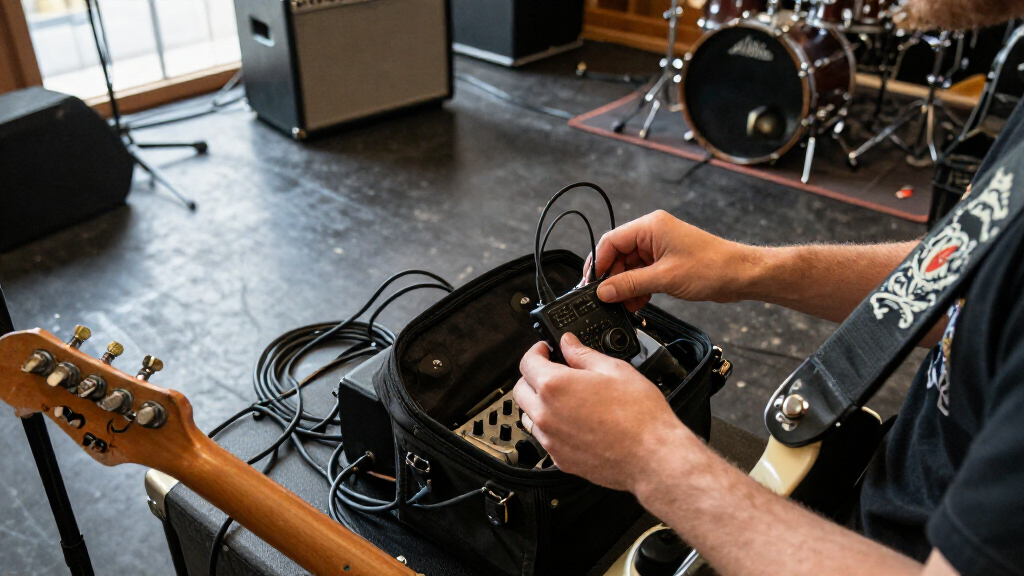
I ranked these wireless in-ear monitor systems for musicians by how well their stated design and included components fit real monitoring jobs: rehearsals, small gigs, and more demanding live setups. I weighed the wireless band and tuning approach, stereo or mono operation, receiver count, setup complexity, battery and charging provisions, and the practical flexibility a musician gets from the system. A second receiver can be more useful than an extra channel when two performers share one mix; frequency options matter more when a venue has a crowded RF environment.
The ranking favors systems with a clearer fit for repeat live use and a useful balance of control and usability, not the longest feature list. The Sennheiser XSW IEM and Shure P3TRA215CL sit ahead of simpler plug-and-play 2.4 GHz sets because their system format is better suited to planned stage rigs. Compact models remain compelling for portability and straightforward setup, while the Phenyx Pro options and other UHF systems may better suit users willing to coordinate frequencies. Product names alone do not establish compatibility or performance: check the exact band, transmitter and receiver configuration, included earphones, and local frequency rules before purchase.
Factors to Consider When Choosing Wireless In-ear Monitors For Musicians
Choosing an IEM system is less about chasing a headline range figure and more about matching its wireless format and signal path to your gigs. I recommend deciding how many people need monitoring, whether each person needs a separate mix, and how much RF setup your venues can support before comparing convenience features.
Match the wireless band to your venues
Wireless systems do not all share the same spectrum, and the listed band can affect where a system can legally and reliably operate. UHF systems offer selectable frequencies on some models, which can help when a chosen frequency is clear, but they also call for coordination with other wireless gear. A 2.4 GHz system can be quick to set up, yet it shares spectrum with Wi-Fi and other everyday devices. Do not assume a stated number of channels means that many clean frequencies will be available at a venue. Check the exact transmitter band and local regulations, then ask whether the venue or sound engineer coordinates wireless equipment. A system that is easy at home may need more planning on a busy festival stage.
Decide whether you need stereo or mono
Stereo can preserve panning and spatial detail in a monitor mix, but it uses two audio channels and requires the mixer to send a suitable stereo feed. Mono can be easier to deploy and may be entirely adequate for a vocal, instrument, or cue-focused mix. Some listed systems are explicitly described as mono, so do not infer stereo support from the phrase “in-ear monitor” alone. Think about what you need to hear: a singer may value a centered vocal and clear cues more than stereo placement, while a player using stereo effects may prefer a two-channel mix. Confirm whether the system transmits stereo, whether it can operate in mono, and how the mixer outputs connect. This prevents paying for a stereo feature your current console cannot provide.
Count mixes, transmitters, and receivers separately
A system advertised with multiple bodypacks does not necessarily provide multiple independent monitor mixes. In many setups, one transmitter sends one mix to several receivers, which is useful when performers want to hear the same blend. A drummer who needs a click-heavy feed and a singer who needs more vocal may need separate mixer sends and, often, separate transmitters. Before purchasing, map each performer to a mix, then count the console’s available aux outputs and the system’s transmitters. Receiver quantity answers how many people can listen; transmitter and input capability determine how many different feeds can be sent. This distinction is especially relevant when comparing single-transmitter packages with two-receiver bundles such as the LEKATO MS-20.
Treat fit and earphones as part of the system
Wireless stability cannot compensate for earphones that do not seal or become uncomfortable during a long set. A good seal helps you hear the mix at a lower level and reduces how much stage sound competes with it. Check what the package includes, whether the earphones can be replaced, and whether their connector works with the earphones you already own. If possible, plan to try several tip sizes and keep spares in the gig bag; a poor seal can make a perfectly functional transmitter seem weak or thin. Musicians who depend on isolation should also think about how they will hear the audience and stage cues. Fit is personal, so do not judge a system only by its wireless specifications.
Plan for battery life and charging between sets
Battery claims are most useful when compared with your actual schedule, including soundcheck, the performance, and any rehearsal time before it. A charging case, as offered with the LEKATO MS-20, can simplify charging and storage, while bodypack systems may rely on replaceable or rechargeable batteries. Check whether the transmitter and receiver use the same charging method and whether the package includes the needed cables or batteries. For long events, carry a backup power plan rather than assuming a single charge will cover a full day. Also account for the receiver’s clip and controls: a pack that is difficult to reach can complicate quick level adjustments on stage. Convenience matters most when it prevents a dead pack or rushed setup from interrupting a set.
Spend for control only when your setup can use it
More frequency choices, rack mounting, and extra receivers can support a complex rig, but they add little if you perform occasional rehearsals with one shared mix. A beginner may get more value from straightforward pairing and a simple signal path than from features that require RF planning. A touring or venue-based musician may have a stronger case for a configurable system and a repeatable frequency-coordination routine. Before paying for added capability, verify that your mixer, cabling, and stage workflow can take advantage of it. Check whether the system’s exact frequency version suits the places where you play, since a model name may be sold in different bands. The right spend is the one that solves a real limitation in your current setup.
Frequently Asked Questions
Can several musicians use one wireless IEM transmitter?
Several receivers can often listen to one transmitter, but they will generally hear the same transmitted mix. That works for bandmates who are happy with a shared monitor balance, and it is the kind of use that makes a two-receiver package useful. It does not give each person independent vocal, instrument, or click levels. For individual mixes, you will need enough mixer sends and a compatible transmitter path for each distinct feed. Confirm the system’s transmitter and receiver limits before planning a group setup.
Should I choose a 2.4 GHz system or a UHF system for live gigs?
Neither band is automatically right for every venue. A 2.4 GHz unit is often appealing for quick setup and compact use, but it shares spectrum with common wireless devices and may face congestion. UHF can offer frequency selection on some systems, which helps only when you can find and coordinate a suitable channel. Venue size alone does not decide the issue; nearby wireless equipment and local spectrum rules matter too. Check the exact band and ask the venue or sound engineer about coordination before committing to a system.
Do I need stereo in-ear monitoring?
Not necessarily. Mono can provide a clear vocal and instrument blend with a simpler signal path, which suits many rehearsals and live sets. Stereo is useful if your mix relies on panning, stereo effects, or spatial separation, but it requires two channels from the mixer and compatible system operation. A mono feed can also be a practical fallback when you need to conserve mixer outputs. Choose based on what helps you perform, not on the assumption that stereo is always an upgrade.
Can I use my own in-ear headphones with these systems?
Often, but you should check the connector, impedance guidance, and package details for the specific model before connecting another set. Compatibility at the plug does not guarantee that every earphone will have the same loudness or behave as expected. Custom or higher-isolation earphones may improve fit for some musicians, though they do not fix a congested wireless signal or a poorly built mix. Start with a conservative listening level when changing earphones. If the manufacturer lists approved accessories or operating guidance, follow that information.
What should I check before buying an IEM system for a band?
Write down how many performers need monitoring, how many different mixes they need, and which mixer outputs are available. Then compare those needs with the system’s transmitter count, receiver count, stereo or mono operation, and exact frequency band. Also check whether the package includes earphones, power supplies, batteries, and any rack hardware your setup requires. Ask who will coordinate frequencies at gigs and whether the band’s other wireless equipment can operate alongside the IEM system. This short compatibility check can prevent buying a bundle that has enough packs but too few independent mixes.
Conclusion
For most musicians seeking a capable, stage-oriented starting point, I would choose the Sennheiser XSW IEM as the best overall option, while checking the exact band version for the venues where I play. The best value for a shared mix is the LEKATO MS-20, whose two-receiver bundle and charging case suit bands that want a convenient two-listener setup. For a more established pro-audio format, the Shure P3TRA215CL is my premium-oriented recommendation, though buyers should verify their frequency and mixer needs. Beginners who favor quick, uncomplicated setup can start with a 2.4 GHz option such as the LEKATO MS-1 or JOYO JW-07, while accepting less flexibility in crowded RF environments. For musicians building a more involved UHF rig, compare the Phenyx Pro PTM-11-2B and PTM-10 against their actual mix and coordination requirements. The right pick depends on whether your priority is easy setup, multiple listeners, or more control over a live wireless system.