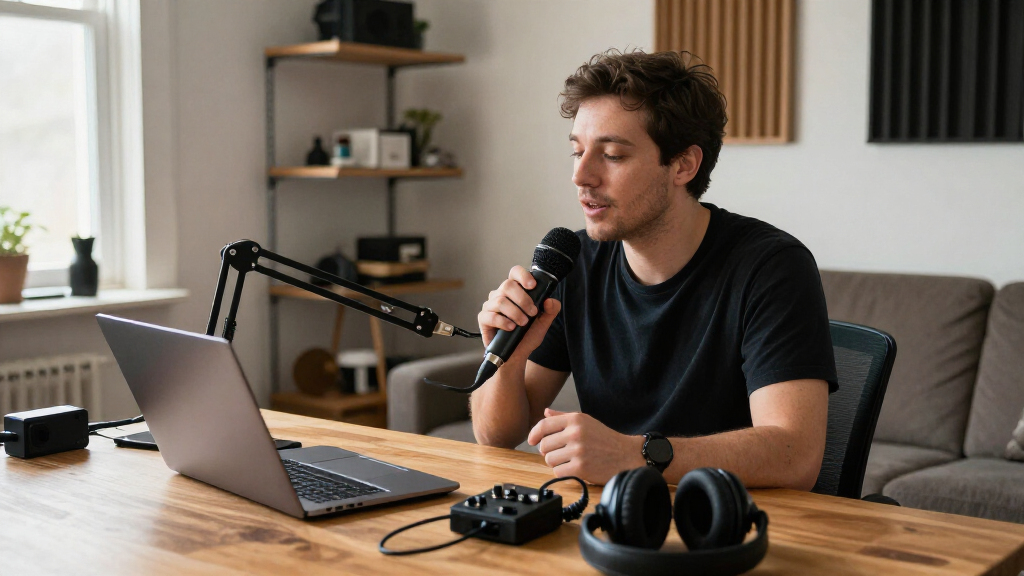
The best wireless microphones for podcasts depend on whether you record at a desk, on location, or with several guests. I rank the MAONO PD200W Hybrid Wireless Dynamic Podcast Microphone as the best overall for podcasters who want a podcast-style mic with wireless flexibility; the DJI Mic 3 stands out for a two-person mobile setup, while the BOYA BY-V4U suits recordings with up to four speakers. The main tradeoff is between a familiar, close-miked sound and the portability of clip-on lavaliers, with connection compatibility and number of transmitters narrowing the choice further. I also compare simpler phone-focused kits and desktop USB options for different budgets and recording habits. Continue reading for the full breakdown and help choosing the right setup for your show.

Get audio and creator gear delivered free with Prime
- Fast, free delivery on millions of items
- Prime Video, Amazon Music and more included
- Member-only deals all year
Complete the kit


Key Takeaways
- Podcast-style handling separates the desk picks from the clip-on kits: the MAONO PD200W models and PD100W are dynamic microphones intended for closer, voice-focused recording, while lavaliers prioritize hands-free placement and mobility.
- Two-person and four-person shows need different systems: the BOYA BY-V4U and Gicorino kit target four speakers, while the DJI Mic 3, DJI Mic Mini, and several dual-lavalier kits fit smaller groups.
- The DJI kits serve different priorities: the Mic 3 is the stronger choice for a feature-rich two-person mobile workflow, while the Mic Mini is the more compact alternative.
- Phone-first buyers have several lighter options: GoorDik, NPTCL, Mini Mic Pro, and Labstandard focus on lavalier recording with mobile-device connections, but buyers should confirm connector compatibility before ordering.
- Wireless does not always mean a complete podcast setup: desktop USB microphones such as the ZealSound K66 options and MAONO PD100W offer hands-on controls or monitoring, while lavalier kits can simplify movement but may require more attention to mic placement and clothing noise.
| ZealSound K66 Wireless USB Microphone with Noise Reduction and Onboard Controls |  | Best Overall Wireless Desktop Pick | Microphone type: Condenser | Audio capture: 48 kHz | Pickup pattern: Cardioid | VIEW LATEST PRICE | See Our Full Breakdown |
| DJI Mic 3 Wireless Microphone Kit (2 Transmitters, 1 Receiver, Charging Case) | 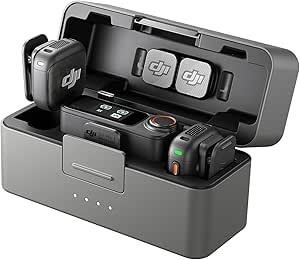 | Best Premium Interview Kit | Microphone type: Wireless lavalier | Included components: 2 transmitters, 1 receiver, charging case, USB-C mobile phone adapter | Audio channels: 4 | VIEW LATEST PRICE | See Our Full Breakdown |
| Loewieta X-108B2-S-GARY Wireless Handheld Microphone |  | Best for Handheld Podcast Hosting | Microphone type: Handheld dynamic | Wireless frequency: 2.4 GHz (2400–2483.5 MHz) | Wireless range: Up to 150 ft | VIEW LATEST PRICE | See Our Full Breakdown |
| GoorDik Wireless USB-C Lavalier Microphone Set |  | Best Value for Two-Person Phone Podcasts | Microphone type: Lavalier | Connectors: USB Type-C and USB Type-A adapter | Pickup pattern: Omnidirectional | VIEW LATEST PRICE | See Our Full Breakdown |
| ZealSound K66 USB Condenser Microphone with Noise Reduction, Gain and Volume Controls, Mute, and Headphone Monitoring |  | Best for Beginner Desk Podcasts | Microphone type: USB condenser | Pickup pattern: Cardioid | Frequency response: 40 Hz–18 kHz | VIEW LATEST PRICE | See Our Full Breakdown |
| MAONO PD100W Wireless Dynamic Microphone for PC |  | Best for a Wireless Desk Setup | Connectivity: USB wired and 2.4 GHz wireless | Capsule: 30 mm dynamic | Pickup pattern: Cardioid | VIEW LATEST PRICE | See Our Full Breakdown |
| Gicorino Wireless Lavalier Microphone Kit for Four People |  | Best for Four-Person Interviews | Microphones: 4 | Wireless technology: 2.4 GHz | Wireless range: Up to 164 feet | VIEW LATEST PRICE | See Our Full Breakdown |
| BOYA BY-V4U 4-Channel Wireless Lavalier Microphone with Charging Case, USB-C |  | Best USB-C Pick for Four Speakers | Connectivity: 2.4 GHz wireless | Connector: USB-C | Channels: 4 mono channels | VIEW LATEST PRICE | See Our Full Breakdown |
| NPTCL Dual USB-C Wireless Lavalier Microphone for iPhone, Android, and Computers |  | Best for Two-Person Podcasts | Microphone count: 2 | Connector: USB Type-C | Pickup pattern: Omnidirectional | VIEW LATEST PRICE | See Our Full Breakdown |
| Mini Mic Pro Wireless Lavalier Microphone for iPhone and Android | 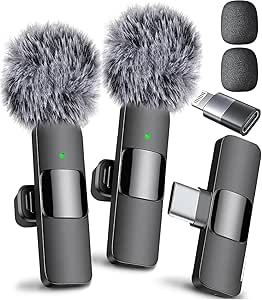 | Best Compact Pick for Phone-Based Podcasts | Connectivity: 2.4 GHz wireless | Connectors: Lightning and USB Type-C | Microphones: 2 lavalier microphones | VIEW LATEST PRICE | See Our Full Breakdown |
| MAONO PD200W Hybrid Wireless Dynamic Podcast Microphone |  | Best Hybrid Mic for a Solo Podcaster | Microphone type: Dynamic | Connectivity: Wireless, USB, XLR | Polar pattern: Unidirectional (cardioid) | VIEW LATEST PRICE | See Our Full Breakdown |
| Labstandard Dual Wireless Lavalier Microphone Kit for iPhone and USB-C Devices |  | Best Value for Two-Person Mobile Interviews | Microphone type: Wireless lavalier condenser | Microphone count: 2 | Connectivity: Lightning, USB Type-C | VIEW LATEST PRICE | See Our Full Breakdown |
| MAONO PD200W Hybrid Wireless Podcast Microphone Bundle for Two |  | Best Two-Mic Desk Podcast Bundle | Microphone type: Dynamic | Microphone count: 2 | Connectivity: Wireless, USB, XLR | VIEW LATEST PRICE | See Our Full Breakdown |
| DJI Mic Mini Wireless Microphone Kit (2 Transmitters, 1 Receiver, Charging Case) | 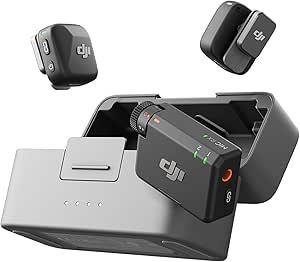 | Best Compact Kit for On-the-Go Podcasts | Transmitters: 2 | Transmitter weight: 10 g | Maximum transmission range: 400 m | VIEW LATEST PRICE | See Our Full Breakdown |
| wireless microphones for podcast | Battery life | Connectivity | Microphone type | Pickup pattern |
|---|---|---|---|---|
| ZealSound K66 Wireless USB Mic | — | — | Condenser | Cardioid |
| DJI Mic 3 Wireless Microphone | Up to 28 hours with charging case | Bluetooth and Wi-Fi | Wireless lavalier | — |
| Loewieta X-108B2-S-GARY Wirele | — | — | Handheld dynamic | — |
| GoorDik Wireless USB-C Lavalie | 6–12 hours per transmitter | — | Lavalier | Omnidirectional |
| ZealSound K66 USB Condenser Mi | — | USB; includes USB-C and Lightning adapters | USB condenser | Cardioid |
| MAONO PD100W Wireless Dynamic | Up to 40 hours | USB wired and 2.4 GHz wireless | — | Cardioid |
| Gicorino Wireless Lavalier Mic | Up to 6 hours | — | — | Omnidirectional |
| BOYA BY-V4U 4-Channel Wireless | Up to 6 hours per charge; up to 18 hours with charging case | 2.4 GHz wireless | — | Omnidirectional |
| NPTCL Dual USB-C Wireless Lava | Up to 6 hours per microphone; up to 24 hours with charging case | — | — | Omnidirectional |
| Mini Mic Pro Wireless Lavalier | Up to 6 hours per charge | 2.4 GHz wireless | — | Omnidirectional |
| MAONO PD200W Hybrid Wireless D | Up to 60 hours with RGB lighting off | Wireless, USB, XLR | Dynamic | — |
| Labstandard Dual Wireless Lava | About 6 hours | Lightning, USB Type-C | Wireless lavalier condenser | — |
| MAONO PD200W Hybrid Wireless P | Up to 60 hours with RGB lighting off | Wireless, USB, XLR | Dynamic | — |
| DJI Mic Mini Wireless Micropho | — | Bluetooth, DJI OsmoAudio, USB Type-C | — | — |
More Details on Our Top Picks
ZealSound K66 Wireless USB Microphone with Noise Reduction and Onboard Controls
For a podcast recorded at a desk, the wireless K66 combines focused cardioid pickup with controls that are easy to reach mid-session. Its receiver-based 2.4 GHz connection lets you place the mic without keeping it tethered to the computer, while gain, mute, echo, and zero-latency headphone monitoring help manage levels and check your voice as you record. The included Lightning-compatible and USB-C adapters broaden its use across supported phones and tablets, and wired USB audio gives you a fallback for longer sessions.
Compared with the wired ZealSound K66 USB Condenser, this version offers more flexible placement but depends on a receiver and device compatibility. Its noise-reduction mode may help with common background sounds, though it is not a substitute for a quiet room. I would skip it if your podcast needs clip-on mics for multiple moving guests.
Pros:- 2.4 GHz wireless connection allows flexible mic placement.
- Gain, mute, echo, and headphone monitoring controls are available on the mic.
- Wired USB audio and power offer a fallback for extended recording.
- Includes Lightning-compatible and USB-C adapters for supported devices.
Cons:- Wireless operation depends on the receiver and compatible device connections.
- Onboard noise reduction may not remove all room noise.
- A single desktop-style microphone is less suited to recording multiple speakers at a distance.
Best for: Solo podcasters who record at a desk but want to move the microphone or switch among compatible computers, phones, and tablets.
Not ideal for: Interviewers recording several guests away from a desk, since this is a single microphone rather than a multi-transmitter lavalier kit.
- Microphone type:Condenser
- Audio capture:48 kHz
- Pickup pattern:Cardioid
- Wireless connection:2.4 GHz
- Monitoring:3.5 mm headphone jack; zero-latency monitoring
- Controls:Gain, headphone volume, echo, mute
- Wired backup:USB audio and power
- Compatibility:Windows PC, Mac, laptops, PS4, PS5, iPhone, iPad, Android devices, and compatible tablets
Our verdict“Choose the wireless K66 for a control-rich solo podcast setup that benefits from flexible placement, but choose a two-transmitter lavalier kit for guest interviews.”
DJI Mic 3 Wireless Microphone Kit (2 Transmitters, 1 Receiver, Charging Case)
The DJI Mic 3 is the strongest fit here for podcasters who record interviews on the move and want a backup recording inside each transmitter. Its dual-file 32-bit float internal recording can help preserve usable takes when levels change unexpectedly, while adaptive gain control and two noise-cancellation levels offer more ways to manage voices than the simpler controls on the ZealSound K66 models. Two transmitters make it ready for a host and guest, and the charging case supports up to 28 hours of use.
That added recording flexibility comes with a more involved kit and a higher setup burden than a direct USB desktop mic. It works with cameras, smartphones, and supported OsmoAudio devices, but the listed compatibility is narrower than the K66’s broad device list. I would pass if you only need one fixed mic at a computer.
Pros:- Two transmitters support host-and-guest recording.
- Dual-file 32-bit float internal recording helps handle unexpected changes in recording level.
- Adaptive gain control and two noise-cancellation levels offer flexible voice management.
- Charging case supports up to 28 hours of use.
Cons:- More components and connection steps than a plug-and-play USB desktop mic.
- Compatibility is specified for cameras, smartphones, and supported OsmoAudio devices rather than a broad range of computers.
- Connecting to Osmo Mobile series products requires the first-generation DJI OM Multifunctional Module.
Best for: Mobile interview podcasters and small production teams who want two wireless mics, internal recording, and protection against level spikes.
Not ideal for: Solo desktop podcasters who want a simple direct USB microphone and do not need transmitters, a receiver, or internal recording.
- Microphone type:Wireless lavalier
- Included components:2 transmitters, 1 receiver, charging case, USB-C mobile phone adapter
- Audio channels:4
- Internal recording:Dual-file 32-bit float
- Noise cancellation:2 levels
- Connectivity:Bluetooth and Wi-Fi
- Connectors:3.5 mm jack and USB Type-C
- Battery life:Up to 28 hours with charging case
- Weight:221.2 g
Our verdict“Pick the DJI Mic 3 for mobile two-person podcasts where backup recording and flexible gain handling matter more than a simple desktop setup.”
Loewieta X-108B2-S-GARY Wireless Handheld Microphone
The Loewieta X-108B2-S-GARY suits a podcast format where the host passes a microphone between speakers or records standing interviews. Its handheld dynamic design feels more like a stage mic than the clip-on transmitters in the DJI Mic 3 or GoorDik set, and the listed range of up to 150 feet gives room to move when paired with compatible equipment. Plug-and-play setup avoids pairing, while 3.5 mm and 6.35 mm connectors let it connect to supported audio interfaces, mixers, speakers, and amplifiers.
The tradeoff is that it is a single-channel handheld system, not a discreet two-person podcast kit. The receiver is rated for up to six hours, less than the microphone’s stated eight-hour battery life, so long sessions need attention to receiver power. I would choose a lavalier kit instead for hands-free video interviews or a tidy desk recording.
Pros:- Handheld dynamic format works well for passing a mic between speakers.
- Listed wireless range reaches up to 150 feet.
- Plug-and-play setup requires no pairing.
- Rechargeable microphone battery is rated for up to eight hours.
Cons:- Single-channel design does not provide separate wireless microphones for multiple speakers.
- Receiver runtime is listed as up to six hours, shorter than the microphone’s stated battery life.
- Requires compatible audio equipment with 3.5 mm or 6.35 mm input.
Best for: Hosts who record standing interviews, live podcast segments, or conversational shows with a compatible mixer or audio interface.
Not ideal for: Podcasters who need hands-free placement, two separately captured speakers, or a receiver runtime that matches the microphone’s full stated battery life.
- Microphone type:Handheld dynamic
- Wireless frequency:2.4 GHz (2400–2483.5 MHz)
- Wireless range:Up to 150 ft
- Microphone battery life:Up to 8 hours
- Receiver runtime:Up to 6 hours
- Microphone battery capacity:1200 mAh
- Charging time:2 hours
- Connectors:3.5 mm and 6.35 mm jacks
Our verdict“Choose the Loewieta for handheld, movement-friendly podcast segments with compatible audio gear, not for discreet dual-person recording.”
GoorDik Wireless USB-C Lavalier Microphone Set
For a two-person podcast recorded on a compatible phone or tablet, the GoorDik set provides two transmitters and a USB-C receiver without the more elaborate recording features of the DJI Mic 3. That makes it a practical match for simple host-and-guest conversations: each speaker can wear a mic, and the included furry wind muffs and foam covers help adapt to indoor or outdoor recording conditions. Noise reduction, original sound, and mute modes offer useful choices without requiring a desktop audio interface.
Compared with the wireless ZealSound K66, GoorDik prioritizes two mobile speakers over desk controls and headphone monitoring. Its 30-meter range is listed for wireless use, but phone and computer setup can take extra steps: some Android devices need OTG activation, and computers may require selecting it as the input. I would skip it if you need built-in local recording or extensive level control.
Pros:- Two transmitters allow separate mic placement for a host and guest.
- Noise reduction, original sound, and mute modes provide simple recording choices.
- Includes USB and Lightning adapters for broader device connections.
- Furry wind muffs and foam covers suit both outdoor and indoor recording.
Cons:- Some Android phones may require OTG activation.
- Computers may require selecting the microphone as the default input.
- Does not list internal recording or headphone monitoring for checking audio during a session.
Best for: Two-person podcast teams recording directly to a compatible USB-C phone, tablet, or computer who want clip-on mics and basic sound modes.
Not ideal for: Podcasters who need onboard headphone monitoring, detailed gain controls, or a kit that works with every Android phone without setup checks.
- Microphone type:Lavalier
- Connectors:USB Type-C and USB Type-A adapter
- Pickup pattern:Omnidirectional
- Channels:2
- Wireless range:Up to 30 meters
- Battery life:6–12 hours per transmitter
- Frequency range:20–20,000 Hz
- Signal-to-noise ratio:65 dB
- Included accessories:USB charging cable, USB adapter, Lightning adapter, 4 foam covers, 2 furry wind muffs
Our verdict“Choose GoorDik for straightforward two-person mobile podcasts with included wind protection, but look elsewhere for advanced monitoring or internal backups.”
ZealSound K66 USB Condenser Microphone with Noise Reduction, Gain and Volume Controls, Mute, and Headphone Monitoring
The wired ZealSound K66 USB Condenser is the more straightforward choice for a beginner recording at a desk: connect it by USB, speak toward its cardioid pickup, and use the physical controls to adjust mic volume, monitoring volume, echo, or mute. Zero-latency headphone monitoring lets you hear the signal while recording, and the mute indicator makes it easier to tell when the mic is off. Included USB-C and Lightning adapters extend its use to compatible phones and tablets.
Unlike the wireless K66 in this roundup, this model does not offer untethered placement, but the direct USB connection avoids a separate wireless receiver. Its noise-reduction mode may help with keyboard or fan sounds, though it cannot replace room treatment. I would pick the GoorDik instead for two mobile speakers, or the DJI Mic 3 if internal recording is a priority.
Pros:- Plug-and-play USB connection suits a simple desk recording setup.
- Cardioid pickup focuses on the speaker in front of the mic.
- Zero-latency headphone monitoring and a mute status LED help with session control.
- Physical microphone, monitoring, echo, and mute controls are built in.
Cons:- Wired USB connection limits microphone placement compared with the wireless K66.
- Noise reduction may not remove all background sounds.
- Phone compatibility depends on the included adapters and device support.
Best for: New solo podcasters recording at a computer who want direct USB setup, physical controls, and headphone monitoring.
Not ideal for: Hosts who need wireless freedom, multiple clip-on microphones, or a compact kit for recording guests away from a desk.
- Microphone type:USB condenser
- Pickup pattern:Cardioid
- Frequency response:40 Hz–18 kHz
- Sampling rate:46 kHz
- Sensitivity:–45 dB ±3 dB
- Monitoring:Zero-latency monitoring via 3.5 mm headphone jack
- Controls:Microphone volume, monitoring volume, echo, and mute
- Connectivity:USB; includes USB-C and Lightning adapters
Our verdict“Pick this wired K66 for an uncomplicated solo desk podcast with direct monitoring, and choose a wireless kit if free movement or guest mics matter more.”
MAONO PD100W Wireless Dynamic Microphone for PC
The MAONO PD100W is the closest fit here for a host who wants a familiar desk-microphone setup without staying tethered to a computer. Its dynamic cardioid capsule focuses on the speaker in front of it, while three noise-reduction levels offer some flexibility when a room is less than quiet. Unlike the wearable lavaliers in the BOYA BY-V4U or Mini Mic Pro kits, this mic is designed to sit near the host, which better suits a fixed podcast position but is less convenient for moving interviews. USB wired mode gives a fallback when you do not want to rely on wireless, and headphone monitoring and touch mute make solo recording easier to manage. The tradeoffs are its desk-bound format, lack of Xbox support, and the separate Lightning receiver needed for iPhone use.
Pros:- USB wired and 2.4 GHz wireless modes provide different ways to connect.
- Cardioid pickup and adjustable noise reduction suit focused, close-up voice recording.
- Touch mute and headphone monitoring help a host manage a solo session.
- Battery life is rated for up to 40 hours.
Cons:- The desk-microphone format is less practical than lavaliers for mobile interviews.
- Not compatible with Xbox.
- iPhone use requires a separately purchased Lightning receiver.
Best for: Solo podcasters recording at a desk on a computer or PS5 who want both wireless freedom and a USB wired fallback.
Not ideal for: Hosts who record while walking, need a multi-person wearable mic kit, or use Xbox or an iPhone without a separate Lightning receiver.
- Connectivity:USB wired and 2.4 GHz wireless
- Capsule:30 mm dynamic
- Pickup pattern:Cardioid
- Noise reduction:Three adjustable levels
- Battery life:Up to 40 hours
- Wireless range:Up to 50 m (160 ft)
- Monitoring:3.5 mm headphone jack
- Compatibility:Computer, mobile phone, laptop, and PS5; not Xbox
Our verdict“Choose the PD100W for a mostly fixed podcast desk where wireless operation, monitoring, and a wired fallback matter more than portability.”
Gicorino Wireless Lavalier Microphone Kit for Four People
For a podcast with several guests gathered at once, the Gicorino four-microphone kit addresses a different problem than the desk-focused MAONO PD100W: it lets up to four people wear separate transmitters rather than taking turns at one mic. Its Lightning, USB-C, and 3.5 mm connections also make it more adaptable across phones and camera-style inputs than the USB-C-only BOYA BY-V4U. The omnidirectional lavaliers allow speakers to move naturally, though they can capture more surrounding sound than a close, front-facing dynamic mic. A stated 164-foot range is ample for many interview setups, but the practical limit will depend on the recording environment. The main constraint for longer sessions is up to six hours of transmitter battery life; Android users may also need to enable OTG.
Pros:- Supports simultaneous recording with up to four microphones.
- Includes Lightning, USB-C, and 3.5 mm connections.
- USB-C receiver port can charge a phone while recording.
- Kit includes wind covers, clips, wired headphones, and a storage case.
Cons:- Transmitters are rated for up to six hours per charge.
- Android devices require OTG to be enabled.
- Omnidirectional pickup can capture more room sound than a close cardioid desk mic.
Best for: Interview podcasters and small panel hosts who need four people mic’d at once and record across phones or devices with a 3.5 mm input.
Not ideal for: Hosts recording long sessions without charging breaks, or Android users who cannot enable OTG on their device.
- Microphones:4
- Wireless technology:2.4 GHz
- Wireless range:Up to 164 feet
- Battery life:Up to 6 hours
- Pickup pattern:Omnidirectional
- Connections:USB-C, Lightning, and 3.5 mm
- Latency:0.01 seconds
- Included accessories:3-in-1 receiver, USB adapter, wind covers, cables, wired headphones, case, and clips
Our verdict“Pick the Gicorino when four-person interview flexibility matters more than long transmitter runtime or tightly focused desk-mic pickup.”
BOYA BY-V4U 4-Channel Wireless Lavalier Microphone with Charging Case, USB-C
The BOYA BY-V4U is a strong match for a four-person podcast recorded directly on a USB-C phone, tablet, or computer. Its four mono channels support multiple lavaliers, while the plug-and-play receiver avoids the extra connection choices included with the Gicorino kit. That simplicity comes with a narrower device fit: this is USB-C only and is not compatible with GoPro or other cameras. The charging case raises total stated use to up to 18 hours, more than the Gicorino transmitters’ six-hour rating per charge, but that total still includes charging between sessions rather than a single uninterrupted recording. One-click noise cancellation and wind protection may help with unwanted sound, though omnidirectional pickup and mono output make this less suited to a host seeking stereo capture or a tightly isolated desk-mic sound.
Pros:- Four mono channels support recording with up to four microphones.
- Plug-and-play USB-C receiver avoids Bluetooth, apps, and extra adapters.
- Charging case provides up to 18 hours of stated total use.
- One-click noise cancellation and a spray-proof sponge add noise and wind protection.
Cons:- USB-C connection limits compatibility, and the system does not support GoPro or other cameras.
- Output is mono rather than stereo.
- Each charge is rated for up to six hours, so extended sessions may need a charging break.
Best for: USB-C device owners recording multi-person interviews who want a simple receiver and a charging case for repeated sessions.
Not ideal for: Creators who need camera or GoPro compatibility, stereo output, or a wired desk microphone like the MAONO PD100W.
- Connectivity:2.4 GHz wireless
- Connector:USB-C
- Channels:4 mono channels
- Pickup pattern:Omnidirectional
- Transmission range:Up to 650 feet
- Battery life:Up to 6 hours per charge; up to 18 hours with charging case
- Frequency response:20 Hz–20 kHz
- Compatibility:USB-C smartphones, tablets, laptops, and computers; not GoPro or other cameras
Our verdict“Choose the BY-V4U for straightforward four-person recording on USB-C devices, but skip it if your podcast workflow depends on cameras or stereo output.”
NPTCL Dual USB-C Wireless Lavalier Microphone for iPhone, Android, and Computers
The NPTCL dual lavalier set is aimed at the common two-person podcast: a host and guest can each wear a mic, and automatic pairing avoids app setup or Bluetooth configuration. Its charging case provides up to 24 hours of combined use, a longer stated total than the Mini Mic Pro’s six-hour per-charge runtime, though each NPTCL microphone is also rated for only up to six hours before recharging. Compared with the four-mic BOYA BY-V4U, this kit is a simpler fit for two speakers and USB-C devices, but it does not offer the same four-person channel capacity. Noise reduction and windscreen covers can help tame incidental sound, while omnidirectional pickup favors natural movement over isolating each voice from a noisy room. Computer users should check their port: the included USB adapter is needed for a standard USB connection.
Pros:- Two microphones support recording a host and guest at the same time.
- Automatic pairing works without an app or Bluetooth.
- Charging case provides up to 24 hours of combined use and displays remaining battery.
- Noise reduction and windscreen covers help reduce some unwanted sound.
Cons:- Each microphone is rated for up to six hours per charge.
- Two microphones do not cover larger panels like the four-mic BOYA BY-V4U.
- A USB adapter is needed for computers with a standard USB port.
Best for: Two-person podcast hosts using USB-C phones or tablets who want automatic pairing and a case for charging between sessions.
Not ideal for: Panel podcasters who need more than two microphones, or computer users who do not have the required USB adapter for their port.
- Microphone count:2
- Connector:USB Type-C
- Pickup pattern:Omnidirectional
- Battery life:Up to 6 hours per microphone; up to 24 hours with charging case
- Maximum range:70 ft
- Compatible devices:USB-C iPhone, Android phones, iPad, MacBook, laptop, and PC
- Features:Noise reduction, mute function, battery indicator, and clip
- Weight:200 g
Our verdict“The NPTCL set suits two-speaker USB-C podcasts that value easy setup and case-based charging over four-person capacity.”
Mini Mic Pro Wireless Lavalier Microphone for iPhone and Android
When podcast recording happens on a phone and portability outranks long runtimes, the Mini Mic Pro earns its place through compact, wearable components and adapters for both Lightning and USB-C. That broader connector mix makes it easier to move between compatible iPhones and Android devices than the USB-C-only NPTCL set, though the Mini Mic Pro’s stated battery life is still only up to six hours per charge. Two lavalier microphones support a host and guest, and the included foam and deadcat tips offer useful wind protection for outdoor or on-the-go recording. Unlike the MAONO PD100W, it does not provide a desk-oriented dynamic capsule, headphone monitoring, or a wired USB mic mode; it is built around mobile convenience instead. The 2.4 GHz link may also face interference in crowded wireless environments.
Pros:- Lightning and USB-C adapters support a broad range of compatible phones and tablets.
- Compact, lightweight design supports wearable recording.
- Includes two microphones plus foam and deadcat wind protection.
- Can charge the connected device while recording.
Cons:- Battery life is rated for up to six hours per charge.
- The 2.4 GHz connection may be susceptible to interference.
- Lacks the headphone monitoring and USB wired mode offered by the MAONO PD100W.
Best for: Mobile podcasters and interviewers who need a lightweight two-mic kit that can connect to Lightning or USB-C devices.
Not ideal for: Desk-based hosts who want headphone monitoring and a wired backup, or podcasters planning sessions longer than six hours without a recharge.
- Connectivity:2.4 GHz wireless
- Connectors:Lightning and USB Type-C
- Microphones:2 lavalier microphones
- Pickup pattern:Omnidirectional
- Battery life:Up to 6 hours per charge
- Weight:80 g
- Dimensions:3 x 0.5 x 0.25 inches
- Included wind protection:Two foam tips and two deadcat tips
Our verdict“Choose the Mini Mic Pro for compact two-person phone recordings across Lightning and USB-C devices, not for a feature-rich desk podcast setup.”
MAONO PD200W Hybrid Wireless Dynamic Podcast Microphone
I’d choose the PD200W for a solo host who wants one microphone to fit a changing podcast setup. Its wireless, USB-C, and XLR connections let you start at a computer and later connect to an audio interface without replacing the mic. The cardioid dynamic design and three-stage noise cancellation are better suited to focusing on a nearby voice than the Labstandard dual lavalier kit, which prioritizes discreet, mobile two-person recording. MaonoLink adds sound adjustments, and the mic can support two wireless microphones on separate tracks if your show expands. The tradeoff is a comparatively substantial desktop unit at 1.32 kg, rather than a tiny clip-on. Wireless use also means charging, and camera or Lightning accessories are sold separately. I’d rank it ahead of the two-mic bundle for a solo host who values flexible connections over a second included mic.
Pros:- Wireless, USB-C, and XLR connections accommodate different recording setups.
- Cardioid pickup and three-stage noise cancellation help focus on a close voice.
- Can connect two wireless microphones and record them to separate tracks.
- Up to 60 hours of battery life with RGB lighting off.
Cons:- Wireless operation requires charging.
- Camera and Lightning accessories are sold separately.
- At 1.32 kg, it is less suited to portable or clip-on recording than a lavalier kit.
Best for: Solo podcasters recording at a desk who want the option to move from USB-C to an XLR interface later.
Not ideal for: Hosts who need two complete microphones in the box or a lightweight setup for recording while walking.
- Microphone type:Dynamic
- Connectivity:Wireless, USB, XLR
- Polar pattern:Unidirectional (cardioid)
- Signal-to-noise ratio:82 dB
- Maximum SPL:128 dB
- Wireless range:Up to 60 m
- Battery life:Up to 60 hours with RGB lighting off
- Weight:1.32 kg
- Included accessories:Desktop stand, USB-C to USB-A and USB-C cable, Type-C receiver, Type-C adapter cable
Our verdict“Choose the PD200W if you want a desk-focused podcast mic that can adapt from USB recording to an XLR setup.”
Labstandard Dual Wireless Lavalier Microphone Kit for iPhone and USB-C Devices
For interviews recorded directly to a phone or tablet, I’d favor the Labstandard dual lavalier kit over the desk-oriented MAONO PD200W. Its two clip-on microphones let both speakers move naturally, while Lightning and USB-C receiver options cover compatible Apple and USB-C devices. That makes it a practical fit for a mobile podcast, though it is not a substitute for the PD200W’s XLR path or desktop dynamic-mic format. The omnidirectional pickup can capture voices from different directions, and noise reduction plus 2.4 GHz transmission are intended to support clearer, synchronized speech. Battery life is about six hours, so this kit is less suited to long recording days than the MAONO’s stated runtime. I’d keep compatibility in mind too: your recording device needs a supported port, and the kit’s compact plastic-or-metal-alloy construction is less desk-studio oriented.
Pros:- Two microphones support recording two speakers at once.
- Lightning and USB-C connectivity suit compatible phones and tablets.
- Omnidirectional pickup accommodates speakers who move during interviews.
- Noise reduction and real-time audio syncing are designed for clearer speech capture.
Cons:- About six hours of battery life may limit extended recording days.
- Compatibility depends on having a supported Lightning or USB-C port.
- Lavalier recording does not provide the desktop dynamic-mic and XLR setup of the MAONO PD200W.
Best for: Two-person podcast hosts who record interviews on compatible Lightning or USB-C phones and tablets.
Not ideal for: Desk-based hosts seeking an XLR connection, a single broadcast-style microphone, or long sessions without recharging.
- Microphone type:Wireless lavalier condenser
- Microphone count:2
- Connectivity:Lightning, USB Type-C
- Polar pattern:Omnidirectional
- Channels:2
- Latency:0.008 seconds
- Battery life:About 6 hours
- Weight:0.05 kg
- Included accessories:Receiver, rechargeable Lightning adapter, USB-C charging cable, user manual
Our verdict“Pick this kit for two-person podcast interviews recorded on a compatible phone, not for a desk studio that needs XLR.”
MAONO PD200W Hybrid Wireless Podcast Microphone Bundle for Two
If two hosts record from a desk, I’d pick this bundle over buying the single MAONO PD200W and adding another mic later. It includes two dynamic cardioid microphones and desktop stands, with wireless, USB, and XLR connectivity for adapting to different recording setups. Separate-track recording gives each speaker an independent path for editing, while three-stage noise cancellation and cardioid pickup are designed to focus on voices near the microphones. Compared with the Labstandard dual lavalier kit, this is the more studio-shaped choice; the Labstandard is lighter and better suited to mobile phone interviews. The tradeoff is that two desk mics take more room and are less discreet to wear. Wireless battery life is stated as up to 60 hours with RGB off, and lighting reduces that runtime. Camera and Lightning accessories are sold separately.
Pros:- Includes two microphones and two desktop stands for a two-host setup.
- Can record each wireless microphone to a separate track.
- Wireless, USB, and XLR connectivity offers flexible recording options.
- Cardioid pickup and three-stage noise cancellation help focus on voices.
Cons:- Two desktop microphones and stands require more space than a dual lavalier kit.
- Wireless battery life is reduced when RGB lighting is on.
- Camera and Lightning accessories are sold separately.
Best for: Two-person podcast teams recording at a desk who want separate tracks and the choice of wireless, USB, or XLR connections.
Not ideal for: Mobile interviewers who need tiny clip-on microphones or podcasters who cannot accommodate two desktop stands.
- Microphone type:Dynamic
- Microphone count:2
- Connectivity:Wireless, USB, XLR
- Polar pattern:Unidirectional cardioid
- Signal-to-noise ratio:82 dB
- Maximum sound pressure level:128 dB SPL
- Wireless range:Up to 60 m
- Battery life:Up to 60 hours with RGB lighting off
- Included:2 microphones, 2 desktop stands, 2 USB-C to USB-A and USB-C cables, Type-C receiver, Type-C adapter cable, user manual
Our verdict“Choose the bundle for a two-host desk podcast that needs separate tracks and flexible connections rather than wearable mics.”
DJI Mic Mini Wireless Microphone Kit (2 Transmitters, 1 Receiver, Charging Case)
The DJI Mic Mini is the pick here when a podcast moves beyond the desk: two transmitters weigh just 10 g each, making them easier to wear discreetly than either MAONO desktop microphone. Its receiver-and-case setup is aimed at camera and smartphone recording, with a stated range of up to 400 m, two noise-cancellation levels, and automatic audio limiting to help manage changing sound levels. The charging case provides up to 48 hours of battery life, but that figure does not make it a desk mic with USB and XLR options like the MAONO PD200W bundle. For seated studio conversation, the MAONO’s dynamic cardioid microphones are the more direct fit; DJI makes more sense for walking interviews, video podcasts, and location recording. It is not waterproof, and Osmo Mobile connection needs a specific first-generation module.
Pros:- 10 g transmitters are lightweight and discreet to wear.
- Up to 400 m transmission range supports recording in outdoor settings.
- Two noise-cancellation levels and automatic limiting help manage varied audio conditions.
- Charging case provides up to 48 hours of battery life.
Cons:- The product is not waterproof.
- It lacks the USB and XLR desk-mic connectivity offered by the MAONO PD200W bundle.
- Osmo Mobile series connection requires the first-generation DJI OM Multifunctional Module.
Best for: Video podcasters and interviewers who need lightweight clip-on transmitters for camera or smartphone recording away from a desk.
Not ideal for: Desk-based audio-only hosts who want XLR connectivity, or creators who need waterproof transmitters.
- Transmitters:2
- Transmitter weight:10 g
- Maximum transmission range:400 m
- Sampling rate:48 kHz
- Sound pressure level:120 dB SPL
- Battery life with charging case:Up to 48 hours
- Noise cancellation:2 levels: Basic and Strong
- Connectivity:Bluetooth, DJI OsmoAudio, USB Type-C
- Included components:2 transmitters, 1 receiver, charging case, accessories
Our verdict“Choose the DJI Mic Mini for lightweight, mobile podcast recording rather than a permanent desk-microphone setup.”
How We Picked
I judged these microphones by how well their stated designs fit actual podcast workflows: recording at a desk, interviewing on location, or capturing multiple speakers. I compared microphone style, the number of transmitters, device connections, and practical controls such as mute, gain adjustment, and headphone monitoring where listed. For a podcast, a system that captures every speaker reliably and fits the recording device can matter more than a long feature list.
The ranking gives priority to versatile podcast use, clear role separation, and a setup that matches the intended recording context. The MAONO PD200W Hybrid Wireless Dynamic Podcast Microphone leads for its podcast-oriented format and wireless flexibility; the DJI Mic 3 ranks highly for two-person mobile recording, while multi-transmitter lavalier kits earn their place for group interviews. More specialized or simpler options rank lower not because they cannot work, but because their use cases are narrower or buyers may need to verify compatibility and workflow fit. I did not treat product names or broad category claims as proof of sound quality.
| wireless microphones for podcast | Pickup pattern |
|---|---|
| ZealSound K66 Wireless USB Mic | Cardioid |
| DJI Mic 3 Wireless Microphone | — |
| Loewieta X-108B2-S-GARY Wirele | — |
| GoorDik Wireless USB-C Lavalie | Omnidirectional |
| ZealSound K66 USB Condenser Mi | Cardioid |
| MAONO PD100W Wireless Dynamic | Cardioid |
| Gicorino Wireless Lavalier Mic | Omnidirectional |
| BOYA BY-V4U 4-Channel Wireless | Omnidirectional |
| NPTCL Dual USB-C Wireless Lava | Omnidirectional |
| Mini Mic Pro Wireless Lavalier | Omnidirectional |
| MAONO PD200W Hybrid Wireless D | — |
| Labstandard Dual Wireless Lava | — |
| MAONO PD200W Hybrid Wireless P | — |
| DJI Mic Mini Wireless Micropho | — |
Factors to Consider When Choosing Wireless Microphones For Podcasts
Before choosing a wireless microphone, start with the way your podcast is actually recorded. The right system depends on speaker count, recording distance, host movement, and the device or software at the center of your setup. These factors can prevent a mismatch that no extra feature can fix.
Choose the microphone style for your recording space
A dynamic podcast microphone is usually positioned close to the speaker, which makes it a natural fit for a desk or a controlled interview setup. A lavaliere clips to clothing and allows a host or guest to move, but it also makes placement and fabric noise part of the recording routine. Handheld wireless microphones can suit standing interviews or shared hosting, though they take up a hand and need consistent distance from the speaker. Do not choose based on the word “podcast” in a product name alone; ask whether the mic’s physical format matches your posture and room. A desk host may find a clip-on mic less convenient than expected, while a traveling interviewer may find a desktop microphone cumbersome. If several people share a table, plan where each mic and receiver will sit before choosing the style.
Match transmitter count to the number of speakers
Count the people who need separate microphones at the same time, not just the usual host and guest. A dual-transmitter kit can serve a two-person interview, but it will not cover a third guest unless the recording workflow adds another compatible microphone. Four-person kits such as the BOYA BY-V4U and Gicorino are designed for larger groups, yet more transmitters also mean more devices to charge, place, and keep track of. Buying a multi-person set for a solo show can add setup complexity without improving the recording. Conversely, trying to share one mic across several speakers can create uneven levels and interruptions. Leave room for occasional guests only if the added transmitter capacity fits how often those episodes happen.
Check the complete connection path before buying
A wireless kit must connect to both the microphone system and the device that records your show. Confirm whether the receiver works with your phone, computer, camera, or audio interface, and check the connector type for the exact device you use. USB-C in a product title does not guarantee compatibility with every phone, computer, or recording app. Some setups may need an adapter, and an adapter can affect mounting or add another point of failure when recording away from home. For computer-based shows, check that your preferred software can select the receiver as an input. For phone recording, confirm the operating system and port rather than relying on a general claim that a mic works with phones.
Think about how close the speakers are to the receiver
Wireless range claims are only part of the picture; walls, other wireless equipment, and a busy venue can affect a recording. A desk interview with the receiver nearby asks less of a wireless system than a host walking through a large room. Keep the receiver where it can maintain a clear link, and avoid assuming that a charging case or extra transmitter improves signal reliability. If your podcast moves between quiet rooms and public locations, favor a workflow that lets you monitor the connection and check audio before a long take. A short test recording in the actual room can reveal dropouts or interference before a full episode. For remote or high-stakes interviews, a wired backup or a second recording path can reduce the cost of a wireless failure.
Budget for setup time, monitoring, and upkeep
The purchase decision includes more than the microphone itself: think about charging, storage, adapters, and the time needed to prepare each session. A charging case can make a compact kit easier to carry and store, but it does not replace a charging routine or a battery check before recording. Onboard mute, gain, or headphone-monitoring controls can help a host catch mistakes without interrupting the session, while a simpler kit may require more checks on the connected device. Lavaliers also need occasional repositioning and care around clothing, whereas a desktop mic needs a stable place and a repeatable speaking distance. If multiple guests use the system, label transmitters and agree on who is responsible for charging them. Pay more for features that address a recurring problem in your workflow, not for capabilities you are unlikely to use.
Set expectations for sound and room treatment
A wireless connection changes how audio reaches the recorder; it does not make a noisy or echoing room sound controlled. Close microphone placement, a quiet recording area, and consistent speaking technique often matter more than adding another wireless feature. Clip-on mics can capture clothing movement, while desk microphones can pick up room reflections if the speaker sits too far away. Before blaming a microphone, try changing its position and reducing nearby noise sources. If every episode uses the same room, improving that space may help more than moving to a different kit. If you record in changing locations, portability and a quick sound check may be more useful than elaborate desk controls.
Frequently Asked Questions
Is a wireless lavalier or a wireless dynamic mic better for a two-person podcast?
Choose a wireless dynamic mic if both speakers sit at a desk and want a close, familiar podcast setup; choose a dual-lavalier kit if they need to move or record away from a table. A lavalier keeps hands free, but placement, clothing noise, and transmitter charging become part of the routine. A dynamic mic generally asks speakers to stay near the microphone, which can be less convenient during an active interview. Also check whether the system provides one transmitter per person rather than assuming a single receiver means two microphones. For a stationary show, prioritize speaking position and monitoring; for a mobile show, prioritize fit and connection compatibility.
Can I use a USB-C wireless microphone with both my phone and computer?
Possibly, but the connector alone does not confirm support for every phone, computer, or recording app. Check the manufacturer’s compatibility information for your specific operating system and device, and confirm whether the receiver connects directly or needs an adapter. Then verify that your recording software can select the microphone as its input. A phone may also need permission settings or a different recording app before external audio is recognized. If you plan to switch devices regularly, test the full connection path before an interview rather than assuming one setup transfers seamlessly to another.
Do I need a four-transmitter kit if my show usually has two speakers?
Not usually. A dual-transmitter system is simpler to manage when the show consistently has a host and one guest, and it avoids charging and tracking extra transmitters. A four-person kit makes more sense if panel episodes or group interviews are a regular part of the format. Think about how often additional guests appear and whether you need each person recorded with a separate microphone. If larger groups are rare, a spare recording plan may be more practical than carrying a larger kit every time. If they are common, matching transmitter capacity to the full panel can reduce the need to share microphones.
Are onboard mute and headphone-monitoring controls worth prioritizing?
They can be useful when you host without a separate producer or want to catch setup mistakes during recording. A physical mute control gives you a quick way to stop audio without searching through software, while headphone monitoring can help reveal connection problems or an unusable signal. These controls are less valuable if your recording software already provides a dependable monitoring workflow and someone else manages the session. Check what the controls actually affect: a microphone’s onboard adjustment may not behave the same way across every connected device. Treat hands-on controls as workflow support, not a substitute for a short pre-recording sound check.
What should I do if my wireless mic connects but the recording still sounds poor?
First check mic placement, speaking distance, and whether clothing or desk contact is creating noise. Then record a short sample with headphones and confirm that the recording app is using the wireless receiver rather than the device’s built-in microphone. Listen for room echo and background noise; wireless transmission cannot fix either problem. If the level is too quiet or distorted, review available gain controls and the input settings in your recording software. Repeat the test in the room where you plan to record, since furniture, walls, and nearby wireless devices can change the result.
Conclusion
For one versatile pick, I recommend the MAONO PD200W Hybrid Wireless Dynamic Podcast Microphone as the best overall option for a podcast-oriented desk setup with wireless flexibility. The ZealSound K66 options are worth a look for buyers who want a straightforward USB desktop workflow with hands-on controls, while the DJI Mic 3 is my best premium-style fit for two-person mobile recording. Beginners who want clip-on convenience can start by comparing the Mini Mic Pro and GoorDik, then confirm that the connector fits their phone. For multi-person shows, choose the BOYA BY-V4U or Gicorino if four-speaker coverage is a regular need; for a compact two-person kit, the DJI Mic Mini is the more focused alternative. Match the system to your speaker count and recording device first, then weigh extra controls and portability against the setup you will actually use.
Evergreen bestsellers Picks

LG 77-Inch OLED evo C6 4K Smart TV

KitchenAid Artisan 5-Quart Tilt-Head Stand Mixer, Blue Velvet

eufy E15 Gen 2 Wire-Free Robotic Lawn Mower
As an affiliate, we earn on qualifying purchases.