For most homes, I’d start with the Edifier R1700BTs: it pairs Bluetooth convenience with useful wired inputs, making it a flexible choice for music, TV, and everyday listening. The PreSonus Eris Accent BT is a strong alternative for desktop listening, while the Edifier R1280DBs suits buyers who want a straightforward home speaker setup with several connection options. The main tradeoffs are room-filling output versus compact size, Bluetooth convenience versus wired flexibility, and a speaker pair versus a single all-in-one unit. Some models also need an amplifier, so “bookshelf speaker” does not always mean ready to play out of the box. Read on for the full breakdown and help matching a pick to your room and sources.

Get audio and creator gear delivered free with Prime
- Fast, free delivery on millions of items
- Prime Video, Amazon Music and more included
- Member-only deals all year
Complete the kit


Key Takeaways
- Powered speakers dominate this lineup: most picks combine amplification and Bluetooth, while the Polk Audio T15 pair needs a separate amplifier and is not a direct Bluetooth alternative.
- The Edifier R1700BTs is the clearest all-rounder: its mix of wireless playback and wired connections makes it more adaptable across home listening setups than compact, more specialized options.
- Desktop size changes the decision: the Sanyun SW208 and ULTIMEA BS-3 emphasize compact placement, while larger powered pairs are better suited to listeners who have room for fuller speaker cabinets.
- Several entries fill niche roles rather than replacing a stereo pair: the Marshall Acton III is a single-cabinet home speaker, while the PreSonus Eris Accent BT is aimed more at near-field desk listening.
- Similar names do not guarantee identical setups: the two Electrohome Huntley versions and the Edifier R1280DB and R1280DBs should be compared by their exact included connections and model suffix.
| MEVOSTO DS19 5-Inch Powered Bookshelf Speakers |  | Best for Adjustable, All-Purpose Connectivity | Speaker type: Powered bookshelf speakers | Audio output: 2.0 stereo | Amplifier power: 36W RMS | VIEW LATEST PRICE | See Our Full Breakdown |
| Sony SS-CS5M2 3-Way Compact Bookshelf Speakers (Pair) | 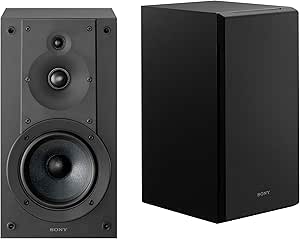 | Best Passive Pick for a Receiver-Based System | Speaker configuration: 3-way, 3-driver pair | Woofer: 5.12 inches | Tweeter: 0.98-inch precision tweeter plus wide-dispersion super tweeter | VIEW LATEST PRICE | See Our Full Breakdown |
| RIOWOIS DS6701NP Powered Bookshelf Speakers |  | Best for TV and Mixed Home Sources | Speaker type: Powered bookshelf speakers | Audio output: Stereo | Wireless connectivity: Bluetooth 5.3 | VIEW LATEST PRICE | See Our Full Breakdown |
| Marshall Acton III Bluetooth Home Speaker, Black |  | Best Compact Single-Unit Style Pick | Audio output: Stereo | Connectivity: Bluetooth and 3.5 mm input | Bluetooth range: 33 feet | VIEW LATEST PRICE | See Our Full Breakdown |
| PreSonus Eris Accent BT Powered Bluetooth Bookshelf Speakers (Pair) |  | Best for Expandable Desktop and Living-Room Audio | Configuration: 2-way stereo pair | Power output: 60W total; 30W per channel | Drivers: 4-inch woofer and 13 mm silk-dome tweeter | VIEW LATEST PRICE | See Our Full Breakdown |
| Edifier R1700BTs Bluetooth Bookshelf Speakers |  | Best for Wireless Audio Quality and Expansion | Power output: 66 watts continuous | Woofer: 4 inches | Tweeter: 19 mm silk dome | VIEW LATEST PRICE | See Our Full Breakdown |
| Electrohome Huntley Powered Bookshelf Speakers with Bluetooth 5 (EB10) |  | Best for Simple, Multi-Source Setup | Driver size: 3 inches | Maximum output power: 20 watts | Audio output: Stereo | VIEW LATEST PRICE | See Our Full Breakdown |
| Sanyun SW208 3-Inch Active Bluetooth Bookshelf Speakers with 24-Bit DAC |  | Best Compact Pick for Computer Desks | Speaker type: Active bookshelf | Driver size: 3 inches | Speaker power: 30 W × 2 | VIEW LATEST PRICE | See Our Full Breakdown |
| Electrohome Huntley Powered Bookshelf Speakers with Bluetooth 5, RCA and Aux (EB10B) |  | Best Straightforward Stereo Pair | Driver size: 3 inches | Maximum output power: 20 watts | Audio output: Stereo | VIEW LATEST PRICE | See Our Full Breakdown |
| Saiyin Powered Bluetooth Bookshelf Speakers |  | Best for Digital TV Connections | Speaker type: Powered bookshelf speakers, active and passive pair | Bluetooth: Bluetooth 5.3 | Inputs: Optical, coaxial, 3.5 mm, RCA, Bluetooth | VIEW LATEST PRICE | See Our Full Breakdown |
| Edifier R1280DBs Bluetooth Bookshelf Speakers, 42W RMS, Wood Grain |  | Best for Subwoofer Expansion | Speaker type: Powered bookshelf speakers | Power output: 42W RMS | Bluetooth: Version 5.0; 30-foot range | VIEW LATEST PRICE | See Our Full Breakdown |
| Saiyin Powered Bluetooth Bookshelf Speakers |  | Best for Flexible Connections | Power: 40 W × 2 | Bluetooth: Version 5.3; 10-meter range | Inputs: Optical, coaxial, auxiliary, RCA, Bluetooth | VIEW LATEST PRICE | See Our Full Breakdown |
| ULTIMEA BS-3 3-Way Powered Bookshelf Speakers |  | Best for TV-Centered Home Audio | Amplifier output: 70W RMS | Driver layout: Three-way | Woofer: 5.25 inches | VIEW LATEST PRICE | See Our Full Breakdown |
| Polk Audio T15 Passive Bookshelf Speakers, Black, Pair |  | Best for Receiver-Based Surround Setups | Speaker type: Passive bookshelf speakers; pair | Driver: 5.25-inch Dynamic Balance | Tweeter: 0.75 inch | VIEW LATEST PRICE | See Our Full Breakdown |
| Edifier R1280DB Powered Bluetooth Bookshelf Speakers, 42W RMS, Wood Grain |  | Best for Straightforward TV and Bluetooth Use | Speaker type: Powered bookshelf speakers | Maximum output power: 42 watts | Woofer: 4 inches | VIEW LATEST PRICE | See Our Full Breakdown |
| Bluetooth bookshelf speakers for home | Tweeter | Dimensions | Controls | Woofer |
|---|---|---|---|---|
| MEVOSTO DS19 5-Inch Powered Bo | — | — | Bass and treble knobs; remote included | — |
| Sony SS-CS5M2 3-Way Compact Bo | 0.98-inch precision tweeter plus wide-dispersion super tweeter | 8.7 × 7 × 13.2 inches (D × W × H) | — | 5.12 inches |
| RIOWOIS DS6701NP Powered Books | — | 9.69 × 7.6 × 6.22 inches | Remote and buttons | — |
| Marshall Acton III Bluetooth H | 0.75 inches | 5.91 × 10.24 × 6.69 inches | — | 4 inches |
| PreSonus Eris Accent BT Powere | — | 7 × 6.3 × 9.2 inches | Volume, bass, treble, and source; remote included | — |
| Edifier R1700BTs Bluetooth Boo | 19 mm silk dome | 6.06 × 8.43 × 10 inches | — | 4 inches |
| Electrohome Huntley Powered Bo | — | 9.09 × 9.09 × 10.91 inches | — | — |
| Sanyun SW208 3-Inch Active Blu | — | — | Volume, bass, and treble adjustment | — |
| Electrohome Huntley Powered Bo | — | 9.17 × 9.17 × 11.1 inches | — | — |
| Saiyin Powered Bluetooth Books | 0.5 inches | — | Remote control and onboard buttons | 3.75 inches |
| Edifier R1280DBs Bluetooth Boo | 13 mm silk dome | — | Remote and side-panel bass, treble, and volume knobs | 4 inches |
| Saiyin Powered Bluetooth Books | 0.5 inches (12.7 mm) | 150 × 170 × 240 mm | Remote control and top-panel buttons | 4 inches |
| ULTIMEA BS-3 3-Way Powered Boo | 1 inch | 9.17 × 7.4 × 13.15 inches | — | 5.25 inches |
| Polk Audio T15 Passive Bookshe | 0.75 inch | — | — | — |
| Edifier R1280DB Powered Blueto | 0.51 inches | — | Remote; side-panel bass and treble knobs | 4 inches |
More Details on Our Top Picks
MEVOSTO DS19 5-Inch Powered Bookshelf Speakers
The MEVOSTO DS19 is a strong fit for a home setup that needs Bluetooth alongside several wired sources. Its USB, RCA, and AUX inputs make it more adaptable than the Bluetooth-and-3.5 mm Marshall Acton III, while Bluetooth 5.4 offers a convenient wireless option. The built-in 36W RMS amplifier means the pair can work without a separate receiver, and the bass and treble knobs let you make quick adjustments without relying on an app. Its 5-inch woofers give it a larger driver format than compact options such as the RIOWOIS DS6701NP. The tradeoffs are that USB playback depends on a compatible audio-output port, Dolby Audio is unsupported, and the speakers are not water resistant. I’d choose it for flexible everyday listening, not for a surround-sound system or damp spaces.
Pros:- Built-in amplifier powers the pair without a separate receiver.
- Bluetooth 5.4, USB digital audio, RCA, and AUX support a range of compatible sources.
- Physical bass and treble controls and an included remote make adjustments straightforward.
- 5-inch woofers offer a larger driver format than the RIOWOIS DS6701NP’s 2.75-inch woofers.
Cons:- USB audio works only with a compatible device port that supports audio output.
- Does not support Dolby Audio.
- Not water resistant.
Best for: Home listeners who want a self-powered stereo pair for Bluetooth, a computer, or other compatible wired sources, with hands-on tone controls.
Not ideal for: Buyers building a Dolby-enabled TV setup, or anyone needing water-resistant speakers for a kitchen or covered outdoor area.
- Speaker type:Powered bookshelf speakers
- Audio output:2.0 stereo
- Amplifier power:36W RMS
- Drivers:Dual 5-inch woofers and dual 1-inch silk-dome tweeters
- Connectivity:USB digital audio, Bluetooth 5.4, RCA, and AUX
- Bluetooth range:15 meters
- Controls:Bass and treble knobs; remote included
- Dimensions per speaker:5.9 × 6.1 × 9.7 inches (W × D × H)
- Finish:Brown walnut wood grain
Our verdict“Choose the MEVOSTO DS19 if you want a self-powered home stereo pair with several input choices and direct tone controls.”
Sony SS-CS5M2 3-Way Compact Bookshelf Speakers (Pair)
The Sony SS-CS5M2 is the lineup’s clearest choice for someone who already has an AV receiver and wants compact passive speakers rather than an all-in-one Bluetooth pair. Its three-way driver design combines a woofer, precision tweeter, and wide-dispersion super tweeter, while the bass-reflex enclosure is designed to support lower frequencies. That makes it a different proposition from the self-powered MEVOSTO DS19 and PreSonus Eris Accent BT, which connect directly to sources and include Bluetooth. The Sony’s wired-only setup means you’ll need a receiver or amplifier, and the listed compatibility with Sony AV receivers may appeal most to buyers already in that ecosystem. I’d pick it for a receiver-based home audio setup, but skip it if you want wireless playback without adding other equipment.
Pros:- Three-way, three-driver design includes a wide-dispersion super tweeter.
- Bass-reflex enclosure and reinforced woofer cone are designed to support low frequencies with reduced distortion.
- Compact bookshelf format suits tabletop placement.
- Works with compatible Sony AV receivers.
Cons:- Wired-only connection requires a separate receiver or amplifier.
- No built-in Bluetooth for direct wireless playback.
- Not waterproof.
Best for: Home listeners who own a compatible AV receiver and want a passive stereo pair for music or TV sound.
Not ideal for: Bluetooth-first buyers without an amplifier or receiver; unlike the MEVOSTO DS19 and PreSonus Eris Accent BT, this pair cannot connect directly by Bluetooth.
- Speaker configuration:3-way, 3-driver pair
- Woofer:5.12 inches
- Tweeter:0.98-inch precision tweeter plus wide-dispersion super tweeter
- Frequency response:53–50,000 Hz
- Maximum output power:100 watts
- Impedance:6 ohms
- Connectivity:Wired
- Enclosure:Bass reflex
- Dimensions:8.7 × 7 × 13.2 inches (D × W × H)
Our verdict“Choose the Sony SS-CS5M2 if you have a receiver and prefer passive speakers over a powered Bluetooth pair.”
RIOWOIS DS6701NP Powered Bookshelf Speakers
The RIOWOIS DS6701NP earns its place for buyers who want one powered pair to handle a TV, computer, turntable, and phone through different connection types. Its optical and TV-ARC inputs set it apart from the MEVOSTO DS19, which offers USB, RCA, and AUX but not those TV connections. Bluetooth 5.3 and an included remote add convenient everyday control, and the powered design avoids the need for a separate receiver. Its 2.75-inch woofers are smaller than the MEVOSTO’s 5-inch drivers, so buyers prioritizing larger woofers may prefer that model. The main catch for TV users is format support: optical input handles standard stereo only, not Dolby or DTS. Optical and TV-ARC cables are also not included, so check what your setup requires before choosing it.
Pros:- Bluetooth 5.3, AUX, optical, and TV-ARC provide several ways to connect home sources.
- Powered design works without a separate amplifier or receiver.
- Remote and onboard buttons offer convenient playback control.
- Reinforced MDF cabinets have a wood-grain finish.
Cons:- Optical input supports standard stereo audio only, not Dolby or DTS.
- Optical and TV-ARC cables are not included.
- Not compatible with amplifiers or receivers.
Best for: TV and computer owners who want powered speakers with Bluetooth, optical, and TV-ARC connections in a tabletop setup.
Not ideal for: Buyers who need Dolby or DTS playback over optical, want to connect the speakers to an amplifier, or expect larger woofers for their home audio system.
- Speaker type:Powered bookshelf speakers
- Audio output:Stereo
- Wireless connectivity:Bluetooth 5.3
- Inputs:AUX, optical, TV-ARC, and Bluetooth
- Drivers:2.75-inch woofer and 2-inch tweeter
- Cabinet materials:ABS, metal, and MDF
- Controls:Remote and buttons
- Dimensions:9.69 × 7.6 × 6.22 inches
- Power source:Corded electric
Our verdict“Choose the RIOWOIS DS6701NP if TV-ARC and optical connectivity matter more to you than the MEVOSTO DS19’s larger woofers.”
Marshall Acton III Bluetooth Home Speaker, Black
The Marshall Acton III is the style-led compact option here: one home speaker with Bluetooth and a 3.5 mm input, rather than a pair of separately positioned bookshelf speakers. Its outward-angled tweeters and placement-related sound adjustments are designed to help it fill a room from a small footprint. Compared with the MEVOSTO DS19 or PreSonus Eris Accent BT, it offers a simpler connection list and a single-unit format, which may suit a living room where tidy placement matters more than input flexibility. The tradeoff is that it has no USB, optical, or RCA connections, and its 33-foot Bluetooth range is more limited than the MEVOSTO’s listed 15-meter range. Its recycled, PVC-free materials are a distinctive plus, but this is not a water-resistant choice for damp rooms.
Pros:- Compact single-unit format is easy to place in a living room or on a shelf.
- Outward-angled tweeters and updated waveguides are designed for room-filling stereo sound.
- Dynamic Loudness and Placement Compensation adjust sound for volume and nearby reflective surfaces.
- PVC-free construction uses 70% recycled plastic and vegan materials.
Cons:- Connectivity is limited to Bluetooth and 3.5 mm input, unlike the wider input selection on the PreSonus Eris Accent BT.
- Listed Bluetooth range is 33 feet.
- Not water resistant.
Best for: Listeners who want a compact, design-forward home speaker for Bluetooth playback and occasional 3.5 mm wired listening.
Not ideal for: Buyers seeking a stereo pair with multiple digital inputs, a longer stated Bluetooth range, or a water-resistant speaker.
- Audio output:Stereo
- Connectivity:Bluetooth and 3.5 mm input
- Bluetooth range:33 feet
- Woofer:4 inches
- Tweeter:0.75 inches
- Dimensions:5.91 × 10.24 × 6.69 inches
- Weight:6.3 pounds
- Materials:PVC-free; 70% recycled plastic; vegan materials
Our verdict“Choose the Marshall Acton III if you want a compact, design-conscious Bluetooth home speaker and can do without a wider range of inputs.”
PreSonus Eris Accent BT Powered Bluetooth Bookshelf Speakers (Pair)
The PreSonus Eris Accent BT is the most adaptable powered pair in this group for buyers who may add more equipment later. It pairs Bluetooth 5.3 with USB-C, optical, coaxial, RCA, and AUX, giving it a broader listed input range than the MEVOSTO DS19, while its RCA subwoofer output leaves room to expand the low-frequency side of a home setup. Front-panel source, volume, bass, and treble controls plus a remote make everyday use straightforward. Each channel delivers 30W through a 4-inch woofer and silk-dome tweeter, a different balance from the MEVOSTO’s larger 5-inch woofers. The cabinet footprint is worth checking on a crowded desk or shelf, and fuller bass requires a separate subwoofer. I’d choose it for flexible placement and future system expansion, not for the smallest available footprint.
Pros:- Bluetooth 5.3 plus USB-C, optical, coaxial, RCA, and AUX support varied home sources.
- RCA subwoofer output allows later system expansion.
- Front-panel source, volume, bass, and treble controls are complemented by an included remote.
- Two-year manufacturer warranty is listed.
Cons:- The listed dimensions may occupy too much space on smaller desks or shelves.
- A separate subwoofer is needed for additional low-frequency output.
- Its 4-inch woofers are smaller than the MEVOSTO DS19’s 5-inch woofers.
Best for: Home users who want a powered stereo pair with several digital and analog inputs, onboard sound controls, and the option to add a subwoofer.
Not ideal for: Buyers with very limited shelf or desk space, or anyone who wants deeper bass without adding a separate subwoofer.
- Configuration:2-way stereo pair
- Power output:60W total; 30W per channel
- Drivers:4-inch woofer and 13 mm silk-dome tweeter
- Frequency response:55 Hz–20 kHz
- Bluetooth:Version 5.3
- Inputs:USB-C, optical, coaxial, RCA, and 1/8-inch AUX
- Subwoofer output:RCA
- Controls:Volume, bass, treble, and source; remote included
- Dimensions:7 × 6.3 × 9.2 inches
Our verdict“Choose the PreSonus Eris Accent BT if you want broad source support and a subwoofer output in a self-powered stereo pair.”
Edifier R1700BTs Bluetooth Bookshelf Speakers
I’d choose the Edifier R1700BTs when wireless listening quality and room to expand matter more than the smallest footprint. Its aptX HD Bluetooth support and 66-watt continuous output give it a stronger feature set for music than the compact Sanyun SW208, while dual RCA inputs let two wired sources stay connected. The subwoofer output with built-in crossover also offers a straightforward path to fuller bass later, without replacing the speakers. The tradeoff is size: at 10 inches tall, this pair takes more shelf space than the 3-inch-driver options. Bluetooth range is listed at 10 meters, and these are not suited to damp rooms or outdoor use. For a home setup that may grow beyond the speakers themselves, it’s the most flexible pick in this group.
Pros:- Bluetooth 5.0 with aptX HD supports high-resolution wireless audio.
- Dual RCA inputs allow two wired audio sources to remain connected.
- Subwoofer output includes a built-in crossover and auto detection.
- Remote and side-panel EQ controls make playback adjustments convenient.
Cons:- The 10-inch height and substantial weight make placement less convenient on small shelves.
- Bluetooth range is limited to 10 meters.
- Not waterproof or water resistant.
Best for: Home listeners who want higher-quality Bluetooth support, two wired sources connected at once, and the option to add a wired subwoofer.
Not ideal for: People with very shallow shelves, listeners who need wireless coverage beyond 10 meters, or anyone placing speakers where they may get wet.
- Power output:66 watts continuous
- Woofer:4 inches
- Tweeter:19 mm silk dome
- Bluetooth:Bluetooth 5.0 with aptX HD
- Inputs:Dual RCA
- Subwoofer output:Wired, with built-in crossover and auto detection
- Dimensions:6.06 × 8.43 × 10 inches
- Warranty:2 years
Our verdict“Choose the R1700BTs if you want a feature-rich home pair with aptX HD, two RCA inputs, and a subwoofer upgrade path.”
Electrohome Huntley Powered Bookshelf Speakers with Bluetooth 5 (EB10)
The Electrohome Huntley EB10 suits a home where one compact stereo pair needs to serve a TV, computer, turntable, and phone. Its RCA, auxiliary, and Bluetooth 5 connections cover those common sources without adding a separate receiver, while the wood cabinets are designed for warm sound and enhanced bass response. Compared with the Edifier R1700BTs, the Huntley offers less stated output and smaller 3-inch drivers, so it’s better matched to a desk or modest room than listeners seeking fuller, room-filling playback. The listed 60-meter Bluetooth range is unusually long on paper, but the 20-watt maximum output remains the more relevant limit for loud listening. I’d pick this version for straightforward wired-and-wireless flexibility, not for heavy bass or high volume.
Pros:- RCA, auxiliary, and Bluetooth 5 support several everyday audio sources.
- Powered stereo design avoids the need for a separate amplifier.
- Wood cabinets with rear ports are designed to enhance bass response.
- Includes speaker wire and a power cord for a basic home setup.
Cons:- The 3-inch drivers and 20-watt maximum output are limiting for large rooms or loud playback.
- No subwoofer output is listed for adding a dedicated bass speaker.
- Not waterproof or water resistant.
Best for: Listeners furnishing a desk, bedroom, or modest living room who want one powered pair for a TV, computer, turntable, and phone.
Not ideal for: People who want strong low-frequency output or high-volume sound for a large room; its 3-inch drivers and 20-watt maximum output are modest.
- Driver size:3 inches
- Maximum output power:20 watts
- Audio output:Stereo
- Connectivity:RCA, auxiliary, Bluetooth 5
- Bluetooth range:60 meters listed
- Enclosure:Wood
- Dimensions:9.09 × 9.09 × 10.91 inches
- Warranty:1 year
Our verdict“Choose the EB10 for a simple, versatile stereo setup in a smaller home listening space, rather than for big-room output.”
Sanyun SW208 3-Inch Active Bluetooth Bookshelf Speakers with 24-Bit DAC
For a desk or narrow shelf, the Sanyun SW208 stands out through its compact 3-inch design and unusually useful input mix. USB connects a computer directly to the built-in 24-bit DAC, while Bluetooth 5.0 and 3.5 mm auxiliary input cover phones and other sources. That gives it a clearer computer-audio role than the larger Edifier R1700BTs, which is the better fit if you want 4-inch woofers and a subwoofer output. The Sanyun’s side-mounted bass and treble controls make quick tonal changes easy, but small drivers can’t offer the same low-frequency reach as larger bookshelf models. Its 10-meter Bluetooth range and lack of water resistance also make it a stationary indoor choice, not a speaker to move around the home.
Pros:- USB input works with the built-in 24-bit DAC for digital audio from a computer.
- Bluetooth 5.0 and 3.5 mm auxiliary input provide additional connection options.
- Side controls allow direct volume, bass, and treble adjustment.
- Compact 3-inch active-speaker format suits a desk or tight shelf.
Cons:- The 3-inch drivers may limit low-frequency output compared with larger bookshelf speakers.
- Bluetooth range is limited to 10 meters.
- Not waterproof.
Best for: Desktop listeners who want a compact stereo pair with USB digital audio, Bluetooth, and quick access to bass and treble adjustment.
Not ideal for: People seeking deep bass, large-room volume, or a speaker pair with a subwoofer output or long Bluetooth range.
- Speaker type:Active bookshelf
- Driver size:3 inches
- Speaker power:30 W × 2
- Channels:2.0 stereo
- Connectivity:Bluetooth 5.0, USB, 3.5 mm auxiliary
- DAC:Built-in 24-bit
- Bluetooth range:10 meters
- Controls:Volume, bass, and treble adjustment
Our verdict“Choose the SW208 for a compact computer-centered setup, but pick a larger model if bass weight or room-filling sound is a priority.”
Electrohome Huntley Powered Bookshelf Speakers with Bluetooth 5, RCA and Aux (EB10B)
The Electrohome Huntley EB10B is a no-frills powered pair for buyers who want Bluetooth and familiar wired inputs without a separate amplifier. Its Bluetooth 5, RCA, and auxiliary connections make it easy to switch between a phone and common home audio sources, while the wood cabinets and rear-ported design are intended to add warmth and bass response. Compared with the Sanyun SW208, the EB10B gives up USB and a built-in DAC, so it is less tailored to direct computer audio; compared with the Edifier R1700BTs, its 3-inch drivers and 20-watt maximum output are more modest. The appeal is simplicity, but that simplicity has limits: there’s no listed subwoofer output, and the drivers may not satisfy listeners who want substantial bass. It makes the most sense for casual stereo listening in a smaller room.
Pros:- Bluetooth 5, RCA, and auxiliary input accommodate multiple home audio sources.
- Built-in amplification supports stereo playback without a separate receiver.
- Wood cabinets use a rear-ported design intended to support bass response.
- Includes speaker wire and a power cord.
Cons:- The 3-inch drivers may feel limited for listeners seeking larger-speaker output.
- No USB input or built-in DAC is listed.
- Not waterproof.
Best for: Casual home listeners who need a simple powered pair for Bluetooth playback plus an RCA or auxiliary source.
Not ideal for: Computer listeners who want USB audio, or buyers seeking larger drivers, stronger bass, or a listed subwoofer connection.
- Driver size:3 inches
- Maximum output power:20 watts
- Audio output:Stereo
- Connections:Bluetooth 5, RCA, auxiliary input
- Enclosure:Wood
- Dimensions:9.17 × 9.17 × 11.1 inches
- Weight:4.1 pounds
- Warranty:1 year
Our verdict“Choose the EB10B for uncomplicated Bluetooth-and-wired stereo in a small room, not for computer USB audio or bass-heavy listening.”
Saiyin Powered Bluetooth Bookshelf Speakers
The Saiyin pair is the most connection-oriented choice here for a home TV or mixed-source setup. Alongside Bluetooth 5.3, it accepts optical, coaxial, 3.5 mm, and RCA inputs, giving more ways to connect a television or other digital source than the RCA-and-aux Electrohome Huntley EB10B. The remote and onboard buttons also make input switching and volume adjustment more practical from across a room. Its powered design means there’s no separate amplifier to buy, though the supplied information doesn’t state power output, so I wouldn’t rank it above the Edifier R1700BTs for output confidence or expansion; the Edifier specifically lists 66 watts and a subwoofer output. Turntable owners should check their setup: PHONO-only models need a preamplifier, and Bluetooth use requires a transmitter or suitable output. This is a flexible home hub, not a water-resistant speaker.
Pros:- Optical, coaxial, 3.5 mm, RCA, and Bluetooth inputs support varied home sources.
- Bluetooth 5.3 provides wireless playback.
- Remote and onboard buttons simplify volume and input control.
- Powered design does not require a separate amplifier or receiver.
Cons:- PHONO-only turntables require a separate preamplifier.
- Turntable Bluetooth playback requires a transmitter or compatible output.
- Not water resistant.
Best for: TV owners and mixed-source listeners who want optical and coaxial inputs, Bluetooth, and remote control without a separate receiver.
Not ideal for: Turntable owners with PHONO-only output and no preamplifier, or buyers who need water resistance or published power figures to guide room matching.
- Speaker type:Powered bookshelf speakers, active and passive pair
- Bluetooth:Bluetooth 5.3
- Inputs:Optical, coaxial, 3.5 mm, RCA, Bluetooth
- Woofer:3.75 inches
- Tweeter:0.5 inches
- Audio output:Stereo
- Controls:Remote control and onboard buttons
- Enclosure materials:ABS, MDF, metal
Our verdict“Choose Saiyin when TV-friendly digital inputs and remote control matter more than a specified power rating or subwoofer expansion.”
Edifier R1280DBs Bluetooth Bookshelf Speakers, 42W RMS, Wood Grain
The R1280DBs is the strongest fit here for someone building a flexible living-room setup around a TV or computer. Its optical and coaxial inputs handle common digital sources, while Bluetooth 5.0 covers casual phone listening. The useful distinction from the Edifier R1280DB is the subwoofer output with automatic detection and a built-in crossover, which gives you a straightforward path to fuller bass later. The 4-inch woofers and 42W RMS output suit everyday room listening, though they are not a substitute for a larger system when you want room-filling low end. Side-panel tone controls and a remote make adjustment simple; unlike the ULTIMEA BS-3, this pair has no app EQ or three-way driver layout. Skip it if you need water resistance or wireless connections to every source.
Pros:- Optical, coaxial, line-in, and Bluetooth connections suit a mix of home sources.
- Subwoofer output includes automatic detection and a built-in crossover.
- Remote and side-panel knobs provide convenient volume and tone adjustment.
- 42W RMS powered stereo design needs no separate amplifier.
Cons:- The 4-inch woofers offer less low-frequency reach than a larger speaker or a system with a subwoofer.
- Optical, coaxial, and line-in sources require wired connections.
- Not water resistant.
Best for: TV and computer listeners who want powered stereo speakers now, with the option to add a powered subwoofer later.
Not ideal for: Buyers seeking water-resistant speakers, app-based EQ, or substantial bass without adding a subwoofer.
- Speaker type:Powered bookshelf speakers
- Power output:42W RMS
- Bluetooth:Version 5.0; 30-foot range
- Inputs:Optical, coaxial, Bluetooth, line-in
- Woofer:4 inches
- Tweeter:13 mm silk dome
- Subwoofer output:Yes; automatic detection and built-in crossover
- Controls:Remote and side-panel bass, treble, and volume knobs
Our verdict“Choose the R1280DBs if you want easy TV and Bluetooth connectivity with a clear option to add a powered subwoofer.”
Saiyin Powered Bluetooth Bookshelf Speakers
Saiyin’s powered pair is a practical choice when several devices need a place to connect. Bluetooth 5.3 serves phones, while optical, coaxial, auxiliary, and RCA inputs cover many TVs, computers, and other home sources. Compared with the Edifier R1280DBs, Saiyin lists a wider collection of input types and 24-bit/192 kHz digital audio support over optical and coaxial, but its stated Bluetooth range is shorter at 10 meters. The powered 40W × 2 design avoids a separate receiver, and a subwoofer output leaves room to expand. There are setup caveats: PHONO-only turntables need a preamplifier, and digital sources should output PCM or stereo rather than surround. This is a sensible connection hub, not the simplest pick for someone who wants every source to work without checking settings.
Pros:- Bluetooth 5.3 and four types of wired input support varied home sources.
- Optical and coaxial inputs support digital audio up to 24-bit/192 kHz.
- Subwoofer output allows connection to a powered subwoofer.
- Remote and top-panel buttons offer two ways to control playback.
Cons:- PHONO-only turntables require a separate preamplifier.
- Digital sources may need to be set to PCM, stereo, or non-surround output.
- Bluetooth range is listed as 10 meters.
Best for: Listeners connecting a TV, computer, phone, and compatible turntable who want powered speakers without a separate receiver.
Not ideal for: Owners of PHONO-only turntables who do not want to add a preamplifier, or buyers seeking a completely wireless setup.
- Power:40 W × 2
- Bluetooth:Version 5.3; 10-meter range
- Inputs:Optical, coaxial, auxiliary, RCA, Bluetooth
- Digital audio support:24-bit/192 kHz via optical and coaxial
- Woofer:4 inches
- Tweeter:0.5 inches (12.7 mm)
- Subwoofer output:Yes; for powered subwoofers
- Dimensions:150 × 170 × 240 mm
- Controls:Remote control and top-panel buttons
Our verdict“Pick Saiyin if your home setup mixes several wired sources and you are comfortable checking turntable and digital-audio settings.”
ULTIMEA BS-3 3-Way Powered Bookshelf Speakers
The ULTIMEA BS-3 is the feature-rich choice for a home setup where TV use matters as much as music. Its HDMI ARC connection can simplify linking a compatible television, while optical, RCA, USB, and Bluetooth 6.0 give other sources a route in. A three-way driver design assigns low, mid, and high frequencies to separate drivers; paired with 70W RMS output and app-based EQ, that offers more ways to shape playback than the simpler Edifier R1280DB. The 5.25-inch woofer and stated response down to 50 Hz also give it a larger-driver approach than the 4-inch Edifier models, though those figures alone do not replace a subwoofer for deeper bass. At 19 pounds, this is a substantial shelf speaker, and its subwoofer output only helps if you add an external powered subwoofer.
Pros:- HDMI ARC, optical, RCA, USB, and Bluetooth 6.0 support varied sources.
- Three-way driver layout separates low, mid, and high frequencies.
- App-based EQ gives listeners a way to adjust the sound for different uses.
- Subwoofer output allows future expansion with an external subwoofer.
Cons:- The 19-pound pair needs sturdy shelf space.
- Deeper bass expansion through the subwoofer output requires an external subwoofer.
- Not water resistant.
Best for: TV-focused households that want HDMI ARC, app EQ, and multiple wired options in one powered stereo pair.
Not ideal for: Buyers with limited shelf space, anyone seeking water-resistant speakers, or listeners expecting deep sub-bass without an additional subwoofer.
- Amplifier output:70W RMS
- Driver layout:Three-way
- Woofer:5.25 inches
- Tweeter:1 inch
- Frequency response:Down to 50 Hz
- Connectivity:HDMI ARC, optical, RCA, USB, Bluetooth 6.0
- Subwoofer output:Yes
- Dimensions:9.17 × 7.4 × 13.15 inches
- Weight:19 pounds
Our verdict“Choose the BS-3 if HDMI ARC and app EQ are priorities and you have room for a larger, heavier powered pair.”
Polk Audio T15 Passive Bookshelf Speakers, Black, Pair
The Polk T15 is the outlier in this roundup: it is a passive, wired pair, not a Bluetooth speaker system. That makes it a poor match for someone who wants to stream directly from a phone, but a better fit for a home already built around an AV receiver or stereo amplifier. Its wall-mountable cabinet and front, rear, or surround placement options add flexibility that the powered Edifier R1280DB does not offer in the same role. The 5.25-inch Dynamic Balance driver and 0.75-inch tweeter serve music, movies, and gaming, while the receiver supplies the power and source switching. The tradeoff is clear: you need speaker wire and separate electronics, and there is no built-in Bluetooth or standalone powered operation. Skip this pair if you want a simple, all-in-one wireless setup.
Pros:- Integrated keyhole slot supports wall mounting.
- Can serve as front, rear, or surround speakers in a receiver-based system.
- 5.25-inch driver and 0.75-inch tweeter suit music, movies, and gaming.
- Compact wood cabinets can fit on a shelf or desk.
Cons:- Requires a separate AV receiver or amplifier.
- No Bluetooth or wireless playback; sources connect through the receiver.
- Speaker wire is required.
Best for: Home-theater owners with an AV receiver or amplifier who need compact front, rear, or surround speakers.
Not ideal for: Bluetooth-first listeners or anyone without a receiver or amplifier to power passive speakers.
- Speaker type:Passive bookshelf speakers; pair
- Driver:5.25-inch Dynamic Balance
- Tweeter:0.75 inch
- Power:100 watts
- Impedance:8 ohms
- Connectivity:Wired speaker connection
- Mounting:Wall mount with integrated keyhole slot
- Enclosure material:Wood
Our verdict“Choose the Polk T15 only if you already have an amplifier or receiver and want flexible wired speakers for a home-theater layout.”
Edifier R1280DB Powered Bluetooth Bookshelf Speakers, 42W RMS, Wood Grain
The R1280DB suits listeners who want a familiar mix of Bluetooth and wired connections without making subwoofer expansion the focus. It pairs Bluetooth, optical, coaxial, and dual RCA inputs with 42 watts of output, so a phone, computer, or television can share the same powered stereo system. Compared with the R1280DBs, it has a similar 4-inch woofer, silk dome tweeter, remote, and side-panel tone controls, but the supplied data does not list the newer model’s subwoofer output. That makes the R1280DB the more direct choice for everyday listening, while the R1280DBs is the better fit for a planned bass upgrade. The remote and bass-and-treble knobs keep adjustments accessible, though wired sources still need cables and the corded design is not intended for damp spaces.
Pros:- Bluetooth, optical, coaxial, and dual RCA inputs connect common home sources.
- 42-watt powered stereo setup does not require a separate amplifier.
- Remote and side-panel bass and treble knobs support convenient sound adjustment.
- 4-inch woofers and silk dome tweeters provide a two-driver bookshelf format.
Cons:- The supplied specifications do not list a subwoofer output, unlike the R1280DBs.
- Optical, coaxial, and RCA sources need wired connections.
- Requires corded electric power and is not water resistant.
Best for: Home listeners who want one powered pair for Bluetooth music plus wired TV or computer audio, without plans to add a subwoofer.
Not ideal for: Buyers who want a listed subwoofer output, water resistance, or speakers that operate without a power cord.
- Speaker type:Powered bookshelf speakers
- Maximum output power:42 watts
- Woofer:4 inches
- Tweeter:0.51 inches
- Inputs:Bluetooth, optical, coaxial, dual RCA
- Bluetooth range:10 meters
- Controls:Remote; side-panel bass and treble knobs
- Power source:Corded electric
- Warranty:2 years
Our verdict“Choose the R1280DB for straightforward Bluetooth, TV, and computer playback if adding a subwoofer is not part of your plan.”
How We Picked
I ranked these speakers by how well they serve the specific job of home Bluetooth listening: straightforward wireless pairing, useful sound for their likely room and placement, and practical connections for sources such as a TV, computer, or turntable. I also weighed whether each product is a ready-to-use powered setup, how much space it is likely to need, and whether its design suits a desk, shelf, or shared living room. A listed specification matters most when it helps a buyer make a real setup decision.
The order favors versatility and ease of choosing over any single headline feature. That puts adaptable powered stereo pairs ahead of narrowly focused desktop models, while compact speakers still earn a place for buyers who need to save space. I treat the Acton III differently because it is a single-cabinet Bluetooth speaker, and the passive Polk T15 differently because it needs external amplification. The two Saiyin entries are listed separately in the supplied lineup, but buyers should verify the exact model and included connections before ordering.
Factors to Consider When Choosing Bluetooth Bookshelf Speakers For Home
Picking a home Bluetooth speaker is less about finding the longest feature list and more about avoiding a mismatch between the speaker, room, and source. I’d settle these points before choosing a model.
Choose Powered or Passive Before Comparing Features
A powered speaker has amplification built in, so it can usually connect directly to a phone or another source. A passive pair needs an external amplifier or receiver, which adds equipment, setup, and cost beyond the speakers themselves. This distinction matters more than Bluetooth version if your goal is a simple wireless system. Do not assume a passive speaker can receive Bluetooth on its own; the wireless connection would need to come from a compatible amplifier or adapter. Powered pairs are usually the simpler starting point, while passive speakers make more sense if you already own suitable amplification. Check what is included in the box rather than relying on the product category name.
Match Speaker Size and Listening Distance to the Room
A compact speaker can work well on a desk or a small shelf, but cabinet size alone does not promise satisfying sound across a large living room. Near-field listening, where you sit close to the speakers, places different demands on placement and coverage than music played across an open space. Think about the distance between the speakers and your usual seat, as well as whether the speakers will sit against a wall or inside shelving. Tight corners and enclosed cubbies can change how bass sounds, so a listed bass feature is not a substitute for sensible placement. Buyers with limited space may prefer a compact pair, while a larger room may call for more capable speakers and room to position them. Leave space for cables and controls as well as the cabinets.
List Every Source You Expect to Connect
Bluetooth is convenient for phones, but a home system often needs to serve more than one source. Make a short list that might include a television, computer, turntable, or wired music player, then check that the speaker has the matching inputs. Analog RCA and auxiliary connections can be useful for older equipment, while a digital input may suit some TVs and other digital sources. Input labels vary, and a connection that looks familiar may still require a separate cable or a phono preamp for a turntable. Avoid buying based on a vague promise of “multiple inputs”; confirm the exact ports and any needed accessories. More connection options are useful only if they match equipment you actually own.
Decide Whether You Need Stereo Separation or One-Cabinet Simplicity
A two-speaker set lets you place left and right channels apart, which can create a more spacious presentation for music and films when the room allows it. A single-cabinet Bluetooth speaker takes up less space and may be easier to move, but it does not offer the same physical separation as a stereo pair. Consider whether you want fixed listening at a desk or shelf, or a speaker that can move between rooms. Also check whether a product listing describes a pair or one unit; product photos and category names can make this easy to miss. If stereo placement is a priority, allow room for both speakers and their connecting cable. If convenience matters more, a one-piece design may fit your routine better.
Pay for Useful Adjustments, Not Just a Longer Feature List
Extra controls and connection options can improve day-to-day use, but they are only valuable when they solve a real problem in your home. Tone controls can help adapt sound to a room or personal preference, while a remote can be convenient when speakers sit out of reach. A subwoofer output may leave room for a future system change, but it adds little if you do not plan to add a subwoofer. Bluetooth specifications can affect compatibility and convenience, yet they should not outweigh basic questions such as whether the speaker is powered or whether it has the inputs you need. Before paying more, identify the feature you expect to use regularly. Skip extras that add complexity without improving your intended setup.
Frequently Asked Questions
Can I connect Bluetooth bookshelf speakers directly to my TV?
Sometimes, but the TV and speakers both need compatible Bluetooth audio support, and the TV must be able to send audio to external Bluetooth devices. Wireless TV audio can introduce delay, which may make dialogue feel out of sync. A wired connection can be a better fit if the speakers offer an input that matches your TV, though you may need the correct cable or converter. Check the TV’s audio output options before choosing speakers. If your TV lacks suitable Bluetooth or audio outputs, an external adapter may be required.
Do Bluetooth bookshelf speakers still work when Bluetooth is not available?
Many powered models can play through a wired input, but Bluetooth support alone does not guarantee that an alternative connection is included. Check each speaker’s listed inputs and confirm they match the source you want to use. Some products in this roundup are designed for particular setups, so do not assume every pair accepts the same types of cables. Passive speakers need an amplifier regardless of whether the source is wireless or wired. If you want the most flexible setup, choose a model with the specific wired inputs you expect to use.
Should I choose a compact pair for a desk or larger speakers for a living room?
Start with your usual listening distance and available placement space, rather than choosing by room label alone. Compact pairs can be a practical fit for a desk, where listeners sit close, while larger cabinets may suit a shelf or living-room setup with more space. A small speaker may have limits when asked to fill a wide or open area, and a larger speaker can be awkward on a crowded desk. Wall distance and shelf placement also affect how the system fits and sounds. If possible, measure the shelf or desk and leave space for the speaker connections.
Do I need an amplifier for the Polk Audio T15 speakers in this roundup?
Yes. The Polk Audio T15 is a passive speaker pair, so it needs an external amplifier or receiver to power it. It does not function as a self-contained Bluetooth system by itself. To use Bluetooth, you would need an amplifier or another component that can receive Bluetooth audio, or a compatible external adapter in the signal chain. This can suit someone who already owns audio equipment, but it adds setup steps for a buyer seeking a simple phone-to-speaker connection. Compare the full system you would need, not just the speaker pair.
How should I compare the similar Edifier and Electrohome model names?
Check the full model number and exact connection list rather than relying on the shared family name. The R1280DB and R1280DBs are separate listings, as are the two Huntley versions, so confirm which inputs and accessories are specified for the exact product you plan to buy. Look at the manufacturer’s current product details and the retailer’s included-items list, since listings can group related versions together. This step can prevent a mismatch if you need a particular connection for your TV or other equipment. Compare the features you will use, not just the suffix or appearance.
Conclusion
For one flexible home stereo setup, I’d choose the Edifier R1700BTs as best overall, with the Edifier R1280DBs as a strong value-oriented alternative for buyers who want a practical powered pair. The PreSonus Eris Accent BT is my beginner-friendly pick for a straightforward desktop listening setup, while the Marshall Acton III suits buyers who prefer a single-cabinet speaker over a separated stereo pair. For compact placement, compare the Sanyun SW208 and ULTIMEA BS-3 against your desk space and source needs; for a system built around existing amplification, consider the Polk Audio T15. Before choosing between close variants, confirm the exact model and inputs. That leaves the decision down to the setup you want: versatile stereo, compact near-field listening, a one-piece speaker, or passive speakers for an existing audio system.