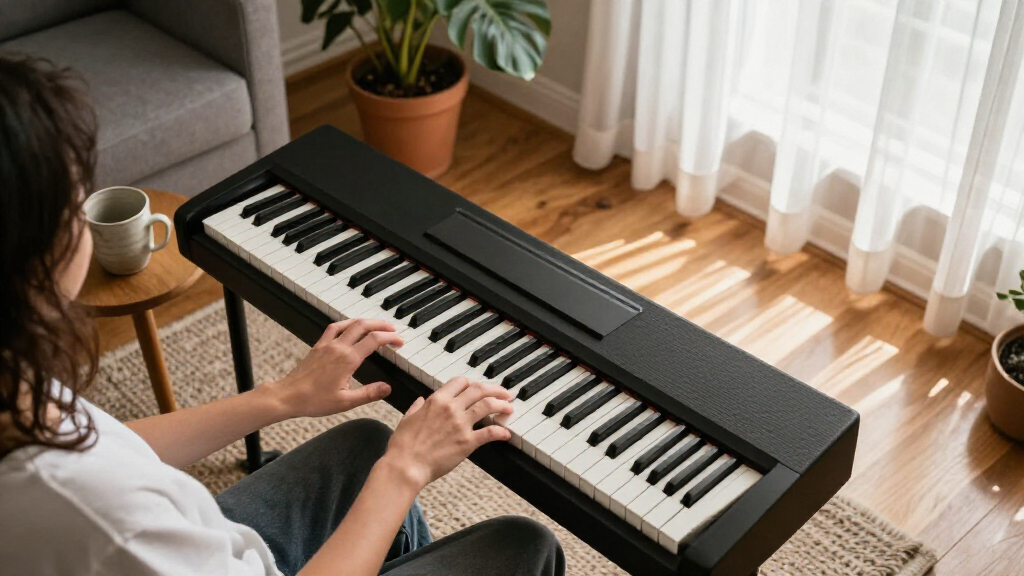

For most homes, the Roland FP-10 is my best overall compact digital piano: it pairs a full 88-key weighted action with a space-conscious portable design. The Yamaha Arius YDP-S56WH stands out if you want a more polished, furniture-style piano, while the Yamaha P71 is a simpler fit for players who need weighted keys without a built-in cabinet. The main tradeoff is between a compact footprint and features such as a three-pedal unit, a stable stand, and a more substantial piano action. Smaller keyboards save room but do not offer the full range or playing feel of an 88-key model. Read on for the full comparison and help choosing the right fit for your room, playing level, and setup.

Get audio and creator gear delivered free with Prime
- Fast, free delivery on millions of items
- Prime Video, Amazon Music and more included
- Member-only deals all year
Complete the kit


Key Takeaways
- The Roland FP-10 and Yamaha P71 take different routes to compactness: both are portable 88-key choices, while the FP-10 is the stronger all-round pick and the P71 keeps the setup simpler.
- The Arius models prioritize home furniture fit: the YDP-S56WH and two YDP-S36 finishes offer a cabinet-style alternative to portable keyboards, but require more dedicated space.
- Weighted keys are the clearest dividing line: full-size weighted models are better suited to developing piano technique than the semi-weighted GLARRY and Zilvok options.
- Bundled stands and pedals can reduce setup decisions: models such as the Donner DEP-08 and DEP-20 include more home-oriented hardware, though a bundle does not automatically mean a better playing experience.
- The Loog and Nimbusfit serve narrower needs: their smaller key counts suit space-limited or introductory use, but neither is a direct substitute for a full 88-key home piano.


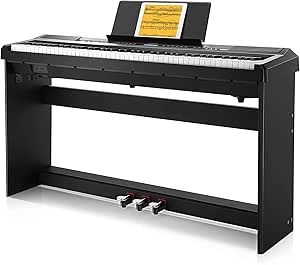


| compact digital pianos for home | Weight | Connectivity |
|---|---|---|
| Yamaha Arius YDP-S56WH Compact | 114.9 lbs | Bluetooth Audio/MIDI, Dual 6.35mm Jacks |
| GLARRY 88-Key Semi-Weighted Di | — | — |
| Eastar EUP-100 88-Key Weighted | 22 kg | USB, Wireless, MIDI IN/OUT |
| Roland FP-10 88-Key Compact Di | 27 lbs | Bluetooth, USB/MIDI |
| Loog Piano 37-Key Portable Key | 3.5 pounds | USB-C, MIDI, 3.5mm Jack |
| Zilvok 88-Key Digital Piano wi | — | MIDI, USB, Bluetooth |
| Donner DEP-08 88-Key Digital P | 15 kg | — |
| Nimbusfit 49-Key Digital Piano | — | — |
| Donner DEP-1S 88-Key Velocity- | 8 kg | USB, Bluetooth |
| Donner DEP-20 Beginner 88-Key | 24.75 kg | — |
| Yamaha Arius YDP-S36 Compact U | 112.4 pounds | Bluetooth Audio & MIDI |
| Yamaha P71 88-Key Weighted Act | 25 pounds | USB |
| Donner OURA DDP-60 88-Key Digi | — | — |
| UISCOM 88-Key Weighted Digital | — | USB, MIDI |
| Yamaha Arius YDP-S36 Compact D | 112.4 pounds | Bluetooth Audio & MIDI |
More Details on Our Top Picks
Yamaha Arius YDP-S56WH Compact Digital Piano, 88-Key Weighted GrandTouch-E Action, White
The Yamaha Arius YDP-S56WH stands out for its ability to deliver a concert-grade acoustic feel in a form factor designed for tight living spaces. Its GrandTouch-E action offers a level of key resistance and dynamic response that the semi-weighted GLARRY 88-Key simply cannot match, making it suitable for serious students who need to build proper finger strength. The CFX Concert Grand voice with VRM Lite resonance creates a rich, immersive soundstage that feels far more realistic than the basic tones found on entry-level models like the Eastar EUP-100. However, this premium build comes with physical constraints; at nearly 115 pounds, it is not portable and requires a dedicated spot in your home. It is an investment in long-term playability rather than a temporary hobbyist device.Pros:- GrandTouch-E action provides a realistic, heavy acoustic piano feel
- CFX Concert Grand voice with VRM Lite delivers rich, resonant sound
- Integrated 3-pedal unit eliminates the need for separate pedal purchases
- Slim cabinet design maximizes floor space efficiency
Cons:- Extremely heavy (114.9 lbs) makes relocation nearly impossible
- Limited aesthetic options with only a white finish available
- Higher price point compared to budget-friendly alternatives
Best for: Serious piano students or intermediate players who require authentic weighted action and high-fidelity sound in a small apartment.
Not ideal for: Renters or those with limited floor space, as its heavy weight and fixed cabinet design make it difficult to move or store away.
- Key Action:GrandTouch-E Weighted Hammer Action
- Sound Engine:CFX Concert Grand with VRM Lite
- Dimensions:57.6 x 20.63 x 16.69 inches
- Weight:114.9 lbs
- Connectivity:Bluetooth Audio/MIDI, Dual 6.35mm Jacks
- Pedals:Integrated 3-Pedal Unit
Our verdict“Choose the Arius YDP-S56WH if you prioritize authentic piano mechanics and sound quality over portability and budget.”
GLARRY 88-Key Semi-Weighted Digital Piano with Stand and Pedal, White
This model appeals to budget-conscious buyers who need 88 keys without committing to the high cost of weighted actions. Compared to the Yamaha Arius YDP-S56WH, the GLARRY uses semi-weighted keys, which are lighter and less resistant, making it easier for young children or casual players to press but less effective for developing advanced technique. The inclusion of 380 tones and 128 rhythms offers more variety than the focused piano sounds of the Eastar EUP-100, turning the instrument into a general MIDI controller as well. While the build quality is functional rather than premium, it provides a complete package with a stand and pedal, removing the friction of additional accessory purchases for beginners.Pros:- Semi-weighted keys offer a middle ground between synth and piano feel
- Includes stand, pedal, and music stand in the box
- Extensive library of tones and rhythms for diverse playing styles
- Bluetooth and USB connectivity for easy app integration
Cons:- Semi-weighted action lacks the resistance needed for serious technique
- Build quality and speaker output are basic compared to premium brands
- Power adapter is required, limiting battery-powered use
Best for: Casual hobbyists, young children, or beginners who want full-key-range practice without the expense of a weighted action.
Not ideal for: Advanced students or classical piano learners who require the resistance of fully weighted keys to build proper finger strength.
- Key Type:Semi-weighted
- Polyphony:128 notes
- Tones:380
- Rhythms:128
- Speakers:15 W Stereo
- Included Accessories:Stand, Pedal, Music Stand
Our verdict“The GLARRY is the smart choice for casual players who want a full-size keyboard experience at an accessible price point.”
Eastar EUP-100 88-Key Weighted Digital Piano with Three Pedals
The Eastar EUP-100 bridges the gap between entry-level synths and high-end consoles by offering weighted hammer-action keys at a moderate price. Unlike the GLARRY, which uses semi-weighted keys, the Eastar provides the resistance necessary for dynamic control, making it a better tool for skill development. It includes a triple pedal unit and a protective cover, features often sold separately on models like the Yamaha P71. However, the sound engine is less sophisticated than the Yamaha Arius YDP-S56WH, lacking the nuanced resonance of concert grand samples. It is a substantial instrument requiring assembly, so it suits those who have a permanent spot for it and want weighted action without the premium brand markup.Pros:- Weighted hammer action simulates grand piano touch
- Includes triple pedal unit and protective cover
- MIDI IN/OUT supports professional music production setups
- Retro wood finish offers a classic aesthetic
Cons:- Assembly is required and recommended for two people
- Sound engine lacks the depth of premium Yamaha or Roland models
- Heavy weight (22 kg) makes it difficult to move frequently
Best for: Intermediate students who need weighted keys and a full pedal setup but want to avoid the cost of major brand consoles.
Not ideal for: Those seeking the absolute best sound quality or brand-name resale value, as the tone engine is functional but not exceptional.
- Key Action:Weighted Hammer Action
- Voices:13
- Rhythms:128
- Connectivity:USB, Wireless, MIDI IN/OUT
- Weight:22 kg
- Included Accessories:Triple Pedal, Headphones, Cover
Our verdict“The Eastar EUP-100 is ideal for players who prioritize weighted key mechanics and included accessories over brand prestige.”
Roland FP-10 88-Key Compact Digital Piano
The Roland FP-10 is defined by its SuperNATURAL sound engine, which delivers a warm, expressive piano tone that rivals more expensive consoles. Its standout feature is the PHA-4 Standard action, which provides ivory-feel textures and escapement, offering a tactile experience closer to acoustic pianos than the Eastar EUP-100. At just 27 pounds, it is significantly lighter than the Yamaha Arius YDP-S56WH, making it easy to move between rooms or transport for lessons. The tradeoff is minimalism; it comes with only a basic sustain pedal and requires a separate stand purchase, unlike the all-in-one GLARRY. This model is for players who value sound quality and portability over bundled accessories.Pros:- SuperNATURAL sound engine provides rich, dynamic piano tones
- PHA-4 action offers ivory-feel texture and escapement
- Lightweight design (27 lbs) enhances portability
- Bluetooth MIDI allows wireless connection to learning apps
Cons:- Matching stand and triple pedal unit sold separately
- Built-in speakers are less powerful than cabinet-style pianos
- Simple design lacks the aesthetic presence of upright consoles
Best for: Gigging musicians or students who need a high-quality, portable piano for lessons and home practice.
Not ideal for: Buyers who want a complete furniture-style setup out of the box, as the stand and premium pedals are sold separately.
- Sound Engine:SuperNATURAL Piano
- Keyboard Action:PHA-4 Standard
- Weight:27 lbs
- Connectivity:Bluetooth, USB/MIDI
- Dimensions:54.45 × 11.1 × 15.94 inches
- Included Accessories:DP-2 Foot Switch, Music Rest
Our verdict“The Roland FP-10 is the top choice for those who prioritize authentic sound and easy transport over a complete furniture package.”
Loog Piano 37-Key Portable Keyboard for Beginners
The Loog Piano serves a different purpose than the full-size instruments in this list, designed specifically for young children aged 3 and up. Its 37-key layout is intentionally limited to prevent frustration, allowing small hands to reach all notes comfortably, unlike the overwhelming 88-key span of the Yamaha Arius. The rechargeable battery and lightweight 3.5-pound design make it truly portable, fitting into a backpack where the Roland FP-10 would not. While it lacks weighted keys and full piano range, its integration with a learning app and flashcards creates a structured, gamified introduction to music. It is not a substitute for a serious practice instrument but acts as an effective, low-pressure gateway for early musical engagement.Pros:- Lightweight and battery-powered for ultimate portability
- 37-key layout is sized appropriately for small hands
- Integrated learning app and flashcards guide beginners
- Durable construction withstands rough handling by children
Cons:- Only 37 keys limits playable repertoire significantly
- Lightweight synth action does not build finger strength
- Not suitable for older children or adults learning piano
Best for: Parents looking for a durable, engaging, and age-appropriate first instrument for toddlers and preschoolers.
Not ideal for: Anyone seeking to learn standard piano repertoire, as the limited key range and unweighted keys hinder proper technique development.
- Keys:37 Velocity-Sensitive
- Weight:3.5 pounds
- Battery Life:Up to 8 hours
- Connectivity:USB-C, MIDI, 3.5mm Jack
- Skill Level:Beginner (Ages 3+)
- Included Accessories:Chord-and-Scale Flashcards
Our verdict“The Loog Piano is the perfect introductory tool for young children, prioritizing engagement and portability over professional features.”
Zilvok 88-Key Digital Piano with Semi-Weighted Keys and Beginner Accessory Kit
This model stands out for its exceptional accessory bundle, which includes a double-X stand, carrying case, headphones, and even a microphone. Compared to the Donner DEP-1S, which offers a sleeker look but fewer included extras, the Zilvok provides everything a novice needs to start playing immediately without hunting for separate parts. The 1,000 tones and rhythms keep practice sessions varied, though the semi-weighted action lacks the authentic resistance found in hammer-action models like the Yamaha P71. It is a pragmatic choice for those who prioritize convenience and breadth of sound over pure acoustic realism. The inclusion of key stickers suggests a focus on absolute beginners who need visual aids.Pros:- Comprehensive accessory kit includes stand, case, and headphones
- Massive library of 1,000 tones and rhythms for variety
- Semi-weighted keys offer a lighter touch than heavy hammer actions
- Dual-keyboard function aids in teacher-student lessons
Cons:- Semi-weighted action lacks the realistic feel of acoustic pianos
- Bulkier design due to included accessories may clutter small spaces
- Unknown dimensions make fitting into tight home layouts difficult
Best for: Absolute beginners who want a complete, ready-to-play setup without buying extra accessories.
Not ideal for: Intermediate players seeking authentic acoustic key resistance or a minimalist aesthetic.
- Keys:88 Semi-Weighted
- Tones:1,000
- Rhythms:1,000
- Demo Songs:150
- Connectivity:MIDI, USB, Bluetooth
- Included Accessories:Stand, Pedal, Case, Headphones, Mic
- Skill Level:Beginner
Our verdict“Choose this if you want a hassle-free, fully equipped starter kit and don’t mind a less authentic key feel.”
Donner DEP-08 88-Key Digital Piano with Removable Stand and Triple Pedal
The Donner DEP-08 occupies a sweet spot between portability and feature density. Unlike the Zilvok, which relies on semi-weighted keys, the DEP-08 offers velocity-sensitive action that responds dynamically to touch, fostering better technique early on. Its removable stand is a clever design choice for home use, allowing the keyboard to be stored away when not in practice, unlike the fixed furniture stands seen on the Donner DEP-20. While it lacks the heavy hammer action of premium models like the Roland FP-10, the inclusion of a triple pedal and split/teaching modes makes it a versatile tool for learning. It is heavier than portable stage pianos but offers a more complete home experience.Pros:- Velocity-sensitive keys improve dynamic control practice
- Triple pedal and split mode support advanced learning techniques
- Removable stand offers flexible storage options
- 128-note polyphony prevents note dropout during complex chords
Cons:- At 15 kg, it is too heavy for frequent transport
- The included stand sits lower than standard piano height
- Plastic construction may feel less premium than wood-finish rivals
Best for: Students who need a dedicated home instrument with teaching modes but limited storage space.
Not ideal for: Musicians who require ultra-lightweight portability or full-weighted acoustic feel.
- Keys:88 Velocity-Sensitive
- Tones:380
- Polyphony:128 Notes
- Speakers:Stereo Built-in
- Modes:Split, Teaching, Recording
- Weight:15 kg
- Stand:Removable
Our verdict“This is the ideal mid-range choice for students who need velocity sensitivity and teaching features without the bulk of a console piano.”
Nimbusfit 49-Key Digital Piano with Wooden Stand and Bench
This 49-key keyboard is the most compact option in this lineup, designed specifically for tiny apartments or dorm rooms where an 88-key piano simply won’t fit. Compared to the Loog Piano, which targets children with a simplified layout, the Nimbusfit offers standard-sized 22 mm keys with balanced resistance, making it suitable for adult beginners learning finger placement. The wooden stand and bench create a cohesive aesthetic that blends into home decor better than the plastic-heavy Donner DEP-1S. However, the limitation of 49 keys means you will outgrow it quickly if you pursue classical repertoire. It serves as a focused tool for melody and chord practice rather than full-range performance.Pros:- Ultra-compact 49-key layout fits in the smallest spaces
- Standard key width ensures proper finger positioning
- Aesthetic wooden stand and bench blend with home furniture
- Quiet action is suitable for shared living environments
Cons:- 49 keys severely limit repertoire possibilities
- Requires a wired power connection, limiting placement flexibility
- Lacks the velocity sensitivity found in 88-key competitors
Best for: Urban dwellers with severely limited floor space who need a stylish, small-footprint practice tool.
Not ideal for: Serious piano students who need the full 88-key range for classical pieces.
- Keys:49 Standard Width
- Key Width:22 mm
- Action:Balanced Resistance
- Stand:Walnut Wooden
- Bench:Included
- Power:Plug-in Wired
- Warranty:1 Year
Our verdict“Buy this only if space is your absolute constraint and you are focused on basic melody practice rather than full piano repertoire.”
Donner DEP-1S 88-Key Velocity-Sensitive Digital Piano with Stand, Sustain Pedal, and Piano Stickers
The Donner DEP-1S is engineered for those who refuse to compromise on key count but live in tight quarters. Weighing just 8 kg, it is significantly lighter than the Donner DEP-08 and the Yamaha P71, making it easy to move between rooms. The reddish-brown finish and slim profile allow it to disappear into a living area when not in use. While it lacks the built-in speaker power of larger consoles like the Yamaha Arius YDP-S56, its USB MIDI connectivity shines for users who prefer practicing through headphones with app-based learning tools. The included X-stand is adjustable, though it may feel less stable than furniture-style stands. It is a modern, tech-forward entry point.Pros:- Lightweight 8 kg design is highly portable within the home
- Slim profile fits easily under desks or in narrow corners
- USB MIDI connectivity integrates seamlessly with learning apps
- Velocity-sensitive keys support dynamic expression
Cons:- Requires corded electric power at all times
- X-stand may lack the stability of furniture stands
- Built-in speakers are less powerful than larger consoles
Best for: Tech-savvy beginners who use learning apps and need a lightweight, full-size keyboard.
Not ideal for: Players who prefer loud, built-in speakers for room-filling sound without headphones.
- Keys:88 Velocity-Sensitive
- Weight:8 kg
- Connectivity:USB, Bluetooth
- Stand:Adjustable X-Style
- Pedal:Sustain
- Finish:Reddish Brown
- Warranty:2 Years
Our verdict“This is the best choice for small apartments where a full 88-key range is needed without the bulk or weight of traditional pianos.”
Donner DEP-20 Beginner 88-Key Weighted Digital Piano with Stand and 3-Pedal Unit
For those who prioritize authentic piano mechanics over portability, the Donner DEP-20 is the standout in this group. Its full-size hammer-action keys mimic the resistance of an acoustic grand, a significant upgrade from the semi-weighted Zilvok or the velocity-only Donner DEP-1S. The included furniture stand and 3-pedal unit create a console-like experience that feels permanent and serious, unlike the portable rigs of the Yamaha P71. However, this realism comes at a cost: at 24.75 kg, it is heavy and cumbersome to move. The 128-note polyphony ensures complex pieces sound clean, but the large footprint requires dedicated floor space. It is a commitment piece for serious students.Pros:- Full-size hammer action provides realistic acoustic resistance
- 3-pedal unit and furniture stand create a console-like feel
- 128-note polyphony handles complex classical pieces
- Adjustable touch response allows customization of key feel
Cons:- Extremely heavy at 24.75 kg, making relocation difficult
- Large dimensions require significant dedicated floor space
- Plastic housing may not match the weight of the key action
Best for: Serious students who need weighted keys and a permanent home setup for classical training.
Not ideal for: Renters or those with limited floor space who need portability or a smaller footprint.
- Keys:88 Full-Size Hammer Action
- Tones:238
- Polyphony:128 Notes
- Amplifiers:Two 25W
- Weight:24.75 kg
- Stand:Furniture Style
- Pedals:3-Pedal Unit
- Display:Backlit LCD
Our verdict“Choose this if you are committed to learning proper piano technique and have the space for a stationary, weighted-key instrument.”
Yamaha Arius YDP-S36 Compact Upright Digital Piano, 88-Key Weighted Keyboard, 3-Pedal Unit, Black
This model stands out for its slim upright design, which saves floor space compared to traditional consoles. The Graded Hammer Standard action offers a realistic touch, making it suitable for students progressing beyond beginner levels. Unlike the Yamaha P71, this unit includes Bluetooth connectivity, allowing you to stream backing tracks directly through the built-in speakers. The CFX concert grand voice is rich and detailed, providing a more immersive playing experience than standard digital sounds. However, the 112-pound weight makes moving it a two-person job. It requires more dedicated space than slab-style pianos due to its cabinet structure, though it is narrower than many acoustic uprights. This is the best choice for those who want a furniture-grade aesthetic without the bulk of a full console.
Pros:- Slim upright design saves floor space
- Bluetooth allows direct streaming from devices
- Realistic GHS weighted key action
- Includes a full three-pedal unit
Cons:- Heavy at 112 pounds
- Larger footprint than slab pianos
Best for: Homeowners who want a furniture-grade piano that looks like an upright but fits in smaller living rooms.
Not ideal for: Renters who move frequently — the 112-pound weight and cabinet design make relocation difficult.
- Key Action:Graded Hammer Standard (GHS)
- Voices:10
- Connectivity:Bluetooth Audio & MIDI
- Weight:112.4 pounds
- Dimensions:57.6 x 20.63 x 16.69 inches
- Headphone Jacks:2 x 6.35mm
Our verdict“This pick makes the most sense for players who prioritize a realistic feel and sleek home aesthetics over portability.”
Yamaha P71 88-Key Weighted Action Digital Piano with Sustain Pedal and Power Supply
Compared with the Yamaha Arius YDP-S36, this slab piano is significantly lighter at 25 pounds, making it easy to move or store. It retains the 88-key weighted action that beginners and intermediates need for proper technique development. While it lacks the Bluetooth features found on the Arius, the USB connectivity allows you to connect to computers for learning software like Simply Piano or GarageBand. The weighted hammer action provides a solid foundation for practice, though it feels slightly less refined than the GHS action on higher-end models. This option is better suited to those who need a portable solution that still offers full key weight. You will need to purchase a stand separately if you want an upright playing position, which adds to the total setup footprint.
Pros:- Lightweight 25-pound design
- 88 weighted keys for proper technique
- USB connectivity for apps
- Includes sustain pedal
Cons:- No Bluetooth connectivity
- Stand sold separately
- Basic voice selection
Best for: Beginners who need a portable, weighted-key piano that fits in tight spaces or small apartments.
Not ideal for: Players who want Bluetooth streaming or a built-in console stand — this is a slab-only unit.
- Weight:25 pounds
- Key Action:Weighted Hammer Action
- Voices:10
- Connectivity:USB
- Dimensions:52.25 x 11.5 x 6 inches
- Included:Sustain pedal, power supply
Our verdict“This model is the go-to for budget-conscious players who need weighted keys without the bulk of a console.”
Donner OURA DDP-60 88-Key Digital Piano with Three Pedals
This piano offers a wider range of sounds than the Yamaha P71, with 128 tones and 83 rhythms for creative practice. The four adjustable velocity curves allow you to customize the touch response to match your playing style, a feature often missing in entry-level Yamaha models. It includes three headphone jacks, making it ideal for families where multiple students practice simultaneously. The light oak finish fits modern home decor better than standard black plastics. However, the cabinet design is bulky at 53.5 inches wide, requiring significant floor space similar to larger consoles. The build quality feels less premium than the Yamaha Arius series, but the feature set provides more value for casual players who enjoy exploring different instruments and rhythms alongside their piano lessons.
Pros:- 128 tones and 83 rhythms
- Adjustable velocity curves
- Three headphone jacks
- Includes three-pedal unit
Cons:- Bulky cabinet design
- Less refined key action
- Limited polyphony compared to pros
Best for: Casual learners and families who want varied sounds and multiple headphone outputs for shared practice.
Not ideal for: Serious classical students — the action and voice quality are less refined than Yamaha’s dedicated piano models.
- Tones:128
- Rhythms:83
- Headphone Jacks:3
- Polyphony:128 notes
- Key Action:Velocity-sensitive
- Dimensions:53.5 x 14.09 x 30.08 inches
Our verdict“This pick works best for hobbyists who want diverse sounds and family-friendly features over pure piano realism.”
UISCOM 88-Key Weighted Digital Piano with Triple Pedals
This unique model transforms from a piano into a vanity, a feature no other product in this lineup offers. The progressive hammer action provides a decent weighted feel for practice, though it lacks the brand recognition of Yamaha or Roland. It includes USB MP3 playback, allowing you to play backing tracks from a USB drive without needing a phone or computer. The triple-pedal unit covers sustain, sostenuto, and soft functions, ensuring you can practice proper pedal technique. However, the limited voice selection (only eight tones) restricts creative exploration compared to the Donner OURA. The design prioritizes space-saving utility over audio fidelity, making it a compromise for those who need the piano to double as room furniture when not in use.
Pros:- Transforms into vanity/desk
- USB MP3 playback
- Full triple-pedal unit
- Progressive hammer action
Cons:- Only 8 tones available
- Brand is less known for audio quality
- Complex mechanism may feel less stable
Best for: Small apartment dwellers who need furniture that serves two purposes to maximize limited living space.
Not ideal for: Audiophiles or serious players — the audio quality and voice variety are basic compared to dedicated pianos.
- Key Action:Weighted, progressive hammer
- Tones:8
- Pedals:Sustain, Sostenuto, Soft
- Special Feature:Vanity/Desk conversion
- Connectivity:USB, MIDI
- Color:Brown
Our verdict“This option is strictly for buyers who prioritize dual-function furniture over superior sound quality.”
Yamaha Arius YDP-S36 Compact Digital Piano, 88-Key Weighted Keyboard with 3-Pedal Unit, White
Identical in performance to the black model, this white version suits homes with lighter color palettes or modern, airy interiors. It retains the slim upright cabinet that keeps the footprint smaller than traditional consoles. The Bluetooth audio integration allows for seamless streaming, a significant advantage over the non-Bluetooth Yamaha P71. The white finish requires more care to keep clean, as it shows dust and fingerprints more readily than black models. Like its sibling, it weighs over 100 pounds, so placement should be planned carefully. This is the ideal choice for those who want the premium Yamaha action and sound but need the aesthetic to blend seamlessly with white furniture or bright living spaces.
Pros:- White finish for light interiors
- Same GHS action as black model
- Bluetooth audio and MIDI
- Compact upright design
Cons:- White finish shows dirt/scuffs
- Heavy weight (112+ lbs)
- Requires dedicated floor space
Best for: Buyers with modern, light-colored interiors who want a premium digital piano that matches their decor.
Not ideal for: Households with young children or pets — the white finish shows scuffs and dirt more easily than black.
- Color:White
- Key Action:Graded Hammer Standard (GHS)
- Connectivity:Bluetooth Audio & MIDI
- Weight:112.4 pounds
- Voices:10
- Headphone Jacks:2
Our verdict“Choose this model if you want the performance of the YDP-S36 but need a white aesthetic to match your home design.”
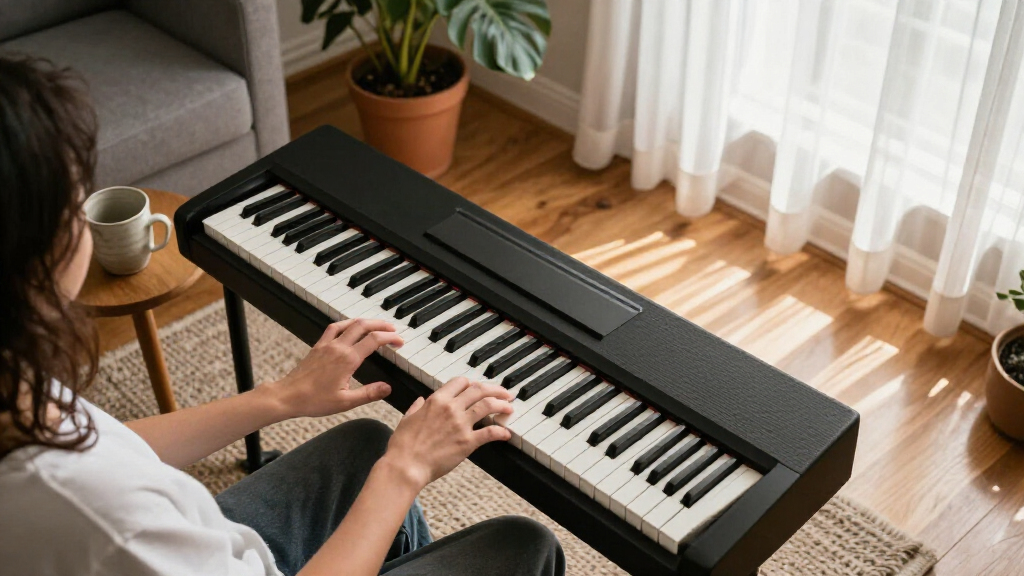
How We Picked
I ranked these pianos by how well they answer the particular challenge of fitting a usable instrument into a home. I weighed key count and action first, since a full 88-key weighted keyboard supports a wider range of repertoire and more piano-like practice than a smaller or semi-weighted model. I also considered the footprint and format: a portable keyboard can be stored or repositioned, while a cabinet-style piano may look more at home in a room but claims a permanent spot.
Next, I compared the practical value of included stands, pedals, and beginner accessories, along with how clearly each model suits a particular buyer. The ranking favors options with a strong balance of playability, home practicality, and useful setup features, rather than the longest accessory list. Models with fewer keys, lighter actions, or less clearly differentiated roles rank lower for buyers seeking a long-term home piano, though they can still suit specific space or budget constraints. The three Arius listings are treated as distinct finish or model options, not as three unrelated types of instrument.
Factors to Consider When Choosing Compact Digital Pianos For Home
Before choosing a compact home piano, decide what “compact” needs to mean in your room. A portable keyboard may have a smaller stored footprint, but it needs somewhere stable to sit; a cabinet model takes more permanent floor space yet can make setup feel settled. These broader checks can help you avoid paying for a feature you will not use—or choosing a small instrument that soon limits your practice.
Measure the Playing Setup, Not Just the Keyboard
Measure the space the piano occupies while you are playing, including the bench, pedal area, and room to sit comfortably. A keyboard that fits on a shelf may still be awkward if its stand blocks a walkway or leaves your knees cramped. Portable models can be easier to reposition, but the stand and seating arrangement become part of the purchase decision. Cabinet-style options take a more fixed footprint, so check their listed dimensions rather than judging from product photos. A common mistake is measuring only the instrument and discovering that the complete setup does not fit. If the piano must be put away after each session, prioritize a practical storage plan as much as key count.
Choose Key Count Around the Music You Want to Play
An 88-key keyboard gives you the full range found on a standard piano and is the safer choice for lessons, classical repertoire, and sustained skill development. A 37- or 49-key model can make sense for a young beginner, casual exploration, or an unusually tight space, but the limited range may require changing octaves or skipping notes. Think about where the player is likely to be in a year, not only what seems manageable on day one. If the piano is shared by people with different goals, the larger range is usually more flexible. Smaller models are best treated as a deliberate compromise, not as equivalent substitutes for a full-size instrument.
Match the Action to Practice Goals
Weighted keys generally make more sense for someone who wants to build piano technique, because they provide more resistance than semi-weighted or velocity-sensitive alternatives. That action can also make a keyboard feel less light and casual, so a new player should think about both technique and comfort. Semi-weighted models may suit basic note learning or occasional playing when compactness and a bundled setup matter more than piano feel. Do not assume that every 88-key instrument has the same touch; key count describes range, not action quality. If lessons or an acoustic piano are part of the plan, prioritize a weighted model over extra beginner accessories.
Decide Whether the Stand and Pedals Should Be Built In
A bundle with a stand and pedal can make initial setup simpler, particularly when the household has no suitable furniture or accessories. Bundles vary, though, so check whether the stand is removable, how the pedal arrangement is described, and whether the setup suits the player’s posture. A portable keyboard paired with a separate stand offers flexibility, but adds decisions about stability, storage, and compatibility. A cabinet piano can give the setup a more unified look and keep pedals in a familiar position, at the cost of easy relocation. Avoid treating a longer accessory list as proof of better playability; the keyboard action and a stable playing position matter more over time.
Allow for Household Noise and Shared Rooms
Before buying, check the product details for headphone connectivity and think about when and where the piano will be played. A digital instrument can be more convenient than an acoustic piano for a shared home, but quiet practice depends on the available connections and the household’s routine. Speakers, pedal noise, and the sound of keys being played can still affect others, even when the main instrument sound is sent to headphones. If several people will use the piano, make sure the setup is easy to access without rearranging the room each time. Do not infer connectivity features from a model’s appearance; verify the listing or manufacturer specifications for the exact version.
Pay for Long-Term Use, Not a One-Time Bundle
It can be tempting to choose the package with the most included items, but some accessories matter far more after the first week than others. For a developing player, a full range and weighted action may outlast stickers or a basic beginner kit. For a casual household, a stand, bench, and pedal that make the instrument comfortable to use may be the more practical choice. Consider whether the piano will remain in one room, move between rooms, or be packed away; those habits change which features earn their space. Paying more is easier to justify when it brings a lasting improvement in fit, action, or setup, rather than extras that do not match the player’s needs.
Frequently Asked Questions
Is a 61-key piano enough for learning at home?
It can be enough for early note reading, simple tunes, and casual practice, but it offers less room than an 88-key instrument for developing piano repertoire. In this roundup, the Loog’s 37 keys and Nimbusfit’s 49 keys make them compact, focused choices rather than full-range alternatives. A learner taking formal lessons or planning to play with both hands across a wide range may outgrow a smaller keyboard sooner. If space is the reason for considering fewer keys, measure whether a portable 88-key model could work with a foldable or removable stand. Choose the smaller range when portability or a beginner’s limited needs matter more than long-term flexibility.
Should I choose weighted keys if I am a complete beginner?
Weighted keys are a sensible choice if the goal is to learn piano technique and continue beyond basic melodies. They can feel more demanding at first than semi-weighted keys, but the fuller resistance may make practice more relevant to acoustic-piano playing. A beginner who only wants to explore notes or play occasionally may prefer a simpler, lighter setup instead. The GLARRY and Zilvok are semi-weighted options, while several Yamaha, Roland, Eastar, and Donner models in this group are described as weighted. Let the learner’s goals, rather than age or experience alone, guide the decision.
Is a cabinet-style digital piano a better choice for a small home?
Not automatically. A cabinet can keep the piano, pedals, and playing position together, which may suit a room where the instrument will stay in place. A portable model can be easier to move or store, but it still needs a stable stand and a suitable seat when in use. Compare the complete playing footprint, not just the width of the keyboard, and check the exact dimensions for the specific model. If the room serves several purposes, a portable format may be easier to accommodate even if setup takes more planning.
Do I need a three-pedal unit for home practice?
For basic beginner practice, a sustain pedal is often enough to get started. A three-pedal setup is more useful for players following repertoire or instruction that calls for the additional piano pedals, and it can make a cabinet-style instrument feel more like a permanent piano. Bundled pedal configurations differ, so confirm what is included with the exact listing rather than assuming every stand or cabinet has the same arrangement. If the player is still exploring, it may be wiser to prioritize a suitable key action and comfortable setup first. A more complete pedal unit becomes easier to justify as practice becomes more structured.
Which compact format is better if I have to move the piano often?
A portable keyboard is generally easier to reposition than a cabinet-style model, but the full setup still includes its stand, pedal, power supply, and sometimes a bench. The Roland FP-10 and Yamaha P71 fit the portable 88-key role in this roundup, while the Arius options are better suited to a more permanent place at home. Smaller keyboards are easier to handle, though their reduced key range is a meaningful compromise for piano study. If frequent moves are within the home, check the instrument’s dimensions and plan where accessories will be stored. For regular transport outside the home, verify the manufacturer’s handling guidance and use a suitable protective case if available.
Conclusion
For the strongest balance of full-range playability and a compact, portable format, I recommend the Roland FP-10 as best overall. The Yamaha P71 is my best value-style pick for buyers who want a straightforward weighted 88-key setup, while the Yamaha Arius YDP-S56WH is the best premium, furniture-style choice among these options. Beginners who plan to learn piano technique should focus on a weighted 88-key model such as the FP-10, P71, or a Donner DEP-20; the Loog is better for a young or casual starter who specifically needs a smaller keyboard. For a tight room or a piano that must be moved, choose a portable design; for a settled home setup with included pedals, compare the Arius, Donner DEP-08, Donner DEP-20, OURA DDP-60, and other bundled models. The right choice is the one whose action, footprint, and included setup match how the household will actually play.