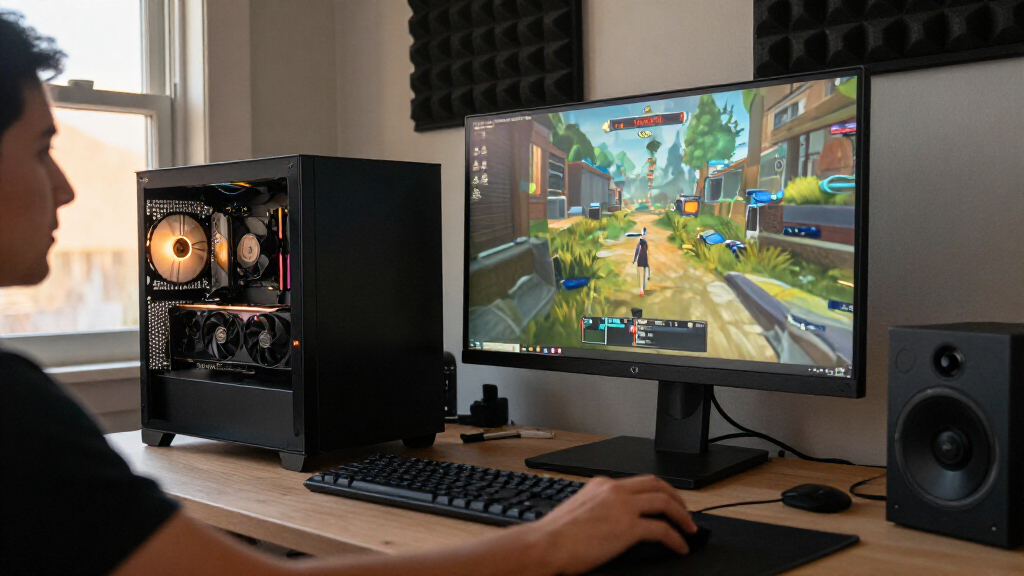

For most players seeking the best gaming graphics cards, I’d start with the GIGABYTE Radeon RX 9070 XT Gaming OC 16G: its 16GB of memory and high-performance tier make it a strong all-rounder for demanding games. The ASUS TUF Gaming GeForce RTX 5080 is a better fit for shoppers prioritizing premium features and high-resolution play, while the ASUS Dual Radeon RX 9060 XT 16GB offers a more measured choice for mainstream gaming. The main tradeoffs are performance headroom, memory capacity, card size and power demands, and graphics features—not just the GPU name. Older RTX 3060 models and the RTX 3050 serve different needs, but they should be matched carefully to a build and gaming target. Continue reading for the full breakdown and help choosing the right card for your system.

Get audio and creator gear delivered free with Prime
- Fast, free delivery on millions of items
- Prime Video, Amazon Music and more included
- Member-only deals all year
Complete the kit


Key Takeaways
- The RX 9070 XT picks lead this roundup’s all-rounder tier: both the GIGABYTE Gaming OC and XFX Swift pair that GPU class with 16GB of memory, making them more suitable for demanding games than the 12GB RTX 5070 options when memory headroom matters.
- The RTX 5090 models sit in a separate premium class: the ASUS TUF and MSI Gaming Trio offer 32GB of GDDR7, but their scale and system demands make them a specialist choice rather than a sensible default for every gaming PC.
- Cooling and card dimensions separate models that share a GPU: cooler design, factory tuning, and chassis fit can matter more to a buyer than small differences in product naming.
- Several RTX 3060 entries offer similar 12GB capacity in different board designs: compare dimensions, cooling, and system compatibility instead of assuming the GPU label alone makes one a better fit.
- The RTX 3050 6GB is the most constrained choice here: it can suit an entry-level or modest gaming build, but buyers wanting longer-term headroom should look higher in the lineup, such as the RTX 5060 Ti 16GB or RX 9060 XT 16GB.
| ASUS Prime GeForce RTX 5070 OC 12GB GDDR7 Graphics Card |  | Best for Compact Builds | GPU: NVIDIA GeForce RTX 5070 | Memory: 12GB GDDR7 | GPU clock speed: 2587 MHz OC mode; 2557 MHz default mode | VIEW LATEST PRICE | See Our Full Breakdown |
| GIGABYTE Radeon RX 9070 XT Gaming OC 16G Graphics Card |  | Best for Memory Headroom | GPU: AMD Radeon RX 9070 XT | Memory: 16 GB GDDR6 | GPU clock speed: 3060 MHz | VIEW LATEST PRICE | See Our Full Breakdown |
| XFX Swift AMD Radeon RX 9070 XT Graphics Card, 16GB GDDR6, Triple-Fan Cooling |  | Best for Straightforward Radeon Builds | GPU: AMD Radeon RX 9070 XT | Memory: 16GB GDDR6 | Boost clock: Up to 2970 MHz | VIEW LATEST PRICE | See Our Full Breakdown |
| ASUS TUF Gaming GeForce RTX 5090 OC 32GB GDDR7 Graphics Card |  | Best Premium Performance Pick | GPU: NVIDIA GeForce RTX 5090 | Memory: 32GB GDDR7 | Boost clock: 2580 MHz OC mode; 2550 MHz default mode | VIEW LATEST PRICE | See Our Full Breakdown |
| ASUS Dual GeForce RTX 5060 Ti 16GB GDDR7 OC Edition Graphics Card |  | Best Compact GeForce Pick | GPU: NVIDIA GeForce RTX 5060 Ti | Architecture: NVIDIA Blackwell | Memory: 16GB GDDR7 | VIEW LATEST PRICE | See Our Full Breakdown |
| MSI GeForce RTX 3060 Ventus 2X 12G OC V1 Graphics Card |  | Best Compact RTX 3060 Pick | GPU: NVIDIA GeForce RTX 3060 | Architecture: Ampere | Memory: 12GB GDDR6 | VIEW LATEST PRICE | See Our Full Breakdown |
| GIGABYTE GeForce RTX 3060 Gaming OC 12G Graphics Card (Rev. 2.0) |  | Best RTX 3060 for Multi-Display Setups | GPU: NVIDIA GeForce RTX 3060 | Memory: 12GB GDDR6 | Memory interface: 192-bit | VIEW LATEST PRICE | See Our Full Breakdown |
| ASUS TUF Gaming GeForce RTX 5080 16GB GDDR7 OC Edition Graphics Card | 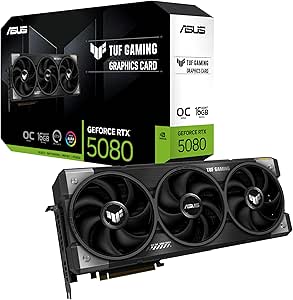 | Best Premium Gaming GPU | GPU: NVIDIA GeForce RTX 5080 | Architecture: NVIDIA Blackwell | Memory: 16GB GDDR7 | VIEW LATEST PRICE | See Our Full Breakdown |
| MSI GeForce RTX 3060 Ventus 2X 12GB OC Graphics Card |  | Best for Compact RTX 3060 Builds | GPU: NVIDIA GeForce RTX 3060 | Architecture: Ampere | Memory: 12GB GDDR6 | VIEW LATEST PRICE | See Our Full Breakdown |
| ASUS TUF Gaming GeForce RTX 5070 OC Edition 12GB GDDR7 Graphics Card |  | Best Balanced Blackwell Upgrade | GPU: NVIDIA GeForce RTX 5070 | Architecture: NVIDIA Blackwell | Memory: 12GB GDDR7 | VIEW LATEST PRICE | See Our Full Breakdown |
| ASUS Dual Radeon RX 9060 XT 16GB GDDR6 Graphics Card |  | Best Compact AMD Pick | GPU: AMD Radeon RX 9060 XT | Memory: 16GB GDDR6 | Boost clock: Up to 3250 MHz OC mode; 3230 MHz default mode | VIEW LATEST PRICE | See Our Full Breakdown |
| MSI GeForce RTX 5090 Gaming Trio OC Graphics Card, 32GB GDDR7 |  | Best for Maximum Memory and Flagship-Class Builds | GPU: NVIDIA GeForce RTX 5090 | Memory: 32GB GDDR7 | Memory interface: 512-bit | VIEW LATEST PRICE | See Our Full Breakdown |
| MSI GeForce RTX 3050 Ventus 2X 6G OC Graphics Card |  | Best Entry-Level NVIDIA Option | GPU: NVIDIA GeForce RTX 3050 | Memory: 6GB GDDR6 | Memory interface: 96-bit | VIEW LATEST PRICE | See Our Full Breakdown |
| ASUS Dual GeForce RTX 3060 V2 12GB GDDR6 OC Edition Graphics Card |  | Best for Extra VRAM in a Two-Slot Build | GPU: NVIDIA GeForce RTX 3060 | Memory: 12GB GDDR6 | Boost clock: 1867 MHz OC mode; 1837 MHz Gaming mode | VIEW LATEST PRICE | See Our Full Breakdown |
| ASUS Prime GeForce RTX 5080 16GB GDDR7 Graphics Card |  | Best Premium Pick for a Space-Conscious High-End Build | GPU: NVIDIA GeForce RTX 5080 | Memory: 16GB GDDR7 | Boost clock: 2617 MHz default; 2640 MHz OC mode | VIEW LATEST PRICE | See Our Full Breakdown |
| gaming graphics card | GPU | Memory | Cooling | Video outputs |
|---|---|---|---|---|
| ASUS Prime GeForce RTX 5070 OC | NVIDIA GeForce RTX 5070 | 12GB GDDR7 | Three Axial-tech fans | — |
| GIGABYTE Radeon RX 9070 XT Gam | AMD Radeon RX 9070 XT | 16 GB GDDR6 | WINDFORCE with Hawk Fan | — |
| XFX Swift AMD Radeon RX 9070 X | AMD Radeon RX 9070 XT | 16GB GDDR6 | Triple-fan | HDMI and DisplayPort |
| ASUS TUF Gaming GeForce RTX 50 | NVIDIA GeForce RTX 5090 | 32GB GDDR7 | — | 3 x DisplayPort 2.1a, 2 x HDMI 2.1b |
| ASUS Dual GeForce RTX 5060 Ti | NVIDIA GeForce RTX 5060 Ti | 16GB GDDR7 | 2 Axial-tech fans | 3 × DisplayPort 2.1b, 1 × HDMI 2.1b |
| MSI GeForce RTX 3060 Ventus 2X | NVIDIA GeForce RTX 3060 | 12GB GDDR6 | Torx twin fan | 3 × DisplayPort 1.4a; 1 × HDMI 2.1 |
| GIGABYTE GeForce RTX 3060 Gami | NVIDIA GeForce RTX 3060 | 12GB GDDR6 | WINDFORCE 3X with alternate-spinning fans | 2 × HDMI 2.1; 2 × DisplayPort 1.4 |
| ASUS TUF Gaming GeForce RTX 50 | NVIDIA GeForce RTX 5080 | 16GB GDDR7 | 3 Axial-tech fans | 3 × DisplayPort 2.1a; 2 × HDMI 2.1b |
| MSI GeForce RTX 3060 Ventus 2X | NVIDIA GeForce RTX 3060 | 12GB GDDR6 | Two fans | 3 × DisplayPort 1.4a; 1 × HDMI 2.1 |
| ASUS TUF Gaming GeForce RTX 50 | NVIDIA GeForce RTX 5070 | 12GB GDDR7 | 3 Axial-tech fans | 3 × DisplayPort 2.1a; 2 × HDMI 2.1b |
| ASUS Dual Radeon RX 9060 XT 16 | AMD Radeon RX 9060 XT | 16GB GDDR6 | Two Axial-tech fans, 0dB technology, dual BIOS | 2 x DisplayPort 2.1a; HDMI 2.1b |
| MSI GeForce RTX 5090 Gaming Tr | NVIDIA GeForce RTX 5090 | 32GB GDDR7 | Three fans | 3 x DisplayPort 2.1a; 1 x HDMI 2.1b |
| MSI GeForce RTX 3050 Ventus 2X | NVIDIA GeForce RTX 3050 | 6GB GDDR6 | Two fans | 1 x DisplayPort 1.4a; 2 x HDMI 2.1a |
| ASUS Dual GeForce RTX 3060 V2 | NVIDIA GeForce RTX 3060 | 12GB GDDR6 | Two Axial-tech fans with 0dB technology | HDMI 2.1; DisplayPort 1.4a |
| ASUS Prime GeForce RTX 5080 16 | NVIDIA GeForce RTX 5080 | 16GB GDDR7 | Three Axial-tech fans and vapor chamber | 3 x DisplayPort 2.1a; 2 x HDMI 2.1b |
More Details on Our Top Picks
ASUS Prime GeForce RTX 5070 OC 12GB GDDR7 Graphics Card
The ASUS Prime RTX 5070 OC is my pick for builders who want a current-generation GeForce card without giving up as much case space as a larger gaming model. Its 2.5-slot, SFF-Ready design is more accommodating than the 13.7-inch ASUS TUF RTX 5090, though it still needs more than two expansion slots and a case that fits its 12-inch length. Three Axial-tech fans and a phase-change thermal pad handle heat, while dual BIOS profiles let you favor quieter operation or performance. The 12GB of GDDR7 gives this card less memory capacity than the RX 9070 XT options in this roundup, so buyers prioritizing memory headroom should compare those instead. I’d choose this for a compact NVIDIA-focused gaming build, not a truly tiny case.
Pros:- SFF-Ready 2.5-slot design is easier to accommodate than larger cards such as the ASUS TUF RTX 5090.
- Three Axial-tech fans and a phase-change thermal pad support heat management.
- Dual BIOS offers Quiet and Performance profiles.
- 0dB technology supports quieter operation during light gaming.
Cons:- The 2.5-slot cooler still occupies more than two expansion slots.
- Its 12GB of memory is less capacity than the 16GB RX 9070 XT models in this roundup.
- The 2587 MHz clock applies to OC mode; default mode is 2557 MHz.
Best for: Small-form-factor PC builders who want a 2.5-slot NVIDIA card with selectable quiet and performance profiles.
Not ideal for: Builders with cases that cannot fit a 12-inch, multi-slot card, or gamers who prioritize 16GB of graphics memory.
- GPU:NVIDIA GeForce RTX 5070
- Memory:12GB GDDR7
- GPU clock speed:2587 MHz OC mode; 2557 MHz default mode
- Interface:PCIe 5.0 x16
- Cooling:Three Axial-tech fans
- Design:2.5-slot, SFF-Ready
- Dimensions:12 x 5 in
- BIOS:Dual BIOS with Quiet and Performance profiles
Our verdict“Choose the ASUS Prime RTX 5070 OC for a space-conscious NVIDIA build if your case fits its length and you do not need 16GB of memory.”
GIGABYTE Radeon RX 9070 XT Gaming OC 16G Graphics Card
The GIGABYTE Radeon RX 9070 XT Gaming OC is a strong fit for gamers who want 16GB of GDDR6 and a substantial triple-fan cooler. That memory capacity exceeds the ASUS Prime RTX 5070 OC’s 12GB, giving this Radeon option more room for memory-heavy games and graphics workloads. Its WINDFORCE system, Hawk Fan and server-grade thermal conductive gel are aimed at managing heat under sustained use, while RGB lighting adds a customizable visual touch. The tradeoff is a relatively broad 5.2-inch body and an 11.34-inch length, so case clearance deserves a check before buying. The listed memory-clock figure is unusually specified as 2600 GHz; I would verify that detail rather than rely on it. Choose it over the XFX RX 9070 XT if you want this specific cooling and lighting package.
Pros:- 16GB of GDDR6 provides more memory capacity than the 12GB ASUS Prime RTX 5070 OC.
- WINDFORCE cooling with a Hawk Fan is designed for heat dissipation.
- RGB lighting allows visual customization.
- Supports a maximum resolution of 7680 × 4320.
Cons:- The 11.34 × 5.2-inch dimensions may rule it out for compact cases.
- The supplied memory-clock figure of 2600 GHz is unusual and should be confirmed.
- The listed video-output interface specifies DisplayPort but does not detail other outputs.
Best for: Desktop gamers who want a 16GB Radeon card, triple-fan cooling and RGB lighting, and have room for a wide card.
Not ideal for: Small-case builders or buyers who need clearly documented memory-clock specifications without checking with the seller.
- GPU:AMD Radeon RX 9070 XT
- Memory:16 GB GDDR6
- GPU clock speed:3060 MHz
- Memory clock speed:2600 GHz (listed)
- Interface:PCIe 5.0, PCI-Express x16
- Cooling:WINDFORCE with Hawk Fan
- Maximum resolution:7680 × 4320
- Dimensions:11.34 × 5.2 in
Our verdict“Pick this GIGABYTE RX 9070 XT if you want 16GB of memory and its cooling and RGB features, and your case can accommodate its width.”
XFX Swift AMD Radeon RX 9070 XT Graphics Card, 16GB GDDR6, Triple-Fan Cooling
The XFX Swift RX 9070 XT keeps its appeal focused: a Radeon RX 9070 XT, 16GB of GDDR6 and triple-fan cooling, with HDMI and DisplayPort listed for connecting gaming displays. That makes it a straightforward alternative to the GIGABYTE RX 9070 XT Gaming OC, which adds RGB lighting and a named WINDFORCE cooling system but also has a supplied memory-clock figure that merits verification. XFX lists a boost clock of up to 2970 MHz, though the product data does not give dimensions, so I would check case clearance before choosing it. The 16GB capacity is greater than the ASUS Prime RTX 5070 OC’s 12GB, but this listing provides fewer build details to compare. It suits buyers who want a clearly stated Radeon configuration, not those who need a documented compact fit.
Pros:- 16GB of GDDR6 offers more memory capacity than the ASUS Prime RTX 5070 OC.
- Triple-fan cooling is specified for the card.
- Both HDMI and DisplayPort outputs are listed.
- Boost clock is specified up to 2970 MHz.
Cons:- Card dimensions are not provided, making case-fit checks harder.
- The product data gives limited detail about the cooling system beyond its three fans.
- The listed 20 GHz memory clock may need clarification.
Best for: Desktop gamers seeking a 16GB RX 9070 XT with triple-fan cooling and both HDMI and DisplayPort connections.
Not ideal for: Small-case builders who need confirmed card dimensions, or shoppers who want detailed cooling and clock specifications before purchase.
- GPU:AMD Radeon RX 9070 XT
- Memory:16GB GDDR6
- Boost clock:Up to 2970 MHz
- Memory clock speed:20 GHz
- Cooling:Triple-fan
- Video outputs:HDMI and DisplayPort
- Interface:PCI Express x16
- Maximum resolution:7680 × 4320
Our verdict“Choose the XFX Swift RX 9070 XT for a plainly specified 16GB Radeon setup with both HDMI and DisplayPort, provided you can confirm case fit.”
ASUS TUF Gaming GeForce RTX 5090 OC 32GB GDDR7 Graphics Card
The ASUS TUF Gaming RTX 5090 OC is the premium choice here for buyers who want the lineup’s largest stated memory capacity: 32GB of GDDR7. Compared with the ASUS Prime RTX 5070 OC’s 12GB, it is aimed at a much more demanding build and offers three DisplayPort 2.1a connections plus two HDMI 2.1b outputs. Dual BIOS and GPU Tweak III give users controls for noise, performance and thermals, while Axial-tech fans support cooling. The cost of that headroom is physical: despite a stated 2.5-slot design, the product data also describes a 3.6-slot requirement, and its 13.7-inch length and 5-pound weight call for careful case and support checks. This card is a poor match for compact builds; its role is an expansive, high-end system.
Pros:- 32GB of GDDR7 offers the largest memory capacity among these five cards.
- Three DisplayPort 2.1a and two HDMI 2.1b outputs support multiple display setups.
- Dual BIOS provides Quiet and Performance profiles.
- Axial-tech fans, a protective PCB coating and military-grade components are specified.
Cons:- Its 13.7-inch length, 5.7-inch width and 5-pound weight demand substantial case clearance and support.
- The listed design is described as both 2.5-slot and 3.6-slot, so buyers should confirm slot clearance.
- Its 32GB memory and feature set are excessive for buyers seeking a compact or modest gaming build.
Best for: Enthusiasts building a spacious high-end desktop who need 32GB of GDDR7 and multiple modern display connections.
Not ideal for: Small-case builders, users with limited expansion-slot clearance, or gamers who do not need a premium-tier graphics card.
- GPU:NVIDIA GeForce RTX 5090
- Memory:32GB GDDR7
- Boost clock:2580 MHz OC mode; 2550 MHz default mode
- AI performance:772 AI TOPS
- Video outputs:3 x DisplayPort 2.1a, 2 x HDMI 2.1b
- Interface:PCIe 5.0 x16
- Fans:3 Axial-tech fans
- Dimensions:13.7 x 5.7 in
Our verdict“Choose the ASUS TUF RTX 5090 OC for a spacious premium build that can use its 32GB memory and extensive display outputs, not for a compact system.”
ASUS Dual GeForce RTX 5060 Ti 16GB GDDR7 OC Edition Graphics Card
The ASUS Dual RTX 5060 Ti 16GB OC is the most compact GeForce option in this group, measuring 9 × 4.7 inches while retaining 16GB of GDDR7. Its two Axial-tech fans, 0dB mode and dual BIOS make it a practical fit for builders who want to tune noise without moving up to the larger ASUS Prime RTX 5070 OC. The tradeoff is its position in the lineup: buyers seeking the higher-tier GPU named in that Prime card may prefer the RTX 5070, while this model emphasizes a smaller footprint and 16GB memory capacity. DLSS 4 is listed, and the card includes three DisplayPort 2.1b outputs and one HDMI 2.1b. Its 2.5-slot thickness still needs case clearance, so compact length does not mean single-slot fit.
Pros:- Compact 9 × 4.7-inch dimensions suit shorter-case builds.
- 16GB of GDDR7 provides more memory capacity than the ASUS Prime RTX 5070 OC.
- DLSS 4 and dual BIOS are included.
- 0dB technology supports quieter operation during light gaming.
Cons:- The 2.5-slot design still needs more than two expansion slots.
- It is a lower-tier GPU option than the ASUS Prime RTX 5070 OC in this lineup.
- A PCIe x16 desktop interface is required.
Best for: Compact desktop builders who want an NVIDIA card with 16GB of GDDR7, DLSS 4 and configurable fan behavior.
Not ideal for: Buyers prioritizing a higher-tier GPU over a shorter card, or owners of cases with only two expansion slots available.
- GPU:NVIDIA GeForce RTX 5060 Ti
- Architecture:NVIDIA Blackwell
- Memory:16GB GDDR7
- Clock speed:2632 MHz OC mode; 2602 MHz default mode
- AI performance:767 AI TOPS
- Video outputs:3 × DisplayPort 2.1b, 1 × HDMI 2.1b
- Cooling:2 Axial-tech fans
- Dimensions:9 × 4.7 in
Our verdict“Pick the ASUS Dual RTX 5060 Ti 16GB if a shorter GeForce card and 16GB of memory matter more to your build than stepping up to the RTX 5070.”
MSI GeForce RTX 3060 Ventus 2X 12G OC V1 Graphics Card
The Ventus 2X OC V1 is the RTX 3060 option I’d favor when a shorter, two-fan card matters more than elaborate cooling or lighting. Its 12GB of GDDR6 memory and ray-tracing support give it a flexible feature set for gaming, while three DisplayPort connections and HDMI 2.1 accommodate several monitors or a modern display. Compared with the GIGABYTE GeForce RTX 3060 Gaming OC 12G, this MSI model uses a simpler twin-fan design and offers one HDMI output rather than two; the Gigabyte is the more display-flexible choice. The tradeoff is that the listed boost clock is lower than the Gigabyte’s, and an RTX 3060 is a more modest gaming tier than the newer RTX 5070 and RTX 5080 cards in this roundup. Check case fit and use trusted software.
Pros:- 12GB of GDDR6 memory and a 192-bit memory interface
- Supports ray tracing and Tensor Cores
- Three DisplayPort 1.4a outputs plus HDMI 2.1
- Twin-fan design is simpler than the three-fan Gigabyte RTX 3060
Cons:- Listed 1807 MHz boost clock is lower than the Gigabyte RTX 3060 Gaming OC’s 1837 MHz core clock
- RTX 3060 performance tier sits below the RTX 5070 and RTX 5080 options in this roundup
- Requires a compatible desktop PCI Express x16 slot
Best for: Desktop gamers who want an RTX 3060 with 12GB of memory, a twin-fan cooler, and three DisplayPort connections.
Not ideal for: Buyers targeting newer high-performance gaming tiers, or users who need two HDMI outputs and prefer the Gigabyte RTX 3060’s four-output layout.
- GPU:NVIDIA GeForce RTX 3060
- Architecture:Ampere
- Memory:12GB GDDR6
- Memory interface:192-bit
- Boost clock:1807 MHz
- Cooling:Torx twin fan
- Video outputs:3 × DisplayPort 1.4a; 1 × HDMI 2.1
- Maximum resolution:7680 × 4320
- Warranty:3 years
Our verdict“Choose this MSI if you want a straightforward, twin-fan RTX 3060 with 12GB of memory and multiple DisplayPort connections.”
GIGABYTE GeForce RTX 3060 Gaming OC 12G Graphics Card (Rev. 2.0)
Among these two RTX 3060 cards, the GIGABYTE Gaming OC makes the strongest case for buyers who want more cooling hardware and display flexibility. Its WINDFORCE 3X cooler uses three alternate-spinning fans, and the four outputs include two HDMI 2.1 ports—handy if your setup mixes HDMI displays or a TV with DisplayPort monitors. The MSI Ventus 2X models are simpler two-fan alternatives with three DisplayPort outputs and one HDMI; they may suit a more compact or less feature-focused build better. Gigabyte’s tradeoffs are its listed 11.1-inch length and the “Limited Hash Rate” designation, which may matter to buyers seeking a general-purpose card without that label. It remains an RTX 3060, so the newer RTX 5070 and RTX 5080 options target a higher performance tier.
Pros:- Three-fan WINDFORCE 3X cooling with alternate-spinning fans
- Two HDMI 2.1 and two DisplayPort 1.4 outputs
- 12GB of GDDR6 memory on a 192-bit interface
- Metal backplate and RGB Fusion 2.0 lighting
Cons:- 11.1-inch length can constrain case compatibility
- Limited Hash Rate designation may not suit buyers seeking a card without that label
- RTX 3060 is a lower gaming tier than the RTX 5070 and RTX 5080 picks
Best for: RTX 3060 buyers connecting a mix of HDMI and DisplayPort monitors who have room for a three-fan card.
Not ideal for: Small-case builders or gamers seeking a newer, higher-tier GPU than the RTX 3060.
- GPU:NVIDIA GeForce RTX 3060
- Memory:12GB GDDR6
- Memory interface:192-bit
- Core clock:1837 MHz
- Cooling:WINDFORCE 3X with alternate-spinning fans
- Video outputs:2 × HDMI 2.1; 2 × DisplayPort 1.4
- Dimensions:11.1 × 4.6 inches
- Maximum resolution:7680 × 4320
- Warranty:3 years
Our verdict“Pick the Gigabyte if your RTX 3060 build needs four display outputs and a three-fan cooler, and your case can accommodate its length.”
ASUS TUF Gaming GeForce RTX 5080 16GB GDDR7 OC Edition Graphics Card
The ASUS TUF RTX 5080 OC is the premium-performance choice here, built for gamers who want a higher-tier GPU and can plan a system around its size and power needs. Its 16GB of GDDR7, Blackwell architecture, and OC-mode boost clock of up to 2730 MHz distinguish it from the 12GB RTX 5070 and RTX 3060 cards in this batch. Three Axial-tech fans and a phase-change GPU thermal pad are designed to handle demanding loads, while the protective PCB coating adds a layer of physical protection. That hardware comes with practical costs: the card is 348mm long and 3.6 slots wide, and it calls for an 850W PSU with a 16-pin connector. For a smaller or less powerful build, the RTX 5070 is easier to accommodate.
Pros:- 16GB of GDDR7 memory on NVIDIA Blackwell architecture
- OC-mode boost clock up to 2730 MHz
- Three Axial-tech fans and a phase-change GPU thermal pad
- Three DisplayPort 2.1a and two HDMI 2.1b outputs
Cons:- Requires a minimum 850W power supply with a 16-pin 12V-2×6 connector
- 348mm length and 3.6-slot width demand substantial case clearance
- More demanding to accommodate than the 3.125-slot ASUS TUF RTX 5070
Best for: Enthusiast gamers building a roomy desktop with an 850W-or-higher power supply and a 16-pin 12V-2×6 connector.
Not ideal for: Small-case builders, users with limited expansion-slot space, or anyone whose power supply lacks the required connector.
- GPU:NVIDIA GeForce RTX 5080
- Architecture:NVIDIA Blackwell
- Memory:16GB GDDR7
- Boost clock:2730 MHz OC mode; 2700 MHz default mode
- Interface:PCIe 5.0 x16
- Video outputs:3 × DisplayPort 2.1a; 2 × HDMI 2.1b
- Cooling:3 Axial-tech fans
- Dimensions and slot width:348mm long; 3.6 slots
- Power supply requirement:Minimum 850W with 16-pin 12V-2×6 connector
Our verdict“Choose this RTX 5080 for a premium gaming build only if your case, power supply, and expansion-slot spacing can support it.”
MSI GeForce RTX 3060 Ventus 2X 12GB OC Graphics Card
This MSI Ventus 2X is the clearest fit for a gaming desktop where card length matters: its listed dimensions are 9.25 × 4.88 inches, paired with a two-fan cooler. It keeps the RTX 3060’s useful 12GB memory capacity and adds ray tracing and Tensor Cores, without the three-fan design of the GIGABYTE RTX 3060 Gaming OC. Gigabyte is the better match if you need two HDMI outputs or favor its WINDFORCE 3X cooling; this MSI instead provides three DisplayPort 1.4a connections and one HDMI 2.1. The limitation is the GPU tier itself: the RTX 5070 and RTX 5080 cards in this roundup use newer architectures and target more demanding gaming builds. This model also still needs a compatible desktop PCI Express x16 slot.
Pros:- Listed dimensions of 9.25 × 4.88 inches
- 12GB of GDDR6 memory with a 192-bit bus
- Ray tracing and Tensor Core support
- Three DisplayPort 1.4a outputs and one HDMI 2.1
Cons:- Two-fan cooling differs from the three-fan Gigabyte RTX 3060 design
- Only one HDMI output, compared with two on the Gigabyte RTX 3060
- Requires a desktop with a PCI Express x16 interface
Best for: Desktop gamers fitting an RTX 3060 into a build where a two-fan card and a listed 9.25-inch length are useful.
Not ideal for: Gamers seeking a newer, higher-tier GPU, or users who need two HDMI outputs or a three-fan cooler.
- GPU:NVIDIA GeForce RTX 3060
- Architecture:Ampere
- Memory:12GB GDDR6
- Memory bus:192-bit
- GPU clock:1837 MHz
- Cooling:Two fans
- Video outputs:3 × DisplayPort 1.4a; 1 × HDMI 2.1
- Dimensions:9.25 × 4.88 inches
- Warranty:3 years
Our verdict“Choose this Ventus 2X when its two-fan layout and compact listed dimensions suit your RTX 3060 build better than Gigabyte’s extra outputs and third fan.”
ASUS TUF Gaming GeForce RTX 5070 OC Edition 12GB GDDR7 Graphics Card
The ASUS TUF RTX 5070 OC sits between the older RTX 3060 models and the larger RTX 5080 in this batch. Its Blackwell GPU and 12GB of GDDR7 make it the newer-generation option for a gaming build that does not call for the RTX 5080’s 16GB memory and 850W power-supply requirement. ASUS adds three Axial-tech fans, a phase-change thermal pad, protective PCB coating, and a GPU Guard and bracket to support cooling and mounting. The tradeoff is physical fit: at 13 inches long and 3.125 slots wide, it still takes substantial case and expansion-slot space. Compared with the 3.6-slot TUF RTX 5080, it is less demanding on slot width, but it is not a small-case card.
Pros:- NVIDIA Blackwell architecture with 12GB of GDDR7 memory
- OC-mode boost clock up to 2640 MHz
- Three Axial-tech fans and a phase-change GPU thermal pad
- GPU Guard and bracket support card mounting
Cons:- 13-inch length may not fit smaller cases
- 3.125-slot width uses substantial expansion-slot space
- Offers 12GB of memory, compared with 16GB on the RTX 5080
Best for: Gamers upgrading to a Blackwell graphics card who want 12GB of GDDR7 and can accommodate a long, three-slot-class card.
Not ideal for: Small-case builders or buyers who need more than 12GB of memory and are prepared to support the RTX 5080’s larger power and clearance requirements.
- GPU:NVIDIA GeForce RTX 5070
- Architecture:NVIDIA Blackwell
- Memory:12GB GDDR7
- Boost clock:2640 MHz OC mode; 2610 MHz default mode
- Interface:PCIe 5.0, PCI-Express x16
- Video outputs:3 × DisplayPort 2.1a; 2 × HDMI 2.1b
- Cooling:3 Axial-tech fans
- Dimensions and slot width:13 × 5.5 inches; 3.125 slots
- Warranty:3 years
Our verdict“Pick the TUF RTX 5070 if you want a newer Blackwell gaming card with substantial cooling hardware and have room for its long, wide design.”
ASUS Dual Radeon RX 9060 XT 16GB GDDR6 Graphics Card
I’d shortlist the ASUS Dual Radeon RX 9060 XT for a gaming PC where case space matters but 16GB of VRAM is still a priority. Its 2.5-slot design is more accommodating than the much larger ASUS Prime GeForce RTX 5080, though it still needs more room than a true two-slot card. The dual BIOS lets builders choose between Quiet and Performance profiles, while 0dB operation can keep fan noise down during lighter play. Compared with the 12GB ASUS Dual GeForce RTX 3060 V2, this card offers more memory capacity and a newer PCIe 5.0 interface. The tradeoff is that buyers seeking the flagship-class hardware and 32GB of memory in the MSI GeForce RTX 5090 Gaming Trio OC will need to look higher in the lineup. I’d also check the case’s expansion-slot clearance before buying.
Pros:- 16GB of GDDR6 memory
- Compact 2.5-slot design relative to larger cards in the lineup
- 0dB fan technology and Quiet/Performance dual BIOS
- Two DisplayPort 2.1a outputs and HDMI 2.1b
Cons:- Still occupies more than two expansion slots
- Requires a desktop PCI-Express x16 slot
- GDDR6 memory rather than the GDDR7 used by newer NVIDIA options here
Best for: Small- and mid-size PC builders who want an AMD card with 16GB of VRAM, quiet light-load operation, and a less bulky cooler than high-end triple-fan models.
Not ideal for: Buyers with a strict two-slot clearance limit or those seeking flagship-tier hardware and 32GB of VRAM.
- GPU:AMD Radeon RX 9060 XT
- Memory:16GB GDDR6
- Boost clock:Up to 3250 MHz OC mode; 3230 MHz default mode
- Interface:PCIe 5.0, PCI-Express x16
- Video outputs:2 x DisplayPort 2.1a; HDMI 2.1b
- Cooling:Two Axial-tech fans, 0dB technology, dual BIOS
- Form factor:2.5-slot
- Dimensions:8 x 4.7 inches
Our verdict“Choose the ASUS Dual RX 9060 XT if you want 16GB of AMD graphics in a relatively compact build and can spare 2.5 slots.”
MSI GeForce RTX 5090 Gaming Trio OC Graphics Card, 32GB GDDR7
The MSI GeForce RTX 5090 Gaming Trio OC is the memory-heavy flagship pick in this group, pairing 32GB of GDDR7 with a 512-bit interface. That capacity makes it a stronger fit than the 16GB ASUS Prime GeForce RTX 5080 for buyers who want more room for demanding graphics workloads and high-resolution gaming setups. Three DisplayPort 2.1a connections also make it easier to build a multi-display rig without relying on adapters. The other side of that capability is a substantial physical commitment: at 14.1 inches long and 6.2 pounds, it calls for a roomy case and careful support planning. Its triple-fan cooler is suited to a powerful card, but this is not the choice for a compact or lightweight build. I’d reserve it for buyers whose case and overall system are planned around a top-tier GPU.
Pros:- 32GB of GDDR7 memory with a 512-bit interface
- Three DisplayPort 2.1a outputs and one HDMI 2.1b output
- Triple-fan cooling design
- Supports resolutions up to 7680 x 4320
Cons:- 14.1-inch length demands substantial case clearance
- At 6.2 pounds, the card may need extra attention to mounting support
- A poor fit for small-form-factor builds
Best for: Enthusiast PC builders who want 32GB of GDDR7, multiple DisplayPort connections, and a flagship-class card for demanding gaming and graphics workloads.
Not ideal for: Compact-case builders, anyone prioritizing a light GPU, or buyers whose gaming needs do not call for 32GB of video memory.
- GPU:NVIDIA GeForce RTX 5090
- Memory:32GB GDDR7
- Memory interface:512-bit
- GPU clock:2497 MHz
- Video outputs:3 x DisplayPort 2.1a; 1 x HDMI 2.1b
- Cooling:Three fans
- Maximum resolution:7680 x 4320
- Dimensions and weight:14.1 x 5.9 inches; 6.2 pounds
Our verdict“Pick the MSI RTX 5090 Gaming Trio OC if your build can accommodate its size and you specifically want 32GB of GDDR7.”
MSI GeForce RTX 3050 Ventus 2X 6G OC Graphics Card
I’d place the MSI GeForce RTX 3050 Ventus 2X 6G OC at the entry end of this roundup. Its Ampere GPU includes dedicated Ray Tracing and Tensor Cores, giving budget-conscious builders access to NVIDIA’s supported features without stepping up to the more capable ASUS Dual GeForce RTX 3060 V2. That comparison also highlights the main compromise: this card has just 6GB of GDDR6 and a 96-bit memory interface, which leaves less headroom for demanding games and higher-resolution texture settings than the 3060’s 12GB. Its 7.4-inch length is easier to fit than the ASUS Prime RTX 5080, and two fans provide active cooling in a compact card. I’d choose it for a modest gaming system, not as a long-term pick for memory-intensive games or ambitious high-resolution play.
Pros:- Dedicated Ray Tracing and Tensor Cores
- Compact 7.4-inch card length
- Three display outputs
- Two-fan cooling design
Cons:- 6GB of GDDR6 limits memory headroom in demanding games
- 96-bit memory interface is narrower than the RTX 3060 V2’s listed configuration
- Older Ampere platform than the RTX 5080 and RTX 5090 options in this roundup
Best for: First-time PC builders and casual gamers upgrading a compact desktop for 1080p-class gaming and NVIDIA feature support.
Not ideal for: Players targeting demanding high-resolution gaming or games that benefit from more than 6GB of video memory.
- GPU:NVIDIA GeForce RTX 3050
- Memory:6GB GDDR6
- Memory interface:96-bit
- Boost clock:1492 MHz
- Memory speed:14 Gbps
- Video outputs:1 x DisplayPort 1.4a; 2 x HDMI 2.1a
- Cooling:Two fans
- Dimensions:7.4 x 4.3 inches
Our verdict“Choose the RTX 3050 Ventus 2X if you need a compact, entry-level NVIDIA card and are comfortable with its 6GB memory limit.”
ASUS Dual GeForce RTX 3060 V2 12GB GDDR6 OC Edition Graphics Card
The ASUS Dual GeForce RTX 3060 V2 makes a practical case for buyers who value memory capacity and straightforward fit over newer-generation hardware. Its 12GB of GDDR6 gives it twice the listed memory of the MSI RTX 3050 Ventus 2X 6G OC, which can provide more room for games with larger texture demands. The card’s two-slot design is also slimmer than the 2.5-slot ASUS Dual Radeon RX 9060 XT, and its 0dB mode can reduce fan noise during lighter gaming. It remains an Ampere-generation option with a PCIe 4.0 interface, though, so buyers looking for newer PCIe 5.0 cards such as the RX 9060 XT or RTX 5080 should look elsewhere. Its two-slot footprint is helpful, but it still occupies two expansion slots.
Pros:- 12GB of GDDR6 memory
- Two-slot design is slimmer than several higher-end cards in this roundup
- 0dB technology supports quiet operation during light gaming
- Two Axial-tech fans and a corrosion-resistant stainless steel bracket
Cons:- Ampere generation is older than the RX 9060 XT, RTX 5080, and RTX 5090 options here
- Still occupies two expansion slots
- Uses PCIe 4.0 rather than PCIe 5.0
Best for: Gamers upgrading an older desktop who want 12GB of VRAM, quiet light-load cooling, and a two-slot card.
Not ideal for: Builders seeking a newer-generation GPU, a single-slot solution, or the latest PCIe 5.0 interface.
- GPU:NVIDIA GeForce RTX 3060
- Memory:12GB GDDR6
- Boost clock:1867 MHz OC mode; 1837 MHz Gaming mode
- PCIe standard:PCIe 4.0
- Video outputs:HDMI 2.1; DisplayPort 1.4a
- Cooling:Two Axial-tech fans with 0dB technology
- Design:2-slot
- Dimensions and weight:7.87 x 4.84 inches; 1.2 pounds
Our verdict“Choose the ASUS Dual RTX 3060 V2 if 12GB of VRAM and a two-slot cooler matter more to you than newer-generation hardware.”
ASUS Prime GeForce RTX 5080 16GB GDDR7 Graphics Card
The ASUS Prime GeForce RTX 5080 is the premium middle ground between the 32GB MSI RTX 5090 Gaming Trio OC and the more compact, lower-tier options in this batch. Its 16GB of GDDR7 and NVIDIA Blackwell architecture suit buyers seeking a high-end gaming card without moving up to the RTX 5090’s bulk and 32GB memory capacity. A 2.5-slot layout gives it a slimmer profile than the RTX 5090, while the three Axial-tech fans, vapor chamber, and phase-change thermal pad are designed to manage heat. Still, “space-conscious” is relative: at 12 inches long, this card needs a careful case-clearance check. The minimum 850W power supply and 16-pin connector also make it a less straightforward upgrade than the ASUS Dual RTX 3060 V2. Its Quiet and Performance BIOS profiles offer a useful choice, but won’t remove those build requirements.
Pros:- 16GB of GDDR7 on NVIDIA Blackwell architecture
- 2.5-slot design is slimmer than the MSI RTX 5090 Gaming Trio OC
- Vapor chamber and phase-change thermal pad support heat transfer
- Dual BIOS provides Quiet and Performance profiles
Cons:- 12-inch length still demands substantial case clearance
- Requires a minimum 850W power supply and a 16-pin connector
- At 2.5 slots, it is not a two-slot or especially small card
Best for: High-end gaming builders who want Blackwell hardware and 16GB of GDDR7 in a slimmer card than the RTX 5090 models.
Not ideal for: Small-case builders without 306mm of clearance, or owners of power supplies below 850W or without a 16-pin 12V-2×6 connector.
- GPU:NVIDIA GeForce RTX 5080
- Memory:16GB GDDR7
- Boost clock:2617 MHz default; 2640 MHz OC mode
- Interface:PCIe 5.0 x16
- Video outputs:3 x DisplayPort 2.1a; 2 x HDMI 2.1b
- Cooling:Three Axial-tech fans and vapor chamber
- Slot design and dimensions:2.5 slots; 12 inches long x 5 inches wide
- Power requirement:Minimum 850W PSU with 16-pin 12V-2×6 (12VHPWR) connector
Our verdict“Choose the ASUS Prime RTX 5080 if you want a high-end Blackwell card with 16GB of GDDR7 and have the case space and power supply for it.”
How We Picked
I ranked these cards by how well their GPU tier, memory capacity, cooler design, and likely system fit serve distinct gaming needs. Performance class matters, but so do practical details: a high-end GPU needs a suitable power supply and enough case clearance, while an entry-level card should not be presented as a sensible path to demanding 4K gaming. I also separated cards by their intended use rather than treating every model as interchangeable.
The ordering favors broad usefulness first, then specialized strengths. The RX 9070 XT options stand out as high-performance picks with 16GB, while the RTX 5080 and RTX 5090 cards target premium systems and higher-resolution ambitions. More approachable 16GB models follow, with RTX 3060 variants and the RTX 3050 placed lower because their older or more limited performance tiers narrow their fit. Where multiple cards use the same GPU, board size, cooling approach, and build requirements help explain their different roles.
| gaming graphics card | Interface |
|---|---|
| ASUS Prime GeForce RTX 5070 OC | PCIe 5.0 x16 |
| GIGABYTE Radeon RX 9070 XT Gam | PCIe 5.0, PCI-Express x16 |
| XFX Swift AMD Radeon RX 9070 X | PCI Express x16 |
| ASUS TUF Gaming GeForce RTX 50 | PCIe 5.0 x16 |
| ASUS Dual GeForce RTX 5060 Ti | — |
| MSI GeForce RTX 3060 Ventus 2X | — |
| GIGABYTE GeForce RTX 3060 Gami | — |
| ASUS TUF Gaming GeForce RTX 50 | PCIe 5.0 x16 |
| MSI GeForce RTX 3060 Ventus 2X | — |
| ASUS TUF Gaming GeForce RTX 50 | PCIe 5.0, PCI-Express x16 |
| ASUS Dual Radeon RX 9060 XT 16 | PCIe 5.0, PCI-Express x16 |
| MSI GeForce RTX 5090 Gaming Tr | — |
| MSI GeForce RTX 3050 Ventus 2X | — |
| ASUS Dual GeForce RTX 3060 V2 | — |
| ASUS Prime GeForce RTX 5080 16 | PCIe 5.0 x16 |
Factors to Consider When Choosing Best Gaming Graphics Cards
Choosing a gaming GPU is a system decision, not a spec-sheet contest. I’d match the card to the games and resolution you actually use, then check power, physical fit, and the features you value before choosing a model.
Match GPU Tier to Resolution and Frame-Rate Goals
Start with the resolution and refresh rate you want to drive, since those demands can change which tier makes sense. A card suited to mainstream 1080p play may struggle to maintain high frame rates at 1440p or 4K in demanding games. At the other end, a flagship can be wasted on a basic display or games that do not tax the GPU. Check performance information for the specific games you play rather than relying on a general GPU ranking. Leave some headroom if you plan to keep the card for several years or upgrade your monitor. Avoid buying the most powerful card you can fit if your display and workload cannot use the extra capacity.
Treat VRAM as Headroom, Not a Performance Guarantee
Video memory affects how comfortably a card handles high-resolution textures, large game assets, and some demanding settings. It does not turn a lower-tier GPU into a faster one, so compare both memory capacity and graphics performance. The 16GB cards in this roundup provide more capacity than the 12GB RTX 3060 and RTX 5070 models, while the RTX 3050 6GB has the least room for demanding settings. Game requirements can change, so memory headroom may help with future titles, but it cannot promise a particular frame rate. Buyers should avoid paying for extra VRAM alone without checking the GPU tier. For a balanced choice, look for enough memory for your target resolution alongside adequate rendering performance.
Check Case Clearance, Slot Width, and Cooling
Graphics cards with the same GPU can differ in length, height, thickness, and cooler design. Measure the available space in your case, including clearance around front fans, radiators, and drive cages. A larger cooler can support heat management, but a bulky card may block adjacent slots or leave little room for airflow. Compact builds may favor a smaller dual-fan model, while a spacious case gives more flexibility for triple-fan designs. Also check whether the card’s power connectors are accessible once installed. A fit problem can outweigh a modest cooling or factory-tuning advantage.
Confirm Power Supply and Connector Compatibility
High-performance cards can place a much greater load on a system than entry-level options, so check the manufacturer’s power-supply guidance for the exact model. Match the card’s connector type to your PSU and confirm that the needed cables are available without awkward adapters or excessive bending. A PSU’s age and overall quality matter alongside its stated wattage. Leave room for the CPU and other components rather than sizing the supply around the GPU alone. Buyers upgrading an older PC should verify power and connector needs before ordering. This check is especially important for premium cards, where an otherwise capable system may need supporting upgrades.
Choose Features Around Your Game Library
GPU brands and generations can differ in image reconstruction, frame generation, ray-tracing behavior, and software support. Those features may improve the experience in supported games, but results vary and they do not replace the card’s underlying rendering capability. Check whether the titles you play support the features you care about and whether you prefer image quality or maximum frame rate. If you use creative software as well as games, review its hardware support too. Avoid choosing from a feature name alone; compare independent results for your actual workload. A feature-rich card makes more sense when you will use those features regularly.
Compare Board Models, Not Just GPU Names
Factory-overclocked and custom-cooled versions of a GPU can differ in noise, cooling, dimensions, and power limits. Those differences rarely erase the broad performance gap between GPU tiers, so do not let a premium cooler persuade you to buy a lower tier when your goal is more gaming performance. A quieter or smaller design may still be worth choosing if your case or noise preferences make it a better match. For repeated GPU models in this roundup, compare the actual board dimensions and connector layout rather than assuming the names indicate a major performance change. Check warranty terms and support details before settling on a manufacturer. Prioritize the GPU tier first, then choose the board design that fits your build.
Frequently Asked Questions
Is a 16GB graphics card always a better choice than a 12GB model?
No. More VRAM can give games more room for high-resolution textures and large assets, but it does not guarantee higher frame rates. A faster 12GB GPU can outperform a slower 16GB card in many games. Match capacity to your resolution and graphics settings, then compare performance in the titles you play. In this lineup, the 16GB options are appealing for memory headroom, while the RTX 5070 and RTX 3060 models may still suit buyers whose performance needs fit their GPU tier.
Should I choose an RX 9070 XT or an RTX 5080 for a gaming PC?
Choose based on your priorities, system, and game library rather than assuming one is best for everyone. The RX 9070 XT cards offer 16GB of memory and a high-performance tier, while the RTX 5080 models target premium builds and include NVIDIA’s graphics feature ecosystem. Look for game-specific comparisons at your intended resolution, especially if ray tracing or upscaling matters to you. Check each card’s size and power requirements before deciding. The better fit is the one that meets your frame-rate and feature goals without forcing unwanted system changes.
Can an RTX 3060 still make sense for a gaming build in 2027?
It can, particularly for a buyer upgrading an existing system or targeting less demanding games and settings. The RTX 3060 models here have 12GB of memory, but their GPU tier is older than the newer 16GB options in this roundup. That difference matters if you want higher resolutions, demanding graphics settings, or more performance headroom over time. Check game-specific results and the card’s physical and power requirements before choosing one. If you are building for more demanding play, compare the RTX 5060 Ti 16GB or RX 9060 XT 16GB as newer alternatives.
What should I check before installing an RTX 5090 or RTX 5080?
Verify that your case has enough room for the card’s length, height, and thickness, and that nearby components will not block airflow or connectors. Check the exact model’s power-supply recommendation, connector type, and cable requirements. A premium GPU may also make an older CPU a limiting factor in some games, so review the balance of your full system. Confirm that your monitor can use the performance you are buying, especially if your target is high-resolution or high-refresh-rate gaming. Planning these details first helps avoid a card that fits the budget but not the PC.
Is the RTX 3050 6GB a sensible first gaming graphics card?
It can suit a modest first build or a basic upgrade when expectations focus on less demanding games and settings. Its 6GB of memory gives it less headroom than every 12GB or 16GB alternative in this roundup, so it is not the strongest pick for demanding new games or high-resolution textures. Check requirements for the games you want to play and look for performance at your chosen resolution. Also confirm the card’s physical fit and power needs for your system. If you want more room to grow, compare a 16GB option before committing.
Conclusion
For the best overall balance, I’d choose the GIGABYTE Radeon RX 9070 XT Gaming OC 16G, with the XFX Swift RX 9070 XT as another 16GB option for buyers comparing board designs. For a value-focused mainstream build, the ASUS Dual Radeon RX 9060 XT 16GB is a more measured choice; buyers considering an RTX 3060 should do so with a clear plan for resolution and game settings. For a premium system, the ASUS TUF RTX 5080 is the high-end pick, while the ASUS TUF or MSI RTX 5090 suits buyers seeking the most specialized, highest-tier option in this lineup and prepared for its system demands. For beginners, I’d favor a 16GB mainstream card over the RTX 3050 6GB unless the build is deliberately modest. For specific needs, choose a compact dual-fan model only after checking case clearance, and prioritize 32GB RTX 5090 models when premium capacity and performance matter more than broad value.