
The best graphics cards balance gaming performance, memory, power demands, and the limits of your PC. I name the GIGABYTE Radeon RX 9070 XT Gaming OC 16G my best overall pick for its high-performance 16GB class, while the ASUS Prime GeForce RTX 5070 Ti is a strong alternative for buyers who want NVIDIA features and 16GB of newer-generation memory. For a more modest build, the ASUS Dual GeForce RTX 5060 offers a newer-generation option with a compact dual-fan design. The main tradeoffs are how much performance you need, how much memory your games and creative apps use, and whether your case and power supply can support the card. Read on for the full breakdown and a guide to matching a GPU to your system.

Get audio and creator gear delivered free with Prime
- Fast, free delivery on millions of items
- Prime Video, Amazon Music and more included
- Member-only deals all year
Complete the kit


Key Takeaways
- 16GB cards form the most flexible middle ground in this lineup: the RX 9070 XT, RX 9060 XT, RTX 5070 Ti, RTX 4080, and RX 9070 models offer more memory headroom than the 8GB entry and midrange choices.
- The strongest pick depends on your workload, not just the GPU name: NVIDIA options span RTX 3050 through RTX 5090, while AMD’s RX 7600, RX 9060 XT, and RX 9070 models give shoppers alternatives across several performance tiers.
- Flagship performance brings system-level costs: the RTX 5090 and RTX 5080 deserve attention from buyers who can accommodate their power, size, and cooling needs, not just those seeking the highest GPU tier.
- Some cards are separated by memory more than by their product label: the 6GB RTX 3050 models suit tighter needs than the 12GB RTX 3060 cards, while the 8GB RTX 5060 and RX 7600 call for more careful checks against game and application demands.
- Cooler design affects fit and noise as well as performance: compact ASUS Dual cards are easier to place in smaller cases than many triple-fan models, but case clearance and airflow still need to be checked before buying.
| GIGABYTE Radeon RX 9070 XT Gaming OC 16G Graphics Card |  | Best Overall AMD Pick | GPU: AMD Radeon RX 9070 XT | Memory: 16GB GDDR6 | GPU clock speed: 3060 MHz | VIEW LATEST PRICE | See Our Full Breakdown |
| ASUS TUF Gaming GeForce RTX 5090 32GB GDDR7 OC Graphics Card |  | Best Premium Performance Pick | GPU: NVIDIA GeForce RTX 5090 | Memory: 32GB GDDR7 | Boost clock: Up to 2580 MHz in OC mode | VIEW LATEST PRICE | See Our Full Breakdown |
| MSI Gaming RTX 3050 Ventus 2X 6G OC Graphics Card |  | Best Entry-Level Pick | GPU: NVIDIA GeForce RTX 3050 | Architecture: NVIDIA Ampere | Memory: 6GB GDDR6 | VIEW LATEST PRICE | See Our Full Breakdown |
| ASUS Prime NVIDIA GeForce RTX 5070 Ti 16GB GDDR7 OC Edition Graphics Card |  | Best for Compact High-Memory Builds | GPU: NVIDIA GeForce RTX 5070 Ti | Memory: 16GB GDDR7 | Boost clock: 2527 MHz OC mode; 2497 MHz default mode | VIEW LATEST PRICE | See Our Full Breakdown |
| XFX Swift AMD Radeon RX 9060 XT OC Triple Fan Graphics Card, 16GB GDDR6 |  | Best 16GB AMD Alternative | GPU: AMD Radeon RX 9060 XT | Memory: 16GB GDDR6 | Boost clock: Up to 3320 MHz | VIEW LATEST PRICE | See Our Full Breakdown |
| EVGA GeForce RTX 3070 Ti XC3 Ultra Gaming Graphics Card, 8GB GDDR6X |  | Best for High-Refresh 1440p Gaming | GPU: NVIDIA GeForce RTX 3070 Ti | Memory: 8GB GDDR6X | Boost clock: 1815 MHz | VIEW LATEST PRICE | See Our Full Breakdown |
| ASRock Radeon RX 7600 Challenger Pro OC 8GB Graphics Card |  | Best for Quiet Everyday Gaming | GPU: AMD Radeon RX 7600 | Architecture: AMD RDNA 3 | Memory: 8GB GDDR6 | VIEW LATEST PRICE | See Our Full Breakdown |
| MSI Gaming GeForce RTX 3060 Ventus 2X 12G OC V1 Graphics Card |  | Best for VRAM-Conscious 1080p Builds | GPU: NVIDIA GeForce RTX 3060 | Memory: 12GB GDDR6 | Memory interface: 192-bit | VIEW LATEST PRICE | See Our Full Breakdown |
| ASUS Dual GeForce RTX 3050 6GB GDDR6 OC Edition Gaming Graphics Card | 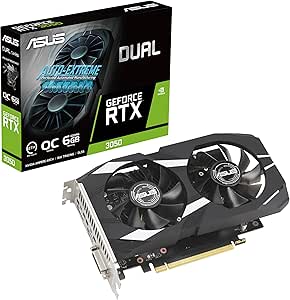 | Best Compact Entry-Level Pick | GPU: NVIDIA GeForce RTX 3050 | Memory: 6GB GDDR6 | Boost clock: 1500 MHz OC mode; 1470 MHz default mode | VIEW LATEST PRICE | See Our Full Breakdown |
| ASUS Dual Radeon RX 9060 XT 16GB GDDR6 Graphics Card |  | Best Compact High-Memory Pick | GPU: AMD Radeon RX 9060 XT | Memory: 16GB GDDR6 | Boost clock: Up to 3250 MHz OC mode; up to 3230 MHz default mode | VIEW LATEST PRICE | See Our Full Breakdown |
| GIGABYTE GeForce RTX 3060 Gaming OC 12G Graphics Card (Rev. 2.0) |  | Best for 12GB on an Older Platform | GPU: NVIDIA GeForce RTX 3060 | Memory: 12GB GDDR6 | Memory interface: 192-bit | VIEW LATEST PRICE | See Our Full Breakdown |
| NVIDIA GeForce RTX 4080 16GB GDDR6X Graphics Card |  | Best for 4K Gaming on an RTX 40-Series Card | GPU: NVIDIA GeForce RTX 4080 | Memory: 16GB GDDR6X | CUDA cores: 9,728 | VIEW LATEST PRICE | See Our Full Breakdown |
| ASUS Prime GeForce RTX 5080 16GB GDDR7 Graphics Card |  | Best Premium NVIDIA Pick | GPU: NVIDIA GeForce RTX 5080 | Architecture: NVIDIA Blackwell | Memory: 16GB GDDR7 | VIEW LATEST PRICE | See Our Full Breakdown |
| ASUS Dual GeForce RTX 5060 OC Edition 8GB GDDR7 Graphics Card |  | Best Compact New-Generation Pick | GPU: NVIDIA GeForce RTX 5060 | Memory: 8GB GDDR7 | GPU clock speed: 2535 MHz default; 2565 MHz OC mode | VIEW LATEST PRICE | See Our Full Breakdown |
| ASRock Radeon RX 9070 Challenger 16GB OC Graphics Card |  | Best 16GB AMD Alternative | GPU: AMD Radeon RX 9070 | Architecture: AMD RDNA 4 | Memory: 16GB GDDR6 | VIEW LATEST PRICE | See Our Full Breakdown |
| graphics card | GPU | Memory | Cooling | Dimensions |
|---|---|---|---|---|
| GIGABYTE Radeon RX 9070 XT Gam | AMD Radeon RX 9070 XT | 16GB GDDR6 | WINDFORCE cooling system with Hawk fans | 11.34 × 5.2 in |
| ASUS TUF Gaming GeForce RTX 50 | NVIDIA GeForce RTX 5090 | 32GB GDDR7 | Three fans, vapor chamber, Axial-tech fans | — |
| MSI Gaming RTX 3050 Ventus 2X | NVIDIA GeForce RTX 3050 | 6GB GDDR6 | Two fans | 7.4 × 4.3 in |
| ASUS Prime NVIDIA GeForce RTX | NVIDIA GeForce RTX 5070 Ti | 16GB GDDR7 | Three Axial-tech fans and phase-change GPU thermal pad | — |
| XFX Swift AMD Radeon RX 9060 X | AMD Radeon RX 9060 XT | 16GB GDDR6 | Triple-fan | — |
| EVGA GeForce RTX 3070 Ti XC3 U | NVIDIA GeForce RTX 3070 Ti | 8GB GDDR6X | iCX3 cooling with three fans | 11.23 x 4.38 in |
| ASRock Radeon RX 7600 Challeng | AMD Radeon RX 7600 | 8GB GDDR6 | Triple fan with 0dB silent mode | 303 x 131 x 45 mm |
| MSI Gaming GeForce RTX 3060 Ve | NVIDIA GeForce RTX 3060 | 12GB GDDR6 | Twin-fan Ventus 2X | — |
| ASUS Dual GeForce RTX 3050 6GB | NVIDIA GeForce RTX 3050 | 6GB GDDR6 | Two Axial-tech fans | 20 cm long; listed as 7.9 x 4.7 in |
| ASUS Dual Radeon RX 9060 XT 16 | AMD Radeon RX 9060 XT | 16GB GDDR6 | Two Axial-tech fans; 0dB technology | 8 x 4.7 inches |
| GIGABYTE GeForce RTX 3060 Gami | NVIDIA GeForce RTX 3060 | 12GB GDDR6 | WINDFORCE 3X, three alternate-spinning fans | 11.1 x 4.6 inches |
| NVIDIA GeForce RTX 4080 16GB G | NVIDIA GeForce RTX 4080 | 16GB GDDR6X | — | 11.97 x 4.84 inches |
| ASUS Prime GeForce RTX 5080 16 | NVIDIA GeForce RTX 5080 | 16GB GDDR7 | Three Axial-tech fans, vapor chamber, and phase-change thermal pad | 306 mm (12 in) long; 2.5 slots |
| ASUS Dual GeForce RTX 5060 OC | NVIDIA GeForce RTX 5060 | 8GB GDDR7 | Two Axial-tech fans | 9 x 4.8 inches; 2.5-slot |
| ASRock Radeon RX 9070 Challeng | AMD Radeon RX 9070 | 16GB GDDR6 | Three fans with 0dB silent feature | 290 x 123 x 51 mm |
More Details on Our Top Picks
GIGABYTE Radeon RX 9070 XT Gaming OC 16G Graphics Card
The RX 9070 XT gives this card a strong place in the roundup for buyers who want a current-generation AMD GPU with 16GB of GDDR6. That memory capacity offers more room for demanding games and high-resolution textures than the 6GB RTX 3050 Ventus 2X, while the WINDFORCE system and Hawk fans are designed to manage heat under load. Its listed maximum resolution reaches 7680 × 4320, though that output figure alone does not indicate how smoothly every game will run at that resolution. Compared with the much larger ASUS TUF RTX 5090, this Gigabyte is a less extreme choice, but it still measures 11.34 inches and weighs 1.78 kg. RGB lighting adds customization, not performance; buyers should focus on case fit and cooling needs.
Pros:- 16GB of GDDR6 provides more memory capacity than the RTX 3050 Ventus 2X’s 6GB.
- WINDFORCE cooling with Hawk fans is designed for sustained heat management.
- PCIe 5.0 x16 connectivity.
- Supports a maximum resolution of 7680 × 4320.
Cons:- Its 11.34-inch length and 1.78 kg weight may challenge smaller or less sturdy builds.
- The listed maximum resolution does not establish gaming performance at that resolution.
- GDDR6 memory is less advanced than the GDDR7 used by the ASUS RTX 5070 Ti and RTX 5090.
Best for: Desktop gamers who want a modern AMD card with 16GB of memory and a substantial custom cooling system.
Not ideal for: Small-case builders or buyers seeking a compact, light card; its 11.34-inch length and 1.78 kg weight call for a careful fit check.
- GPU:AMD Radeon RX 9070 XT
- Memory:16GB GDDR6
- GPU clock speed:3060 MHz
- Interface:PCIe 5.0, PCI-Express x16
- Maximum resolution:7680 × 4320
- Cooling:WINDFORCE cooling system with Hawk fans
- Dimensions:11.34 × 5.2 in
- Weight:1.78 kg
- Warranty:3 years
Our verdict“Choose this Gigabyte for a well-cooled AMD gaming build with 16GB of memory, provided your case can accommodate its size.”
ASUS TUF Gaming GeForce RTX 5090 32GB GDDR7 OC Graphics Card
For buyers building around NVIDIA’s flagship tier, the RTX 5090 stands apart in this group with 32GB of GDDR7, Blackwell architecture, and DLSS 4 support. Its triple-fan cooling and vapor chamber are paired with dual BIOS modes, giving builders a choice of operating profiles. The five video outputs—three DisplayPort 2.1a and two HDMI 2.1b—also suit systems connecting several displays. Compared with the ASUS Prime RTX 5070 Ti, this TUF model offers twice the listed memory capacity, but its 13.7-inch length and 5-pound weight make it a far more demanding fit. The supplied information does not state a power supply requirement, so buyers should check system compatibility rather than assume an existing PSU will suffice. This is a premium, large-format option, not a sensible default for compact builds.
Pros:- 32GB of GDDR7 is the highest listed memory capacity among these five cards.
- NVIDIA Blackwell architecture and DLSS 4 support.
- Triple-fan cooling, vapor chamber, and dual BIOS modes.
- Five video outputs include three DisplayPort 2.1a and two HDMI 2.1b.
Cons:- At 13.7 inches long and 5 pounds, it needs substantial case room and physical support.
- Its premium flagship positioning may be excessive for buyers who do not need its advanced feature set.
- The supplied specifications do not state a power supply requirement.
Best for: Enthusiasts building a spacious desktop around NVIDIA Blackwell, DLSS 4, and high memory capacity for demanding creative or gaming workloads.
Not ideal for: Small-form-factor builders or anyone who cannot verify case clearance and power compatibility for a 13.7-inch, 5-pound card.
- GPU:NVIDIA GeForce RTX 5090
- Memory:32GB GDDR7
- Boost clock:Up to 2580 MHz in OC mode
- AI performance:772 AI TOPS
- Interface:PCIe 5.0 x16
- Video outputs:3 × DisplayPort 2.1a, 2 × HDMI 2.1b
- Cooling:Three fans, vapor chamber, Axial-tech fans
- Dimensions and weight:13.7 × 5.7 inches; 5 pounds
- Warranty:3 years
Our verdict“Pick the TUF RTX 5090 for a spacious, high-end NVIDIA build that can make use of its 32GB memory and DLSS 4 support.”
MSI Gaming RTX 3050 Ventus 2X 6G OC Graphics Card
The RTX 3050 Ventus 2X 6G is the entry-level choice here: its Ampere GPU includes dedicated ray-tracing and Tensor cores, plus a compact 7.4-inch, dual-fan design. That makes it a more plausible fit for modest desktop upgrades than the 11.34-inch Gigabyte RX 9070 XT or the much larger RTX 5090. Its 6GB of GDDR6 is the clear compromise. It is well below the 16GB offered by the ASUS Prime RTX 5070 Ti and the XFX RX 9060 XT, leaving less memory headroom for demanding games and large graphics workloads. The card has one DisplayPort and two HDMI outputs, which can work for a straightforward display setup. I’d treat its 7680 × 4320 maximum-resolution listing as an output capability, not a promise of high-resolution gaming performance.
Pros:- Compact 7.4-inch length is easier to accommodate than the larger cards in this roundup.
- Dedicated ray-tracing and Tensor cores from NVIDIA Ampere.
- Two HDMI 2.1a outputs and one DisplayPort 1.4a.
- Dual-fan cooling in a relatively small card.
Cons:- 6GB of GDDR6 is substantially less memory than the 16GB AMD and NVIDIA alternatives.
- The 96-bit memory interface is narrower than the interfaces listed for some other cards.
- The maximum-resolution specification does not indicate performance in games at that resolution.
Best for: Budget-conscious desktop owners seeking a small Ampere card for a basic upgrade, light gaming, or systems with limited card clearance.
Not ideal for: Players targeting demanding modern games, high-resolution textures, or long-term memory headroom; its 6GB capacity is much lower than the 16GB options here.
- GPU:NVIDIA GeForce RTX 3050
- Architecture:NVIDIA Ampere
- Memory:6GB GDDR6
- Memory interface:96-bit
- Boost clock:1492 MHz
- Memory speed:14 Gbps
- Video outputs:1 × DisplayPort 1.4a, 2 × HDMI 2.1a
- Cooling:Two fans
- Dimensions:7.4 × 4.3 in
Our verdict“Choose this MSI for a compact, entry-level desktop upgrade, but skip it if your games or workloads need more than 6GB of graphics memory.”
ASUS Prime NVIDIA GeForce RTX 5070 Ti 16GB GDDR7 OC Edition Graphics Card
The ASUS Prime RTX 5070 Ti pairs 16GB of newer GDDR7 with a 2.5-slot design, making it a useful middle ground for builders who want more memory than the RTX 3050 Ventus 2X without moving to the oversized TUF RTX 5090. Three Axial-tech fans and a phase-change GPU thermal pad are intended to manage heat, while dual BIOS profiles and GPU Tweak III offer control over performance and thermal behavior. Its 306mm length is still substantial, so “compact” applies to its slot width rather than every dimension. The stated 750W minimum PSU and 16-pin connector also add a compatibility check before installation. Compared with the XFX RX 9060 XT, this ASUS card uses GDDR7 and offers more detailed tuning features, but it requires a more specific power setup.
Pros:- 16GB of GDDR7 offers more capacity than the RTX 3050 Ventus 2X and newer memory than the GDDR6 options.
- 2.5-slot width can suit builds with tighter expansion-slot spacing.
- Three Axial-tech fans and a phase-change GPU thermal pad.
- Dual BIOS profiles and GPU Tweak III provide configuration options.
Cons:- The 306mm length can exceed the clearance of many compact cases.
- Requires a minimum 750W power supply and a 16-pin 12V-2×6 connector.
- At 2.5 slots wide, it may obstruct nearby expansion slots.
Best for: Small-form-factor builders with room for a 306mm card who want 16GB of GDDR7, adjustable BIOS profiles, and NVIDIA’s RTX 5070 Ti platform.
Not ideal for: Owners of short cases or systems without a 750W power supply and 16-pin 12V-2×6 connector.
- GPU:NVIDIA GeForce RTX 5070 Ti
- Memory:16GB GDDR7
- Boost clock:2527 MHz OC mode; 2497 MHz default mode
- Video outputs:3 × DisplayPort 2.1a, 2 × HDMI 2.1b
- Cooling:Three Axial-tech fans and phase-change GPU thermal pad
- Dimensions and slot width:306mm long; 2.5 slots
- Weight:2.6 pounds
- Power supply requirement:Minimum 750W with 16-pin 12V-2×6 (12VHPWR) connector
- Warranty:3 years
Our verdict“Choose the Prime RTX 5070 Ti when you want 16GB of GDDR7 in a relatively narrow card and have the case space and power hardware to support it.”
XFX Swift AMD Radeon RX 9060 XT OC Triple Fan Graphics Card, 16GB GDDR6
The XFX Swift RX 9060 XT is aimed at buyers who want 16GB of GDDR6 and a triple-fan design without stepping up to the RX 9070 XT. Its listed 4K UHD maximum resolution makes it suitable for a 4K-capable display connection, though it does not specify game performance at that resolution. Compared with the GIGABYTE RX 9070 XT, the Swift has the same stated memory capacity but a lower-positioned GPU model in the supplied product details; the Gigabyte also lists PCIe 5.0 and an 8K maximum output. Against the compact RTX 3050 Ventus 2X, XFX offers far more memory, but its triple-fan build is a less space-conscious choice. Buyers should also note that the product data only specifies a compatible PCI-Express x16 slot, not card dimensions or power requirements.
Pros:- 16GB of GDDR6, matching the memory capacity of the Gigabyte RX 9070 XT.
- Triple-fan cooling design.
- Supports a maximum resolution of 3840 × 2160 (4K UHD).
- Provides both DisplayPort and HDMI outputs.
Cons:- The listed maximum resolution is not a measure of gaming performance at 4K.
- Dimensions and power supply requirements are not provided in the product data.
- Uses GDDR6 rather than the GDDR7 found in the ASUS RTX 5070 Ti.
Best for: AMD-focused desktop gamers who want 16GB of graphics memory, triple-fan cooling, and HDMI or DisplayPort output for a 4K UHD display.
Not ideal for: Small-case builders or buyers who need confirmed dimensions and power requirements before checking fit; those details are not supplied here.
- GPU:AMD Radeon RX 9060 XT
- Memory:16GB GDDR6
- Boost clock:Up to 3320 MHz
- Base clock:1900 MHz
- Memory clock speed:20 GHz
- Cooling:Triple-fan
- Video outputs:DisplayPort, HDMI
- Interface:PCI-Express x16
- Maximum resolution:3840 × 2160 (4K UHD)
Our verdict“Pick the XFX Swift for an AMD-based build where 16GB of memory and triple-fan cooling matter more than confirmed fit details or GDDR7.”
EVGA GeForce RTX 3070 Ti XC3 Ultra Gaming Graphics Card, 8GB GDDR6X
The RTX 3070 Ti XC3 Ultra is the performance-oriented choice here for buyers who want more gaming headroom than the RTX 3060 Ventus 2X offers. Its 1815 MHz boost clock and fast 8GB GDDR6X memory suit demanding 1440p play, while the triple-fan iCX3 cooler is designed to manage heat across longer sessions. That speed comes with a memory-capacity tradeoff: the RTX 3060 has 12GB, which can be more comfortable for workloads or games that use more VRAM. The 11.23-inch card also needs room in the case, and its PCIe x16 connection limits it to compatible desktop systems. I’d choose this EVGA model for gaming performance over the 3060’s larger memory pool, but skip it if compact dimensions or more VRAM matter more.
Pros:- 8GB of GDDR6X memory and an 1815 MHz boost clock target demanding gaming workloads.
- Triple-fan iCX3 cooling is designed to keep temperatures in check during sustained play.
- Metal backplate adds structural support and adjustable ARGB lighting offers visual customization.
- Supports a maximum resolution of 7680 x 4320.
Cons:- 8GB of memory is less generous than the 12GB on the RTX 3060 Ventus 2X.
- Its 11.23-inch length may be awkward in compact cases.
- Requires a desktop with a PCI-Express x16 interface.
Best for: Desktop gamers targeting high-refresh 1440p play who have room for a full-length card and value GDDR6X bandwidth.
Not ideal for: Small-case builders or buyers who need more than 8GB of graphics memory for VRAM-heavy games and creative workloads.
- GPU:NVIDIA GeForce RTX 3070 Ti
- Memory:8GB GDDR6X
- Boost clock:1815 MHz
- Memory clock:19000 MHz
- Cooling:iCX3 cooling with three fans
- Maximum resolution:7680 x 4320
- Dimensions:11.23 x 4.38 in
- Weight:1500 g
- Warranty:3 years
Our verdict“Choose the EVGA RTX 3070 Ti for a faster-leaning 1440p build, but favor the RTX 3060 Ventus 2X if its 12GB memory capacity matters more than gaming speed.”
ASRock Radeon RX 7600 Challenger Pro OC 8GB Graphics Card
The RX 7600 Challenger Pro OC pairs AMD’s RDNA 3 architecture with a triple-fan cooler that can stop its fans in low-temperature conditions. That 0dB silent mode makes it a sensible pick for a gaming desktop that also handles everyday tasks, while ray tracing and AMD FSR support provide modern graphics features. Compared with the EVGA RTX 3070 Ti XC3 Ultra, this card is positioned as a more modest 8GB option rather than a higher-performance GDDR6X alternative; buyers should choose based on their workload and expectations, not the fan count. Its 303 mm length is a real fit constraint, and the recommended 550W power supply with an 8-pin connector needs checking before purchase. Four display outputs also make it more flexible than a basic single-screen setup.
Pros:- Triple-fan cooling includes a 0dB mode for quiet operation at low temperatures.
- Supports ray tracing and compatible AMD FSR features.
- Three DisplayPort outputs and one HDMI port can drive up to four displays.
- PCIe 4.0 x8 interface is listed as compatible with PCIe 3.0.
Cons:- The 303 mm card length may not fit shorter cases.
- Calls for a recommended 550W power supply and one 8-pin power connector.
- Its 8GB GDDR6 capacity is smaller than the 12GB on the RTX 3060 Ventus 2X.
Best for: PC gamers seeking a quiet-capable AMD card for a multi-display desktop and whose case and power supply meet its requirements.
Not ideal for: Compact-case owners, buyers with a lower-capacity power supply, or gamers who need more than 8GB of graphics memory.
- GPU:AMD Radeon RX 7600
- Architecture:AMD RDNA 3
- Memory:8GB GDDR6
- Memory interface:128-bit
- Boost clock:Up to 2695 MHz
- Cooling:Triple fan with 0dB silent mode
- Power requirements:1 x 8-pin; 550W recommended power supply
- Dimensions:303 x 131 x 45 mm
- Display outputs:3 x DisplayPort 1.4a, 1 x HDMI 2.1; up to 4 displays
Our verdict“Pick the ASRock RX 7600 for quiet-capable AMD gaming and multi-display flexibility if your case has space and your power supply meets the stated requirement.”
MSI Gaming GeForce RTX 3060 Ventus 2X 12G OC V1 Graphics Card
The MSI RTX 3060 Ventus 2X stands apart from the other 8GB cards in this group with 12GB of GDDR6 memory. That larger capacity can help buyers whose games, graphics applications, or multitasking workloads put pressure on VRAM, even though it does not make the card a higher-performance alternative to the RTX 3070 Ti XC3 Ultra. The RTX 3070 Ti has faster GDDR6X memory and a higher-tier GPU, while this Ventus 2X offers more capacity in a twin-fan design. Its Ampere architecture includes ray-tracing and Tensor Cores, and the listed outputs include three DisplayPort connections and HDMI 2.1. Product data gives both 1807 MHz and 1837 MHz as clock figures, so I’d treat the exact clock specification cautiously. The listing provides little detail on dimensions or power needs.
Pros:- 12GB of GDDR6 memory exceeds the capacity of the RTX 3070 Ti and RX 7600 options in this batch.
- Ampere architecture includes dedicated ray-tracing and Tensor Cores.
- Three DisplayPort 1.4a outputs plus HDMI 2.1 support multiple display arrangements.
- Twin-fan Ventus 2X design provides a simpler cooling layout than the triple-fan cards.
Cons:- It is an RTX 3060, not a performance-tier substitute for the RTX 3070 Ti.
- The supplied listing gives conflicting clock figures of 1807 MHz and 1837 MHz.
- Dimensions and power requirements are not supplied in the product data.
Best for: 1080p gamers and desktop creators who prefer 12GB of VRAM and want three DisplayPort outputs for a multi-monitor setup.
Not ideal for: Buyers prioritizing stronger gaming performance than the RTX 3070 Ti, or builders who need fully specified dimensions and power requirements before selecting a card.
- GPU:NVIDIA GeForce RTX 3060
- Memory:12GB GDDR6
- Memory interface:192-bit
- Memory speed:15 Gbps
- Clock speed:Listing states 1807 MHz and 1837 MHz
- Cooling:Twin-fan Ventus 2X
- Interface:PCI-Express x16; PCIe 4.0 listed
- Display outputs:3 x DisplayPort 1.4a, 1 x HDMI 2.1
- Maximum resolution:7680 x 4320
Our verdict“Choose the MSI RTX 3060 Ventus 2X if 12GB of VRAM matters more to your 1080p gaming or creative workload than the RTX 3070 Ti’s higher performance tier.”
ASUS Dual GeForce RTX 3050 6GB GDDR6 OC Edition Gaming Graphics Card
The ASUS Dual RTX 3050 6GB is the compact, entry-level choice in this group, with a 20 cm, two-slot design suited to smaller desktop cases. Its two Axial-tech fans, dust-resistant construction, and listed DLSS support offer useful features without the bulk of the triple-fan ASRock RX 7600 Challenger Pro OC. The tradeoff is performance headroom: its 6GB of GDDR6 is less than the 8GB on that RX 7600 and far below the 16GB on the ASUS Dual RX 9060 XT. This card is better matched to modest gaming demands than to high-resolution or VRAM-heavy workloads; its listed maximum resolution is 3840 x 2160. I’d favor it when physical fit and NVIDIA features matter more than memory capacity or room for demanding games.
Pros:- 20 cm length and two-slot construction suit many compact desktop cases.
- Two Axial-tech fans provide active cooling in a small card.
- Listed support includes DLSS, HDMI 2.1, and DisplayPort 1.4a.
- IP5X dust resistance and a stainless steel bracket add practical durability features.
Cons:- 6GB of memory is less than the 8GB on the RX 7600 Challenger Pro OC and the 16GB on the RX 9060 XT.
- The listed maximum resolution is 3840 x 2160, below the 8K figures supplied for several alternatives.
- Its entry-level positioning leaves less headroom for demanding graphics workloads.
Best for: Small-form-factor desktop owners who want a compact NVIDIA card for lighter gaming and value DLSS support.
Not ideal for: Gamers targeting demanding high-resolution play or workloads that benefit from more than 6GB of graphics memory.
- GPU:NVIDIA GeForce RTX 3050
- Memory:6GB GDDR6
- Boost clock:1500 MHz OC mode; 1470 MHz default mode
- Cooling:Two Axial-tech fans
- Dimensions:20 cm long; listed as 7.9 x 4.7 in
- Slot design:2-slot
- Interface:PCIe 4.0; PCI-Express x16
- Display outputs:HDMI 2.1, DisplayPort 1.4a, DVI-D
- Maximum resolution:3840 x 2160
Our verdict“Pick the ASUS RTX 3050 6GB for a compact build and lighter gaming, but choose a higher-memory card such as the RX 9060 XT for more demanding workloads.”
ASUS Dual Radeon RX 9060 XT 16GB GDDR6 Graphics Card
The ASUS Dual RX 9060 XT combines a 16GB GDDR6 memory pool with a 2.5-slot, two-fan design, giving it a different balance from the triple-fan RX 7600 Challenger Pro OC. Its extra memory offers more room for demanding games and graphics workloads, while its 8-inch length and 0dB light-load operation make it a more compact, quieter-oriented fit than many larger cards. The Dual BIOS switch lets buyers choose Quiet or Performance profiles, and the listed outputs include two DisplayPort 2.1a connections and HDMI 2.1b. This is the strongest memory-capacity pick among the lower-tier models in this batch, but buyers still need a desktop with a PCIe x16 interface. Its 2.5-slot thickness may also rule it out for especially narrow builds.
Pros:- 16GB of GDDR6 memory provides more capacity than the 8GB RX 7600 and 6GB RTX 3050.
- 8-inch length and 2.5-slot design offer a compact alternative to the 303 mm RX 7600 Challenger Pro OC.
- Dual BIOS offers Quiet and Performance profiles, with 0dB technology for light loads.
- DisplayPort 2.1a and HDMI 2.1b outputs support newer display connections.
Cons:- The 2.5-slot thickness may not suit compact cases with limited expansion-slot clearance.
- Requires a desktop computer with a PCIe x16 interface.
- Two fans provide a smaller cooling array than the triple-fan RX 7600 Challenger Pro OC.
Best for: Desktop gamers and creators who want 16GB of graphics memory in a shorter card with selectable quiet and performance profiles.
Not ideal for: Builders with very tight slot clearance or systems without a PCIe x16 interface.
- GPU:AMD Radeon RX 9060 XT
- Memory:16GB GDDR6
- Boost clock:Up to 3250 MHz OC mode; up to 3230 MHz default mode
- Game clock:Up to 2640 MHz OC mode; up to 2620 MHz default mode
- Interface:PCIe 5.0, PCI-Express x16
- Cooling:Two Axial-tech fans; 0dB technology
- Dimensions:8 x 4.7 inches
- Video outputs:2 x DisplayPort 2.1a, 1 x HDMI 2.1b
- Warranty:3 years
Our verdict“Choose the ASUS RX 9060 XT if you want 16GB of memory and a shorter card, provided your case can accommodate its 2.5-slot thickness.”
GIGABYTE GeForce RTX 3060 Gaming OC 12G Graphics Card (Rev. 2.0)
The RTX 3060 Gaming OC is the sensible pick for buyers who want 12GB of graphics memory without moving to a newer, more demanding card. That capacity gives it more room for memory-heavy games and creative projects than the ASUS Dual RTX 5060 OC, which has 8GB, though the newer card brings Blackwell features and DLSS 4. Gigabyte’s three-fan WINDFORCE cooler and two HDMI 2.1 ports suit a roomy desktop that also connects to multiple displays. Its tradeoff is age: it lacks the newer architecture of the RTX 5060 and the stronger performance tier of the ASRock Radeon RX 9070 Challenger. The listed Limited Hash Rate designation may also matter to buyers seeking a card without that specific limitation. At 11.1 inches, check case clearance before choosing it.
Pros:- 12GB of GDDR6 memory offers more capacity than the ASUS Dual RTX 5060 OC’s 8GB
- Three-fan WINDFORCE cooling design
- Two HDMI 2.1 and two DisplayPort 1.4 outputs
- Supports a maximum resolution of 7680 x 4320
Cons:- Older RTX 3060 generation lacks the RTX 5060’s Blackwell architecture and DLSS 4
- 11.1-inch card may not fit shorter cases
- Listed as a Limited Hash Rate version
Best for: PC builders seeking a 12GB card for gaming and creative workloads who prefer HDMI 2.1 connectivity and have space for a full-size, three-fan cooler.
Not ideal for: Buyers prioritizing newer GPU architecture, a compact case, or higher-tier performance; the RTX 5060 offers newer features, while the RX 9070 is a stronger-class alternative.
- GPU:NVIDIA GeForce RTX 3060
- Memory:12GB GDDR6
- Memory interface:192-bit
- Core clock:1837 MHz
- Cooling:WINDFORCE 3X, three alternate-spinning fans
- Video outputs:2 x HDMI 2.1, 2 x DisplayPort 1.4
- Dimensions:11.1 x 4.6 inches
- Warranty:3 years
Our verdict“Choose this RTX 3060 if you want 12GB of memory and multiple modern display outputs in an older-generation card, and have room for its long cooler.”
NVIDIA GeForce RTX 4080 16GB GDDR6X Graphics Card
The GeForce RTX 4080 suits buyers who want a high-performance NVIDIA card with dedicated ray tracing support and 16GB of fast GDDR6X memory. Its listed 4K ceiling gives it a clearer high-resolution focus than the GIGABYTE RTX 3060 Gaming OC, while its 9,728 CUDA cores place it in a much higher performance class. It also supports PCIe 3.0 systems, so an older motherboard is not automatically a reason to rule it out. The tradeoff is that this listing specifies only basic DisplayPort and HDMI outputs, with no port versions or cooling design details to help buyers plan a build. Compared with the newer ASUS Prime RTX 5080, the RTX 4080 belongs to an earlier GPU generation. Choose it for its stated 4K and ray-tracing capabilities, not as the newest option in this group.
Pros:- 16GB of GDDR6X memory
- 9,728 CUDA cores and a 2.51 GHz boost clock
- Supports ray tracing, DirectX 12 Ultimate, and Vulkan RT
- Compatible with PCIe 3.0 systems as well as PCIe 4.0
Cons:- Earlier generation than the ASUS Prime RTX 5080
- Listing does not specify display output versions or a cooling design
- Maximum resolution is listed as 3840 x 2160, below the 7680 x 4320 listed for several alternatives
Best for: Gamers building or upgrading a system for 4K play and ray tracing who want 16GB of GDDR6X and need compatibility with a PCIe 3.0 motherboard.
Not ideal for: Buyers seeking the latest NVIDIA architecture, specified modern display-port versions, or detailed cooling and power information before planning a build.
- GPU:NVIDIA GeForce RTX 4080
- Memory:16GB GDDR6X
- CUDA cores:9,728
- Boost clock:2.51 GHz
- Interface:PCI Express 4.0; compatible with PCI Express 3.0
- Outputs:DisplayPort, HDMI
- Maximum resolution:3840 x 2160
- Dimensions:11.97 x 4.84 inches
Our verdict“Pick the RTX 4080 if 4K gaming, ray tracing, and 16GB of GDDR6X matter more to you than having the newer RTX 5080 generation.”
ASUS Prime GeForce RTX 5080 16GB GDDR7 Graphics Card
For a premium NVIDIA build, the ASUS Prime RTX 5080 combines Blackwell architecture and 16GB of GDDR7 with a cooling setup that stands out from the more basic details supplied for the RTX 4080. Its vapor chamber, phase-change thermal pad, and three Axial-tech fans are designed to manage heat, while Quiet and Performance BIOS profiles let builders choose between those operating priorities. The 2.5-slot format is relatively compact for this performance tier, but the 12-inch length still calls for a case check. This card is a stronger fit for a high-end system than the ASUS Dual RTX 5060 OC; the latter is smaller and more modestly equipped, but it is not a like-for-like performance alternative. The RTX 5080’s main build constraint is power: ASUS specifies an 850W minimum supply and a 16-pin connector.
Pros:- Blackwell GPU with 16GB of GDDR7 memory
- Vapor chamber, phase-change thermal pad, and three Axial-tech fans
- Quiet and Performance BIOS profiles
- Three DisplayPort 2.1a and two HDMI 2.1b outputs
Cons:- Requires a minimum 850W power supply and a 16-pin 12V-2×6 connector
- 306 mm length and 2.5-slot width still impose case and slot-clearance limits
- At 3 lb, it is a substantial card to support in a build
Best for: Enthusiasts building a high-end NVIDIA gaming PC who want Blackwell, GDDR7, advanced cooling, and dual BIOS profiles.
Not ideal for: Builders with a lower-wattage power supply, no 16-pin 12V-2×6 connector, or a case that cannot accommodate a 306 mm-long, 2.5-slot card.
- GPU:NVIDIA GeForce RTX 5080
- Architecture:NVIDIA Blackwell
- Memory:16GB GDDR7
- Boost clock:2617 MHz default; 2640 MHz OC mode
- Cooling:Three Axial-tech fans, vapor chamber, and phase-change thermal pad
- Video outputs:3 x DisplayPort 2.1a, 2 x HDMI 2.1b
- Dimensions:306 mm (12 in) long; 2.5 slots
- Power supply requirement:Minimum 850W with 16-pin 12V-2×6 (12VHPWR) connector
Our verdict“Choose the ASUS Prime RTX 5080 for a premium Blackwell build if your case and 850W-or-better power supply can support it.”
ASUS Dual GeForce RTX 5060 OC Edition 8GB GDDR7 Graphics Card
The ASUS Dual RTX 5060 OC is the most straightforward choice here for a buyer who wants newer NVIDIA features in a card shorter than the 12-inch ASUS Prime RTX 5080. Its Blackwell architecture, DLSS 4 support, and 8GB of GDDR7 make it a better fit for a compact, current-generation gaming build than the older GIGABYTE RTX 3060, even though that card has 12GB of memory. That capacity gap matters: 8GB can limit demanding games or memory-heavy creative work, so buyers who prioritize memory headroom should compare it with the 16GB ASRock Radeon RX 9070 Challenger. The two Axial-tech fans and 2.5-slot design help it fit more builds, but compact does not mean single-slot; check both case space and slot clearance.
Pros:- Blackwell architecture with DLSS 4 support
- 8GB of GDDR7 memory
- 9-inch length is shorter than the ASUS Prime RTX 5080
- Three DisplayPort 2.1b and one HDMI 2.1b output
Cons:- 8GB of memory may constrain demanding games and creative workloads
- 2.5-slot thickness can still limit compact-case compatibility
- Less memory capacity than the 12GB RTX 3060 and 16GB RX 9070
Best for: Builders looking for a shorter Blackwell card with DLSS 4 for a compact desktop and workloads that fit within 8GB of graphics memory.
Not ideal for: Gamers or creators who expect memory-heavy workloads, want more than 8GB of VRAM, or have a very narrow case that cannot fit a 2.5-slot card.
- GPU:NVIDIA GeForce RTX 5060
- Memory:8GB GDDR7
- GPU clock speed:2535 MHz default; 2565 MHz OC mode
- AI performance:623 AI TOPS
- Cooling:Two Axial-tech fans
- Video outputs:3 x DisplayPort 2.1b, 1 x HDMI 2.1b
- Dimensions:9 x 4.8 inches; 2.5-slot
- Interface:PCI Express x16; PCIe 5.0
Our verdict“Choose this card for a compact build that benefits from Blackwell and DLSS 4, but pick a 12GB or 16GB alternative if memory capacity is a priority.”
ASRock Radeon RX 9070 Challenger 16GB OC Graphics Card
The ASRock Radeon RX 9070 Challenger is the AMD alternative for buyers who want 16GB of memory in a newer-generation card without choosing the NVIDIA-focused ASUS Prime RTX 5080. Its RDNA 4 GPU, factory overclock, and 256-bit memory bus give this pick a clear performance-oriented profile, while three fans with a 0dB silent feature offer a cooling design that can stop fans under suitable conditions. Compared with the ASUS Dual RTX 5060 OC, the RX 9070 doubles the listed memory capacity, making it a more appealing fit for memory-heavy games and creative workloads. The tradeoffs are physical and electrical: the 290 mm card occupies 2.5 slots, and ASRock recommends a 700W power supply with two 8-pin connectors. Its two-year warranty is shorter than the three years listed for the ASUS picks.
Pros:- 16GB of GDDR6 memory on a 256-bit bus
- Factory overclock with boost clock up to 2520 MHz
- Triple-fan cooling with a 0dB silent feature
- Uses two 8-pin power connectors
Cons:- Requires a recommended 700W power supply and two 8-pin connectors
- 290 x 123 x 51 mm dimensions and 2.5-slot width need case clearance
- Two-year warranty is shorter than the three years listed for the ASUS RTX 5080 and RTX 5060
Best for: Gamers and creators seeking a 16GB AMD card with a factory overclock, triple-fan cooling, and two standard 8-pin power connections.
Not ideal for: Builders with a short or narrow case, a power supply below the 700W recommendation, or a preference for a longer stated warranty.
- GPU:AMD Radeon RX 9070
- Architecture:AMD RDNA 4
- Memory:16GB GDDR6
- Memory bus and speed:256-bit; 20 Gbps
- Boost clock:Up to 2520 MHz
- Cooling:Three fans with 0dB silent feature
- Dimensions:290 x 123 x 51 mm
- Power:Two 8-pin connectors; recommended 700W PSU
- Warranty:2 years
Our verdict“Pick the RX 9070 Challenger if you want a 16GB AMD card with factory overclocking and your case and power supply meet its requirements.”
How We Picked
I compared these 15 graphics cards by their intended performance tier, memory capacity, architecture generation, and practical fit in a gaming or creative-work PC. I also weighed cooler configuration, likely power and space demands, and the usefulness of the card for different workloads. Those factors matter because a fast GPU is a poor match if it strains a power supply, crowds a case, or lacks memory for the games and applications a buyer uses.
The ranking favors balanced choices that suit a broad range of systems and needs, rather than treating the highest model number as the automatic winner. The RX 9070 XT leads as a versatile 16GB-class pick; the RTX 5070 Ti and RX 9060 XT offer distinct alternatives, while premium cards earn their place for buyers with demanding workloads and compatible builds. Older and lower-memory options rank lower because they are better suited to narrower budgets, existing systems, or lighter use. I treat model names and specifications as buying signals, not substitutes for checking current benchmarks, exact dimensions, power requirements, and software compatibility.
Factors to Consider When Choosing Best Graphics Cards
Before choosing among these cards, I would start with the games or applications you actually run and the rest of your PC. A GPU’s tier matters, but so do memory needs, display resolution, case clearance, power delivery, and whether you value a particular software ecosystem. These broader checks can prevent paying for performance your setup cannot use—or buying a card that becomes limiting sooner than expected.
Match GPU Performance to Your Display
Choose a card around the resolution and refresh rate you intend to use, not a vague goal of getting the fastest GPU possible. Higher resolutions place greater demands on the graphics card, while high refresh rates also require enough rendering performance to keep up in the games you play. Competitive titles and visually demanding single-player games can have very different needs, so check benchmarks for your own mix of software. An expensive flagship can be wasted on a modest display, while an entry-level card may struggle if you later move to a higher-resolution monitor. I would also check whether your preferred games support the graphics features you care about before paying extra for them.
Treat VRAM as a Workload Limit, Not a Quality Score
More video memory can help with high-resolution textures, large creative projects, and workloads that keep many assets on the GPU. It does not automatically make a card faster, and memory capacity alone cannot replace a stronger GPU. The 6GB RTX 3050 choices, 8GB RTX 5060 and RX 7600, and 12GB RTX 3060 options illustrate why buyers should compare both capacity and processing tier. Check the requirements of the games and applications you run, especially if you use large textures, mods, or GPU-accelerated editing. Avoid buying solely on a memory number without checking performance in the tasks that matter to you.
Check Case Clearance, Airflow, and Power Together
Graphics cards vary in length, thickness, cooler design, and power demand, so a model that fits one PC may not fit another. Measure the available card space with front fans, radiators, and cables in place; a listed card length alone can miss awkward clearance limits. Then compare the card’s power guidance and connectors with your power supply, including its age and available cables. A compact dual-fan card can suit a smaller case, but it still needs room for airflow and may run differently from a larger cooler. For a high-tier model, plan the whole system around heat and power rather than treating the GPU as an isolated upgrade.
Choose Features and Software for Your Actual Workflow
AMD and NVIDIA cards can differ in features, application support, and performance depending on the game or creative program. Buyers who rely on a particular rendering tool, streaming workflow, or upscaling feature should verify current support and results for that software before choosing a brand. A feature list is only useful when your games or applications can use it and you like the resulting image or workflow. If you mostly play titles where raw raster performance matters, the best fit may differ from the choice for ray tracing or GPU-accelerated production. I would weigh those specific needs alongside memory and performance rather than assuming one brand is best for every task.
Pay More Only When Your System Can Use the Extra Tier
A higher GPU tier makes sense when it solves a real limitation: low frame rates at your target resolution, a demanding creative workload, or a need for more memory and processing headroom. It is less compelling when the CPU, monitor, or power supply is likely to hold the system back. Before upgrading, check whether your processor can keep pace in the games you play and whether your display can show the extra frames. A balanced build may benefit more from a monitor or power-supply upgrade than from moving to a flagship card. I would compare the full cost and compatibility of the system change, not just the GPU specification sheet.
Frequently Asked Questions
Is a 16GB graphics card a better choice than an 8GB model for gaming?
It can be a better fit for games that use large textures, higher resolutions, or mods, but capacity alone does not determine frame rates. This roundup includes 16GB cards across several tiers, so compare their performance and features rather than treating them as interchangeable. An 8GB card can still suit lighter games or a more modest display, while a stronger GPU with less memory may perform better in some workloads. Check benchmarks and requirements for the games you play, especially if you intend to keep the card for several years. Choose extra memory when your actual use calls for it, not just because the number is larger.
Should I choose an AMD Radeon card or an NVIDIA GeForce card?
Neither brand is the right choice for every buyer; the better match depends on the games, applications, and features you use. This selection spans Radeon options such as the RX 9060 XT and RX 9070 XT, plus GeForce cards from the RTX 3050 through RTX 5090. Compare performance in your own titles, then check whether your creative software or streaming setup favors particular features. Also weigh memory, card dimensions, power demands, and the rest of the build. If you have a specific workflow, verify current software support instead of choosing by brand reputation alone.
Can I install an RTX 5090 or RTX 5080 in my existing PC?
Possibly, but the GPU model alone cannot confirm that your system is ready. Check the exact card’s length and thickness against your case, then confirm that your power supply meets the manufacturer’s guidance and has the required connectors. High-tier cards can also put more demand on case airflow and system cooling than an existing build was designed to handle. Make sure the processor and monitor can make useful use of the extra graphics performance. If any of those checks fail, a more balanced card may be a better upgrade than replacing several parts at once.
Is an older RTX 3060 or RTX 3070 Ti still worth considering?
It may be, particularly for an existing PC upgrade or a workload that fits the card’s capabilities. The RTX 3060 models in this roundup have 12GB of memory, while the listed RTX 3070 Ti has 8GB, so memory capacity and processing tier point in different directions. Compare current game benchmarks and application support against newer alternatives such as the RTX 5060 or RX 9060 XT rather than relying on the generation label. Also check the specific card’s condition, warranty, dimensions, and power needs if you are buying an older model. An older card makes sense when it fits your system and tasks better than a newer option, not simply because it was once a higher tier.
Will a compact dual-fan graphics card fit and cool well in a small case?
A dual-fan design can be easier to fit than a larger triple-fan card, but the cooler style does not guarantee compatibility. Compare the exact card dimensions with the case’s GPU clearance, including any radiator, front fans, and power cables that occupy space. Small cases can restrict airflow, which may affect temperatures and fan noise even when the card physically fits. Check the case’s intake and exhaust layout and leave room for air to reach the GPU. If the case is especially constrained, confirm the card’s dimensions and cooling needs before ordering rather than relying on its product name.
Conclusion
For the broadest mix of gaming and creative use, I recommend the GIGABYTE Radeon RX 9070 XT Gaming OC 16G as the best overall pick in this lineup. Buyers seeking a strong 16GB-class alternative with NVIDIA features should look at the ASUS Prime GeForce RTX 5070 Ti; those wanting a premium flagship should compare the ASUS TUF RTX 5090 and ASUS Prime RTX 5080 against their power, case, and workload needs. For value-focused builds, the XFX Swift RX 9060 XT 16GB and ASUS Dual RX 9060 XT are the first alternatives I would compare, while the ASUS Dual RTX 5060 is the simpler newer-generation starting point for a modest PC. Buyers with lighter needs can consider the RTX 3050 models, but should check whether 6GB suits their games; anyone upgrading an older system may prefer an RTX 3060 after comparing its 12GB memory and current performance. Match the final choice to your monitor, software, power supply, and case—not just the card’s name.