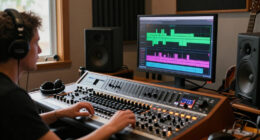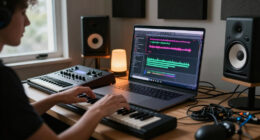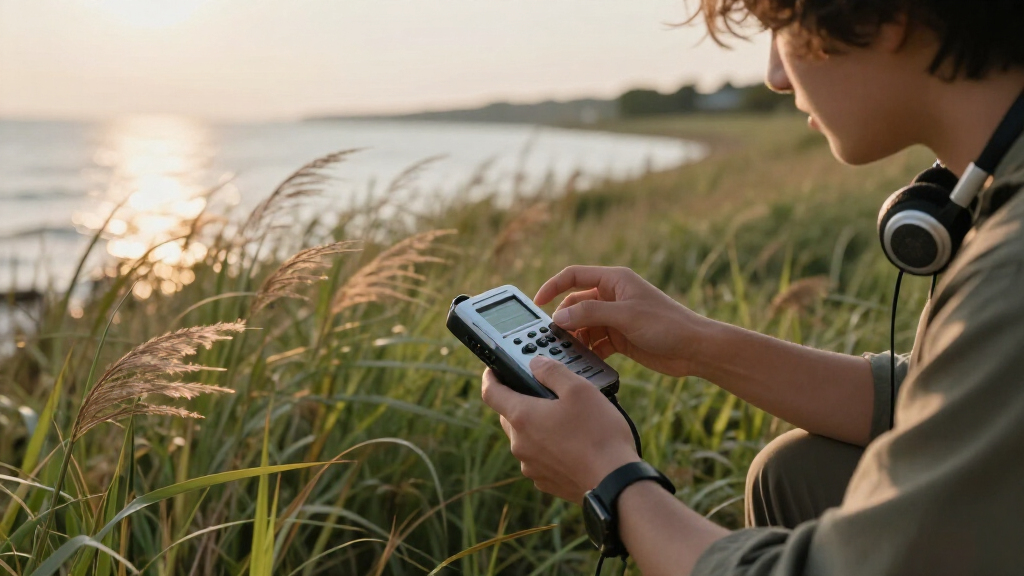
For most field recordists, I’d start with the Zoom H4essential: its built-in stereo mics and external-input flexibility cover a broad range of location work. The TASCAM DR-40XP is a strong alternative for adjustable microphone placement and multichannel capture, while the Zoom F3 suits crews that prioritize dependable recording from external mics. The main tradeoff is between a small, simple recorder and a larger model with more inputs, controls, and setup demands. I compare all 15 options below so you can match the recorder to your sources, workflow, and field conditions.

Get audio and creator gear delivered free with Prime
- Fast, free delivery on millions of items
- Prime Video, Amazon Music and more included
- Member-only deals all year
Complete the kit


Key Takeaways
The H4essential is the most balanced starting point in this lineup: it combines built-in stereo capture with inputs for external microphones, avoiding the single-purpose limits of the H1 models.
The F6 and F3 serve different external-mic workflows. The F6 offers multiple inputs for a multichannel setup, while the F3 keeps the recording unit simpler and more focused on a smaller external-mic rig.
32-bit float appears across several TASCAM and Zoom choices, but it does not replace good mic placement. It can provide more room to recover level mistakes; it cannot remove wind, handling noise, or distortion already created before the signal reaches the recorder.
Small recorders trade direct control for lighter kits. The H1essential, H1n, DR-07XP, and Xvive XV1-R are easier to carry than a multichannel rig, but they offer fewer options for simultaneous sources and accessories.
Some models target production needs rather than general ambience. The DR-10LW is designed around a lavalier workflow, and the PodTrak P4 is aimed at podcast-style multitrack recording, so neither is the natural choice for every outdoor recording task.
| Zoom H4essential 4-Track Portable Audio Recorder Bundle |  | Best Overall for Flexible Field Sessions | Recording format: 32-bit float | Built-in microphones: X/Y microphones | Maximum sound pressure level: 130 dB SPL | VIEW LATEST PRICE | See Our Full Breakdown |
| Tascam DR-22WL Portable Handheld Audio Recorder with Wi-Fi |  | Best for Remote Smartphone Control | Microphones: Built-in stereo condenser microphones in true X/Y pattern | Recording format: WAV | Wireless feature: Wi-Fi control and file transfer | VIEW LATEST PRICE | See Our Full Breakdown |
| Zoom H1essential Portable Stereo Recorder |  | Best Compact 32-Bit Float Recorder | Microphones: Built-in X/Y stereo | Recording technology: 32-bit float | Recording format: WAV | VIEW LATEST PRICE | See Our Full Breakdown |
| Zoom PodTrak P4 Portable Podcast Recorder |  | Best for Multi-Person Field Interviews | Microphone inputs: 4 XLR inputs with phantom power | Headphone outputs: 4 with individual volume control | Recording: Multitrack WAV | VIEW LATEST PRICE | See Our Full Breakdown |
| TASCAM DR-40XP 4-Channel 32-Bit Float Portable Field Recorder |  | Best for Flexible Built-In and External Mics | Channels: 4 | Recording formats: 32-bit float, 24-bit, and 16-bit WAV | Sample rates: 96 kHz, 48 kHz, or 44.1 kHz | VIEW LATEST PRICE | See Our Full Breakdown |
| Zoom H1n Portable Digital Recorder |  | Best for Simple Stereo Field Notes | Microphones: Built-in stereo condenser, 90-degree X/Y | Recording format: WAV | Storage capacity: 32 GB | VIEW LATEST PRICE | See Our Full Breakdown |
| TASCAM DR-10LW Ultra-Compact Audio Recorder with Lavalier Microphone |  | Best for Hands-Free Speech Recording | Microphone: Mono lavalier | Microphone cable length: 160 cm | Storage capacity: 32 GB | VIEW LATEST PRICE | See Our Full Breakdown |
| Zoom F6 Portable 6-Input, 14-Track Field Recorder Bundle |  | Best for Multi-Mic Field Productions | Inputs: 6 | Maximum simultaneous tracks: 14, including stereo mix | Recording format: BWF-compliant WAV | VIEW LATEST PRICE | See Our Full Breakdown |
| Zoom H4essential Handheld Recorder |  | Best All-Rounder for External Microphones | Recording tracks: 4 | Recording resolution: 32-bit float, up to 96 kHz | Microphones: Built-in stereo | VIEW LATEST PRICE | See Our Full Breakdown |
| Xvive XV1-R Portable Stereo Recorder and Audio Interface |  | Best Compact 32-Bit Float Stereo Recorder | Recording formats: 24-bit PCM or 32-bit float | Maximum sample rate: 96 kHz | Supported file formats: HE-AAC, AAC-LC, WAVF32, WAV24 PCM | VIEW LATEST PRICE | See Our Full Breakdown |
| Zoom F3 Professional Field Recorder |  | Best for External-Mic Field Recording | Channels: 2 | Recording format and technology: WAV, 32-bit float | Inputs: 2 locking XLR/TRS | VIEW LATEST PRICE | See Our Full Breakdown |
| TASCAM DR-07XP 32-Bit Float Portable Field Recorder and USB-C Audio Interface |  | Best Value for Stereo Ambience | Recording formats: 32-bit float, 24-bit, 16-bit, MP3 | Sample rates: 44.1 kHz, 48 kHz, 96 kHz | Built-in microphones: Adjustable stereo AB/XY condenser microphones | VIEW LATEST PRICE | See Our Full Breakdown |
| TASCAM Portacapture X6 32-Bit Float Portable Audio Recorder |  | Best for Multitrack Field Sessions | Recording quality: Up to 96 kHz, 32-bit float WAV | Simultaneous tracks: 6 (4 tracks + 2 mix) | Inputs: 2 XLR | VIEW LATEST PRICE | See Our Full Breakdown |
| Zoom H1 XLR 2-Channel Recorder |  | Best Compact Recorder for External Inputs | Channels: 2 | Recording resolution: 32-bit float, up to 96 kHz | Inputs: 2 locking XLR/TRS combo inputs; 3.5 mm stereo input | VIEW LATEST PRICE | See Our Full Breakdown |
| Xvive XV1-R Portable Stereo Audio Recorder with 32-Bit Float and X/Y Microphones |  | Best for Lightweight Stereo Capture | Recording formats: WAV (32-bit float or 24-bit PCM), AAC | Maximum sample rate: 96 kHz | Built-in microphones: X/Y directional microphones | VIEW LATEST PRICE | See Our Full Breakdown |
| portable audio recorders for field recording | Weight | Battery life | Inputs |
|---|---|---|---|
| Zoom H4essential 4-Track Porta | — | Up to 10 hours | 2 XLR/TRS combo inputs |
| Tascam DR-22WL Portable Handhe | 8 ounces | — | — |
| Zoom H1essential Portable Ster | 92 g | Up to 10 hours | — |
| Zoom PodTrak P4 Portable Podca | 130 g | Up to 3.5 hours on two AA batteries | — |
| TASCAM DR-40XP 4-Channel 32-Bi | 6.1 ounces | — | 2 XLR/TRS |
| Zoom H1n Portable Digital Reco | 2.4 oz | Approximately 10 hours | — |
| TASCAM DR-10LW Ultra-Compact A | 63 g | Up to 10 hours | — |
| Zoom F6 Portable 6-Input | — | — | 6 |
| Zoom H4essential Handheld Reco | 243 g | — | 2 XLR/TRS |
| Xvive XV1-R Portable Stereo Re | — | Up to 12 hours on two AA batteries | Stereo 1/8-inch mic/line input |
| Zoom F3 Professional Field Rec | 8.48 ounces | — | 2 locking XLR/TRS |
| TASCAM DR-07XP 32-Bit Float Po | 4.8 ounces | Up to 17.5 hours on 2 AA batteries | — |
| TASCAM Portacapture X6 32-Bit | 0.53 kg | 6 hours | 2 XLR |
| Zoom H1 XLR 2-Channel Recorder | 6.4 ounces | Up to 10 hours | 2 locking XLR/TRS combo inputs; 3.5 mm stereo input |
| Xvive XV1-R Portable Stereo Au | — | — | — |
More Details on Our Top Picks
Zoom H4essential 4-Track Portable Audio Recorder Bundle
The H4essential bundle is my most versatile pick here for field recording that may shift from ambient capture to microphones or line-level sources. Its 32-bit float recording helps accommodate sudden changes in volume, while the built-in X/Y mics can capture a stereo scene without extra gear. Compared with the smaller Zoom H1essential, it adds two XLR/TRS inputs and a four-in/two-out USB interface, making it better suited to interviews, music sessions, or a recorder that also serves as a computer interface. The bundle’s card, power bank, cables, and bag reduce the amount of kit a buyer must assemble separately. The tradeoff is bulk: the listed bundle weight is 2.9 pounds, and standalone battery operation still depends on two AA cells.
Pros:- 32-bit float recording helps handle unpredictable changes in source level
- Built-in X/Y microphones plus two XLR/TRS inputs cover both quick stereo capture and external mics
- Four-in/two-out USB interface mode adds usefulness for computer-based recording
- Bundle includes a 64GB card, power bank, cables, batteries, charger, and travel bag
Cons:- The listed bundle weight of 2.9 pounds is substantial for a handheld field kit
- Portable battery use requires two AA batteries
- Its added inputs and accessories may be unnecessary for simple ambient recordings
Best for: Field recordists who want built-in stereo capture, two external mic inputs, and a ready-to-pack accessory bundle for varied assignments.
Not ideal for: Hikers or minimal-kit recordists who prioritize the lightest possible setup; the H1essential is much lighter and simpler to carry.
- Recording format:32-bit float
- Built-in microphones:X/Y microphones
- Maximum sound pressure level:130 dB SPL
- Inputs:2 XLR/TRS combo inputs
- USB interface:4-in/2-out
- Battery life:Up to 10 hours
- Power:Two AA batteries or USB-C bus power
- Storage support:microSDXC up to 1TB
- Bundle accessories:64GB microSDXC card, power bank, batteries and charger, cables, travel bag, and other accessories
Our verdict“Choose the H4essential bundle if you want one adaptable recorder and a broad accessory kit, and skip it if low carry weight is your main priority.”
Tascam DR-22WL Portable Handheld Audio Recorder with Wi-Fi
The Tascam DR-22WL suits field recordists who value remote operation more than newer recording formats. Its Wi-Fi control and file transfer can help when the recorder needs to sit away from the operator, while true X/Y stereo mics capture a coherent left-right image for outdoor ambience. The eight-position Scene Dial also offers a quicker setup path than manually adjusting every recording parameter. Compared with the Zoom H1essential, this Tascam’s standout is wireless control, not 32-bit float recording; the H1essential is the stronger fit when changing sound levels are hard to predict. The DR-22WL records WAV and supports expandable microSD storage, but its listed 4GB built-in capacity is modest, and the two-AA power requirement adds a recurring item to the field kit.
Pros:- Wi-Fi supports remote control and file transfer with compatible devices
- True X/Y stereo microphones suit ambience and location sound
- Eight-position Scene Dial simplifies common recording setups
- microSD, USB, and 3.5 mm headphone connections support practical field use
Cons:- Does not offer the 32-bit float recording specified for the H1essential and H4essential
- Listed built-in storage is only 4GB, so expandable card storage matters
- Requires two AA batteries
Best for: Solo location recordists who want to start, monitor, or transfer recordings wirelessly from a compatible phone or computer.
Not ideal for: Recordists who need 32-bit float capture, large built-in storage, or the most straightforward modern workflow; the H1essential offers a clearer fit for level changes.
- Microphones:Built-in stereo condenser microphones in true X/Y pattern
- Recording format:WAV
- Wireless feature:Wi-Fi control and file transfer
- Recording presets:Eight-position Scene Dial
- Built-in storage:4GB
- Battery requirement:Two AA batteries
- Weight:8 ounces
- Headphone jack:3.5 mm
Our verdict“Pick the DR-22WL if wireless control is central to your field workflow, but choose a 32-bit float model if unpredictable levels matter more.”
Zoom H1essential Portable Stereo Recorder
For a light field kit, the Zoom H1essential delivers the core advantages I’d want from a grab-and-go stereo recorder: built-in X/Y microphones, 32-bit float capture, and USB-C connectivity in a 92-gram body. That combination makes it easier to carry for walks, quick ambience grabs, and location notes than the more input-heavy Zoom H4essential. It can also work as a USB microphone, so it has a role beyond recording to a card. The tradeoff is limited expansion: unlike the H4essential or Tascam DR-40XP, it has no listed XLR/TRS inputs for external microphones. Its two AAA batteries and unspecified included-card status also mean buyers should plan their power and storage before heading out.
Pros:- Light 92-gram body is easy to carry for spontaneous field recordings
- 32-bit float recording helps manage sudden changes in sound level
- Built-in X/Y microphones capture stereo without an external mic
- USB-C microphone mode supports connection to a computer or compatible mobile device
Cons:- No XLR/TRS inputs are listed for external microphones
- Runs on two AAA batteries
- A memory card is not specified as included
Best for: Traveling sound gatherers and solo creators who need lightweight stereo recording with 32-bit float and little setup.
Not ideal for: Field teams using XLR microphones or recording several sources at once; the H4essential or DR-40XP provides external inputs.
- Microphones:Built-in X/Y stereo
- Recording technology:32-bit float
- Recording format:WAV
- Connectivity:USB-C
- Storage support:Up to 1TB
- Battery life:Up to 10 hours
- Power:Two AAA batteries
- Weight:92 g
Our verdict“Choose the H1essential for lightweight, self-contained stereo capture, and move up to the H4essential when external mic inputs are part of the job.”
Zoom PodTrak P4 Portable Podcast Recorder
The Zoom PodTrak P4 is the lineup’s interview-focused choice: four XLR mic inputs and four individually controlled headphone outputs make it better suited to a small crew or roundtable than the stereo-first H1essential. Separate headphone levels let each participant monitor comfortably without changing everyone else’s mix, while phone and USB connections support remote guests. It can record multitrack WAV audio and includes programmable sound pads, though those podcast tools matter less for wildlife or ambience work. Compared with the Tascam DR-40XP, the P4 gives a group more mic and headphone connections, but the Tascam is the more field-oriented option for adjustable built-in stereo mics and 32-bit float recording. The P4’s stated battery life is only up to 3.5 hours on two AA cells.
Pros:- Four XLR microphone inputs support multi-person recording
- Four headphone outputs have individual volume controls
- Multitrack WAV recording and programmable sound pads suit interview production
- TRRS and USB connections support phone or computer-based remote interviews
Cons:- Stated battery life is up to 3.5 hours on two AA batteries
- Podcast-focused controls and sound pads add little value for simple ambience recording
- Compared with the DR-40XP, it lacks listed adjustable built-in stereo microphones and 32-bit float recording
Best for: Small field interview crews, documentary teams, and mobile podcasters who need several XLR microphones and separate headphone monitoring.
Not ideal for: Solo nature recordists or users prioritizing long battery sessions and adaptable stereo ambience capture; its podcast-oriented layout and short stated battery life are less suited to those jobs.
- Microphone inputs:4 XLR inputs with phantom power
- Headphone outputs:4 with individual volume control
- Recording:Multitrack WAV
- Sound pads:4 programmable pads
- Phone connections:TRRS jack and USB
- USB interface:2-in/2-out
- Battery life:Up to 3.5 hours on two AA batteries
- Weight:130 g
Our verdict“Choose the PodTrak P4 when a field interview involves several mic’d participants, but choose a stereo recorder for lightweight environmental sound capture.”
TASCAM DR-40XP 4-Channel 32-Bit Float Portable Field Recorder
The TASCAM DR-40XP bridges handheld stereo capture and external-mic recording. Its adjustable condenser microphones switch between A-B and X-Y arrangements, while two XLR/TRS inputs let a recordist add microphones or other sources; the product data also says built-in mics and external inputs can record simultaneously. That makes it a more adaptable field setup than the compact Zoom H1essential, which has no listed XLR inputs, and a more natural choice for location audio than the podcast-oriented PodTrak P4. Its 32-bit float option can help with changing levels, and USB-C interface mode adds computer use. The listed maximum microphone SPL is 125 dB, below the H4essential’s 130 dB SPL. Batteries and a microSD card are not included, so the kit needs preparation.
Pros:- Adjustable built-in microphones switch between A-B and X-Y stereo recording
- Two XLR/TRS inputs allow built-in and external sources to be used together
- 32-bit float recording offers headroom for unpredictable field levels
- USB-C 2-in/2-out interface mode adds computer and compatible mobile use
Cons:- Batteries and microSD card are not included
- Maximum microphone SPL is listed at 125 dB, below the H4essential’s 130 dB SPL
- More recording options may be unnecessary for buyers who only need quick stereo capture
Best for: Location recordists who want adjustable onboard stereo mics plus the option to connect two external sources or use the recorder as a USB interface.
Not ideal for: Buyers seeking an all-in-one bundle or a very simple pocket recorder; the H1essential is lighter in role, while this model requires separate batteries and a card.
- Channels:4
- Recording formats:32-bit float, 24-bit, and 16-bit WAV
- Sample rates:96 kHz, 48 kHz, or 44.1 kHz
- Inputs:2 XLR/TRS
- Built-in microphones:Adjustable A-B or X-Y stereo condenser microphones
- Maximum microphone SPL:125 dB
- USB interface:2-in/2-out USB-C
- Weight:6.1 ounces
Our verdict“Choose the DR-40XP for adaptable stereo mics and two external inputs in one field recorder, provided you are ready to supply its batteries and card.”
Zoom H1n Portable Digital Recorder
The Zoom H1n is a straightforward pick for capturing ambience, location notes, and quick stereo references without carrying a multi-input recorder. Its built-in 90-degree X/Y microphones make a self-contained setup, while one-touch controls keep basic recording tasks simple. Compared with the Zoom H4essential, it gives up XLR/TRS inputs and 32-bit float recording, so it is less adaptable when using external microphones or recording unpredictable loud sounds. In return, the H1n is notably lighter and less involved to operate. WAV recording, stereo overdubbing, and playback-speed control add useful practice and review tools, but the separate AA battery and 2.5 mm headphone jack are practical annoyances. Choose it for uncomplicated stereo capture, not a growing production rig.
Pros:- Built-in 90-degree X/Y microphones capture stereo without extra gear
- One-touch controls suit quick recording in the field
- Compact 2.4-ounce body is easy to carry
- Stereo overdubbing and playback-speed control support review and practice
Cons:- Does not offer the H4essential’s XLR/TRS inputs or 32-bit float recording
- Requires a separate AA battery
- 2.5 mm headphone jack may require an adapter for common headphones
Best for: Field recordists who want a lightweight, self-contained recorder for ambient sound, reference clips, and spoken notes.
Not ideal for: People using XLR microphones or recording sources with abrupt volume changes who need 32-bit float capture and more robust input connections.
- Microphones:Built-in stereo condenser, 90-degree X/Y
- Recording format:WAV
- Storage capacity:32 GB
- Power:1 AA battery
- Battery life:Approximately 10 hours
- Headphone jack:2.5 mm
- Dimensions:1.5 × 5.5 × 1 in
- Weight:2.4 oz
Our verdict“Choose the H1n for portable, uncomplicated stereo recording; choose the H4essential if you need external mic inputs and more recording headroom.”
TASCAM DR-10LW Ultra-Compact Audio Recorder with Lavalier Microphone
The TASCAM DR-10LW is built for a different field task than handheld stereo recorders: capturing one person’s voice while the recorder stays clipped to their clothing. The included lavalier microphone, clip, and windscreen make it ready for interviews or location dialogue, and its mono recording suits a single speaking subject. Two files recorded at different levels provide a safety option if vocal volume spikes, while the limiter and automatic level control can help manage changing speech. That makes it more focused than the Zoom H1n, which is better suited to stereo ambience and general-purpose capture. The tradeoff is limited flexibility: it is not a stereo environmental recorder, and its single AAA battery powers a dedicated body-mic setup rather than a broader recording kit.
Pros:- Includes a lavalier microphone, clip, and windscreen
- Records two files at different levels for added protection against loud speech
- Automatic level control and limiting help manage voice-level changes
- Up to 10 hours of operation from one AAA alkaline battery
Cons:- Mono recording is less suitable for stereo field ambience than the Zoom H1n
- Single AAA battery may be less convenient to replace on longer assignments
- Designed around a lavalier workflow rather than flexible microphone connections
Best for: Documentary crews, interviewers, and location videographers who need a compact recorder and lavalier mic for one speaker.
Not ideal for: Recordists capturing stereo ambience, wildlife, or music who need a pair of microphones or multiple external inputs.
- Microphone:Mono lavalier
- Microphone cable length:160 cm
- Storage capacity:32 GB
- Compatible memory cards:MicroSD, SDHC
- Power:1 AAA battery
- Battery life:Up to 10 hours
- Headphone jack:3.5 mm
- Weight:63 g
Our verdict“Pick the DR-10LW for discreet, hands-free recording of one speaker, but choose a stereo handheld recorder for environmental sound.”
Zoom F6 Portable 6-Input, 14-Track Field Recorder Bundle
When a field session needs several microphones, isolated tracks, and synchronization with other cameras, the Zoom F6 offers far more production capacity than the handheld recorders here. Its six inputs and up to 14 tracks let a crew capture multiple sources alongside a stereo mix, while 32-bit float recording provides room to handle wide changes in level. Timecode support and USB audio-interface operation also make it a better fit for coordinated video and post-production workflows than the Zoom H4essential, which has two XLR/TRS inputs and four tracks. That capability comes with a heavier, more involved setup: the listed recorder-and-accessory weight is four pounds, and the bundle still needs a chosen power source. It is excessive for casual ambience walks, but compelling when track separation matters.
Pros:- Six inputs and up to 14 tracks support multi-microphone sessions
- 32-bit float recording accommodates wide changes in source level
- Timecode input and output help synchronize field audio with video
- AA, USB-C, and Sony L-Series power options suit varied setups
Cons:- Listed recorder and bundle weight of four pounds is substantial for mobile solo recording
- Requires a separate AA, USB-C, or Sony L-Series power source
- More inputs and routing add setup complexity compared with the H4essential
Best for: Location sound teams and advanced field recordists who need multiple mic inputs, isolated tracks, and timecode synchronization.
Not ideal for: Solo hikers and casual recordists who prioritize a small, ready-to-carry recorder over multichannel routing and production accessories.
- Inputs:6
- Maximum simultaneous tracks:14, including stereo mix
- Recording format:BWF-compliant WAV
- Recording technology:32-bit float
- Timecode:Input and output
- Power options:AA batteries, USB Type-C, Sony L-Series batteries
- Included memory card:128 GB SDXC
- Recorder and included accessories weight:4 pounds
Our verdict“Choose the F6 when your field work needs multiple isolated tracks and timecode; for a lighter two-mic-input setup, the H4essential is easier to carry.”
Zoom H4essential Handheld Recorder
The Zoom H4essential is a strong middle ground for field recordists who want built-in stereo capture but also need to connect external microphones. Its two XLR/TRS inputs and four-track recording make it more adaptable than the H1n, while 32-bit float recording can reduce the risk of losing a take when levels change unexpectedly. Spoken menu guidance and a color display add practical access and navigation support, and USB-C lets it record to a connected device while backing up to an SD card. Compared with the larger Zoom F6, it is a simpler handheld option with fewer inputs and less track capacity; that is a worthwhile exchange for solo work and small crews. It still depends on two AA batteries, and an SD card is not listed as included.
Pros:- Built-in stereo microphones pair with two XLR/TRS inputs for varied field setups
- 32-bit float recording supports unpredictable changes in source volume
- Can record to a connected device while backing up to an SD card
- Spoken menu guidance supports an accessible recording workflow
Cons:- Two AA batteries are required for portable operation
- SD card is not specified as included
- Four-track capacity falls short of the Zoom F6 for multi-mic productions
Best for: Independent location recordists who need built-in stereo microphones plus two external mic inputs for interviews, music, or video sound.
Not ideal for: Crews recording several isolated sources at once, who are better served by the Zoom F6’s six inputs and higher track count.
- Recording tracks:4
- Recording resolution:32-bit float, up to 96 kHz
- Microphones:Built-in stereo
- Inputs:2 XLR/TRS
- Connectivity:USB-C
- Storage:SD card, up to 1 TB
- Power:2 AA batteries
- Weight:243 g
Our verdict“Choose the H4essential for a versatile handheld recorder with external inputs; step up to the F6 when a field session needs more microphones and tracks.”
Xvive XV1-R Portable Stereo Recorder and Audio Interface
The Xvive XV1-R suits field recordists who want compact stereo capture with 32-bit float available, but do not need the H4essential’s XLR/TRS connections. It records mono or stereo at up to 96 kHz and accepts a stereo 1/8-inch mic/line input, making it a practical match for compatible small microphones and line-level sources. Its onboard limiter, noise gate, and lo-cut filter provide basic control, while USB-C handles both power and data and can connect it as an audio interface. Compared with the Zoom H1n, the XV1-R offers 32-bit float and a longer stated battery life, but it relies on an external mic/line input rather than built-in stereo microphones. That makes microphone choice part of the setup, and the 1/8-inch connection is less suited to professional XLR mics.
Pros:- Records 32-bit float at sample rates up to 96 kHz
- Onboard limiter, noise gate, and lo-cut filter provide useful signal controls
- USB-C supports both data and power and enables audio-interface use
- Up to 12 hours of operation on two AA batteries
Cons:- Stereo 1/8-inch mic/line input is less suitable for direct connection of XLR microphones
- No built-in stereo microphones are specified, so field capture depends on an external source
- Two AA batteries are required for battery-powered operation
Best for: Mobile recordists with a compatible stereo mic or line source who want 32-bit float capture and USB-C interface capability in a compact unit.
Not ideal for: Buyers seeking a ready-to-record handheld with built-in stereo microphones or direct XLR microphone connections.
- Recording formats:24-bit PCM or 32-bit float
- Maximum sample rate:96 kHz
- Supported file formats:HE-AAC, AAC-LC, WAVF32, WAV24 PCM
- Maximum SPL:130 dB
- Storage:microSD, microSDHC, or microSDXC; up to 128 GB
- Inputs:Stereo 1/8-inch mic/line input
- Power and data:USB-C
- Battery life:Up to 12 hours on two AA batteries
Our verdict“Pick the XV1-R if you already have a compatible mic and want compact 32-bit float recording; choose the H4essential for built-in microphones and XLR/TRS inputs.”
Zoom F3 Professional Field Recorder
The Zoom F3 is the strongest fit here when field work depends on two external microphones rather than built-in stereo mics. Its 32-bit float recording and dual A/D converters give you room to capture quiet ambience alongside abrupt peaks without riding input levels, while the locking XLR/TRS connections help prevent a cable pull from interrupting a take. Compared with the handheld Zoom H1 XLR, the F3 is more focused on secure mic connections and discreet recording than on a display for waveform checks. That compact, screen-light approach has a tradeoff: you need a microSD card and must rely on a phone or other workflow for more direct monitoring and control. It also takes two AA batteries unless powered by USB.
Pros:- 32-bit float recording with dual A/D converters accommodates a broad range of input levels.
- Two locking XLR/TRS inputs help keep microphone cables attached during field work.
- Low-noise preamps support clean recordings with external microphones.
- Runs on two AA batteries or USB power, giving more than one field-power option.
Cons:- No built-in microphones are listed, so capturing stereo ambience requires external mics.
- A microSD card is required and is not listed as included.
- Battery-powered use requires two AA batteries.
Best for: Field recordists using external XLR microphones who want reliable connections and headroom for unpredictable sound levels.
Not ideal for: People who want built-in stereo microphones, prominent on-device visual monitoring, or a ready-to-record package without adding a microSD card.
- Channels:2
- Recording format and technology:WAV, 32-bit float
- Inputs:2 locking XLR/TRS
- Storage:MicroSD, up to 512 GB
- Power:2 AA batteries or USB
- Digital recording time:73 hours
- Dimensions:3.04 × 2.95 × 1.88 inches
- Weight:8.48 ounces
Our verdict“Choose the F3 for compact, two-microphone field recording where secure XLR connections and 32-bit float capture matter more than built-in mics or a large display.”
TASCAM DR-07XP 32-Bit Float Portable Field Recorder and USB-C Audio Interface
The TASCAM DR-07XP makes a practical case for carrying one recorder for both location stereo and computer-based work. Its adjustable AB/XY microphones let you change the stereo pickup arrangement, and support for sound up to 125 dB SPL suits everything from quieter outdoor beds to louder nearby sources. Unlike the Zoom F3, it can record with built-in mics without an external microphone kit; unlike the Portacapture X6, it stays lighter and simpler, with stereo rather than multitrack ambitions. Its USB-C 2-in/2-out interface adds a useful desktop role. The compromise is limited expansion for productions that need several isolated sources, and the two AA batteries and memory card are not included.
Pros:- Built-in adjustable AB/XY stereo microphones support different ambient recording approaches.
- 32-bit float recording offers flexibility when source levels are hard to predict.
- USB-C 2-in/2-out interface adds a computer-recording use beyond field capture.
- Weighs 4.8 ounces and runs for up to 17.5 hours on two AA batteries.
Cons:- Stereo recording is less suited to capturing multiple separate sources than the Portacapture X6.
- Two AA batteries are sold separately.
- A microSD, microSDHC, or microSDXC card is not included.
Best for: Solo field recordists, students, and mobile creators who want adjustable stereo microphones plus a USB-C interface in one compact recorder.
Not ideal for: Teams recording several isolated microphones at once, or buyers who want included batteries and storage for an immediate field setup.
- Recording formats:32-bit float, 24-bit, 16-bit, MP3
- Sample rates:44.1 kHz, 48 kHz, 96 kHz
- Built-in microphones:Adjustable stereo AB/XY condenser microphones
- Maximum sound pressure level:125 dB SPL
- USB interface:USB-C, 2-in/2-out
- Memory support:MicroSD, microSDHC, microSDXC up to 512 GB
- Battery life:Up to 17.5 hours on 2 AA batteries
- Weight:4.8 ounces
Our verdict“Pick the DR-07XP if adjustable onboard stereo mics and USB-C interface use matter more than multitrack expansion.”
TASCAM Portacapture X6 32-Bit Float Portable Audio Recorder
For field sessions where one stereo file is not enough, the TASCAM Portacapture X6 brings the most track flexibility in this group: it records six tracks simultaneously, including four tracks plus a mix, at up to 96 kHz and 32-bit float. That makes it better suited than the two-channel Zoom F3 to keeping multiple sources separate for later editing. Its built-in microphones switch between AB and true-XY patterns, while the 2.4-inch touchscreen and recording presets make setup more approachable than a recorder centered on physical connections alone. The extra capability comes with a larger, heavier unit and a listed battery life of six hours, so long days away from power may call for a backup plan. Its USB interface is USB 2.0.
Pros:- Records up to six tracks simultaneously, allowing separate sources and a mix to be captured.
- 32-bit float recording at up to 96 kHz supports flexible post-production.
- Built-in microphones switch between AB and true-XY patterns.
- Touchscreen and recording presets provide a guided setup for varied field tasks.
Cons:- Listed battery life is six hours, shorter than the DR-07XP’s stated maximum.
- At 0.53 kg, it is heavier than compact two-channel options such as the Zoom H1 XLR.
- Bluetooth adapter compatibility is limited to the AK-BT1.
Best for: Documentary crews, location musicians, and sound recordists who need to capture several sources and a mix in one portable session.
Not ideal for: Ultralight hikers or long-duration recordists who prioritize low weight and extended battery operation over track count.
- Recording quality:Up to 96 kHz, 32-bit float WAV
- Simultaneous tracks:6 (4 tracks + 2 mix)
- Inputs:2 XLR
- Built-in microphones:Dual microphones with switchable AB/true-XY patterns
- Screen:2.4-inch touchscreen
- Storage capacity:Up to 512 GB
- Battery life:6 hours
- Weight:0.53 kg
Our verdict“Choose the Portacapture X6 when separate tracks and built-in stereo capture justify carrying a heavier recorder with shorter listed battery life.”
Zoom H1 XLR 2-Channel Recorder
The Zoom H1 XLR is a compact choice for recordists who already have microphones and want two locking combo inputs without stepping up to the broader track setup of the Portacapture X6. Its 32-bit float recording reaches 96 kHz, and the small OLED waveform display gives a quick visual check while working. A 3.5 mm stereo input also opens a path for an external stereo source, which the two XLR/TRS inputs alone would not cover. Compared with the Zoom F3, this model adds a visible waveform display and SDXC support up to 1 TB, but the F3 offers dual A/D converters and USB power as an alternative to AA batteries. The H1 XLR remains a two-channel recorder, so it is not the pick for capturing several isolated microphones at once.
Pros:- Two locking XLR/TRS combo inputs accept microphones or instruments.
- 32-bit float recording at up to 96 kHz helps manage unpredictable source levels.
- OLED waveform display provides a direct visual recording check.
- Supports SDXC cards up to 1 TB.
Cons:- Two XLR/TRS inputs limit simultaneous external mic recording compared with the Portacapture X6.
- Requires two AA batteries, with no USB power option listed.
- Built-in microphones are not listed, so ambient stereo capture requires an external source.
Best for: Mobile sound recordists with external microphones who want a small two-channel recorder, an on-device waveform display, and large-card support.
Not ideal for: Field crews needing more than two XLR/TRS channels, built-in stereo microphones, or an alternative to AA battery power.
- Channels:2
- Recording resolution:32-bit float, up to 96 kHz
- Inputs:2 locking XLR/TRS combo inputs; 3.5 mm stereo input
- Headphone output:3.5 mm
- Memory support:SDXC up to 1 TB
- Power:2 AA batteries
- Battery life:Up to 10 hours
- Weight:6.4 ounces
Our verdict“Pick the H1 XLR for a compact, visually monitorable two-input recorder, but choose the Portacapture X6 if your field sessions need more tracks.”
Xvive XV1-R Portable Stereo Audio Recorder with 32-Bit Float and X/Y Microphones
The Xvive XV1-R suits field recordists who want a self-contained stereo recorder rather than a unit built around external XLR microphones. Its built-in X/Y microphones handle sound levels up to 130 dB SPL, and 32-bit float WAV recording at up to 96 kHz gives flexibility when source volume changes. Auto-record and pre-record features can help capture unscripted moments, while AAC support offers a compressed recording option. Compared with the TASCAM DR-07XP, the XV1-R also works as a USB-C microphone and lists compatibility with computers and mobile devices; the DR-07XP, however, has adjustable AB/XY mics, an audio-interface specification, and a headphone jack. The XV1-R’s missing headphone jack limits direct monitoring, and its storage support tops out at 128 GB.
Pros:- Built-in X/Y microphones support stereo capture without an external mic setup.
- 32-bit float WAV recording at up to 96 kHz accommodates changing sound levels.
- Microphones handle sound levels up to 130 dB SPL.
- USB-C microphone function works with PC, Mac, iOS, and Android devices.
Cons:- No headphone jack is provided for direct monitoring.
- Storage support is limited to 128 GB, below the DR-07XP’s listed 512 GB capacity.
- Requires two AA batteries.
Best for: Solo creators recording outdoor ambience or loud nearby events who value built-in X/Y mics, pre-record functions, and USB-C microphone use.
Not ideal for: Recordists who need to monitor with headphones, connect professional XLR microphones, or store long sessions on cards larger than 128 GB.
- Recording formats:WAV (32-bit float or 24-bit PCM), AAC
- Maximum sample rate:96 kHz
- Built-in microphones:X/Y directional microphones
- Maximum sound pressure level:130 dB SPL
- USB microphone sample rate:48 kHz
- Compatible devices:PC, Mac, iOS, Android
- Storage:Up to 128 GB
- Maximum recording time:12 hours
Our verdict“Choose the XV1-R for compact, self-contained stereo recording and USB-C mic use, but skip it if headphone monitoring or external XLR inputs are part of your field setup.”
How We Picked
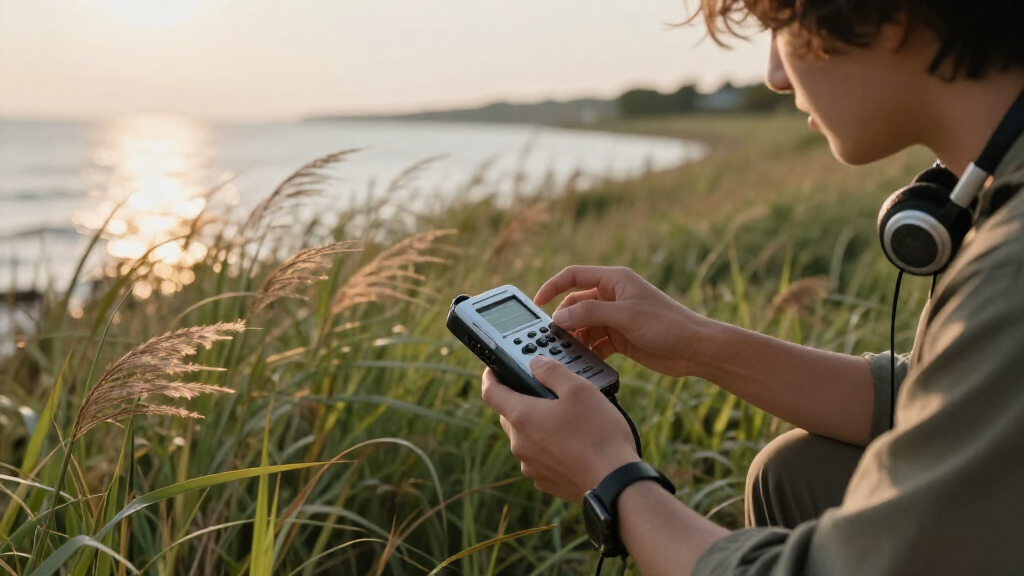
I ranked these recorders by how well they suit real field-recording work: capturing environmental sound, interviews, wildlife, or location production away from a studio. My main criteria were recording flexibility, input options, built-in microphone usefulness, format and level-management features, portability, and how easily a buyer can operate the unit outside. I also weighed whether a model’s feature set matches its intended work rather than treating a longer spec list as an automatic advantage.
The higher-ranked options offer a more versatile balance of capture choices and field practicality. Models with multiple external inputs rank well for users building a mic-based setup, while compact stereo recorders remain appealing when low weight and quick operation matter more than expansion. Specialized products rank lower for general field use, not because they lack value, but because their workflow is narrower. The list includes near-duplicate listings, so I treat the H4essential and XV1-R versions as separate entries only where their named configurations suggest a distinct buying choice; buyers should verify the exact package and features before ordering.
Factors to Consider When Choosing Portable Audio Recorders For Field Recording
Choosing a field recorder starts with the sound sources and the way you plan to capture them. I’d decide how many microphones you need at once, whether built-in mics are enough, and how much setup you’re willing to carry before comparing extra features.
Count simultaneous sources, not just advertised tracks
Track counts can make recorders seem more capable than a typical field session requires. What matters first is how many independent sources you need to record at the same time, such as a stereo ambience pair plus an interview mic. A device with two inputs may suit a solo recordist, while a group of microphones or a production rig can call for a multichannel unit. Check whether built-in microphones use inputs you might otherwise need, and whether the recorder can capture those sources together. A common mistake is buying for an imagined future setup and carrying unused complexity on every outing. I’d choose around the largest session you regularly expect, then rent or borrow for occasional larger jobs.
Match microphones and connectors before choosing a recorder
A recorder only helps if it can connect cleanly to the microphones you plan to use. Check connector type, available plug-in or phantom power, and whether the inputs support the mic’s output level. Built-in X/Y microphones are convenient for quick stereo ambience, but external mics can be easier to position away from handling noise or the recorder itself. A lavalier-centered setup has different needs from a pair of condensers on stands, so a specialized recorder may fit one job and frustrate another. Buyers often focus on input count and overlook cables, power, wind protection, and mounting hardware. I’d map the complete signal chain before settling on a model.
Treat 32-bit float as protection, not a cure-all
32-bit float recording can give more flexibility when adjusting levels later, which is useful when a sound source changes unexpectedly. It does not repair clipping in an external microphone or preamp, eliminate background noise, or make poor placement sound professional. It may also shift some level decisions from the recording stage to editing, so confirm that your software and workflow handle the files comfortably. For predictable interviews or controlled recordings, careful gain setting can still be straightforward and efficient. For changing outdoor sounds, extra level flexibility may be welcome, but wind protection and monitoring remain important. I’d pay for this feature when unpredictable dynamics are a regular part of the work, not just because it appears on a spec sheet.
Balance portability against controls and setup time
A small recorder is easier to carry, but compact layouts can mean smaller controls and fewer direct connections. That difference matters when you need to change settings quickly outdoors, wear gloves, or operate without looking closely at a screen. Larger units often provide more routing and input options, but they can require a bag, cables, batteries, and a more deliberate setup. Think about the whole kit rather than the recorder’s dimensions alone. A recorder that stays at home because the rig feels cumbersome is less useful than a simpler model you bring consistently. I’d prioritize compactness for spontaneous ambience walks and direct access for planned production sessions.
Plan for power, storage, and environmental protection
Long field sessions expose practical limits that are easy to miss while shopping. Confirm the recorder’s power options and expected runtime for your chosen microphones, since external mics can change battery demands. Carry enough storage for uncompressed files and leave headroom for takes you may want to repeat. Wind protection, a stable mount, and a way to keep rain or dust away from the device can matter more to usable audio than another menu feature. Avoid assuming that portable means weatherproof; check the manufacturer’s guidance for exposure limits. I’d build a small field kit around the recorder before the first important session, then test its runtime and file workflow at home.
Choose features for the way you will edit and deliver audio
Recording is only one part of the workflow, so think about what happens after the session. USB audio interface capability can be handy for desk recording, but it may be irrelevant if the recorder will live in a field bag. Wi-Fi control can help when the recorder is positioned out of reach, though it adds little if you operate the unit by hand. Multitrack files offer more control over separate sources but take more time to organize and mix than a stereo file. Consider who will edit the recordings, what file formats they accept, and whether you need isolated tracks for later changes. I’d favor the simplest feature set that supports the full path from capture to delivery.
Frequently Asked Questions
Is the Zoom H4essential a better first field recorder than a compact stereo model?
It can be a better first choice if you expect to use external microphones as well as record with built-in mics. That flexibility makes it more adaptable than a basic stereo-only recorder, but the larger feature set adds setup choices and may not be needed for casual ambience capture. A compact model is easier to carry and can be quicker to start when you only need a stereo recording. I’d pick the H4essential for mixed work such as interviews and environmental sound, and a smaller recorder for simple, lightweight outings. The deciding question is whether you will use the extra inputs regularly.
Should I choose a 32-bit float recorder if I cannot monitor audio continuously?
It can reduce the risk of recording at an unsuitable level when sound changes suddenly, which makes it useful for some unattended or unpredictable sessions. It does not prevent microphone overload, wind noise, cable problems, or a recorder being placed too far from the source. If you cannot monitor, test the full setup beforehand and use a windscreen or secure mounting where needed. Also check how the recorded files will be handled in your editing software. I’d treat 32-bit float as added recovery room, not a substitute for a sensible placement and backup plan.
When is a multichannel recorder worth carrying for field recording?
A multichannel recorder makes sense when you need several independent microphones or sources running at once, such as a location production with separate dialogue and ambience feeds. It gives you more control later, but the extra inputs bring more cables, power needs, setup time, and file management. For a single stereo ambience pair or one interview microphone, a smaller recorder may capture the job with less fuss. Consider how often you truly need simultaneous isolated sources rather than how many tracks a device can advertise. If those sessions are rare, a simpler recorder plus a planned rental may be the lighter choice.
Can a pocket recorder capture wildlife and quiet outdoor ambience well?
It can be a practical choice when portability and quick setup matter, but the recorder is only one part of the result. Quiet sources call for suitable microphones, careful placement, low handling noise, and protection from wind; built-in microphones may limit how far you can position the recorder from yourself. A pocket model is convenient for spontaneous recording, while an external-mic recorder gives more placement options. Check whether the unit can accept the microphone you want and how it handles power. I’d choose based on the quietest source and environment you expect, not just the recorder’s size.
Which recorder should I choose if my main job is recording a lavalier mic?
A lavalier-focused option such as the TASCAM DR-10LW may suit a simple wearable recording workflow better than a general-purpose handheld recorder. It is less compelling if you also need stereo ambience, multiple microphones, or frequent changes between recording setups. Before choosing, verify that the included microphone and connector arrangement match your use, and check how you will monitor and retrieve recordings. For a recorder that needs to handle varied field jobs, a model with broader inputs may be a safer fit. The right choice depends on whether lavalier capture is your main task or only one part of a wider kit.
Conclusion
For the broadest mix of field tasks, I’d choose the Zoom H4essential as the best overall pick. The Zoom H1essential is my best value-style choice for buyers who want a light, straightforward stereo recorder, while the Zoom F6 is the best premium fit for multichannel production needs. Beginners focused on simple location audio can start with the TASCAM DR-07XP or H1essential rather than carrying inputs they may not use. For lavalier work, consider the TASCAM DR-10LW; for a compact external-mic setup, compare the Zoom F3. Match the recorder to your microphones and typical session first, then choose the smallest setup that still gives you the control your work needs.
Halloween Picks

Vexalify 11-Inch Halloween Pumpkin Fog Machine with 12-Color Lights

Halloween Inflatable Haunted House Maze – 20×20 ft with Removable Roof and Blower

Govee Outdoor Halloween Projector Light, 3D Dynamic Visual Holiday Decor
As an affiliate, we earn on qualifying purchases.