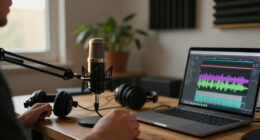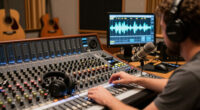
For most home recording setups, I’d start with the Audio-Technica ATH-M40x: its closed-back design, detachable cable, and practical balance of isolation and versatility make it a strong all-around choice. The Sony MDR-7506 stands out for detailed monitoring, while the AKG K240 Studio suits listeners who prefer a more open presentation and can work without strong sound isolation. The main choice is between closed-back headphones that limit sound leakage for recording and semi-open designs that feel less sealed but leak more audio. Comfort, replaceable or detachable cables, and how revealing the sound is also matter during long sessions. Read on for the full comparison and picks by studio need.
Complete the kit


Key Takeaways
- The ATH-M40x is the most balanced pick in this lineup for buyers who need one closed-back headphone for tracking and general monitoring.
- The Sony MDR-7506 favors detail and a compact, familiar studio design, while its fixed cable gives it less flexibility than the ATH-M40x.
- The AKG K240 Studio’s semi-open construction makes it a distinct choice for less isolated listening, but it is a poor fit when microphone bleed is a concern.
- Audio-Technica’s ATH-M20x, ATH-M30x, ATH-M40x, and ATH-M50x form a useful progression: decide whether you need basic monitoring, more flexibility, or a more versatile feature set before moving up the line.
- Several low-cost closed-back choices, including the TASCAM TH-02 and M-Audio HDH40, prioritize straightforward use, while detachable cables and stronger isolation can matter more for frequent studio work.
| OneOdio Pro-10 Wired Over-Ear DJ Headphones |  | Best for Single-Ear Monitoring | Driver size: 50 mm | Connectivity: Wired | Audio jacks: 3.5 mm and 6.35 mm | VIEW LATEST PRICE | See Our Full Breakdown |
| Sony MDR-7506 Professional Over-Ear Headphones | 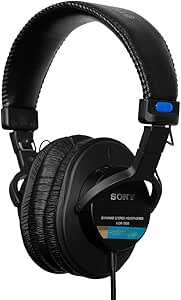 | Best for Studio Tracking | Driver size: 40 mm | Frequency response: 10 Hz–20 kHz | Design: Closed-back, foldable | VIEW LATEST PRICE | See Our Full Breakdown |
| OneOdio A71 Hi-Res Wired Over-Ear Studio Headphones, Black |  | Best for Shared Listening | Driver size: 40 mm | Connection: Wired | Plugs: 3.5 mm and 6.35 mm | VIEW LATEST PRICE | See Our Full Breakdown |
| Audio-Technica ATH-M20x Professional Studio Monitor Headphones |  | Best for Low-Frequency Tracking | Driver size: 40 mm | Design: Circumaural, over-ear | Intended use: Studio tracking and mixing | VIEW LATEST PRICE | See Our Full Breakdown |
| Audio-Technica ATH-M40x Professional Studio Monitor Headphones |  | Best for One-Ear Studio Monitoring | Driver size: 40 mm | Driver magnets: Rare earth | Voice coils: Copper-clad aluminum wire | VIEW LATEST PRICE | See Our Full Breakdown |
| Audio-Technica ATH-M20xWH Professional Studio Monitor Headphones, White |  | Best Entry-Level Closed-Back Pick | Brand: Audio-Technica | Model: ATH-M20XWH | Driver size: 40 mm | VIEW LATEST PRICE | See Our Full Breakdown |
| Sennheiser HD 280 Pro Wired Headphones, Black |  | Best for Noisy Tracking Rooms | Brand: Sennheiser | Model: HD 280 Pro | Model number: 506845 | VIEW LATEST PRICE | See Our Full Breakdown |
| AKG K240 Studio Semi-Open Over-Ear Headphones | 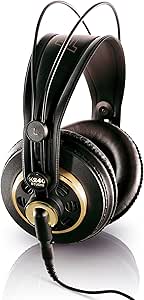 | Best Semi-Open Studio Pick | Design: Semi-open, over-ear | Transducers: 30 mm XXL with Varimotion diaphragms | Connectivity: Wired | VIEW LATEST PRICE | See Our Full Breakdown |
| M-Audio HDH40 Closed-Back Over-Ear Studio Headphones |  | Best for Multi-Device Setups | Driver size: 40 mm | Driver type: Neodymium dynamic | Design: Closed-back, over-ear | VIEW LATEST PRICE | See Our Full Breakdown |
| Audio-Technica ATH-M50x Professional Studio Monitor Headphones, Black | 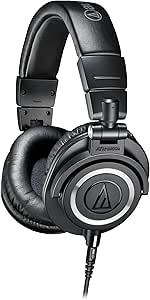 | Best for Hands-On Monitoring | Brand: Audio-Technica | Model: ATH-M50x | Type: Professional studio monitor headphones | VIEW LATEST PRICE | See Our Full Breakdown |
| Shure SRH440A Over-Ear Wired Studio Headphones |  | Best for Recording and Monitoring | Type: Wired over-ear headphones | Design: Closed-back | Cable: Detachable locking cable | VIEW LATEST PRICE | See Our Full Breakdown |
| FIFINE HD8 Wired Studio Monitor Headphones with Detachable Cables |  | Best for Flexible Studio Connections | Driver size: 50 mm | Frequency response: 20 Hz–20 kHz | Weight: 265 g | VIEW LATEST PRICE | See Our Full Breakdown |
| Syndesmos CM7005 Over-Ear Wired Studio and DJ Headphones |  | Best for Single-Ear Monitoring | Brand: Syndesmos | Model: CM7005 (Captain 370) | Driver size: 50 mm | VIEW LATEST PRICE | See Our Full Breakdown |
| TASCAM TH-02 Wired Over-Ear Studio Monitor Headphones |  | Best for a Simple, Packable Setup | Type: Dynamic, wired over-ear headphones | Design: Foldable, closed-back | Adapter: Snap-on 3.5 mm to 6.3 mm | VIEW LATEST PRICE | See Our Full Breakdown |
| Audio-Technica ATH-M30x Professional Studio Monitor Headphones |  | Best for Midrange Detail | Brand: Audio-Technica | Model: ATH-M30x | Type: Over-ear monitor headphones | VIEW LATEST PRICE | See Our Full Breakdown |
| studio monitor headphone | Design | Driver size |
|---|---|---|
| OneOdio Pro-10 Wired Over-Ear | Over-ear | 50 mm |
| Sony MDR-7506 Professional Ove | Closed-back, foldable | 40 mm |
| OneOdio A71 Hi-Res Wired Over- | Over-ear | 40 mm |
| Audio-Technica ATH-M20x Profes | Circumaural, over-ear | 40 mm |
| Audio-Technica ATH-M40x Profes | Circumaural over-ear | 40 mm |
| Audio-Technica ATH-M20xWH Prof | Circumaural, over-ear | 40 mm |
| Sennheiser HD 280 Pro Wired He | Closed-back, over-ear | — |
| AKG K240 Studio Semi-Open Over | Semi-open, over-ear | — |
| M-Audio HDH40 Closed-Back Over | Closed-back, over-ear | 40 mm |
| Audio-Technica ATH-M50x Profes | Circumaural, sound-isolating | 45 mm |
| Shure SRH440A Over-Ear Wired S | Closed-back | — |
| FIFINE HD8 Wired Studio Monito | Over-ear, closed-back | 50 mm |
| Syndesmos CM7005 Over-Ear Wire | Over-ear, wired | 50 mm |
| TASCAM TH-02 Wired Over-Ear St | Foldable, closed-back | — |
| Audio-Technica ATH-M30x Profes | Collapsible | 40 mm |
More Details on Our Top Picks
OneOdio Pro-10 Wired Over-Ear DJ Headphones
Rotating ear cups and broad plug compatibility give the Pro-10 a practical edge for DJs and home setups that move between mixers and everyday devices. Its 50 mm drivers are larger than the 40 mm drivers in the Sony MDR-7506, with the description emphasizing powerful bass alongside clear vocals and crisp highs. That presentation may suit cueing and casual listening, though buyers focused on studio decisions may prefer to compare its stated sound profile with the MDR-7506’s monitoring-oriented design. The padded cushions and adjustable headband support longer sessions, and the shared audio port makes it easy to let someone else listen. The main tradeoff is a wired-only connection, so it offers no wireless freedom for moving around the room.
Pros:- 90° swiveling ear cups support single-ear monitoring.
- 50 mm drivers are described as delivering powerful bass, clear vocals, and crisp highs.
- 3.5 mm and 6.35 mm jacks suit a range of devices and audio gear.
- Shared audio port lets a second pair connect for listening together.
Cons:- Wired-only connection restricts movement away from the source.
- Bass-forward description may be less appealing to buyers seeking a specifically neutral monitoring profile.
Best for: DJs and home listeners who need swiveling cups for cueing and want both 3.5 mm and 6.35 mm connections.
Not ideal for: Listeners who need wireless use or a detachable cable for flexible studio setups.
- Driver size:50 mm
- Connectivity:Wired
- Audio jacks:3.5 mm and 6.35 mm
- Ear cup rotation:90° swiveling
- Design:Over-ear
- Shared audio port:Yes
Our verdict“Choose the Pro-10 for wired DJ cueing and flexible connections; compare the Sony MDR-7506 if studio monitoring is your main priority.”
Sony MDR-7506 Professional Over-Ear Headphones
The MDR-7506 earns its place for buyers who want a closed-back monitoring design with practical details suited to recording and home audio. Its 40 mm drivers and stated 10 Hz–20 kHz frequency response give buyers concrete reference points, while the closed-back construction helps reduce outside noise during tracking. Compared with the OneOdio Pro-10, it forgoes 50 mm drivers and swiveling ear cups, putting less emphasis on DJ cueing and more on a straightforward studio role. The foldable frame, soft case, and included 1/4-inch adapter make it easier to pack and connect to common studio equipment. Its biggest compromise is the non-detachable 9.8-foot cord: useful reach at a desk, but awkward to replace or manage if a shorter lead is preferred.
Pros:- Closed-back design helps reduce external noise during tracking.
- Folds for easier storage and travel.
- Includes a soft case and 1/4-inch adapter.
- 9.8-foot cord provides reach around a studio desk.
Cons:- Non-detachable cord is harder to replace and can be cumbersome outside a fixed setup.
- No swiveling ear cups are listed for single-ear monitoring.
Best for: Home recording musicians and audio students who want closed-back headphones, an included adapter, and a long cable for studio monitoring.
Not ideal for: Mobile listeners who need a detachable cable, compact untethered use, or swiveling cups for one-ear DJ monitoring.
- Driver size:40 mm
- Frequency response:10 Hz–20 kHz
- Design:Closed-back, foldable
- Connectivity:Wired
- Cord length:9.8 ft
- Cord:Non-detachable, oxygen-free copper
- Plug:Gold-plated; 1/4-inch adapter included
- Included accessories:Soft case
Our verdict“Pick the MDR-7506 for closed-back tracking and a travel-friendly foldable frame, provided its fixed long cord suits your setup.”
OneOdio A71 Hi-Res Wired Over-Ear Studio Headphones, Black
The A71 is the lineup’s sharing-friendly pick: a second pair can plug into its shared audio port, a handy option for collaborative editing or listening beside a student. Its 40 mm drivers and 90° swiveling ear cups also make it usable for studio work and one-ear monitoring. Compared with the OneOdio Pro-10, the A71 has smaller listed drivers, while retaining dual 3.5 mm and 6.35 mm connections; compared with the Sony MDR-7506, it adds swiveling cups and audio sharing but lacks the listed foldable design and case. The coiled cable stretches from 6.6 to 9.8 feet, which can help at a desk, though it still tethers the listener. Buyers should also note that the product data provides no active noise cancellation information.
Pros:- Shared audio port allows a second pair of headphones to connect.
- Includes both 3.5 mm and 6.35 mm plugs.
- 90° swiveling ear cups support single-ear monitoring.
- Coiled cable extends from 6.6 to 9.8 feet.
Cons:- Wired connection limits movement.
- No active noise cancellation information is provided.
- No foldable design or storage case is listed in the supplied product data.
Best for: Students, collaborators, and home studio users who want to share headphone audio and connect to both consumer and studio jacks.
Not ideal for: People who need wireless listening, a stated noise-cancellation feature, or a short fixed cable.
- Driver size:40 mm
- Connection:Wired
- Plugs:3.5 mm and 6.35 mm
- Cord length:6.6–9.8 ft coiled
- Earcup rotation:90° swiveling
- Design:Over-ear
- Color:Black
- Shared audio port:Yes
Our verdict“Choose the A71 for shared wired listening and DJ-style cup rotation, while the MDR-7506 is the stronger fit if a foldable frame and case matter more.”
Audio-Technica ATH-M20x Professional Studio Monitor Headphones
The ATH-M20x takes a focused approach to studio tracking and mixing, with 40 mm drivers tuned for enhanced low-frequency performance. Its circumaural ear cups are designed to help isolate sound in loud environments, a useful trait when recording near other instruments or equipment. Compared with the ATH-M40x, the M20x’s supplied description does not list 90° swiveling ear cups or detachable cables, so it is the simpler choice for fixed listening rather than one-ear monitoring. The single-sided cable exit keeps the lead routed to one side, which can reduce cable clutter at a desk. Product details supplied here do not specify cable length, connectors, or included accessories, so buyers should check compatibility with their interface before choosing it over the more fully specified Sony MDR-7506.
Pros:- 40 mm drivers are tuned for enhanced low-frequency performance.
- Circumaural design helps isolate sound in loud environments.
- Single-sided cable exit can keep a desk setup less cluttered.
- Designed specifically for studio tracking and mixing.
Cons:- No swiveling ear cups are listed for single-ear monitoring.
- Cable is described as single-sided, but detachability and length are not specified.
- Supplied product data does not list connectors or included accessories.
Best for: Home recording beginners who want over-ear isolation and a low-frequency-focused option for tracking and mixing.
Not ideal for: DJs needing one-ear monitoring or studio users who require a detachable cable and clearly specified connector details.
- Driver size:40 mm
- Design:Circumaural, over-ear
- Intended use:Studio tracking and mixing
- Driver magnets:Rare earth
- Voice coils:Copper-clad aluminum wire
- Cable:Single-sided exit
- Color:Black
Our verdict“Choose the ATH-M20x for basic tracking with low-frequency emphasis and ear-cup isolation, but consider the ATH-M40x if swiveling cups matter.”
Audio-Technica ATH-M40x Professional Studio Monitor Headphones
The ATH-M40x stands apart from the ATH-M20x through its 90° swiveling ear cups, which make one-ear monitoring more practical for tracking and DJ work. Its 40 mm drivers use rare earth magnets and copper-clad aluminum wire voice coils, while the circumaural design helps isolate sound around the ear. That combination gives it a broader monitoring role than the M20x, whose supplied details focus on low-frequency tuning and do not mention swiveling cups. The M40x also includes detachable cables, a meaningful convenience if a lead needs replacing or a setup calls for a different cable. The tradeoff is that the product data does not specify cable lengths or connectors, so check what is included for your intended interface. Buyers who do not need rotation may find the M20x’s more focused feature set sufficient.
Pros:- 90° swiveling ear cups support one-ear monitoring.
- Circumaural design helps isolate sound.
- Detachable cables can be replaced or adapted to a setup.
- Professional-grade padding is designed for comfort and durability.
Cons:- Supplied product data does not specify cable length or connector types.
- The extra monitoring flexibility may be unnecessary for listeners who only need fixed-position tracking.
Best for: Studio users and DJs who need over-ear isolation, one-ear monitoring, and the flexibility of detachable cables.
Not ideal for: Buyers who will keep headphones stationary and do not need rotating cups or detachable cables.
- Driver size:40 mm
- Driver magnets:Rare earth
- Voice coils:Copper-clad aluminum wire
- Design:Circumaural over-ear
- Swiveling earcups:90 degrees
- Included accessories:Detachable cables
- Padding:Professional-grade; designed for comfort and durability
Our verdict“Pick the ATH-M40x if swiveling cups and detachable cables are useful in your studio, while the ATH-M20x suits simpler tracking needs.”
Audio-Technica ATH-M20xWH Professional Studio Monitor Headphones, White
The ATH-M20xWH suits home recording and basic monitoring where isolation and a straightforward wired setup matter more than extensive adjustment options. Its circumaural cups help reduce outside sound, while the 40 mm drivers are tuned for stronger low frequencies. Compared with the more capable ATH-M50x, this is a simpler M-Series option: it lacks the listed 45 mm drivers, swiveling earcups, and detachable cable, but its single-side cable exit keeps the connection easy to manage at a desk. That low-frequency emphasis can make listening more engaging, though it may be less useful when you need a neutral reference for judging bass balance. Choose it for an uncomplicated first studio pair; skip it if your workflow depends on one-ear monitoring or cable replacement.
Pros:- Circumaural cups help isolate sound in louder recording spaces
- 40 mm drivers are tuned for enhanced low-frequency performance
- Single-side cable exit keeps the lead routed from one side
- Two-year warranty is specified
Cons:- Entry-level M-Series model with fewer listed monitoring features than the ATH-M50x
- Enhanced low frequencies may be less suitable for judging bass balance neutrally
- Cable is not specified as detachable
Best for: New home-recording users who want closed-back isolation and a simple wired headphone for tracking and general monitoring
Not ideal for: Mix engineers who need the listed ATH-M50x features, such as 90-degree swiveling earcups and a detachable cable, or a less bass-emphasized reference
- Brand:Audio-Technica
- Model:ATH-M20XWH
- Driver size:40 mm
- Design:Circumaural, over-ear
- Cable:Single-side exit
- Warranty:2 years
Our verdict“Choose the ATH-M20xWH for simple, isolated tracking and monitoring; pick the ATH-M50x if you need swiveling cups and a detachable cable.”
Sennheiser HD 280 Pro Wired Headphones, Black
When keeping room sound out is the priority, the HD 280 Pro makes a strong case: its closed-back design is specified to attenuate outside sound by up to 32 dB. That makes it a more isolation-focused choice than the semi-open AKG K240 Studio, whose design can let sound leak. The Sennheiser also folds for transport, and its ear pads, headband padding, and cord are replaceable, giving working studios practical options for upkeep. Its sound is described as warm and natural, but buyers seeking the ATH-M50x’s listed 90-degree earcup swivel for one-ear monitoring may prefer that Audio-Technica model. This remains a fully wired headphone, and the coiled cord can extend from 3.3 to 9.8 feet, so it is better suited to a connected studio station than untethered listening.
Pros:- Closed-back design attenuates outside sound by up to 32 dB
- Replaceable ear pads, headband padding, and audio cord support maintenance
- Collapsible design is convenient for transport
- Coiled cord extends from 3.3 to 9.8 feet
Cons:- Wired connection limits movement away from the source
- No swiveling earcup feature is specified for one-ear monitoring
- Warm sound may not suit listeners seeking a brighter presentation
Best for: Recording musicians and engineers working near loud instruments who need substantial passive noise attenuation and replaceable wear parts
Not ideal for: People who need wireless listening or one-ear monitoring with a specified swiveling earcup
- Brand:Sennheiser
- Model:HD 280 Pro
- Model number:506845
- Design:Closed-back, over-ear
- Noise attenuation:Up to 32 dB
- Connectivity:Wired
- Cord length:3.3–9.8 ft (coiled/extended)
- Included accessory:Screw-type 1/4-inch adaptor
- Warranty:2 years
Our verdict“Choose the HD 280 Pro for tracking in noisy rooms and replaceable parts; consider the AKG K240 only if you prefer a semi-open design.”
AKG K240 Studio Semi-Open Over-Ear Headphones
The AKG K240 Studio is the lineup’s semi-open option, aimed at recording, mixing, and podcast work where a more open listening presentation is welcome. Its 30 mm XXL transducers and Varimotion diaphragms are described as providing a wide dynamic range, while the self-adjusting headband helps accommodate long sessions. That design sets it apart from the closed-back Sennheiser HD 280 Pro, which is the better fit when reducing outside sound is the main need. The tradeoff is sound leakage: the K240 may let audio escape, making it a poor choice for close-miked vocals or a noisy tracking room. It also requires a wired connection, though its 3 m cable and screw-on 1/4-inch adapter suit common studio setups.
Pros:- Semi-open design offers an alternative to the lineup’s closed-back monitoring options
- 30 mm XXL transducers with Varimotion diaphragms are specified
- Self-adjusting headband and over-ear pads support extended wear
- Includes a screw-on 1/4-inch adapter and 3 m cable
Cons:- Semi-open construction may allow sound to leak
- Less suited to noisy tracking than the Sennheiser HD 280 Pro
- Wired connection limits untethered use
Best for: Mixers, podcasters, and listeners in quieter rooms who prefer a semi-open design and a self-adjusting headband
Not ideal for: Vocalists recording near a live microphone or engineers who need strong isolation from loud instruments
- Design:Semi-open, over-ear
- Transducers:30 mm XXL with Varimotion diaphragms
- Connectivity:Wired
- Connector:1/8-inch stereo connector
- Adapter:Screw-on 1/4-inch adapter
- Cable length:3 m (9.9 ft)
Our verdict“Choose the K240 Studio for semi-open listening and quieter studio work; choose the HD 280 Pro when isolation matters more.”
M-Audio HDH40 Closed-Back Over-Ear Studio Headphones
The M-Audio HDH40 stands out for a practical combination of a 32-ohm impedance, 2.7 m cable, and included 1/4-inch adapter. The supplied information lists compatibility with phones, tablets, gaming consoles, and professional audio equipment, which makes this a flexible wired option for people who move between a home studio and everyday devices. Compared with the ATH-M50x, the HDH40 has 40 mm drivers rather than 45 mm and does not list swiveling earcups or a detachable cable. Its 180-degree rotatable frame supports adjustment, but the fixed cable is a meaningful limitation if a lead gets damaged or needs replacement. The one-year manufacturer warranty is also shorter than the two-year warranty listed for several alternatives. It fits straightforward monitoring across devices, but not a cable-service-focused setup.
Pros:- 32-ohm impedance and listed compatibility span several device types
- Includes a 1/4-inch adapter for professional audio equipment
- 2.7 m cable provides reach around a desk or recording position
- 180-degree rotatable frame supports flexible positioning
Cons:- Fixed cable cannot be detached for replacement
- One-year manufacturer warranty is shorter than the two-year warranties listed for the ATH-M50x and HD 280 Pro
- 95 dB sensitivity is specified, but no sound isolation figure is provided
Best for: Home creators who connect one wired headphone to a phone, tablet, console, or studio gear using the included adapter
Not ideal for: Studio users who need a detachable cable, longer listed warranty, or one-ear monitoring through swiveling cups
- Driver size:40 mm
- Driver type:Neodymium dynamic
- Design:Closed-back, over-ear
- Impedance:32 ohms
- Sensitivity:95 dB
- Cable length:2.7 m
- Frame:180-degree rotatable
- Connectivity:Fixed cable with 1/4-inch adapter
- Warranty:1 year manufacturer
Our verdict“Choose the HDH40 for a versatile wired headphone that moves across devices; choose the ATH-M50x for a detachable cable and one-ear monitoring.”
Audio-Technica ATH-M50x Professional Studio Monitor Headphones, Black
The ATH-M50x earns its place for studio users who need features that support active monitoring: its 90-degree swiveling earcups make one-ear listening practical, and the detachable cable is easier to replace than a fixed lead. Its 45 mm drivers are described as delivering clear sound across an extended frequency range with deep, accurate bass. Compared with the entry-level ATH-M20xWH, this model offers a larger listed driver size and more monitoring flexibility. It also isolates sound through its circumaural design, though the supplied data does not quantify attenuation as the HD 280 Pro does. The ATH-M50x is the more feature-rich Audio-Technica choice here, but those features matter most to people who monitor actively; casual listeners may prefer a simpler option such as the M-Audio HDH40 for its specified multi-device compatibility.
Pros:- 45 mm drivers are described as delivering clear sound and deep, accurate bass
- 90-degree swiveling earcups support one-ear monitoring
- Detachable cable can be replaced separately
- Circumaural design helps isolate sound in loud environments
Cons:- Sound attenuation is not quantified in the supplied specifications
- One-ear monitoring features may be unnecessary for casual listening
- The supplied product data does not specify cable length or included adapters
Best for: Recording engineers and musicians who switch between two-ear listening and one-ear monitoring, and want a detachable cable
Not ideal for: Casual listeners seeking a simpler wired headphone or buyers who need a stated noise-attenuation figure
- Brand:Audio-Technica
- Model:ATH-M50x
- Type:Professional studio monitor headphones
- Driver size:45 mm
- Design:Circumaural, sound-isolating
- Earcup swivel:90 degrees
- Cable:Detachable
- Color:Black
- Warranty:2 years on parts and labor
Our verdict“Choose the ATH-M50x if you need swiveling earcups and a detachable cable for hands-on studio monitoring.”
Shure SRH440A Over-Ear Wired Studio Headphones
Closed-back isolation and a balanced sound make the Shure SRH440A a practical pick for recording sessions where headphone spill and outside noise can get in the way. Its adjustable headband and cushioned earcups suit longer monitoring sessions, while the collapsible frame is easier to pack than a fixed design. Compared with the Audio-Technica ATH-M30x, the SRH440A emphasizes its detachable locking cable, which helps keep the connection secure during studio work. The tradeoff is straightforward: it remains wired, so it offers less freedom to move around than a wireless option, and the provided details don’t specify driver size or frequency response. This is a focused monitoring choice for buyers who value a balanced presentation and a replaceable cable over extra features.
Pros:- Balanced, detailed sound is suited to recording and critical listening
- Closed-back design helps reduce ambient noise
- Detachable locking cable provides a secure connection
- Collapsible design aids storage and transport
Cons:- Wired connection restricts movement
- Driver size and frequency response are not specified in the supplied product data
Best for: Home recording musicians and podcasters who need closed-back headphones with a secure detachable cable
Not ideal for: Listeners who need wireless movement or want published driver and frequency-response specifications before choosing
- Type:Wired over-ear headphones
- Design:Closed-back
- Cable:Detachable locking cable
- Portability:Collapsible design
- Compatibility:Audio interfaces, mixers, laptops, and portable devices
- Fit:Cushioned earcups and adjustable headband
Our verdict“Choose the SRH440A for balanced, isolated studio monitoring with a locking detachable cable, provided a wired connection suits your setup.”
FIFINE HD8 Wired Studio Monitor Headphones with Detachable Cables
The FIFINE HD8 is the most connection-ready option in this group: it includes two detachable coiled cables, with 3.5 mm and 1/4-inch plugs, so a buyer can move between portable devices and studio gear without relying on a separate adapter. Its closed-back fit and passive isolation also suit tracking in a shared room. The 50 mm drivers and stated 20 Hz–20 kHz range give useful basic specification context, though those figures alone don’t establish how neutral it sounds. Compared with the Shure SRH440A, the HD8 supplies more cable options, while the Shure’s locking cable offers a more specific connection detail. The FIFINE’s long coiled lead can be cumbersome at a desk, and its wired design provides no active noise cancellation. It makes sense for a setup that needs plug flexibility more than mobility.
Pros:- Two detachable coiled cables cover 3.5 mm and 1/4-inch connections
- Closed-back construction provides passive noise isolation
- 50 mm drivers and a stated 20 Hz–20 kHz frequency range
- Padded ear cushions and adjustable headband support extended sessions
Cons:- The wired connection limits movement
- The 9.8 ft coiled cable can be cumbersome in compact work areas
- No active noise cancellation
Best for: Home studio users who alternate between an audio interface with a 1/4-inch jack and portable devices with 3.5 mm output
Not ideal for: Mobile listeners seeking a lightweight wireless setup or active noise cancellation
- Driver size:50 mm
- Frequency response:20 Hz–20 kHz
- Weight:265 g
- Design:Over-ear, closed-back
- Noise isolation:Passive
- Cable length:9.8 ft
- Cables:Two detachable coiled cables
- Plug types:3.5 mm and 1/4-inch
Our verdict“Pick the HD8 if you need bundled cable options for studio and portable gear and can work comfortably with a wired headset.”
Syndesmos CM7005 Over-Ear Wired Studio and DJ Headphones
90-degree swiveling earcups give the Syndesmos CM7005 a clear DJ-oriented advantage: a user can monitor one channel with one ear while keeping the other free. Its detachable coiled cable comes with both 3.5 mm and 6.35 mm plugs, and the headphone output for sharing audio can help when working alongside another listener. Compared with the FIFINE HD8, which includes two cable options but no swivel feature in the supplied description, the CM7005 is better suited to hands-on cueing. Its stated 50 mm drivers and 20 Hz–20 kHz range provide basic technical detail, but the product data doesn’t describe a neutral sound profile. The cable still tethers the user, and no active noise cancellation is specified. Mixing engineers who mainly listen on both ears may find its DJ features less useful than the Shure SRH440A’s monitoring focus.
Pros:- 90-degree swiveling earcups support single-ear monitoring
- Detachable coiled cable includes 3.5 mm and 6.35 mm connectors
- Audio-sharing output can connect another pair of headphones
- Stated 50 mm drivers and 20 Hz–20 kHz frequency range
Cons:- Wired design limits movement
- No active noise cancellation is specified
- The supplied data does not describe the sound profile
Best for: DJs and cue-based audio operators who need to monitor one ear and connect a second pair for shared listening
Not ideal for: Mix engineers seeking documented sound tuning or listeners who want wireless use or active noise cancellation
- Brand:Syndesmos
- Model:CM7005 (Captain 370)
- Driver size:50 mm
- Frequency response:20 Hz–20 kHz
- Design:Over-ear, wired
- Ear cup rotation:90 degrees
- Cable:Detachable coiled cable, 5.7–6 ft
- Connectors:3.5 mm and 6.35 mm
- Weight:9.12 oz
Our verdict“Choose the CM7005 for DJ cueing and shared headphone listening, rather than for a documented neutral mixing profile.”
TASCAM TH-02 Wired Over-Ear Studio Monitor Headphones
The TASCAM TH-02 keeps the feature set simple: foldable closed-back construction, padded contact points, and a snap-on adapter for switching from a 3.5 mm connection to 6.3 mm studio equipment. That makes it an uncomplicated option for someone moving between a laptop and an interface. The description calls out rich bass and crisp highs, a more colored-sounding direction than the balanced presentation specified for the Shure SRH440A; buyers seeking monitoring detail should weigh that distinction. The foldable design is useful for transport, but the supplied data gives no driver size, frequency response, cable details, or sound-isolation rating. That leaves less to compare on paper than the Audio-Technica ATH-M30x. Its wired format also ties the listener to the source. This pick suits basic tracking and practice where portability and a standard adapter matter more than detailed specifications.
Pros:- Foldable design packs compactly for transport
- Closed-back construction suits recording and monitoring
- Padded headband and ear pads provide cushioned contact
- Included snap-on adapter supports 3.5 mm and 6.3 mm connections
Cons:- Wired design restricts movement
- Driver size and frequency response are not specified in the supplied data
- The described rich bass and crisp highs may be less suitable for buyers seeking a balanced presentation
Best for: Beginner home-studio users who need a foldable wired headset and a 6.3 mm adapter for an interface
Not ideal for: Mixers who want a clearly specified frequency range, driver details, or an explicitly balanced sound profile
- Type:Dynamic, wired over-ear headphones
- Design:Foldable, closed-back
- Adapter:Snap-on 3.5 mm to 6.3 mm
- Fit:Padded headband and ear pads
- Sound description:Rich bass and crisp highs
- Connection:Wired
Our verdict“The TH-02 suits a basic, portable studio setup when foldability and the included adapter matter more than detailed sound specifications.”
Audio-Technica ATH-M30x Professional Studio Monitor Headphones
The ATH-M30x is the clearest fit here for listeners who want mid-range definition called out as a design priority. That focus can help vocals and other central mix elements stand out during tracking and editing. Its collapsible earcups, single-side cable, and included protective case also make it easier to pack than a less portable studio set. Compared with the Shure SRH440A, Audio-Technica specifies 40 mm drivers and the ATH-M30x’s midrange emphasis, while the Shure description stresses balanced sound and a locking detachable cable. The tradeoff is that the ATH-M30x’s supplied cable is single-side exit, with no detachable connection specified, and its product data doesn’t state a frequency range. It is a more focused choice than the TASCAM TH-02 for buyers prioritizing defined mids, though neither description provides detailed frequency-response data.
Pros:- 40 mm drivers are tuned for detailed audio
- Clear mid-range definition helps reveal vocals and central mix elements
- Contoured earcups provide sound isolation
- Collapsible design, protective case, and single-side cable support studio portability
Cons:- No wireless connection is specified
- The supplied data does not specify a detachable cable
- Frequency response is not listed in the supplied product information
Best for: Musicians and editors who need portable wired headphones with a stated focus on vocal and midrange detail
Not ideal for: Users who require a detachable cable or want published frequency-response specifications before selecting monitor headphones
- Brand:Audio-Technica
- Model:ATH-M30x
- Type:Over-ear monitor headphones
- Driver size:40 mm
- Driver magnets:Rare earth
- Voice coils:Copper-clad aluminum wire
- Cable:Single-side exit
- Design:Collapsible
- Included items:Headphones, cable, protective case, user manual, screw-on adapter
Our verdict“Choose the ATH-M30x for portable studio work where defined midrange detail matters more than a detachable cable.”
How We Picked
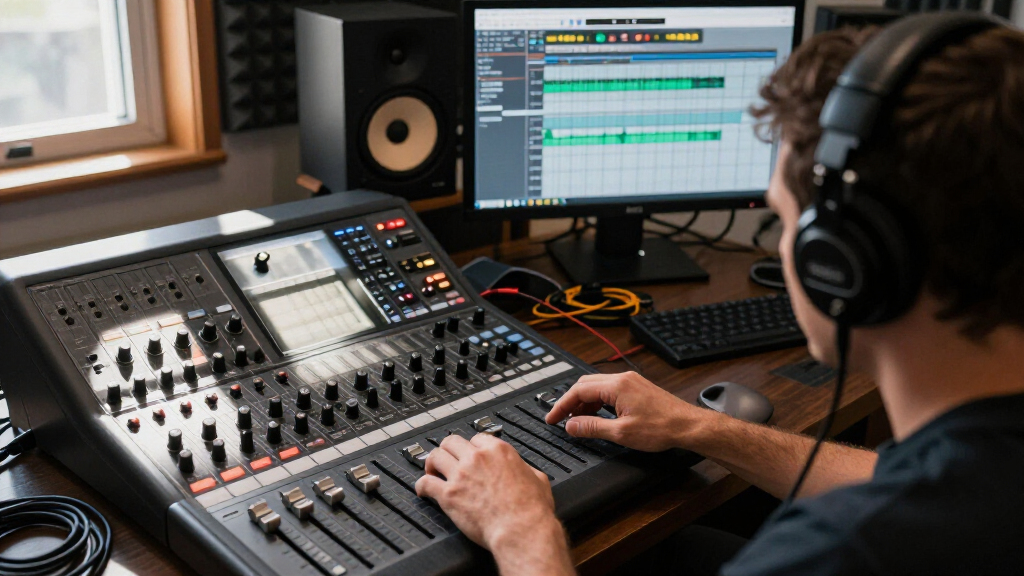
I ranked these headphones by how well their design serves actual studio tasks: monitoring while recording, limiting headphone bleed into microphones, making mix details easier to hear, and staying comfortable through longer sessions. I also weighed practical ownership factors such as cable design, portability, construction, and whether the headphone’s open or closed design suits shared recording spaces.
The order favors adaptable studio tools over models aimed mainly at casual listening or DJ use. That puts the ATH-M40x first for its combination of closed-back monitoring and detachable cable, with the Sony MDR-7506 close behind for detailed monitoring. The AKG K240 Studio earns a separate role for listeners who want a semi-open option, while simpler or less flexible models rank lower for buyers who expect regular recording work. No single tonal presentation suits every mix, so I treat these picks as monitoring tools rather than guarantees of translation across speakers.
Factors to Consider When Choosing Studio Monitor Headphones
Choosing studio monitor headphones starts with the recording situation, not a claim that one model reveals every mix flaw. Use these factors to match the design to your room, workflow, and listening habits.
Closed-back or semi-open for your recording setup?
Closed-back headphones are the safer default when a microphone is active nearby because their sealed earcups reduce sound escaping into the recording. That isolation can also help you hear a cue mix over room noise, though a strongly sealed fit may feel warm during a long session. Semi-open designs allow more air and sound through, which some listeners find more comfortable for editing or listening between takes. They also leak audio, so they can cause bleed in vocal or acoustic recordings. Choose based on microphone proximity and room noise first; the label alone does not tell you which headphone will feel or sound right.
Treat frequency response as a working reference, not a promise
Monitor headphones can help reveal edits, clicks, harshness, and uneven bass, but their response is not a substitute for learning how your mixes translate. A boosted bass region may make a mix seem fuller than it will sound on other systems, while a bright presentation can exaggerate sibilance. Before changing a mix, listen to familiar tracks through the same headphones and note what they do to bass, vocals, and treble. Cross-check important balance decisions on speakers or another trusted playback device when possible. A consistent reference you understand is more useful than choosing a model from an “accurate” label alone.
Plan for comfort over the length of a session
Headband pressure, earcup depth, clamp force, and heat can decide whether you can work comfortably for a full editing session. Over-ear cups do not guarantee that your ears will avoid the padding, and glasses can change how a seal feels. If you can try a fit before buying, wear the headphones for more than a quick check and listen at a moderate level. For online purchases, check whether replacement pads are available and whether the return window gives you time to assess comfort. A small fit mismatch becomes more distracting as listening time grows.
Think about cable failures and replacement parts
Cables are easy to overlook until they snag on a chair, pull a headphone off a desk, or develop a loose connection. A detachable cable gives you the option to replace that part without replacing the whole headphone, and a coiled cable can keep slack manageable at a fixed workstation. Fixed cables can be simpler, but damage may be harder to repair. Check connector type, cable length, and whether the supplied cable suits your interface or movement around the room. For frequent studio use, pad and cable availability can matter more to long-term ownership than a small feature difference.
Match the headphone to the job before upgrading
Tracking vocals, editing podcasts, checking a mix, and listening while traveling place different demands on a headphone. Recording usually calls for isolation; long editing sessions put comfort high on the list; travel rewards folding construction and a cable that is easy to manage. Paying more makes sense when a model adds a feature you will use often, such as detachable cables or a more flexible design. A higher model in a product family may not improve every workflow, so identify the limitation you are trying to solve before upgrading. If you are just starting out, reliable fit and a familiar reference matter more than collecting several similar headphones.
Frequently Asked Questions
Can I use studio monitor headphones to mix a complete track?
Yes, you can make a full mix on headphones, especially when room acoustics or late-night volume limits make speakers impractical. Headphones can make small edits and background details easier to hear, but their stereo presentation and bass perception differ from speakers. Check your work on other playback systems and use familiar reference tracks to keep perspective. If you mix only on headphones, learn the character of your chosen pair before making large tonal changes.
Will semi-open headphones work for recording vocals?
They can work if the microphone is not picking up the cue mix, but sound leakage is the main risk. The amount of bleed depends on headphone level, microphone sensitivity, and how close the earcups are to the mic. For close vocal recording or quiet acoustic sources, a closed-back model is usually the more dependable choice. Semi-open headphones make more sense for editing or monitoring when leakage will not enter a live microphone.
Should beginners buy a more expensive model from the start?
Only if its added features solve a real need, such as frequent cable replacement or a specific fit preference. A beginner will usually gain more from learning one consistent reference than from moving between several headphones. Start with the kind of work you do most and choose a design that fits your recording environment. Upgrade once you can name a limitation in your current setup, rather than assuming a more expensive model will make mixes accurate by itself.
Do I need an amplifier for these wired headphones?
Many wired studio headphones can reach useful monitoring levels from an audio interface, computer, or headphone output, but the result depends on the device and headphone combination. If you hear distortion, have to turn the output near its maximum, or cannot get enough level, check the interface’s headphone specifications before adding gear. A headphone amplifier can help when the existing output is underpowered or when several people need separate listening levels. It will not correct a headphone’s tonal character or improve a mix automatically.
Is a detachable cable worth prioritizing for studio use?
It is useful if the cable often gets pulled, catches on furniture, or needs a different length for your setup. Replacing a damaged cable is usually simpler than repairing a fixed one, and a detachable connection can make storage easier. The connector adds another point that can wear, so it is not a guarantee against failure. For occasional home listening, a fixed cable may be perfectly workable; for regular tracking and editing, cable flexibility can be a practical reason to choose one model over another.
Conclusion
For one dependable closed-back pair, I’d choose the Audio-Technica ATH-M40x as the best overall option. The OneOdio Pro-10 is my value pick for buyers who want a straightforward wired DJ and studio-style headphone, while the Audio-Technica ATH-M50x is the premium choice for those seeking a more versatile model in the same family. Beginners can start with the ATH-M20x for basic monitoring without paying for features they may not use. If reducing bleed is your priority, favor closed-back options such as the Sennheiser HD 280 Pro; if you want a semi-open listening experience and can tolerate leakage, consider the AKG K240 Studio. Match the design to your recording conditions, then choose the fit and cable setup you can live with through long sessions.