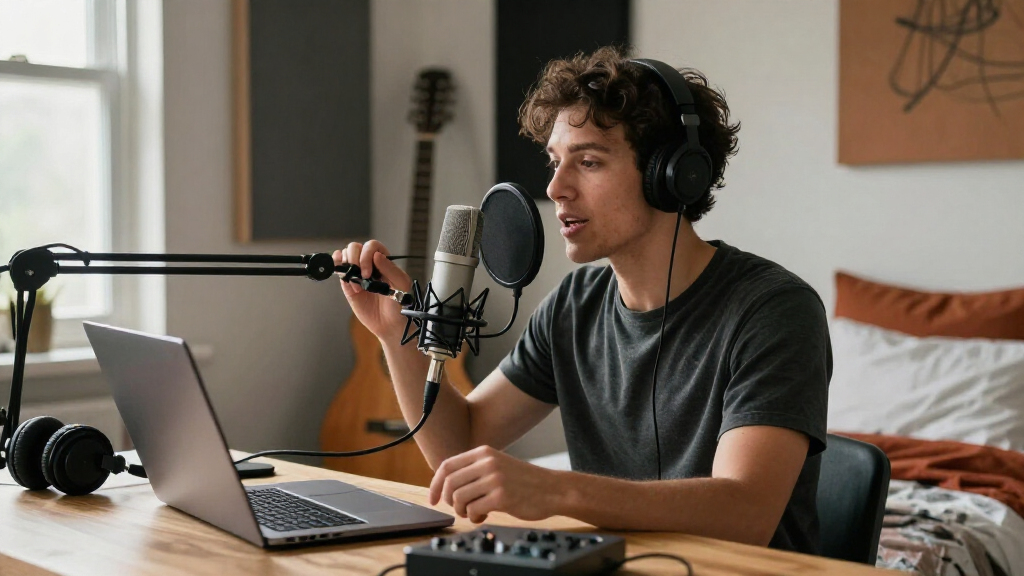

For most home studios, I’d start with the RØDE NT-USB+: its condenser design and included monitoring features suit voice recording when you can manage room noise. The Audio-Technica AT2040USB is a stronger fit for untreated rooms, while the FIFINE AM8 gives you USB simplicity with an XLR path for later upgrades. The main tradeoff is sensitivity versus noise control: condenser mics can capture more room detail, while dynamic models tend to be more forgiving of everyday reflections and background sounds. Stand, mounting, monitoring, and connection options also shape how smoothly a mic fits a desk-based setup. Read on for the full comparison and recommendations by recording style.

Get audio and creator gear delivered free with Prime
- Fast, free delivery on millions of items
- Prime Video, Amazon Music and more included
- Member-only deals all year
Complete the kit


Key Takeaways
- The room matters as much as the microphone: the condenser options suit quieter, more controlled spaces, while dynamic models such as the AT2040USB and AM8 are better matches for rooms with audible reflections or household noise.
- The RØDE NT-USB+ leads for a polished, direct USB setup: its condenser approach and monitoring features make it a strong general-purpose pick, but it is not the most forgiving choice in a noisy room.
- The FIFINE AM8 offers a useful upgrade route: its USB/XLR connections serve a new creator now and leave room to add an audio interface later.
- Accessory bundles solve different problems: the T669 adds a boom arm, while the Dejasound kit includes an isolation shield; neither accessory replaces room treatment or careful mic placement.
- Specialty features matter more than a long feature list: the MAONO PD200W adds wireless flexibility, while the Blue Yeti offers a more feature-rich USB format; buyers who only need close, single-speaker recording may prefer a simpler model.
| ZealSound K66 USB Condenser Microphone |  | Best for Multi-Device Home Studios | Microphone type: Condenser | Pickup pattern: Cardioid | Frequency response: 40 Hz–18 kHz | VIEW LATEST PRICE | See Our Full Breakdown |
| Logitech Creators Blue Yeti USB Microphone – Blackout | 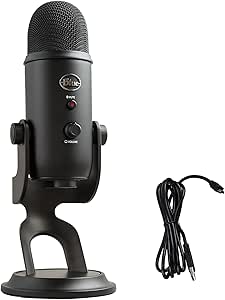 | Best for Versatile Recording Patterns | Microphone type: USB condenser | Pickup pattern: Multipattern: cardioid, omnidirectional, bidirectional, and stereo | Capsule design: Tri-capsule array | VIEW LATEST PRICE | See Our Full Breakdown |
| FIFINE AmpliGame AM8 USB/XLR Dynamic Microphone |  | Best for a USB-to-XLR Upgrade Path | Microphone type: Dynamic | Pickup pattern: Cardioid, unidirectional | Frequency response: 50 Hz–16 kHz | VIEW LATEST PRICE | See Our Full Breakdown |
| Dejasound DJM5 USB Condenser Microphone Kit |  | Best Complete Starter Recording Kit | Microphone type: USB condenser | Pickup pattern: Hypercardioid | Diaphragm: 16 mm | VIEW LATEST PRICE | See Our Full Breakdown |
| FIFINE K669B USB Condenser Microphone |  | Best Simple Desktop Starter | Microphone type: Desktop condenser | Pickup pattern: Cardioid, unidirectional | Frequency response: 20 Hz–20 kHz | VIEW LATEST PRICE | See Our Full Breakdown |
| Sennheiser Professional Profile USB Cardioid Condenser Microphone with Table Stand and 1.2 m USB-C Cable |  | Best for Simple, Hands-On Setup | Connectivity: USB | Polar pattern: Unidirectional (cardioid) | Form factor: Table array | VIEW LATEST PRICE | See Our Full Breakdown |
| Audio-Technica AT2020USB-X Cardioid Condenser USB Microphone |  | Best for High-Resolution USB Recording | Connectivity: USB | Polar pattern: Unidirectional (cardioid) | Audio resolution: 24-bit/96 kHz | VIEW LATEST PRICE | See Our Full Breakdown |
| Audio-Technica AT2020USB+ Cardioid Condenser USB Microphone |  | Best for Straightforward Monitoring | Connectivity: USB | Microphone type: Condenser | Polar pattern: Cardioid (unidirectional) | VIEW LATEST PRICE | See Our Full Breakdown |
| MAONO PD200W Hybrid Wireless Dynamic Podcast Microphone |  | Best for Flexible Recording Setups | Connectivity: Wireless, USB, XLR | Microphone type: Dynamic | Capsule size: 30 mm | VIEW LATEST PRICE | See Our Full Breakdown |
| Audio-Technica AT2040USB Dynamic USB Microphone |  | Best for Noisy Home Rooms | Connectivity: USB Type-C | Microphone type: Dynamic | Polar pattern: Hypercardioid | VIEW LATEST PRICE | See Our Full Breakdown |
| RØDE NT-USB+ Professional USB Condenser Microphone |  | Best Overall for Flexible Home Recording | Microphone type: USB condenser | Connectivity: USB Type-C | Polar pattern: Unidirectional | VIEW LATEST PRICE | See Our Full Breakdown |
| Samson Meteor USB Condenser Microphone |  | Best Compact Desktop Pick | Microphone type: USB condenser | Capsule: 25 mm (1 inch) | Polar pattern: Cardioid (unidirectional) | VIEW LATEST PRICE | See Our Full Breakdown |
| TONOR TC-777 USB Condenser Microphone with Tripod Stand and Pop Filter | 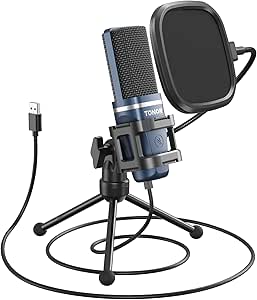 | Best for Simple Desktop Voice Recording | Connectivity: USB 2.0, USB Type-A | Polar pattern: Unidirectional (cardioid) | Frequency response: 20 kHz | VIEW LATEST PRICE | See Our Full Breakdown |
| FIFINE T669 USB Condenser Microphone Kit with Adjustable Boom Arm |  | Best Boom-Arm Starter Kit | Connectivity: USB | Connector types: USB Type-A, USB Type-C | Polar pattern: Unidirectional (cardioid) | VIEW LATEST PRICE | See Our Full Breakdown |
| RØDE X XCM-50 USB Condenser Microphone with UNIFY Software |  | Best for Streaming and Software Mixing | Microphone type: USB condenser | Connectivity: USB | Polar pattern: Unidirectional (cardioid) | VIEW LATEST PRICE | See Our Full Breakdown |
| USB microphones for home studio | Connectivity | Microphone type | Frequency response | Polar pattern |
|---|---|---|---|---|
| ZealSound K66 USB Condenser Mi | USB with USB-C and Lightning adapters | Condenser | 40 Hz–18 kHz | — |
| Logitech Creators Blue Yeti US | USB | USB condenser | — | — |
| FIFINE AmpliGame AM8 USB/XLR D | USB and XLR | Dynamic | 50 Hz–16 kHz | — |
| Dejasound DJM5 USB Condenser M | — | USB condenser | 30 Hz–16 kHz | — |
| FIFINE K669B USB Condenser Mic | USB | Desktop condenser | 20 Hz–20 kHz | — |
| Sennheiser Professional Profil | USB | — | — | Unidirectional (cardioid) |
| Audio-Technica AT2020USB-X Car | USB | — | 20 Hz–20 kHz | Unidirectional (cardioid) |
| Audio-Technica AT2020USB+ Card | USB | Condenser | — | Cardioid (unidirectional) |
| MAONO PD200W Hybrid Wireless D | Wireless, USB, XLR | Dynamic | — | Cardioid (unidirectional) |
| Audio-Technica AT2040USB Dynam | USB Type-C | Dynamic | — | Hypercardioid |
| RØDE NT-USB+ Professional USB | USB Type-C | USB condenser | 20 Hz | Unidirectional |
| Samson Meteor USB Condenser Mi | — | USB condenser | 20 Hz–20 kHz | Cardioid (unidirectional) |
| TONOR TC-777 USB Condenser Mic | USB 2.0, USB Type-A | — | 20 kHz | Unidirectional (cardioid) |
| FIFINE T669 USB Condenser Micr | USB | — | 20 Hz–20 kHz | Unidirectional (cardioid) |
| RØDE X XCM-50 USB Condenser Mi | USB | USB condenser | Up to 24,000 Hz | Unidirectional (cardioid) |
More Details on Our Top Picks
ZealSound K66 USB Condenser Microphone
The K66 makes the most sense for a home studio that moves between a computer, phone, or tablet. Its included USB-C and Lightning adapters give it a wider range of compatible setups than the computer-focused FIFINE K669B, while the K66 also adds real-time headphone monitoring and separate controls for mic level, headphone volume, and echo. A cardioid pattern and selectable noise reduction mode can help keep attention on the speaker, but neither makes a noisy room disappear. The echo control may suit casual streaming or voice effects better than a clean, natural recording workflow. The product details also do not list a stand or mounting hardware, so I would plan for a separate way to position it. It is a flexible starter pick, not the most complete out-of-box studio setup.
Pros:- USB-C and Lightning adapters support a range of compatible devices.
- Cardioid pickup and selectable noise reduction can help focus speech.
- Zero-latency headphone monitoring with separate mic and headphone controls.
- Physical mute and echo controls are accessible during recording.
Cons:- Noise reduction is described as reducing background sounds, not eliminating them.
- No stand, boom arm, or other mounting accessory is specified.
- Echo controls may be less useful for buyers seeking an unprocessed studio vocal.
Best for: Creators who record at a desk and sometimes switch between a compatible computer, iPhone, iPad, or USB-C device.
Not ideal for: Buyers who need a complete mounted setup or want noise reduction to remove substantial room noise.
- Microphone type:Condenser
- Pickup pattern:Cardioid
- Frequency response:40 Hz–18 kHz
- Sampling rate:46 kHz
- Sensitivity:−45 dB ±3 dB
- Monitoring:Zero-latency via 3.5 mm headphone jack
- Controls:Microphone volume, monitoring volume, echo, and mute
- Connectivity:USB with USB-C and Lightning adapters
- Noise reduction:Selectable mode
Our verdict“Choose the K66 if device flexibility and hands-on controls matter more than included mounting gear or advanced recording options.”
Logitech Creators Blue Yeti USB Microphone – Blackout
The Blue Yeti earns its place for a home studio that records more than one kind of session. Its four selectable pickup patterns let one mic handle solo voice, two-person conversation, room sound, or stereo capture; the simpler FIFINE K669B is limited to cardioid use. That flexibility can reduce the need to buy separate microphones, though it also asks the user to choose the right pattern and placement each time. The included desktop stand and onboard headphone monitoring make setup straightforward, while Blue VO!CE adds software-based vocal options when Logitech G HUB is installed. The tradeoff is a bulky body that can crowd a small desk, and the software features add setup beyond basic plug-and-play. For a fixed solo voice position, a less expansive mic may be easier to manage.
Pros:- Four pickup patterns support several recording arrangements.
- Desktop stand is included for a ready-to-position setup.
- Onboard headphone monitoring and volume control support direct listening.
- Blue VO!CE software adds vocal effects and processing options.
Cons:- Large form factor can take up substantial desk space.
- Full Blue VO!CE functionality requires Logitech G HUB software.
- Pattern flexibility adds setup choices that a basic solo-voice workflow may not need.
Best for: Home podcasters and creators who alternate between solo narration, interviews, and group or stereo recording.
Not ideal for: Solo creators with very limited desk space or buyers who want every feature to work without companion software.
- Microphone type:USB condenser
- Pickup pattern:Multipattern: cardioid, omnidirectional, bidirectional, and stereo
- Capsule design:Tri-capsule array
- Frequency range:20 Hz–20 kHz
- Connectivity:USB
- Monitoring:Onboard headphone monitoring with volume control
- Software:Blue VO!CE features require Logitech G HUB
- Included accessory:Adjustable desktop stand
- Enclosure material:Metal
Our verdict“Pick the Blue Yeti if you need one USB mic for several recording formats and have room for its larger desktop footprint.”
FIFINE AmpliGame AM8 USB/XLR Dynamic Microphone
The AM8 is the clearest pick here for someone who wants to start recording over USB but may later add an audio interface or mixer. Unlike the USB-only FIFINE K669B, the AM8 has USB and XLR connections, so it can remain useful as a studio grows. In USB mode, tap-to-mute, headphone monitoring, and separate gain and monitoring controls keep common adjustments within reach. Its dynamic cardioid design is a practical fit for close-miked speech in a home room, though it does not remove the need for sensible placement or room control. The XLR path has a real limitation: the cable is not included, and RGB lighting plus onboard controls stop working in that mode. I see this as a flexible voice-work mic, not a full-featured XLR upgrade in every respect.
Pros:- USB and XLR connections allow a future move to interface-based recording.
- USB mode provides tap-to-mute and an LED mute reminder.
- USB headphone monitoring and separate gain and monitoring-volume controls.
- Built-in 3/8-inch and 5/8-inch threads fit many mic stands.
Cons:- XLR cable is not included.
- RGB lighting and onboard function controls are inactive in XLR mode.
- USB conveniences depend on using the microphone without the XLR connection.
Best for: Streamers and podcasters who want a simple USB setup now and the option to connect through XLR equipment later.
Not ideal for: Buyers who need an included XLR cable or expect the USB lighting and onboard controls to carry over to XLR use.
- Microphone type:Dynamic
- Pickup pattern:Cardioid, unidirectional
- Frequency response:50 Hz–16 kHz
- Connectivity:USB and XLR
- USB-mode features:Tap-to-mute, RGB lighting, gain control, monitoring-volume control
- Monitoring:Headphone jack in USB mode
- Stand threads:3/8 inch and 5/8 inch
- Channels:1
- Enclosure materials:ABS plastic and metal
Our verdict“Choose the AM8 if you want a dynamic USB mic today with a practical XLR connection for a later studio setup.”
Dejasound DJM5 USB Condenser Microphone Kit
The DJM5 is the most bundled option in this group: it pairs a USB condenser mic with a foldable isolation shield, pop filter, tripod, headphones, and adapters. That makes it a stronger out-of-box choice than the ZealSound K66, whose listed package does not specify mounting accessories. For a new home studio, the shield and pop filter give the user more tools to manage reflections and plosive bursts without sourcing each piece separately. The microphone also has echo, volume, and mute controls plus headphone monitoring. The compromise is a larger kit, with a listed total weight of 4.1 lb, and corded power rather than a simple USB-powered specification. Its hypercardioid pattern and stated frequency range may suit focused voice work, but buyers wanting a minimal desk setup should choose a smaller package.
Pros:- Includes a foldable five-panel isolation shield and pop filter.
- Package also includes tripod, monitoring headphones, and Lightning and USB-C adapters.
- Echo, volume, mute, and headphone monitoring controls are built into the setup.
- USB connection supports compatible computers and smartphones.
Cons:- The full kit is relatively bulky, with a listed total weight of 4.1 lb.
- Corded 5 V power requires a cable connection.
- The specified frequency response tops out at 16 kHz.
Best for: First-time podcasters or home voice creators who want a microphone, basic acoustic accessories, and phone adapters in one kit.
Not ideal for: Minimalist desk setups or mobile creators who want a lightweight mic with fewer pieces and cables.
- Microphone type:USB condenser
- Pickup pattern:Hypercardioid
- Diaphragm:16 mm
- Sampling format:192 kHz / 24-bit
- Frequency response:30 Hz–16 kHz
- Connectors:USB Type-B and 3.5 mm jack
- Controls:Echo, volume, and mute
- Included items:Isolation shield, pop filter, tripod, headphones, Lightning and USB-C adapters, cables, and foam cover
- Total kit weight:4.1 lb (1.86 kg)
Our verdict“Choose the DJM5 if you want an accessory-rich first recording setup and have room for its shield and supporting gear.”
FIFINE K669B USB Condenser Microphone
The K669B suits a home studio where the priority is a straightforward, fixed desktop setup rather than broad device support or expansion options. It combines a cardioid condenser capsule, included tripod, metal body, and onboard volume knob in a basic USB connection. Compared with the ZealSound K66, it gives up headphone monitoring, echo controls, and the listed phone adapters, but its simpler feature set can be easier to manage for calls, streaming, or voice recording at a computer. The K669B also supports PS4 and PS5, though it is not compatible with Xbox or phones. One workflow wrinkle is that some applications may adjust recording level automatically, so users may need to change their app settings to keep levels steady. This is a sensible entry point, not a flexible all-device studio mic.
Pros:- Cardioid pattern focuses pickup toward the main sound source.
- USB-powered connection and included tripod make for a simple desktop setup.
- Metal body offers a sturdy enclosure for everyday desk use.
- Onboard volume knob provides direct level adjustment.
Cons:- Not compatible with Xbox or phones.
- No headphone monitoring is specified.
- Some applications may change recording levels automatically unless their settings are adjusted.
Best for: Computer-based beginners who want a compact desktop microphone for voice recording, streaming, calls, or PS4/PS5 chat.
Not ideal for: Phone-based creators, Xbox users, or anyone who needs headphone monitoring and more recording controls on the microphone.
- Microphone type:Desktop condenser
- Pickup pattern:Cardioid, unidirectional
- Frequency response:20 Hz–20 kHz
- Connectivity:USB
- Cable:USB-B to USB-A/C, 6.5 ft
- Power source:USB-powered
- Controls:Onboard volume knob
- Compatible devices:Desktop and laptop computers, PS4, and PS5
- Included stand:Tripod
Our verdict“Pick the K669B for uncomplicated computer or PlayStation voice work, but skip it if you need phone support or direct headphone monitoring.”
Sennheiser Professional Profile USB Cardioid Condenser Microphone with Table Stand and 1.2 m USB-C Cable
The Sennheiser Profile suits a home studio where quick setup and direct control matter more than software customization. Its USB-C plug-and-play connection and included table stand keep a basic podcast or streaming desk uncomplicated, while onboard mute, gain, mix, and volume controls let me make adjustments without opening settings. The cardioid condenser capsule is a better fit for a speaker who wants natural voice capture than the dynamic AT2040USB, which puts more emphasis on isolating a close voice in a noisy room. The Profile’s all-metal construction also gives it a sturdier feel than a lightweight starter setup. The tradeoff is limited growth: it has no XLR or analog output, and there is no dedicated software for EQ or effects. I’d choose the AT2020USB-X instead for its stated high-resolution recording support.
Pros:- USB-C plug-and-play setup requires no additional software.
- On-mic mute, gain, mix, and volume controls allow quick adjustments.
- Cardioid condenser capsule is designed to focus on voice and reduce off-axis sound.
- All-metal enclosure and included table stand suit a permanent desk setup.
Cons:- USB-C is the only listed connection; there is no XLR or analog output.
- No dedicated software is provided for EQ or effects.
Best for: Podcasters and streamers who want a durable, ready-to-record USB mic with physical controls on the microphone.
Not ideal for: Home-studio users who expect to add an audio interface, use XLR, or shape their sound with software effects.
- Connectivity:USB
- Polar pattern:Unidirectional (cardioid)
- Form factor:Table array
- Signal-to-noise ratio:60 dB
- Channels:1
- Enclosure material:Metal
- Weight:350 g
- Dimensions:4.37 × 4.37 × 7.95 in
Our verdict“Choose the Profile for a sturdy, straightforward desk mic with useful physical controls, but pick a different model if you need software processing or an upgrade path to XLR.”
Audio-Technica AT2020USB-X Cardioid Condenser USB Microphone
The AT2020USB-X is the strongest fit here for a home-studio creator who wants a clear recording workflow and a stated 24-bit/96 kHz resolution. Its cardioid pickup, headphone monitoring, mix control, and touch-sensitive mute put the main recording and listening adjustments within reach. Compared with the older AT2020USB+, which is specified for 16-bit recording at 44.1/48 kHz, the USB-X offers a higher listed recording ceiling; that makes it the more flexible choice for creators who want to retain more detail in their recorded files. The included stand and USB adapters help it work on a desk without extra mounting hardware. Still, this is a USB-focused, single-channel mic, not a route into an XLR setup. The optional AT8455 shock mount is not included, so buyers planning a boom-arm arrangement may need an additional accessory.
Pros:- Supports recording up to 24-bit/96 kHz.
- Built-in headphone jack with volume and mix controls supports direct monitoring.
- Touch-sensitive mute button makes it easy to silence the mic at the desk.
- Includes a custom desk stand, threaded adapter, and USB cable adapters.
Cons:- USB-only connectivity limits use with conventional XLR audio interfaces.
- Optional AT8455 shock mount is not included.
- Single-channel design does not support multichannel recording.
Best for: Voiceover artists, podcasters, and musicians recording at a computer who want high-resolution USB capture and direct headphone monitoring.
Not ideal for: Creators who need XLR connectivity, multichannel recording, or a shock mount included for boom-arm use.
- Connectivity:USB
- Polar pattern:Unidirectional (cardioid)
- Audio resolution:24-bit/96 kHz
- Frequency response:20 Hz–20 kHz
- Signal-to-noise ratio:80 dB
- Channels:1
- Enclosure material:Stainless steel
- Included accessories:Custom desk stand, threaded adapter, USB-C to USB-A cable, USB-A to USB-C adapter
Our verdict“Pick the AT2020USB-X for high-resolution computer recording and practical monitoring controls, unless your home studio needs XLR or an included shock mount.”
Audio-Technica AT2020USB+ Cardioid Condenser USB Microphone
The AT2020USB+ is a practical home-studio choice for people who want to hear their voice while recording and blend it with playback using on-mic headphone and mix controls. Its cardioid condenser design is suited to a single speaker or source in front of the mic, rather than a group gathered around one device. Compared with the newer AT2020USB-X, it has a lower stated recording specification—16-bit at 44.1/48 kHz rather than 24-bit/96 kHz—but it still covers common podcast, meeting, and voiceover workflows. Its monitoring controls also give it a more hands-on desk workflow than the Sennheiser Profile, whose appeal centers on a broader set of onboard controls and metal construction. The compromises are a wired USB-only connection and one-channel operation, so it is less suitable for a studio planning to add XLR gear or record several sources at once.
Pros:- Built-in headphone jack and volume control enable direct monitoring.
- Mix control blends microphone audio with pre-recorded sound.
- Cardioid pickup helps reduce off-axis sound.
- USB connection supports direct digital recording to a computer.
Cons:- USB-only connection and corded power limit setup flexibility.
- Single-channel audio is not suited to multichannel recording.
- Listed recording format is 16-bit at 44.1/48 kHz, below the AT2020USB-X specification.
Best for: Solo podcasters and online presenters who want direct headphone monitoring and a simple way to blend microphone audio with computer playback.
Not ideal for: Creators who need XLR connectivity, multichannel recording, or the higher listed resolution of the AT2020USB-X.
- Connectivity:USB
- Microphone type:Condenser
- Polar pattern:Cardioid (unidirectional)
- Bit depth:16-bit
- Sampling rate:44.1/48 kHz
- Frequency range:20–20,000 Hz
- Signal-to-noise ratio:74 dB
- Weight:2.3 lb
Our verdict“Choose the AT2020USB+ for a solo recording desk where direct monitoring and mix control matter more than newer high-resolution specifications or XLR expansion.”
MAONO PD200W Hybrid Wireless Dynamic Podcast Microphone
The MAONO PD200W stands apart from the USB-only microphones in this group by combining wireless, USB-C, and XLR connections. That makes it a fit for a home studio that may move from a desk podcast to a camera setup or eventually into an interface-based recording chain. Its dynamic capsule, cardioid pattern, and three-stage noise cancellation are aimed at keeping attention on a nearby speaker; compared with the condenser AT2020USB-X, this setup is more focused on flexible placement and noise management than on a stated high-resolution recording format. The MaonoLink app adds sound adjustments, while support for two wireless mics with separate tracks can suit a two-person show. The tradeoffs are extra setup complexity and dependence on battery for wireless use. The stated up to 60-hour battery life applies with RGB lighting off, and camera or Lightning accessories are sold separately.
Pros:- Offers wireless, USB, and XLR connection options.
- Cardioid pickup and three-stage noise cancellation target background noise and room echo.
- Supports two wireless microphones with separate tracks.
- Battery life is listed at up to 60 hours with RGB lighting off.
Cons:- Up to 60 hours of battery life depends on RGB lighting being off.
- Camera and Lightning accessories are sold separately.
- Wireless operation adds battery and receiver setup compared with USB-only models such as the AT2020USB+.
Best for: Podcasters who record at a desk and on the move, or who want wireless two-person recording with the option to connect by USB or XLR.
Not ideal for: Buyers seeking a minimal plug-in desktop mic, or creators who require all camera and mobile-device adapters in the box.
- Connectivity:Wireless, USB, XLR
- Microphone type:Dynamic
- Capsule size:30 mm
- Polar pattern:Cardioid (unidirectional)
- Maximum SPL:128 dB
- Wireless range:Up to 60 m
- Battery life:Up to 60 hours with RGB lighting off
- Software:MaonoLink app; compatible with Mac and Windows
Our verdict“Choose the PD200W if your home-studio work benefits from wireless mobility and multiple connection types, but skip it for a simple fixed USB desk setup.”
Audio-Technica AT2040USB Dynamic USB Microphone
The AT2040USB is the lineup’s clearest choice for a home studio where room sound is a bigger concern than maximum connection flexibility. Its dynamic capsule and hypercardioid pickup focus capture on a close speaker, which makes it a more targeted fit for untreated rooms than the condenser AT2020USB-X. A built-in headphone jack supports real-time monitoring, and the touch-sensitive mute button has a colored LED ring so its status is easy to read while recording or streaming. Compared with the Sennheiser Profile, it trades a condenser capsule and a wider set of stated physical controls for a dynamic, tightly focused pickup pattern. That focus rewards careful mic placement, though: it is not the pick for recording a group around a desk. The USB-only, single-channel design also means no direct XLR route into an interface.
Pros:- Dynamic capsule and hypercardioid pickup focus on a nearby voice.
- Built-in headphone jack with volume control supports real-time monitoring.
- Touch-sensitive mute button has an LED ring that indicates mute status.
- Includes USB Type-C to Type-A cable and USB adapter.
Cons:- USB-only connectivity provides no XLR connection for an audio interface.
- Single-channel design is unsuitable for multichannel capture.
- Its focused pickup is better suited to one close speaker than a group recording.
Best for: Solo streamers and podcasters recording close to the mic in a room where background noise or echo is hard to control.
Not ideal for: Musicians recording several people or instruments at once, and home-studio owners who want to connect directly to an XLR interface.
- Connectivity:USB Type-C
- Microphone type:Dynamic
- Polar pattern:Hypercardioid
- Headphone monitoring:Built-in headphone jack with volume control
- Mute indicator:LED ring: blue when active, red when muted
- Signal-to-noise ratio:60 dB
- Weight:600 g
- Warranty:2 years
Our verdict“Pick the AT2040USB for close-mic solo recording in a noisy or reflective room, but choose a condenser or multi-input setup for group and instrument sessions.”
RØDE NT-USB+ Professional USB Condenser Microphone
The NT-USB+ is my most balanced pick here for a home studio that needs to handle voice recording, calls, and mobile-device use without adding separate monitoring gear. Its 48 kHz/24-bit audio gives it a higher stated resolution than the Samson Meteor’s 16-bit option, while zero-latency headphone monitoring lets you hear your performance as you record. USB-C compatibility across computers, phones, and tablets adds flexibility the desktop-focused TONOR TC-777 lacks.
The tradeoff is a single-direction pickup pattern: it suits one speaker in a controlled setup, not a group gathered around the mic. APHEX processing also depends on RØDE Central software, and the corded connection keeps it from being a portable, battery-free setup. I’d choose it for an adaptable solo recording station, rather than for multi-person recording or the simplest possible plug-in-and-go kit.
Pros:- 48 kHz/24-bit audio provides more stated recording resolution than the Samson Meteor’s 16-bit format.
- USB-C compatibility supports computers, smartphones, and tablets.
- Zero-latency headphone monitoring includes dedicated controls.
- Includes a detachable pop filter and desktop stand.
Cons:- Unidirectional pickup is not suited to capturing a group from multiple directions.
- APHEX audio processing requires RØDE Central software.
- Requires a corded power connection.
Best for: Solo podcasters, voiceover artists, and home musicians who want higher-resolution USB recording, headphone monitoring, and computer or mobile-device compatibility.
Not ideal for: People recording several speakers around one microphone or anyone who needs a wireless, battery-powered setup.
- Microphone type:USB condenser
- Connectivity:USB Type-C
- Polar pattern:Unidirectional
- Audio resolution:48 kHz / 24-bit
- Frequency response:20 Hz
- Signal-to-noise ratio:59 dB
- Included accessories:Desktop stand, detachable pop filter, ring mount, 3 m USB-C to USB-C cable
- Weight:540 g
Our verdict“Choose the NT-USB+ for a flexible solo home studio that values USB-C connectivity, detailed recording resolution, and direct headphone monitoring.”
Samson Meteor USB Condenser Microphone
The Samson Meteor makes sense when desk space and quick setup matter more than an elaborate recording rig. Its folding tripod legs keep the microphone self-contained for storage or occasional travel, and USB operation needs no separate drivers for Windows or Mac recording applications. Like the RØDE NT-USB+, it offers zero-latency headphone monitoring, but the Meteor’s compact body and built-in stand make it easier to pack and place without assembling a separate desktop stand.
That convenience comes with fewer positioning options: the integrated legs limit placement compared with the FIFINE T669’s adjustable boom arm. Its 16-bit resolution is also lower than the NT-USB+’s 24-bit specification, so I’d favor it for straightforward voice or instrument capture rather than a more expandable studio setup. The cardioid pattern works best when one speaker stays in front of the mic.
Pros:- Folding tripod legs make the microphone easy to store and transport.
- Zero-latency monitoring is available through the headphone output.
- Driver-free USB setup works with Windows and Mac recording applications.
- Zinc die-cast metal construction gives the compact microphone a sturdy housing.
Cons:- Built-in tripod legs restrict positioning compared with the FIFINE T669 boom arm.
- 16-bit resolution is lower than the RØDE NT-USB+’s 24-bit specification.
- Cardioid pickup is designed for one sound source in front of the mic.
Best for: Home-studio beginners and occasional travelers who want a compact USB mic with a built-in tripod and headphone monitoring.
Not ideal for: Voiceover artists who need precise boom-arm placement or buyers who prioritize 24-bit recording resolution.
- Microphone type:USB condenser
- Capsule:25 mm (1 inch)
- Polar pattern:Cardioid (unidirectional)
- Resolution:16-bit, 44.1/48 kHz
- Frequency response:20 Hz–20 kHz
- Maximum SPL:120 dB
- Headphone output:1/8-inch TRS with zero-latency monitoring
- Weight:0.57 lb (263 g)
Our verdict“Pick the Meteor for portable, uncomplicated desktop recording, but choose a boom-arm kit if flexible mic placement matters more.”
TONOR TC-777 USB Condenser Microphone with Tripod Stand and Pop Filter
The TONOR TC-777 is the straightforward desktop choice for someone who wants the basic pieces of a voice setup in one package. Its plug-and-play USB connection, foldable tripod, shock mount, and pop filter make it less involved to set up than the Samson Meteor, whose built-in legs offer fewer opportunities to adjust the mic’s position. One-click mute and volume controls also make quick changes convenient during calls, streams, or spoken-word recording.
This is a more focused, less feature-rich option than the RØDE NT-USB+: the listed specs do not include headphone monitoring or an audio-resolution figure, and its USB Type-A connection is less flexible than USB-C for mobile-device setups. Its cardioid pattern helps prioritize the speaker in front, but it is still a desktop mic rather than a portable recording solution. Xbox users should skip it; the listed compatible devices exclude Xbox.
Pros:- Includes a foldable tripod, mini shock mount, and pop filter.
- One-click mute and volume controls simplify desktop use.
- Plug-and-play USB setup works with Windows and Mac computers.
- Cardioid pickup focuses on sound in front of the microphone.
Cons:- Not compatible with Xbox.
- Desktop design is less suited to mobile recording.
- The listed specs do not provide headphone monitoring or audio-resolution details.
Best for: New home podcasters and remote workers who want a basic desktop voice setup with included pop filtering, shock mounting, and simple controls.
Not ideal for: Xbox users, mobile-first creators, or recording musicians who need specified audio resolution and headphone monitoring.
- Connectivity:USB 2.0, USB Type-A
- Polar pattern:Unidirectional (cardioid)
- Frequency response:20 kHz
- Signal-to-noise ratio:80 dB
- Channels:1
- Cable length:1.8 m (70 in)
- Compatible devices:Windows and Mac computers, laptops, PS4, PS5
- Included items:Foldable tripod, mini shock mount, pop filter, power cord, manual
Our verdict“Choose the TC-777 for an uncomplicated desktop voice setup with useful included accessories, provided you do not need Xbox support or mobile flexibility.”
FIFINE T669 USB Condenser Microphone Kit with Adjustable Boom Arm
The FIFINE T669 is the most practical fit in this group for a home studio where the microphone needs to move out of the way between sessions. Its 30-inch adjustable boom arm brings the mic closer to the speaker without taking up the same fixed desktop footprint as the TONOR TC-777 or Samson Meteor. The included shock mount and double-layer pop filter also make this a fuller positioning kit than the NT-USB+, which comes with a desktop stand instead of an arm.
The tradeoff is that the T669 is built around a wired computer setup, and the listed compatibility excludes Xbox. Its cardioid condenser design suits a single voice or nearby source, not a room conversation. I’d pick it over the compact Meteor when reach and desk clearance matter, but the arm and accessories mean more pieces to assemble than a self-contained desktop mic.
Pros:- 30-inch boom-arm reach supports flexible placement and helps clear desk space.
- Includes a steel arm, shock mount, and double-layer pop filter.
- Cardioid pickup focuses on sound from the front.
- USB plug-and-play connection avoids the need for extra audio hardware or drivers.
Cons:- Not compatible with Xbox.
- Requires a wired USB connection to a compatible device.
- Boom-arm setup takes more assembly and desk space than the Samson Meteor’s folding tripod.
Best for: Home podcasters, streamers, and voiceover beginners who want an adjustable arm and included pop filtering without sourcing studio accessories separately.
Not ideal for: Xbox users, mobile recordists, or anyone who wants a compact mic that can be set down without assembling an arm.
- Connectivity:USB
- Connector types:USB Type-A, USB Type-C
- Polar pattern:Unidirectional (cardioid)
- Frequency response:20 Hz–20 kHz
- Signal-to-noise ratio:78 dB
- Boom arm reach:30 in
- Boom arm movement:180° up and down; 135° forward and backward
- Included accessories:Boom arm stand, shock mount, double pop filter, USB cable
Our verdict“Choose the T669 if adjustable positioning and an included boom-arm kit matter more than portability or a minimal desktop setup.”
RØDE X XCM-50 USB Condenser Microphone with UNIFY Software
The RØDE X XCM-50 is the specialist pick for a home studio that also serves as a streaming or gaming station. Its UNIFY virtual mixing software adds routing and voice-processing tools that the RØDE NT-USB+ does not list as part of its software package, while the XCM-50’s zero-latency headphone output provides direct monitoring with level control and mute. A 360-degree swing mount and included tripod give it more positioning options than the TONOR TC-777’s basic desktop arrangement.
Those streaming-oriented tools make less difference if the main goal is recording vocals or instruments in a conventional studio workflow. The XCM-50 is still a single-channel, wired USB condenser, so it is not a multi-speaker or wireless solution. I’d choose it over the NT-USB+ when software mixing and streaming controls lead the brief; for broader computer and mobile use, the NT-USB+ is the more flexible fit.
Pros:- UNIFY software provides virtual mixing, voice processing, and voice effects.
- Zero-latency headphone output includes level control and mute.
- 360-degree swing mount and included tripod support flexible positioning.
- Metal enclosure provides a durable housing.
Cons:- Streaming and gaming focus may offer less value for a traditional music-recording workflow.
- Single-channel cardioid pickup is intended for one nearby sound source.
- Requires a wired USB connection.
Best for: Streamers and gaming creators building a computer-based home studio who want software mixing, voice effects, and direct headphone monitoring.
Not ideal for: Musicians seeking a general-purpose recording setup, multi-person hosts, or creators who need wireless operation.
- Microphone type:USB condenser
- Connectivity:USB
- Polar pattern:Unidirectional (cardioid)
- Frequency response:Up to 24,000 Hz
- Signal-to-noise ratio:78 dB
- Channels:1
- Software:UNIFY virtual mixing software
- Included accessories:Tripod, 3 m USB-C to USB-C cable, 3 m headphone extension cable, threaded adapter
Our verdict“Choose the XCM-50 for a streaming-focused home setup that can make use of UNIFY and its direct monitoring controls.”
How We Picked
I compared these microphones for the demands of a home-studio desk setup: recording speech or vocals in rooms that may not have acoustic treatment, connecting directly to a computer, and fitting a practical workflow. I weighed microphone type and pickup pattern alongside useful controls, headphone monitoring, mounting options, connection flexibility, and included accessories. I also looked at whether a feature solves a real home-recording problem or mainly adds complexity.
The ranking favors sound-control fit, ease of use, and room to grow over the largest spec list. Mics that offer a strong balance for common home-studio tasks rank ahead of specialist or highly bundled options; lower-ranked picks can still be the better choice for a particular room, budget-conscious setup, portable desk, or wireless workflow. Because a condenser can sound detailed in a quiet room but expose more ambient noise, no single microphone type wins for every buyer.
| USB microphones for home studio | Microphone type | Connectivity | Polar pattern |
|---|---|---|---|
| ZealSound K66 USB Condenser Mi | Condenser | USB with USB-C and Lightning adapters | — |
| Logitech Creators Blue Yeti US | USB condenser | USB | — |
| FIFINE AmpliGame AM8 USB/XLR D | Dynamic | USB and XLR | — |
| Dejasound DJM5 USB Condenser M | USB condenser | — | — |
| FIFINE K669B USB Condenser Mic | Desktop condenser | USB | — |
| Sennheiser Professional Profil | — | USB | Unidirectional (cardioid) |
| Audio-Technica AT2020USB-X Car | — | USB | Unidirectional (cardioid) |
| Audio-Technica AT2020USB+ Card | Condenser | USB | Cardioid (unidirectional) |
| MAONO PD200W Hybrid Wireless D | Dynamic | Wireless, USB, XLR | Cardioid (unidirectional) |
| Audio-Technica AT2040USB Dynam | Dynamic | USB Type-C | Hypercardioid |
| RØDE NT-USB+ Professional USB | USB condenser | USB Type-C | Unidirectional |
| Samson Meteor USB Condenser Mi | USB condenser | — | Cardioid (unidirectional) |
| TONOR TC-777 USB Condenser Mic | — | USB 2.0, USB Type-A | Unidirectional (cardioid) |
| FIFINE T669 USB Condenser Micr | — | USB | Unidirectional (cardioid) |
| RØDE X XCM-50 USB Condenser Mi | USB condenser | USB | Unidirectional (cardioid) |
Factors to Consider When Choosing USB Microphones For Home Studios
Before choosing a model, I’d match the microphone to the room and recording habit—not just the voice you hope to capture. These decisions can have more effect on the finished recording than a small difference in listed features.
Match mic type to the room you actually have
A condenser mic can capture fine vocal detail, but it may also record computer fans, traffic, hard-wall reflections, and movement outside the speaking position. A dynamic mic generally needs closer placement and more gain, which can help reduce the amount of room sound in a voice recording. That does not make dynamic models immune to noise: a loud keyboard near the mic can still be audible. Before buying, record a short test in the room at the time you usually work and listen for the sound you would want to reduce. If you cannot soften reflections with furnishings or change the recording position, favor a setup built around close speech rather than assuming software can repair everything.
Choose a pickup pattern for your recording habits
A cardioid pattern is a practical starting point for one person speaking or singing in front of a desk mic. Multiple pickup patterns can help when you record two people facing each other or want a room-based sound, but they also introduce settings you need to understand and place carefully. A common mistake is buying a multi-pattern mic for flexibility and then using a room-sensitive setting in a noisy space. Think about the recordings you make most often, not an occasional format you may try later. For a solo home studio, clear front-facing pickup and repeatable placement often matter more than having every pattern available.
Check the whole recording chain, not just the USB connection
USB makes setup straightforward, but compatibility still depends on your computer, recording software, ports, and any adapters in the chain. Check whether the mic provides headphone monitoring if you need to hear your voice without relying on software playback, which can introduce delay. Also confirm how mute, gain, and headphone level controls behave; separate controls can make quick adjustments easier during a session. USB/XLR models add flexibility, but the XLR path usually calls for an interface or mixer, adding equipment and setup steps. Pay for that expansion route only if you expect to use it.
Plan placement and accessories before buying a bundle
A microphone that comes with a stand or boom arm can save setup work, but the included hardware may not suit every desk, posture, or storage routine. A boom arm helps keep the mic close while clearing the keyboard area; a desktop stand is simpler when the mic will stay in one spot. Pop filters can reduce plosive bursts, while an isolation shield may limit some nearby reflections, but neither turns a reflective room into a treated booth. Check desk thickness, clamp clearance, cable routing, and how much space the gear occupies. A well-positioned mic on a basic mount can be more useful than a larger accessory kit that crowds the recording area.
Decide when extra controls or software are worth the effort
Gain, mute, headphone volume, and monitoring controls are useful when they solve a repeatable task, such as adjusting a live session without opening software. Echo effects and other processing can be appealing for casual streaming, but they are not always desirable for clean studio recordings. Software features may also depend on the operating system, application, or connection method, so check compatibility before treating them as part of the package. Keep an unprocessed recording path where possible; it gives you more room to shape the sound later. Choose added controls for a clear workflow benefit, not simply because a product lists more features.
Set expectations for upgrades and room treatment
A USB mic can be a complete starting point, but it does not automatically provide the same routing and upgrade options as a separate microphone, interface, and accessories. If you expect to add an interface, headphones, or other audio gear, a USB/XLR model can keep that route open, although you may not need the XLR connection right away. If your present goal is recording speech at a desk, spending time on mic distance and room noise can bring more benefit than buying a more elaborate setup. Avoid choosing an upgrade path based only on hypothetical future needs. First identify what limits your current recording, then add gear that addresses that specific limitation.
Frequently Asked Questions
Should I choose a condenser or dynamic USB microphone for an untreated bedroom?
I’d usually start with a dynamic model if the room has noticeable echo, a computer fan, or household noise, because close placement can make it easier to keep the voice prominent. A condenser can still work well if the room is quiet and you can position it away from reflective surfaces. Neither type removes room sound on its own, so mic distance and placement remain important. Try to record with the mic close enough for a clear voice without blocking your screen or workspace. The better choice is the one that suits the room you have, not a general claim that one type sounds better.
Is USB/XLR worth choosing if I do not own an audio interface?
It can be worthwhile if you already expect to move to an interface-based setup, since a USB/XLR mic can serve a direct-computer workflow first and offer another connection later. If you plan to keep recording over USB, the extra output may add little practical value. An XLR connection also means accounting for an interface or mixer, cables, and a different setup process. I’d base the decision on a likely upgrade, not the possibility that you might want one someday. For a straightforward solo recording setup, reliable USB operation and monitoring can matter more than expandable connections.
Do I need a boom arm, pop filter, or isolation shield for home recording?
Each accessory addresses a different issue, so I would not treat them as a required bundle. A boom arm helps position the mic close to your mouth and frees desk space; a pop filter helps reduce bursts of air on certain consonants. An isolation shield may reduce some sound reflecting from nearby surfaces, but it cannot replace room treatment or stop noise entering from elsewhere. Start by identifying whether your main problem is desk clutter, plosives, or room reflections. Then choose the accessory that addresses that problem rather than buying a kit for every possible use.
Can one USB microphone handle both vocals and podcasts?
Many USB microphones can record both, but the results depend on the voice, room, placement, and intended sound. Spoken voice often benefits from close, consistent positioning, while singing may call for more distance and attention to room acoustics and loud peaks. A model suited to detailed capture in a quiet room can work for both jobs, though a noisy room may favor a dynamic mic and close technique. Check whether your recording software lets you set levels and monitor comfortably for each task. If you switch between uses, a stable stand and repeatable mic position can be as valuable as extra microphone modes.
What should I check before connecting a USB microphone to my computer?
Check the mic’s connector and supplied cable against your computer’s available ports, and confirm that your operating system and recording application support the device. If you need live monitoring, verify that the microphone has a headphone output and learn whether monitoring is direct or routed through software. Some control or software features may work only with particular systems or applications, so review those details before relying on them. After connection, set the input device in both system settings and your recording program, then make a short test recording. This catches routing and level problems before a longer session.
Conclusion
For a best overall choice, I’d begin with the RØDE NT-USB+ if the room is reasonably quiet and you want a polished condenser-based USB setup. The FIFINE K669B is my best value pick for a simpler desk mic, while the RØDE X XCM-50 is the best premium direction for buyers who want software-oriented control in their workflow. For beginners, the TONOR TC-777 keeps the setup approachable with its included stand and pop filter. For a noisier room or close podcast recording, look at the Audio-Technica AT2040USB; for a future interface-based setup, choose the FIFINE AM8; and for wireless flexibility, the MAONO PD200W has a distinct role. Match the mic to your room and recording routine first, then weigh controls and accessories.