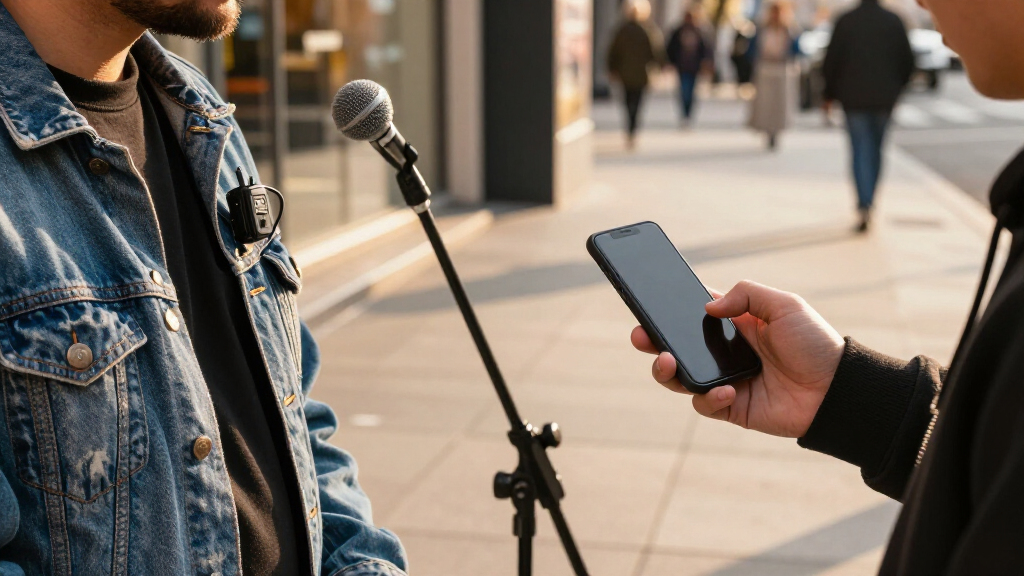

Wireless lavalier microphones make it easier to record clear speech without keeping a handheld mic in view. I rank the DJI Mic Mini (2 Transmitters + 1 Mobile Receiver) as the best overall choice in this lineup for creators who want a compact two-person kit with active noise canceling. The Hollyland Lark M2 stands out for a small, portable setup, while the TONOR UHF systems suit buyers who need bodypack, headset, or live-sound flexibility. The main tradeoffs are phone compatibility, wireless range and stability, noise handling, and how many people you need to record. Read on for the full comparison and advice on matching a microphone to your recording setup.

Get audio and creator gear delivered free with Prime
- Fast, free delivery on millions of items
- Prime Video, Amazon Music and more included
- Member-only deals all year
Complete the kit



Key Takeaways
- The DJI Mic Mini is the strongest all-around fit for mobile creators in this group, pairing two transmitters with a mobile receiver and active noise canceling.
- Hollyland’s Lark M2 and LARK A2 focus on compact creator kits, while the DJI Mic 3 adds a more feature-rich route for buyers prepared to choose a more advanced setup.
- TONOR and Phenyx Pro UHF systems serve a different job from phone-first kits: they offer bodypack, headset, or handheld microphone options for presentations and live sound.
- Included connectors and receivers matter as much as the microphone: phone-oriented USB-C or iPhone kits may not suit a camera, computer, or venue audio setup without compatible connections.
- Two transmitters are useful for interviews, but not a guarantee of a complete two-person workflow; check what receiver is included and how it connects to your recording device.
| Labstandard Dual Wireless Lavalier Microphone for iPhone and USB-C Devices |  | Best for Mixed Lightning and USB-C Phone Setups | Connectivity: Bluetooth | Connectors: Lightning and USB Type-C | Microphone type: Lavalier, mini | VIEW LATEST PRICE | See Our Full Breakdown |
| TONOR UHF Wireless Microphone System with Headset and Lavalier Microphones |  | Best for Two-Person PA and Presentation Use | Connectivity: UHF wireless | Range: Up to 200 ft (60 m), line of sight | Included microphones: 2 headset microphones and 2 lapel microphones | VIEW LATEST PRICE | See Our Full Breakdown |
| Hollyland Lark M2 Wireless Lavalier Microphone System with Charging Case | 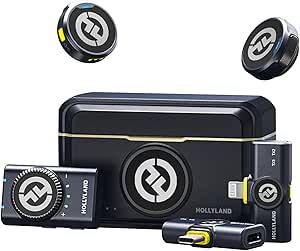 | Best Premium All-Rounder | Connectivity: 2.4 GHz | Connectors: 3.5 mm jack, Lightning, and USB Type-C | Audio format: 48 kHz/24-bit | VIEW LATEST PRICE | See Our Full Breakdown |
| NEEWER KM19 Mini Wireless Lavalier Microphone, USB-C, Black |  | Best Compact USB-C Kit | Connectivity: 2.4 GHz wireless | Connector: USB Type-C | Audio sampling: 48 kHz, 24-bit | VIEW LATEST PRICE | See Our Full Breakdown |
| TONOR UHF Wireless Microphone System with Bodypack, Lavalier, and Headset Mics |  | Best for a Single Presenter Using PA Gear | Connectivity: UHF wireless | Connector: 6.35 mm (1/4-inch) jack | Range: Up to 200 ft (60 m), line of sight | VIEW LATEST PRICE | See Our Full Breakdown |
| DJI Mic Mini (2 Transmitters + 1 Mobile Receiver) – Ultralight with Active Noise Canceling |  | Best for Lightweight DJI Setups | Transmitter weight: 10 g | Operating time: Up to 11.5 hours | Transmission range: Up to 300 m | VIEW LATEST PRICE | See Our Full Breakdown |
| Mini Mic Pro Wireless Lavalier Microphone for iPhone and Android | 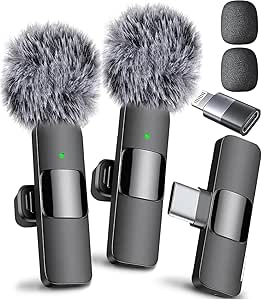 | Best for Simple Phone Recording | Connectors: Lightning and USB Type-C | Wireless frequency: 2.4 GHz | Battery life: Up to 6 hours per charge | VIEW LATEST PRICE | See Our Full Breakdown |
| DJI Mic 3 (2 Transmitters + 1 Receiver + Charging Case) Wireless Microphone | 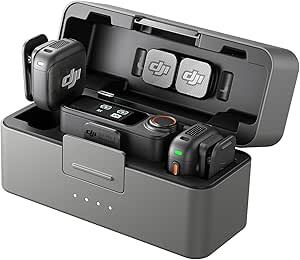 | Best Premium Recording Backup | Included items: 2 transmitters, 1 receiver, charging case, USB-C mobile adapter | Battery life: Up to 28 hours | Recording format: Dual-file 32-bit float internal recording | VIEW LATEST PRICE | See Our Full Breakdown |
| MAYBESTA Wireless Mini Lavalier Microphone, 2-Pack |  | Best for Two-Person Clips | Included microphones: 2 | Connectors: Lightning and USB Type-C | Frequency: 2.4 GHz | VIEW LATEST PRICE | See Our Full Breakdown |
| Wireless Lavalier Microphone for iPhone, Android, and PC |  | Best for Multi-Device Flexibility | Wireless connectivity: 2.4 GHz | Connectors and adapters: USB Type-C, Lightning, USB-A | Included microphones: 2 | VIEW LATEST PRICE | See Our Full Breakdown |
| TONOR Wireless Microphone System Handheld Mic Set with Headset and Lapel Mics |  | Best for Multi-Format PA Use | Microphone formats: Handheld, headset, and lavalier | Operating range: Up to 200 ft / 60 m | Channels: 20 listed | VIEW LATEST PRICE | See Our Full Breakdown |
| Hollyland LARK A2 (2 TX + 1 RX + Charging Case) Wireless Microphone with AI Auto-Limit |  | Best for Assisted Audio Control | Wireless technology: 2.4 GHz | Audio format: 48 kHz / 24-bit | Transmitters: 2 | VIEW LATEST PRICE | See Our Full Breakdown |
| DJI Mic Mini Wireless Microphone (2 Transmitters, 1 Receiver, Charging Case) | 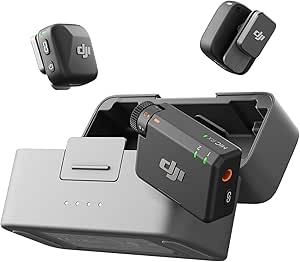 | Best for Long-Run Compact Recording | Transmitter weight: 10 g | Transmitters: 2 | Maximum transmission range: Up to 400 m | VIEW LATEST PRICE | See Our Full Breakdown |
| Hollyland Lark M2 Wireless Lavalier Microphone | 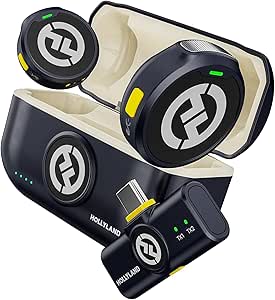 | Best Lightweight Compact Pick | Weight: 9 g | Wireless range: Up to 1,000 ft line of sight | Audio format: 48 kHz / 24-bit | VIEW LATEST PRICE | See Our Full Breakdown |
| Phenyx Pro Dual UHF Tunable Frequency Wireless Microphone System PTU-52-1H1B |  | Best for Tunable UHF Event Setups | Frequency range: 500–590 MHz | Tunable frequency groups: 30 | Channels: 2; up to 3 units can operate simultaneously | VIEW LATEST PRICE | See Our Full Breakdown |
| wireless lavalier microphone | Signal-to-noise ratio |
|---|---|
| Labstandard Dual Wireless Lava | — |
| TONOR UHF Wireless Microphone | — |
| Hollyland Lark M2 Wireless Lav | — |
| NEEWER KM19 Mini Wireless Lava | 81 dB |
| TONOR UHF Wireless Microphone | — |
| DJI Mic Mini | 70 dB |
| Mini Mic Pro Wireless Lavalier | — |
| DJI Mic 3 | — |
| MAYBESTA Wireless Mini Lavalie | 80 dB |
| Wireless Lavalier Microphone f | 65 dB |
| TONOR Wireless Microphone Syst | 60 dB |
| Hollyland LARK A2 | 68 dB |
| DJI Mic Mini Wireless Micropho | 70 dB |
| Hollyland Lark M2 Wireless Lav | 70 dB |
| Phenyx Pro Dual UHF Tunable Fr | 90 dB |
More Details on Our Top Picks
Labstandard Dual Wireless Lavalier Microphone for iPhone and USB-C Devices
Two transmitters and dual connector support make the Labstandard a practical pick for interviews where two people need to be mic’d and the recording phone may use Lightning or USB-C. Unlike the Hollyland Lark M2, which lists camera and computer connections as well, this set is framed mainly around phones and tablets. Noise reduction and a stated 0.008-second latency are aimed at clearer, closely synchronized phone recordings, while its roughly six-hour battery life suits shorter shoots. The main drawback is uncertainty: the supported-device details are inconsistent, and the battery requirements are not clearly explained despite the included-battery note. I’d choose it for a simple two-person mobile setup, not a production where connector and power details need to be fully documented.
Pros:- Includes two wireless microphones for recording two speakers
- Lists both Lightning and USB-C connectors
- Noise reduction and low stated latency support synchronized voice recording
- About six hours of battery life suits shorter recording sessions
Cons:- Supported-device details are inconsistent
- The included-battery information does not clearly explain battery requirements
- The listed connectivity is Bluetooth, which may leave the connection method unclear to buyers
Best for: Phone-based interviewers who need two microphones and may record on either Lightning or USB-C devices
Not ideal for: Creators who need clearly specified device compatibility, known battery requirements, or a receiver setup for cameras and audio gear
- Connectivity:Bluetooth
- Connectors:Lightning and USB Type-C
- Microphone type:Lavalier, mini
- Polar pattern:Omnidirectional
- Channels:2
- Battery life:About 6 hours
- Latency:0.008 seconds
- Compatibility:iPhone, iPad, and USB-C devices
Our verdict“Choose the Labstandard for a basic two-person phone recording setup if its unclear compatibility and power details fit your needs.”
TONOR UHF Wireless Microphone System with Headset and Lavalier Microphones
The TONOR TW632 is built for a different job from phone-first kits: two bodypacks, two lapel mics, and two headset mics let presenters choose how they wear the microphones, while its 1/4-inch output feeds compatible sound systems. Its 200-foot line-of-sight range and 15 selectable frequencies per bodypack suit a classroom, event, or small stage better than the compact NEEWER KM19, which connects through USB-C for mobile devices. The rechargeable receiver runs for six to eight hours, but each bodypack needs two AA batteries that are not included. This is also not a direct phone-mic alternative: buyers need compatible PA equipment and should expect to manage UHF frequency selection rather than plug into a mobile device.
Pros:- Includes two bodypacks plus both headset and lapel microphone options
- Offers up to 200 feet of line-of-sight range
- Receiver provides six to eight hours of use per charge
- Selectable frequencies and individual bodypack volume controls support two-person use
Cons:- Each bodypack requires two AA batteries, which are not included
- The 1/4-inch output requires compatible sound equipment
- Receiver takes two to three hours to charge
Best for: Presenters, instructors, and event hosts who need two hands-free microphones connected to a compatible PA system
Not ideal for: Mobile creators who record directly to a phone or buyers who want an all-in-one rechargeable transmitter-and-receiver kit
- Connectivity:UHF wireless
- Range:Up to 200 ft (60 m), line of sight
- Included microphones:2 headset microphones and 2 lapel microphones
- Transmitters:2 bodypacks
- Frequency options:15 per bodypack; 30 total channels
- Receiver usage time:6–8 hours
- Bodypack power:2 AA batteries each, not included
- Output connector:6.35 mm (1/4-inch) jack
Our verdict“Pick the TW632 for two presenters using a PA system, not for direct-to-phone lavalier recording.”
Hollyland Lark M2 Wireless Lavalier Microphone System with Charging Case
The Lark M2 is the most flexible option here for creators moving between phones, computers, and cameras: its listed connectors cover Lightning, USB-C, and 3.5 mm, while the set includes two transmitters and three receivers. Its 48 kHz/24-bit audio, switchable noise cancellation, and up-to-300-metre line-of-sight range give it more production flexibility than the phone-focused Labstandard. The microphones weigh just 9 g each, which helps keep a two-person setup unobtrusive. Battery claims need context, though: ten hours is listed per charge, while the 40-hour total applies to the camera-version charging case. Mono/stereo switching is also limited to the camera receiver connected through 3.5 mm. Those caveats matter if you expect every receiver to offer identical controls.
Pros:- Includes two transmitters and three receiver options for varied recording devices
- Supports Lightning, USB-C, and 3.5 mm connections
- Compact 9 g microphones and switchable noise cancellation suit mobile shoots
- Lists up to 300 m of line-of-sight transmission range
Cons:- The 40-hour total battery claim applies to the camera version with its charging case
- Mono/stereo switching is limited to the camera receiver connected by 3.5 mm
- Long stated range depends on line-of-sight conditions
Best for: Creators who record interviews across cameras, phones, and computers and want multiple receiver connection options
Not ideal for: Buyers who need mono/stereo switching on every receiver or who expect the 40-hour case figure to apply to every version
- Connectivity:2.4 GHz
- Connectors:3.5 mm jack, Lightning, and USB Type-C
- Audio format:48 kHz/24-bit
- Transmission range:Up to 300 m (1,000 ft), line of sight
- Battery life:Up to 10 hours per charge; up to 40 hours with camera-version charging case
- Microphone weight:9 g per microphone
- Frequency range:20 Hz–20 kHz
- Included:2 transmitters, 3 receivers, charging case
Our verdict“Choose the Lark M2 if you need a lightweight two-person kit that can connect across several device types.”
NEEWER KM19 Mini Wireless Lavalier Microphone, USB-C, Black
The KM19 makes a strong case for mobile creators who want two microphones without carrying a bulky receiver setup: it pairs two transmitters with a USB-C receiver and charging case, and the included OTG adapters add options for supported devices. Three noise-cancellation levels, mute control, and mono or stereo output give it more recording control than the simpler Labstandard, while its 48 kHz/24-bit capture and up-to-100-metre range suit interviews and short-form video. The tradeoff is a narrower compatibility story: it is not compatible with GoPro, and some Android devices need OTG activation. App interaction is Android-only, too. I’d favor the KM19 over the Lark M2 when a compact USB-C workflow is the priority, but not when broad receiver or camera compatibility matters most.
Pros:- Includes two transmitters, a USB-C receiver, charging case, and OTG adapters
- Offers three noise-cancellation levels and mute control
- Supports stereo or mono output
- Lists up to 30 hours of total battery life with the case
Cons:- Not compatible with GoPro
- Some Android devices require OTG activation
- App interaction is available on Android only
Best for: USB-C phone and laptop creators recording two people who want a compact kit with mute and noise-control options
Not ideal for: GoPro users, Lightning-device owners, or Android users who do not want to configure OTG access
- Connectivity:2.4 GHz wireless
- Connector:USB Type-C
- Audio sampling:48 kHz, 24-bit
- Microphone:Omnidirectional lavalier
- Wireless range:Up to 100 m (328 ft)
- Battery life:Up to 6 hours per transmitter; up to 30 hours with charging case
- Signal-to-noise ratio:81 dB
- Included components:1 receiver, 2 transmitters, charging case, 2 OTG adapters, charging cable, 2 windscreens, pouch
Our verdict“Choose the KM19 for a feature-rich, compact USB-C setup, provided your device supports its connection requirements.”
TONOR UHF Wireless Microphone System with Bodypack, Lavalier, and Headset Mics
Unlike the two-bodypack TONOR TW632, this system is aimed at one presenter: a single bodypack works with either the included lavalier or headset mic, giving you a choice between a discreet clip-on and a more secure speaking position. Its 200-foot line-of-sight range, 15 adjustable frequencies, and metal enclosure suit presentations where the receiver feeds an amplifier, speaker, mixer, or PA system through a 1/4-inch jack. The receiver runs six to eight hours per charge, but the bodypack still needs two AA batteries, and the receiver takes two to three hours to recharge. With no Bluetooth or direct phone connection, it is less suited to vlogging than the USB-C NEEWER KM19. Choose this TONOR for spoken presentations, not mobile recording.
Pros:- Includes both lavalier and headset microphones for one bodypack
- Offers up to 200 feet of line-of-sight range
- Receiver provides six to eight hours of use per charge
- Fifteen adjustable frequency options help manage interference
Cons:- Bodypack requires two AA batteries, which are not included
- Needs a compatible amplifier, speaker, PA system, or mixer
- Does not connect directly by Bluetooth or to soundbars and TVs
Best for: Solo presenters, instructors, or event speakers who need a wearable microphone for a compatible PA or mixer
Not ideal for: Phone and computer creators, or anyone needing two separately mic’d speakers from one kit
- Connectivity:UHF wireless
- Connector:6.35 mm (1/4-inch) jack
- Range:Up to 200 ft (60 m), line of sight
- Microphone types:Lavalier and headset
- Frequency options:15 adjustable frequencies
- Receiver battery life:6–8 hours
- Bodypack power:2 AA batteries, not included
- Compatible devices:Amplifier, speaker, PA system, mixer
Our verdict“Pick this TONOR for one presenter using PA equipment who wants both lavalier and headset wearing options.”
DJI Mic Mini (2 Transmitters + 1 Mobile Receiver) – Ultralight with Active Noise Canceling
At 10 g per transmitter, the DJI Mic Mini is the pick here for creators who want a discreet clip-on mic without a bulky pack. Its two noise-cancellation levels give you a way to temper background sound, while the stated 300 m range offers room to move that the Wireless Lavalier Microphone for iPhone, Android, and PC, rated for up to 20 m, does not match on paper. Up to 11.5 hours of operation also gives it more headroom than the six-hour Mini Mic Pro. The tradeoff is that this kit centers on a USB-C mobile receiver and DJI device integration, so buyers should check their connection needs before choosing it. It is not waterproof, and the listed magnetic components may be unsuitable near some medical implants or sensitive storage media.
Pros:- Very light 10 g transmitter for discreet wear
- Up to 11.5 hours of operation
- Stated transmission range of up to 300 m
- Two selectable noise-cancellation levels
Cons:- Not waterproof, so moisture exposure can damage it
- USB-C mobile receiver may not suit Lightning-only devices
- Magnets may pose concerns near some medical implants or storage media
Best for: DJI Osmo users and mobile creators who prioritize a light transmitter, long operating time, and more freedom to record at a distance.
Not ideal for: Creators who need a Lightning-first setup, waterproof gear, or a system with clearly specified internal recording safeguards.
- Transmitter weight:10 g
- Operating time:Up to 11.5 hours
- Transmission range:Up to 300 m
- Noise cancellation:Two selectable levels
- Connector:USB Type-C
- Polar pattern:Omnidirectional
- Signal-to-noise ratio:70 dB
- Dimensions:1.06 x 1.54 x 0.35 inches
Our verdict“Choose the DJI Mic Mini if light wear, long runtime, and DJI integration matter more than waterproofing or broad connector flexibility.”
Mini Mic Pro Wireless Lavalier Microphone for iPhone and Android
The Mini Mic Pro suits creators who want to start recording without app setup or Bluetooth pairing. Its receiver comes with USB-C and Lightning adapters, making it more flexible across common phones than the DJI Mic Mini’s USB-C mobile receiver. The kit also includes two lavalier microphones and both foam and deadcat tips, a useful bundle for interviews or outdoor clips. That simplicity comes with limits: battery life tops out at six hours, well below the DJI Mic Mini’s stated 11.5 hours, and the product data does not specify a wireless range. Pass-through device charging can help when a phone battery is running low, but it does not extend the mic’s own runtime. I’d favor it for straightforward mobile recording, not long shoots or buyers who need detailed range and endurance figures.
Pros:- USB-C and Lightning adapters are included
- Plug-and-play connection without app or Bluetooth setup
- Includes two microphones and foam and deadcat wind tips
- Pass-through charging supports the connected device
Cons:- Up to six hours of battery life per charge
- Wireless range is not specified
- Adapter compatibility may not cover every device
Best for: Phone-first creators who want a no-app setup, both Lightning and USB-C adapters, and included wind protection for occasional interviews or short videos.
Not ideal for: People recording long sessions or working far from the phone, since runtime is limited to six hours and range is not specified.
- Connectors:Lightning and USB Type-C
- Wireless frequency:2.4 GHz
- Battery life:Up to 6 hours per charge
- Microphone pattern:Omnidirectional
- Included microphones:2
- Included wind protection:2 foam tips and 2 deadcat tips
- Dimensions:3 x 0.5 x 0.25 inches
- Warranty:90-day refund guarantee and 6-month warranty
Our verdict“Pick the Mini Mic Pro for simple, adapter-friendly phone recording, but choose the DJI Mic Mini for longer stated runtime and range.”
DJI Mic 3 (2 Transmitters + 1 Receiver + Charging Case) Wireless Microphone
The DJI Mic 3 is the most recording-focused option in this group. Its standout advantage is internal 32-bit float recording, which gives creators a backup file on the transmitters rather than relying solely on a clean wireless link to the camera or phone. That makes it a stronger fit for interviews and travel work where a missed take is costly. The up to 28 hours of use and charging case also outlast the DJI Mic Mini’s stated 11.5 hours, while dual-band anti-interference transmission and adaptive gain control target busy recording environments. The added capability brings more ecosystem dependence: buyers should check compatibility with their devices, and this is more system than someone seeking a basic plug-and-play phone mic needs. Its listed pairing capacity also makes it more expandable than the simpler two-mic kits.
Pros:- Internal dual-file 32-bit float recording provides a backup
- Up to 28 hours of use
- Dual-band transmission is designed to resist interference
- Can pair with up to 4 transmitters and 8 receivers
Cons:- Full functionality depends on compatible DJI ecosystem devices
- More features and system components than basic mobile recording requires
Best for: Video creators and interviewers who want on-device backup recording, extended use with a charging case, and room to connect more transmitters.
Not ideal for: Casual phone users who want the simplest, least involved setup or do not need internal recordings and DJI ecosystem features.
- Included items:2 transmitters, 1 receiver, charging case, USB-C mobile adapter
- Battery life:Up to 28 hours
- Recording format:Dual-file 32-bit float internal recording
- Transmission:Dual-band anti-interference
- Maximum transmitter pairing:4 transmitters
- Maximum receiver pairing:8 receivers
- Form factor:Pocket-sized wireless system
Our verdict“Choose the DJI Mic 3 when backup recording and extended, expandable production capability matter more than a bare-bones phone setup.”
MAYBESTA Wireless Mini Lavalier Microphone, 2-Pack
For creators who regularly record two people, MAYBESTA’s two-microphone set offers a straightforward way to capture both voices without buying a second mic kit. Its plug-and-play design and Lightning and USB-C connector options make it a practical alternative to the DJI Mic Mini, whose listed mobile receiver is USB-C. MAYBESTA also includes windscreens and a noise-reduction chip, giving it useful basics for outdoor or casual interview recording. The limitation is how much the product data leaves unanswered: it gives no battery runtime or wireless range, so I would not choose it for a shoot where endurance or distance needs to be predictable. Its listed single channel is another reason to confirm that the intended two-person recording workflow is supported by the connected device.
Pros:- Includes two wireless lavalier microphones
- Lightning and USB Type-C connectors support a range of mobile devices
- Plug-and-play setup without an app
- Noise-reduction chip and windscreens are included
Cons:- Battery runtime is not specified
- Wireless range is not specified
- Listed channel count is one, so buyers should verify two-person recording behavior
Best for: Couples, co-hosts, and casual interviewers who need two clip-on microphones with common phone connectors and included wind protection.
Not ideal for: Creators planning long shoots or recording at a distance who need confirmed runtime, range, or a clearly documented multichannel workflow.
- Included microphones:2
- Connectors:Lightning and USB Type-C
- Frequency:2.4 GHz
- Polar pattern:Omnidirectional
- Signal-to-noise ratio:80 dB
- Features:Mute function, noise reduction, plug and play
- Enclosure material:ABS
- Battery runtime:Not specified
Our verdict“MAYBESTA is a sensible two-person starter set if connector flexibility matters more than documented runtime and range.”
Wireless Lavalier Microphone for iPhone, Android, and PC
This two-mic kit is a flexible choice for creators moving between phones and computers: it includes USB-C, Lightning, and USB-A adapters, covering more connection types than the USB-C-only mobile receiver in the DJI Mic Mini listing. Automatic pairing keeps setup uncomplicated, and the stated 20 m range gives buyers a defined working distance that the MAYBESTA set does not provide. Each mic runs for up to six hours, which suits shorter sessions but falls short of the DJI Mic Mini’s 11.5-hour figure. The included windproof and sponge covers help tailor the setup to different recording conditions, though the listed signal-to-noise ratio is 65 dB. USB-C users may also need to enable OTG, adding a device-setting step that a true plug-and-play workflow might avoid.
Pros:- Includes USB-C, Lightning, and USB-A adapters
- Automatic pairing simplifies startup
- Stated wireless range of up to 20 m
- Two microphones and multiple wind covers are included
Cons:- Each microphone offers up to six hours of battery life
- USB-C devices may require OTG to be enabled
- Signal-to-noise ratio is listed as 65 dB
Best for: Creators who record on a mix of iPhone, Android, and computer devices and want two mics with a stated working range.
Not ideal for: People recording all-day events or users who want a consistently effortless USB-C setup without checking OTG support.
- Wireless connectivity:2.4 GHz
- Connectors and adapters:USB Type-C, Lightning, USB-A
- Included microphones:2
- Wireless range:Up to 20 m
- Battery life:Up to 6 hours per microphone
- Polar pattern:Omnidirectional
- Signal-to-noise ratio:65 dB
- Weight:40 g
Our verdict“Choose this kit for broad device connections and a documented 20 m range, but look to the DJI Mic Mini for longer stated operation.”
TONOR Wireless Microphone System Handheld Mic Set with Headset and Lapel Mics
I’d choose the TONOR TW362 when a lavalier is only one part of a larger event microphone setup. Its receiver works with mixers, karaoke machines, amplifiers, and powered speakers, while the package also supplies two lavaliers, two headsets, and two handheld mics. That makes it more adaptable for a classroom or ceremony than the compact Hollyland LARK A2, which is built around phone, tablet, and computer recording. The stated 200-foot range suits presenters who need room to move, and multiple channels give operators options when managing several sets. The tradeoff is a less streamlined recording workflow: this is a receiver-based PA system, not a pocketable USB-C kit. It also runs on AA batteries, which are not included, so I’d skip it for creators seeking a rechargeable mobile setup.
Pros:- Includes lavalier, headset, and handheld microphone options for different presenters and event formats.
- Connects to mixers, karaoke machines, amplifiers, and powered speakers.
- Listed 200-foot operating range gives presenters room to move around a venue.
- Cardioid capsule and 60 dB signal-to-noise ratio are suited to reducing some surrounding sound.
Cons:- Microphones and bodypacks require AA batteries, which are not included.
- Receiver-based PA setup is less convenient for direct recording to phones and computers than the Hollyland LARK A2.
- The large multi-mic kit is less portable than compact lavalier systems with charging cases.
Best for: Event organizers, teachers, and presenters who need a lavalier alongside headset and handheld microphones for a PA or mixer.
Not ideal for: Mobile video creators who want a compact USB-C receiver, a charging case, or rechargeable transmitters.
- Microphone formats:Handheld, headset, and lavalier
- Operating range:Up to 200 ft / 60 m
- Channels:20 listed
- Signal-to-noise ratio:60 dB
- Polar pattern:Unidirectional (cardioid)
- Power:AA batteries; not included
- Connector:6.35 mm (1/4-inch) aux
- Package microphones:2 handheld microphones, 2 headset microphones, and 2 lavalier microphones
Our verdict“Choose the TONOR if you need a flexible lavalier-and-PA kit for events, but pick a compact USB-C system for mobile recording.”
Hollyland LARK A2 (2 TX + 1 RX + Charging Case) Wireless Microphone with AI Auto-Limit
The Hollyland LARK A2 is the pick here for creators who want automatic safeguards as well as wireless lavalier convenience. Its AI auto-limit is intended to keep sudden loud sounds from overwhelming a recording, while three noise-cancellation levels let users adjust how much ambient sound to suppress. That makes it more hands-off than the DJI Mic Mini, whose listed appeal centers on simpler noise-cancellation levels and long case-supported runtime. The A2 also records at 48 kHz/24-bit and includes two transmitters, making it useful for two-person shoots. Its lightweight clips and stated long range support flexible placement, but the published battery information is awkward: it lists C batteries while also describing charging and a case. I’d verify the exact power arrangement before buying, especially for travel or long recording days.
Pros:- AI auto-limit is designed to reduce clipping from sudden loud sounds.
- Three noise-cancellation levels offer more control over how much background sound is reduced.
- 48 kHz/24-bit recording and two transmitters suit interviews and two-person content.
- Stated wireless range reaches up to 200 m / 650 ft.
Cons:- Product data gives conflicting signals about replaceable batteries, charging, and the charging case, so power details should be confirmed.
- A 2.4 GHz wireless link can be affected by the recording environment and competing wireless devices.
- The Hollyland Lark M2 offers a simpler published battery-life figure of up to 30 hours with its case.
Best for: Two-person video creators who want adjustable noise reduction and automatic level control to help manage changing speech volume.
Not ideal for: Buyers who prioritize clearly specified, straightforward rechargeable power or need a receiver designed for a particular camera connection.
- Wireless technology:2.4 GHz
- Audio format:48 kHz / 24-bit
- Transmitters:2
- Noise cancellation:Three adjustable AI-powered levels
- Wireless range:Up to 200 m / 650 ft
- Transmitter weight:8.5 g
- Signal-to-noise ratio:68 dB
- Connector:USB Type-C
- Listed battery life:Up to 7 hours per transmitter; up to 9 hours with power saving; case extends total to 42 hours
Our verdict“Pick the LARK A2 for two-person recordings where automatic level control and adjustable noise reduction matter more than simple power specifications.”
DJI Mic Mini Wireless Microphone (2 Transmitters, 1 Receiver, Charging Case)
I’d put the DJI Mic Mini on the shortlist for creators who want a small two-person lavalier kit that can stay ready through long production days. The case-backed runtime is listed at up to 48 hours, exceeding the Hollyland Lark M2’s stated 30 hours, while the 10 g transmitters remain light enough for discreet clothing placement. Two noise-cancellation levels and automatic audio limiting offer useful protection when voices shift in volume. DJI owners also get a direct connection option through OsmoAudio on select devices. The long stated range is a line-of-sight figure, not a promise of consistent performance through walls or crowds. It is also not waterproof, and its magnets may interfere with some devices, so I’d choose the Lark M2 for a simpler compact setup if those caveats are a concern.
Pros:- Charging case provides up to 48 hours of stated battery life.
- Two transmitters support interviews and other two-person recordings.
- Automatic limiting and two noise-cancellation levels help manage variable speech and surroundings.
- OsmoAudio supports direct connection to select DJI devices.
Cons:- Not waterproof, limiting confidence in wet or harsh outdoor conditions.
- Magnets may interfere with some nearby devices.
- The 400 m maximum range should not be treated as typical performance in obstructed environments.
Best for: Two-person creators and DJI device owners who need lightweight transmitters and long case-supported runtime for extended shoots.
Not ideal for: Outdoor users who need waterproofing, or buyers who keep magnet-sensitive devices close to the transmitters.
- Transmitter weight:10 g
- Transmitters:2
- Maximum transmission range:Up to 400 m
- Battery life with case:Up to 48 hours
- Sampling rate:48 kHz
- Maximum SPL:120 dB
- Signal-to-noise ratio:70 dB
- Frequency range:20 Hz–20,000 Hz
- Connectivity:Bluetooth, DJI OsmoAudio, and USB Type-C
Our verdict“Choose the DJI Mic Mini for a lightweight two-person kit with long case runtime, provided you can work around its lack of waterproofing and magnet caveat.”
Hollyland Lark M2 Wireless Lavalier Microphone
The Hollyland Lark M2 makes the most sense when a small, light transmitter matters more than elaborate controls. At 9 g, it is lighter than the DJI Mic Mini’s 10 g transmitter, and its listed 48 kHz/24-bit audio suits creators who want a compact system without giving up a detailed recording format. A charging case supplies up to 30 hours of total use, while adjustable noise cancellation lets users adapt to different surroundings. Its 1,000-foot wireless range is specified for line of sight, so I would not treat that number as a guarantee in crowded venues or through walls. The stated 10-hour per-charge runtime also depends on noise cancellation being off. Compared with the longer-running DJI Mic Mini, the Lark M2 trades some case runtime for an especially light form and a straightforward USB-C connection.
Pros:- 9 g transmitter keeps clothing load low and helps maintain a discreet setup.
- 48 kHz/24-bit audio format supports detailed recordings.
- Charging case provides up to 30 hours of total use.
- Adjustable noise cancellation and USB-C connectivity support flexible, simple recording.
Cons:- The 1,000 ft range is specified for line-of-sight conditions.
- The up-to-10-hour continuous runtime is stated with noise cancellation off.
- The DJI Mic Mini lists longer total battery life with its case.
Best for: Solo creators and interviewers who want a very light lavalier transmitter, USB-C connectivity, and a compact charging-case workflow.
Not ideal for: Buyers who need reliable long-distance use through obstructions or full stated battery life with noise cancellation active.
- Weight:9 g
- Wireless range:Up to 1,000 ft line of sight
- Audio format:48 kHz / 24-bit
- Signal-to-noise ratio:70 dB
- Maximum sound pressure level:115 dB
- Battery life:Up to 10 hours per charge; up to 30 hours with charging case
- Connectivity:USB-C and wireless
- Polar pattern:Omnidirectional
- Channels:2
Our verdict“Choose the Lark M2 if low transmitter weight and a compact USB-C kit matter more than the DJI Mic Mini’s longer stated case runtime.”
Phenyx Pro Dual UHF Tunable Frequency Wireless Microphone System PTU-52-1H1B
The Phenyx Pro PTU-52-1H1B is the strongest fit here for a fixed event or PA setup where frequency selection and durable hardware matter more than pocket portability. Its 30 tunable UHF frequency groups give operators choices for coordinating systems, and the receiver offers XLR and 6.35 mm outputs for connecting to common audio equipment. The bundle includes a handheld mic plus a bodypack for its headset or lavalier, making it more versatile on stage than the Hollyland Lark M2, which is designed around compact personal recording. There are limits: despite the many frequency groups, this system has only two channels and supports up to three units simultaneously according to the supplied data. At 2.5 kg, it is also far less travel-friendly than either compact Hollyland or DJI kit, and it relies on AA batteries.
Pros:- 30 tunable UHF frequency groups offer channel choices for managing wireless interference.
- Includes handheld, headset, and lavalier microphone options.
- XLR and 6.35 mm outputs suit mixers and PA equipment.
- Metal construction is suited to regular event use.
Cons:- Only two channels are available, despite the 30 frequency groups.
- The 2.5 kg listed weight makes the system cumbersome for portable recording.
- AA batteries are required for extended use and may need replacement.
Best for: Churches, schools, and event operators who need a tunable UHF receiver with lavalier, headset, and handheld options for a PA system.
Not ideal for: Traveling creators who need a lightweight phone or camera kit, or operators requiring more than two simultaneous microphone channels.
- Frequency range:500–590 MHz
- Tunable frequency groups:30
- Channels:2; up to 3 units can operate simultaneously
- Operating distance:Up to 200 ft line of sight
- Power:4 AA batteries, included
- Weight:2.5 kg
- Connector types:6.35 mm jack, XLR, and UHF
- Signal-to-noise ratio:90 dB
- Included microphone formats:Handheld, headset, and lavalier
Our verdict“Choose the Phenyx Pro for a tunable, multi-format UHF PA kit, not for a lightweight creator-focused lavalier setup.”

How We Picked
I compared the 15 options by how well their designs match common lavalier jobs: recording to a phone, filming interviews, capturing speech on camera, and providing wireless audio for presentations. The main criteria were receiver and connector compatibility, number of transmitters, microphone formats, noise-control features, portability, and the practicality of the included kit. I also separated compact mobile systems from UHF sets with bodypack, headset, or handheld options, since they serve different recording environments and are not direct substitutes.
The ranking gives priority to versatility for typical video and voice recording, then weighs ease of setup and the usefulness of the supplied components. Models with a clear use case, such as a small phone kit or a flexible UHF system, can rank well for that role without being the best fit for everyone. Product names and listed configurations are used to distinguish similar variants; check the exact connector and package contents before buying, especially where a product appears in more than one configuration.
Factors to Consider When Choosing Wireless Lavalier Microphones
Before choosing a wireless lavalier microphone, match the whole signal path to the way you record—not just the transmitter clipped to a shirt. These factors can help prevent compatibility surprises and clarify when a simple phone kit is enough and when a more adaptable system makes sense.
Match the receiver to your recording device
Start with the device that will capture the audio: a USB-C phone, an iPhone with a different connector, a camera, or a computer may each need a different receiver or adapter. A microphone that pairs easily with one phone is not automatically ready for a camera or laptop. Check whether the kit includes the receiver you need, rather than assuming every product name covers the same package. Adapters can help, but they may add bulk and create another connection that can be unplugged or misconfigured. If you record to more than one device, favor a setup whose included outputs or supported connections match those devices. This compatibility check often matters more than a small difference in transmitter features.
Decide how many people need a mic
A single transmitter is often enough for solo narration, while two transmitters can simplify interviews or paired presentations. Yet transmitter count alone does not tell you how the receiver handles two voices or what your recording app will capture. Check that the complete kit lists a receiver and supports the recording workflow you want. For interviews, think about how each mic will be clipped and whether both speakers can remain within a reliable wireless range. A two-person kit also means more batteries to manage and more equipment to keep track of. If you mainly record alone, a second transmitter may add little practical value.
Choose phone-first or UHF for the setting
Compact phone-oriented systems are designed around quick mobile recording, whereas UHF systems with bodypacks, headset mics, or handheld mics are better aligned with presentations and live audio setups. Neither format is universally better; the useful choice depends on where the receiver connects and how the speaker moves. In crowded or signal-heavy environments, wireless performance can depend on placement, obstructions, and competing equipment, so no format should be treated as immune to dropouts. UHF kits can bring more microphone-format flexibility, but their separate components make setup and packing less simple. Phone-first kits are easier to carry, yet may not integrate as naturally with venue sound equipment. Match the system to the environment where you will actually record.
Treat noise reduction as one part of sound quality
Noise-control features can make speech more intelligible when there is steady background sound, but they cannot repair every recording problem. Wind, clothing rustle, room echo, and a mic placed too far from the speaker each need different fixes. A noise-canceling mode may also change the character of a voice, so listen to a short sample before relying on it for an important recording. Good placement—close to the speaker and away from fabric friction—often makes a greater difference than a processing label. For outdoor work, plan for wind protection and a quiet monitoring check where possible. Pick noise tools for the conditions you face, not as a substitute for mic placement.
Balance portability against the controls and kit you need
Small transmitters and charging cases are convenient for creators who travel light, but a compact kit may offer fewer physical controls or microphone options than a larger system. Look at the complete package: receiver, charging case, clips, bodypack, headset, and any adapters can matter more than a headline feature. A case can make storage and charging easier, though it also adds something to carry and keep charged. For frequent shoots, simple setup and clear status indicators can save time between takes. For fixed presentations, a larger kit may be a reasonable trade for headset or handheld choices. Avoid choosing on transmitter size alone; consider the entire recording routine.
Pay for versatility only when your work uses it
More features make sense when they solve a repeat problem, such as recording two speakers, switching between phone and camera, or using a headset for a presentation. If you only capture short solo clips on one phone, a straightforward compatible kit may be easier to operate and maintain. Check the exact model and configuration before comparing listings, since similar product names can refer to different receiver or case bundles. Think about ongoing needs too: battery charging, spare accessories, and how easily the system can be packed between shoots. A premium or more elaborate system is most useful when its added flexibility replaces gear you would otherwise need. Choose the simplest setup that covers your recording tasks reliably.
Frequently Asked Questions
Can I use a wireless lavalier microphone made for a phone with a camera or laptop?
Sometimes, but the transmitter and receiver connection determines compatibility. A phone-oriented USB-C or iPhone receiver may not connect directly to a camera’s audio input, and a computer may handle external audio differently from a phone. Check the exact kit contents and the recording device’s input before buying. An adapter can solve some connection gaps, but it does not guarantee that the device will recognize the microphone correctly. If you plan to switch devices often, choose a setup with a clearly supported connection path for each one.
Is a two-transmitter kit worth choosing if I usually record alone?
It can be useful if interviews, guest videos, or paired presentations are part of your plans, since you will not need to add a second mic later. For solo work, the extra transmitter may remain unused and add another item to charge, store, and keep track of. Consider whether the receiver included in the package supports the two-person recording workflow you want, rather than judging by transmitter count alone. A smaller single-person setup may be easier to carry and set up. Choose two transmitters for a real second-speaker need, not just because the kit sounds more capable.
Should I choose a compact mobile kit or a UHF system for presentations?
A compact mobile kit is generally simpler when you record directly to a phone, while UHF systems with bodypacks, headset mics, or handheld options are aimed at more varied presentation and live-sound setups. The deciding question is how the receiver will connect to the sound equipment at your venue. A UHF system may offer more microphone-format flexibility, but it also involves more pieces and setup steps. For quick social video or mobile interviews, that added complexity may not help. For a speaker who needs a headset or handheld mic, it may be a better match than a phone-first kit.
Will active noise canceling remove wind and clothing noise?
No single noise-control feature can be expected to remove every unwanted sound. Wind can overwhelm a mic outdoors, while a loose clip or fabric rubbing against the capsule can create noise that processing may not clean up naturally. Place the mic close to the speaker, keep it clear of moving fabric, and use suitable wind protection when recording outside. Noise reduction is most useful as one layer of help for some background sounds, not a replacement for careful placement. Record a short sample in the actual setting before relying on the result.
What should I check before buying a microphone for both an iPhone and an Android phone?
Check the exact connectors and receiver configuration for both phones, including the connection type each model uses. Product titles can group several versions together, and a kit intended for one phone connection may not include what the other requires. Confirm that the receiver is listed as compatible with your devices and that your recording app can accept external microphone audio. If an adapter is needed, verify that it supports audio input rather than assuming any charging adapter will work. When cross-device recording is a regular task, favor a kit with a clearly documented connection path for each phone.
Conclusion
For most mobile creators, I would start with the DJI Mic Mini (2 Transmitters + 1 Mobile Receiver) as the best overall pick in this lineup, especially when active noise canceling and two-person recording are useful. For a compact creator setup, compare the Hollyland Lark M2 and LARK A2; for a more feature-rich premium direction, look at the DJI Mic 3 and confirm that its receiver configuration suits your gear. Buyers seeking a value-focused, straightforward phone kit can compare the Mini Mic Pro, MAYBESTA 2-Pack, and other phone-oriented options against their device connectors and included receivers. Beginners should favor a kit that connects directly to their phone and has only the controls they need, rather than buying extra capability they will not use. For presentations or live sound requiring headset, bodypack, or handheld choices, the TONOR UHF systems and Phenyx Pro PTU-52-1H1B are the more relevant options. Pick by recording device and setting first; that will narrow the field faster than comparing feature lists alone.
Fall Picks
fall essentials
As an affiliate, we earn on qualifying purchases.