
The best wireless DJ headphones overall in this roundup are the AlphaTheta HDJ-F10-TX, whose included SonicLink transmitter is aimed at low-latency monitoring. The AIAIAI TMA-2 DJ Wireless is a modular alternative, while the OneOdio Studio Max 1 stands out for buyers who want both wireless and wired use. The main tradeoff is that Bluetooth convenience does not automatically suit cueing: connection latency, wired fallback, fit, and controls matter more in a DJ booth than they do for casual listening. Some picks are better suited to wireless monitoring, while others make more sense as versatile headphones that can also serve a DJ setup. Read on for the full comparison and help choosing the right kind of wireless DJ headphones for your workflow.

Get audio and creator gear delivered free — and shop member deals
- Fast, free delivery on millions of items
- Access to Prime Big Deal Days deals on October 6–7
- Prime Video, Amazon Music and more included
Complete the kit


Key Takeaways
- The HDJ-F10-TX has the clearest DJ-first proposition: its bundled SonicLink transmitter targets low-latency wireless monitoring, unlike models centered on Bluetooth versatility.
- The HDJ-F10 and HDJ-F10-TX are not interchangeable: the TX bundle includes a transmitter, so buyers should compare the bundle contents with their existing setup before choosing.
- Several picks are wireless-capable studio or everyday headphones rather than dedicated wireless monitoring systems: check the connection method and intended use before relying on them for beatmatching.
- Wired backup is a practical divider across the lineup: it can keep a session going when battery or wireless performance becomes a concern, but cable support and included accessories vary by model.
- The OneOdio choices and PUPGSIS option emphasize different combinations of connectivity and accessibility: prioritize the exact features you need rather than assuming a familiar brand or wireless label guarantees booth suitability.
| AlphaTheta HDJ-F10-TX Wireless DJ Headphones with SonicLink Transmitter |  | Best for Low-Latency Wireless DJ Monitoring | Included transmitter: HP-TX01 | Wireless monitoring: SonicLink, 9 ms latency | Connectivity: SonicLink, Bluetooth, wired | VIEW LATEST PRICE | See Our Full Breakdown |
| AIAIAI TMA-2 DJ Wireless Headphones, Black |  | Best for Modular Wireless DJ Setups | Wireless links: W+ Link and Bluetooth | Bluetooth version: 5.3 | Bluetooth range: 10 meters | VIEW LATEST PRICE | See Our Full Breakdown |
| OneOdio A70 Bluetooth Over-Ear DJ Studio Headphones, Black | 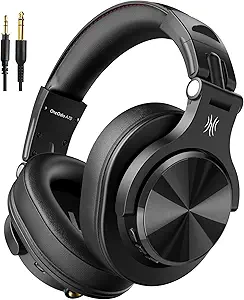 | Best Value for Wired-and-Wireless Flexibility | Connectivity: Bluetooth and wired | Wireless playtime: Up to 72 hours | Drivers: 40 mm neodymium | VIEW LATEST PRICE | See Our Full Breakdown |
| OneOdio Studio Max 1 Wireless and Wired DJ Studio Headphones |  | Best for Long Sessions and Feature-Rich Connectivity | Connectivity: Bluetooth 5.3, low-latency transmitter, 3.5 mm and 6.35 mm wired | Transmitter latency: 20 ms | Battery life: Up to 120 hours in Bluetooth mode; up to 50 hours with dongle | VIEW LATEST PRICE | See Our Full Breakdown |
| Audio-Technica ATH-M50xBT2 Wireless Headphones, Black |  | Best for Studio Listening and Everyday Bluetooth Use | Drivers: 45 mm | Amplifier: Dedicated amplifier | Battery life: Up to 50 hours | VIEW LATEST PRICE | See Our Full Breakdown |
| AlphaTheta HDJ-F10 Wireless DJ Headphones with SonicLink and Noise Cancelling |  | Best for Low-Latency DJ Monitoring | Driver: 40 mm dynamic PEEK | Connectivity: SonicLink, Bluetooth, wired | SonicLink latency: 9 ms | VIEW LATEST PRICE | See Our Full Breakdown |
| PUPGSIS 2.4GHz Wireless DJ Headphones with Bluetooth and Wired Connectivity |  | Best for Flexible Connections and Long Bluetooth Sessions | Wireless connections: 2.4GHz and Bluetooth 5.3 | Wired connection: AUX | 2.4GHz latency: 20 ms | VIEW LATEST PRICE | See Our Full Breakdown |
| OneOdio Studio Max 2 Wireless DJ Headphones |  | Best for Long Runtime and Multi-Use Listening | Latency: 9 ms | Audio codec: LDAC | Frequency response: 20 Hz–40 kHz | VIEW LATEST PRICE | See Our Full Breakdown |
| wireless DJ headphone | Battery life | Connectivity | Drivers |
|---|---|---|---|
| AlphaTheta HDJ-F10-TX Wireless | Up to 9 hours with SonicLink; up to 30 hours with Bluetooth | SonicLink, Bluetooth, wired | 40 mm PEEK dynamic |
| AIAIAI TMA-2 DJ Wireless Headp | More than 25 hours | — | 40 mm |
| OneOdio A70 Bluetooth Over-Ear | — | Bluetooth and wired | 40 mm neodymium |
| OneOdio Studio Max 1 Wireless | Up to 120 hours in Bluetooth mode; up to 50 hours with dongle | Bluetooth 5.3, low-latency transmitter, 3.5 mm and 6.35 mm wired | 50 mm |
| Audio-Technica ATH-M50xBT2 Wir | Up to 50 hours | — | 45 mm |
| AlphaTheta HDJ-F10 Wireless DJ | Up to 9 hours with SonicLink; up to 30 hours with Bluetooth | SonicLink, Bluetooth, wired | — |
| PUPGSIS 2.4GHz Wireless DJ Hea | Up to 60 hours in Bluetooth mode; up to 30 hours in 2.4GHz mode | — | — |
| OneOdio Studio Max 2 Wireless | Up to 120 hours | 2.4GHz wireless, Bluetooth 6.0, wired | — |
More Details on Our Top Picks
AlphaTheta HDJ-F10-TX Wireless DJ Headphones with SonicLink Transmitter
The HDJ-F10-TX is the clearest choice here when your priority is monitoring a DJ mix without a cable tether: its included HP-TX01 transmitter sends audio over SonicLink with a stated 9 ms latency. That makes it more directly geared to live mixing than the OneOdio A70, whose description focuses on Bluetooth playback and wired use rather than a dedicated low-latency DJ link. Bluetooth and wired listening also give this AlphaTheta more flexibility away from the booth, while active noise cancellation and transparency mode help adapt to different environments. The tradeoff is stamina and weight: SonicLink runs for up to 9 hours, and the listed 2.3-pound weight may feel cumbersome for travel. I’d choose it for wireless booth monitoring, not as the lightest everyday option.
Pros:- Included HP-TX01 transmitter enables SonicLink monitoring with 9 ms latency.
- SonicLink, Bluetooth, and wired connections cover DJ monitoring and general listening.
- Active noise cancellation and transparency mode offer different ways to manage surrounding sound.
- Shock-tested to MIL-STD-810H.
Cons:- SonicLink battery life is up to 9 hours, shorter than the stated Bluetooth runtime.
- The listed 2.3-pound weight is a substantial portability tradeoff.
Best for: DJs who want a dedicated low-latency wireless monitoring system with a transmitter included and noise-control modes for travel.
Not ideal for: DJs prioritizing long wireless sets or lightweight headphones; SonicLink battery life is up to 9 hours and the listed weight is 2.3 pounds.
- Included transmitter:HP-TX01
- Wireless monitoring:SonicLink, 9 ms latency
- Connectivity:SonicLink, Bluetooth, wired
- Drivers:40 mm PEEK dynamic
- Noise control:Active noise cancellation and transparency mode
- Battery life:Up to 9 hours with SonicLink; up to 30 hours with Bluetooth
- Weight:2.3 pounds
- Shock testing:MIL-STD-810H
Our verdict“Choose the HDJ-F10-TX if dedicated low-latency wireless monitoring matters more than low weight or all-day SonicLink battery life.”
AIAIAI TMA-2 DJ Wireless Headphones, Black
The TMA-2 DJ Wireless stands out for pairing ultra-low-latency W+ Link with a modular design: buyers can customize, replace, or upgrade parts rather than treating the headphones as a fixed package. Its memory foam cushions provide sound isolation, a useful fit for DJs who need to focus on cue audio, and the stated battery life of more than 25 hours gives it far more headroom on a wireless session than the AlphaTheta HDJ-F10-TX’s 9-hour SonicLink runtime. Bluetooth 5.3 adds a separate route for listening on the go. The key compromise is firm: there is no headphone jack, so a wired fallback is not available. I’d favor this over the OneOdio A70 for dedicated wireless mixing, but not for a setup that depends on cable backup.
Pros:- W+ Link provides ultra-low-latency wireless audio for mixing.
- More than 25 hours of stated battery playback supports long sessions.
- Memory foam ear cushions are designed for sound isolation.
- Modular parts can be customized, replaced, or upgraded.
Cons:- No headphone jack means there is no wired listening fallback.
- The provided specifications do not state driver type, weight, or a precise W+ Link latency.
Best for: DJs who want low-latency wireless mixing, isolating ear cushions, and headphones they can customize or repair by replacing parts.
Not ideal for: DJs who need wired backup or a headphone jack for connecting directly to a mixer.
- Wireless links:W+ Link and Bluetooth
- Bluetooth version:5.3
- Bluetooth range:10 meters
- Drivers:40 mm
- Battery life:More than 25 hours
- Charge time:2 hours
- Headphone jack:None
- Warranty:2 years
Our verdict“Pick the TMA-2 DJ Wireless for modular construction and dedicated wireless mixing, provided you can work without a wired backup.”
OneOdio A70 Bluetooth Over-Ear DJ Studio Headphones, Black
The A70 makes sense for DJs who want a simple hybrid setup rather than a dedicated wireless monitoring system. Its standout is up to 72 hours of wireless playback, plus wired operation that does not depend on battery power. The included 3.5 mm-to-6.35 mm cable is practical for connecting to common DJ and studio gear, a capability the AIAIAI TMA-2 DJ Wireless lacks because it has no headphone jack. Foldable, rotatable ear cups also make the A70 easier to pack and position for single-ear listening. The tradeoff is that the product information does not specify a low-latency wireless link, so I would not put it ahead of the AlphaTheta HDJ-F10-TX for cable-free live cueing. Its strengths are endurance and connection flexibility, not specialized wireless DJ transmission.
Pros:- Up to 72 hours of stated wireless playback.
- Wired mode works without battery power.
- Includes both 3.5 mm-to-6.35 mm and 3.5 mm-to-3.5 mm cables.
- Foldable, rotatable ear cups support portability and single-ear monitoring.
Cons:- The supplied product details do not specify a low-latency wireless mode for DJ cueing.
- Audio sharing requires compatible cables and additional headphones.
Best for: Newer DJs and home-studio users who want long wireless playback, a wired mixer connection, and foldable headphones in one pair.
Not ideal for: DJs who need a specified low-latency wireless link for live cueing or a dedicated transmitter-based setup.
- Connectivity:Bluetooth and wired
- Wireless playtime:Up to 72 hours
- Drivers:40 mm neodymium
- Microphone:Built-in HD microphone with noise reduction
- Included cables:3.5 mm to 6.35 mm; 3.5 mm to 3.5 mm
- Ear cup design:Foldable and rotatable
- Type:Over-ear
Our verdict“Choose the A70 for long battery life and useful wired connections, not when low-latency wireless monitoring is your main requirement.”
OneOdio Studio Max 1 Wireless and Wired DJ Studio Headphones
The Studio Max 1 is the endurance pick: it claims up to 120 hours over Bluetooth and up to 50 hours with its dongle, while also offering wired connections. Its low-latency transmitter is rated at 20 ms, giving it a more explicit wireless monitoring route than the OneOdio A70, although the AlphaTheta HDJ-F10-TX lists an even lower 9 ms SonicLink latency. Rotating ear cups support one-ear monitoring, and the included cables and travel case make the package flexible for booth and travel use. The 50 mm drivers, LDAC support, and quick-charge feature widen its appeal beyond DJ work. The tradeoff is that battery life changes by connection mode, and the supplied details omit weight and dimensions, making fit and portability harder to judge.
Pros:- Supports Bluetooth, a low-latency transmitter, and wired connections.
- Stated battery life reaches up to 120 hours in Bluetooth mode and 50 hours with the dongle.
- 180-degree rotating ear cups support single-ear monitoring.
- Includes 3.5 mm and 6.35 mm cables and a travel case.
Cons:- The stated 20 ms transmitter latency is higher than the AlphaTheta HDJ-F10-TX’s 9 ms SonicLink figure.
- Battery life varies substantially by connection mode.
- Weight and dimensions are not provided.
Best for: DJs who want long stated battery life, both transmitter-based and wired connections, and rotating ear cups for one-ear monitoring.
Not ideal for: Buyers who need a lighter, clearly documented travel fit or who prioritize the lowest stated transmitter latency over extra features.
- Connectivity:Bluetooth 5.3, low-latency transmitter, 3.5 mm and 6.35 mm wired
- Transmitter latency:20 ms
- Battery life:Up to 120 hours in Bluetooth mode; up to 50 hours with dongle
- Quick charge:5 minutes provides up to 5 hours of playback
- Drivers:50 mm
- Audio support:Hi-Res Audio, LDAC, LC3 decoding
- Ear cups:180-degree rotating
- Microphones:Dual-mic ENC
Our verdict“Pick the Studio Max 1 for connection flexibility and long battery claims, but choose the HDJ-F10-TX if the lower stated wireless latency is your priority.”
Audio-Technica ATH-M50xBT2 Wireless Headphones, Black
The ATH-M50xBT2 is better suited to DJs who want familiar studio-style sound for listening and general use than to those seeking a purpose-built wireless booth link. Its 45 mm drivers and dedicated amplifier are described as delivering clear audio and deep bass, while up to 50 hours of battery life, rapid charging, and two-device Bluetooth pairing make it convenient away from a mixer. Compared with the OneOdio Studio Max 1, it has a shorter stated maximum Bluetooth runtime but includes a quick-charge figure and multipoint pairing. The main DJ-specific limitation is that the supplied details mention Bluetooth but no low-latency transmitter or wired connection. That makes it a less direct fit for cable-free live cueing than the AlphaTheta HDJ-F10-TX, despite its strong everyday listening credentials.
Pros:- 45 mm drivers and a dedicated amplifier are specified for clear sound and deep bass.
- Up to 50 hours of stated battery life.
- A 10-minute charge provides up to 3 hours of use.
- Bluetooth can connect to two devices at once, with beamforming microphones for calls.
Cons:- The supplied product details do not specify a low-latency DJ transmitter.
- A wired connection is not listed in the provided specifications.
- Its DJ monitoring suitability is less clearly established than the AlphaTheta HDJ-F10-TX.
Best for: DJs who want studio-style wireless headphones for listening, calls, and travel, and do not rely on a dedicated low-latency DJ link.
Not ideal for: DJs who need a specified low-latency wireless transmitter or a confirmed wired mixer connection for live monitoring.
- Drivers:45 mm
- Amplifier:Dedicated amplifier
- Battery life:Up to 50 hours
- Rapid charging:10 minutes provides up to 3 hours of use
- Bluetooth pairing:Connects to two devices at once
- Microphones:Dual microphones with beamforming
- Color:Black
Our verdict“Choose the ATH-M50xBT2 for studio-style Bluetooth listening and everyday convenience, not for a dedicated wireless DJ monitoring setup.”
AlphaTheta HDJ-F10 Wireless DJ Headphones with SonicLink and Noise Cancelling
The HDJ-F10 is the clearest fit here for DJs who want wireless monitoring without giving up a dedicated low-latency connection: SonicLink is rated at 9 ms, alongside Bluetooth and wired modes. That makes it more purpose-built for booth use than Bluetooth-only listening, while its active noise cancelling and transparency mode offer ways to manage competing sound. Compared with the OneOdio Studio Max 2, it trades that model’s longer stated battery life and LDAC support for AlphaTheta’s SonicLink system and a durability-tested design. The main limitation is runtime: SonicLink playback is listed for up to 9 hours, versus up to 30 hours over Bluetooth. At 2.2 pounds, it is also a substantial over-ear option. I’d choose it for monitoring-focused setups, not for buyers who prioritize the lightest fit or the longest wireless sessions.
Pros:- SonicLink wireless monitoring is rated at 9 ms latency
- Offers SonicLink, Bluetooth, and wired connectivity
- Active noise cancelling and transparency mode add listening flexibility
- Design is tested to MIL-STD-810H standards
Cons:- SonicLink battery life is listed at up to 9 hours
- The listed weight of 2.2 pounds may feel heavy during long sessions
Best for: DJs who want a dedicated low-latency wireless monitoring mode, noise control options, and Bluetooth or wired listening for other uses.
Not ideal for: DJs needing long shifts on low-latency wireless alone, or buyers seeking a lightweight headphone for extended wear.
- Driver:40 mm dynamic PEEK
- Connectivity:SonicLink, Bluetooth, wired
- SonicLink latency:9 ms
- Battery life:Up to 9 hours with SonicLink; up to 30 hours with Bluetooth
- Noise control:Active noise cancelling and transparency mode
- Fit:Over-ear
- Weight:2.2 pounds
- Durability:Tested to MIL-STD-810H standards
- Warranty:2 years
Our verdict“Choose the HDJ-F10 if low-latency SonicLink monitoring and noise-control modes matter more than extended wireless runtime or a lighter fit.”
PUPGSIS 2.4GHz Wireless DJ Headphones with Bluetooth and Wired Connectivity
The PUPGSIS covers several practical DJ needs without leaning on a proprietary link: it has 2.4GHz wireless, Bluetooth 5.3, and AUX, plus rotating ear cups for single-ear monitoring. Its 20 ms 2.4GHz latency is higher than the 9 ms figures listed for the AlphaTheta HDJ-F10 and OneOdio Studio Max 2, so those alternatives have the stronger stated case for timing-sensitive wireless cueing. The PUPGSIS counters with up to 30 hours in 2.4GHz mode and up to 60 hours over Bluetooth, along with a foldable build for carrying between sessions. The listed 3.5 mm and 6.35 mm ports add connection flexibility, but the product data does not specify noise cancelling or a durability test standard. I’d shortlist it for a feature-flexible setup, while DJs who put lowest latency first should compare the other two closely.
Pros:- Offers 2.4GHz, Bluetooth 5.3, and AUX connection modes
- Rotating ear cups support single-ear monitoring
- Listed battery life reaches up to 30 hours in 2.4GHz mode and 60 hours in Bluetooth mode
- Foldable design and 3.5 mm and 6.35 mm ports support transport and varied setups
Cons:- Its stated 20 ms 2.4GHz latency is higher than the 9 ms listed for the AlphaTheta HDJ-F10 and OneOdio Studio Max 2
- Battery life is shorter in 2.4GHz mode than in Bluetooth mode
- Product data does not list active noise cancelling or a durability testing standard
Best for: DJs and home studio users who want 2.4GHz, Bluetooth, and wired connections, rotating ear cups, and long stated Bluetooth runtime.
Not ideal for: DJs who prioritize the lowest stated wireless latency for cueing, since its 2.4GHz mode is rated at 20 ms rather than 9 ms.
- Wireless connections:2.4GHz and Bluetooth 5.3
- Wired connection:AUX
- 2.4GHz latency:20 ms
- Battery life:Up to 60 hours in Bluetooth mode; up to 30 hours in 2.4GHz mode
- Driver size:50 mm
- Frequency response:20 Hz–40 kHz
- Ports:3.5 mm and 6.35 mm
- Ear cup rotation:180°
- Design:Over-ear and foldable
Our verdict“Pick the PUPGSIS if connection variety, single-ear monitoring, and long stated Bluetooth runtime outweigh the need for the lowest listed wireless latency.”
OneOdio Studio Max 2 Wireless DJ Headphones
The Studio Max 2 brings together a fast stated wireless response and unusually long claimed runtime: 9 ms latency is paired with up to 120 hours of battery life, plus a fast-charge claim of up to 9 hours of playback from five minutes of charging. For DJ use, its 2.4GHz, Bluetooth 6.0, and wired modes give it more connection options than a single-link wireless design. Compared with the AlphaTheta HDJ-F10, it lists a much longer battery claim and LDAC support, while the HDJ-F10 specifies active noise cancelling and a durability-testing standard that this listing does not. The Studio Max 2 also has 180° swivel earcups and both 3.5 mm and 6.35 mm jacks. Its runtime and charging figures are manufacturer-stated, and the supplied product data offers no customer review content to help judge real-world performance.
Pros:- Listed 9 ms latency supports timing-sensitive wireless monitoring
- Offers 2.4GHz wireless, Bluetooth 6.0, and wired modes
- LDAC support and a stated 20 Hz–40 kHz frequency response
- Up to 120 hours of stated battery life with a five-minute fast-charge claim
Cons:- Battery life and fast-charging figures are manufacturer-stated and are not independently established by the supplied product data
- Product data does not list active noise cancelling or a durability testing standard
- No customer review content is provided to help evaluate real-world performance
Best for: DJs and creators who want several connection modes, a low stated latency, and long claimed runtime for sessions that also include editing or gaming.
Not ideal for: Buyers who need evidence of real-world battery performance or specifically want listed active noise cancelling and durability testing.
- Latency:9 ms
- Audio codec:LDAC
- Frequency response:20 Hz–40 kHz
- Driver size:45 mm
- Connectivity:2.4GHz wireless, Bluetooth 6.0, wired
- Jacks:3.5 mm and 6.35 mm
- Battery life:Up to 120 hours
- Fast charging:5 minutes for up to 9 hours of playback
- Earcups:Over-ear with 180° swivel
Our verdict“Choose the Studio Max 2 if its broad connectivity and long stated runtime suit your workflow, but favor the HDJ-F10 if listed noise cancelling and durability testing matter more.”

How We Picked
I ranked these headphones by how well their stated design and connection options fit real DJ tasks: cueing, monitoring, moving around a workspace, and switching to a cable when wireless use is unsuitable. Connection method and latency carried the most weight, followed by wired fallback, controls, comfort for extended sessions, and the usefulness of each model beyond DJing. A dedicated wireless link can be a better match for monitoring than Bluetooth alone, while flexible Bluetooth and cable options can suit practice and everyday listening.
The order reflects those differences rather than treating every wireless feature as equivalent. The HDJ-F10-TX leads for its DJ-oriented transmitter bundle; other AlphaTheta and AIAIAI options are positioned for buyers weighing wireless monitoring against different configurations. Versatile OneOdio, Audio-Technica, and PUPGSIS models remain relevant, but their fit depends more on a buyer’s intended connection and whether they need true booth-focused wireless performance. I also account for tradeoffs: a feature-rich set is not automatically the right choice if its connection, fit, or workflow does not match the buyer.
| wireless DJ headphone | Battery life |
|---|---|
| AlphaTheta HDJ-F10-TX Wireless | Up to 9 hours with SonicLink; up to 30 hours with Bluetooth |
| AIAIAI TMA-2 DJ Wireless Headp | More than 25 hours |
| OneOdio A70 Bluetooth Over-Ear | — |
| OneOdio Studio Max 1 Wireless | Up to 120 hours in Bluetooth mode; up to 50 hours with dongle |
| Audio-Technica ATH-M50xBT2 Wir | Up to 50 hours |
| AlphaTheta HDJ-F10 Wireless DJ | Up to 9 hours with SonicLink; up to 30 hours with Bluetooth |
| PUPGSIS 2.4GHz Wireless DJ Hea | Up to 60 hours in Bluetooth mode; up to 30 hours in 2.4GHz mode |
| OneOdio Studio Max 2 Wireless | Up to 120 hours |
Factors to Consider When Choosing Wireless DJ Headphones
Before choosing, separate wireless convenience from wireless monitoring performance. The right decision depends on where audio comes from, how precisely you need to cue, and whether you will use the headphones for anything outside a DJ setup.
Match the wireless link to the job
Bluetooth is convenient for playlists, practice, and casual listening, but it can introduce a delay between the source and what you hear. That delay may make cueing or beatmatching feel unreliable even when the sound itself is clear. A dedicated transmitter-based system is designed with a different use case in mind, though the actual compatibility depends on the gear and connection path. Check whether the transmitter is included or sold separately, and confirm how it connects to your mixer or controller. Do not choose by the word wireless alone; identify whether you need untethered listening or timing-sensitive booth monitoring.
Treat wired backup as part of the workflow
A cable can be more than an emergency accessory: it may be the most dependable route for a long set, a low-battery situation, or a source that does not support the headphone’s wireless connection. Check whether wired playback works with the headphones powered off, whether the cable is detachable, and whether the connector fits your mixer or adapter. A wireless model without a practical cable option can leave you dependent on battery and connection conditions. On the other hand, a cable can limit movement and add something else to manage in a crowded booth. Decide which fallback you will actually use before paying for wireless features.
Check the whole audio chain, not just the headphones
Wireless performance depends on the source, transmitter, and connection route as well as the headphones. A controller’s available outputs may determine whether a transmitter can connect cleanly, and an adapter may be needed for a particular jack. If you plan to cue one track while another plays, verify that your mixer supports the monitoring setup you expect; headphones cannot create a cue mix on their own. Also check whether any included transmitter works with your existing equipment rather than assuming it pairs with every DJ device. Mapping this chain in advance can prevent a purchase that is wireless in name but awkward in your booth.
Prioritize fit and handling for long sessions
Clamping force, pad material, weight, and how easily an earcup can be repositioned affect comfort and monitoring habits over a full session. A secure fit helps keep sound consistent when you move, while a design that is easy to adjust can suit one-ear cueing. Head shape and glasses can change how comfortable the same pads feel, so published specifications cannot settle every fit question. Look for replaceable pads or other serviceable parts if you expect frequent use, and check how the headphones fold or travel if you carry them between venues. Do not trade away a reliable fit just to gain a feature you will rarely use.
Choose for your second use case, too
Some buyers need a booth tool; others want one headset for DJ practice, commuting, and studio listening. A versatile Bluetooth model may make more sense for mixed use, while a purpose-built monitoring setup may be the stronger match when timing matters most. Think about whether you need a microphone, simple device switching, compact storage, or an easily replaceable cable, then check each model’s actual support for those needs. Extra functions can add controls and connection choices, but they do not automatically improve cueing. Paying more makes sense when a specific feature solves a recurring problem in your setup, not simply because a model offers more modes.
Frequently Asked Questions
Can I use Bluetooth headphones to beatmatch in a DJ set?
You can use Bluetooth headphones for practice or casual listening, but ordinary Bluetooth may add enough delay to make timing-sensitive cueing difficult. The delay varies with the headphones, source, and codec, so a connection that seems fine for music playback may still feel late in a booth. For beatmatching, check whether the model supports a DJ-oriented low-latency link and whether the required transmitter is part of the package. A wired connection remains a dependable fallback when timing matters most. Match the connection to your actual setup before relying on wireless cueing.
Do I need the transmitter bundle, or is a wireless headphone model enough?
That depends on the headphones’ connection system and the outputs on your mixer or controller. A Bluetooth-capable model may pair with a compatible source directly, while a dedicated low-latency system may need a matching transmitter connected to the DJ gear. The HDJ-F10-TX bundle is distinguished by including SonicLink transmission equipment, so buyers should compare it with the HDJ-F10 package and their own gear. Confirm the connector type, compatibility, and what is included before ordering. A transmitter that cannot connect to your source will not improve the setup.
Is a wired backup necessary if I mainly want wireless DJ headphones?
It is a useful safeguard if you play long sessions, work with equipment that lacks the needed wireless connection, or cannot risk a battery interruption. Wired use can also avoid wireless delay and connection issues for timing-sensitive cueing. Check whether the model supports passive wired playback and whether its cable is detachable or included. If you only listen wirelessly away from the booth, a cable may matter less, but it still expands where the headphones can be used. Consider the wired mode as a practical part of the buying decision, not an assumed feature.
Should I choose a dedicated DJ model or a Bluetooth studio headphone?
Choose around the work you do most often. A DJ-focused model is the better direction when monitoring, cueing, and booth handling are priorities, while a Bluetooth studio-style option can be appealing for practice and general listening. The product name alone does not confirm that a wireless link is suitable for live cueing, so check connection latency and wired behavior. If you need one pair for both roles, decide which compromise you can accept: less booth-specific wireless performance or less everyday flexibility. A wired fallback can make a versatile model more useful in a DJ setup.
How should I compare the AlphaTheta HDJ-F10 with the HDJ-F10-TX?
Start by comparing the package contents: the HDJ-F10-TX listing specifies a SonicLink transmitter, while the HDJ-F10 is presented as a headphone model with SonicLink and noise cancelling. Whether the bundle difference matters depends on whether you already own compatible transmission gear and what your mixer can connect to. Check the exact included accessories and compatibility details for the listing you plan to buy, since bundle contents can shape the total setup you need. Then decide whether the HDJ-F10’s stated noise-cancelling feature fits your environment. Neither model should be chosen on its name alone; the right pick depends on the connection path you need.
Conclusion
For best overall DJ-first wireless use, I would start with the AlphaTheta HDJ-F10-TX because its included SonicLink transmitter makes its monitoring intent clearest. The best premium direction is also the AlphaTheta HDJ-F10 family for buyers who specifically want its dedicated feature set, with the TX bundle making most sense when the transmitter is needed. For best value and flexible everyday use, compare the OneOdio Studio Max 1, Studio Max 2, and A70 against the exact wireless and wired features your setup requires rather than assuming their roles are identical. The best option for beginners is the model whose wired fallback and connection steps are easiest to understand with their controller; a straightforward wired mode can matter more than extra wireless features at first. Choose the AIAIAI TMA-2 DJ Wireless if its modular approach suits your priorities, the Audio-Technica ATH-M50xBT2 for a headphone that also serves broader listening needs, or the PUPGSIS when its stated 2.4GHz, Bluetooth, and wired options match your gear. Before deciding, verify compatibility and whether the wireless link is suitable for your kind of cueing.
Fall Picks
fall essentials
As an affiliate, we earn on qualifying purchases.