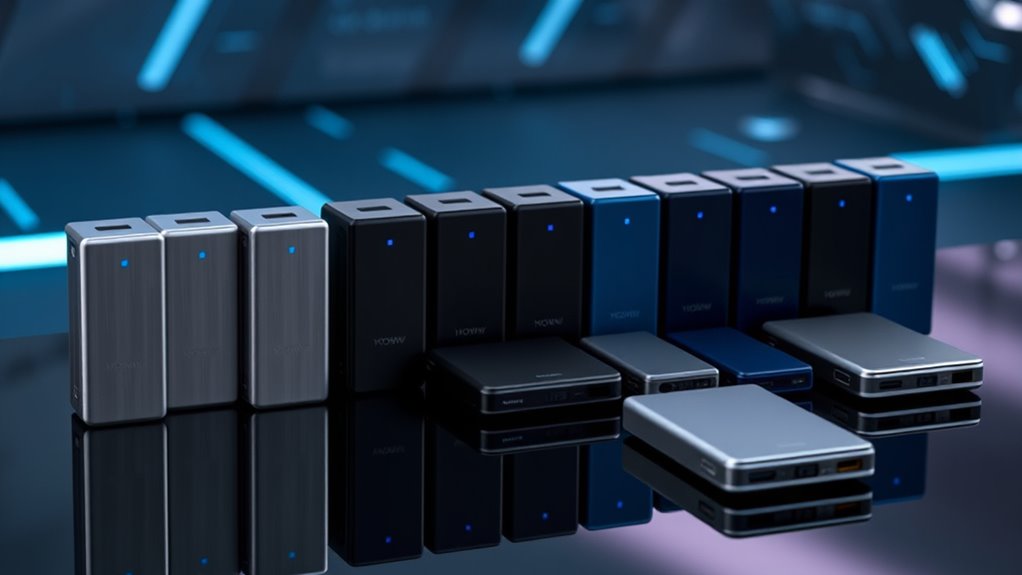

100W power banks can charge many USB-C laptops as well as phones, but capacity, port layout, and built-in cables make a real difference in daily use. My best overall pick is the UGREEN Nexode 25000mAh 145W, which offers extra output headroom and three ports for charging more than one device. The Anker 25,000mAh 165W stands out for higher combined output, while the INIU 25,000mAh 100W models favor laptop-friendly capacity at a 100W ceiling. The main tradeoff is portability versus longer runtime and multi-device flexibility, with cable convenience adding another choice. Read on for the full comparison and help matching a power bank to your laptop, travel habits, and charging needs.

Get audio and creator gear delivered free with Prime
- Fast, free delivery on millions of items
- Prime Video, Amazon Music and more included
- Member-only deals all year
Complete the kit


Key Takeaways
- 100W is a single-device output target, not a guarantee of 100W on every port. Multi-port models may divide their available power when several devices are connected.
- The UGREEN Nexode 25000mAh 145W offers the clearest headroom above 100W among the listed models, which can help when charging multiple devices or using a laptop with higher power demands.
- Capacity and size pull in opposite directions. The 10,000mAh built-in-cable model favors a lighter carry, while 25,000–27,000mAh options prioritize longer use between wall outlets.
- Built-in cables simplify packing but add a wear point. A separate cable is easier to replace, while retractable or integrated designs reduce loose accessories.
- An AC outlet changes the use case rather than simply improving USB charging. The 98Wh model can serve devices that need a wall-style outlet, but its listed USB-C output is 65W rather than 100W.


| w power bank | Ports | Battery capacity | Maximum output |
|---|---|---|---|
| Laptop Power Bank 20000mAh 100 | 2 USB-C, 1 USB-A | — | 100W |
| 100W Power Bank Fast Charging | 1 USB-C port, 2 USB-A ports, plus built-in USB-C cable | — | — |
| INIU Laptop Power Bank 25000mA | 2 USB-C, 1 USB-A | — | 100W |
| INIU Laptop Power Bank | 2 USB-C, 1 USB-A | — | 100W |
| INIU Laptop Power Bank | 2 USB-C, 1 USB-A | — | 100W |
| UGREEN Nexode 25000mAh 145W 3- | 2 USB-C, 1 USB-A | 25,000mAh | — |
| Baseus 100W Portable Laptop Ch | 2 USB-C, 2 USB-A | 20,000mAh | — |
| UGREEN Nexode 20000mAh 130W Po | 3 | 20,000mAh | — |
| Portable Charger 100W | 3 | 10,000mAh | — |
| Anker Laptop Power Bank | 4 | 25,000mAh | — |
| Portable Power Bank with AC Ou | — | 27,000mAh / 98Wh | — |
| UGREEN Nexode 100W 20000mAh Po | 2 USB-C, 1 USB-A | 20,000mAh | 100W |
| Baseus Portable Charger with B | — | 20,000mAh | 100W PD |
| 27000mAh 120W Fast Charging Po | 2 USB-C, 1 USB-A | 27,000mAh | 120W |
More Details on Our Top Picks
Laptop Power Bank 20000mAh 100W Portable Charger with Built-in USB-C Cable
This 20,000mAh model pairs 100W output with a built-in USB-C cable, so laptop users can pack one fewer accessory. Its two USB-C ports and USB-A port support three-device charging, a useful setup for carrying a laptop, phone, and smaller accessory. Compared with the INIU 25,000mAh options, it gives up capacity but may suit shorter workdays when a smaller battery is enough. The tradeoff is limited product detail: the supplied information does not specify weight, battery lifespan, or how output is divided when several devices are connected. I’d favor it over the REWONDER retractable-cable bank if a straightforward integrated cable matters more than a retractable design and display. Choose it for convenience, not for the most documented feature set.
Pros:- 100W output is suited to compatible laptops as well as phones and tablets.
- Built-in 100W USB-C cable reduces the need to pack a separate charging lead.
- Two USB-C ports and one USB-A port allow up to three devices to connect.
- 20,000mAh capacity offers a more travel-friendly scale than the 25,000mAh INIU models.
Cons:- Battery lifespan and charging behavior across multiple connected devices are not detailed.
- Weight is not specified, making carry-size comparisons harder.
- Lower capacity than the 25,000mAh INIU options means less reserve for longer trips.
Best for: Laptop commuters who want a built-in USB-C cable and need to top up a laptop, phone, and accessory during a workday.
Not ideal for: Travelers who need a clearly stated weight, detailed battery-longevity information, or more capacity for extended trips.
- Capacity:20,000mAh
- Maximum output:100W
- Ports:2 USB-C, 1 USB-A
- Built-in cable:USB-C, rated up to 100W
- Dimensions:5.5 × 2.8 × 0.8 inches
- Simultaneous charging:Up to 3 devices
Our verdict“Choose this if an integrated cable and three-device connectivity matter more than maximum capacity or detailed specifications.”
100W Power Bank Fast Charging 20000mAh, Built-in Retractable USB-C Cable
The defining feature here is a 27.6-inch retractable USB-C cable that stores inside the bank, keeping a useful charging lead attached without leaving loose cable ends in a bag. It also pairs that lead with another USB-C port and two USB-A ports, giving it more connection options than the first 20,000mAh model in this group. There is a clear limit, though: 100W is available from one port at a time, while simultaneous charging drops total output to 15W. That makes multi-device use better for overnight or emergency top-ups than fast laptop charging. The digital percentage display and stated safety certifications add practical travel detail, while the INIU 25,000mAh bank is the better fit if additional capacity matters more than a built-in retracting lead.
Pros:- Retractable 27.6-inch USB-C cable stores in the bank and reduces loose-cable clutter.
- Single-port output reaches 100W for compatible laptops and devices.
- Four charging connections include an additional USB-C port and two USB-A ports.
- Digital display shows remaining battery percentage, and the listing states UL and FCC certification.
Cons:- Total output falls to 15W when multiple devices charge simultaneously.
- The separate USB-C port needs a 100W-capable PD cable to reach its stated maximum.
- At 20,000mAh, it has less capacity than the 25,000mAh INIU models.
Best for: Frequent commuters and travelers who want an attached, tidy USB-C cable and mostly charge one demanding device at a time.
Not ideal for: People who regularly need to fast-charge a laptop and phone simultaneously, since combined output is limited to 15W.
- Capacity:20,000mAh
- Maximum single-port output:100W
- Ports:1 USB-C port, 2 USB-A ports, plus built-in USB-C cable
- Built-in cable:27.6-inch retractable USB-C, rated up to 100W
- Multi-device output:15W total when charging multiple devices
- Display:Digital battery-percentage display
- Certifications:UL and FCC, as stated in the product description
Our verdict“Pick this for cable-free packing and strong single-device charging, but skip it if you need fast multi-device output.”
INIU Laptop Power Bank 25000mAh 100W Fast Charging Battery Pack
Among the products here, this INIU stands out for combining 25,000mAh capacity with 100W output, giving laptop travelers more stored energy than the two 20,000mAh picks. Its USB-C and USB-A ports cover common devices, while the detachable-cable design avoids making a cable a permanent point of failure. That flexibility is useful if you already carry the right leads, but less convenient than the built-in cable on the first product or the retractable setup on the REWONDER. The supplied details also call it compact and airline-safe, but do not give a weight or dimensions for this specific listing, so I can’t compare its carry burden precisely with the other INIU 25,000mAh version, which is listed at 14 ounces. Three ports are practical, though not a hub for a large group of devices.
Pros:- 25,000mAh capacity provides more reserve than the 20,000mAh models in this batch.
- 100W output supports compatible laptops and other high-draw devices.
- Detachable cable avoids the fixed-cable failure risk of integrated-cable designs.
- Digital display and stated overcharge and short-circuit protection add useful monitoring and safeguards.
Cons:- Three ports limit how many devices can connect at once.
- A separate Lightning cable is needed for older iPhones.
- The supplied product data does not give a weight or dimensions for assessing portability.
Best for: Laptop and gaming-device owners who want more capacity than a 20,000mAh bank and already carry USB-C or Lightning cables.
Not ideal for: Travelers who want a cable permanently attached, need more than three charging connections, or require a stated weight before buying.
- Capacity:25,000mAh
- Maximum output:100W
- Ports:2 USB-C, 1 USB-A
- Voltage:20V
- Number of ports:3
- Features:Digital display, LED indicators, overcharge protection, short-circuit protection
- Compatible devices:Laptops, smartphones, tablets, and gaming devices
- Cable design:Detachable cable design
Our verdict“Choose this INIU for added capacity and a replaceable cable, provided you are comfortable bringing your own leads.”
INIU Laptop Power Bank, 25000mAh, 100W Fast Charging, Compact and Airline Approved
This 25,000mAh INIU provides the same headline 100W output and three-port layout as the other INIU model here, but its listing gives buyers more concrete carry details: 14 ounces (400g) and a short, included 0.4-foot USB-C cable. That makes it easier to judge for a laptop bag than the B0GJ8HTS9R listing, whose weight is unspecified. The short cable keeps the kit compact but is not a built-in cord; you may still want a longer cable for charging from awkwardly placed outlets. It has more capacity than the 20,000mAh built-in-cable options, while giving up their grab-and-go convenience. The claim that it is smaller than a soda can is not a precise dimension, so buyers focused on exact fit should treat the stated weight as the clearer portability measure.
Pros:- 25,000mAh capacity offers more reserve than the 20,000mAh models in this batch.
- 100W output is suited to compatible laptops and other power-hungry devices.
- Listed weight of 14 ounces (400g) gives travelers a concrete portability reference.
- Includes a short 0.4-foot USB-C cable and has two USB-C ports plus one USB-A port.
Cons:- No built-in cable, unlike the first product and the REWONDER retractable-cable model.
- The included 0.4-foot cable may be too short for some charging setups.
- A separate Lightning cable is needed for older iPhones.
Best for: Air travelers who want 25,000mAh capacity and a stated 14-ounce weight, and who are happy to carry their preferred USB-C cable.
Not ideal for: Buyers who want a built-in charging cable, or anyone who needs exact dimensions rather than a general compact-size claim.
- Capacity:25,000mAh
- Maximum output:100W
- Ports:2 USB-C, 1 USB-A
- Voltage:20V
- Weight:14oz (400g)
- Included cable:0.4-foot USB-C cable
- Size description:Smaller than a soda can
Our verdict“Choose this version if a stated 14-ounce weight and 25,000mAh capacity matter more than having a cable built into the bank.”
INIU Laptop Power Bank, Smallest 25000mAh 100W Fast Charging Battery Pack
This INIU targets buyers who want 25,000mAh and 100W output without a bulky power bank. Its listing gives a specific weight of about 14 ounces and describes the body as 30% smaller than a soda can; that makes it a more concrete compact-carry proposition than the INIU listing with no supplied weight. It includes a detachable 0.4-foot USB-C cable, which keeps the cable replaceable but is short enough that many users will want another lead for flexible setups. The product description claims simultaneous fast charging across devices, but does not state the combined output split, so I would not assume every connected device receives 100W. Compared with the 20,000mAh REWONDER, this offers more capacity and avoids a retractable mechanism, at the cost of needing to pack cables separately.
Pros:- 25,000mAh capacity and 100W output support a broad range of compatible laptops and devices.
- Listed at approximately 14 ounces and described as 30% smaller than a soda can.
- Detachable 0.4-foot USB-C cable avoids a permanently attached cable.
- Three ports provide USB-C and USB-A connections for multiple device types.
Cons:- The included 0.4-foot cable may not reach comfortably in every setup.
- The supplied description does not specify combined output when several devices charge together.
- Older iPhones require a separate Lightning cable.
Best for: Laptop travelers, creators, and handheld-gaming users who want 25,000mAh capacity in a compact body and can bring their own cables.
Not ideal for: People who prefer an integrated cable or need documented combined output for charging several high-draw devices at once.
- Capacity:25,000mAh
- Maximum output:100W
- Ports:2 USB-C, 1 USB-A
- Weight:Approximately 14oz (400g)
- Included cable:0.4-foot USB-C cable, rated 100W
- Number of ports:3
- Features:Digital display, fast charging, LED indicators, overcharge protection, short-circuit protection
- Battery cell type:Lithium polymer
Our verdict“Pick this for compact, higher-capacity 100W carry if you value a detachable cable and can supply any extra leads you need.”
UGREEN Nexode 25000mAh 145W 3-Port USB-C Power Bank for iPhone and Laptops
The UGREEN Nexode is the strongest fit here for buyers who want more than 100W of headroom: its stated 145W peak output can serve demanding laptops while leaving capacity for other devices. Its 25,000mAh battery also gives it more reserve than the Baseus 20,000mAh model, making it a better match for longer stretches away from an outlet. A digital display helps track remaining charge, and the three-port layout supports a mix of USB-C and USB-A gear. The tradeoff is that its listed output specs are not fully consistent: the product description says 145W, while the specs list 140W. It is also described as heavy, and a 65W charger is needed for a full recharge but is not included.
Pros:- High listed peak output offers headroom beyond the 100W target
- 25,000mAh capacity exceeds the 20,000mAh Baseus and UGREEN options here
- Three ports accommodate USB-C and USB-A devices
- Digital display provides a visible battery-level readout
Cons:- Output is described as both 145W and 140W in the supplied information
- A 65W charger for full recharging is not included
- Weight and dimensions are not specified, and the product is described as heavy
Best for: Laptop users who want a high-output battery with enough capacity for extended travel and several device charges
Not ideal for: Light packers who prioritize a clearly documented weight or a compact everyday phone charger
- Battery capacity:25,000mAh
- Listed output:140W in specs; 145W in product description
- Ports:2 USB-C, 1 USB-A
- Voltage:28V
- Amperage:5A
- Recharge time:2 hours
- Battery cell type:Lithium-ion
- Color:Space Grey
Our verdict“Choose this UGREEN if capacity and output headroom matter more than low carry weight and fully consistent specs.”
Baseus 100W Portable Laptop Charger 20000mAh Power Bank with Fast Charging
The Baseus makes the most sense for buyers who want to stay close to the roundup’s 100W brief without stepping up to the higher output of the UGREEN Nexode 25000mAh. Its 20,000mAh capacity is a practical middle ground for laptop top-ups and phone charging, while two USB-C and two USB-A ports offer more connection options than the UGREEN’s three-port arrangement. A digital display also gives a quick read on remaining power during a workday or trip. The tradeoff is a thinner spec record: weight and dimensions are not provided, so its travel-friendly description cannot be checked against exact measurements. Recharging is listed with a 60W input, so buyers should account for a compatible charger rather than assume the power bank itself will recharge at 100W.
Pros:- 100W output matches the needs of many laptop-charging setups
- Four ports provide two USB-C and two USB-A connections
- Digital display shows remaining power
- 20,000mAh capacity balances laptop use with a travel-oriented format
Cons:- Weight and dimensions are not specified
- 60W recharging input is below its stated 100W output
- Capacity is lower than the 25,000mAh UGREEN and Anker models in this batch
Best for: Traveling professionals who need a 100W laptop-capable bank and a mix of USB-C and USB-A connections
Not ideal for: Buyers who need a documented carry weight, exact dimensions, or more than 20,000mAh of capacity
- Battery capacity:20,000mAh
- Power output:100W
- Ports:2 USB-C, 2 USB-A
- Charging input:60W recharger
- Battery type:Lithium polymer
- Color:Black
Our verdict“Pick the Baseus for a versatile 100W setup with four ports, but skip it if exact size and weight matter to your packing plan.”
UGREEN Nexode 20000mAh 130W Portable PD Power Bank for MacBook Pro 16
This UGREEN Nexode pairs a 130W output with a relatively light stated weight of 0.48kg, making it a compelling choice for laptop owners who want more output than a standard 100W bank without carrying the larger 25,000mAh Nexode. Its 20,000mAh capacity is less suited to repeated laptop top-ups than that bigger sibling, but the compact listed dimensions and TFT display make this one easier to evaluate as a travel companion. Three ports support a mix of devices, and the product is described as airline approved. Buyers should budget for a suitable cable: the listing says certified cables are needed for optimal performance and no charging cable is included. Compared with the Baseus 100W model, this offers higher stated output, but less capacity and fewer total ports.
Pros:- 130W fast charging exceeds the Baseus model’s stated 100W output
- Listed weight of 0.48kg and compact dimensions aid travel planning
- TFT display provides real-time charging information
- Three ports support phones, tablets, and compatible laptops
Cons:- 20,000mAh capacity is below the 25,000mAh UGREEN and Anker options
- No charging cable is included
- Certified cables are recommended for optimal performance
Best for: Laptop and tablet travelers who value a documented compact size, a clear display, and output above 100W
Not ideal for: People seeking the longest capacity between recharges or a package that includes a charging cable
- Battery capacity:20,000mAh
- Fast charging output:130W
- Ports:3
- Connector types:USB Type-C and USB Type-A
- Voltage:20V
- Amperage:3.25A
- Weight:0.48kg
- Dimensions:2.13 x 2.01 x 5.16 inches
Our verdict“Choose this Nexode if you want a compact, documented 130W option and can accept less capacity than the larger banks.”
Portable Charger 100W, 10000mAh Power Bank with Built-in USB-C Cable
This compact-capacity option is aimed at a different job from the 20,000mAh Baseus and UGREEN banks: it prioritizes 100W output and a built-in USB-C cable over long-haul reserve. That integrated cable means one less accessory to pack or misplace, and the digital display makes it easier to judge whether the remaining charge is enough for a laptop top-up. Its 10,000mAh capacity is the clear compromise; it is better suited to a short outing or emergency backup than repeated laptop charging over several days. The listing also says laptop charging works best above 80% remaining, which narrows its useful window as the battery drains. Weight is not specified, so buyers cannot verify its portability from the supplied data.
Pros:- Built-in USB-C cable reduces the need to carry a separate cable
- 100W output supports compatible laptops as well as smaller devices
- Digital display shows remaining battery level
- Three ports allow multiple devices to connect
Cons:- 10,000mAh capacity is substantially lower than the other laptop-focused options here
- Listing recommends keeping charge above 80% for optimal laptop charging
- Weight is not specified
Best for: Commuters and day-trip travelers who want a built-in cable and a short burst of laptop-capable power
Not ideal for: Remote workers or travelers who need repeated laptop charges or dependable capacity across multiple days
- Battery capacity:10,000mAh
- Output power:100W
- Input power:30W USB-C
- Ports:3
- Built-in cable:USB-C
- Voltage:20V
- Amperage:5A
- Charging time:1.5 hours
Our verdict“Choose this model for a cable-convenient day bag, not as your main power source for extended laptop use.”
Anker Laptop Power Bank, 25,000mAh Travel Essential with 165W Total Output
The Anker stands out for combining 25,000mAh capacity with three USB-C ports rated at up to 100W each and a stated 165W total output. That layout suits a remote-work setup better than the simpler three-port UGREEN Nexode 25000mAh, especially when a laptop and smaller devices need power at once. Its two built-in USB-C cables also reduce loose accessories; one retracts, while the other doubles as a carrying strap. The tradeoff is that 165W is a total-output figure, not the maximum available from a single port, so buyers focused on one unusually demanding device may prefer the UGREEN’s higher stated single-unit peak. The supplied information also does not give the bank’s weight or dimensions, and its fast recharge requires a 100W-or-higher charger that is not included.
Pros:- 25,000mAh capacity supports longer trips and multiple device top-ups
- Three USB-C ports are listed at up to 100W each, with 165W total output
- Two built-in USB-C cables reduce the need to pack separate leads
- Four total ports allow charging up to four devices at once
Cons:- 165W total output is not the same as 165W from one port
- A 100W-or-higher charger for fast recharging is not included
- Weight and dimensions are not provided
Best for: Remote workers and family travelers who need to charge a laptop and several USB devices from one bank
Not ideal for: Buyers who need the highest documented single-device output or want a power bank with a supplied wall charger
- Battery capacity:25,000mAh
- Total output:165W
- USB-C port output:Up to 100W per port
- Ports:4
- Built-in cables:2 USB-C cables; one retractable
- Recharge time:2 hours
- Fast-recharge requirement:100W or higher charger
- Battery cell type:Lithium polymer
Our verdict“Pick the Anker for a multi-device travel setup with integrated cables, but choose the UGREEN Nexode 25000mAh if single-device peak output is your priority.”
Portable Power Bank with AC Outlet, 100W, 98Wh/27000mAh High Capacity, 65W PD USB-C Laptop Battery Bank, Backup Power for Travel & Outdoors
The defining advantage here is its 100W AC outlet, which can run or charge compatible devices that need a standard plug rather than USB-C. Its 27,000mAh capacity also exceeds the 20,000mAh UGREEN Nexode and Baseus options in this group, giving it more stored energy for multiple device top-ups. The tradeoff is that its USB-C output is rated at 65W, so a laptop that can accept 100W over USB-C may charge more slowly than it would from the Baseus 100W or UGREEN Nexode. The AC outlet is limited to devices under 100W, and the listed weight of 300g is still a portability consideration. I’d choose this for plug-in flexibility, not for maximum USB-C laptop speed or the lightest travel setup.
Pros:- 100W AC outlet supports compatible devices with a standard plug.
- 27,000mAh capacity is higher than the 20,000mAh UGREEN Nexode and Baseus models listed here.
- Four USB ports allow several devices to connect.
- USB-C input is described as supporting a 1.5-hour recharge.
Cons:- USB-C output is 65W, below the 100W USB-C output of the UGREEN Nexode and Baseus options.
- AC output cannot support devices drawing 100W or more.
- No wireless charging is listed.
Best for: Travelers or outdoor users who need to power a low-wattage AC-plug device alongside phones, tablets, or a USB-C laptop.
Not ideal for: Laptop owners seeking the fastest USB-C charging, or minimal-pack travelers who do not need an AC outlet.
- Battery capacity:27,000mAh / 98Wh
- Battery type:Lithium-ion
- AC output:100W maximum
- USB-C output:65W
- USB ports:4
- Dimensions:6.7 x 2.6 x 2.6 inches
- Weight:300g
- Certifications:FCC, CE, RoHS
Our verdict“Choose this if an AC outlet and higher capacity matter more than 100W USB-C laptop charging.”
UGREEN Nexode 100W 20000mAh Power Bank, PD Fast for MacBook
The UGREEN Nexode makes a strong case for buyers who want 100W USB-C output without carrying a higher-capacity, heavier option. It has two USB-C ports plus a 22.5W USB-A port, so it can charge three devices at once; that makes it more flexible for a laptop-and-phone setup than the USB-C-only Baseus portable charger. UGREEN also specifies 65W self-recharging and a 1.6-hour full recharge, useful when short stops are the only chance to top up. Its 20,000mAh capacity is less than the 27,000mAh AC-outlet model in this group, and the laptop’s full charging speed depends on using a suitable 5A cable. I’d pick it for a balanced USB-C kit, but not if you need an AC outlet or maximum battery capacity.
Pros:- Up to 100W output supports compatible laptops over USB-C.
- Two USB-C ports and one USB-A port support three connected devices.
- 65W input enables a stated 1.6-hour full recharge.
- Includes a USB-C-to-USB-C cable rated for high-power charging.
Cons:- 20,000mAh capacity is lower than the 27,000mAh AC-outlet option in this group.
- Full laptop charging speed depends on using a suitable 5A, 100W USB-C cable.
- The supplied product information lists inconsistent battery-capacity figures, so capacity details merit checking.
Best for: Laptop users who regularly charge a phone or accessories at the same time and want both USB-C and USB-A connections.
Not ideal for: Buyers who need an AC outlet, more than 20,000mAh capacity, or a setup that avoids checking USB-C cable capability.
- Battery capacity:20,000mAh
- Maximum output:100W
- Ports:2 USB-C, 1 USB-A
- USB-A output:Up to 22.5W
- Maximum recharge input:65W
- Stated full recharge time:1.6 hours
- Display:Digital display
- Included cable:USB-C to USB-C
Our verdict“Choose the UGREEN Nexode if you want fast USB-C laptop charging and three-port flexibility in a 20,000mAh bank.”
Baseus Portable Charger with Built-in Cables, 100W Laptop Power Bank, 20000mAh, Fast Charging USB-C Battery Pack for MacBook, iPhone, Samsung Galaxy
The Baseus stands apart through two built-in USB-C cables: you can charge compatible devices without packing a separate lead, and two cables suit people who often top up a laptop and phone together. Its 100W PD output puts it in the same laptop-ready class as the UGREEN Nexode, while the real-time display helps track remaining charge. The difference is connector flexibility: UGREEN includes USB-A alongside USB-C, but this Baseus model is listed with USB-C connections only. That narrows its usefulness for older accessories, and the 20,000mAh capacity is below the 27,000mAh AC-outlet pick. Pass-through charging and temperature-control features add convenience, though they do not replace the need to check device and cable compatibility. I’d choose it for a streamlined USB-C travel kit, not a mixed-port collection.
Pros:- Two built-in USB-C cables reduce the need to pack separate leads.
- 100W PD output supports compatible laptops and phones.
- Real-time display shows charging and battery status.
- Pass-through charging is listed for charging the bank and connected devices at the same time.
Cons:- USB-C-only connections exclude devices that require USB-A.
- 20,000mAh capacity is lower than the 27,000mAh AC-outlet model in this group.
- The supplied data gives no exact weight or dimensions for comparing packability.
Best for: Frequent travelers with USB-C laptops and phones who want to leave separate charging cables at home.
Not ideal for: People who charge USB-A accessories or want a larger-capacity bank with an AC outlet.
- Battery capacity:20,000mAh
- Maximum output:100W PD
- Built-in cables:2 USB-C
- Charging connections:USB-C only
- Display:Real-time display
- Pass-through charging:Supported
- Temperature features:AI temperature control and graphene cooling
- Battery cells:Automotive-grade cells
Our verdict“Choose this Baseus if built-in USB-C cables matter more to you than USB-A support or maximum capacity.”
27000mAh 120W Fast Charging Power Bank, High Capacity 3-Port Portable Charger with Smart Display, Compatible with iPhone 16/15/14, Vision Pro, Samsung, MacBook & More
This model’s headline is 120W maximum output, the highest stated figure among these four products, paired with a 27,000mAh capacity. That combination suits people carrying several devices, and its two USB-C ports plus USB-A give it broader connection options than the USB-C-only Baseus. The display adds at-a-glance battery and power information, which is useful when planning a laptop top-up away from an outlet. Its 1.3-pound weight is a notable tradeoff: it is much heavier than the listed 300g AC-outlet bank, despite that model also offering 27,000mAh. The data does not explain how the 120W output is divided among ports, so I would not assume every port can deliver its maximum while others are in use. Choose it for capacity and port variety, not light carry.
Pros:- 27,000mAh capacity is greater than the 20,000mAh UGREEN Nexode and Baseus models.
- 120W maximum output is the highest stated output among these four picks.
- Two USB-C ports and one USB-A port accommodate a mix of devices.
- Digital display shows battery and power status.
Cons:- At 1.3 pounds, it is substantially heavier than the listed 300g AC-outlet model.
- The supplied specs do not state how output is divided when multiple ports are used.
- Fast charging depends on device compatibility.
Best for: Travelers who carry a laptop, phone, and USB-A accessory and value high stated output over a lightweight bag.
Not ideal for: Commuters or hikers who prioritize low weight, and buyers who need confirmed per-port output for simultaneous charging.
- Battery capacity:27,000mAh
- Maximum output:120W
- Ports:2 USB-C, 1 USB-A
- Dimensions:6.14 x 2.02 x 2.03 inches
- Weight:1.3 pounds
- Battery type:Lithium
- Input:20V, 5A
- Features:Digital display and overcharge protection
Our verdict“Choose this if you want 27,000mAh capacity, mixed ports, and high stated output, and can accept the added weight.”

How We Picked
I ranked these 14 options by how well their stated specifications fit the promise of a 100W power bank: laptop-capable USB-C output, useful capacity, and practical charging flexibility. I also weighed port count and shared-output behavior where the product name provides clues, plus portability, integrated-cable convenience, and whether a model serves a distinct need such as an AC outlet or a smaller carry. A higher maximum output can be useful, but it does not automatically make a bank the best choice if the buyer wants a compact 100W-class charger.
The order favors models with a strong balance of output headroom, capacity, and versatility, then separates specialized choices by their tradeoffs. The UGREEN 145W and Anker 165W lead for buyers who want more total output than the 100W baseline; 20,000mAh models and built-in-cable designs suit different portability priorities. I treat product-name claims as specifications, not proof of real-world charging speed: laptop compatibility, cable rating, and output allocation can vary, so buyers should check the maker’s detailed specifications for their devices.
Factors to Consider When Choosing 100 W Power Banks
A 100W label is a useful starting point, but it does not tell the whole story. I would match the bank to the laptop’s input needs, the number of devices you charge at once, and how much capacity you are willing to carry. These checks help avoid paying for output you cannot use or choosing a compact bank that runs short on energy.
Match the power bank to your laptop’s actual charging needs
Check the laptop’s USB-C charging specification or its original adapter before choosing a bank. Some thin laptops work well below 100W, while larger models may charge slowly or lose battery during demanding work even when connected to a 100W bank. The bank also needs a compatible USB-C Power Delivery profile; a headline wattage alone does not confirm that it supports your laptop’s preferred voltage and charging protocol. If your laptop needs 100W, leave room for power sharing: a bank advertising 145W or 165W total may not send that full amount through one port. Buyers with lower-power laptops can often prioritize capacity or size instead of paying attention to the largest output figure.
Choose capacity for the length of your day, not a headline number
Capacity figures describe stored energy, not the amount that reaches your device after voltage conversion and normal operating losses. A 25,000mAh bank can provide more charging reserve than a 10,000mAh model, but it also tends to take up more room and add carry weight. Laptop size, workload, screen brightness, and background tasks all affect how much runtime a charge provides. For commuting or topping up a phone, a smaller bank may be easier to carry and more likely to come along. For travel days away from outlets, a larger capacity can be more useful than extra output you rarely need.
Read total output and per-port output separately
Product names may state a bank’s combined output, its highest single-port output, or both, and those figures are not interchangeable. A multi-port bank can offer useful flexibility while reducing the power available to each device when several ports are active. Before buying, find the output table for one-port and multi-port use, then compare those figures with the laptop and phone you plan to connect. A 145W or 165W total rating matters most to people who charge several demanding devices together; a single-laptop user may gain little from that extra headroom. This distinction prevents a common mismatch between a high headline number and the power available in a real charging setup.
Decide whether built-in cables suit your packing habits
An integrated or retractable USB-C cable cuts down on loose accessories and can make a power bank easier to grab for a short trip. It also becomes a potential failure point: if the attached cable wears out, it may be less straightforward to replace than a separate cable. Check the cable’s supported wattage and length, since a cable that is convenient for a phone may be awkward at a desk or unsuitable for full-speed laptop charging. A separate cable adds one more item to pack but gives you a replacement path and more freedom to choose its length. I would favor built-in cables for frequent, light travel and a conventional port-and-cable setup for longer-term flexibility.
Check airline limits and the complete travel setup
Battery capacity is often shown in milliamp-hours, while airline rules commonly use watt-hours, so do not rely on a capacity label alone when planning a flight. The listed AC-outlet model is rated at 98Wh, but travelers should still verify current airline and local rules for their route and carry-on arrangement. Keep power banks in carry-on baggage when required, and check whether a model’s shape, weight, and cable setup fit your bag. A bank that is technically travel-friendly can still be inconvenient if it is bulky or difficult to charge overnight. For frequent flyers, clear labeling and a compact form may matter as much as maximum capacity.
Pay for the feature that solves your real limitation
Extra output, more ports, an integrated cable, a smart display, and an AC outlet solve different problems. Higher wattage is useful when your laptop needs it or you want to charge multiple devices quickly, but it does not create more stored energy. A display can help monitor remaining charge, while an AC outlet can support equipment that cannot charge over USB-C; neither feature replaces checking capacity and output limits. If your main goal is dependable phone and laptop charging, a simpler bank may be easier to carry and use. Spend more attention on verified compatibility and port behavior than on feature count alone.
Frequently Asked Questions
Will a 100W power bank charge any USB-C laptop?
No. A USB-C port and a 100W label do not guarantee compatibility with every laptop. The bank needs to support the laptop’s charging protocol and voltage profile, and the cable must also be rated for the power you want to deliver. Some laptops accept less than 100W, while others may charge slowly under heavy workloads or require a proprietary charger. Check both the laptop maker’s charging requirements and the bank’s detailed output table before buying.
Is a 145W or 165W model worth choosing over a 100W model?
It can be worthwhile if you charge more than one device at a time or your laptop benefits from power above 100W. The higher figure may describe combined output rather than the power available from one USB-C port, so check the port-by-port limits before deciding. If you usually charge just one laptop that accepts 100W or less, the extra output may not change your day-to-day experience. In that case, capacity, size, or cable convenience may be a better reason to choose one model over another.
Does a 25,000mAh power bank give my laptop a full charge?
Not necessarily. The usable energy reaching a laptop is lower than the amount implied by the battery’s capacity label because power conversion loses energy along the way. Laptop battery size and workload also affect how much of a recharge the bank can provide. A lightweight laptop used for basic tasks may get a more useful boost than a larger workstation running intensive software. Treat capacity as a way to compare energy reserves, not as a guaranteed number of full laptop charges.
Should I choose a power bank with a built-in USB-C cable?
A built-in cable is a good fit if you often forget accessories or want a tidy setup for short trips. It reduces loose items, but the attached cable can be harder to replace if it wears out, and its length may not suit every charging situation. Check that it supports the bank’s advertised laptop output rather than assuming the main unit’s wattage applies to the cable. A model with a standard USB-C port and a separate rated cable offers more flexibility. The better choice depends on whether convenience or replaceability matters more to you.
Can I bring a 27,000mAh or 98Wh power bank on a plane?
Airline rules depend on watt-hours, route, and the carrier’s current policy, so capacity in milliamp-hours alone does not settle the question. The listed AC-outlet model states 98Wh, but check its label and confirm the applicable rules before departure. Keep the power bank in carry-on baggage when required, and do not assume that a large-capacity model is permitted just because it is marketed for travel. Regulations can change, and some airlines may ask for approval or impose limits on batteries near the applicable threshold. Verify with your airline before packing it.
Conclusion
For the strongest all-around balance of capacity and output headroom, I would start with the UGREEN Nexode 25000mAh 145W; it is my best overall choice for people who charge a laptop alongside other devices. For a best premium option centered on higher combined output, the Anker 25,000mAh 165W is the better fit, while buyers wanting a straightforward 100W-class laptop bank can look to the INIU 25,000mAh models. My best value pick is the Baseus 20,000mAh 100W for shoppers who want the core output class without prioritizing higher combined wattage; the UGREEN Nexode 100W 20,000mAh is another sensible conventional-cable choice. For beginners, I would favor a simple 20,000mAh model with familiar USB-C charging over an AC-outlet design or a higher-output multi-port bank. Choose the 10,000mAh built-in-cable model for a lighter everyday carry, the 98Wh AC-outlet model for compatible gear that needs a wall-style outlet, and a 25,000–27,000mAh option when longer time away from an outlet matters most.
Halloween Picks
halloween
As an affiliate, we earn on qualifying purchases.