
A 32-channel digital mixer can mean a full-size console, a compact surface, or a rack unit controlled from a tablet, and those designs suit different jobs. My best overall pick is the PreSonus StudioLive Series III 32S for its broad live-and-studio workflow, while the Mackie DL32S is a strong choice when a rack mixer and wireless control matter more than physical faders. The Yamaha TF5 stands out for buyers who want an integrated console surface and a guided operating approach. The main tradeoffs are hands-on control versus portability, workflow versus connectivity, and a mixer’s stated input count versus the number of channels available at once. Read on for how the 12 options differ and which design fits your setup.

Get audio and creator gear delivered free with Prime
- Fast, free delivery on millions of items
- Prime Video, Amazon Music and more included
- Member-only deals all year
Complete the kit


Key Takeaways
- Form factor is the first major divide: Mackie’s DL32S and DL32SE put rack-based, app-controlled mixing ahead of a built-in fader surface, while the Yamaha TF5 and Behringer X32 models offer physical controls.
- The PreSonus 32S is the most balanced console-style pick: it suits buyers who need a substantial surface and want to bridge live mixing with studio production.
- The X32 family spreads one platform across several setups: the full console, Compact, Producer, and Rack versions trade surface size and control access, so choose by stage layout rather than input count alone.
- Bundles change what arrives in the box, not the core mixer’s workflow: compare the included headphones, cables, and software against what you already own before treating a bundle as a better fit.
- The Allen & Heath Qu-5 is a distinct alternative: its 96kHz operation and 38-in/24-out specification appeal to buyers focused on its stated I/O and processing format, but it is not a direct 32-channel-spec match to every other model here.



| channel digital mixer | Weight | Connectivity | Channels |
|---|---|---|---|
| Mackie DL32S 32-Channel Digita | 8.8 lb | — | 32 |
| Mackie DL32SE 32-Channel Digit | 8.8 lb | Wi-Fi | 32 |
| PreSonus StudioLive Series III | 30.9 lb | USB | 32 |
| Behringer X32 Digital Mixing C | — | USB, ADAT, MADI, Dante, ULTRANET, AES50 | — |
| Yamaha TF5 32-Channel Digital | 20 kg | USB, Wi-Fi | 32 |
| Behringer X32 Rack 40-Input 25 | — | USB 2.0 Type A | — |
| PreSonus StudioLive Series III | 37 lb | — | 32 |
| Behringer X32 Compact 40-Input | — | — | — |
| StudioLive Series III SE 32 Di | 50.4 lb | Ethernet, USB, and Wi-Fi | 40 |
| Allen & Heath Qu-5 38-In/24-Ou | 27.4 lb | USB | — |
| Behringer X32 Producer 40-Inpu | 25.1 pounds | USB | — |
| PreSonus StudioLive Series III | 22 pounds | Ethernet, USB, AVB | 32 |
More Details on Our Top Picks
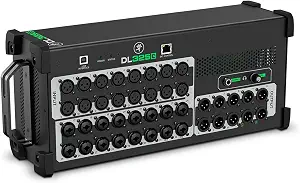
Mackie DL32S 32-Channel Digital Rack Mixer
The Mackie DL32S is a strong fit for buyers who want 32 input channels without dedicating space to a console surface. Its built-in Wi-Fi and Master Fader app let an engineer mix from around the venue, while 32 Onyx+ mic preamps and four FX processors cover core live-sound needs. The 32×32 USB recording connection also makes it useful for capturing a multitrack show or routing audio to a computer. Compared with the DL32SE, this model offers a closely related rack-mixing approach, so the choice may come down to the app and workflow details a buyer prefers. Unlike the Behringer X32, it has no physical faders on the mixer itself; remote control is central, and that can feel less direct or more demanding for new users.
Pros:- Built-in Wi-Fi supports wireless control with the Master Fader app.
- 32 Onyx+ mic preamps provide inputs for large ensembles and stage setups.
- 32×32 USB recording supports multitrack capture and computer-based routing.
- Four FX processors and 15 busses provide flexible live mixing options.
Cons:- Rack format has no onboard faders, making app-based control the main mixing workflow.
- The feature set and routing options may take time for beginners to learn.
- The supplied product information does not clarify software update support.
Best for: Live-sound engineers and bands who need 32 channels, multitrack USB recording, and wireless mixing from a tablet or phone.
Not ideal for: Operators who need hands-on motorized faders at the mixer or prefer a physical console workflow over app-based control.
- Channels:32
- Mic preamps:32 Onyx+
- Busses:15
- FX processors:4
- USB recording:32×32
- Wireless control:Built-in Wi-Fi; Master Fader app for iOS and Android
- Output connector:XLR
- Weight:8.8 lb
- Warranty:1-year all-inclusive
Our verdict“Choose the DL32S if you want a capable 32-channel rack mixer with wireless control and multitrack USB, and do not need console-style faders.”
Mackie DL32SE 32-Channel Digital Rack Mixer
The Mackie DL32SE suits performers and production teams who want a 32-channel rack mixer that can also serve as a computer recording interface. Its 32×32 USB interface supports multitrack recording and playback, while Onyx+ preamps, EQ, compression, effects, and flexible routing handle the basics of a demanding live mix. Like the DL32S, it relies on wireless app control rather than onboard faders, so it can be placed near the stage while an engineer works from a mobile device. The Behringer X32 offers physical motorized faders and broader listed connection choices; the DL32SE instead keeps the rack-based workflow compact and remote-focused. That approach is less suited to operators who want tactile controls, and setup may take some learning.
Pros:- 32×32 USB audio supports multitrack recording and playback.
- Onyx+ preamps and onboard processing cover live and studio mixing needs.
- Wi-Fi control through the Master Fader SE app allows remote operation.
- Rack format avoids the footprint of a full-size console surface.
Cons:- No onboard faders; mixing depends on a compatible app and wireless control.
- Setup and routing may be challenging for first-time digital mixer users.
- Software update support is not specified in the supplied product information.
Best for: Small production companies and bands that need 32 inputs, remote mixing, and multitrack recording from a rack-format system.
Not ideal for: Engineers who rely on physical faders, need clearly documented software update support, or want a particularly simple first mixer.
- Channels:32
- Mic preamps:Onyx+
- USB audio interface:32×32
- Connectivity:Wi-Fi
- Output connectors:Headphone, XLR
- Dimensions:5.8 x 17.6 x 7.3 in
- Weight:8.8 lb
- Warranty:1 year
Our verdict“Pick the DL32SE if a rack mixer with multitrack USB and remote app control matters more than physical faders.”
PreSonus StudioLive Series III 32SX Digital Console Mixer
The PreSonus StudioLive 32SX is the better match for buyers who want a physical console and room to build a connected production setup. Its dual-core FLEX DSP, onboard multitrack recording to USB and SD card, and professional effects give it more self-contained recording flexibility than either Mackie DL32 rack mixer. AVB networking can link the console with stage boxes and personal monitor mixers, which is useful when a 32-channel show needs distributed connections or independent musician mixes. The tradeoff is a heavier, more involved system: at 30.9 pounds, it is less convenient to move than the 8.8-pound Mackies, and its advanced routing may take technical experience. The Behringer X32 also offers a physical surface and extensive connections, so buyers should compare their preferred networking and recording workflow.
Pros:- Dual-core FLEX DSP supports substantial onboard processing.
- USB and SD-card multitrack recording offer two capture paths.
- AVB networking can connect stage boxes and personal monitor mixers.
- Physical console format gives operators direct access to mixing controls.
Cons:- At 30.9 lb, it is heavier to transport than the Mackie DL32S and DL32SE.
- Advanced routing and networking can demand technical setup experience.
- The supplied specifications do not detail software update support.
Best for: Venues, houses of worship, and production teams building a 32-channel console system with onboard recording and AVB expansion.
Not ideal for: Mobile operators who prioritize low weight, or beginners seeking a simple setup with minimal routing decisions.
- Channels:32
- DSP:Dual-core FLEX DSP
- Recording:Onboard multitrack recording via USB and SD card
- Networking:AVB; expandable with stage boxes and personal monitor mixers
- Connectivity:USB
- Output connector:XLR
- Frequency:20 Hz
- Weight:30.9 lb
Our verdict“Choose the 32SX if you want a physical 32-channel console with onboard recording and AVB expansion, and can accommodate its weight and setup complexity.”
Behringer X32 Digital Mixing Console
The Behringer X32 stands apart from the Mackie DL32S and DL32SE by putting a substantial control surface in front of the operator: 25 motorized faders and LCD scribble strips make channel changes easier to follow during a busy show. It is listed as a 40-input, 25-bus console, so it offers more stated input capacity than the 32-channel models in this roundup. Its connection options—including USB, ADAT, AES50, and optional MADI or Dante expansion—also suit studios and venues with varied gear. The compromise is a larger, more complex console rather than a lightweight rack mixer. Beginners may need time to learn its routing, and some networking formats require additional cards. Compared with the PreSonus 32SX, the X32 emphasizes its fader workflow and broad connection menu.
Pros:- 25 motorized 100 mm faders provide tactile control and quick scene adjustments.
- LCD scribble strips help identify channels during live operation.
- 40 listed inputs and 25 buses provide capacity for larger setups.
- USB, ADAT, AES50, and expansion options support varied studio and live connections.
Cons:- Console format takes more space and is less convenient to transport than the Mackie rack mixers.
- The extensive controls and routing can present a learning curve for new users.
- Certain networking protocols require separate expansion cards.
Best for: Live engineers and fixed-installation venues that want hands-on motorized faders, extensive routing, and capacity beyond 32 listed inputs.
Not ideal for: Buyers who need a compact rack unit, want uncomplicated setup, or require every network protocol without optional expansion hardware.
- Inputs:40
- Buses:25
- Mic preamps:32 MIDAS-designed programmable
- Faders:25 motorized 100 mm
- Outputs:16 XLR; 6 line in/out
- Connectivity:USB, ADAT, MADI, Dante, ULTRANET, AES50
- Remote control:Compatible with iPad and iPhone
- Color:Black
Our verdict“Pick the X32 if physical faders and broad connectivity are more valuable to you than the smaller footprint of a rack mixer.”
Yamaha TF5 32-Channel Digital Mixing Console
The Yamaha TF5 is aimed at buyers who want a full 32-channel console with a wide range of physical inputs and fader control. Its XLR/TRS combo inputs and stereo RCA line inputs can accommodate varied sources without making a rack mixer such as the Mackie DL32SE the center of the setup. That makes the TF5 a plausible choice for larger events where the operator needs a dedicated console position and direct access to channels. The cost of that approach is substantial size: the listed dimensions are 34.1 inches wide, and its 20 kg weight makes transport and placement a bigger task than with the Mackie rack units. The Behringer X32 is another surface-based option, with more detailed listed networking formats; buyers should weigh those connections against the TF5’s stated analog input variety.
Pros:- 32-channel format supports substantial live input needs.
- XLR/TRS combo and stereo RCA inputs accommodate different source types.
- Console layout provides multiple fader controls for hands-on operation.
- USB and Wi-Fi are listed among its connectivity options.
Cons:- At 20 kg and 34.1 inches wide, it is less portable than the Mackie rack mixers.
- Large footprint can complicate transport and placement in small venues.
- The interface may require training for operators new to digital consoles.
Best for: Sound teams running larger events who want a full-size 32-channel console with combo inputs and a dedicated physical mixing position.
Not ideal for: Mobile bands, compact venues, or rack-based rigs where a 20 kg console and its wide footprint are impractical.
- Channels:32
- Connectivity:USB, Wi-Fi
- Audio inputs:XLR/TRS combo; stereo line (RCA)
- Output connector:XLR
- Power:Corded electric
- Dimensions:23.6 x 34.1 x 8.9 in
- Weight:20 kg
Our verdict“Choose the TF5 if you need a full-size 32-channel surface and varied analog inputs, but skip it for a compact or frequently transported rig.”
Behringer X32 Rack 40-Input 25-Bus Digital Mixer Bundle with Headphones and XLR Cables
The X32 Rack suits buyers who want 32 input channels in a rack format rather than a full console surface. Its 16 buses and six matrices give sound teams room to build monitor and output mixes, while USB connectivity supports recording and playback workflows. The included headphones and two XLR cables make the bundle more ready to deploy than a mixer-only purchase, though larger setups will likely need additional cabling and rack hardware. Compared with the hands-on X32 Compact, this version saves console space but puts more reliance on remote control or an external control surface. Its routing depth is a strength, but the feature set can take time to learn, and the rack format is a poor fit for buyers who want immediate access to physical faders.
Pros:- 32 input channels with eight aux inputs and eight FX returns
- 16 buses and six matrices support flexible monitor and output routing
- USB 2.0 Type A supports recording and playback workflows
- Bundle includes studio headphones and two XLR cables
Cons:- Rack-mounted design needs rack space and may call for a separate control surface
- Routing and processing options create a learning curve for new digital-mixer users
Best for: Live engineers and venues needing 32 input channels in a rack-based system, especially those who already use remote control or a separate console surface.
Not ideal for: Beginners or operators who want a built-in fader surface and straightforward setup without allocating rack space.
- Input channels:32
- Aux inputs:8
- FX returns:8
- Buses:16
- Matrices:6
- Signal processing:40-bit floating point
- Converters:Cirrus Logic 24-bit
- Connectivity:USB 2.0 Type A
- Included accessories:Studio headphones and 2 XLR male-to-female cables
Our verdict“Choose the X32 Rack bundle when rack integration and extensive routing matter more than having faders built into the mixer.”
PreSonus StudioLive Series III 32S Digital Console Mixer with Studio One Pro Software
The StudioLive 32S is a strong fit for bands, venues, and production teams that want a console to handle live mixing and multitrack capture together. Its 64×64 USB interface offers unusually broad computer recording connectivity, and the onboard SD recorder with virtual soundcheck lets engineers rehearse or adjust a mix without the performers present. Sixteen configurable FlexMixes can serve as aux, subgroup, or matrix mixes, giving it more routing flexibility than a simpler console setup. Compared with the rack-format Behringer X32 Rack, the 32S provides direct, one-to-one controls across inputs, but its 37-pound weight makes regular transport less appealing. The recording and routing features reward experienced operators; a beginner seeking a minimal setup may find the workflow more involved than needed.
Pros:- 64×64 USB interface supports extensive multitrack recording
- Onboard SD multitrack recording includes virtual soundcheck
- 16 FlexMixes can be configured as aux, subgroup, or matrix mixes
- One-to-one input controls offer direct access to channel adjustments
Cons:- At 37 pounds, it is a substantial load for frequent transport
- Its recording and routing workflow may take time for new users to learn
Best for: Live sound engineers and recording-focused venues that want extensive USB multitracking, virtual soundcheck, and configurable monitor mixes from one console.
Not ideal for: Mobile operators prioritizing a lightweight rig, or beginners who need a simpler mixer with fewer recording and routing choices.
- Channels:32
- USB interface:128-channel, 64×64
- Mixes:16 configurable FlexMixes
- Recording:Onboard multitrack SD card recording
- Output connectors:USB and XLR
- Included software:Studio One Artist DAW and Capture
- Power source:Corded electric
- Weight:37 lb
Our verdict“Pick the StudioLive 32S if live multitrack recording and virtual soundcheck matter more than keeping a mobile console light.”
Behringer X32 Compact 40-Input 25-Bus Digital Mixing Console Bundle with Studio Monitor Headphones and Microphone Cables
The X32 Compact offers a physical console surface and substantial routing in a smaller format than the full-size X32, making this bundle a practical choice for live mixing when an engineer wants hands-on control. Its 16 MIDAS-designed mic preamps, 25 buses, eight XLR outputs, and dual AES50 ports support a range of stage and system configurations. Headphones and XLR microphone cables add useful starting accessories, though larger productions may still need more cabling. Compared with the X32 Rack, the Compact makes channel adjustments more direct but takes up more transport and setup space. Its 40-input specification also provides capacity beyond the 32-channel focus of this roundup. The tradeoff is a complex interface, so first-time digital-mixer users may prefer a less routing-heavy console.
Pros:- 40 inputs and 25 buses provide capacity for complex live setups
- 16 MIDAS-designed mic preamps support microphone-based sources
- Eight XLR outputs, six TRS aux outputs, and dual AES50 ports expand connection options
- Bundle includes studio monitor headphones and XLR microphone cables
Cons:- Bulkier than the X32 Rack for transport and compact installations
- The extensive interface and routing options can challenge beginners
Best for: Live engineers who want hands-on fader control, broad I/O, and an X32-based setup with essential bundle accessories.
Not ideal for: Rack-first installations or mobile users who need a smaller, lighter mixer and do not need a physical console surface.
- Inputs:40
- Buses:25
- Mic preamps:16 MIDAS-designed
- Signal processing:40-bit floating point
- XLR outputs:8
- Aux outputs:6 TRS
- Network ports:Dual AES50
- Included accessories:Studio monitor headphones and XLR microphone cables
Our verdict“Choose the X32 Compact bundle for hands-on control and broad connections; choose the X32 Rack if saving console space matters more.”
StudioLive Series III SE 32 Digital Console Mixer with Fender Studio Pro
The StudioLive SE 32 is aimed at installations and productions that need capacity beyond a typical 32-input console: the supplied specification lists 40 channels, along with integrated recording, audio networking, and remote-control options. Ethernet, USB, and Wi-Fi connectivity give teams several ways to connect equipment and manage sessions, while vintage-style EQ and compression are available across channels. Compared with the StudioLive 32S, the SE 32 is positioned for larger, more networked systems, but its 50.4-pound weight and wide footprint make it a more demanding choice for transport and stage placement. That scale can pay off in a fixed venue or broadcast room, yet it is excessive for a small band setup. The feature set also asks more of operators than a simpler console.
Pros:- 40-channel capacity supports larger input lists
- Ethernet, USB, and Wi-Fi connectivity suit networked and remote workflows
- Integrated recording and audio networking support live-to-studio production
- Vintage-style EQ and compression are available across channels
Cons:- At 50.4 pounds, it is heavy for frequent transport
- Its wide console footprint requires substantial setup space
- Advanced routing and remote features can be demanding for beginners
Best for: Large venues, broadcast teams, and studios that need 40-channel capacity, network connectivity, and remote operation in a permanent or semi-permanent setup.
Not ideal for: Small bands, solo operators, and mobile crews who need a lighter console with less setup space and a simpler workflow.
- Channels:40
- Connectivity:Ethernet, USB, and Wi-Fi
- Output connector:XLR
- Audio inputs:XLR and RCA
- Power source:Corded electric
- Dimensions:22.97 x 32.37 x 6.51 in
- Weight:50.4 lb
- Included software:Fender Studio Pro
Our verdict“Choose the SE 32 for a large, networked production system, not for a compact rig that needs frequent loading and unloading.”
Allen & Heath Qu-5 38-In/24-Out 96kHz Digital Mixer
The Allen & Heath Qu-5 is a compact alternative for buyers who want a console-style mixer with current recording options and flexible routing, rather than the larger footprint of the StudioLive SE 32. Its 38-input, 24-output format sits close to the 32-channel brief while leaving extra capacity for a growing source list. The 96kHz processing, touchscreen, and motorized faders help operators make detailed adjustments and recall settings across sessions; 12 configurable mixes and four matrix outputs give venues room to shape monitor and system feeds. USB-C, USB-A, and SD recording options are listed as strengths, but the supplied connectivity specification specifically identifies USB. Advanced functions may take practice, and at 27.4 pounds it is still a powered console rather than a lightweight rack unit.
Pros:- 38 inputs and 24 outputs offer capacity close to the 32-channel class
- 96kHz processing supports high-resolution audio workflows
- Touchscreen and motorized faders make channel adjustments and settings recall more direct
- 12 configurable mixes, four matrix outputs, and USB and SD recording options add flexibility
Cons:- Advanced features can take time for beginners to learn
- At 27.4 pounds, it is less convenient than a rack mixer for compact mobile rigs
- Requires external power and is not a self-contained battery-powered option
Best for: Live engineers, houses of worship, and small production teams seeking a compact console with high-resolution processing, configurable mixes, and multiple recording options.
Not ideal for: Beginners who want a minimal learning curve or rack-based operators who do not need a console surface and its onboard controls.
- Inputs:38
- Outputs:24
- Audio processing frequency:96kHz
- Configurable mixes:12
- Matrix outputs:4
- Connectivity:USB
- Input connector:XLR
- Power source:Corded electric
- Weight:27.4 lb
Our verdict“Pick the Qu-5 if you want a compact console with 96kHz processing and flexible routing, and can accommodate its learning curve and power needs.”
Behringer X32 Producer 40-Input, 25-Bus Digital Mixing Console with Midas Preamps and Remote Control
The X32 Producer pairs a 40-input, 25-bus architecture with 17 motorized faders, giving engineers physical control over more channels than the fader surface can show at once. Its 16 Midas-designed programmable preamps suit live and studio setups that need multiple mic inputs, while the 32-channel USB interface supports computer recording and playback. Compared with the Behringer X32 Rack, this model adds a built-in fader surface, so adjustments need not depend on a tablet; compared with the PreSonus StudioLive 32SC, it offers more listed input channels but is larger and heavier. Remote control from an iPad or iPhone adds flexibility, yet the routing and setup can take technical fluency. I’d favor it for buyers who want a substantial hands-on console, not a lightweight rack-first rig.
Pros:- 40 input channels and 25 buses provide room for complex live and studio mixes.
- 16 programmable Midas-designed preamps accommodate multiple microphone sources.
- 17 motorized faders provide direct control without relying only on a tablet.
- 32-channel USB audio interface and iOS remote control support recording and flexible operation.
Cons:- Complex setup and routing may require substantial digital-mixing experience.
- At 25.1 pounds and nearly 20 inches wide, it is less convenient for frequent transport than the rack-mountable StudioLive 32SC.
- Warranty information is limited in the supplied product details.
Best for: Live-sound engineers and project studios needing a physical fader surface, extensive bus capacity, and multichannel USB recording.
Not ideal for: Mobile operators prioritizing low weight and quick setup, or beginners who want a simpler workflow than a feature-rich digital console provides.
- Input channels:40
- Buses:25
- Preamps:16 Midas-designed programmable
- Faders:17 motorized
- Audio interface:32 channels
- Connectivity:USB
- Dimensions:19.29 × 19.92 × 6.42 inches
- Weight:25.1 pounds
Our verdict“Choose the X32 Producer if you want extensive routing and hands-on fader control in one console and can accommodate its size and setup demands.”
PreSonus StudioLive Series III 32SC Digital Console Mixer
The StudioLive 32SC suits buyers who need a 32-channel digital mixer in a rack-mountable format rather than a broad control surface. Its 16 FlexMixes and onboard recording support adaptable routing for installed sound, mobile systems, and recording workflows; AVB networking can also connect compatible stage boxes and monitor mixers as a setup grows. Compared with the Behringer X32 Producer, the 32SC is lighter at 22 pounds and offers AVB and SD recording connections, while the X32 Producer lists more inputs, more buses, and 17 motorized faders for hands-on mixing. PreSonus also includes Studio One Artist and Capture software, useful for buyers building a recording workflow. The tradeoff is a more compact control format and a setup that may challenge newcomers; the supplied details also leave software-update support unclear.
Pros:- Rack-mountable 22-pound design is easier to integrate into mobile and installed systems than the larger X32 Producer.
- 16 FlexMixes support adaptable monitor, effects, and routing configurations.
- AVB networking allows expansion with compatible stage boxes and monitor mixers.
- Onboard recording options and included Studio One Artist and Capture software support recording workflows.
Cons:- Advanced routing and networking can make setup demanding for less experienced operators.
- Its compact format offers less physical fader access than the X32 Producer’s 17 motorized faders.
- The supplied product information does not clarify software-update support.
Best for: Sound technicians and small production teams who need a rack-mountable 32-channel console with AVB expansion and onboard recording.
Not ideal for: Engineers who want a large, built-in motorized-fader surface or buyers seeking a straightforward mixer with minimal routing configuration.
- Channels:32
- FlexMixes:16
- Connectivity:Ethernet, USB, AVB
- Recording connections:USB and SD
- Output connectors:Auxiliary audio input LR/TRS, AVB network, USB, SD
- Power source:Corded electric
- Weight:22 pounds
- Frequency:20 hertz
Our verdict“Pick the StudioLive 32SC if rack integration, AVB expansion, and recording tools matter more than a full-size hands-on fader surface.”

How We Picked
I ranked these options by how well their input capacity, control style, routing, and connections fit the needs of a buyer searching specifically for a 32-channel digital mixer. A listed channel or input count does not tell the whole story: I also weighed whether the mixer has a console surface, relies on remote control, or trades physical controls for a smaller footprint. The order favors versatile options that can handle demanding live work while remaining practical to set up and operate.
I also considered workflow differences, expandability, and purchase completeness. Console versions rank ahead when direct hands-on mixing is a clear advantage; rack models rise for installs and compact rigs where remote operation suits the room. Bundles are judged as packages, not as upgraded mixer designs. Models with different stated channel counts or a more specialized format are included for buyers who may value those distinctions, but their fit depends on matching the published I/O and workflow to the actual job.
Factors to Consider When Choosing 32 Channel Digital Mixer
Before choosing by model name, I would pin down what the mixer needs to do on an actual show or session. A 32-channel label can refer to different combinations of local inputs, buses, playback returns, and networked sources. These buying factors help prevent a mismatch between the console’s headline specification and the rig you need to build around it.
Count the inputs you need at the same time
Write down every source that may need an independent channel during your busiest session: microphones, instruments, playback, talkback, and returns. Then distinguish physical input sockets from channels that can also arrive through digital connections or software. A mixer advertised with a high total input count may not provide that many local mic preamps. Leave headroom for guest sources and future additions, but avoid paying for capacity that your stage plot will never use. Check the manufacturer’s channel and I/O definitions rather than relying on the number in a product name.
Choose a control surface that fits the room
Physical faders are useful when an operator needs to make quick changes without looking at a screen, especially during a live set. A rack mixer can save space and simplify transport, but it makes a tablet or other remote device part of the control plan. Think about who will mix, where they will stand, and whether more than one person needs access. Also plan for a reliable control connection and a backup device if remote operation is central to the rig. A compact mixer is not automatically easier if its control method creates extra setup work.
Map buses and outputs to the show, not the headline count
Channel count handles sources; bus and output capacity determines how those sources can be sent to monitors, recording, streaming, and front-of-house. Sketch the signal flow before buying, including separate monitor mixes and any matrix or broadcast feeds. A common mistake is to count channels carefully but forget that independent mixes need separate buses and physical outputs. Confirm which signals can be routed where, and whether the required outputs are built in or depend on expansion. This matters most when the same mixer must serve both a room PA and a recording or stream.
Match the workflow to live sound, studio work, or both
Some mixers are designed around fast live control, while others put more emphasis on recording links and production software. If recording is part of the job, check the computer connection, supported recording workflow, and how many channels can be sent and returned at once. Bundled software can be useful, but it should not decide the purchase unless it matches the computer and production process you already use. For live-only work, prioritize scene handling, monitor routing, and operator access instead. A hybrid setup needs both sides of the workflow to be practical, not merely listed among the features.
Plan for network, remote control, and redundancy
Remote mixing and digital stage connections can reduce cable runs and make a rig easier to place, but they add network planning to the setup. Check supported protocols, compatible stage boxes, control-device requirements, and how the system behaves if a connection drops. Do not assume that two mixers with similar channel counts can share the same expansion gear. For touring or fixed installations, map the complete signal path and identify which components are essential to keep the show running. If a tablet is the only control surface, consider a backup plan before the first event.
Compare the full package and long-term ownership needs
Bundles may include cables, headphones, or software, but those extras are useful only if they suit your setup and quality needs. Compare the included accessories with the exact lengths, connectors, and monitoring gear your work calls for. Check dimensions, rack requirements, ventilation, power needs, and transport protection before choosing a format. Also look into firmware support, replacement parts, and the availability of compatible accessories through the mixer’s expected service life. A lower-complexity setup can be a better purchase than a feature-rich system that requires gear you do not have.
Frequently Asked Questions
Does a 32-channel mixer provide 32 physical microphone inputs?
Not necessarily. A model’s advertised channel count can include channels fed by digital connections, playback, or other sources, while its physical mic inputs may be fewer. Check the specification for local mic preamps and any remote stage-box inputs separately. Then compare that number with the microphones and line-level sources you need to connect at once. This distinction is especially important when comparing rack mixers with console-style products.
Should I choose a rack mixer or a console with faders?
Choose a rack mixer when saving space and controlling the mix remotely fit the room and operating style. A console is a better match when quick access to physical faders and dedicated controls matters, or when the mixer may be used by operators who prefer a surface. Remote systems also require suitable control devices and a dependable connection. Consider where the person mixing will stand and how adjustments will be made during a busy show, rather than choosing by portability alone.
Is the Behringer X32 Rack the same choice as an X32 console?
They share the X32 family identity, but their physical workflow is different. The Rack model puts the mixer in a rack-oriented format and relies more on remote control, while console versions provide built-in surface controls, with different sizes and layouts across the range. Check the exact model’s I/O, control options, and included accessories instead of assuming every X32 version has the same setup. The Rack bundle’s headphones and cables may help outfit a rig, but they do not turn it into a console with onboard faders.
Do I need a mixer with 96kHz operation for live sound?
Not by default. A higher operating sample rate may matter when it fits a recording workflow or a specific system requirement, but it does not replace practical checks for I/O, routing, and control. The Allen & Heath Qu-5’s stated 96kHz operation is a meaningful point of difference, yet buyers should confirm its 38-in/24-out configuration suits the job. For many live setups, ease of operation and enough independent monitor outputs have more direct impact on the system’s usefulness. Match the format to your full signal chain.
What should I check before buying a mixer for both live mixing and recording?
Confirm how the mixer connects to a computer and how many channels can be recorded and played back simultaneously. Check whether the software workflow suits your operating system and whether the supplied software is part of the package or an optional component. Then verify that live routing still supports the monitor mixes, stream feeds, and outputs you need while recording. A mixer can be capable in both settings but still demand extra interfaces or setup steps. Map one typical show and one typical recording session before settling on a model.
Conclusion
For a single mixer to cover varied live and studio work, I would start with the PreSonus StudioLive Series III 32S as the best overall fit. The Mackie DL32S is my value-oriented pick for buyers who want a rack format and remote operation, while the Yamaha TF5 is the better beginner choice for someone who prefers a hands-on console workflow. For a premium, higher-format alternative, consider the Allen & Heath Qu-5 after confirming its I/O suits your rig. Choose the Behringer X32 Rack for a compact rack setup, or an X32 console variant when you need physical controls; among the PreSonus options, the 32SX, 32SC, and SE 32 each deserve a closer look for their specific surface and package differences. The right pick comes down to the actual inputs, independent mixes, and control method your work requires.
Halloween Picks
halloween
As an affiliate, we earn on qualifying purchases.