For most Apple Music Lossless listeners, I’d start with the iFi GO Link 2 Max: its portable design and balanced output make it a flexible match for wired headphones. The FiiO KA15 is a standout for listeners who want more control, while the WiiM Mini suits a home stereo setup where wireless streaming matters more than headphone drive. The main tradeoffs are portability versus desktop connectivity, headphone power versus simplicity, and wired lossless playback versus the convenience of wireless listening. Apple Music can deliver lossless audio to a capable DAC, but the right choice depends on your device, headphones, and listening setup. Read on for how all 12 options compare and which type of listener each one suits.

Get audio and creator gear delivered free with Prime
- Fast, free delivery on millions of items
- Prime Video, Amazon Music and more included
- Member-only deals all year
Complete the kit


Key Takeaways
- The iFi GO Link 2 Max leads for portable wired listening because it combines a compact form with a 4.4mm balanced output, while a desktop DAC such as the Fosi Audio Q6 is better suited to a fixed stereo setup.
- Apple Music’s lossless support is only one part of the chain: the phone or computer, connection type, app settings, and DAC all affect whether a track reaches the converter as lossless audio.
- Bluetooth convenience and wired lossless playback are different priorities. The Qudelix-5K and Questyle M18i Max offer wireless features, but a direct USB connection is the clearer path when lossless transmission is the goal.
- Several portable picks focus on different kinds of flexibility: the FiiO KA15 adds user control, the Qudelix-5K supports Bluetooth codecs, and the Fosi DS2 keeps the setup simple with a USB-C-to-headphone connection.
- A separate music player is not automatically the best Apple Music DAC solution. The Surfans F20 Pro is a self-contained player, while a DAC connected to an iPhone or computer is the more direct choice for using Apple Music.
| iFi GO Link 2 Max USB DAC Headphone Amp |  | Best for Balanced Portable Power | DAC chips: Dual ESS Sabre | Interface: USB | Audio channels: 2 | VIEW ON AMAZON | See Our Full Breakdown |
| iFi Zen Air DAC 2 Hi-Res Audio Converter |  | Best Desktop Pick for Headphone Listening | Compatibility: PC, laptop, tablet | Headphone drive: Described as 300% more | Output: Balanced headphone output | VIEW ON AMAZON | See Our Full Breakdown |
| Fosi Audio Q6 Mini Desktop DAC |  | Best for Connecting Multiple Digital Sources | DAC chipset: AKM AK4493S | Processor: XMOS XU316 | Inputs: USB, optical, coaxial | VIEW ON AMAZON | See Our Full Breakdown |
| FiiO KA15 Portable DAC and Headphone Amplifier (Black) |  | Best Feature-Rich Portable Pick | Model: KA15 | Supported sampling rates: Up to 768kHz/32bit | DSD support: DSD256 | VIEW ON AMAZON | See Our Full Breakdown |
| MOONDROP Dawn Pro 2 Decoder Headphone Amplifier |  | Best for App-Based Headphone Tuning | DAC chips: Dual Cirrus Logic CS43198 | Power chips: Three LDOs | Sampling rate: Up to 384kHz | VIEW ON AMAZON | See Our Full Breakdown |
| Questyle M18i Max Headphone Amplifier Bluetooth 5.4 Receiver Portable USB DAC with Dual Outputs |  | Best for Bluetooth Flexibility | DAC chip: ESS ES9219Q | Outputs: 3.5mm unbalanced; 4.4mm balanced | Bluetooth: Version 5.4 | VIEW ON AMAZON | See Our Full Breakdown |
| Surfans F20 Pro Hi-Res Music Player with Dual ESS9018 DAC, DSD512, WiFi & Bluetooth LDAC, Expandable 1TB, Touchscreen, Portable MP3 DAP (Gray) |  | Best for a Standalone Music Library | DAC: Dual ESS9018 | Storage: 32GB built in; expandable up to 1TB via microSD | Supported formats: FLAC, WAV, WMA, M4A, MP3, MP2, AAC | VIEW ON AMAZON | See Our Full Breakdown |
| WiiM Mini AirPlay 2 Wireless Audio Streamer with Multiroom Support |  | Best for AirPlay Home Systems | Wireless connectivity: Wi-Fi, Bluetooth, AirPlay | Audio outputs: Analog auxiliary, optical TOSLINK, Bluetooth | Stated audio support: Up to 192kHz/24-bit | VIEW ON AMAZON | See Our Full Breakdown |
| Fosi Audio DS2 USB-C to AUX Headphone Amp DAC Dongle | 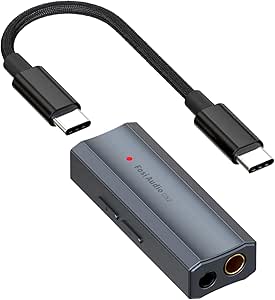 | Best Value Wired Dongle | DAC chips: Two Cirrus Logic CS43131 | Supported formats: DSD256; PCM 32-bit/384kHz | Outputs: 3.5mm single-ended; 4.4mm balanced | VIEW ON AMAZON | See Our Full Breakdown |
| Questyle M15i Blues Blue Headphone Amplifier Portable USB C DAC Amps |  | Best for Jazz and Blues Listening | Chipset: ESS ES9281AC | Decoding: PCM768; DSD512 | Tuning: Jazz / Blues | VIEW ON AMAZON | See Our Full Breakdown |
| Qudelix-5K Bluetooth USB DAC Amp with LDAC, aptX Adaptive, aptX HD, AAC |  | Best for Wireless Headphone Listening | DAC: Dual ES9219 | Bluetooth chipset: Qualcomm QCC5124 | Bluetooth codecs: LDAC, aptX Adaptive, aptX HD, AAC | VIEW ON AMAZON | See Our Full Breakdown |
| USB-C to 3.5mm Adapter with Dual Chip CX31993 MAX97220 DAC Amplifier |  | Best Simple USB-C Adapter | DAC chips: CX31993 and MAX97220 | Advertised audio support: Up to 32-bit/384kHz | Connector: USB Type-C | VIEW ON AMAZON | See Our Full Breakdown |
More Details on Our Top Picks
iFi GO Link 2 Max USB DAC Headphone Amp
For Apple Music Lossless listeners who want a small USB-powered DAC with a balanced headphone connection, the iFi GO Link 2 Max combines dual ESS Sabre chips with a stated 241mW from its 4.4mm output. That extra output can give compatible headphones more headroom than a basic phone adapter, while its PCM 384kHz and DSD256 support exceeds what Apple Music Lossless itself requires. Compared with the FiiO KA15, the iFi emphasizes a simpler portable DAC-and-amp setup rather than a display, multiple connection options, and app-based EQ. Its tradeoffs are practical: it needs a USB audio source, offers no Bluetooth, and the available details do not establish a 3.5mm output. Buyers should check that their headphones use a compatible balanced cable and that their phone or computer supports USB audio output.
Pros:- Dual ESS Sabre DAC chips and stated low-noise design
- Balanced 4.4mm output rated at 241mW
- Supports PCM up to 384kHz and DSD256
- Portable cable-style USB design
Cons:- Requires a compatible USB audio source and draws from that setup
- No Bluetooth or standalone playback
- Balanced output is useful only with compatible headphones and cabling
Best for: Apple Music listeners with balanced 4.4mm headphones who want a lightweight USB DAC for a phone or laptop.
Not ideal for: Listeners who want Bluetooth, a built-in music player, or a stated single-ended 3.5mm connection; the listed details focus on USB input and balanced output.
- DAC chips:Dual ESS Sabre
- Interface:USB
- Audio channels:2
- Output mode:Balanced 4.4mm
- Balanced output power:241mW
- PCM support:Up to 384kHz
- DSD support:DSD256
- Body material:Plastic
Our verdict“Choose the GO Link 2 Max if you want a compact wired source for balanced headphones, not an all-purpose wireless DAC.”
iFi Zen Air DAC 2 Hi-Res Audio Converter
The iFi Zen Air DAC 2 suits an Apple Music setup centered on a computer or tablet and wired headphones. Its listed balanced headphone output, boosted drive, and PowerMatch give headphone owners ways to tailor output to their load, while Bass Restore is aimed at bringing weight back to lean-sounding material. Unlike the pocketable iFi GO Link 2 Max, this is a desktop-oriented choice, so it makes more sense as a fixed listening station than as a phone companion on the move. The product details, however, give little information about its ports, supported sample rates, or exact output power; I would not choose it on the assumption that it has a particular input or format capability beyond what is stated. It also depends on a connected source and does not provide wireless playback.
Pros:- Balanced headphone output
- PowerMatch is designed to adjust drive for different headphones
- Bass Restore offers a way to add perceived low-end weight
- Desktop-oriented metal design in a midnight blue finish
Cons:- Requires a connected PC, laptop, or tablet
- Available product details do not specify supported sample rates or port selection
- Not a portable or wireless listening solution
Best for: Computer-based Apple Music listeners who want a desktop headphone DAC with drive adjustment and bass restoration features.
Not ideal for: Travel listeners or buyers who need clearly documented connection options and format support before purchasing.
- Compatibility:PC, laptop, tablet
- Headphone drive:Described as 300% more
- Output:Balanced headphone output
- Bass Restore:Yes
- PowerMatch:Yes
- Finish:Midnight blue
- Build:Metal design
Our verdict“Pick the Zen Air DAC 2 for a desk-based headphone setup where drive matching and bass restoration matter more than portability or detailed format documentation.”
Fosi Audio Q6 Mini Desktop DAC
The Fosi Audio Q6 is the lineup’s clearest fit for an Apple Music system that shares speakers or an amplifier with other digital sources. USB can connect a computer, while optical and coaxial inputs accommodate compatible streamers and disc players; RCA and sub-out connections send the converted signal onward to a stereo system. That flexibility sets it apart from the headphone-focused MOONDROP Dawn Pro 2, which is a portable DAC/amp rather than a multi-input desktop converter. The Q6’s high-resolution support reaches well beyond Apple Music Lossless, but those headline rates do not make Apple’s catalog sound better by themselves. It also has no built-in headphone amplification, so headphone-only buyers need another amp. Its feature set and configuration options may be unnecessary for someone seeking a simple phone dongle.
Pros:- USB, optical, and coaxial digital inputs
- RCA and sub-out connections for a stereo setup
- Supports PCM up to 32bit/768kHz and DSD512
- Aluminum-alloy chassis with AKM DAC and XMOS processor
Cons:- No built-in headphone amplifier
- Requires a separate amplifier or powered speakers for listening
- High-resolution format support goes beyond what Apple Music Lossless needs
Best for: Apple Music listeners using a computer alongside a streamer or CD player who want one compact DAC feeding an RCA-based stereo system.
Not ideal for: Buyers seeking a portable headphone DAC, a direct headphone output, or a plug-in phone adapter.
- DAC chipset:AKM AK4493S
- Processor:XMOS XU316
- Inputs:USB, optical, coaxial
- Outputs:RCA, sub-out
- PCM support:Up to 32bit/768kHz
- DSD support:DSD512
- Signal-to-noise ratio:121dB
- Distortion:0.00012%
- Material:Aluminum alloy
Our verdict“Choose the Q6 when Apple Music is one of several digital sources feeding a stereo system, not when you need a headphone amp.”
FiiO KA15 Portable DAC and Headphone Amplifier (Black)
The FiiO KA15 is the most configurable pocket DAC in this group: it pairs a color display with app-based EQ, multiple device compatibility, and a stated desktop-mode output of 560mW+560mW. For Apple Music Lossless, that means more than format headroom; the EQ can help tailor playback to particular headphones, and the display gives access to device information without relying entirely on a phone screen. Compared with the iFi GO Link 2 Max, the KA15 offers a richer interface and wider stated compatibility, but its extra controls and app features may feel like needless complexity for someone who just wants a basic wired adapter. The listed connectivity includes USB and 3.5mm coax/SPDIF, but does not specify headphone output connectors. App control is also limited to Android, which narrows the customization story for iPhone users.
Pros:- Supports PCM up to 768kHz/32bit and DSD256
- Customizable EQ through the app
- 0.96-inch color LCD provides an on-device interface
- Compatible with iOS, iPadOS, Android, Windows, and macOS
Cons:- App control features are limited to Android
- The interface and firmware features may take setup and learning
- Listed connectivity does not clearly specify headphone output connectors
Best for: Apple Music listeners who want a portable DAC with an on-device display, headphone EQ options, and compatibility across Apple and computer platforms.
Not ideal for: iPhone owners who expect full app control, or buyers who want a minimal dongle with clearly documented headphone output connections.
- Model:KA15
- Supported sampling rates:Up to 768kHz/32bit
- DSD support:DSD256
- Desktop-mode output power:560mW+560mW
- Display:0.96-inch IPS color LCD
- Connectivity:USB, 3.5mm coax/SPDIF, microphone input
- Compatibility:Android, iOS, iPadOS, Windows, macOS
- Hi-Res certified:Yes
Our verdict“Choose the KA15 if you value display-led control and EQ more than the simplicity of the GO Link 2 Max.”
MOONDROP Dawn Pro 2 Decoder Headphone Amplifier
The MOONDROP Dawn Pro 2 is a portable USB DAC/amp for listeners who want to shape headphone playback as well as convert a digital signal. Its dual CS43198 DACs, 4Vrms output voltage, and app-based EQ make it a more tuning-focused alternative to the iFi GO Link 2 Max, whose listed appeal centers on balanced output power and a cable-style portable form. MOONDROP also specifies iOS and Android app compatibility, a useful distinction for Apple Music listeners who want access to EQ from an iPhone. The aluminum housing adds durability, while the stated output power is 124+124mW. That figure is not directly comparable to the iFi’s 241mW without matching the measurement conditions and output configuration. Buyers who prefer automatic setup may find the app and EQ options more involved than needed.
Pros:- Dual Cirrus Logic CS43198 DAC chips
- MOONDROP app supports iOS and Android EQ customization
- 4Vrms output voltage and stated 124+124mW output power
- Aviation-grade aluminum-alloy housing
Cons:- USB-only connectivity with no Bluetooth
- App setup and EQ options may add complexity for beginners
- Listed output power is lower than the GO Link 2 Max’s stated 241mW, though ratings may use different conditions
Best for: iPhone or Android listeners who use wired headphones and want portable USB conversion with app-based EQ customization.
Not ideal for: Listeners who want wireless playback, a standalone player, or a plug-and-play experience without app setup and audio tuning.
- DAC chips:Dual Cirrus Logic CS43198
- Power chips:Three LDOs
- Sampling rate:Up to 384kHz
- DSD support:DSD256
- Output voltage:4Vrms
- Output power:124+124mW
- Volume control:100-level smooth DAC volume
- Connectivity:USB
- App compatibility:iOS and Android
Our verdict“Choose the Dawn Pro 2 if you want an iOS-compatible EQ app and portable headphone amplification more than a simple, untuned USB DAC.”
Questyle M18i Max Headphone Amplifier Bluetooth 5.4 Receiver Portable USB DAC with Dual Outputs
The Questyle M18i Max is the flexible pick for Apple Music listeners who want one portable device for USB playback and wireless listening. Its USB DAC mode supports PCM up to 384kHz and DSD256, while Bluetooth 5.4 and a broad codec list make it useful when a cable is inconvenient. That flexibility sets it apart from the Fosi Audio DS2, which is a wired-only dongle, and gives it a different role from the WiiM Mini, a home streamer rather than a headphone amp.
The tradeoff is that the supplied information does not specify battery capacity or runtime, so I can’t gauge how well it suits long mobile sessions. Manual gain and several listening modes may also feel like extra setup for casual use. Apple Music lossless over USB is the clearest fit; Bluetooth playback depends on the phone’s connection and codec, so it shouldn’t be treated as equivalent to a wired lossless path.
Pros:- USB DAC support for PCM up to 384kHz and DSD256
- Bluetooth 5.4 with AAC, LDAC, aptX variants, and other listed codecs
- 3.5mm unbalanced and 4.4mm balanced outputs
- Switches between Bluetooth receiver and USB DAC modes
Cons:- Battery capacity and runtime are not specified
- Multiple modes and manual gain may be more involved than a basic USB dongle
- Bluetooth playback is not the same lossless path as wired USB playback
Best for: Apple Music listeners who want a portable headphone amp that can switch between USB DAC use and Bluetooth listening, with both 3.5mm and 4.4mm headphones.
Not ideal for: Buyers who need confirmed battery runtime or a simple wired-only dongle; the available details leave endurance unclear, and the mode and gain options add complexity.
- DAC chip:ESS ES9219Q
- Outputs:3.5mm unbalanced; 4.4mm balanced
- Bluetooth:Version 5.4
- Supported codecs:AAC, SBC, aptX, aptX HD, aptX Adaptive, LE Audio, LDAC
- High-resolution support:PCM 384kHz; DSD256
- Amplifier distortion:0.0002%
- Microphone:Infineon flagship microphone; stated 2-meter range
Our verdict“Choose the M18i Max if you want one portable device for wired Apple Music playback and flexible Bluetooth listening, and can accept uncertainty about battery life.”
Surfans F20 Pro Hi-Res Music Player with Dual ESS9018 DAC, DSD512, WiFi & Bluetooth LDAC, Expandable 1TB, Touchscreen, Portable MP3 DAP (Gray)
The Surfans F20 Pro makes the most sense for listeners who want a dedicated player, rather than a DAC dongle attached to an iPhone. Its 32GB of built-in storage and microSD expansion up to 1TB suit a large offline library, while Wi-Fi and listed support for streaming apps offer another way to access music. Compared with the Fosi Audio DS2, it is a self-contained player with a screen and storage; unlike the WiiM Mini, it is designed for portable headphone listening.
There is an Apple Music caveat: the supplied details name Spotify and Tidal, but do not confirm Apple Music app support. I would not choose it as an assured Apple Music streaming device without verifying that compatibility. Battery life and weight are also unspecified, and its extra player functions make it less direct than a phone-plus-DAC setup for listeners who already use Apple Music on iOS.
Pros:- 32GB built-in storage with microSD expansion up to 1TB
- Dual ESS9018 DACs and stated DSD512 support
- 3.5mm single-ended and 4.4mm balanced outputs
- Wi-Fi and Bluetooth 5.0 with LDAC listed
Cons:- Apple Music app compatibility is not specified
- Battery life and weight are not provided
- A dedicated player adds another device and library workflow for iPhone users
Best for: Listeners who want a dedicated portable player for local lossless files, expandable storage, and supported streaming apps, and who do not require confirmed Apple Music app support.
Not ideal for: Buyers seeking a straightforward Apple Music device with verified app compatibility, or those prioritizing known battery endurance and weight.
- DAC:Dual ESS9018
- Storage:32GB built in; expandable up to 1TB via microSD
- Supported formats:FLAC, WAV, WMA, M4A, MP3, MP2, AAC
- Outputs:3.5mm single-ended; 4.4mm balanced
- Connectivity:Wi-Fi, Bluetooth 5.0, USB
- Screen:2.73 inches
- Dimensions:4.01 × 0.62 × 2.33 inches
Our verdict“Pick the F20 Pro for a storage-rich portable player, but verify Apple Music compatibility before buying it specifically for that service.”
WiiM Mini AirPlay 2 Wireless Audio Streamer with Multiroom Support
The WiiM Mini is the home-system choice in this group: it receives AirPlay 2 and sends audio to a stereo through analog or optical output. That makes it more useful for adding Apple Music playback to existing speakers than the portable Fosi Audio DS2 or Questyle M18i Max, both aimed at headphones. Its app, voice-control options, and multiroom support also suit a shared listening setup rather than a single-person portable rig.
The key distinction is that the WiiM Mini is a streamer, not a standalone audiophile DAC with a headphone output. Its stated support up to 192kHz/24-bit does not by itself establish the resolution of every AirPlay stream, and Apple Music playback follows the AirPlay route from a compatible device. It also lacks Google Cast support. Choose it for convenient home integration, not as the most direct way to drive demanding headphones.
Pros:- AirPlay 2 receiving for Apple-device streaming
- Analog and optical outputs for connecting to different stereo systems
- Supports multiroom playback with compatible AirPlay 2 devices
- Lists support for streaming services including TIDAL and Qobuz
Cons:- No dedicated headphone output or headphone amplifier
- Limited to receiving AirPlay rather than transmitting AirPlay to other speakers
- Does not support Google Cast
Best for: Apple Music listeners who want to add AirPlay 2 streaming to an existing stereo or powered-speaker setup, with app and voice-control options.
Not ideal for: Headphone listeners needing a built-in headphone amp, or households that depend on Google Cast or Google Assistant.
- Wireless connectivity:Wi-Fi, Bluetooth, AirPlay
- Audio outputs:Analog auxiliary, optical TOSLINK, Bluetooth
- Stated audio support:Up to 192kHz/24-bit
- Audio output mode:Analog and digital
- Channels:2
- Control:App, remote, voice
- Listed integrations:AirPlay 2, Siri, Alexa, Spotify Connect, TIDAL Connect, NAS, DLNA
Our verdict“Choose the WiiM Mini to bring AirPlay-based Apple Music playback into a home stereo, not for portable headphone listening.”
Fosi Audio DS2 USB-C to AUX Headphone Amp DAC Dongle
The Fosi Audio DS2 is the straightforward wired pick for Apple Music lossless: connect it to a compatible USB-C phone, tablet, or computer, then plug in headphones. Its dual Cirrus Logic CS43131 chips, 3.5mm and 4.4mm outputs, and stated PCM 32-bit/384kHz support give it a more fully featured connection panel than a basic USB-C adapter. Compared with the WiiM Mini, it is built for headphones rather than a living-room stereo; compared with the Questyle M18i Max, it skips Bluetooth and focuses on a simpler wired path.
That simplicity has limits. It draws power from the connected device, so extended listening can affect phone or tablet battery life, and it requires USB-C. Its stated 170mW per channel at 32 ohms is useful context, but very power-hungry headphones may call for a more capable amplifier. For Apple Music, its appeal is a direct, portable DAC connection, not wireless convenience.
Pros:- Dual CS43131 DAC chips with stated PCM 32-bit/384kHz and DSD256 support
- 3.5mm single-ended and 4.4mm balanced outputs
- Independent volume control with memory function
- CNC-machined metal body weighing 1.92 ounces
Cons:- Requires a USB-C connection
- No built-in battery; it draws power from the source device
- 170mW per channel at 32 ohms may not suit every demanding headphone
Best for: USB-C iPhone, iPad, or computer owners who want a compact wired DAC and headphone amp with both single-ended and balanced connections.
Not ideal for: Listeners with Lightning-only devices, those who want Bluetooth, or owners of power-hungry headphones who need more specified output power.
- DAC chips:Two Cirrus Logic CS43131
- Supported formats:DSD256; PCM 32-bit/384kHz
- Outputs:3.5mm single-ended; 4.4mm balanced
- Output power:170mW per channel at 32 ohms
- Noise floor:1μV
- THD:0.0001%
- SNR:130dB
- Weight and material:1.92 ounces; CNC-machined solid metal
Our verdict“Choose the DS2 for a compact, wired Apple Music DAC setup if your source has USB-C and your headphones do not need unusually high power.”
Questyle M15i Blues Blue Headphone Amplifier Portable USB C DAC Amps
The Questyle M15i Blues Blue is the specialist option for listeners drawn to its stated jazz-and-blues tuning, rather than a neutral, do-everything dongle. Its ESS ES9281AC chipset and Current Mode Amplifier support high-resolution decoding, while MFi certification and listed iOS compatibility make it a relevant wired companion for Apple devices. Compared with the Fosi Audio DS2, which lists both 3.5mm and 4.4mm outputs and defined output-power figures, the M15i’s appeal rests more on its tuning and compatibility than on a detailed output specification.
PCM768 and DSD512 support exceed what Apple Music lossless requires, so those format limits are not the main buying reason here. The supplied description emphasizes in-ear headphones, and it does not list an output connector or output-power figure; buyers with full-size or demanding headphones should check those details before choosing it. This makes it a more particular match than the flexible Bluetooth-equipped M18i Max.
Pros:- MFi certified with compatibility listed for iOS devices
- Supports PCM768 and DSD512 decoding
- Uses Questyle Current Mode Amplifier technology
- Low-power-consumption design is suited to portable use
Cons:- The jazz-and-blues tuning may not suit listeners seeking a neutral presentation
- Supplied details do not specify the output connector or output power
- The description favors in-ear headphones, limiting confidence for full-size headphone pairing
Best for: iPhone listeners who mainly use in-ear headphones, want a wired USB-C DAC, and prefer the maker’s stated jazz-and-blues tuning.
Not ideal for: Buyers seeking Bluetooth, clearly specified output connections and power, or a broadly neutral DAC for full-size headphones.
- Chipset:ESS ES9281AC
- Decoding:PCM768; DSD512
- Tuning:Jazz / Blues
- Certification:MFi certified
- Amplifier technology:Current Mode Amplifier (CMA)
- Impedance range:8–600 ohms
- Compatibility:iOS, Android 5.1+, Windows 10+, Harmony OS
- Included accessories:USB-C to USB-C cable; USB-C to USB-A converter; manual
Our verdict“Choose the M15i if you want a portable, MFi-certified DAC with a jazz-and-blues focus for in-ear listening, and verify its output fit for your headphones.”
Qudelix-5K Bluetooth USB DAC Amp with LDAC, aptX Adaptive, aptX HD, AAC
The Qudelix-5K is the flexible pick for Apple Music Lossless listeners who want to use wired headphones without staying tethered to a phone. Its USB DAC mode provides a wired route, while Bluetooth receiver mode adds convenience when a cable between phone and DAC is unwelcome. For Bluetooth playback, codecs such as LDAC and AAC can carry good-quality audio, but Bluetooth is not the same as a lossless USB connection; use USB when preserving the lossless stream matters most. Compared with the iFi GO Link 2 Max, the Qudelix adds battery-powered wireless use and a clip-on form, while the iFi is a simpler wired-dongle choice. The 2.5mm balanced and 3.5mm outputs broaden headphone compatibility, though the plastic body and receiver-only Bluetooth design limit its appeal to buyers seeking a metal-built unit or a Bluetooth transmitter.
Pros:- USB DAC mode offers a wired playback option for Apple Music Lossless.
- LDAC, aptX Adaptive, aptX HD, and AAC support gives flexibility with Bluetooth sources.
- 2.5mm balanced and 3.5mm unbalanced outputs support different wired headphone plugs.
- Compact 25g design and stated 6–20-hour battery life suit portable listening.
Cons:- Bluetooth mode is receiver-only and cannot transmit audio to Bluetooth headphones.
- Bluetooth playback does not provide the same lossless connection as USB playback.
- Plastic body may feel less robust than metal-bodied portable DACs.
Best for: Apple Music listeners who want a pocketable DAC for wired headphones, with the option to switch between USB playback and Bluetooth reception.
Not ideal for: Listeners who want a Bluetooth transmitter for wireless headphones, or who prefer a direct, wired-only dongle such as the iFi GO Link 2 Max.
- DAC:Dual ES9219
- Bluetooth chipset:Qualcomm QCC5124
- Bluetooth codecs:LDAC, aptX Adaptive, aptX HD, AAC
- Outputs:2.5mm balanced (4V RMS); 3.5mm unbalanced (2V RMS)
- Battery:500mA Li-Po; 6–20 hours of streaming
- Dimensions:52.8 x 26.7 x 15.6 mm
- Weight:25g
- Body material:Plastic with anti-scratch UV coating and aluminium clip
Our verdict“Choose the Qudelix-5K if you want one compact device for wired USB listening and Bluetooth reception with wired headphones.”
USB-C to 3.5mm Adapter with Dual Chip CX31993 MAX97220 DAC Amplifier
This adapter suits Apple Music listeners who want a small, direct connection from a USB-C device to wired 3.5mm headphones. Unlike the battery-powered Qudelix-5K, it has no Bluetooth modes or separate charging routine: connect it to a compatible port and use the headphone jack. The listing claims support up to 32-bit/384kHz, which exceeds Apple Music’s lossless stream formats, but the supplied product data does not specify output power or confirm detailed device-by-device support. Its aluminium casing and included USB-A adapter add practical flexibility for laptops and other compatible devices. The tradeoff is a narrower job: there is no balanced output, battery, or wireless option, and USB-C or USB-A compatibility is required. Choose it over the Qudelix when uncomplicated wired listening matters more than portable wireless features.
Pros:- Direct USB-C-to-3.5mm connection keeps setup simple for wired headphones.
- Advertised support up to 32-bit/384kHz exceeds Apple Music’s lossless formats.
- Aluminium alloy casing offers a sturdier shell than a basic plastic adapter.
- Included USB-A adapter adds compatibility with some computers and other devices.
Cons:- Only a 3.5mm connection is listed, with no balanced output option.
- Requires a compatible USB-C or USB-A port and does not provide wireless playback.
- Output power and detailed compatibility limits are not specified in the supplied product data.
Best for: USB-C phone, tablet, and laptop owners who use 3.5mm wired headphones and want a compact adapter without a battery or Bluetooth setup.
Not ideal for: Listeners who need balanced headphone output, Bluetooth reception, or a clearly specified drive capability for demanding headphones.
- DAC chips:CX31993 and MAX97220
- Advertised audio support:Up to 32-bit/384kHz
- Connector:USB Type-C
- Number of ports:2
- Cable material:8-strand 4N single-crystal copper, silver-plated
- Build material:Aviation-grade aluminium alloy casing
- Color:Green
- Warranty:20 months
Our verdict“Pick this adapter for straightforward Apple Music listening through 3.5mm wired headphones on a compatible USB device.”

How We Picked
I ranked these options by how well they fit the specific job of getting Apple Music Lossless to headphones or a home audio system. The main factors were connection compatibility with common Apple devices, the practicality of wired digital playback, headphone output options and power, portability, and whether the product’s inputs suit a desktop or stereo setup. I also separated DACs from streamers and standalone players, since those products solve different listening problems even when they can be part of the same system.
The ranking favors useful performance and straightforward setup over feature counts alone. That puts the iFi GO Link 2 Max first as a versatile portable choice, with the FiiO KA15 and other portable DAC/amps appealing to buyers who want additional controls or outputs. Desktop converters, wireless receivers, and the WiiM Mini rank according to their value in their intended setting, not as direct substitutes for a wired headphone DAC. Compact adapters remain relevant for simple listening, but they offer less flexibility than dedicated DAC/amps.
Factors to Consider When Choosing Audiophile Dacs For Apple Music Lossless
Choosing a DAC for Apple Music is less about chasing the largest supported audio number and more about matching the connection to your listening habits. I’d start by deciding whether you listen on headphones, a home stereo, or both, then check how your Apple device will connect and what your headphones require.
Choose the connection that preserves your intended signal
A USB connection from an iPhone, iPad, or computer to a compatible DAC is the straightforward route for wired Apple Music Lossless. Bluetooth may be convenient, but its codec and device support determine how audio is transmitted, so a Bluetooth DAC does not automatically provide the same path as USB. Check whether your source device has the port the DAC expects, and whether you need an adapter or a powered hub. Also check Apple Music’s audio quality settings; a capable DAC cannot recover quality that the app is set not to send. If you mostly listen wirelessly, prioritize stable pairing and comfort rather than buying hardware for a lossless format that your connection does not carry.
Match output and power to your headphones
DAC specifications matter most when they address a real need in your headphone setup. Sensitive in-ear monitors can reveal hiss from a noisy output, while demanding over-ear headphones may benefit from a more capable amplifier. A balanced connector can offer a different output option, but it does not guarantee better sound and requires headphones or a cable with the matching plug. Avoid buying a more powerful unit solely because its output figure is larger; extra power is useful only if your headphones need it. If you switch between easy-to-drive earbuds and full-size headphones, look for practical output choices and low-noise behavior rather than one headline spec.
Decide whether you need a headphone DAC or a stereo converter
Portable USB DAC/amps are designed to sit between a phone or computer and wired headphones. A desktop DAC with RCA outputs is more useful when the destination is powered speakers, an integrated amplifier, or another home component. Optical and coaxial inputs can also connect a television, disc player, or other digital source, which may make a desktop model more versatile than a dongle at home. A wireless streamer addresses a different task: it brings network or AirPlay playback to a stereo system rather than serving as a pocket headphone amp. Buying the wrong form factor can leave you with extra adapters or a device that cannot connect to your main listening setup.
Separate lossless support from resolution claims
Apple Music offers lossless and high-resolution lossless tracks, but a DAC’s maximum format support does not improve every recording or guarantee an audible difference. The source file, app configuration, connection, and the rest of the audio chain all play a part. For many buyers, reliable playback and a quiet, clean headphone output are more useful than support for extreme sample rates. Check that the DAC works with your operating system and music app before treating a format specification as a buying advantage. Spend extra for the inputs, controls, or headphone drive you will use, not just a larger number printed in the feature list.
Account for everyday power, controls, and portability
A tiny dongle is easy to carry, but it can occupy a phone’s port, add cable clutter, and draw power from the device. A larger portable DAC/amp may offer physical controls or more output options, though it can be less convenient in a pocket. Desktop models avoid phone battery concerns but need a settled place and compatible cables. Before choosing, think through a normal listening session: where the DAC sits, whether you adjust volume often, and whether you need to charge or connect other devices at the same time. Those small practical details can matter more than a minor difference in supported formats.
Buy for the whole chain, not the DAC alone
A DAC converts digital audio, but it cannot fix a poor headphone fit, noisy environment, or recording you do not enjoy. If you are building a first wired setup, it can make sense to keep the DAC simple and put more attention toward headphones that suit your preferred music and comfort needs. Existing headphones may change the equation: a difficult-to-drive model or balanced cable can make output capability more relevant. For a home system, verify the DAC’s output type matches the amplifier or speakers before buying. A well-matched basic chain is often more satisfying than a feature-heavy converter paired with incompatible equipment.
Frequently Asked Questions
Will any of these DACs make Apple Music sound lossless over Bluetooth?
No DAC can make Bluetooth carry an audio format that the source and receiving devices do not support. The Qudelix-5K and Questyle M18i Max add useful wireless listening options, but Bluetooth playback involves codec and device compatibility that differs from a direct USB connection. For the most predictable wired lossless path, connect a compatible DAC to your Apple device with USB. If you choose Bluetooth for convenience, treat it as a separate listening mode rather than assuming the lossless label carries through unchanged.
Do I need a high-resolution DAC to listen to Apple Music Lossless?
You need a DAC that can receive and convert the signal from your device, but you do not need the highest format specification available to hear standard lossless tracks. Apple Music’s high-resolution lossless tier can call for more careful setup, and the DAC must support the incoming format for playback at that rate. Most buyers should first confirm device compatibility, app settings, and a suitable connection. A high maximum sample rate is a weak reason to pay more if you will not use the added capability.
Can I use a portable USB DAC with an iPhone that has USB-C?
Many portable USB DACs can connect to a USB-C iPhone, but compatibility depends on the DAC, cable, power draw, and any required app or system support. Check the product’s connection requirements before buying and use a cable suited to both devices rather than assuming every charging cable carries data. A bus-powered DAC may draw power from the phone, which can affect battery life during longer sessions. If you also listen from a computer, confirm that the same DAC supports that operating system and connection.
Should I choose the WiiM Mini or a USB DAC for Apple Music?
Choose based on where the sound needs to go. The WiiM Mini is aimed at bringing wireless streaming to a home audio system, while a USB DAC such as the FiiO KA15 or iFi GO Link 2 Max is designed for a direct wired connection, especially with headphones. AirPlay and other wireless paths can make a stereo setup easier to use, but they are not the same use case as a USB connection intended for wired lossless playback. Check current Apple Music and device support for the streaming route you plan to use before making the choice.
Is a standalone player like the Surfans F20 Pro a better choice than a DAC for Apple Music?
Not if your main goal is to play Apple Music from an iPhone or computer through an external converter. A standalone music player is a separate source device, and its app and streaming-service support may not match what you expect from an Apple Music setup. A USB DAC connected to a device that already runs Apple Music is usually the more direct option. Consider a standalone player when you want a self-contained portable music library or player experience, and confirm its service compatibility before treating it as an Apple Music replacement.
Conclusion
For a single portable pick, I’d choose the iFi GO Link 2 Max as the best overall, with the FiiO KA15 a stronger fit if extra controls and flexibility matter more. For best value in a simple headphone setup, the Fosi Audio DS2 or compact CX31993 adapter is a practical place to start; the entry-level adapter is best for beginners who want minimal fuss and have easy-to-drive headphones. For a premium portable feature set, compare the Questyle M18i Max and Questyle M15i around your preferred wired or wireless use. Choose the Fosi Audio Q6 for a desktop stereo chain, and the WiiM Mini for a wireless home-streaming role. The best match is the one that fits your device, headphones, and listening location—not the one with the most impressive format claim.
Halloween Picks
halloween
As an affiliate, we earn on qualifying purchases.