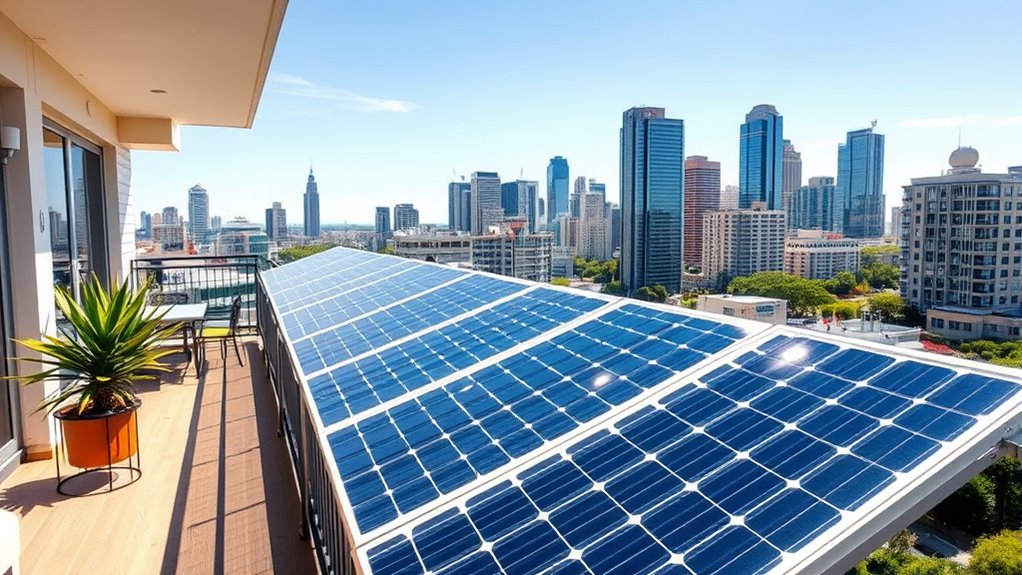

A balcony solar setup can mean very different things: feeding power into a home circuit, charging a battery for later, or assembling a small off-grid system. My leading choice for a more complete balcony-style grid-tie package is the 800W Plug and Play Solar Power System, which pairs four panels with an inverter and long cable. For buyers who already have panels and want a feature-rich inverter, the Cosmoxstar 1200W Micro Inverter offers dual MPPT inputs and app monitoring. If you want power you can carry indoors or take camping, the Jackery Solar Generator 1000 v2 is the clearer fit.

Get audio and creator gear delivered free with Prime
- Fast, free delivery on millions of items
- Prime Video, Amazon Music and more included
- Member-only deals all year
Those picks do not solve the same problem. A plug-in grid-tie kit can offset household use while the sun is shining, whereas a battery station stores energy for use away from the balcony. The Jackery SolarSaga panel and ECO-WORTHY kit are component-style choices rather than complete balcony grid-tie packages. I rank these options by how directly their included parts fit a balcony-solar goal, how much additional equipment or planning they call for, and how clearly their tradeoffs are described. Before buying any grid-connected system, check local rules, building requirements, and electrical compatibility.
Complete the kit


Key Takeaways
- Most complete grid-tie package: The 800W plug-and-play system includes four 200W panels, an inverter with a power monitor, and a 50-foot cord; confirm its outlet-based connection is permitted where you live.
- Best inverter for a DIY build: Cosmoxstar adds dual MPPT tracking and WiFi monitoring, but it is an inverter, not a complete solar kit, so you need compatible panels and must verify electrical requirements.
- Best for stored, portable power: Jackery Solar Generator 1000 v2 combines a 1070Wh battery and 200W of panels, but it does not work like a grid-tie balcony kit.
- Best single-panel add-on: SolarSaga 100 Prime is a compact 100W bifacial panel with an IP68 rating; expect to source compatible charging equipment separately.
- Best for a basic off-grid array: ECO-WORTHY supplies two 100W panels and a PWM controller, but its 200W total and controller-focused setup suit modest battery charging better than household grid export.


More Details on Our Top Picks
Plug and Play Solar Power System with 800-Watt Solar Panels and Inverter
This is the most direct match in the lineup for someone searching for a balcony solar kit rather than a panel or battery on its own. Four 200W panels, an 800W micro-inverter, a built-in power monitor, and a 50-foot cord make it the most complete package described here. Compared with the Cosmoxstar inverter, it removes some component-matching work; compared with the Jackery battery kit, it aims to feed household use while generating rather than store power for later.
That convenience comes with an important qualification: “plug and play” does not settle whether a wall-outlet connection is allowed or suitable for your home. I would treat the stated 1500 kWh annual generation and possible bill reduction as estimates, not promises. Sun exposure, panel angle, shade, and local electrical rules all affect the outcome. The product is also described for residential use, so it is not the natural choice for renters without permission or for buyers who need a fully portable power source.
The shipment split across two deliveries adds a practical nuisance: the system may not be ready to assemble when the first package arrives. Still, for buyers seeking the lineup’s clearest all-in-one path to a modest grid-connected setup, this has a stronger claim than the component-only ECO-WORTHY and SolarSaga options. I would confirm the permitted connection method and mounting plan before ordering.
Pros:- Four 200W panels provide 800W of stated panel capacity.
- Includes an inverter, power monitor, and 50-foot cord.
- More complete as a grid-oriented package than the inverter-only Cosmoxstar.
- Plug-in design aims to reduce setup complexity compared with assembling separate components.
Cons:- Two separate shipments can delay a complete installation.
- Performance depends on sunlight, shade, and panel orientation.
- Outlet-based connection suitability and local permission need independent verification.
Best for: Homeowners with a suitable, permitted installation point who want panels, an inverter, monitoring, and a long connection cord in one package.
Not ideal for: Renters without written approval, buyers who need battery storage, or anyone whose local rules or wiring do not permit the described outlet connection.
- Panel count:4
- Total stated panel power:800W
- Inverter:Micro-inverter with power monitor
- Cord:50 feet
- Estimated annual generation:1500 kWh; actual output varies
Our verdict“I rank this first for its comparatively complete grid-tie package, provided the buyer verifies that the connection and installation are allowed and suitable.”
Cosmoxstar 1200W Micro Inverter with 2 MPPT, WiFi App Control, and IP67 Waterproof Rating
Cosmoxstar is the most specialized pick here: it supplies a 1200W micro-inverter, not a complete panel-and-inverter package. Dual MPPT channels can track two panel inputs separately, a useful feature when balcony panels receive different amounts of sun or face different directions. The WiFi app adds production monitoring, while the IP67 rating describes protection from dust and water exposure.
Compared with the 800W plug-and-play system, this option puts more responsibility on the buyer. You must source panels with compatible electrical characteristics and confirm that the inverter’s input range and output match your planned system. Its stated 16–60V DC input and 110V AC output are particularly important details to check; the 110V output may not suit other electrical standards. A 1200W label alone does not mean it is a finished, approved household connection.
The compact unit and included 16.4-foot AC cable may help with a small custom installation, but the stated two-year warranty is shorter than the SolarSaga panel’s five years. I place it behind the complete 800W kit for buyers who want a straightforward package, yet ahead of loose-panel choices for DIY builders because it includes inverter controls and monitoring. I would choose it only after confirming panel compatibility, local interconnection rules, and safe mounting.
Pros:- Dual MPPT channels can help manage two differently exposed panel inputs.
- WiFi app control provides system monitoring.
- IP67 rating and compact enclosure suit outdoor equipment placement.
- Includes a 16.4-foot AC cable.
Cons:- Panels and other system components are not included in the supplied description.
- 110V AC output may not match a buyer’s electrical standard.
- Two-year warranty is shorter than the five-year SolarSaga panel warranty.
Best for: DIY buyers who already have or plan to source compatible panels and want dual-input tracking with app-based monitoring.
Not ideal for: Anyone expecting a complete solar kit, buyers who need a non-110V output, or people unwilling to verify grid-connection and panel compatibility.
- Model:NBQ
- Stated output power:1200W
- Conversion efficiency:96%
- MPPT channels:2
- DC input:16–60V
- AC output:110V
- Protection:IP67
- Connectivity and warranty:WiFi; 2 years
Our verdict“I recommend this inverter to informed DIY builders, not to shoppers who want a complete balcony kit in one purchase.”
Jackery Solar Generator 1000 v2 with 2x100W Light Solar Panels, 1070Wh Portable Power Station, LiFePO4 Battery, 1500W AC Output, Lightweight Solar Kit for RV, Camping, Emergency Backup
This Jackery bundle is the right choice when the priority is stored electricity, not feeding solar generation into a home circuit. Its 1070Wh power station, 1500W AC output, and two 100W panels create a portable system for charging compatible devices and running appliances within the station’s limits. Unlike the 800W grid-tie kit, it can hold energy for later use; unlike the SolarSaga 100 Prime, it includes a battery and power station rather than just a panel.
That makes it a poor like-for-like substitute for a balcony grid-tie system. The panel total is 200W, and the battery’s usable energy and charging speed depend on conditions and the station’s operating limits. Its stated 3000W surge rating may help with some startup loads, but buyers should check the needs of each appliance rather than assume every high-demand device will run. The package is also heavier than a single panel or inverter, even with the listed 23.8-pound station weight.
The LiFePO4 battery is listed for 4000-plus charge cycles, and the panels are described as IP68-rated, but the setup is still designed around portable and off-grid use. App setup is noted as part of getting optimal fast charging. I rank it below the two grid-oriented choices for a balcony electricity-offset goal, but it is the clearest pick for someone who wants balcony-charged energy available during a power interruption, at a campsite, or away from the home.
Pros:- Includes a 1070Wh LiFePO4 power station and two 100W panels.
- 1500W AC output with a stated 3000W surge rating.
- Portable stored power serves a different need from the grid-tie options.
- App control supports monitoring and charging management.
Cons:- Does not function as a grid-tie balcony system based on the supplied description.
- The 200W panel total can limit recharge speed in weak or changing sunlight.
- App setup is noted as necessary for optimal fast charging.
Best for: Campers, RV users, and households seeking a portable battery station that can be charged by solar panels and used away from the balcony.
Not ideal for: Buyers whose main goal is to send daytime solar power into household circuits or who want a fixed grid-tie installation.
- Battery capacity:1070Wh
- Battery chemistry:LiFePO4
- AC output:1500W
- Surge power:3000W
- Included solar panels:2 × 100W
- Power station weight:23.8 lb
- Stated charge cycles:4000+
Our verdict“I would choose this over the grid-tie kits only when portable battery backup matters more than direct household solar offset.”
ECO-WORTHY 200 Watts 12V/24V Solar Panel Kit with Monocrystalline Panels and 30A PWM Charge Controller
ECO-WORTHY offers a more traditional off-grid panel kit than the grid-oriented options above. It includes two 100W monocrystalline panels, a 30A PWM charge controller, mounting brackets, cables, and connectors. That bundle makes sense for charging a compatible 12V or 24V battery system in an RV, camper, boat, or small backup arrangement. The supplied description does not make it a plug-in household grid-tie system, so I would not buy it on the assumption that it can export power through a balcony outlet.
Its included controller and mounting hardware give it a parts advantage over the SolarSaga 100 Prime, which is a single 100W panel and may need additional components. In return, the ECO-WORTHY kit takes more knowledge to configure and is limited to 200W total panel power. The PWM controller is also a different design choice from a grid-tie micro-inverter: it supports battery charging, not direct household AC output by itself.
Stated panel efficiency reaches 21.5%, and the corrosion-resistant aluminum frame plus listed wind and snow load figures suggest a sturdier conventional panel format than a lightweight portable panel. Yet the description gives little warranty detail beyond one year, and the panels’ listed dimensions may prove awkward on a narrow balcony. I rank it as an off-grid value-style bundle, not as the best answer for someone seeking a simple balcony-to-home connection.
Pros:- Includes two 100W panels, a 30A PWM controller, brackets, cables, and connectors.
- Supports 12V and 24V off-grid system configurations.
- Corrosion-resistant aluminum frames and stated wind and snow load capacities.
- More complete for basic battery charging than the SolarSaga panel alone.
Cons:- 200W total output may be modest for larger energy needs.
- Requires setup knowledge and does not include a described grid-tie inverter.
- Warranty information is limited, with only one year specified.
Best for: RV, camper, boat, and small off-grid users who need two panels, a PWM controller, and basic mounting and wiring parts.
Not ideal for: Shoppers seeking a complete grid-tie balcony kit, a battery-free household connection, or more than 200W of stated panel capacity.
- Total panel power:200W
- Panels:2 × 100W monocrystalline
- System voltage:12V/24V
- Charge controller:30A PWM
- Panel dimensions:35.2 × 23.1 × 1.37 in each
- Frame:Corrosion-resistant aluminum alloy
- Wind and snow load:2400Pa wind; 5400Pa snow
- Included parts:Panels, controller, brackets, cables, connectors
Our verdict“I see this as a practical small off-grid kit, but not a substitute for the 800W grid-connected package or a battery station.”
Jackery SolarSaga 100 Prime Bifacial DIY Solar Panel, 100W Portable Solar Charger
The SolarSaga 100 Prime is a single 100W bifacial panel, so I rank it as an add-on for buyers who already have compatible charging equipment, not as a complete balcony system. Its 25% stated efficiency and bifacial design are appealing where panel area is limited, since the rear side may capture reflected light when placement and surroundings allow. Compared with ECO-WORTHY’s two-panel kit, this is lighter in scope and more portable, but it supplies less total panel power and does not include a described charge controller or battery.
The IP68 rating and listed temperature range suggest a panel intended to handle outdoor conditions, while included mounting hardware and brackets may simplify placement. Still, balcony railing geometry, wind exposure, and building rules matter more than a general claim of easy installation. A bifacial design does not guarantee a 20% increase in every installation; rear-side gains depend on clearance and reflective surfaces. Output also changes with sunlight, shade, angle, and temperature.
Jackery lists a five-year warranty, longer than the Cosmoxstar inverter’s two years, but this panel may require specific adapters for older Jackery products and additional components for a complete setup. That makes it less plug-and-play as a balcony solution than the 800W package. I would choose it for compact, flexible panel charging with gear compatibility already confirmed, and skip it if the goal is a ready-to-connect household system.
Pros:- Bifacial design and 25% stated efficiency suit buyers with limited panel area.
- IP68 rating is specified for outdoor protection.
- Includes mounting hardware and brackets.
- Five-year warranty is longer than the Cosmoxstar inverter warranty.
Cons:- One 100W panel is not a complete solar kit or grid-tie system.
- Some older Jackery models require specific adapters.
- Additional equipment may be needed, and actual output varies with conditions.
Best for: Jackery users or portable-power owners who need one weather-resistant 100W panel and have confirmed compatible cables and charging equipment.
Not ideal for: Buyers wanting an all-in-one balcony grid-tie package, substantial panel capacity, or a panel-and-controller bundle.
- Panel design:Bifacial
- Stated efficiency:25%
- Temperature range:-40°F to 185°F
- Warranty:5 years
- Mounting:Hardware and brackets included
Our verdict“I recommend the SolarSaga as a compact compatible-panel add-on, not as a standalone answer to household balcony solar.”

How We Picked
I ranked these five products by fit for the phrase balcony solar kits, not by treating every solar product as interchangeable. A balcony buyer usually needs to distinguish a grid-connected setup from a battery-based arrangement, and from loose panels or an inverter that still needs other parts. That distinction matters: wattage alone cannot tell you whether a product can send power to your home, store it for later, or simply charge a compatible battery.
My order gives the strongest placement to the option that arrives closest to a full balcony-oriented grid-tie system, then to a specialized inverter that could form the center of a DIY system. Portable battery power and individual panel components rank below those because they have different jobs or need more decisions before they become a working setup. I also weighed the supplied descriptions for included hardware, monitoring, stated weather protection, and setup demands. I did not treat estimated savings or generation figures as guaranteed outcomes; actual production varies with location, orientation, shade, and electrical conditions.
Product names can suggest more than the listed details establish. In particular, I do not assume that an outlet connection is lawful or compatible in every home, that the inverter is approved for a particular utility connection, or that a panel will fit a balcony railing. Buyers should verify local rules, building permission, electrical standards, mounting security, and component compatibility before installing or connecting equipment.
Factors to Consider When Choosing Balcony Solar Kits
Before comparing panel wattage, decide what “balcony solar” needs to do at your home. The products here divide into three different categories: a grid-oriented panel-and-inverter package, a DIY inverter or panel component, and a battery system for stored power. Matching the category to your goal will narrow the choice faster than comparing headline output alone.
Choose between grid-tie and stored power
A grid-tie setup is intended to use solar production in the home while it is being generated. In this group, the 800W Plug and Play system is the closest match because its description includes panels, a micro-inverter, a monitor, and a cord. The Cosmoxstar is only an inverter, so you must add suitable panels and check electrical requirements. By contrast, the Jackery 1000 v2 stores energy in a battery; that suits backup and portable use, not the same purpose as a grid-connected kit. Do not assume a particular outlet connection is permitted: verify local rules, utility requirements, and the product’s compatibility before connecting anything to home wiring.
Treat wattage as one part of the system
Panel wattage describes rated production under specified conditions, not guaranteed everyday output. An 800W set of panels does not produce that amount continuously, and shade, orientation, seasonal sun, and temperature can reduce generation. A 1200W inverter does not create extra panel capacity; it needs compatible solar inputs. Similarly, SolarSaga’s 100W rating and ECO-WORTHY’s 200W total serve different scales. I would compare the full path from panel to battery or home circuit, including the inverter or controller, rather than choosing by the largest number printed in a title.
Measure the balcony and plan a secure mount
Balcony space is often defined by railing width, usable floor area, sun exposure, and rules against altering the exterior. ECO-WORTHY’s panels measure 35.2 × 23.1 inches each, while SolarSaga is positioned as portable, but the provided details do not give its dimensions. Ask the seller for measurements if fit is uncertain. Panel weight, wind exposure, mounting method, and clearances matter: a bracket that fits a panel is not automatically a safe or approved railing mount. Confirm building permission and use mounting hardware rated for the installation rather than relying on a generic “easy setup” description.
Check included parts and electrical compatibility
Package completeness separates the main choices. The 800W product lists its panels, inverter, monitor, and cord; ECO-WORTHY includes panels, a PWM controller, brackets, cables, and connectors for off-grid use. SolarSaga may need adapters or extra equipment, while Cosmoxstar requires compatible panels and system components. The Jackery bundle is the most self-contained for portable battery power, but its included panels charge its power station rather than forming a described grid-tie installation. Check connector types, voltage ranges, output standards, controller needs, and whether a battery is included before purchase.
Read durability claims in light of installation
Weather ratings help compare equipment, but they do not make every mounting plan suitable for every balcony. SolarSaga lists IP68, Cosmoxstar lists IP67, and the Jackery bundle describes its panels as IP68-rated. ECO-WORTHY provides frame, wind-load, and snow-load figures. These details are useful when evaluating outdoor exposure, yet they do not replace safe attachment, correct cable routing, or the manufacturer’s installation instructions. Confirm that all components—not only the panel—can be used in the conditions your balcony receives.
Set expectations for monitoring, service, and output
Monitoring can help you see whether a system is generating power, but it cannot promise a particular bill reduction. Cosmoxstar offers WiFi app control and the 800W system lists a power monitor; Jackery includes app control for its station. Warranty details also vary: SolarSaga lists five years, Cosmoxstar lists two, and ECO-WORTHY’s supplied description mentions one year. For the other products, confirm warranty coverage and service terms before purchase. Treat annual generation and savings figures as estimates tied to site conditions, not as guaranteed results.
Frequently Asked Questions
What is the difference between a balcony grid-tie kit and a portable solar generator?
A grid-tie kit uses panels and an inverter to supply power to a home circuit while the sun is available, subject to equipment compatibility and local requirements. A portable solar generator, such as the Jackery 1000 v2, stores energy in a battery for later use through the power station’s outputs. The first category is aimed at household solar use during generation; the second is suited to backup, camping, and portable loads. They are not interchangeable, so choose based on whether you want household integration or stored, movable power.
Can I connect a balcony solar system to a wall outlet?
Do not assume that an outlet-based connection is permitted or appropriate simply because a product is described as plug-and-play. Requirements can vary by location, building, utility, and electrical system, and balcony installations may also need landlord or building approval. Check the manufacturer’s instructions and confirm local electrical and interconnection rules before connecting a grid-tie system. If approval or wiring compatibility is uncertain, consult a qualified electrician or the relevant authority rather than improvising a connection.
Which product in this lineup is the most complete balcony kit?
The 800W Plug and Play Solar Power System is the most complete option for a grid-oriented setup based on the listed contents: four panels, a micro-inverter with a power monitor, and a 50-foot cord. It still needs a suitable, permitted installation and does not include battery storage in the supplied description. Jackery’s 1000 v2 bundle is more complete for portable battery power, while ECO-WORTHY is a fuller off-grid battery-charging kit. The right answer depends on the kind of power system you intend to build.
How much electricity will balcony panels generate?
Actual generation depends on panel rating, sunlight, direction, tilt, shade, temperature, and the time of year. The 800W system lists an estimated annual generation figure of 1500 kWh, but that should be treated as an estimate rather than a promise for every balcony. A shaded balcony or a poor panel angle may produce less, and rated wattage does not describe continuous output. Use a site-specific estimate based on your location and proposed panel placement when planning household energy contributions.
Do balcony solar panels need a battery?
A battery is not automatically required for a grid-connected system designed to provide power while panels are generating, though the system must be compatible with the home and permitted locally. A battery is useful when you want to store solar energy for later, use it away from the balcony, or keep selected devices powered during an outage. The Jackery bundle includes storage; the 800W grid-tie kit is described without a battery. ECO-WORTHY’s controller is intended for an off-grid battery setup, so check the parts needed for your chosen use.
Conclusion
For a buyer seeking the most direct route to a household-oriented balcony setup, I would start with the 800W Plug and Play Solar Power System, then verify that its connection and mounting plan comply with local and building requirements. For a DIY builder who can source compatible panels and check electrical standards, the Cosmoxstar inverter offers dual MPPT tracking and WiFi monitoring, but it is not a complete kit. If portable backup is the priority, choose the Jackery Solar Generator 1000 v2 for its battery and included panels rather than expecting grid-tie behavior.
For smaller component needs, the ECO-WORTHY kit makes more sense for an off-grid battery-charging array, while SolarSaga 100 Prime suits owners of compatible portable power equipment who need one compact panel. I would not choose either as a complete balcony-to-home system. Across all five options, the best match comes from the job you want the solar power to do, the space and permissions you have, and whether the necessary electrical parts are actually included.
Fall Picks
fall essentials
As an affiliate, we earn on qualifying purchases.