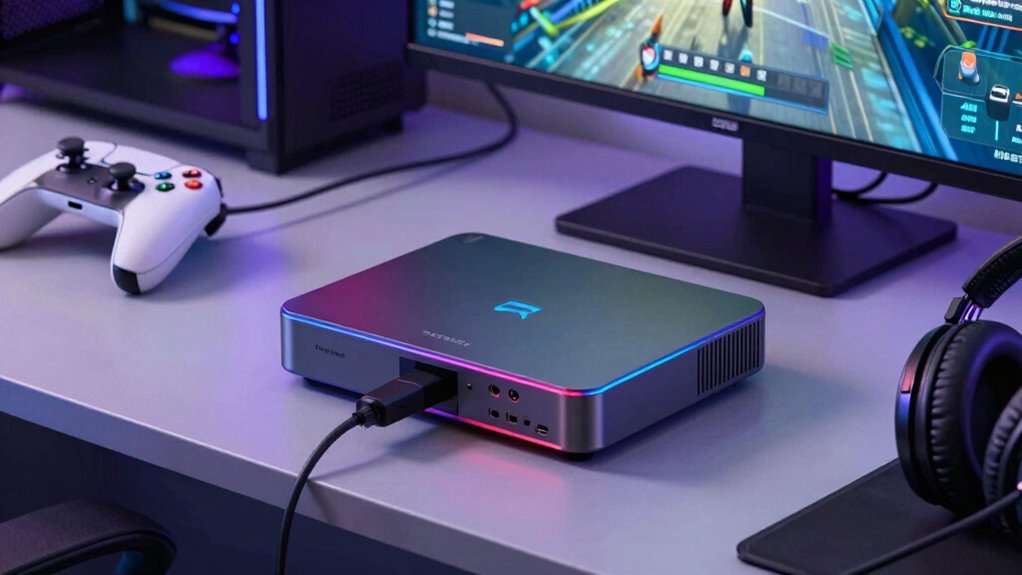

When choosing a capture card for consoles, the main considerations are resolution support, latency, compatibility, and value. The Elgato 4K Capture Card stands out as the best overall for its balance of high performance and ease of use, especially for 4K streaming. The AVerMedia Live Gamer Extreme 3 offers a compelling mix of features at a more affordable price, making it ideal for budget-conscious gamers. However, the key tradeoffs involve balancing resolution, latency, and price—higher-end models typically support 4K at ultra-low latency but come with a bigger investment. Continue reading for a detailed breakdown of each option and how they compare across these factors.

Get audio and creator gear delivered free with Prime
- Fast, free delivery on millions of items
- Prime Video, Amazon Music and more included
- Member-only deals all year
Complete the kit


Key Takeaways
- Top picks like the Elgato 4K and AVerMedia capture cards excel in 4K resolution and low latency, but come at a higher cost.
- Budget options such as the Fifine AmpliGame deliver reliable 1080p performance suitable for streaming on a budget.
- Pass-through features, especially 4K pass-through, are important for real-time gaming without lag, influencing user choice.
- Compatibility across consoles like PS5, Xbox Series X, and Switch varies; check for specific support for your device.
- Ease of setup and software usability heavily impact the overall streaming experience, often defining the user-friendliness of a capture card.
| 4K HDMI Capture Card for Streaming, Full HD 1080P 60FPS USB 3.0 Cam Link Game Audio Video Capture Card |  | Best Overall for Versatile Live Streaming | Resolution: 1080p at 60FPS | Input: HDMI | Output: USB 3.0 | VIEW ON AMAZON | See Our Full Breakdown |
| Newhope USB 3.0 HDMI Capture Card, 1080P 60FPS with 4K Pass-Through |  | Best for Broad Device Compatibility and Low Latency | Video Resolution: 1080P 60FPS | Pass-Through: 4K | Input: HDMI | VIEW ON AMAZON | See Our Full Breakdown |
| AVerMedia Capture Card for Streaming, 4K60 HDR Passthrough, 1080p60 Recording, Ultra-Low Latency Game Streaming for Switch 2, Xbox, PS5, PC |  | Best for High-Quality Gaming with HDR Support | Video Capture Resolution: 1080p60 | HDR Passthrough: Yes, 4K60 HDR | Latency: Ultra-Low | VIEW ON AMAZON | See Our Full Breakdown |
| AVerMedia Live Gamer Extreme 3 4K Capture Card for Streaming |  | Best for High-Refresh Rate 4K Gameplay | Video Capture Resolution: 4K30 | Pass-through Resolution: 1440p120 or 1080p120 | Latency: Zero | VIEW ON AMAZON | See Our Full Breakdown |
| Fifine AmpliGame Video Capture Card, HD 1080p 60fps, 4K HDMI to USB for Gaming and Streaming |  | Best Budget-Friendly 1080p Streaming | Video Resolution: 1080p/60fps | Pass-through: 4K | Connectivity: USB 3.0, HDMI | VIEW ON AMAZON | See Our Full Breakdown |
| Elgato 4K Capture Card with HDMI 2.1, 4K144 Ultra-Low Latency |  | Best for High-Performance 4K Streaming and Competitive Gaming | Input: HDMI (unencrypted) | Output: HDMI (lag-free passthrough) | Recording & passthrough resolution: up to 4K144 HDR10 | VIEW ON AMAZON | See Our Full Breakdown |
| 4K HDMI Video Capture Card, 1080P 60FPS Game Capture Device for Streaming |  | Best for Easy, Reliable 1080p Streaming with Microphone Support | Capture Resolution: 1080p at 60FPS | Input Support: 4K30/60Hz, 1080p120/144Hz | Output Support: up to 2K30Hz | VIEW ON AMAZON | See Our Full Breakdown |
| capture cards for console | Compatibility |
|---|---|
| 4K HDMI Capture Card for Strea | Windows, Mac OS |
| Newhope USB 3.0 HDMI Capture C | Windows, Mac, Linux, PS4, PS5, Xbox, Switch, DSLR, set-top boxes |
| AVerMedia Capture Card for Str | Switch 2, Xbox, PS5, PC, Mac |
| AVerMedia Live Gamer Extreme 3 | PS5, Xbox Series X/S, PC, Mac |
| Fifine AmpliGame Video Capture | PS4, PS5, Xbox, Switch, Windows, Mac |
| Elgato 4K Capture Card with HD | — |
| 4K HDMI Video Capture Card | Windows, Mac OS |
More Details on Our Top Picks
4K HDMI Capture Card for Streaming, Full HD 1080P 60FPS USB 3.0 Cam Link Game Audio Video Capture Card
This capture card stands out for its ease of use and broad compatibility, making it a strong choice for streamers who need reliable 1080p60 recording. Compared to the AVerMedia Live Gamer Extreme 3, it offers a simpler plug-and-play setup without complex configuration, but sacrifices the 4K recording capabilities seen in higher-end options. Its HDMI loop-out and microphone input are valuable for streamers wanting a straightforward broadcast setup, though the limited 1080p resolution may be a downside for those seeking 4K recording. The USB 3.0 interface ensures smooth data transfer, but only if your system supports it. This pick makes the most sense for casual streamers or content creators prioritizing simplicity and broad device compatibility, especially if 4K is not essential.
Pros:- High-quality 1080p 60FPS video capture
- Plug-and-play setup with no drivers needed
- Supports HDMI loop-out and microphone input
Cons:- Limited to 1080p resolution, despite ‘4K’ branding
- Requires USB 3.0 port for optimal performance
Best for: Beginners and casual streamers who prioritize ease of setup and broad device support
Not ideal for: Professional content creators seeking 4K recording or advanced features, due to its 1080p limit
- Resolution:1080p at 60FPS
- Input:HDMI
- Output:USB 3.0
- Compatibility:Windows, Mac OS
- Microphone Input:3.5mm TRS
Our verdict“This capture card is best suited for streamers who want reliable 1080p60 recording with minimal fuss.”
Newhope USB 3.0 HDMI Capture Card, 1080P 60FPS with 4K Pass-Through
Compared with the Fifine AmpliGame Card, this model offers broader device compatibility, supporting Linux and set-top boxes alongside consoles. Its 4K pass-through is a key feature for gamers who want crisp visuals during gameplay, while maintaining 1080p streaming at 60FPS. The real-time HDMI loop-out and microphone input are ideal for live broadcasts, though it doesn’t support 4K recording itself—limiting its use for high-resolution content. Its plug-and-play nature makes it accessible, but the absence of external power might restrict advanced configurations or higher bandwidth usage. This choice is perfect for users who need a versatile, low-latency capture solution compatible with multiple platforms and prefer straightforward setup.
Pros:- Supports 4K pass-through for high-quality gaming visuals
- Low latency with real-time HDMI loop-out
- Broad device compatibility including Linux and set-top boxes
Cons:- No 4K recording capability, only pass-through
- Microphone input limited to 3.5mm TRS
Best for: Streamers and gamers needing compatibility across diverse devices including Linux and set-top boxes
Not ideal for: Producers aiming for 4K recording or detailed post-production, since it only captures at 1080p60
- Video Resolution:1080P 60FPS
- Pass-Through:4K
- Input:HDMI
- Compatibility:Windows, Mac, Linux, PS4, PS5, Xbox, Switch, DSLR, set-top boxes
- Microphone Input:3.5mm TRS
Our verdict“This capture card is ideal for users wanting a flexible, low-latency device that works across many platforms but doesn’t record in 4K.”
AVerMedia Capture Card for Streaming, 4K60 HDR Passthrough, 1080p60 Recording, Ultra-Low Latency Game Streaming for Switch 2, Xbox, PS5, PC
This device excels at delivering 4K60 HDR passthrough, making it a standout for gamers who value visual fidelity during gameplay. Unlike the Live Gamer Extreme 3, which caps at 1080p recording, this model emphasizes real-time 4K HDR visuals, ideal for high-end streaming setups. Its ultra-low latency ensures gameplay remains responsive, but it only records in 1080p60—limiting post-production options. Its compatibility with current generation consoles and PCs makes it suitable for serious gamers, though the lack of bundled accessories and higher price point might deter budget-conscious users. It’s perfect for streamers who want superior visual quality during gameplay but don’t require 4K recording for editing later.
Pros:- Supports 4K60 HDR passthrough for immersive visuals
- Ultra-low latency ensures real-time gameplay without lag
- Compatible with major consoles and streaming software
Cons:- Limited to 1080p60 recording; no 4K recording
- No bundled accessories or advanced features
Best for: High-end streamers and gamers prioritizing HDR passthrough and minimal latency
Not ideal for: Casual streamers or those needing 4K recording, as it only captures 1080p60
- Video Capture Resolution:1080p60
- HDR Passthrough:Yes, 4K60 HDR
- Latency:Ultra-Low
- Compatibility:Switch 2, Xbox, PS5, PC, Mac
- Supported Formats:NV12, YUY2, MJPEG
Our verdict“This capture card suits gamers who want premium HDR visuals during live play without the need for 4K recording capabilities.”
AVerMedia Live Gamer Extreme 3 4K Capture Card for Streaming
This card provides 4K30 recording with support for high refresh rates up to 1080p240, making it a solid choice for gamers who prioritize high-quality, high-frame-rate gameplay. Unlike the FourK60 HDR Passthrough Card, it focuses on capturing fast-paced action without sacrificing smoothness, thanks to its support for 1080p120 or 1440p120. Its zero-latency pass-through ensures gameplay remains seamless, but it doesn’t record in 4K60, which could limit some streaming content. The required compatibility with suitable hardware and software means it’s best for users with a more capable setup. This pick appeals to competitive gamers or streamers needing smooth high-refresh gameplay with decent 4K recording, but it’s not the best for 4K60 capture.
Pros:- Supports 4K30 recording with high refresh rates up to 1080p240
- Zero-latency pass-through for seamless gameplay
- Broad compatibility with major consoles and streaming setups
Cons:- Limited to 4K30 recording; does not support 4K60
- Requires compatible hardware and software for best performance
Best for: Gamers seeking high-refresh-rate gameplay with 4K30 recording and zero latency
Not ideal for: Streamers aiming for 4K60 recording, as this card caps at 4K30
- Video Capture Resolution:4K30
- Pass-through Resolution:1440p120 or 1080p120
- Latency:Zero
- Compatibility:PS5, Xbox Series X/S, PC, Mac
Our verdict“This capture card is ideal for competitive gamers and streamers prioritizing high refresh rates and ultra-low latency over 4K60 recording.”
Fifine AmpliGame Video Capture Card, HD 1080p 60fps, 4K HDMI to USB for Gaming and Streaming
This capture card offers a straightforward solution for streaming in 1080p60 with the added advantage of 4K HDMI pass-through, making it appealing for budget-conscious users. Compared to higher-end options like the AVerMedia Live Gamer Extreme 3, it provides a simple plug-and-play experience but lacks advanced features or high-end build quality. The absence of included cables and the need for an original USB cable can be inconvenient, especially for new users. While it supports a wide range of devices, its basic feature set makes it less suitable for those seeking professional-grade streaming or recording. This makes it a suitable entry-level choice for casual gamers and streamers who want decent quality without breaking the bank.
Pros:- Affordable price point for entry-level streaming
- Supports 1080p60 streaming with 4K HDMI pass-through
- Wide device compatibility and easy setup
Cons:- HDMI and USB cables are not included, requiring additional purchases
- No advanced features or bundled software
Best for: Beginner streamers and gamers on a tight budget who need reliable 1080p60 performance
Not ideal for: Professional streamers or content creators requiring advanced features and bundled accessories
- Video Resolution:1080p/60fps
- Pass-through:4K
- Connectivity:USB 3.0, HDMI
- Compatibility:PS4, PS5, Xbox, Switch, Windows, Mac
- Additional Ports:LINE IN, Headset Port
- RGB Lighting:Variable RGB with 9 modes
Our verdict“This capture card is best for beginners seeking straightforward, budget-friendly 1080p streaming with 4K pass-through.”
Elgato 4K Capture Card with HDMI 2.1, 4K144 Ultra-Low Latency
The Elgato 4K Capture Card stands out for its ability to handle 4K resolution at 144 fps, making it ideal for gamers who demand the highest quality visuals. Compared with the 4K HDMI Video Capture Card, which maxes out at 1080p 60FPS, this model offers significantly sharper and more responsive streams, especially useful in fast-paced titles. The inclusion of HDMI 2.1 and VRR passthrough ensures that gameplay remains smooth without tearing or latency issues. However, this power comes with the need for a robust system—specifically a USB 3.2 Gen 2 port—and a higher price point. Its superior performance in high-refresh-rate gaming makes it perfect for streamers who want top-tier quality, but it may be overkill for casual players or those with older hardware.
Pros:- Supports 4K resolution at 144 fps for crystal-clear, smooth gameplay
- Features HDMI 2.1 and VRR passthrough for tear-free gaming
- Ultra-low latency technology ensures minimal delay between gameplay and stream
Cons:- Requires USB 3.2 Gen 2 port, which may not be available on all systems
- Higher price point limits affordability for some users
- System requirements might exclude older hardware
Best for: Gamers and streamers seeking ultra-high-resolution, low-latency broadcasts on powerful PCs or consoles
Not ideal for: Casual players or those with older computers that lack the necessary USB port or system specs
- Input:HDMI (unencrypted)
- Output:HDMI (lag-free passthrough)
- Recording & passthrough resolution:up to 4K144 HDR10
- Dimensions:112 x 72 x 18 mm
- Weight:91 g
- System Requirements:Windows 10 (64-bit), macOS 11, iPadOS 17 or later; 6th gen Intel Core i5 / AMD Ryzen 5 or better; NVIDIA GeForce GTX 10xx or better; USB 3.2 Gen 2 port
Our verdict“This pick is best suited for serious gamers and streamers who prioritize top-tier resolution and minimal latency, provided their hardware can support it.”
4K HDMI Video Capture Card, 1080P 60FPS Game Capture Device for Streaming
The 4K HDMI Video Capture Card offers a straightforward, plug-and-play experience focused on 1080p 60FPS recording, making it ideal for users who want reliable quality without fuss. Unlike the Elgato 4K Capture Card, which pushes for ultra-high resolutions, this model emphasizes ease of use and compatibility across a wide range of devices, including cameras and PCs. Its low latency streaming and 3.5mm microphone input provide a solid setup for streamers who need simple audio and video capture. Still, it falls short if you require 4K or high-refresh-rate input—limiting its appeal for those chasing cutting-edge graphics. It’s a practical choice for entry-level or casual streamers who prioritize simplicity and compatibility over ultimate resolution.
Pros:- Supports 1080p at 60FPS for smooth, clear recordings
- Plug-and-play setup with no driver installation needed
- Includes microphone input for easy commentary integration
Cons:- Limited to 1080p 60FPS, not suitable for 4K or high-refresh-rate gaming
- Output capped at 2K30Hz, which may restrict some uses
- Microphone input only accepts 3.5mm TRS headsets, limiting mic options
Best for: Beginner streamers or gamers seeking a reliable, easy-to-use device for 1080p recording and streaming
Not ideal for: High-end gamers or professionals needing 4K capture or high-refresh-rate inputs
- Capture Resolution:1080p at 60FPS
- Input Support:4K30/60Hz, 1080p120/144Hz
- Output Support:up to 2K30Hz
- Connection:USB 3.0
- Compatibility:Windows, Mac OS
- Microphone Input:3.5mm TRS
Our verdict“This capture card is ideal for newcomers and casual streamers who need dependable 1080p capture without complex setup, but it won’t satisfy those seeking the latest in resolution or refresh rate.”
How We Picked
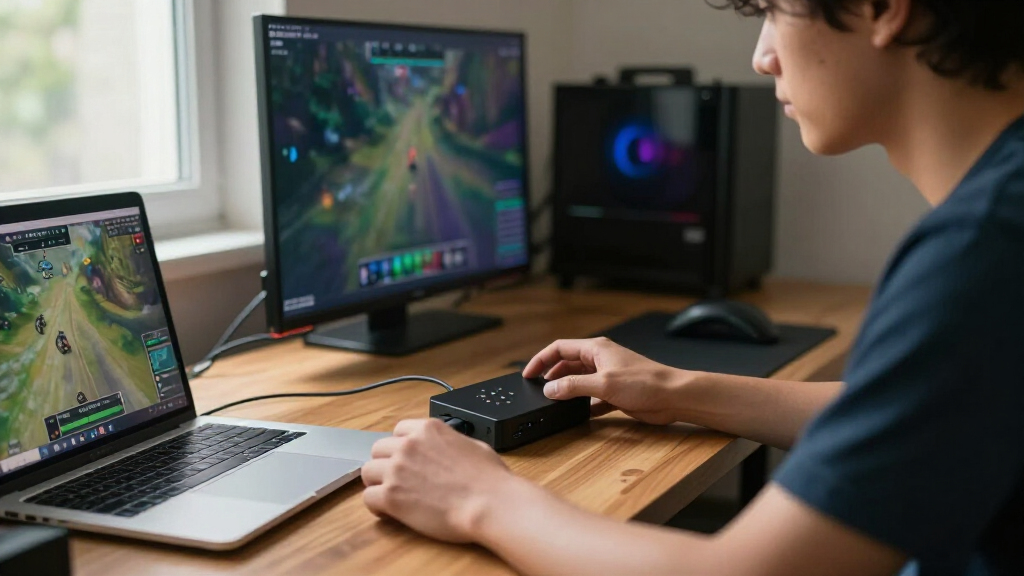
These capture cards were evaluated based on performance parameters such as resolution support, latency, and compatibility with modern consoles. Ease of use, build quality, and software stability also played a key role, as these factors directly impact streaming quality and setup convenience. Price was a consideration, but not at the expense of essential features like 4K support or low latency. The ranking reflects a balance between value and advanced features, ensuring options for different budgets and needs. Ultimately, the goal was to identify products that deliver consistent, reliable results for both casual streamers and professional content creators.| capture cards for console | Compatibility |
|---|---|
| 4K HDMI Capture Card for Strea | Windows, Mac OS |
| Newhope USB 3.0 HDMI Capture C | Windows, Mac, Linux, PS4, PS5, Xbox, Switch, DSLR, set-top boxes |
| AVerMedia Capture Card for Str | Switch 2, Xbox, PS5, PC, Mac |
| AVerMedia Live Gamer Extreme 3 | PS5, Xbox Series X/S, PC, Mac |
| Fifine AmpliGame Video Capture | PS4, PS5, Xbox, Switch, Windows, Mac |
| Elgato 4K Capture Card with HD | — |
| 4K HDMI Video Capture Card | Windows, Mac OS |
Factors to Consider When Choosing Capture Cards For Consoles
Choosing the right capture card depends on your specific gaming setup and streaming goals. Beyond just resolution and frame rate, there are several factors that can influence your experience and satisfaction over time. Understanding these can help you avoid common pitfalls like overpaying for features you don’t need or selecting a device incompatible with your console. Here are the key considerations to keep in mind:Resolution and Frame Rate Support
Determine what resolution and frame rate your setup demands. If you play on a 4K console and want to stream in 4K, ensure the capture card supports 4K at 60FPS. Lower resolutions like 1080p are more forgiving for budget options but may limit future-proofing. Remember, higher resolutions often require more powerful PCs and faster data transfer, so assess your hardware capacity before investing in high-end models.
Latency and Pass-Through Capabilities
Low latency is crucial for real-time gameplay, especially if you’re aiming to stream or record without perceptible lag. Pass-through features, particularly 4K or HDR pass-through, allow you to play on your TV or monitor while capturing gameplay, minimizing delay. Be cautious of capture cards that lack pass-through or have high latency, as these can disrupt your gaming experience or hinder live reactions.
Compatibility and Connectivity
Check if the capture card is compatible with your console, whether it’s PS5, Xbox Series X, or Nintendo Switch. Some cards are designed specifically with certain systems in mind or require specific ports like HDMI 2.1. USB type and data transfer speeds also matter—USB 3.0 or higher is recommended for smooth data flow, reducing frame drops and lag.
Ease of Use and Software
Intuitive software interfaces and straightforward setup can make a significant difference, especially if you’re new to streaming. Look for capture cards that come with user-friendly software and broad compatibility with streaming platforms like OBS, Streamlabs, or XSplit. Stable drivers and regular updates contribute to a smoother experience over time, helping you avoid frustrating technical issues during critical streams.
Price and Future-Proofing
While it can be tempting to choose the cheapest option, investing in a slightly higher-priced device with better features can pay off long-term. Consider your current setup and potential upgrades—if you plan to move to 4K or higher frame rates soon, choosing a more capable capture card now can save you from costly replacements later. Balance your budget against the features you truly need for your streaming ambitions.
Frequently Asked Questions
Do I need a 4K capture card if I only stream in 1080p?
While a 4K capture card can handle 1080p streams, investing in one primarily designed for 1080p can be more cost-effective if you don’t plan to upgrade to 4K gaming or streaming soon. However, having a 4K-capable device provides more future-proofing, in case you upgrade your console or want higher-quality recordings later. It’s worth considering your long-term plans before choosing between these options.
Can I use a capture card with multiple consoles?
Yes, most capture cards are compatible with multiple consoles, but compatibility varies based on the model. Check whether the device supports your specific console and its output resolution. Some cards offer additional features like HDMI pass-through that work well with various devices, making them versatile options for gamers with multiple systems. Always verify compatibility before purchasing to avoid setup issues.
Is a 4K pass-through necessary for streaming at 1080p?
Not necessarily. For 1080p streaming, a capture card with 4K pass-through isn’t required, provided it supports 1080p at 60FPS. However, pass-through features are useful if you want to play on your TV or monitor in higher quality while capturing in 1080p. The main benefit is reduced lag during gameplay, which can improve your overall gaming experience even if the recording resolution is lower.
How important is low latency for live streaming?
Low latency is vital for real-time interaction during live streams, especially if you engage with viewers or perform live reactions. High latency can cause delays between your gameplay and what viewers see, diminishing the immediacy of your content. Opting for a capture card with low latency and reliable pass-through ensures your gameplay remains synchronized with the stream, enhancing viewer engagement and reducing frustration.
Should I prioritize resolution support or software features?
Both are important, but your choice depends on your primary needs. If you’re aiming for high-quality recordings or streams, resolution support—like 4K at 60FPS—is crucial. However, good software features such as easy setup, broad streaming platform compatibility, and stability can significantly improve your overall experience. Balancing both aspects will help you find a capture card that meets your current needs while offering room to grow.
Conclusion
For casual gamers or streamers just starting out, the Fifine AmpliGame offers reliable HD performance at an accessible price. If you want a solid all-rounder with excellent compatibility, the AVerMedia Live Gamer Extreme 3 is a smart choice. The Elgato 4K Capture Card is best suited for those seeking premium features like 4K support and ultra-low latency, ideal for professional streamers or content creators. Budget-conscious buyers should consider models with 1080p support, while early adopters aiming for future-proofing might prefer higher-end 4K-capable options. Ultimately, your ideal pick hinges on your gaming setup, streaming goals, and budget constraints.
Halloween Picks

Kalolary 12ft Halloween Witch Haunted House Inflatable Archway

HOPOCO Halloween Pumpkin Fog Machine with 12 LED Colors & 4 Light Modes

JOYIN 5-Foot Halloween Animatronic Drinking Skeleton
As an affiliate, we earn on qualifying purchases.