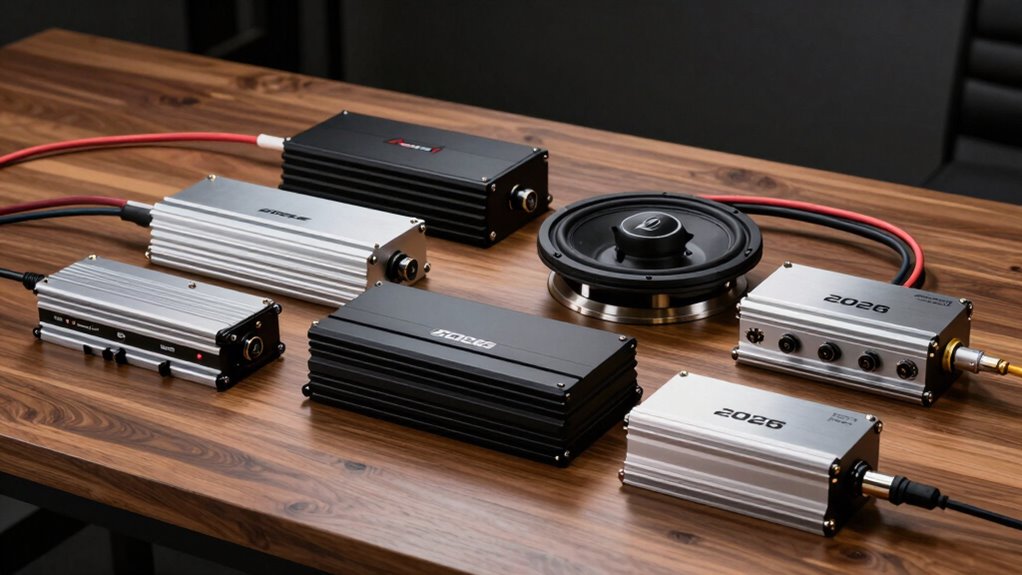

For a 5-channel car amplifier that can run four speakers and a subwoofer from one chassis, my best overall pick is the NVX VAD11005 v2, which pairs a substantial stated RMS output with a compact Class D design. The AudioControl EPICFIVE stands out for buyers prioritizing a more polished system upgrade, while the Skar Audio SK-M9005D is a sensible choice when installation space is tight. The main tradeoff is not peak wattage alone: buyers need to match RMS power and impedance to their speakers and sub, then weigh size, controls, and wiring demands. Some models emphasize output, while others favor compact fit or extra convenience features. Read on for the full comparison, selection criteria, and guidance on matching an amp to your system.

Get audio and creator gear delivered free with Prime
- Fast, free delivery on millions of items
- Prime Video, Amazon Music and more included
- Member-only deals all year
Complete the kit



Key Takeaways
- The NVX VAD11005 v2 leads on stated continuous power: its 1100W RMS figure gives it a clear output-focused position, but only if the connected speakers and subwoofer can use that power safely.
- Compact installation changes the shortlist: the Skar Audio SK-M9005D is the clearest fit for restricted space, while larger-output choices may need more room and careful planning for wiring and heat.
- Peak wattage does not create a fair comparison: the listed models mix peak and RMS figures, so compare channel-by-channel RMS ratings at the impedance you plan to use.
- Convenience features separate otherwise similar layouts: the NVX NDA11005 includes a remote bass knob, and the STX2200.5DBT adds Bluetooth streaming; each feature suits a different system workflow.
- Five channels simplify the system, not every installation: one chassis can power four speakers and a sub, but speaker impedance, subwoofer wiring, available current, and crossover setup still determine compatibility.




| car amplifier 5 channel | Channels | Amplifier class | Dimensions |
|---|---|---|---|
| RECOIL DI1300.5 5-Channel Clas | 5 | Class D | — |
| NVX VAD11005 v2 Model 5-Channe | 5 | Class D | 12 x 7.2 x 2 inches |
| NVX NDA11005 Class-D 5-Channel | 5 | Class D | 10.15 x 4.42 x 1.73 inches |
| Recoil RED1800.5 Class-D Car A | 5 | Class D | 14.6 x 7.6 x 2.2 inches |
| Pioneer GM-DX975 2000W Max Cla | 5 | Class D | — |
| Skar Audio SK-M9005D Compact F | 5 | — | 12.4 × 4.6 × 1.7 inches |
| CT Sounds CT-1500.5D 1800W RMS | 5 | Class D | — |
| STX Audio STX2000.5D 2000W 5-C | 5 | Class D | — |
| BOSS Audio Systems PV3700 3700 | 5 | Class A/B | — |
| Rockville dB55 5 Channel Car S | 5 | — | 3 × 3 × 3 inches (as listed) |
| AudioControl EPICFIVE 5-Channe | 5 | Digital Class D | 6.1 x 13.35 x 2.01 inches |
| KENWOOD KAC-835 Class D 5-Chan | 5 | Class D | 9.75 x 2.0625 x 6.625 inches |
| STX Audio STX2200.5DBT 5 Chann | 5 | — | — |
| Rockville Krypton F5 5 Channel | 5 | — | 15.35 x 8.66 x 2.2 inches |
More Details on Our Top Picks
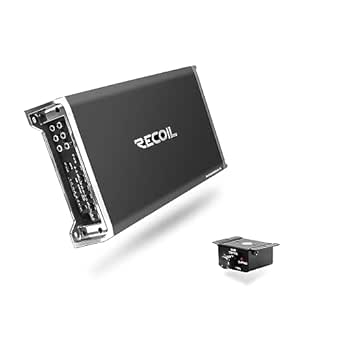
RECOIL DI1300.5 5-Channel Class-D Car Amplifier 2600W Max 4/2 Ohm Stable
The RECOIL DI1300.5 stands apart from the other picks here by specifying a 1-ohm-stable sub channel with up to 770W RMS, giving bass-focused builders more flexibility when matching a low-impedance subwoofer. Its listed four-channel output of 125W RMS per channel at 2 ohms also leaves room to run substantial door-speaker power from one chassis. Compared with the Pioneer GM-DX975, whose supplied details emphasize Hi-Res support and tuning rather than a 1-ohm sub load, this RECOIL is the clearer choice when subwoofer impedance is the deciding factor. The tradeoff is that the description does not give a full power breakdown at every load, and its ambitious output claims make careful wiring, gain setup, and electrical-system planning important. It is less compelling for a modest factory-speaker refresh.
Pros:- Sub channel is specified as stable down to 1 ohm
- Listed 770W RMS subwoofer output at 1 ohm
- Four speaker channels are rated at 125W RMS each at 2 ohms
- Includes crossover options, bass controls, and a clip indicator
Cons:- The supplied information does not list complete RMS ratings for every load
- High-output installation calls for careful electrical and wiring planning
- Its stated subwoofer capacity may exceed what modest speaker systems need
Best for: Bass-focused builders choosing a 1-ohm-stable subwoofer load while powering four speakers from one amplifier.
Not ideal for: Drivers making a modest speaker-only upgrade or buyers who need a complete RMS power table across all speaker impedances.
- Amplifier class:Class D
- Channels:5
- Maximum power:2600W
- Total RMS power:1300W
- Speaker-channel output:4 x 125W RMS at 2 ohms
- Subwoofer-channel output:770W RMS at 1 ohm
- Subwoofer-channel stability:1 ohm
- Tuning and protection:HPF/Full/LPF crossover, variable bass controls, clip indicator, and protection circuitry
Our verdict“Choose the DI1300.5 if a 1-ohm subwoofer load and strong combined speaker-and-sub output matter more than a fully documented load-by-load rating table.”
NVX VAD11005 v2 Model 5-Channel Class D Amplifier 2200W Peak, 1100W RMS
The NVX VAD11005 v2 earns its place for buyers installing a five-channel system in a vehicle exposed to harsher conditions: its description calls out a marine-grade circuit board, a useful distinction from the car-focused Pioneer GM-DX975. It combines 1100W RMS output with five channels, so one amplifier can handle speakers and a subwoofer without stacking separate units. The supplied specs also list a 12 x 7.2 x 2-inch body, making space planning straightforward, though that is not especially small next to the compact NVX NDA11005. This model’s case for outdoor use is stronger than its case for a simple daily-driver upgrade. Installation may take more planning, and the available information does not spell out channel-by-channel RMS ratings or specific control ranges. Buyers should confirm load compatibility and system requirements before wiring.
Pros:- Marine-grade circuit board is suited to harsher installation environments
- Five channels support a combined speaker-and-subwoofer system
- 1100W RMS output is specified
- Aluminum-alloy construction is listed in the product specs
Cons:- The 12 x 7.2 x 2-inch dimensions require room for a substantial mounting footprint
- Installation may be complex for beginners
- Supplied specifications omit a channel-by-channel RMS breakdown
Best for: Marine, UTV, and other outdoor-audio builders who want one five-channel amplifier with a stated marine-grade circuit board.
Not ideal for: First-time installers with limited mounting space or buyers who need detailed per-channel power figures before selecting speakers and a subwoofer.
- Amplifier class:Class D
- Channels:5
- RMS output:1100W
- Maximum output:2200W peak
- Voltage:12V
- Dimensions:12 x 7.2 x 2 inches
- Mounting type:Surface mount
- Materials:Aluminum alloy and circuit board
Our verdict“Pick the VAD11005 v2 for a marine or UTV installation where its stated board durability matters more than compact size or detailed tuning documentation.”
NVX NDA11005 Class-D 5-Channel Amplifier with Remote Bass Knob
For installations where every inch counts, the NVX NDA11005 has a useful advantage over the larger NVX VAD11005 v2: its listed body measures just 10.15 x 4.42 x 1.73 inches, while still offering five channels and 1100W RMS output. The included remote bass knob lets the driver adjust subwoofer level from the cabin, rather than reaching the amplifier, and signal-sensing remote turn-on can simplify integration in compatible setups. Variable high-pass and subsonic filters add useful control for matching speakers and subwoofers. The tradeoff is installation: the listed requirement for 4 AWG wiring calls for suitable cable and careful power planning, and the supplied specs do not provide detailed per-channel RMS figures. Compared with the RECOIL DI1300.5, this NVX is the more space-conscious, convenience-oriented choice, not the one with a stated 1-ohm sub rating.
Pros:- Compact listed dimensions suit tighter mounting locations
- Remote bass knob allows level changes from the cabin
- Variable high-pass and subsonic filters support system tuning
- Signal-sensing remote turn-on is listed
Cons:- Requires a 4 AWG wiring kit for the specified installation
- Supplied specs do not give channel-by-channel RMS output
- Its power demand calls for suitable vehicle electrical capacity
Best for: Space-constrained car-audio installers who want a cabin-accessible bass adjustment and a compact five-channel chassis.
Not ideal for: Buyers who need a documented 1-ohm subwoofer rating, full channel-by-channel output figures, or a plug-and-play beginner installation.
- Amplifier class:Class D
- Channels:5
- RMS output:1100W
- Maximum output:2200W
- Dimensions:10.15 x 4.42 x 1.73 inches
- Wiring requirement:4 AWG gauge
- Filters:Variable high-pass and subsonic filters
- Other listed features:Remote bass knob, protection circuitry, and signal-sensing remote turn-on
Our verdict“Choose the NDA11005 when compact mounting and an included remote bass knob are priorities, and verify wiring and load compatibility before purchase.”
Recoil RED1800.5 Class-D Car Audio 5-Channel Amplifier 1800W Max Power
The Recoil RED1800.5 gives buyers a more complete load-specific power picture than the DI1300.5: the supplied ratings cover its four speaker channels and mono channel at 2 and 4 ohms, with the sub channel also rated at 1 ohm. That makes it easier to compare against a planned speaker and subwoofer combination. Its included bass remote, bass EQ, and subsonic filter add practical control from the cabin and amplifier panel. Against the NVX NDA11005, the RED1800.5 offers more detailed published load ratings and a higher stated 1800W maximum, but its 14.6 x 7.6 x 2.2-inch body needs noticeably more mounting room than the compact NVX. The tradeoff is a sizable footprint and a setup with several adjustments that rewards careful tuning. It suits a growing system better than a minimal upgrade.
Pros:- RMS ratings are provided for speaker and sub channels at 2 and 4 ohms
- Mono channel is specified as stable down to 1 ohm
- Includes a remote bass control
- Bass EQ, low-pass, and subsonic adjustments support system tuning
Cons:- Its 14.6 x 7.6 x 2.2-inch chassis needs substantial mounting room
- Multiple tuning controls can complicate setup for inexperienced installers
- Listed power ratings require careful matching to speakers, subwoofer, and wiring
Best for: System builders who want multiple subwoofer impedance options, published RMS ratings at several loads, and an included bass remote.
Not ideal for: Installers working with a tight mounting area or drivers seeking a simple, low-output replacement for factory audio.
- Amplifier class:Class D
- Channels:5
- Maximum power:1800W
- Speaker-channel output:4 x 220W RMS at 2 ohms; 4 x 140W RMS at 4 ohms
- Subwoofer-channel output:980W RMS at 2 ohms; 600W RMS at 4 ohms
- Subwoofer-channel stability:1 ohm
- Dimensions:14.6 x 7.6 x 2.2 inches
- Controls and protection:Bass remote, bass EQ, gain, low-pass filter, subsonic filter, and four-way protection circuitry
Our verdict“Choose the RED1800.5 if flexible subwoofer loads and detailed RMS ratings matter more than a compact chassis.”
Pioneer GM-DX975 2000W Max Class D 5-Channel Car Amplifier
The Pioneer GM-DX975 is the most fitting option here for listeners who value a familiar-brand feature set and Hi-Res audio support alongside five-channel convenience. Its speaker-level inputs can help connect an amplifier to a factory head unit, while the adjustable 40–240 Hz low-pass filter gives the subwoofer channel a broad crossover range. Those details make it a more natural fit for a daily-driver system than the bass-first RECOIL DI1300.5, which highlights 1-ohm subwoofer performance instead. Pioneer’s 2000W figure is a maximum rating, however, and the supplied information does not include RMS output by channel; buyers should not use that peak number alone to match speakers or a sub. The amplifier also weighs 7.3 pounds, and the tuning features may take some setup knowledge to use well.
Pros:- Hi-Res audio support is listed
- Speaker-level inputs can support integration with a factory head unit
- Adjustable low-pass filter spans 40–240 Hz
- Thermal overload and short-circuit protection are specified
Cons:- The supplied information gives maximum power but no channel-by-channel RMS ratings
- No 1-ohm subwoofer stability rating is provided
- Optimal tuning may be challenging for a first-time installer
Best for: Daily-driver owners adding a five-channel amp to a factory-source system who value speaker-level inputs, adjustable sub crossover, and Hi-Res support.
Not ideal for: Buyers choosing by verified RMS output at specific impedances, or bass builders who need a stated 1-ohm subwoofer rating.
- Amplifier class:Class D
- Channels:5
- Maximum power:2000W
- Frequency response:Up to 50,000 Hz
- Weight:7.3 pounds
- Input type:Speaker-level inputs
- Adjustable low-pass filter:40–240 Hz
- Listed features:Hi-Res support, bass boost, gold terminals, thermal overload protection, and short-circuit protection
Our verdict“Pick the GM-DX975 for a factory-source daily system where its input options and Hi-Res support matter more than published RMS detail or 1-ohm sub capability.”
Skar Audio SK-M9005D Compact Full-Range 5-Channel Car Amplifier, 900W
The Skar Audio SK-M9005D is the space-conscious choice in this group: its 12.4-by-4.6-inch footprint is easier to place than the much larger BOSS PV3700, while its five channels handle a speaker set and subwoofer from one amp. The listed 900W RMS output and dedicated filters give buyers useful flexibility for a conventional system, and the included remote bass knob lets the driver adjust sub level from the front seat. Compared with the STX2000.5D, it has a lower stated power figure, so it is a better match for moderate builds than a high-output setup. Its protection circuitry is a practical safeguard, but proper wiring and installation still matter, and the supplied data gives less channel-by-channel power detail than some alternatives.
Pros:- Compact 12.4-by-4.6-inch chassis suits restricted mounting spaces
- Five-channel design powers speakers and a subwoofer from one amplifier
- Remote bass knob and cable are included
- Thermal, voltage, speaker, and DC protection are specified
Cons:- Less stated total RMS output than the STX2000.5D
- Available specifications do not break down RMS power by channel
- Installation quality is important for reliable performance
Best for: Drivers fitting a five-channel system into a tight trunk or under-seat space who want a remote subwoofer-level control.
Not ideal for: Builders seeking detailed per-channel power ratings or a high-output setup with more documented power than the listed 900W RMS.
- Channels:5
- Frequency response:10Hz–20kHz (channels 1–4); 10Hz–500Hz (channel 5)
- Dimensions:12.4 × 4.6 × 1.7 inches
- Protection:Thermal, voltage, speaker, and DC
- Operating voltage:14.4 volts
- Weight:4.9 pounds
- Included control:Remote bass knob and cable
Our verdict“Choose the SK-M9005D when limited mounting room and an included bass knob matter more than maximum stated output.”
CT Sounds CT-1500.5D 1800W RMS Full-Range Class D 5-Channel Car Amplifier
The CT Sounds CT-1500.5D is the output-focused option here, with listed channel ratings of 210W × 4 at 2 ohms and 1,000W × 1 at 1 ohm. That sub-channel rating gives it a different emphasis from the Skar SK-M9005D, whose listed total output is lower and whose channel breakdown is not supplied. The CT Sounds unit is suited to buyers planning a strong subwoofer stage alongside four speakers, while its protection for voltage, current, and temperature adds safeguards for a demanding installation. The tradeoff is that the headline 1,800W RMS figure should not be treated as a guaranteed real-world system output without checking the intended load and electrical setup. Buyers also get less complete published information here than with the STX2000.5D’s stated speaker and subwoofer ratings.
Pros:- Listed 210W × 4 RMS at 2 ohms for the speaker channels
- Sub channel is rated at 1,000W RMS at 1 ohm
- Protection covers high and low voltage, overcurrent, and high temperature
- Remote bass knob is included according to the product description
Cons:- Headline 1,800W RMS figure needs careful interpretation alongside load-specific ratings
- Published specifications do not provide dimensions or frequency response
- Proper installation and electrical-system matching are required
Best for: Experienced installers building a five-channel system around a demanding subwoofer and speakers that can use the listed 2-ohm channel output.
Not ideal for: First-time installers or buyers who need a clearly documented power breakdown across every load and channel before choosing components.
- Channels:5
- Stated total RMS output:1,800 watts
- Channels 1–4 at 2 ohms:210 watts RMS × 4
- Channels 1–4 at 4 ohms:120 watts RMS × 4
- Subwoofer channel at 1 ohm:1,000 watts RMS × 1
- Amplifier class:Class D
- Protection:High voltage, low voltage, overcurrent, and high temperature
Our verdict“Pick the CT-1500.5D for a subwoofer-led build when you can verify that your wiring, load, and vehicle electrical system suit its ratings.”
STX Audio STX2000.5D 2000W 5-Channel Class D Car Amplifier – 130W RMS x 4, 400W RMS Subwoofer Output, MOSFET Circuit Design, Adjustable LPF/HPF
The STX Audio STX2000.5D earns its place through a useful power breakdown: 130W RMS × 4 for the full-range channels and 400W RMS for the subwoofer output. That makes system planning more straightforward than with the BOSS PV3700, whose supplied material emphasizes maximum power rather than a comparable RMS split. Adjustable high-pass and low-pass filters help tailor the speaker and subwoofer handoff, while Class D design suits installations where efficiency and space matter. Its stated sub output is more modest than the CT Sounds CT-1500.5D’s listed 1,000W sub-channel figure, so buyers chasing the strongest bass stage may prefer that alternative. The STX’s tradeoff is setup: detailed installation instructions are not listed, and the available description does not specify protection features or physical dimensions.
Pros:- Clearly states 130W RMS × 4 and 400W RMS for the subwoofer output
- Adjustable HPF and LPF support system-specific crossover tuning
- Class D design is suited to space-conscious installations
- Five-channel layout runs speakers and a subwoofer from one amplifier
Cons:- Lower stated subwoofer output than the CT Sounds CT-1500.5D
- Detailed installation instructions are not listed
- Protection features and chassis dimensions are not provided in the supplied specs
Best for: Buyers who want separate, clearly stated RMS figures for four speakers and a subwoofer before matching components.
Not ideal for: Subwoofer-focused builders seeking the highest listed sub-channel output, or beginners who need detailed installation guidance.
- Channels:5
- Advertised power:2,000 watts
- Full-range channel output:130 watts RMS × 4
- Subwoofer output:400 watts RMS
- Amplifier class:Class D
- Circuit design:MOSFET
- Crossover adjustment:Adjustable high-pass and low-pass filters
Our verdict“Choose the STX2000.5D if clear speaker and subwoofer RMS ratings matter more to you than maximum sub-channel output.”
BOSS Audio Systems PV3700 3700 High Output 5 Channel Car Amplifier
The BOSS Audio PV3700 is the outlier in this selection: it uses a Class A/B design rather than the Class D approach of the Skar SK-M9005D and STX2000.5D. Its full-range operation, variable bass boost, crossover controls, and remote subwoofer control give buyers room to shape a mixed speaker-and-sub setup. The published dimensions—17 × 10.31 × 2.25 inches—make it a substantially larger installation commitment than the compact Skar, and its 12.53-pound weight also calls for a secure mounting location. The stated 3,700W figure is maximum power, not an RMS breakdown, so it is harder to compare directly with models that list RMS by channel. This is a feature-rich choice for buyers who want Class A/B operation, but its size and incomplete RMS detail narrow its appeal.
Pros:- Full-range five-channel design supports speakers and subwoofers
- Variable bass boost and crossover controls allow sound adjustment
- Remote subwoofer control is included in the product description
- Published frequency response spans 9Hz to 50kHz
Cons:- Larger and heavier than compact options such as the Skar SK-M9005D
- 3,700W is a maximum-power figure; comparable RMS channel ratings are not supplied
- Class A/B design differs from the Class D options and may not suit buyers prioritizing a compact installation
Best for: Installers who specifically want a full-range Class A/B five-channel amp with adjustable bass control and have room for a larger chassis.
Not ideal for: Compact-car owners or buyers who need clearly stated RMS output per channel to match an amplifier precisely to their speakers and subwoofer.
- Channels:5
- Amplifier class:Class A/B
- Maximum power:3,700 watts
- Speaker impedance:2–8 ohms
- Frequency response:9Hz–50kHz
- THD at RMS output:0.01%
- Signal-to-noise ratio:103 dB
- Dimensions and weight:17 × 10.31 × 2.25 inches; 12.53 pounds
Our verdict“Choose the PV3700 if you want its Class A/B design and onboard sound controls and can accommodate its larger chassis.”
Rockville dB55 5 Channel Car Stereo Amplifier, 4000W Peak, 980W RMS, 2 Ohm
The Rockville dB55 suits buyers who want hands-on control over how their five-channel system is blended: its listed features include an adjustable crossover, subsonic filter, bass equalizer, and remote subwoofer control. Those tools provide more tuning options than the Skar SK-M9005D’s listed tone controls and filters, particularly for shaping subwoofer response. Its stated 980W RMS places it in a moderate-output bracket rather than alongside the CT Sounds CT-1500.5D’s much higher listed sub-channel rating. The supplied dimensions of 3 × 3 × 3 inches are unusually small for an amplifier, so buyers should verify the actual mounting footprint and ventilation needs before planning an installation. Protection circuitry is described, but mounting hardware is not included, and the product data also lists conflicting output figures that deserve confirmation.
Pros:- Adjustable crossover, subsonic filter, and bass equalizer offer broad tuning control
- Remote subwoofer control is included
- Five-channel layout supports speakers and a subwoofer
- Protection circuitry is listed in the product description
Cons:- Supplied output figures conflict: 980W RMS is stated in the title while specs list 2,000W output and 4,000W maximum
- The listed 3 × 3 × 3-inch dimensions should be confirmed before installation planning
- No mounting hardware is included, and technical installation knowledge is recommended
Best for: Experienced audio installers who want subsonic filtering, bass adjustment, and remote subwoofer control in a five-channel system.
Not ideal for: Buyers who need consistent, detailed power specifications or a verified chassis size before planning a tight installation.
- Channels:5
- Stated RMS output:980 watts
- Listed output power:2,000 watts
- Maximum output power:4,000 watts
- Impedance:2 ohms
- Voltage:8 volts
- Dimensions:3 × 3 × 3 inches (as listed)
- Controls and filters:Adjustable crossover, subsonic filter, bass equalizer, remote subwoofer control
Our verdict“Choose the dB55 for its subwoofer-tuning controls only if you can confirm the power ratings and physical dimensions before buying.”
AudioControl EPICFIVE 5-Channel Car Audio Amplifier 1100W, Digital Class D
I’d put the AudioControl EPICFIVE high on the list for a system where bass control and add-on integration matter as much as channel count. Its included remote knob lets the driver adjust subwoofer level from the cabin, while the 0–12 dB bass EQ and high-pass, low-pass, and subsonic filters offer more direct tuning than the basic adjustable controls described for the KENWOOD KAC-835. The EPICENTER Link also gives AudioControl processor owners a dedicated connection path. Its 1100W rating and 4-gauge power terminals suit a substantial installation, but the product data does not break down RMS output by channel, making speaker and sub matching less straightforward than with the KENWOOD’s listed channel figures. The chassis is low-profile, though its 13.35-inch length still calls for a measured installation plan.
Pros:- Included remote bass-control knob allows subwoofer level changes from the driver’s seat.
- High-pass, low-pass, and subsonic filters support more tailored speaker and subwoofer setup.
- EPICENTER Link provides a dedicated connection option for compatible AudioControl bass-restoration equipment.
- Low-profile Class D chassis and 4-gauge power terminals support a high-output installation.
Cons:- The provided specifications do not state RMS output by channel or load, complicating system matching.
- At 13.35 inches long, it may not fit installations with especially limited mounting space.
- The recommended 150A fuse is sold separately.
Best for: Drivers building a subwoofer-focused system who want a cabin bass knob, extensive crossover controls, and a direct connection option for AudioControl’s EPICENTER.
Not ideal for: Buyers who need clearly itemized RMS output per channel or a very short amplifier; the listed power figure lacks channel-by-channel detail, and the chassis is over 13 inches long.
- Channels:5
- Amplifier class:Digital Class D
- Voltage:12V
- Maximum supply voltage:14.4V DC
- Dimensions:6.1 x 13.35 x 2.01 inches
- Crossover filters:High-pass, low-pass, and subsonic; 12 dB/octave Linkwitz-Riley
- Power terminals:4-gauge power and 8-gauge speaker terminals
- Recommended fuse:150A; fuse sold separately
Our verdict“Choose the EPICFIVE if you want extensive bass adjustment and AudioControl processor integration, but compare its channel-specific power needs carefully before buying.”
KENWOOD KAC-835 Class D 5-Channel Power Amplifier
The KENWOOD KAC-835 is the clearest choice here for buyers who want channel-by-channel power figures to guide speaker and subwoofer matching. It lists 75W x 4 at 4 ohms, plus configurations that pair the four speaker channels with a subwoofer channel, so I can compare its stated output more directly than the AudioControl EPICFIVE, whose supplied data gives a total rating without a channel breakdown. Its compact 9.75-inch width and wired remote also suit installations where space and convenient adjustment matter. The tradeoff is that the description gives fewer details about crossover ranges and connection features than AudioControl’s. Its 2-ohm figures offer more output flexibility, but buyers still need to check that their speakers and subwoofer match the intended load and wiring plan.
Pros:- Lists output by channel and impedance, helping buyers match speakers and subwoofer loads.
- Compact 9.75 x 6.625-inch footprint allows more mounting options than longer chassis.
- Class D design is intended to limit heat and power consumption.
- Wired remote provides a convenient way to adjust the system.
Cons:- The product details do not specify crossover ranges or filter slopes.
- The description provides less information about system integration than the AudioControl EPICFIVE.
- Optimizing gain and filters may require car-audio setup knowledge.
Best for: Installers and car-audio owners who want stated per-channel power figures, a compact footprint, and a wired remote for tuning.
Not ideal for: Buyers seeking extensive documented filtering options or a dedicated processor-link feature; the supplied details are less specific than the AudioControl EPICFIVE’s.
- Channels:5
- Maximum power:1600W
- RMS output:75W x 4 at 4Ω
- RMS output configuration:50W x 4 + 300W at 4Ω
- RMS output configuration:75W x 4 + 500W at 2Ω
- Amplifier class:Class D
- Dimensions:9.75 x 2.0625 x 6.625 inches
- Included control:Wired remote
Our verdict“Pick the KAC-835 if clearly stated channel output and a compact chassis matter more to you than extensive documented tuning features.”
STX Audio STX2200.5DBT 5 Channel Class D Car Amplifier
The STX2200.5DBT earns a distinct place for adding Bluetooth streaming to a five-channel amplifier, a feature not listed for the KENWOOD KAC-835 or AudioControl EPICFIVE. That can suit a setup where wireless audio input is a priority, alongside its stated 130W x 4 plus 330W RMS at 2 ohms. The adjustable high-pass and low-pass filters and bass boost provide basic ways to shape the system, while the full-range MOSFET design is aimed at car audio use. Its main drawback is the thin specification sheet: the description does not give dimensions, detailed filter ranges, or broader load-specific output figures. Compared with the KENWOOD, its Bluetooth capability is a clear differentiator, but the KENWOOD supplies more configuration detail for planning a matched system.
Pros:- Built-in Bluetooth streaming adds a wireless audio option absent from the other listed models.
- States 130W x 4 plus 330W RMS output at 2 ohms.
- Adjustable high-pass and low-pass filters and bass boost allow basic sound shaping.
- Double-sided FR-4 PCB and SMT components are specified as part of its construction.
Cons:- The supplied data does not list amplifier dimensions, making fit difficult to check in advance.
- Detailed crossover ranges and filter slopes are not provided.
- The description gives limited output information beyond the 2-ohm RMS configuration.
Best for: Drivers who want Bluetooth audio streaming built into a five-channel car amp and have speakers and a subwoofer suited to its stated 2-ohm output.
Not ideal for: Buyers who need detailed dimensions, filter ranges, or several channel-and-impedance output options before planning an installation.
- Channels:5
- Maximum power:2200W
- RMS output:130W x 4 + 330W at 2Ω
- Connectivity:Bluetooth
- Amplifier design:Full-range MOSFET
- Filters:Adjustable high-pass and low-pass
- Bass adjustment:Built-in bass boost
- Circuit board:Double-sided FR-4 PCB with SMT components
Our verdict“Choose the STX2200.5DBT if built-in Bluetooth is a priority, but favor the KENWOOD KAC-835 when you need more complete power and fit information.”
Rockville Krypton F5 5 Channel Car Amplifier
The Rockville Krypton F5 stands out for installation feedback: its built-in volt meter and clip indicator give a driver or installer visible cues about system voltage and signal clipping. That is a different priority from the STX2200.5DBT, which adds Bluetooth, or the AudioControl EPICFIVE, which puts more emphasis on dedicated crossover and processor connections. Rockville lists 800W RMS alongside a 3200W peak figure, so the RMS number is the more useful guide when matching speakers and a subwoofer. The included bass knob and mounting hardware add practical setup convenience. However, its 15.35-inch length is not especially short despite the compact positioning, and the supplied details omit channel-by-channel RMS figures and filter specifications. Check available space and load compatibility before choosing it.
Pros:- Built-in volt meter and clip indicator provide useful visual system feedback.
- Lists 800W RMS, a more practical matching figure than peak power alone.
- Includes a bass knob, cable, mounting screws, and user manual.
- Specified for car and marine applications.
Cons:- At 15.35 inches long, it may not suit installations with limited mounting space.
- Channel-by-channel RMS output and crossover details are not provided.
- Some installations may need a line output converter and RCA cables.
Best for: Installers and drivers who want on-amplifier voltage and clipping indicators, an included bass knob, and a single unit for a five-channel system.
Not ideal for: Buyers with very short mounting spaces or those who need channel-specific RMS ratings and detailed crossover specifications before selecting speakers.
- Channels:5
- Peak power:3200W
- RMS power:800W
- Dimensions:15.35 x 8.66 x 2.2 inches
- Weight:9 lb
- Mounting type:Surface mount
- Included components:Amplifier, bass knob with cable, mounting screws, and user manual
- Warranty:1 year
Our verdict“Choose the Krypton F5 if visible voltage and clipping feedback plus an included bass knob matter most, but confirm its dimensions and power details fit your system.”

How We Picked
I ranked these amplifiers by how clearly their stated specifications support a practical four-speaker-and-subwoofer system, not by headline peak wattage. I gave more weight to usable RMS output, stated impedance compatibility, full-range operation, and useful channel-by-channel controls because those details help buyers match an amp to actual speakers and subwoofers. I also considered installation fit, convenience features, and whether the product information makes its intended role easy to understand.
The order reflects those buyer needs: the NVX VAD11005 v2 ranks first for its stated 1100W RMS output and broad system appeal, while AudioControl and Skar serve buyers with different priorities around system refinement and compact fit. Models with a remote bass control or Bluetooth streaming earn distinction for convenience, but those extras do not outweigh an unclear power match. Several listings emphasize maximum or peak figures, so I treat those claims cautiously and advise checking the manufacturer’s RMS ratings at the intended load before purchase.
| car amplifier 5 channel | Amplifier class |
|---|---|
| RECOIL DI1300.5 5-Channel Clas | Class D |
| NVX VAD11005 v2 Model 5-Channe | Class D |
| NVX NDA11005 Class-D 5-Channel | Class D |
| Recoil RED1800.5 Class-D Car A | Class D |
| Pioneer GM-DX975 2000W Max Cla | Class D |
| Skar Audio SK-M9005D Compact F | — |
| CT Sounds CT-1500.5D 1800W RMS | Class D |
| STX Audio STX2000.5D 2000W 5-C | Class D |
| BOSS Audio Systems PV3700 3700 | Class A/B |
| Rockville dB55 5 Channel Car S | — |
| AudioControl EPICFIVE 5-Channe | Digital Class D |
| KENWOOD KAC-835 Class D 5-Chan | Class D |
| STX Audio STX2200.5DBT 5 Chann | — |
| Rockville Krypton F5 5 Channel | — |
Factors to Consider When Choosing Car Amplifier 5 Channel
Choosing a five-channel amp is a system-matching decision, not a contest to find the largest number on a box. I would start with the speakers, subwoofer, vehicle space, and electrical capacity already in the plan, then use features and convenience to narrow the options.
Match RMS power to every speaker and the sub
Use the amplifier’s RMS output per channel, rather than its peak or maximum figure, to compare power with your speakers and subwoofer. A five-channel amp has four speaker channels and a separate sub channel, and their output ratings can differ substantially. Check the ratings at the impedance you will actually wire; a figure at 2 ohms may not apply to a 4-ohm load. Too little power is not automatically safer, since distorted signals can also damage speakers when an amp is pushed hard. Leave headroom for clean listening, but do not pay for output your drivers cannot handle. When a listing gives only a combined or peak figure, consult the full specifications before treating it as a match.
Check impedance and subwoofer wiring before buying
Write down the impedance of each speaker and the final load your subwoofer wiring will present to the amplifier. A dual voice-coil sub can be wired in different ways, so the same driver may create different final impedances depending on the configuration. Confirm that the amp supports that load on its sub channel and that its power rating at that load suits the sub. Do not assume that a model stable at a low impedance on one channel is equally stable across all channels. A mismatch can limit output or put unwanted strain on the equipment. If you are replacing an existing amp, compare its wiring layout and load requirements rather than relying on the old setup as proof of compatibility.
Measure the mounting space and plan for heat
Five-channel designs reduce the number of amplifier chassis, but they still need room for mounting, airflow, and wiring access. Measure the intended location and compare it with the amplifier’s dimensions, including space for power terminals and cable bends. Compact models such as the Skar SK-M9005D may suit a tight installation better than a larger-output chassis, though fit alone does not make an amp the right electrical match. Avoid enclosing an amplifier under carpet or in a sealed space without adequate ventilation. Also account for service access: controls and fuses are harder to reach once an amp is buried behind trim. A slightly larger mounting area can save time and reduce heat-related installation problems.
Budget for power wiring and the vehicle’s electrical system
An amplifier’s rated output is only useful if the vehicle can supply the required current through correctly sized wiring. Follow the manufacturer’s guidance for power cable, fuse rating, ground connection, and installation; do not choose cable by copying an unrelated system. Long cable runs and poor grounds can cause voltage drop, unstable operation, or excessive heat. High-output models deserve more attention to electrical capacity than a modest system upgrade. A bigger amplifier may also call for a battery, charging-system, or wiring review, adding work beyond the unit itself. If you are unsure how to size the circuit or route a fused power cable safely, have a qualified installer inspect the plan.
Choose controls that suit how you use the system
Separate high-pass and low-pass filters help direct appropriate frequencies to the speakers and subwoofer, while gain controls set input sensitivity rather than acting as volume boosters. A remote bass knob, as included with the NVX NDA11005, can make sub-level adjustment easier from the driver’s seat. Bluetooth streaming on the STX2200.5DBT may be useful for a setup that needs a direct wireless source, but it is not a substitute for checking the amp’s core power and load compatibility. More controls can help when tuning a mixed system, yet they can also add setup choices for a first-time installer. Decide which adjustments you will actually use before treating an extra feature as a reason to choose a model.
Compare complete specifications, not marketing labels
Product listings may mix RMS, peak, and maximum-power figures, which makes side-by-side comparisons misleading. Look for a per-channel RMS table at each supported impedance, plus frequency response, crossover ranges, dimensions, and protection details. A large peak number does not tell you how much continuous power the amp can deliver to your system. Check whether included accessories, such as a bass remote, are part of the package and whether your head unit provides the inputs the amplifier needs. For older or less clearly documented models, verify current specifications and support information before purchase. If key details remain unclear, favor a model with better-documented operating limits over an impressive but incomplete headline figure.
Frequently Asked Questions
Can a five-channel amplifier power four door speakers and one subwoofer?
Yes. A five-channel design generally provides four channels for speakers and a dedicated fifth channel for a subwoofer, which can reduce the number of separate amplifiers and simplify system layout. Confirm that the speaker-channel output suits each speaker and that the sub channel supports your subwoofer’s final impedance. The amp’s channel count does not guarantee that its power distribution matches your specific drivers. If you plan to run multiple subs, check the resulting load and sub-channel rating before wiring them together. Also verify that your head unit and installation plan support the required signal connections.
Should I choose the amplifier with the highest wattage number?
No. Listings often show peak or maximum power prominently, but those figures do not indicate sustained output during normal use. Compare RMS power per channel at the impedance your speakers and subwoofer will present. Then check that your drivers can handle the output and that your vehicle’s electrical system can supply it. A high-output amp may be a poor fit if it requires more space, wiring, or system upgrades than your build allows. In this roundup, the NVX VAD11005 v2 has a stated 1100W RMS rating, while several other headline figures are peak or maximum claims that should not be compared directly.
Is a compact five-channel amplifier better for an under-seat installation?
A compact chassis can make under-seat mounting more practical, but you still need to check actual dimensions, terminal clearance, airflow, and seat movement. The Skar Audio SK-M9005D is the lineup’s clearest compact-oriented option, yet its output must still suit your speakers and sub. Measure the space with cables attached, not just the bare chassis, and leave room for ventilation. Avoid mounting where water, debris, or a moving seat mechanism can reach the amplifier. If the space is too enclosed, a different mounting location may be safer even if it requires a longer cable run.
Do I need a separate monoblock amplifier if I buy a five-channel model?
Not always. A five-channel amp can run the four speakers and a subwoofer when its fifth-channel output and impedance limits match the sub’s requirements. A separate monoblock may make sense when the sub needs substantially more power than the five-channel amp can provide, or when you want to upgrade the sub system independently later. That adds another chassis, wiring, mounting space, and electrical demand. Compare the sub’s RMS handling with the amp’s sub-channel RMS rating at the planned load before deciding. For a balanced system with moderate sub needs, a single five-channel unit can be the simpler layout.
What should I check before installing a high-output model like the CT Sounds CT-1500.5D?
Start by confirming the model’s complete RMS ratings at your intended impedances, then compare each channel with the connected speakers and subwoofer. Review the specified fuse and wiring requirements and assess whether the vehicle’s charging system can support the expected load. Plan for a secure ground, a correctly fused power cable near the battery, and enough ventilation around the amp. A high-output label alone does not tell you whether the amplifier is suitable for your vehicle or drivers. If you cannot verify those details from the documentation, ask an installer to check the electrical plan before you buy or wire the system.
Conclusion
For most buyers seeking one chassis for a full speaker-and-sub setup, I would start with the NVX VAD11005 v2 as the best overall choice, based on its stated 1100W RMS output and broad system role. The RECOIL DI1300.5 is my best value-oriented alternative for shoppers comparing a straightforward five-channel layout, though I would verify its full RMS specifications before matching it to drivers. For a more considered system upgrade, the AudioControl EPICFIVE is my best premium pick; the Skar Audio SK-M9005D is better for beginners who need a compact, simpler system footprint, provided its output fits their setup. Choose the NVX NDA11005 if in-cabin bass adjustment is a priority, or the STX2200.5DBT if Bluetooth streaming is useful to your source setup. Whichever model you choose, let RMS ratings, impedance, installation space, and electrical requirements settle the decision—not the biggest peak number.
Fall Picks
fall essentials
As an affiliate, we earn on qualifying purchases.